







African elephant painting, panoramic extra-wide format: how to choose the right dimensions
8 min read · by Walensky
AFRICA PAINTINGS
Three metres of bare wall, a sofa that has been waiting for months, and that precise craving: an elephant, very large, very wide. Then the doubt. 150 cm? 180? 225? Width is chosen before colour, and it is exactly the step almost everyone skips.
An African elephant painting in panoramic extra-wide format is not placed at random: its width depends on the wall, the viewing distance available, and how the animal is framed within the composition. Get it wrong and you either overwhelm a 2.20 m wall with a 225x75 cm piece, or drown a 3.50 m wall with a timid format.
- Ideal width = 60 to 75% of the width of the wall or of the furniture below it.
- The wider the painting, the greater the distance needed to take it in properly.
- An elephant zoomed in too far on an XXL format can crop its tusks or ears: check the framing on the product page before scaling up.
The panoramic extra-wide format, a specificity to master
A panoramic is not simply a classic landscape stretched out. It is a very pronounced width-to-height ratio, generally 3 to 1, which turns the painting into a horizontal band rather than a square window. On this band the African elephant finds its place naturally: its long, low silhouette suits this format better than a square one, where the scene would have to be squeezed.
The African savanna lends itself particularly well to this horizontal stretch. A herd of elephants advancing side by side, a horizon line stretching out as far as the eye can see: the panoramic format tells this scene without compressing it. This is why most large-format animal compositions choose this ratio over a square one.
The paintings in the shop are exclusive digital creations, printed in Italy on acrylic glass or Alu Dibond. No canvas, no frame supplied: they arrive ready to hang, with fixings included.
Calculating the ideal width for your wall
The right width is calculated, not guessed. One metre of tape, five minutes, and the doubt disappears.
The 2/3 rule of available wall space
The reference proportion in wall decoration: a painting should occupy between 60 and 75% of the width of the wall or furniture it hangs above. Beyond that it overwhelms the remaining space; below it, it looks floating and lost.
| Width of the wall or furniture | Recommended painting width | Suitable format |
|---|---|---|
| 160-180 cm (2-seater sofa) | 100-135 cm | L 120x40 cm |
| 200-220 cm (3-seater sofa) | 130-165 cm | XL 150x50 cm or XXL 165x55 cm |
| 260-300 cm (living room wall, long sideboard) | 160-225 cm | 3XL 180x60 cm or 4XL 225x75 cm |
| 320 cm and more (large wall, wide hallway) | 190-255 cm | 4XL 225x75 cm or 5XL 255x85 cm |
Viewing distance and reading the detail
A very large panoramic is meant to be viewed from afar. With less than two metres of distance, it is impossible to take in the whole scene in one glance: the eye keeps travelling back and forth, tires, and the composition loses its impact.
Allow roughly one metre of distance for every metre of painting width. A 225x75 cm piece is fully enjoyed from 2.20-2.50 m away, which generally corresponds to a medium-sized living room seen from the sofa opposite.
The right panoramic extra-wide piece is never the largest possible: it is the one the wall and the eye can accommodate without strain.

Favorite
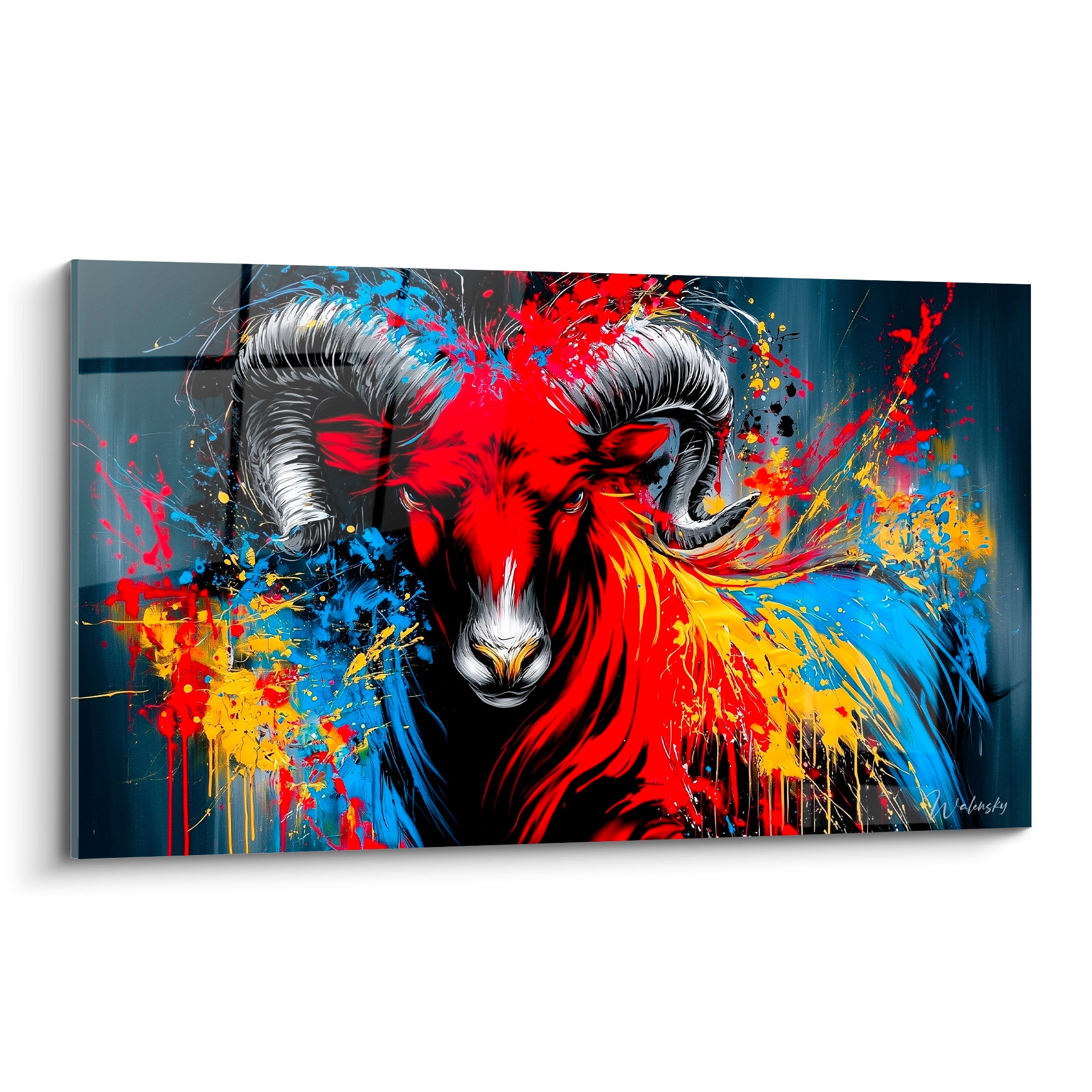
Ram painting, tawny and beige, wide horns, panoramic format - Wide-angle format - Ram edition
From 242.90 €
Discover this paintingVisual pitfalls of very large panoramic formats
Enlarging an image is never neutral. The more a composition stretches horizontally, the greater the risk that certain elements will fall outside the frame or become distorted.
- Cropped tusks: on a very tight framing, enlarging to 5XL can push the edges of the scene (tusks, ears) out of view if the original image was not designed for this ratio.
- Stretched perspective: an elephant photographed head-on keeps its proportions at any format; an elephant in three-quarter view may look slightly elongated at very great widths.
- The empty centre: on a very wide panoramic, if the subject is centred and small, the ends of the wall look bare. Better to choose an image where the animal fills a good part of the width, such as a herd on the move rather than an isolated portrait.
The painting Elephant with ochre and turquoise waves illustrates well a composition designed for width: the head and tusks remain sharp even in the largest formats, because the framing was conceived for the panoramic stretch from the outset.
— Our selection


Where to install an XXL panoramic elephant painting
The right location shapes the result just as much as the format itself.
Above a low sofa
This is the most common and most flattering location. The centre of the painting is placed at about 1.50 m from the floor, the natural eye height when standing, leaving 15 to 20 cm between the top of the sofa and the bottom of the painting.
In an entrance or a wide hallway
A corridor you walk through without really looking becomes, with a panoramic of 180 cm or more, a true moment of pause. The horizontal stretch accompanies the movement of passing by rather than cutting across it, unlike a square format that demands a frontal stop to be appreciated.
For this kind of space, the African landscape panoramic painting follows the same logic of proportion: you will find these detailed guidelines in our guide to the ideal panoramic format for a large wall.
— Also to discover


Combining several paintings to extend the panoramic effect
A very long wall can also accommodate two works rather than one giant piece. An elephant on the left, a giraffe or another savanna animal on the right, separated by 15 to 20 cm: the panoramic effect extends across the full width of the wall without relying on a single XXL format. For a calmer atmosphere, a minimalist baobab African painting for an adult bedroom can harmoniously complete this type of composition.
This approach works particularly well with pieces from the Africa Paintings collection : the Blue and Yellow Giraffe painting, for example, shares the same logic of colour contrast as the elephant editions, and sits naturally alongside them on a mixed wall. In the same spirit of warm colours and strong African subjects, an African painting of a Maasai woman printed on Alu Dibond brings a human and contrasting touch to this ensemble.
To compose a coherent wall without getting the tones and formats wrong, the Terre d'Afrique collection gathers pieces designed to echo one another: elephants, giraffes, savannas at sunset.
For a two-painting composition, keep the same medium (Acrylic Glass or Alu Dibond) on both pieces: different finishes create a contrast in sheen that breaks the visual unity of the wall.

In the same spirit
Grey and beige elephant painting, misty herd - Walking through the mist - Elephant edition
From 242.90 €
Discover this painting →Frequently asked questions
What width of panoramic painting for a 3-metre wall?
Between 180 and 225 cm wide, either a 3XL format (180x60 cm) or a 4XL format (225x75 cm), to respect the 60 to 75% proportion of the wall.
How do you hang a very wide painting without it looking unbalanced?
Centre it on the main piece of furniture (sofa, sideboard) rather than on the entire wall, and keep an equal amount of empty space on each side. The centre should stay at about 1.50 m from the floor.
Can you combine a panoramic elephant painting with other African paintings?
Yes, provided the palette and medium stay consistent. An elephant in ochre tones pairs well with a giraffe or a parrot in warm hues, spaced 15 to 20 cm apart on the same wall.
What ceiling height suits a panoramic extra-wide format?
A standard 2.50 m ceiling is more than enough, since the panoramic format plays on width rather than height. The tallest formats in the range do not exceed 85 cm.
The wall has not changed since you measured it when you walked into the apartment. What changes is the certainty: an African elephant panoramic extra-wide painting is chosen with a measuring tape before it is chosen by eye. Once the width is settled, the rest, ochre, mist, a herd on the move, becomes a pleasure rather than a gamble.
To go further on pairing colours and formats, our guide to the format and palette of savanna elephants details the warm tones that work best at large scale. And to explore all the pieces available, the Africa Paintings collection brings together every format and every savanna animal.
Explore our collections


