

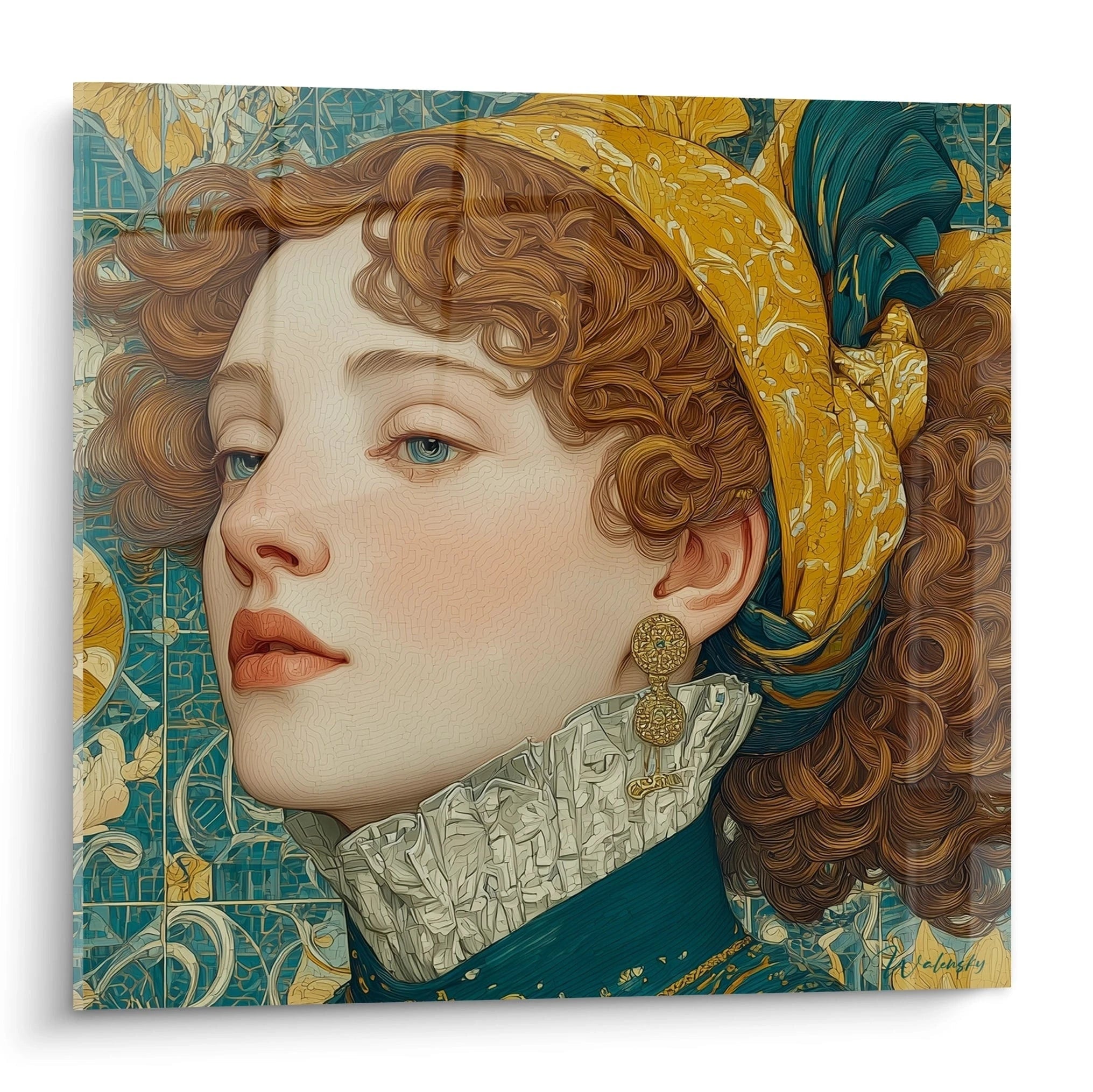






How does a painting shape the perception of luxury in your private space?
June 10, 2026 · 9 min read · by Walensky
When I first stepped across the threshold of a Parisian suite renovated by a collector client, it was neither the Roche Bobois furniture nor the herringbone parquet that caught my eye. It was a 120-centimetre abstract oil painting hanging above the king-size bed, its gilded accents seeming to absorb and then redistribute the natural light. This artwork radically transformed the perception of the space: it did not merely decorate the bedroom, it magnified it.
Here is what a painting brings to your private space: it instantly raises the perceived standing of the room, it creates a focal point that structures visual harmony, and it reveals your cultural uniqueness well beyond mere material comfort. Yet many people invest thousands of euros in premium bedding or Italian textiles while leaving their walls desperately bare. They vaguely sense that something is missing from their bedroom, without realising that this emptiness creates an impression of incompleteness, even blandness. Reassure yourself: a few simple principles are enough to turn your private space into a refined sanctuary where every waking moment becomes an aesthetic experience.
The painting as a silent signature of authentic luxury
After fifteen years designing interiors for demanding clients, I have observed one constant: spaces that truly exude luxury are never those that accumulate ostentatious signs. They are those that cultivate aesthetic coherence and narrative depth. A painting in a bedroom acts as the final punctuation of a carefully constructed sentence: it gives meaning to the whole.
Consider a bedroom with minimalist Scandinavian furniture. Without any artistic element, it risks appearing cold, almost impersonal. Add a contemporary canvas in terre de Sienne and Prussian blue tones, and suddenly the space breathes. The painting creates a visual dialogue between the clean lines of the furniture and the emotional complexity of the artwork. It transforms simplicity into deliberate elegance.
This alchemy works because contemporary luxury is no longer measured in quantity but in perceptual quality. A single, judiciously chosen painting is worth a thousand decorative accessories. It bears witness to a discerning eye and a cultivated sensibility. In your private space, where you reveal yourself without artifice, this cultural dimension becomes the most authentic marker of your refinement.
When colour rewrites perceived dimensions
The perception of luxury in a private space rests on a subtle balance between physical comfort and visual expanse. And it is precisely here that a painting unleashes its most spectacular power: it manipulates our spatial perception through the interplay of colours and compositions.
Cool tones that open the horizon
A 14-square-metre bedroom can feel cramped even with quality furniture. Place on the main wall a painting dominated by deep blues or celadon greens, and observe: the space seems to recede and open up. These cool tones create an illusory depth that gives the room a new breath. I remember a Haussmann apartment where a large abstract seascape had literally transformed an oppressive attic bedroom into a soothing retreat.
Warm tones that structure intimacy
Conversely, in a large bedroom that lacks warmth, a painting with ochre, terracotta or burgundy undertones creates a cocoon effect. These tones visually envelop the space and make it more welcoming. The impression of luxury then arises from this sense of sensory protection, almost maternal. The painting becomes the warm soul of the room, the one that invites deep rest.
This capacity of a painting to modulate spatial perception explains why high-end interior architects systematically integrate art from the earliest sketches. They do not merely decorate: they sculpt light and space through the works they select.

Verticality that lifts the gaze and the mind
Have you noticed that in five-star hotel suites, the artworks above the bed rarely exceed its width, yet often rise generously in height? This calculated verticality is no accident. It creates an upward dynamic that draws the eye skyward, giving the impression that ceilings are higher than they actually are.
Even a room of modest proportions gains in presence. This is particularly effective in bedrooms with standard 2.50-metre ceilings which, without this trick, can feel oppressive.
I applied this principle in a parents' bedroom where the client wanted a sumptuous atmosphere despite limited floor space. Each morning, the owner tells me that their gaze naturally travels up the length of the artwork, creating an almost meditative morning ritual. Luxury, in this case, is no longer material: it becomes daily experience.
— Our selection


Between personal narrative and heritage value
A painting in your private space does far more than decorate: it tells your story. And within contemporary codes of luxury, nothing is more precious than narrative authenticity. The most memorable spaces I have designed are those where the mural artwork resonates with the personal journey of its occupants.
A collector client had brought back from a trip to Kyoto a contemporary print depicting stylised cherry blossom branches. Framed with a natural linen mount and hung facing the bed, this artwork turned her bedroom into a symbolic bridge between her everyday Parisian life and that formative Japanese experience. Every glance at the painting reactivated that memory, creating an emotional richness that no designer furniture could ever produce.
This narrative dimension explains why a well-chosen painting objectively increases the perception of luxury: it bears witness to an intentionality, a conscious construction of one's surroundings. It signals that this space is not simply furnished but genuinely inhabited, thought through, loved. In an era saturated with standardised decoration, this singularity becomes the ultimate luxury.

The delicate balance between presence and discretion
Paradoxically, a painting that positively influences the perception of luxury must never shout its presence. The most frequent mistakes I observe? Overloaded artworks with garish colours that devour attention instead of orchestrating it. In a private space, the painting must be present without being overwhelming.
Favour compositions that create a visual rhythm : an alternation between zones of rest and points of interest. A minimalist abstraction with balanced flat areas of colour works wonderfully in this register. It structures the space without suffocating it, and it dialogues with the furniture without competing with it. Authentic luxury resides in this restrained sophistication.
I have also noticed that paintings with refined finishes – noble wood frames, canvases stretched on thick stretcher bars, museum-quality matt varnish – considerably strengthen the impression of standing. These details, even perceived unconsciously, signal a qualitative demand that elevates the whole room. This is the difference between a generic impression and a true aesthetic signature.
— Also to discover


Light as a revealer of depth
A painting in a bedroom only lives fully under controlled lighting. This is an often-neglected dimension which nonetheless multiplies its impact on the perception of luxury. Natural light plays with textures and pigments throughout the day, creating an artwork in perpetual transformation.
For north-facing bedrooms, I recommend paintings with luminous tones that compensate for the coolness of natural light. Conversely, a bedroom bathed in sunshine can accommodate darker, more contrasted works without risking an oppressive effect. This synergy between light and colour creates a shifting atmosphere that prevents visual fatigue.
Artificial lighting also deserves particular attention. An adjustable spotlight aimed at the painting, with a warm colour temperature (2700–3000 Kelvin), turns the artwork into a nocturnal focal point. In the half-light, the painting becomes almost luminous, creating a theatrical ambience that enhances the private space. It is this capacity to transform the atmosphere according to the hour that makes a painting an incomparable decorative investment.
Ready to transform your bedroom into a refined sanctuary?
Discover our exclusive collection of bedroom paintings that instantly raise the perception of luxury in your private space.

Waking up face to face with beauty
Imagine: tomorrow morning, you open your eyes not onto an anonymous blank wall, but onto a composition that resonates with your deepest aspirations. The first seconds of consciousness are no longer neutral, they are aesthetically enriched. This daily micro-experience, repeated 365 times a year, subtly reconfigures your relationship with your environment.
The painting in your private space is not an accessory: it is the element that transforms a functional bedroom into a personal refuge, a place of rest into a space of renewal. It embodies the simple truth that authentic luxury is measured not by the sum invested, but by the quality of presence a place inspires.
Begin by identifying what truly moves you: which colours soothe your gaze? Which forms resonate with your sensibility? Then choose an artwork that dialogues with your existing furniture, that complements without duplicating, that adds a layer of meaning to your intimacy. Your bedroom will never be the same again.
Frequently Asked Questions
Which painting size should you choose for a small bedroom without overwhelming it visually?
The fear of overcrowding a small bedroom often leads to choosing a painting that is too small, which gets lost on the wall and weakens its decorative impact. In reality, a well-chosen large format (between 80 and 120 cm wide) creates a structuring focal point that organises the space instead of shrinking it. The trick is to favour airy compositions, abstractions with light flat areas of colour, or landscapes with depth of field. These paintings create a visual window that opens the space rather than closing it. Avoid multiple small scattered frames that fragment the wall and heighten the impression of smallness. A single generous painting, with tones harmonised with your bed linen, will turn your small bedroom into a refined jewel box.
Must the painting absolutely be placed above the bed, or are there other strategic locations?
While the wall above the headboard remains the preferred location – creating a crown effect that enhances the bed as the centrepiece – other options deserve consideration depending on your layout. The wall facing the bed works beautifully: it is the first thing you see upon waking, creating a morning visual ritual. In spacious bedrooms, the perpendicular wall can accommodate a large format that structures the space into distinct zones. I have even designed bedrooms where the painting was placed on the floor, leaning against the wall in a gallery-style manner, particularly suited to contemporary interiors and lofts. The essential point is that the painting dialogues with a significant architectural or furniture element: it must visually anchor the space, never float arbitrarily. Observe where your gaze naturally settles when you enter the room; that is often where the painting will have the greatest impact.
How do you choose a painting that stays timeless without becoming tiresome after a few months?
Visual fatigue usually arises with overly literal or overloaded artworks, which reveal all their information at once. To ensure aesthetic longevity, favour paintings that offer subtle complexity : abstract compositions with multiple layers of reading, stylised rather than photographic landscapes, nuanced colour palettes rather than primary hues. Sophisticated neutral tones – anthracite grey, blush beige, night blue, olive green – outlast trends far better than saturated colours. Also look for a quality of execution that rewards close observation: paint texture, fineness of gradations, balance of masses. A good painting reveals new details at every glance, creating an evolving relationship that prevents tedium. Finally, ensure the work resonates with something deep within you – an emotion, a memory, an aspiration – for this personal connection guarantees lasting attachment beyond fashions.


