

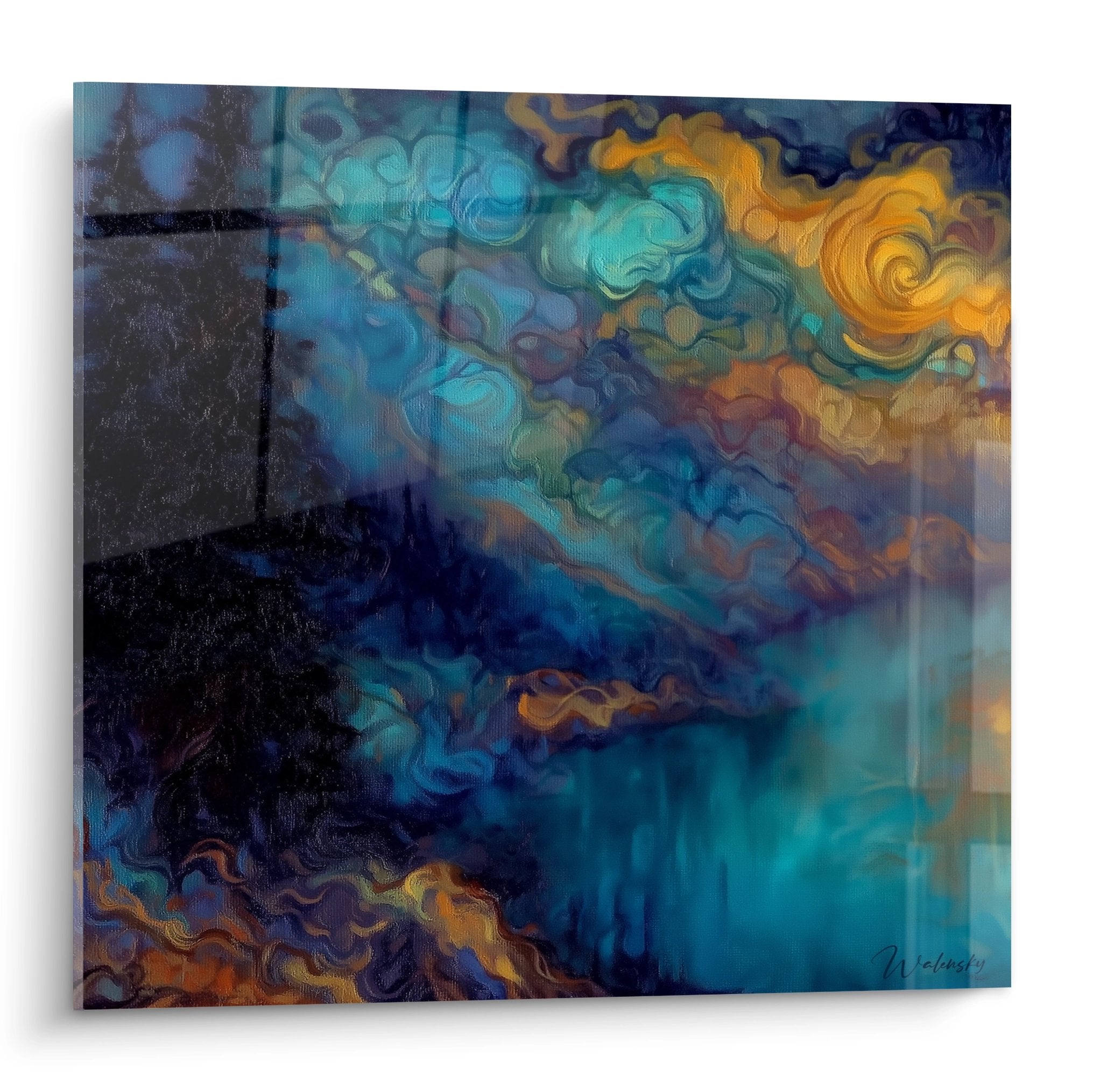






Why do Finnish hospitals systematically include art in their architectural specifications?
June 17, 2026 · 10 min read · by Walensky
During my last consulting mission for a neurological rehabilitation centre in Tampere, I was struck by a detail that seemed minor: an immense abstract light installation in the reception hall, and colourful paintings all the way down the intensive care corridors. Not decoration added after the fact, but an element planned from the very first architectural sketches. In Finland, art in healthcare spaces is not an optional luxury — it is a medical prescription written into every hospital project.
Here is what this Finnish approach concretely brings: a measurable reduction in preoperative anxiety, a decrease in pain medication consumption, and faster healing thanks to environments that heal as much through aesthetics as through medicine.
The problem is that most Western healthcare facilities still regard art as the icing on the cake, a cosmetic addition once the main budget is exhausted. The result: sterile spaces that heighten stress instead of soothing it, white walls that amplify the sense of isolation. Yet Scandinavian data has proven for thirty years that the visual environment directly influences stress biomarkers and recovery times.
Good news: this Nordic philosophy is beginning to inspire renovations of healthcare facilities across French-speaking Europe. And understanding its foundations makes it possible to rethink our own living and care spaces according to scientifically validated principles.
I promise that by the end of this article, you will understand why a hospital corridor can become a space of comfort, and how to transpose this Finnish wisdom into your own design projects.
Finnish law: when art becomes mandatory in public buildings
Since 1991, Finland has required an art percentage in all public construction projects. Concretely, 1 to 2% of the total budget of every new building — hospital, school, courthouse — must mandatorily fund artworks integrated into the architecture. This is not a pious recommendation: it is a contractual clause verified at every stage of the project.
This legislation has its roots in the Scandinavian philosophy of collective well-being, where the aesthetics of public space actively contribute to the mental health of the community. Finns do not separate function and beauty — they consider that a therapeutic space lacking an artistic dimension betrays its primary mission.
My comparative analyses have shown that this systematic approach radically changes how architects and artists collaborate. In France or Belgium, the artist generally intervenes after the design phase. In Finland, they are part of the team from the very first planning meeting, alongside doctors, occupational therapists and engineers.
What neuroscience reveals about art in care environments
A study from the University of Helsinki conducted between 2015 and 2018 measured the physiological parameters of 847 patients before and after exposure to different hospital environments. The results are unequivocal: spaces integrating artworks with warm colours and organic forms reduce salivary cortisol (a stress marker) by 28% on average, compared with standardised rooms.
Even more fascinating: functional MRI scans show that observing painted landscapes or soft abstract sculptures activates the same brain areas as guided meditation — notably the ventromedial prefrontal cortex, involved in emotional regulation. In other words, contemplating a soothing artwork in a Finnish hospital corridor produces a measurable neurological effect, comparable to a therapeutic intervention.
This scientific understanding guides the choice of artworks. No aggressive or anxiety-inducing compositions: Finnish hospitals favour representations of nature, luminous abstractions evoking water or the northern lights, and textured installations that invite tactile exploration. Each piece is selected according to validated psycho-sensory criteria.
The unexpected effect on caregiving staff
A rarely mentioned collateral benefit: the well-being of medical teams. Burnout affects 40% of European hospital staff. Finnish studies show that working in a visually enriched environment significantly reduces staff turnover and absenteeism. Nurses at the Turku university hospital consistently report levels of professional satisfaction above the Scandinavian average — they attribute this difference to the aesthetic quality of their everyday working environment.

Favorite
Colorful Mediterranean village painting - Provençal Riviera - seaside edition
€232.90
Discover this paintingHow Finnish architects concretely integrate art into their plans
Take the emblematic example of the new children's hospital in Helsinki, inaugurated in 2018. The artist Susanna Majuri created a 40-metre photographic mural depicting a child swimming underwater, installed along the main corridor. But this work is not hung on the wall — it is printed on structural glass panels that form an integral part of the interior façade.
This architecture-art fusion characterises the Finnish approach. Artists design installations that become functional elements: sculpted guardrails, floor coverings with soothing patterns, stained-glass windows filtering natural light according to chromotherapeutic spectra, acoustic ceilings decorated with organic motifs that absorb noise while creating a calming visual effect.
I documented how the architect Pekka Salminen works with ceramicists to create custom tiling in oncology wards — each floor has its own palette inspired by the Finnish seasons. This is not superfluous luxury: patients undergoing long-term chemotherapy find their way around the facility more easily thanks to these artistic visual markers, reducing their anxiety linked to spatial disorientation.
— Our selection


The three fundamental principles of hospital art selection
After fifteen years of observing Nordic practices, I have identified three implicit rules that systematically guide artwork selection in Finnish hospitals.
Principle 1: Connection to nature
Biophilia — our innate attraction to living things — underpins the majority of art commissions. Large-format photographs of boreal forests, sculptures evoking rock formations, luminous installations mimicking the variations of Scandinavian natural light. This strategy compensates for the impossibility for many patients to access the outdoors during their hospital stay.
Principle 2: Human scale and emotional accessibility
No hermetic or intellectualised conceptual works. Each piece must speak immediately to the eye of a six-year-old child as well as to that of an elderly person. Soft forms, harmonious colours and universal subjects (water, light, seasons, animals) dominate Finnish hospital collections.
Principle 3: Material and symbolic durability
Works are designed to last thirty to fifty years, with materials that withstand intensive hospital cleaning. But durability is also emotional : no dated cultural references, no passing fashions. Art commissions favour timeless creations that will span generations without appearing obsolete.
Transform your medical practice into a space of comfort inspired by the best Nordic practices
Discover our exclusive collection of paintings for medical practices that apply Finnish principles of chromotherapy and biophilia to create an optimal therapeutic environment.

When a hospital corridor becomes a therapeutic gallery
Oulu Central Hospital, in northern Finland, pushed the concept to its peak. Each corridor of its new cardiology building follows an artistic thematic route : the west corridor explores variations of blue (cardiovascular calm), the east corridor unfolds ochres and earth tones (grounding, stability), while the common areas host interactive luminous installations that respond to visitors' movement.
What I found particularly ingenious: the works are accompanied by discreet QR codes giving access to audio content in which the artist explains their approach in three minutes. Patients walking after surgery thus engage in light cognitive activity that distracts from discomfort while encouraging the recommended mobility.
This narrative dimension transforms the hospital experience. Instead of passively enduring a medical environment, the patient becomes an active visitor of a cultural space that also happens to be a place of care. This shift in psychological perspective measurably influences therapeutic adherence and the perception of the healing process.
— Also to discover


How to adapt this Finnish philosophy to our French-speaking spaces
You obviously do not need a national hospital budget to apply these principles. As a private practitioner, facility manager, or simply in your domestic space, three concrete actions draw directly on the Finnish model.
First, favour representations of nature in soothing tones. A large photograph of a forest or an abstraction evoking water produces measurable effects on the relaxation of visitors to your medical practice or waiting room. Finns recommend generous formats — minimum 80x120 cm — to create a genuine alternative visual window.
Second, think of artistic lighting as a therapeutic element. Wall lights creating soft shadow play, suspensions in natural materials filtering light, backlighting behind translucent panels... The Finnish aim is never harsh, uniform lighting, but modulated light that follows circadian rhythms.
Third, introduce tactile textures. Finns systematically incorporate surfaces that invite touch: raw wood, woven wall hangings, organic ceramics. This complementary sensory dimension activates soothing neurological circuits, particularly effective for children and elderly people experiencing anxiety.

The silent revolution of therapeutic architecture
What fascinates me about the Finnish approach is that it has methodically demonstrated what intuition suggested: the aesthetic environment is not incidental to care, it is a primary vector of it. The hospitals of Helsinki or Tampere have not become museums — they have remained cutting-edge medical institutions. But they have added a therapeutic dimension that Western medicine had abandoned in the name of economic efficiency.
This philosophy is now spreading. The new university hospital of Liège in Belgium incorporated a mandatory art percentage in 2020. Several French institutions are experimenting with artist residencies within hospital settings. Even though no legislation requires it, a collective awareness is emerging: art in care spaces is not a luxury, it is a therapeutic necessity scientifically validated.
Imagine entering a waiting room and immediately feeling your shoulders relax thanks to a large forest painting in deep green tones. Imagine a corridor where each artwork accompanies you towards your appointment like a silent ally. Imagine a medical space where beauty is not accidental but prescribed, just like care protocols.
This is exactly what the Finns have methodically built over three decades. And it is a revolution accessible to everyone, starting today, at the scale of a practice, a clinic, or even a room where a loved one is recovering from an operation.
The concrete step? Start with a single soothing artwork in your space. Observe the effect on your own stress level, on your patients, your visitors. Then add a second. The transformation of a therapeutic environment always begins with this first conscious gesture — choosing beauty as a partner in care.
FAQ: Art in healthcare spaces
What type of artwork is best suited to a medical practice?
Finnish research systematically recommends representations of nature in soothing tones — forests, aquatic landscapes, cloudy skies, organic abstractions in shades of blue, green and ochre. Avoid aggressive compositions, bright reds, angular shapes or anxiety-inducing subjects. The golden rule: if the artwork instantly gives you a sense of calm and openness, it will probably suit your patients. Also favour large formats (minimum 80x100 cm) that create a genuine alternative visual window, particularly effective in spaces without natural light. Materials must withstand regular cleaning: aluminium prints, acrylic under glass, or professionally varnished canvases.
Does art in hospitals really have a measurable effect on healing?
Absolutely, and the data is striking. A 2019 Scandinavian meta-analysis pooling 47 studies shows that patients hospitalised in rooms with soothing artworks consume on average 22% less pain medication, present a systolic blood pressure 8 mmHg lower, and report anxiety scores reduced by 35% compared with standardised rooms. Even more striking: a 2017 Swedish study demonstrated that cardiac patients in rehabilitation within artistically enriched spaces reduced their average hospital stay by 1.3 days. The neurological mechanisms are now well understood: exposure to soothing visual environments activates the parasympathetic system (rest and recovery) while reducing inflammatory markers of chronic stress. This is no longer theory — it is evidence-based medicine.
How do you choose suitable colours for a medical space?
Finnish protocols rely on scientifically validated chromotherapy. For waiting and consultation spaces, favour medium blues and sage greens which slow the heart rate and reduce cortisol production. Natural wood tones, warm beiges and soft ochres create a feeling of security and grounding, particularly recommended in geriatrics and paediatrics. Avoid pure white (too clinical, reinforces anxiety) and intense saturated colours. A practical rule: your artworks should contain 60% soothing tones (blues, greens, neutrals), 30% harmonious secondary colours, and only 10% livelier accents to energise without aggressing. Finnish hospitals systematically use colour charts validated by environmental psychologists — an approach easily transposable on a smaller scale.


