

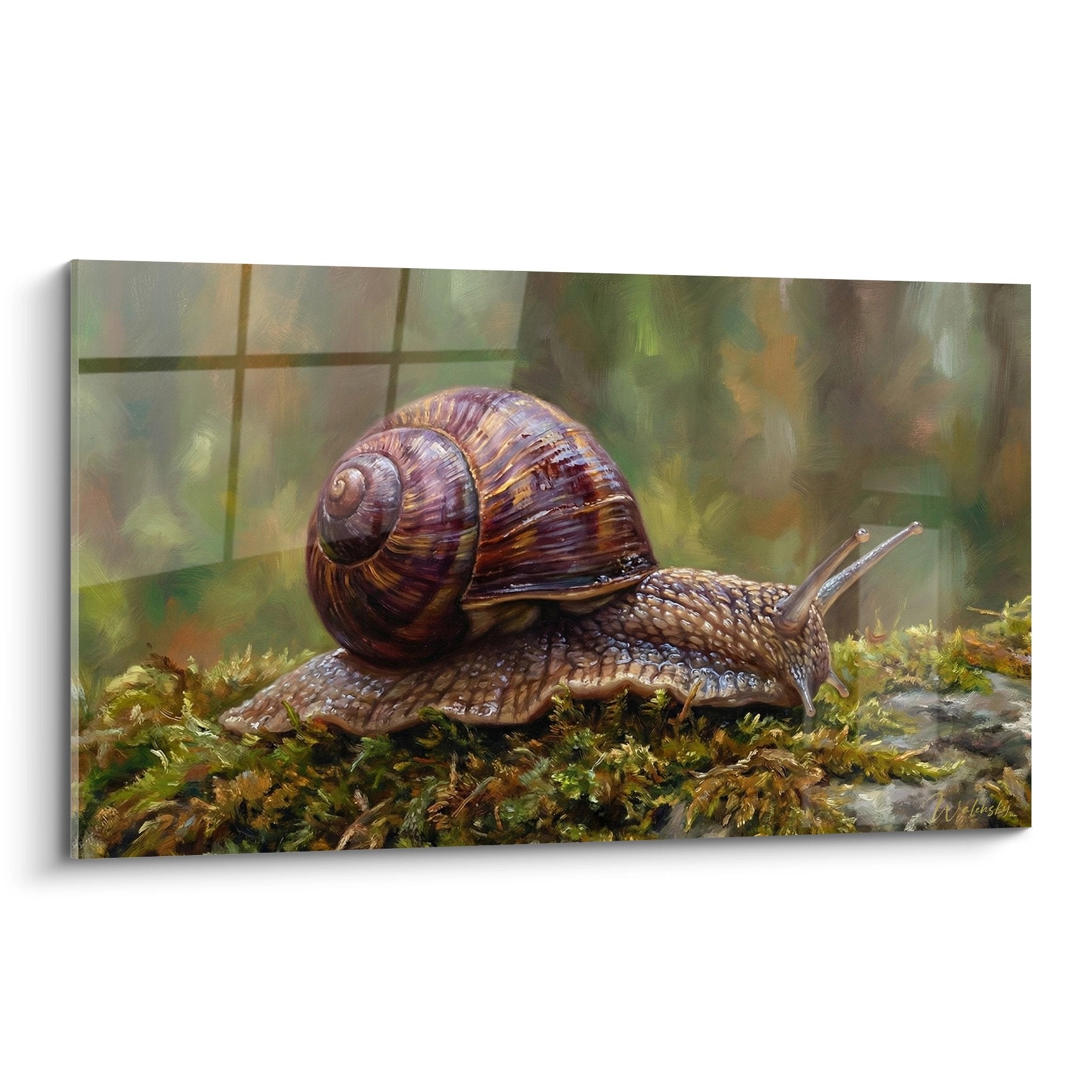






How can a simple artwork transform an impersonal kitchen?
January 19, 2026 · 9 min read · by Walensky
There it was, this kitchen. Functional, clean, perfectly equipped. Yet every morning, while making my coffee, I felt this strange emptiness. The quartz countertops, the immaculate white cabinets, the central island... everything breathed efficiency, but nothing told a story. Until the day I hung a simple citrus lithograph on the blank wall above the table. This tiny gesture changed everything. Suddenly, this utilitarian space had become a place where I wanted to linger.
Here is what a simple artwork brings to an impersonal kitchen: it creates an emotional focal point, reveals your identity at the heart of the domestic space, and transforms a passageway into a true living place.
Do you know this feeling? Your kitchen is beautiful, certainly, but it could belong to anyone. Design magazines praise spotless kitchens, yet yours sorely lacks soul. You hesitate to add anything, afraid of breaking that minimalist harmony... or simply because you don't know where to start.
The good news? You don't need to reinvent your layout or invest thousands of euros. A single artwork, chosen with intention, is enough to infuse personality into even the most neutral space. I'll show you how this transformation happens, and above all, how to trigger it in your own home.
The unsuspected power of a simple painting in the kitchen
Let's first understand why a simple artwork holds this transformative power. In our contemporary kitchens dominated by stainless steel, glass and stone, art introduces a deeply human dimension. It isn't decoration in the superficial sense, but emotional anchoring.
A watercolor of aromatic herbs above your countertop changes your relationship to meal preparation. You no longer simply chop basil; you take part in a ritual that echoes the artwork in front of you. This silent dialogue between your everyday gesture and the artistic representation creates a narrative continuity that turns routine into experience.
I have observed this phenomenon in dozens of kitchens. One client had hung a black-and-white photograph of a Provençal market in her all-white Scandinavian kitchen. This single image created a striking contrast that not only immediately caught the eye, but also told her personal story: her childhood summers in the South. The simple artwork then becomes a memory anchor that radically personalizes the space.
Simplicity as a deliberate strategy
Why insist on the simplicity of the artwork? Because in a kitchen, an environment already visually busy with appliances, utensils and varied materials, artistic restraint creates a soothing counterpoint. A minimalist composition, a restricted palette, a single subject: these qualities allow the artwork to exist without competing with the room's functional activity.
They don't shout for attention; they assert themselves through their calm presence and their coherence with the space's primary function. This simplicity is not poverty, but refinement and respect for spatial balance.

Favorite
Painting inspired by Giuseppe Arcimboldo's Spring No. 2 – Tribute to a Famous Artist
€233.90
Discover this paintingHow to choose the artwork that will reveal your kitchen's soul
Choosing this transformative artwork is never a matter of chance. It begins with careful observation of your current kitchen. What is its dominant color? Which materials prevail? What atmosphere naturally emerges from the space?
In a kitchen with warm tones of wood and terracotta, a simple artwork depicting seasonal fruits in ochre and terracotta hues amplifies the existing warm atmosphere. Conversely, in a kitchen with an industrial design of concrete and steel, an abstract black-and-white photograph or a geometric screen print extends this clean aesthetic while introducing a personal touch.
The mistake would be trying to completely contradict the spirit of your kitchen. The simple artwork dialogues with what exists, it does not fight it. It can bring a subtle contrast – a touch of softness in a too-rigid universe, or conversely a graphic structure in a too-fluid space – but always within a logic of overall harmony.
The subject of the artwork: between obviousness and surprise
Must you necessarily choose an artwork with a culinary theme? Not necessarily. If representations of fruit, vegetables, spices or market scenes naturally work in a kitchen, other subjects can create more personal and unexpected connections.
A client passionate about travel hung a watercolor landscape of Tuscany above her coffee corner. Every morning, this view of the Italian hills turned her morning routine into a mental escape. Another opted for an abstract composition evoking the movement of water, creating a poetic resonance with the central element of every kitchen.
The essential thing is that the simple artwork tells something about you. Whether it reflects your sensibility, echoes your passions, or is simply a daily source of visual joy. This authenticity of choice guarantees that the transformation of your kitchen will be profound and lasting.
— Our selection


The strategic location that maximizes visual impact
A simple artwork placed poorly remains invisible. A simple artwork perfectly positioned reorganizes the entire perception of the space. In a kitchen, certain locations hold greater transformative power.
The wall facing the kitchen entrance is the privileged location. It is the first point of view, the one that sets the tone as soon as you cross the threshold. A simple artwork here immediately creates a strong visual identity. It announces: "This kitchen is not merely functional, it has a personality."
The wall above the table or dining corner is another strategic location. Here the simple artwork accompanies moments of pause, sharing and conversation. It becomes an integral part of the convivial experience. Glances naturally rest on it during meals, creating a visual backdrop that enriches these moments.
Even a small wall between two tall elements, a space above the sink facing a window, or the cooker hood can host a simple artwork. These often-overlooked areas transform into unexpected focal points that energize the whole.
The practical considerations that protect the artwork
A kitchen remains a demanding environment: steam, splashes, temperature variations. Your simple artwork must be protected to last. Favor works framed under glass or plexiglass, easier to clean. Avoid placing an unprotected artwork directly above the cooking zone.
Canvas works may be suitable if positioned at a reasonable distance from heat and humidity sources. Photographs mounted on aluminum, varnished screen prints, or creations on resistant supports such as ceramic are excellent choices for the culinary environment.
— Also to discover


The daily transformation: what really changes
Beyond aesthetics, what concretely changes when you introduce a simple artwork into your impersonal kitchen? First, your relationship to the time spent in this space. You no longer cross your kitchen on autopilot. Your gaze lingers, even for a second, on this image that speaks to you.
This micro visual pause creates breathing room in your routine. It reminds you that even in everyday tasks, beauty has its place. Gradually, your kitchen stops being a merely functional space and becomes a place you enjoy being in, even outside of meal preparation.
I have noticed that clients who take this step then change their spatial behavior. They drink their coffee facing the artwork rather than standing near the sink. They more readily invite loved ones into the kitchen, proud to show off this now personalized space. The simple artwork acts as a catalyst for a new relationship with the domestic space.
The domino effect on the rest of your decor
Remarkably, once the simple artwork is installed in your kitchen, it often reveals other possibilities. You suddenly notice that a certain corner lacks light, that a certain accessory no longer matches the atmosphere created. The simple artwork becomes the starting point of a broader decorative reflection.
Some clients then add plants that pick up the artwork's tones. Others change their kitchen textiles to create chromatic coherence. These gradual, always simple and measured adjustments amplify the initial transformation without ever overloading the space.
Ready to reveal your kitchen's hidden personality?
Discover our exclusive collection of kitchen paintings that transform impersonal spaces into warm and inspiring living places.


Take action: your kitchen is waiting for its transformation
You now know that your impersonal kitchen needs only one thing to reveal itself: a simple artwork that bears your imprint. No aesthetic revolution needed, no exorbitant budget or decorating skills. Just an authentic choice and a thoughtful location.
Start by observing your kitchen with fresh eyes. Identify the wall that catches your attention, the one your eye naturally seeks. Ask yourself which emotion you would like to feel in this space: serenity, energy, nostalgia, joy? Let that answer guide your choice.
The simple artwork you choose may not be permanent. And that is perfect. It will mark the beginning of an evolving relationship with your culinary space, a permanent invitation to live in your kitchen rather than merely use it. This distinction, however subtle, changes everything.
So stop waiting for your kitchen to be "perfect" before personalizing it. It is precisely this personal touch, this simple artwork chosen with intention, that will make it perfect in your eyes. Your impersonal kitchen already possesses all the potential it needs. It just waits for you to give it a soul.
Frequently asked questions about art in the kitchen
What size artwork should I choose for a small kitchen?
In a small kitchen, the mistake would be thinking it must necessarily be a tiny artwork. On the contrary, a medium-sized simple artwork (at least 40x50 cm) creates a visual impact that perceptibly enlarges the space. It draws the eye to a single focal point, avoiding the visual scatter of multiple small elements. Favor a vertical composition that guides the eye upward, accentuating the height under the ceiling. The essential point is that the artwork remains proportionate to the wall: it should occupy about two-thirds of the width of the area it decorates. In a small space, a simple artwork with light tones and an airy composition brings breathing room without visually weighing down. If you hesitate between two sizes, always choose the larger: an artwork that is too small gets lost and fails its transformative mission.
Will the kitchen humidity damage my painting?
This concern is legitimate, but it should not hold you back. With the right precautions, a simple artwork can perfectly well live in your kitchen for years. Simply avoid placing it directly above the cooker or sink where splashes and steam are at their maximum. A location at least 1.5 meters from these zones is generally sufficient. Opt for artworks framed under glass or plexiglass that clean easily with a soft cloth. Prints on aluminum, mounted photographs or varnished works resist particularly well the culinary environment. If your kitchen is properly ventilated (working extractor hood), humidity generally poses no problem. I have artworks in my own kitchen for over five years, and they are in perfect condition. The key lies in the choice of support and the strategic location, not in giving up on personalizing this vital space.
Can I mix several artworks in a kitchen or should I choose just one?
To transform an impersonal kitchen, always start with a single simple artwork. It will create the necessary focal point without risking visual overload. Once this first artwork is installed, live with it for a few weeks. Observe how it changes your perception of the space, how your gaze interacts with it. If after this adjustment period you feel the need to add a complementary element, do so sparingly. A composition of two or three simple artworks can work if they share chromatic or thematic coherence and are arranged according to a clear logic (horizontal alignment, geometric composition). But in a kitchen where visual elements are already numerous (appliances, utensils, visible dishes), the golden rule remains: less is more. A simple artwork, perfectly chosen and positioned, will accomplish more than a scattered accumulation. Keep in mind that your goal is to personalize, not to turn your kitchen into an art gallery. Simplicity remains your best ally for this successful transformation.
Explore our collections


