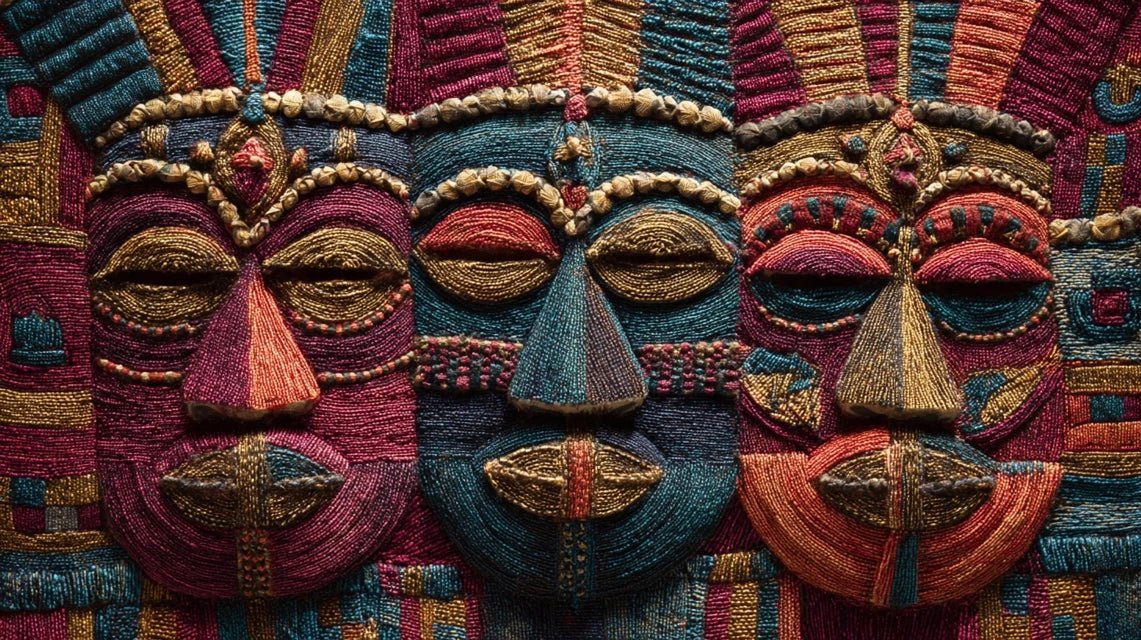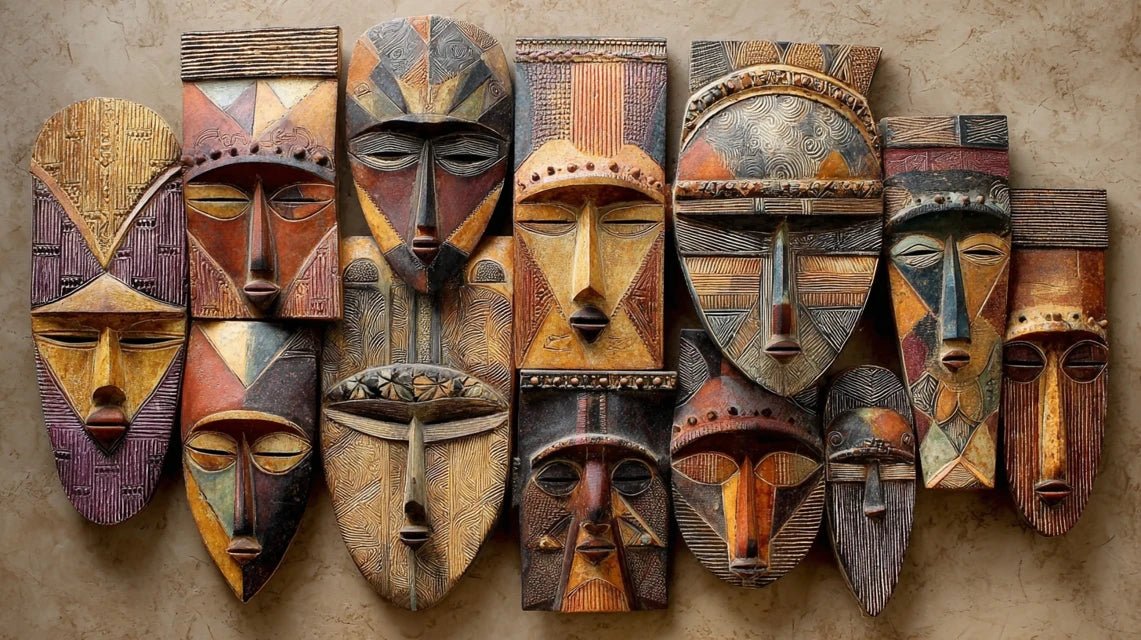
In a Parisian living room where I was preparing a tribal art exhibition, a New York collector froze in front of a Chokwe mask hanging on the wall. "This geometry... it dialogues with space like a contemporary sculpture," he murmured. This moment crystallized fifteen years of research: Chokwe masks possess a visual architecture that radically transforms our modern interiors.
Here's what the geometry of Chokwe masks brings to your wall composition: a sculptural depth that captures natural light differently depending on the time of day, a geometric structure that creates natural focal points in space, and an authentic cultural presence that immediately elevates the sophistication of a room.
Many hesitate to incorporate African art into their wall decor, fearing a result that is too ethnic or disconnected from their aesthetic universe. This apprehension is legitimate: poorly arranged, a traditional mask can indeed seem out of place in a contemporary interior. Yet, it is precisely the rigorous geometry of Chokwe masks that makes them exceptional pieces for modern wall composition.
I will reveal to you how this Angolan and Congolese sculptural tradition naturally dialogues with the principles of contemporary design, and how to compose a wall that respects both cultural authenticity and your personal aesthetic vision.
The geometric architecture of the Chokwe mask: a universal visual grammar
The Chokwe have developed since the 17th century a sculptural approach of fascinating mathematical precision. Unlike masks from other African traditions with organic shapes, the Chokwe mask rests on a strict angular geometry: interlocking triangles for the eyes, lozenges for the cheeks, parallel lines structuring the forehead.
This geometric rigor creates a visual language that naturally resonates with modern aesthetics. When you observe a Cihongo mask or Pwo mask – the two most emblematic types – you immediately identify primary shapes: circles, triangles, rectangles. This universal formal vocabulary explains why these pieces integrate so harmoniously into minimalist or Scandinavian interiors.
The color palette also contributes to this geometry: dark wood creates a sharp contrast, ocher and white pigments delineate precise graphic areas, raffia fibers add a vertical texture that structures the space. Each element contributes to a three-dimensional composition perfectly orchestrated.
The three geometric typologies to know
The Cihongo mask, with its imposing horns and ascending triangular structure, creates a powerful vertical dynamic. Ideal for tall wall compositions, it draws the eye upwards towards the ceiling and amplifies the perception of volume.
The Pwo mask, with softer but still geometrically structured shapes, presents a soothing frontal symmetry. Its more balanced geometry is perfectly suited to centered compositions, above a console or sofa.
The Mwana Pwo mask, intended for initiation dances, combines a refined facial geometry and lateral extensions in fibers. This alternation between structural rigidity and organic movement offers an ideal counterpoint in wall compositions blending tribal art and contemporary design.
Compose your wall: the golden rules of a successful staging
The biggest mistake I regularly see? Hanging a Chokwe mask as if it were a painting. These sculptures require a three-dimensional approach. Their relief geometry plays with cast shadows, creating a composition that evolves throughout the day depending on the orientation of natural light.
First rule: create spatial breathing room. An authentic African mask needs a minimum of 80 centimeters of free space around it. This empty zone is not wasted space: it becomes an integral part of the composition, like ma in Japanese – meaning interval. The eye needs this space to fully appreciate the geometric complexity of the piece.
Second rule: work on the height positioning. Unlike a painting hung at eye level, a Chokwe mask is better placed slightly higher – about 170-180 cm from the floor to the base of the mask. This elevation respects its original ceremonial function while creating an imposing presence without being overwhelming.
Third rule: consider lighting as an integral part of the composition. An adjustable LED spotlight positioned at a 45-degree angle laterally reveals the sculpted geometry, accentuates the reliefs, makes surfaces vibrate. Avoid frontal lighting which flattens volumes – you would lose 70% of the visual impact.
Successful Associations: Creating a Coherent Visual Dialogue
A Chokwe mask should never be isolated like an ethnographic curiosity. The art of African wall composition lies in creating visual echoes. I have obtained my best results by associating a main mask with two to three complementary elements.
Minimalist option: a large Cihongo mask accompanied by a framed Kuba geometric textile, positioned laterally offset and slightly lower. The geometric patterns of the Kuba textile – these extraordinary compositions of lozenges and triangles – create a natural visual resonance with the mask's angular architecture.
Contemporary option: pair your Chokwe mask with a large-format black and white photograph of an African landscape or brutalist architecture. The contrast between the sculptural three-dimensionality and photographic flatness generates a sophisticated visual tension. The geometric lines of Brutalism surprisingly dialogue well with the angular shapes of traditional masks.
Mastered maximalist option: create a triptych composition with a central mask flanked by two smaller pieces – miniature shields, sculpted figures, or even contemporary ceramics with clean lines. Maintain a strict axis of symmetry so that the overall geometry remains legible despite the richness of the elements.

Discover this inspiring artwork
When ancestral geometry meets Scandinavian design
This association may seem counterintuitive, yet it is one of the most successful I have experienced. Scandinavian design relies on clean lines, functional shapes and a natural palette – exactly the characteristics of traditional Chokwe sculpture.
In an interior with white walls and light wood furniture, a Chokwe mask in dark wood creates a dramatic focal point without breaking harmony. The angular geometry of the mask echoes the straight lines of mid-century furniture, while the materiality of sculpted wood dialogues with Nordic light woods.
I recently advised a Copenhagen couple who wanted to energize their minimalist living room. We positioned a Pwo mask above a Wegner console, accompanied by a simple dried branch in a white cylindrical vase. The simple geometric composition – triangle of the mask, verticality of the branch, horizontality of the console – created a striking installation.
The secret lies in the discipline of composition: limit yourself to a maximum of three elements, maintain consistency in materials (favor natural textures), and let it breathe. The void then becomes an active element of your wall composition.
The fatal mistakes that ruin your wall composition
After fifteen years guiding collectors, I have identified the recurring pitfalls that turn an exceptional piece into a stereotyped decoration.
Mistake number one: ethnographic accumulation. Multiplying African masks on the same wall in the hope of creating a “tribal gallery wall” has the opposite effect: visual saturation and trivialization of each piece. A single authentic Chokwe mask, properly highlighted, will have infinitely more impact than a dense collection.
Mistake number two: neglecting scale. A small mask on a large empty wall seems lost; an imposing mask in a confined space becomes oppressive. The rule of thumb: the mask should occupy about one fifth of the visible wall surface from the main viewpoint of the room.
Mistake number three: ignoring the original function. Chokwe masks were worn in motion, in a ceremonial context. This dynamic dimension must be reflected in your composition. Avoid too rigid, too centered, too predictable hangings. A slight tilt, a subtle offset can suggest movement while maintaining visual balance.
The crucial importance of authenticity
Let's be frank: the market is full of industrial reproductions that imitate the geometry of Chokwe masks without capturing their essence. A decorative copy will never have the presence of an authentic piece, and your eye – even untrained – will instinctively perceive the difference.
Signs of authenticity of a Chokwe mask: a natural patina developed through ceremonial use, variations in symmetry (industrial perfection is suspicious), a density of the wood testifying to specific local essences, and above all an indefinable sculptural presence that emanates from objects carrying history.
Investing in an authentic piece, even modest, will radically transform the energy of your space. True tribal art carries an emotional and historical charge that manufactured decoration cannot reproduce.

Discover this inspiring artwork
Creating spatial narrative: beyond simple decoration
The most successful African wall composition tells a story. Rather than considering your Chokwe mask as an isolated decorative object, think of it as the central chapter of a visual narrative that runs through your interior.
In my own Brussels apartment, I created a narrative progression between three rooms: a Malian bogolan textile in the entrance (gentle geometric introduction), an imposing Cihongo mask in the living room (sculptural climax), and a series of Congolese landscape photographs in the office (soothing resolution). This geometric and cultural sequence creates an overall coherence while allowing each room to breathe within its own space.
You can adapt this principle to your scale: even in a studio, a small Chokwe figure on a shelf can dialogue with a cushion featuring African geometric patterns on the sofa, creating a subtle narrative thread that unifies the space.
The goal is not to theme your interior, but to introduce geometric and cultural echoes that enrich the spatial experience. Each glance then reveals new connections, transforming your space into a living environment rather than a static decor.
Ready to transform your wall into a living sculptural composition?
Discover our exclusive collection of African paintings that capture the geometric power of tribal art in contemporary wall compositions perfectly balanced.
Your wall as a personal aesthetic manifesto
Fifteen years after this initial encounter with the New York collector, I remain fascinated by the ability of Chokwe masks to radically transform a space. Their rigorous geometry is not just a formal quality: it's an invitation to rethink our relationship to the wall space.
Your wall composition is not just a decorative decision – it's an aesthetic manifesto that reveals your cultural sensitivity, your visual boldness, your ability to create unexpected dialogues between traditions and modernity. An authentic Chokwe mask, properly showcased, instantly elevates the sophistication of your interior while anchoring your space in a millennial history.
Start simply: identify the wall that deserves this exceptional focal point, precisely measure the available dimensions, imagine how natural light will evolve throughout the day. Then let yourself be guided by the ancestral geometry of these extraordinary sculptures. Your gaze will never see your walls the same way again.
Frequently Asked Questions
How to know if a Chokwe mask is authentic before purchase?
This is an absolutely legitimate question, especially given the proliferation of reproductions. An authentic Chokwe mask has several identifiable characteristics: look for uneven natural patina (grasping areas show different wear), subtle asymmetries in the sculpture (the traditional craftsman does not seek mechanical perfection), unusual wood density (local woods like mukula are remarkably heavy). Also examine the fiber attachments: on an old piece, they show traces of actual use, with broken or replaced fibers. The ultimate test remains your emotional feeling: an authentic piece exudes an inexplicable presence that no reproduction can capture. Do not hesitate to ask for documented provenance and, for significant investments, have it authenticated by an expert in African tribal art. A serious seller will always accept this approach. Be wary of abnormally low prices: a genuine Chokwe ceremonial mask represents hundreds of hours of craftsmanship and decades of patina – that has value.
What is the minimum distance to respect between a Chokwe mask and other wall elements?
Spatial breathing is absolutely crucial to highlight the sculptural geometry of a mask. I systematically recommend a minimum of 80 centimeters of free space in all directions around the main mask. This distance is not arbitrary: it is the area needed for your gaze to grasp the piece as a whole without peripheral distraction. In compositions combining several elements, apply the rule of thirds: the space between objects should represent about one third of the width of the main object. For example, if your Chokwe mask is 60 cm wide, leave at least 20 cm before introducing a complementary element. For large walls, do not be afraid of emptiness: an imposing mask on a 4-meter wall with 2 meters of empty space on each side creates a much more powerful visual impact than an accumulation of elements. The void then becomes an active frame that magnifies the sculpture. If your space is more constrained, prioritize a smaller dimension mask rather than compromising this essential breathing.
Does a Chokwe mask work in a modern interior with light colors?
Absolutely, and it's even one of the most successful associations! The rigorous geometry of Chokwe masks naturally dialogues with minimalist and contemporary interiors. The contrast between the patinated dark wood of the mask and light white or gray walls creates a sophisticated visual dynamic that mutually reinforces both elements. In a space with light tones, the African mask becomes a natural focal point without aggression, visually anchoring the room. I have achieved particularly spectacular results by combining Chokwe masks with Scandinavian interiors: the light wood of Nordic furniture and dark African wood create a fascinating material dialogue, while the clean lines of modern design resonate with the mask's geometric architecture. The mistake to avoid would be to try to "soften" this contrast by adding too many intermediate elements. Fully embrace the dialogue between contemporary clarity and African sculptural intensity. If your interior is very bright with large bay windows, position the mask on a wall perpendicular to the windows: the grazing natural light will beautifully reveal the sculpted reliefs throughout the day, creating a living composition that evolves with the sun.