


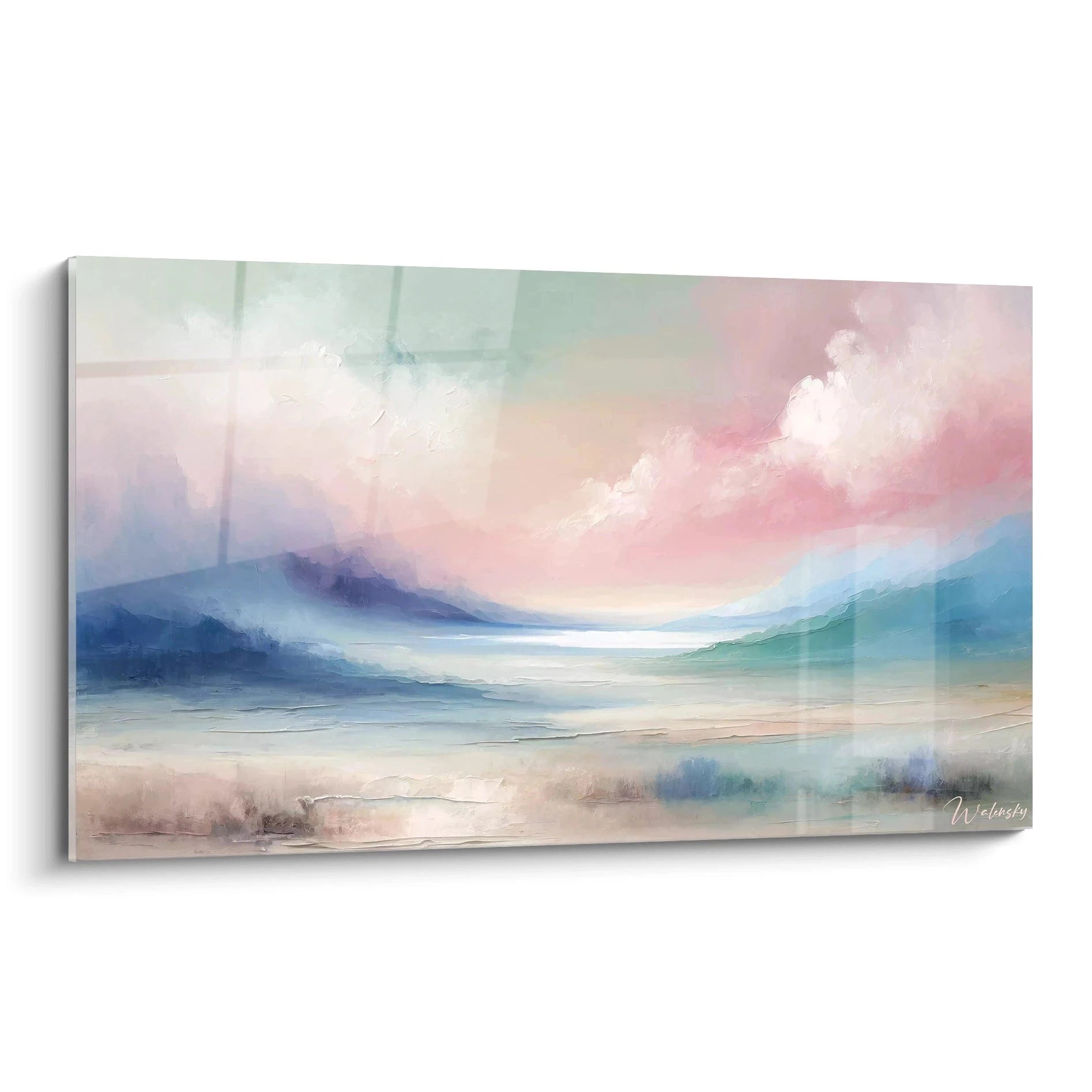

How to Incorporate an Abstract Painting into Your Decor
11 October 2025 · 15 min read · by Walensky
Introduction: Abstract Art and its Importance in Interior Decoration
Abstract art occupies a unique place in interior decoration thanks to its ability to transform spaces and infuse them with a unique atmosphere. Unlike figurative art, which represents recognizable forms, abstract art frees itself from conventions and invites a personal interpretation. This freedom of interpretation makes it a powerful element for structuring and enriching a space, while also reflecting the personality of its occupants.
In interior decoration, abstract art often stands as a harmonious focal point that attracts attention without dominating the entire room. Its bold shapes, fluid lines, and nuanced or vibrant colors interact with other decorative elements, such as furniture, textures, and wall tones. This interaction can contribute to creating a visual balance or, conversely, to establishing a contrasting dynamic, depending on the interior designer's intentions.
One of the undeniable advantages of abstract art lies in its versatility. Abstract works lend themselves to various decorative styles, whether it is a modern, minimalist, industrial, or even bohemian interior. They also allow for the expression of a certain timelessness, making spaces both contemporary and durable over time.
Moreover, abstract art has the ability to convey emotions, stimulate the imagination, and encourage reflection. By integrating an abstract painting into a room, you allow the space to become a place of sensory and intellectual interaction. This gives abstract art a function that goes beyond simple aesthetics to become a true visual language serving personal expression and spatial balance.
Understanding Abstract Art: Origins and Meanings
Abstract art, often perceived as enigmatic or confusing, finds its origins at the beginning of the 20th century, a period marked by a upheaval of artistic conventions. Artists at that time sought to overcome the limitations of figurative representation to explore deeper notions related to emotion, pure form, and perception. Inspired by movements such as Cubism, Expressionism, and Fauvism, pioneers such as Wassily Kandinsky, Kazimir Malevich, and Piet Mondrian established the foundations of abstraction by focusing on elements such as geometric shapes, vibrant colors, and dynamic compositions.
One of the fundamental aspects of abstract art lies in its ability to appeal to the senses and the viewer's imagination, rather than its ability to recognize objects or scenes. It does not seek to imitate reality but to express ideas, emotions, or universal principles. For example:
- Lyrical abstract art : Emphasizes emotion and spontaneity, with a fluid use of shapes and colors.
- Informal abstraction : Renounces any pre-established structure to explore organic and intuitive forms.
- Informal Abstraction : Renounces any pre-established structure to explore organic and intuitive forms.
Beyond its stylistic diversity, abstract art encourages individual reflection. It invites each viewer to attribute personal meanings to it. This subjectivity makes abstract art a unique choice, for both art lovers and those seeking to integrate works into their living spaces.

Golden explosion painting on white background with drips - Celestial luxury - Modern abstract edition
€233.90
233.90€
03.Adding an abstract painting to a modern interior offers numerous aesthetic and functional advantages. These unique works of art are capable of transforming a space while harmoniously integrating with contemporary design elements.
1. Creation of a Focal Point
An abstract painting can become the centerpiece of a room, immediately attracting the eye and capturing attention. In interiors often characterized by clean lines and a neutral color palette, these works allow for a bold and attractive touch.
2. Adaptability to Various Color Palettes
Thanks to their non-figurative nature, these paintings easily adapt to different color schemes. Whether you want to reflect soft and soothing tones or contrast with vibrant hues, an abstract painting offers remarkable flexibility.
3. Addition of Depth and Texture
The shapes, colors, and painting techniques of abstract art introduce a visual depth that can pleasantly contrast with the minimalist aspect of modern interiors. This allows you to break up a design uniformity while enriching the space.
4. Expression of Personality
An abstract painting often reflects a specific individuality or style. When carefully selected, it testifies to the tastes and creativity of the owner, adding a personal dimension to a contemporary interior.
5. Temporal Evolution
These works of art do not quickly go out of style, unlike some decorative items. They evolve with the viewer's gaze, offering new interpretations and sensations over time.
By combining functionality and sophisticated aesthetics, an abstract painting is a judicious choice to embellish and personalize a modern interior.
By combining functionality and sophisticated aesthetics, an abstract artwork asserts itself as a judicious choice to embellish and personalize a modern interior.
Choosing an abstract painting for your interior decoration requires particular attention to three essential factors: size, colors, and themes. These elements must be in harmony with the existing space in order to create a visual balance and a pleasant atmosphere.
Size
The dimension of a painting should be proportional to the surrounding walls and furniture. A painting that is too small loses its impact in a spacious room, while a model that is too large can overwhelm a restricted space. For a large wall, favoring a panoramic painting or a triptych composition can be a good idea. Conversely, a more modest space is better suited to compact formats or series of small grouped paintings.
Colors
Colors
The colors of an abstract painting play a crucial role in the overall aesthetics. They should complement or contrast with the existing tones in the room while respecting the desired atmosphere.
- Complementary Colors : A painting that picks up the dominant colors of the room creates a visual continuity, ideal for minimalist or zen spaces.
- Contrasting Colors : To liven up a neutral space, bright or bold hues are perfect for attracting the eye and introducing dynamism.
- Subtle Shades : In a decor that is already busy, a painting with pastel or monochrome tones brings a touch of elegance and sobriety.
Themes
The themes of abstract paintings, although non-figurative, have their own visual language. Some will prefer geometric patterns for a contemporary atmosphere, while organic shapes evoke fluidity and nature. The choice depends on the energy you want to infuse into the space: modern and structured or soothing and free. It is also important to consider the association between the style of the painting and the furniture, in order to avoid any stylistic imbalance.
A well-chosen painting then becomes a true centerpiece, enhancing the character and style of a room.
— Our selection


Harmonizing an Abstract Painting with the Style of Your Room
To create a visual harmony between an abstract painting and the style of a room, it is essential to consider several key elements. The goal is to ensure that the artwork integrates naturally while reinforcing theoverall ambiance of the space.
1. Analyze the color palette
Start by identifying the dominant colors in the room, whether it's the walls, furniture, or textiles like rugs and curtains. An abstract painting that picks up similar or complementary tones can immediately bring a sense of coherence. For example, in a minimalist space with neutral tones, a canvas with soft or monochrome shades will bring serenity, while a vibrant room with bright colors can play on bold contrasts.
2. Respect the decorative style
The overall style of the room should serve as a guide for choosing the painting. In a Scandinavian interior with clean lines, opt for a work that emphasizes simple shapes and a coherent palette. For an industrial decor, a painting with raw textures, such as thick strokes or a metallic effect, can be interesting. A bohemian environment, on the other hand, calls for organic and colorful compositions.
3. Choose an appropriate format
The size of the painting also plays an essential role in harmony. In a small space, a painting that is too imposing risks visually overwhelming the room. Conversely, a painting that is too small may get lost on a large bare wall. Place it in a central space or at eye level for a balanced effect.
4. Focus on surrounding materials
The frame or support of the painting can be used to reinforce the harmony. A light wood frame will ideally match natural styles, while metallic frames adapt well to modern interiors.
By juggling these elements, it becomes possible to optimize the integration of the artwork into any decorative space. Using these principles promotes an aesthetic balance and makes the abstract painting more meaningful in the context of the room.
## Positioning and Hanging: Showcasing the Artwork

The positioning and hanging of an abstract painting play a crucial role in its integration into a room. The central idea is to highlight the artwork while respecting the proportions, light, and harmony of the space.

### Choosing the Right Location

An abstract painting should be positioned in a space where it can capture attention without dominating the entire room. White walls or those with neutral tones are ideal for this type of art, as they allow the colors and shapes to stand out without distraction. In a living room, a wall above the sofa is a classic option, while a large canvas can perfectly dress the main wall of a dining room or entrance hall.

### Considering the Hanging Height

Hanging a painting at the right height is essential to ensure optimal visibility. As a general rule, the center of the artwork should be placed at eye level of a standing person (approximately 150 to 160 cm from the floor). However, an adjustment may be necessary depending on the room or the piece of furniture located below, such as a sideboard or a bed.

### Considering Dimensions and Proportions

If the artwork is large, it will be better showcased on a spacious wall without other clutter. For a composition of several abstract paintings, prefer a harmonious and balanced arrangement, such as a linear or grid layout.

### Lighting to Enhance the Artwork

Adequate lighting is essential to reveal the nuances of colors and textures of an abstract painting. The use of spotlights or adjustable track lights is particularly recommended. Avoid direct lights, which can create annoying reflections.

By following these principles, an abstract artwork can visually and emotionally enrich any interior space.
— Also to discover


Creating a Focal Point with an Abstract Painting
Using an abstract painting as a focal point in a room is a powerful technique to transform a space into a place that is both sophisticated and captivating. By highlighting a piece ofabstract art, it is possible to naturally attract attention and give a unique character to the entire interior decoration.
Choosing the Ideal Location
The choice of location plays a crucial role when you want to make an abstract painting the visual heart of a room.
- Main Wall: The most visible wall, such as the one behind a sofa in a living room or above a bed in a bedroom, is often perfect.
- Neutral Spaces: In minimalist designed locations, an abstract painting attracts attention without competing with other decorative elements.
- Transition Spaces: Corridors or entrances can become dynamic thanks to an abstract artwork that breaks the monotony.
Combining Colors and Textures
An abstract painting can serve to establish the color scheme of the room. You need to examine its nuances and tones to integrate complementary elements in the furniture, rugs or accessories.
- Tonal Harmony: Choose elements that accentuate the main colors of the artwork.
- Bold Contrasts: Play with contrasts, for example neutral walls with a painting in bright colors, for maximum visual impact.
Playing with Lighting
Clever lighting amplifies the effect of an abstract painting. Opting for accent lighting, such as directed spotlights, can enhance the textures and nuances of the artwork.
Highlighting an abstract artwork in this way allows you to merge art and design while reinforcing the personality of the space.

Using Lighting to Enhance an Abstract Painting
Lighting plays a crucial role in showcasing an abstract artwork and can radically transform its perception. A well-chosen light accentuates textures, contrasts, and colors, revealing the richness of the work. Adapting the lighting to the type of abstraction is also essential for optimal presentation.
Choosing the right type of lighting
The choice of lighting should take into account the texture and palette of the artwork. Neutral white light lamps mimic natural light and are generally suitable for colorful works, while warm light can intensify earthy or pastel tones. Directional spotlights with an adjustable beam offer an excellent option to focus attention on the artwork.
Orientation and placement of luminaires
Positioning the light at the correct angle is essential to avoid reflections, especially if the artwork is framed under glass or varnished. An orientation of 30 degrees ensures sufficient lighting without creating glare. If the painting is large, consider multiple light sources to guarantee even diffusion.
Exploiting ambient lighting
To enrich the atmosphere, integrate ambient lighting around the location of the painting. For example, an LED strip behind the frame creates a subtle halo effect and highlights the contours of the artwork. Similarly, wall lights set to a low intensity can complement a more direct main lighting.
Attention to these lighting elements will help harmonize the painting with the rest of the decor while highlighting its nuances and artistic depth.
Tips for Combining Multiple Abstract Works in a Room
Combining multiple abstract artworks in a space can seem tricky, but by following a few tips, it's possible to create a harmonious composition without overwhelming the decor.
1. Choose a Consistent Color Palette
Ensure that the artworks share a similar or complementary color palette. Chromatic consistency helps unify the whole and prevents the artworks from visually competing with each other. Neutral tones can serve as a base, while touches of vibrant colors bring contrast.
2. Play with Sizes and Formats
Alternating formats (square, rectangular, panoramic) and sizes adds dynamism to the wall while maintaining visual interest. It is advisable to mix imposing pieces with smaller artworks to balance the overall look. However, a controlled proportion is crucial to avoid an overload.
3. Create a Harmonious Layout
Choosing a thoughtful layout is essential. Whether in a straight line, grid, or asymmetrical arrangement, the layout should blend naturally into the space. Works should be spaced approximately 5 to 10 cm apart to create a visual separation without breaking the consistency.
4. Take into Account the Overall Style of the Decoration
Abstract artworks should harmonize with the style of existing furniture, textiles, and decorative objects. For example, in a minimalist interior, artworks with clean lines and subdued colors work well, while in an eclectic setting, bolder pieces will find their place.
5. Use Appropriate Lighting
Well-considered lighting enhances the impact of paintings while highlighting their details. Wall sconces or adjustable spotlights allow you to give each artwork balanced attention and avoid unfavorable shadows.
These tips ensure that each abstract painting retains its identity while contributing to an integrated and aesthetic decor.

Other selected pieces
Painting Asteroids black and red exploding - Rocky fragments in flight - Artistic abstract Edition
233.90€
Discover this painting →Maintaining and Protecting Your Abstract Painting
An abstract painting is much more than just a decorative element; it is a work of art that requires proper maintenance to preserve its beauty and longevity. By following a few simple but essential practices, it is possible to ensure that your abstract painting retains its luster and value over time.
Proper Cleaning
Regular cleaning is crucial to prevent dust from accumulating on the surface of the canvas. When cleaning:
- Use a soft, dry cloth to remove dust. Avoid abrasive materials that may damage the paint or texture of the painting.
- Avoid chemical products or cleaning solutions, unless specifically recommended for paints. Water or any liquid can alter the layers of paint and even cause irreversible stains.
Strategic Placement
The choice of location plays a key role in protecting your painting. Consider:
- Keep the artwork away from direct sunlight, as UV rays can cause progressive discoloration. Prefer locations where natural light is indirect.
- Maintain sufficient distance from heat sources, such as fireplaces or radiators. Excessive heat can cause cracks or degradation of materials.
- Avoid humid areas or those exposed to frequent temperature variations, such as bathrooms or kitchens, to prevent the appearance of mold.
Damage Prevention
To protect the painting from accidental wear and tear:
- Use a frame or protective borders if possible, to limit the risk of damage during handling.
- Hanging artworks must be properly secured with strong hooks suitable for the weight of the artwork. This reduces the risk of falls or impacts.
- When moving, carefully pack the painting using resistant protective materials, such as bubble wrap or reinforced cardboard.
Careful maintenance and adequate protection will ensure that your abstract painting remains not only a centerpiece of your decor, but also an object of admiration for many years.
Conclusion: The Impact of Abstract Art on Your Living Space
Abstract art, by its expressive and subjective nature, transforms a living space into a place where emotion and aesthetics meet. Its power lies in its ability to evoke unique sensations without relying on concrete representations, which makes it particularly adaptable to different types of interiors. Whether it's vibrant shades or softer tones, these works allow you to add visual and narrative depth that can enrich any decor.
An abstract painting can structure a space by becoming a focal point or, conversely, complement existing elements as a secondary piece. This largely depends on its format, location, and palette. For example, installing a large abstract painting in a minimalist living room can highlight a bold contrast, bringing dynamism and modernity. Similarly, in a bedroom decorated in more subdued colors, a soft abstract work with pastel shades can create a soothing and serene atmosphere.
Furthermore, abstract art fosters an emotional connection that varies from individual to individual, offering a form of freedom in interpretation. Each observer can make the work their own in a personal way, making the decorative experience both intimate and universal. This ability to resonate differently according to perspectives contributes to making it a timeless decorative element.
By integrating abstract art, a living space becomes much more than a simple functional place: it becomes a mirror of the emotions and aspirations of those who live there.
Frequently Asked Questions
What size abstract painting for my wall?
It must remain proportional to the walls and neighboring furniture. A painting that is too small loses its impact in a spacious room, a model that is too large overwhelms a limited space. On a large wall, a panoramic format or a triptych works well; in a small space, compact formats.
Should the colors of the painting be matched or contrasted?
Both work, depending on the desired effect. Repeating the dominant colors of the room creates a visual continuity, ideal in a minimalist or zen space. Bright shades, on the other hand, animate a neutral space. In a decor that is already busy, pastel or monochrome tones bring sobriety.
What are the main types of abstract art?
Three mainly. Geometric abstract art emphasizes precise lines and shapes, associated with order, symmetry, and structure. Lyrical abstract art favors emotion and spontaneity, with a fluid use of forms. Informal abstraction explores organic and intuitive forms.
What is the interest of an abstract painting in a modern interior?
It creates a focal point in spaces often made of clean lines and neutral colors. Its shapes and techniques add depth and texture, breaking the uniformity of the design. Well chosen, it also expresses the tastes and creativity of the occupant.
Explore our collections


