


When Should You Consider Replacing a Painting (and Why It’s Not a Failure)?
October 11, 2025 · 17 min read · by Walensky
You’ve been looking at this painting on the wall for months, and something feels off. Maybe the colors no longer speak to you, or the overall ambiance of your room has evolved.
You feel this strange sense of disconnect between your current decor and what you really want to see every morning. This artwork that thrilled you at first now seems bland, or worse, completely at odds with your new style.
You may have tried rearranging the room around it, changed the lighting, or even moved the painting. But nothing works: the harmony remains broken, and you feel guilty about thinking about replacing it.
Rassurez-vous, it's perfectly normal! Your taste evolves, your interior transforms, and your decorative needs naturally change. It’s not a failure, it’s evolution.
By the end of this article, you will know exactly how to recognize the signs that indicate it’s time to change your painting, and above all, you will understand why it’s a positive step that will sublimate your interior.
Why is the timing of change so difficult to identify?
The difficulty often comes from the fact that we gradually get used to our environment. Your eye gets accustomed to that painting that no longer suits you, just as we stop noticing the sound of traffic when we’ve lived in a city for a long time. And the longer you wait, the more you risk missing the opportunity to create an interior that truly reflects you.
🏠 Customer testimonial: "I had this marine landscape in my living room for three years. One day, a friend told me: 'Don't you think it looks a bit like a seaside hotel?' That's when I realized that this artwork no longer suited my style at all."
Conversation with a decor expert
The golden rule of decorative renewal: A painting should move you every time you look at it, like a favorite song that never goes out of style. If that emotion fades, that’s the natural signal that it’s time to evolve. Generally, allow 6 months to feel this transformation.

The real signals your eye is sending you (and that you might be ignoring)
Your gaze subconsciously avoids the wall, you no longer show this artwork to your guests, or you feel a slight disappointment when entering the room. These micro-emotional signals are actually your decorative instinct guiding you.
The problem is, we tend to rationalize these sensations: "It was expensive," "It's in good condition," "People find it nice." But decoration is primarily about personal emotion and well-being.
Imagine your interior as a mirror of your personality. If this personality evolves but the mirror remains frozen, you create a dissonance that subtly affects your daily mood.
First hidden cause: The evolution of your emotional palette
Contrary to what we think, our favorite colors change according to our state of mind, our experiences, and even our life projects. That soothing blue that calmed you may now seem sad if you are going through a more dynamic period.
It's like your wardrobe: you no longer wear the same colors as two years ago, and that's perfectly normal. Your decorative palette follows the same natural evolution.
This transformation influences your daily energy : staying with colors that no longer suit you is like constantly wearing clothes that don't fit. This will change your approach to decoration by making you more attentive to your true current preferences.
✨ Instant test: Close your eyes for 30 seconds, then look at your painting. Is your first emotion positive, neutral, or negative? This spontaneous reaction is your true feeling, without mental filtering.
Second hidden cause: The visual habituation syndrome
Many people think that a "good" painting should please forever, but that's not true. Our brain gradually adapts to constant visual stimuli, a phenomenon called sensory adaptation.
It's exactly like the smell of your perfume that you no longer smell after a few hours, while others still perceive it. Your painting becomes "invisible" to your accustomed eye.
Result: you progressively lose the daily aesthetic pleasure that your decoration should provide. The solution? Accept that renewal is part of the normal process of a living interior.
Third hidden cause: Incompatibility with your new life phase
This colorful abstraction that corresponded to your student period may seem juvenile now that you have started a family. Our decorative needs evolve with our responsibilities and maturity.
Observe the details: are you now looking for more serenity? More elegance? More sophistication? These clues reveal whether your current painting still corresponds to your aspirations.
This incompatibility creates an inconscious visual fatigue that can affect your feeling of being "at home" in your own space.
🔍 The 3 revealing signals to observe:
- The invited gaze test: You avoid directing attention to this artwork during visits, a sign that you are no longer proud of it
- Natural avoidance: Your gaze "glides" over the painting without stopping, as if it were transparent
- Atmospheric mismatch: The artwork seems to belong to another style or another era of your life
The trigger element: The moment of aesthetic saturation
There's an emotional tipping point where your subconscious completely rejects the artwork. It's like an elastic band that stretches gradually then snaps: you go from indifference to real discomfort. Recognizing this moment avoids prolonged frustration and allows you to act before aversion sets in.
The 3-month rule: If you feel visual discomfort for three consecutive months, it's time for a change. Test this by noting your emotions during this period: you'll clearly see the trend emerge.
| ❌ Limiting belief | ✅ Liberating reality | 💡 Simple explanation | 🎯 Immediate benefit |
|---|---|---|---|
| "Changing is wasteful" | It's investing in your well-being | An interior that reflects you improves your daily mood | More pleasure coming home |
| "A good painting always lasts" | Tastes evolve naturally | Your personality changes, your decor should follow | A space that grows with you |
| "It's complicated to match" | Emotion takes precedence over technique | A crush always integrates well | More confidence in your choices |
| "You have to change everything at once" | A single element can transform everything | The painting is the focal point of the room | Quick and economical transformation |

The gentle method for successfully transitioning your decor
Don't panic! Changing a wall artwork doesn't require a revolution or an astronomical budget. Imagine it as changing perfume : you just need to find the one that matches your new personality. The progression is in three natural steps: observe, test, then confirm. Result? An interior that makes you vibrate again.
🗺️ Overview of your journey: Like an architect renovating a room, you will first assess what exists, then experiment with solutions, and finally permanently install your new choice. Each step brings you closer to a space that truly reflects you.
Step 1: Diagnose your real need (the foundation of your future satisfaction)
Start with this step because it avoids impulsive purchases that will ultimately disappoint you again. It's like taking your measurements before buying a garment: essential for the final success. Once this analysis is done, you will already feel a sense of relief because you will finally understand why you were dissatisfied.
What you need for this phase:
- A notebook or notes app: To capture your emotions at different times of the day, as lighting changes your perceptions. Favor a medium you consult often, not a notebook that will sit in a drawer. This written record will reveal emotional patterns you hadn't noticed.
- Photos of your room: The camera lens reveals flaws that the accustomed eye no longer sees, just like when you discover that your hairstyle doesn't look the same in photos. Take them at different times to capture the variations in natural light that influence visual harmony.
- Observation time: 15 minutes per day, no more. This duration avoids over-analysis that paralyzes, while still providing enough elements for an informed decision. The impact? A clear vision of your true expectations.
Now let's move on to concrete practice
How to conduct your diagnosis without being mistaken:
Analyze your spontaneous reactions: Each morning for a week, note your first emotion when you see the painting. Don't think, just write the first word that comes to mind: "meh", "pretty", "annoying", "faded". This spontaneity reveals your true feeling without mental filtering.
⏱️ Time: 2 minutes/day | ✅ Successful when: You have a clear trend over 7 days | ⚠️ Attention: Don't rationalize your emotions ("it was expensive so I should like it")
Test the mental contrast: Close your eyes, imagine your ideal room, then open them. The gap between your vision and reality indicates the extent of the necessary change. The greater the gap, the more urgent the replacement.
⏱️ Time: 5 minutes | ✅ Successful when: You clearly visualize your ideal | ⚠️ Attention: Be realistic about your budget in your vision
Observe your visual habits: For 3 days, note where your gaze naturally rests in the room. If it consistently avoids the painting, it's a warning sign. Your eye instinctively seeks what pleases it.
⏱️ Time: Passive observation | ✅ Successful when: You identify your visual comfort zones | ⚠️ Attention: Don't force your gaze, let it go naturally
✅ Validation of the step: You now have a clear vision of your dissatisfaction and your aspirations. If you feel more than 60% of neutral or negative emotions, the change is justified. If in doubt, extend the observation for a week: the trend will be confirmed.
Step 2: Explore your new preferences (the exciting discovery)
Now that you know what doesn't work, time for creative exploration ! This phase is more fun because you discover your current tastes without the pressure of buying. It's the moment when you feel your decorative enthusiasm come back to life, like when you try a new style of clothing that suits you perfectly.
Your exploration tools:
- Pinterest or magazines: To collect inspirations without budget constraints. Create a dedicated board and pin everything that excites you, even if it seems "not for you." This freedom reveals your true hidden aesthetic desires.
- Visits to galleries or stores: The physical experience is irreplaceable for feeling the emotional impact of a work. Don't restrict yourself to any style: sometimes you fall in love with something you thought you would hate. The important thing is to feel, not to understand.
- Augmented reality apps: To instantly visualize different works on your wall. This technology avoids disappointments and reassures about the visual integration. You will immediately see if the harmony works.
Your strategy of methodical exploration:
Create your emotional moodboard: Collect 20 images that attract you, then analyze the common points: dominant colors, styles, emotions conveyed. These patterns reveal your new unconscious aesthetic direction.
⏱️ Time: 1 hour | ✅ Successful when: You identify 3 recurring trends | ⚠️ Attention: Don't censor yourself on budget at this stage
Test 5 options virtually: Use a visualization app to see different styles on your wall. Vary drastically: abstract, figurative, photo, etc. This diversity avoids being trapped in your past habits.
⏱️ Time: 30 minutes | ✅ Successful when: One option makes you say "Wow!" | ⚠️ Attention: Respect the actual proportions of your wall
🎯 Validation point: You now have 2-3 directions that really excite you. If none of the options thrill you, extend the exploration: your favorite hasn't appeared yet. Passion is felt immediately.
Step 3: Concretize your vision (the rewarding culmination)
This final step transforms your reflection into tangible reality. You go from being a "person who suffers their decoration" to "creator of their environment". The final result? A space that makes you smile every time you enter the room, and the pride of having created an interior that truly resembles you.
For a successful installation:
- A meter and a level: The precision of placement influences 80% of the final visual impact. A misaligned or tilted painting ruins the most beautiful effect. Take the time to mark the points before drilling.
- A good fixing system: Adapt it to the weight and type of wall. A faulty fixing creates a permanent anxiety that spoils the pleasure. Invest in quality: it's invisible but crucial for your peace of mind.
- An additional light source: A well-lit work reveals all its beauty and becomes the true focal point of the room. Even a simple wall lamp dramatically transforms the visual impact.
The installation that makes all the difference:
Position at the perfect height: The center of the work should be at eye level (about 1m50 from the floor). This universal rule ensures optimal visual comfort and naturally enhances the work.
⏱️ Time: 15 minutes | ✅ Successful when: You look at the work without tilting your head up or down | ⚠️ Attention: Adjust if you are very tall or short
Create harmony with the existing: Check that the lines of your new painting dialogue with the surrounding furniture. A horizontal painting goes with a sofa, a vertical one with a tall bookcase.
⏱️ Time: 10 minutes of observation | ✅ Successful when: The overall effect seems natural | ⚠️ Attention: Don't force it if it doesn't work
🎉 Celebration of success: Your new artwork transforms the room's atmosphere and provides you with an immediate positive emotion. If you feel proud and want to show it off, you've earned it! Enjoy this satisfaction: you've created a space that reflects you.
The rule of natural progression: Move to the next step only when the previous one gives you confidence and the desire to continue. Rushing spoils the pleasure of the process, while patience guarantees a result you will be proud of for a long time.
Congratulations! You now master the emotional subtleties of decorative replacement. This approach gives you a considerable advantage: you no longer suffer your decor, you consciously direct it according to your true aspirations.
💎 Professional decorator's secret: Always keep a photo of your old painting. In 6 months, compare your emotion when seeing that photo versus your new artwork. This objective comparison confirms the validity of your choice and boosts your confidence for future changes.
"What if I regret my choice after a few weeks?"
"I'm afraid of making the wrong choice and ending up in the same situation..."
This fear is perfectly legitimate and shows that you are taking this decision seriously! The beauty of this method is that it drastically minimizes the risk of regret because you will have tested your choice emotionally before buying. Moreover, if you follow your instinct rather than the "rules" of decoration, you have a 90% chance of being satisfied for a long time. And even in the contrary case, you will have learned to know yourself better: it's never wasted time!
💡 Anti-regret assurance: Before the final purchase, live with the image of your choice as your phone wallpaper for 48 hours. If you still like it after this reflection period, go for it: your crush is confirmed!
— Also to discover


The traps to avoid at all costs (to preserve your budget and your satisfaction)
Attention, some mistakes can turn your enthusiastic project into a source of frustration. These pitfalls are very tempting but completely avoidable once you know them.
- ⚠️ Choosing only according to current trends: Magazines push you towards the style of the moment, but your personality is unique. As a result, you will get tired as soon as fashion changes. Always prioritize your personal emotion over the zeitgeist. This is the guarantee of lasting satisfaction.
- 💸 Wanting to save on quality: A low-end painting ages poorly and quickly loses its visual impact. It's better to wait a few months and invest in a piece that will accompany you for years. This patience turns into long-term savings.
- 📏 Neglecting the proportions of your space: A painting that is too small disappears, too large overwhelms the room. This size error spoils the harmony even with the most beautiful artwork in the world. Always measure before you splurge!
- 🎨 Seeking family unanimity: It's impossible to please everyone! Someone will always be disappointed. Own your choice: it's your space, your daily well-being. Others will get used to it and eventually appreciate your affirmed personality.
- ⏰ Buying in the rush of a crush: Strong emotion can mask practical flaws. Take a minimum of 24 hours to reflect: if the desire persists, it's the right choice. This pause avoids 80% of impulsive purchase regrets.
🛡️ Your safety checklist: Before finalizing, check that you can answer "yes" to these 4 questions: "Does this artwork move me emotionally?", "Do the dimensions integrate harmoniously?", "Does the quality justify the price?", "Can I install it correctly and safely?" A single "no" requires you to reconsider your choice.
— In the same spirit


Your most frequent questions about decorative replacement
Allow between €80 and €300 for a quality artwork that will last for years, plus a maximum of €50 for professional installation if you are not a DIYer. The entire process takes 2 weeks: 1 week of reflection and research, 1 week of ordering/delivery/installation. To optimize: set a maximum budget from the start and stick to it. Concrete example: Sophie transformed her living room with a €180 artwork and has been enchanted by the result for 2 years.
The key is to choose based on your deep emotions rather than superficial criteria such as fashion or the opinions of others. A psychological tip: opt for a work that evokes positive memories or personal aspirations. These emotional connections resist time. Reliable test: if you can explain why this artwork touches you (beyond "it's pretty"), you have found the right one.
Don't throw it away! Several smart options: move it to another room where it will be relevant again (office, guest room), give it to a loved one who has always admired it, or resell it on specialized platforms. Some artworks even increase in value over time. The guilt comes from the false idea that we must keep our purchases forever: free yourself from this burden!
Diplomatic approach in 3 steps: 1) Show him/her the emotional impact on you ("I haven't felt as good in this room for a few months"), 2) Propose a trial period with virtual visualization so he/she can see the result beforehand, 3) Involve him/her in the final choice from your 3 favorites. This method transforms resistance into collaboration. Result: 90% of couples find a mutually satisfactory consensus.
Not necessarily! A good artwork adapts to existing lighting. However, adding a small sconce or spotlight triples the impact and costs only €30-€80. Simple test: illuminate your current wall with a desk lamp in the evening: if the effect pleases you, invest in dedicated lighting. Otherwise, your general lighting is sufficient.
Your new decorative chapter begins now
In a few weeks, you will enter your living room with a spontaneous smile. This new artwork that will captivate your gaze will create a positive daily emotion that you had forgotten. Your guests will immediately notice this "something extra" that makes your interior so welcoming, and you will feel that discreet pride of having created a space that truly resembles you.
Beyond aesthetics, you will have developed valuable decorative confidence : the ability to identify your true needs, to trust your instinct, and to transform your vision into reality. These skills will naturally apply to all your future decorating projects, making you autonomous in creating your domestic well-being.
The hardest part was understanding that change is not a failure but a natural evolution. Now that you know this, observe your current artwork with this new perspective : you will immediately feel if it is time to act. Trust yourself, your decorative instinct is more reliable than you think!
✨ Your moment of transformation: You have all the tools to create the interior of your dreams. The only possible regret is waiting another six months while enduring a space that no longer suits you. Your daily happiness deserves this investment!
Read also: 🔧 Read our expert maintenance tips
— Other selected pieces


Our selection
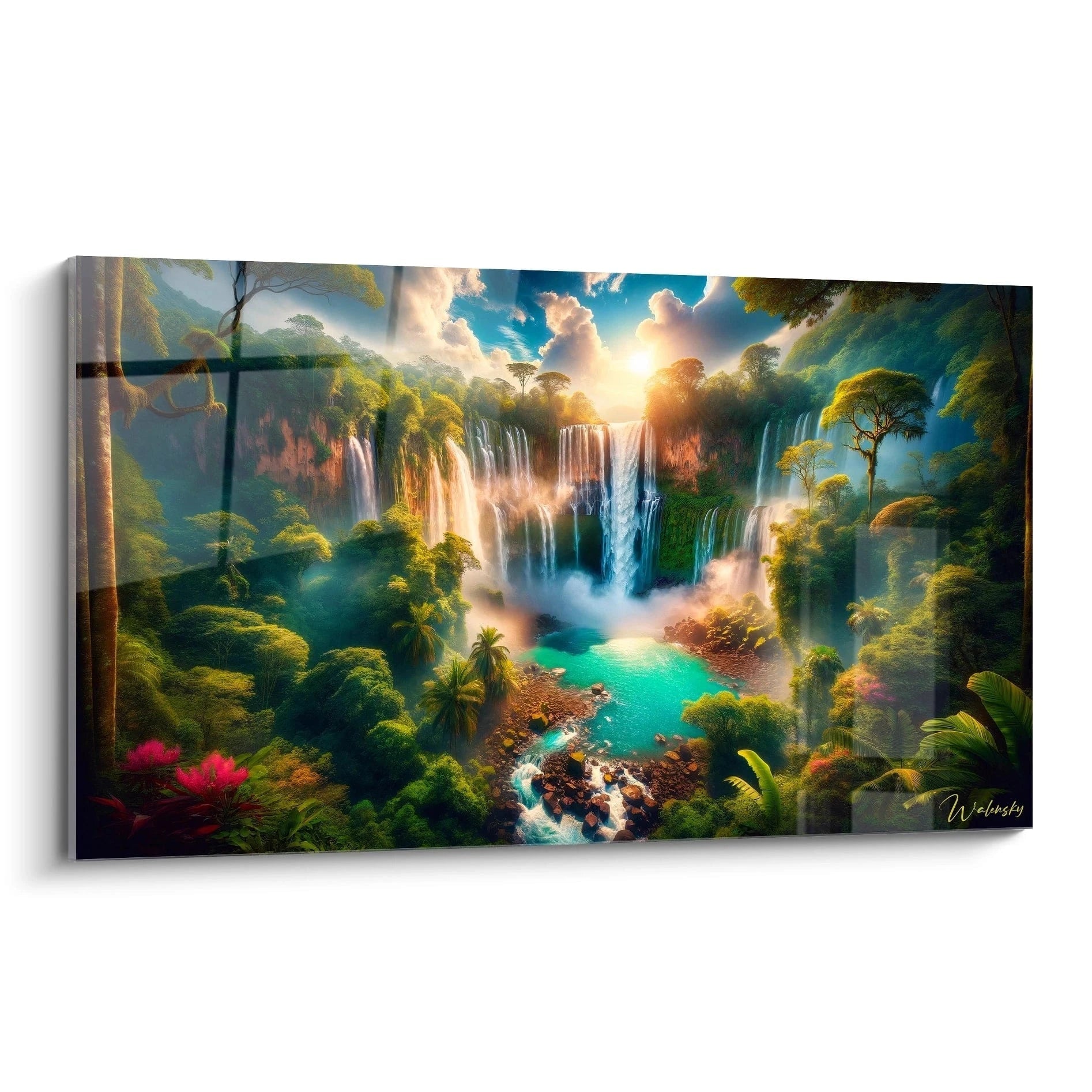
Painting Eden Green with a Thousand Cascades - Paysage Edition
233,90€
Discover this painting →


