

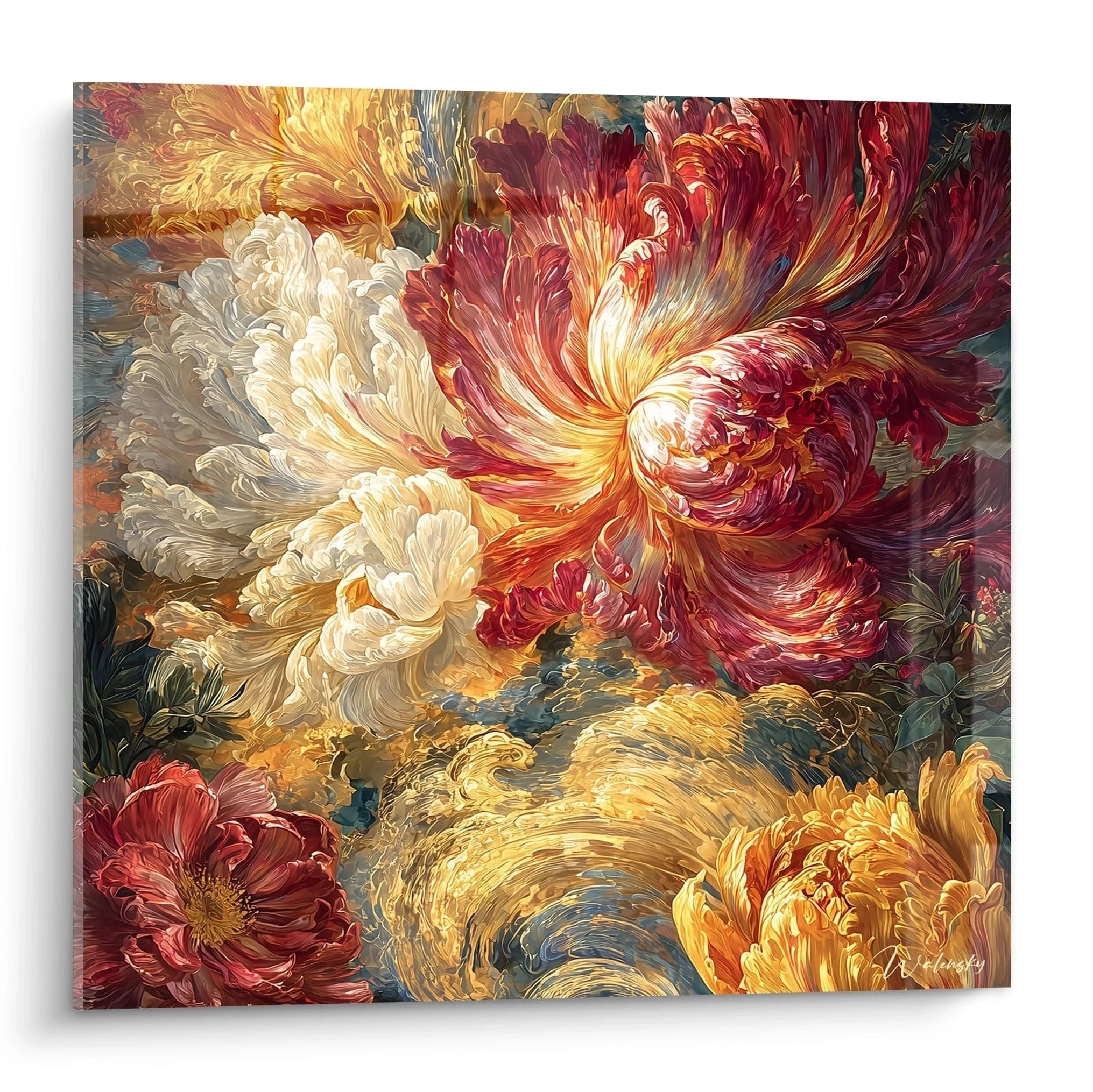
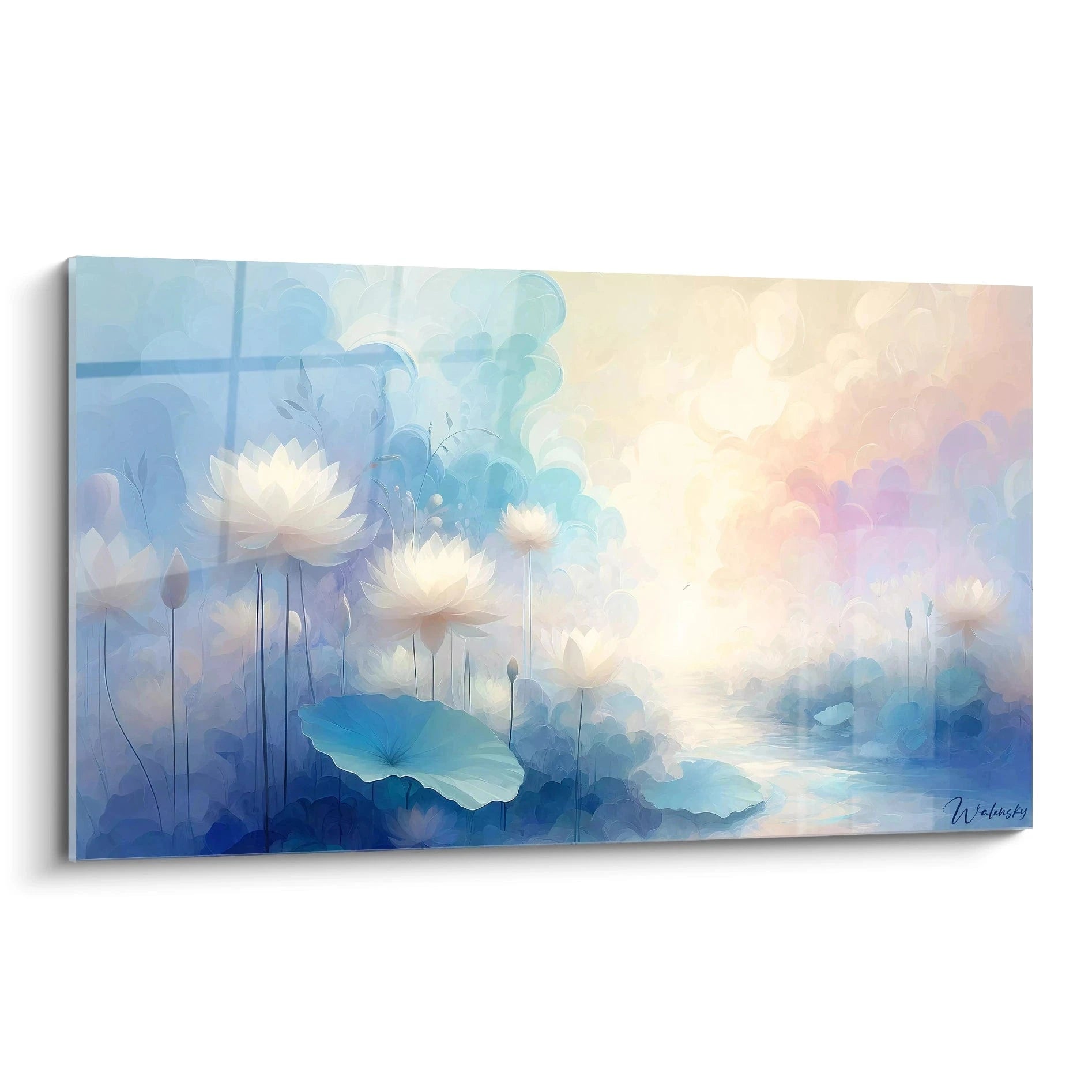
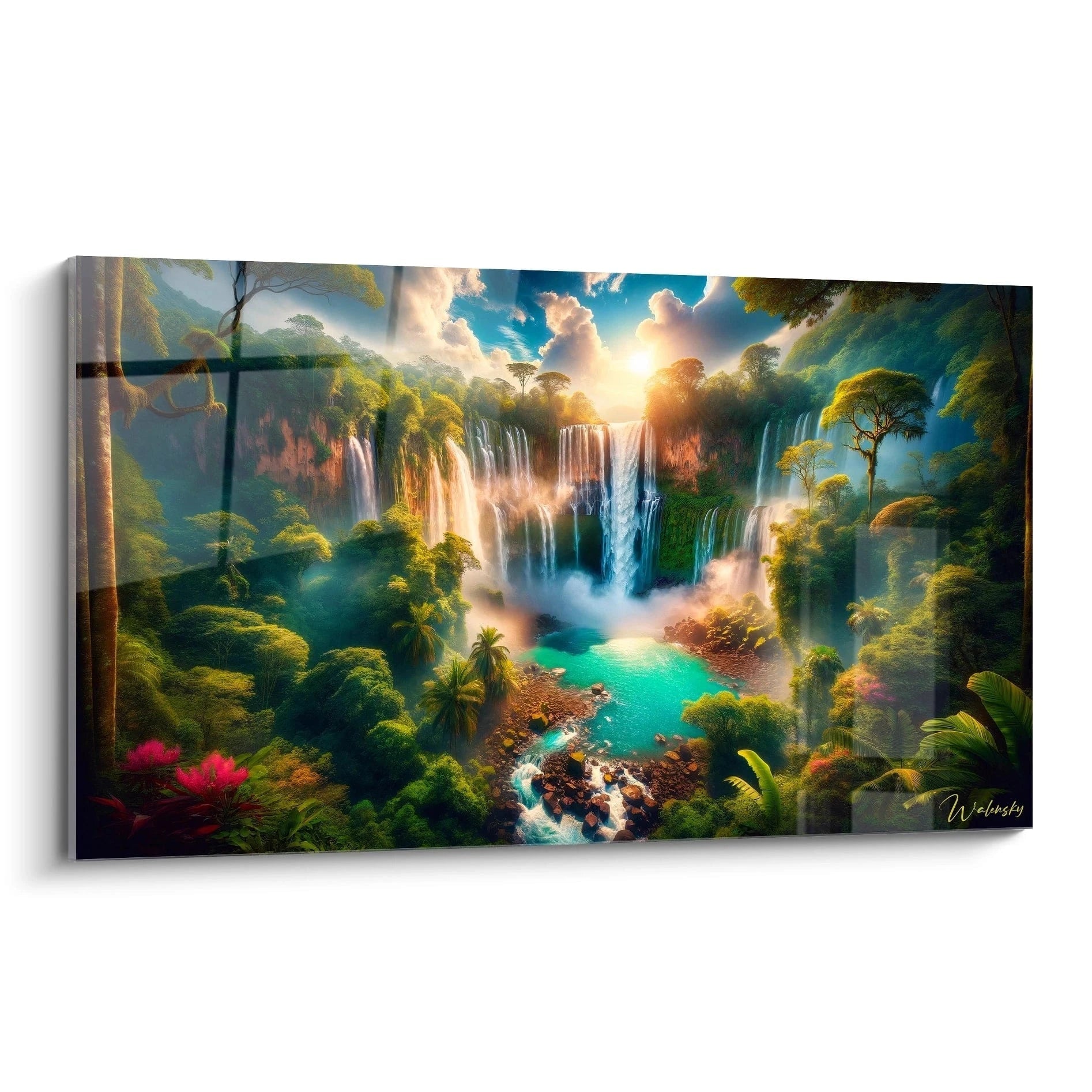
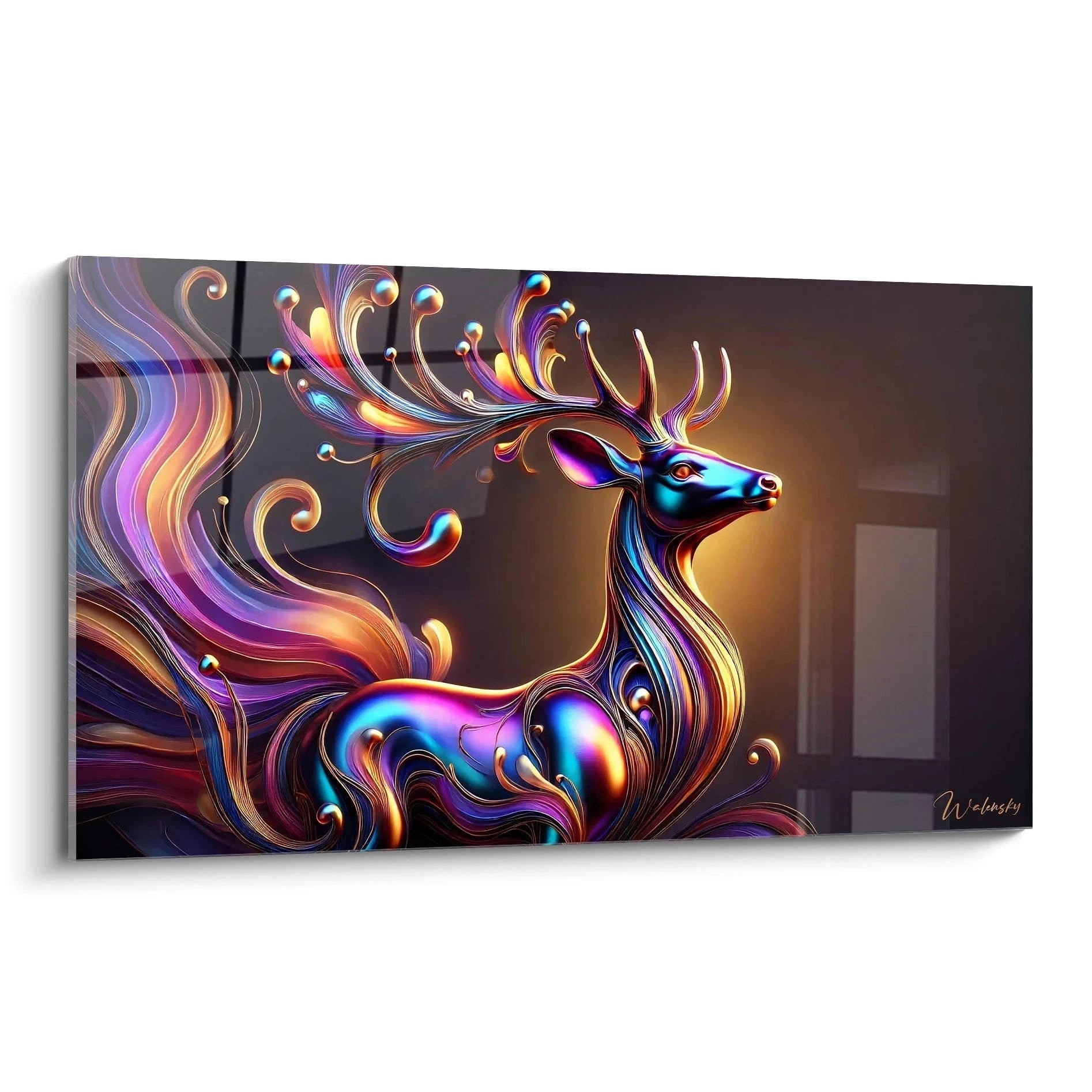
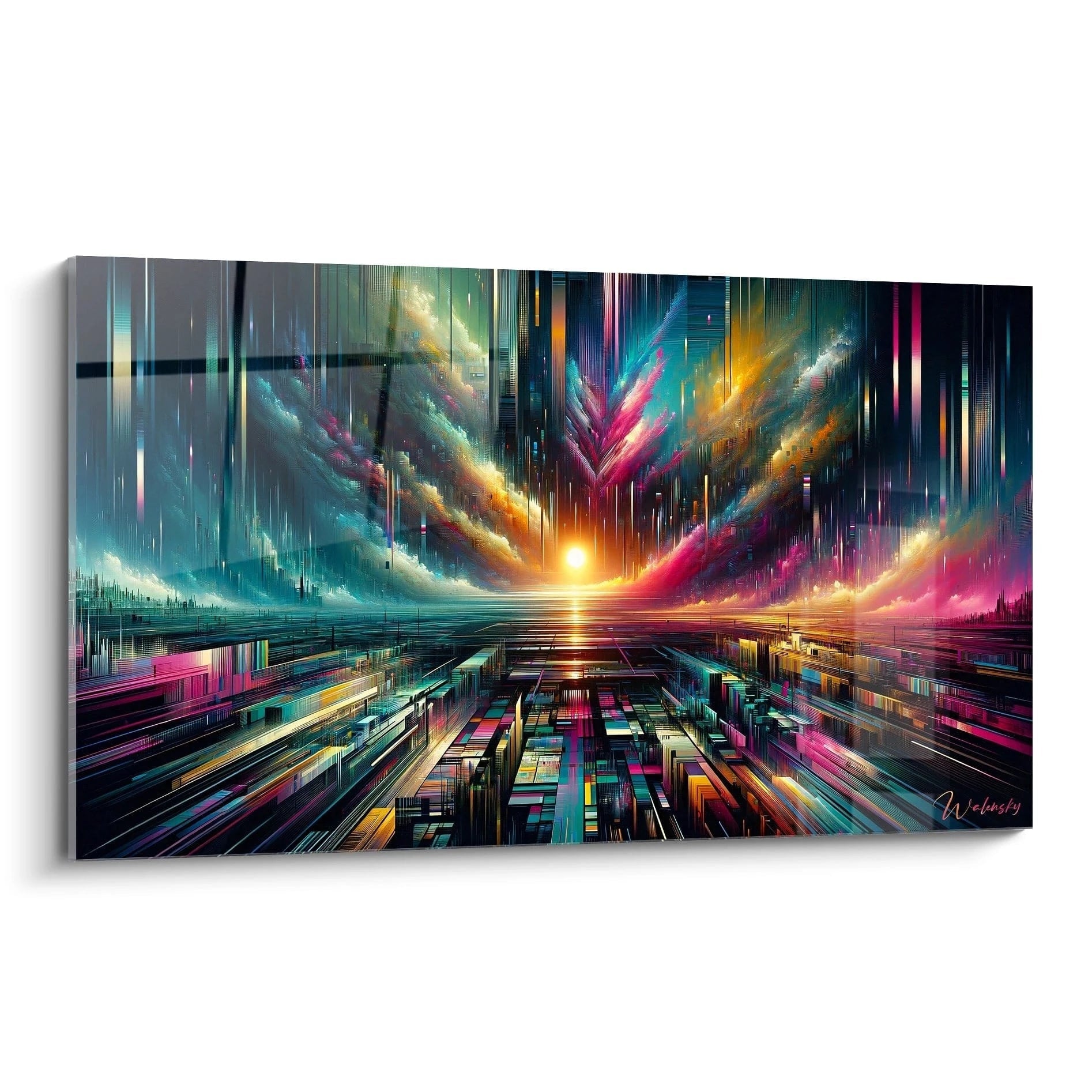
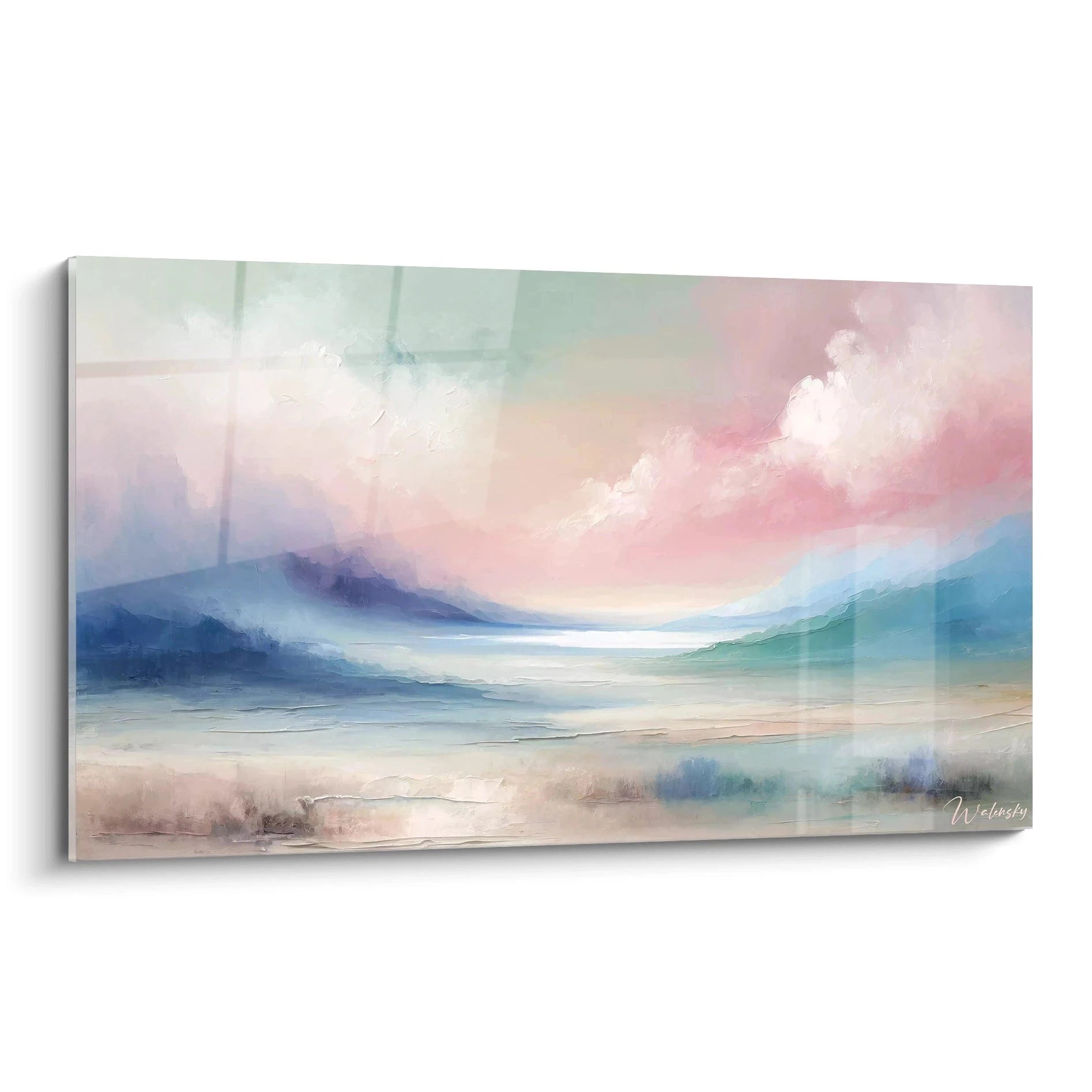

Secular Meditation with a Painting, A Visual Anchor for Mindfulness
October 11, 2025 · 16 min read · by Walensky
Returning home after a stressful day, you settle into your living room to find a moment of calm, but your gaze wanders aimlessly or falls on the blank television screen. Unable to concentrate, your mind continues to wander through the worries of everyday life.
Silence feels heavy, inner restlessness persists. You try to close your eyes and meditate, but it's no use: without a visual anchor, your attention disperses like leaves in the wind.
You’ve tried guided meditation apps, online courses, even a few sessions at a specialized center. But at home, in your own space, mindfulness seems inaccessible. You feel guilty for not succeeding and wonder if meditation is really right for you.
Rest assured: it's not a lack of willpower on your part. The problem is that our brain needs a soothing visual support to anchor attention and facilitate the transition to a meditative state, especially in a familiar environment full of distractions.
By the end of this article, you will know how to transform a simple wall art piece into a true secular meditation support, and discover an accessible practice that naturally integrates into your daily life, without any religious connotation.
Why is your living space sabotaging your meditation attempts?
Meditating at home presents a unique challenge: unlike a dedicated studio or natural space, your living room is full of elements that remind you of your daily obligations. Without an appropriate focal point, your mind remains connected to this “action” mode and refuses to switch to contemplation. It's like trying to fall asleep in an office: the environment sends the wrong signals to your brain.
🏠 Real testimonial: Sarah, an interior architect, recently confided in me: "I had created a meditation corner in my living room with a cushion and a candle. But every time, my gaze drifted to the pile of mail on the console or the remote control on the coffee table. I realized that I needed something more immersive, which really captures my visual attention."
Conversation with a decor expert
Art as a bridge to serenity: A suitable painting acts as a "visual switch" that signals your brain to transition from "daily life" mode to "contemplation" mode. You will feel this transition within the first 30 seconds of contemplation.

What’s really happening when you can't meditate at home
You sit with the best intentions, but three situations repeat: either your mind races over tomorrow's to-do list, or you fall asleep in the armchair, or you give up after two minutes feeling "bad at meditation".
What’s really happening is that your visual cortex remains in an active state and continues to scan the environment for familiar stimuli. Without a suitable focal point, it keeps your nervous system in a minimal alert state, preventing deep relaxation.
It's like trying to fall asleep with a flickering night light: even with your eyes closed, part of your brain remains "connected" to the outside world.
First obstacle: lack of ritual transition
Contrary to what many think, meditation doesn’t begin when you close your eyes. It starts with a transition phase that allows the nervous system to gradually switch from "action" mode to "reception" mode.
Imagine your mind is like a radio: to pick up a soothing station, you must first stop actively searching for other frequencies. Looking at a harmonious visual element plays this role of "fine tuning".
This transition phase directly influences the quality of your meditation and your ability to maintain attention effortlessly. The smoother and more gradual it is, the more accessible and sustainable the meditative state becomes.
🔍 Quick test: Look fixedly at a point on your wall for 30 seconds, then observe your breathing rate. You will notice that it naturally slows down: this is the power of directed visual focus.
Second obstacle: cognitive overload of the environment
Your brain constantly processes the visual information in your space, even unconsciously. Every familiar object activates associative memory networks that maintain a minimal level of mental activity.
It's like trying to concentrate in a library where all the books remind you of tasks to do: even without looking at them directly, their mere presence creates a cognitive "background noise".
This unconscious visual pollution exhausts your attentional reserve and makes meditation more laborious than it should be, creating a natural resistance to practice.
Third obstacle: lack of emotional anchoring
Effective meditation requires a positive emotional component: a feeling of safety, beauty, or inspiration. Without this grounding, the practice becomes purely technical and loses its transformative power.
An empty or "neutral" space can paradoxically generate anxiety in some people, as it provides no reassuring stimulus to balance introspection. That's where a visually chosen element becomes valuable.
Art has this unique ability to instantly evoke positive emotional states and create a bubble of serenity in your daily environment.
The 3 signs that your space is sabotaging your practice:
- Your eyes are constantly searching for a place to rest: Your gaze "flutters" during meditation, indicating that the environment lacks a soothing focal point
- You feel restless even when sitting still: The lack of visual transition keeps your nervous system in "action" mode
- You quickly give up: Without positive emotional anchoring, your brain resists the contemplative state and prioritizes activity
The trigger: the quality of your visual focus
What really makes a difference is your environment's ability to naturally guide your attention towards a receptive state. A deliberately chosen artwork acts as a "gentle magnet" for the mind, creating an effect of effortless concentration that facilitates mindfulness. You'll recognize it by this feeling: as soon as your gaze rests on the work, your breathing spontaneously slows down.
The 3 breaths rule: A good visual meditation support generates a perceptible calming in less than three conscious breaths. If that's not the case, the chosen element is not suitable for your temperament.
| ❌ Standard space | ✅ Space with visual support | 💡 Why it works | 🎯 Perceived benefit |
|---|---|---|---|
| Gaze searching for a place to rest | Natural and immediate focus | Defined visual anchor point | Effortless concentration |
| Thoughts racing | Mind gradually settles | Ritualized transition to contemplation | Calming in less than 2 minutes |
| Persistent feeling of restlessness | Progressive relaxation of the nervous system | Soothing stimulus for the brain | Deep relaxation accessible |
| Rapid abandonment of practice | Natural desire to prolong the moment | Positive emotional anchoring | Sustainable pleasure and motivation |

The gentle method: transforming your artwork into a meditation guide
Don't worry, you don't need to revolutionize your interior or learn complex techniques. This approach follows a natural progression in three steps, like cultivating an indoor garden: first prepare the ground (choosing and installing), then plant the seeds (creating the ritual), and finally nurture the growth (developing your practice). You will feel a deeper connection with your space and your contemplative practice at each step.
🎨 Overview of transformation: Step 1 - Select your artwork and install it ideally (immediate satisfaction of seeing your space transformed). Step 2 - Create your personal contemplation ritual (pleasure of discovering your natural rhythm). Step 3 - Deepen and personalize your practice (pride in having developed your own meditation method).
Step 1: Choose and install your visual companion
Starting with this step is crucial as it lays the energetic foundations of your meditation space. Just like planting a tree, choosing the location and preparing the ground well determines all future growth. Once this step is complete, you will immediately feel that your living room has gained a contemplative dimension that did not exist before.
Criteria for choosing your meditative artwork
- Soothing color palette: Prioritize natural tones, deep blues, forest greens or soft ochres which naturally activate the relaxation response of the nervous system. Avoid saturated or fluorescent colors that stimulate rather than soothe. You will recognize them by this feeling: they "rest" your eyes instead of stimulating them. Non-narrative composition: Opt for abstract works, minimalist landscapes or simple geometric patterns that do not tell a complex story. The brain can then rest without having a "problem" to solve visually. Impact: your attention remains available for pure contemplation. Harmonious format and proportion: Choose a size that balances presence and discretion - neither too small to get lost, nor too large to dominate. The ideal format: you can embrace the entire work with one glance without moving your head, creating a soothing and contained visual field.
Now let's move on to the strategic installation of your support
Positioning for maximum effectiveness
Determine the optimal height: Install the artwork so that its center is at eye level when you are in a meditation position (sitting). This position allows a natural and relaxed gaze without neck tension. The technical rule: if you measure 1m70, the center of the work should be about 1m20 from the floor.
⏱️ Time: 10 minutes | ✅ Success when: Your gaze naturally rests on the artwork without neck effort | ⚠️ Attention: Many install too high out of habit "living room", whereas meditative use requires a "sitting" height
Choose complementary lighting: Plan for a soft, indirect lighting that reveals the nuances of the artwork without creating reflections. An accent lamp directed at the wall (not towards you) or LEDs behind the frame create this cozy atmosphere. The goal is to be able to contemplate the work in warm light even in the evening.
⏱️ Time: 15 minutes | ✅ Successful when: The artwork remains visible and attractive even in soft lighting | ⚠️ Attention: Avoid direct lighting that creates reflections and breaks the contemplative effect
Create a visual clearance zone: Free up the space immediately around the painting from any distracting objects (photo frames, bushy plants, colorful objects). This visual breathing room allows the artwork to fully exert its calming effect. Imagine creating a "halo of silence" around your meditative support.
⏱️ Time: 20 minutes | ✅ Successful when: Your gaze naturally goes towards the painting without being caught by something else | ⚠️ Attention: Resist the temptation to "decorate" around it - simplicity is your ally
✨ Validation test: Sit in your meditation spot and look at your painting for one minute. Your breathing should naturally slow down and your shoulders relax. If you feel agitation or indifference, adjust the position or lighting. A successful installation generates a gentle and immediate attraction towards contemplation.
— Our selection


OUR RECOMMENDED PRODUCTS
Step 2: Develop your personalized contemplation ritual
Now that your visual support is in place, you will discover your natural meditation rhythm. This step transforms the simple presence of the work into a true structured practice. This is where the magic happens: your relationship with space becomes ritualized and the calming effect is automatically multiplied.
Building your meditation entry sequence
Create your start signal: Establish a 30-second micro-ceremony before each session: adjust the lighting, put your phone in airplane mode, take three deep breaths facing the painting. This sequence "programs" your brain and creates a clear transition between daily life and contemplation.
⏱️ Time: 2 minutes of setup | ✅ Successful when: You feel your inner state change from the first gestures | ⚠️ Attention: Keep the ritual simple - too many steps hinder spontaneity
Develop your contemplative gaze technique: Gently focus your gaze on the center of the artwork, without trying to analyze or interpret. Let your eyes "rest" on the colors and shapes as you would lie in a hammock. When your mind wanders, simply bring your gaze back to the painting, effortlessly and without judgment.
⏱️ Time: 5-15 minutes per session | ✅ Success when: You can remain present with the artwork without particular effort | ⚠️ Caution: Do not force concentration - cultivate a relaxed attention instead
Integrate conscious breathing: Naturally synchronize your breath with your contemplation. Inhale as you "welcome" the image, exhale as you release tension. This coordination of breath and vision amplifies the relaxing effect and anchors a deeper meditative state.
⏱️ Time: Automatic after 1 week | ✅ Success when: Breath and gaze find their rhythm effortlessly | ⚠️ Caution: Avoid controlling your breath - let it regulate naturally
Step 3: Deepen and personalize your advanced practice
You now master the basics and regularly feel the benefits of your practice. This third step elevates you to intuitive meditation, where your painting becomes a true "silent teacher" capable of guiding you towards increasingly subtle and nourishing states of consciousness.
Advanced visual meditation techniques
Explore detail meditation: Choose a specific element of your painting (a color, a shape, a texture) and immerse your attention in it throughout the session. This microscopic focus develops remarkable concentration and reveals unsuspected nuances in the artwork.
⏱️ Time: 15-30 minutes | ✅ Success when: You discover new aspects in a familiar work | ⚠️ Caution: Maintain a curious rather than analytical gaze - contemplate rather than study
Develop transition meditation: Observe how your gaze naturally travels from one area of the painting to another. Follow these spontaneous movements of attention as you would follow a path in a forest. This practice refines your awareness of subtle perceptual processes.
⏱️ Time: 20 minutes | ✅ Success when: You perceive the "paths" of your gaze | ⚠️ Caution: Do not impose a trajectory - observe what emerges spontaneously
Integrate "dialogue" sessions with the artwork: Pose an internal question or intention to your painting, then observe which sensations or insights emerge during contemplation. This approach transforms your practice into a true creative introspection guided by art.
⏱️ Time: Variable depending on inspiration | ✅ Successful when: You receive regular insights or clarifications | ⚠️ Attention: Remain receptive without forcing "answers" - let what comes emerge
The rule of natural progression: Move to the next step when the previous one becomes fluid and enjoyable, with no further effort. Your body will indicate the right time with a feeling of "thirst" for deepening the practice.
You now have developed a personalized meditative practice and discovered the subtleties of your unique relationship with contemplative art. This mastery gives you a valuable advantage: the ability to instantly create a state of serenity, even in a familiar and everyday environment.
🎯 Master practitioner tip: When you master your main artwork, add a seasonal rotation with 2-3 different works. Changing artworks every 3 months rekindles contemplative curiosity and develops your meditative adaptability, like a musician who enriches their repertoire.
Beginner question
"What if I don't feel anything special when looking at my artwork? I'm afraid of making the wrong choice and losing my investment..."
This concern is perfectly normal and even reveals a fine sensitivity to your environment. Connecting with a work doesn't always happen instantly - sometimes it develops gradually, like a friendship that deepens. The important thing isn't to feel an immediate "love at first sight", but to observe whether the artwork calms you rather than agitates you. Even a neutral sensation of “visual rest” is an excellent starting point for developing your contemplative practice.
💡 Compatibility test: Before any purchase, spend 5 minutes looking at the image of the artwork on your screen in your future meditation space. If it doesn't generate any resistance or agitation, that’s already a good sign of compatibility.
— You may also like


Pitfalls to avoid to preserve the effectiveness of your practice
Now that you know the method, I want to warn you about common mistakes that can compromise your results. These pitfalls are tempting because they seem logical, but they subtly sabotage the desired effect. Recognizing them will save you weeks of frustration.
- ⚠️ Choosing a work too visually stimulating: It's tempting to opt for a very colorful or complex image that "fills your eyes". But numerous details and bright colors keep the brain in analysis mode rather than contemplation mode. Prefer elegant sobriety that allows the mind to settle. It’s a normal reflex to want to “get your money’s worth” visually.
- 📱 Keeping your phone within reach: Even on silent, the mere presence of your phone in your field of vision creates an unconscious attentional tension. Your brain remains in "standby" mode for potential notifications. As a result: it's impossible to achieve deep relaxation. Place it in another room or in a closed drawer.
- 🔄 Changing artwork too often: The desire to vary is understandable, but familiarity with your painting is part of the relaxation process. Changing every week prevents this sense of security from settling in. Give yourself at least 2-3 months with the same work before considering a change.
- ⏰ Imposing a rigid fixed duration: Wanting to "meditate exactly for 20 minutes" creates a time pressure that undermines the spontaneity of the practice. Some days, 5 minutes are enough; other times, you will want 30 minutes. Listen to your natural rhythm rather than following strict external rules.
- 🎯 Seeking "effects" or special "visions": Expecting extraordinary experiences turns meditation into a performance to be achieved. The effectiveness lies in simplicity: sit, breathe, contemplate. Subtle benefits (better sleep, less stress) appear naturally without being sought.
🛡️ Weekly check-ins: Check that your practice remains enjoyable (no effort or constraint), that you are willing to return spontaneously, that your general stress level decreases, and that you feel more serenity in your living room even outside of sessions. Warning signs: resistance to the practice, increased agitation, or feeling like you're "suffering" through the meditation moment.
— In the same vein


Frequently asked questions about meditation with visual support
Most people feel an immediate soothing after the first 5-10 minute session. For lasting effects on stress and sleep quality, allow 2-3 weeks of regular practice (even 5 minutes daily are enough). To optimize: practice at fixed times to create a natural habit, like Marie who meditates every evening when she gets home from work and now sleeps much better.
An investment of €80-300 already allows you to obtain a quality artwork that will last for years. Prioritize color rendering and finish over size. A small, quality painting will be more effective than a large low-end print. Budget tip: first choose according to your aesthetic and meditative criteria; the investment will be justified by daily use for years.
Absolutely! A small space can even be more conducive as it is easier to control the atmosphere. In a studio, create a "contemplation corner" with your painting and a dedicated cushion or armchair. The cocooning effect often amplifies the feeling of serenity. Minimum distance: 1.5 meters between you and the artwork for optimal visual comfort.
For meditation, the quality of the visual rendering is more important than authenticity. A high-definition reproduction on art paper or canvas with good colors will be more effective than a dull or poorly preserved original. The key: pleasant textures, faithful colors and absence of reflections. Many of our customers get excellent results with professionally printed frames.
Start with a single painting for at least 2-3 months to establish a soothing familiarity. Then, you can introduce seasonal rotation with a maximum of 2-3 artworks. Changing allows to rekindle interest and develop meditative adaptability. Avoid multiplying works simultaneously in the same space - this disperses attention instead of focusing it.
Your new relationship with domestic serenity
In a few weeks, your living room will have gained a contemplative dimension that you did not suspect. Your loved ones will notice this particular atmosphere that now reigns in your home, this quality of presence and calm that transforms the energy of your home. You will have developed this valuable ability to create an island of peace at the heart of everyday life, simply by looking at your visual companion.
This practice goes far beyond the framework of meditation: it develops your aesthetic sensibility, your attention span and your intuitive relationship with art. These skills nourish your creativity, improve your relational presence and enrich your way of inhabiting space. You will discover a new confidence in your ability to create your own well-being method.
Understanding was indeed the most delicate part - now that you know how to do it, the first step is simply to identify the ideal location in your living room and project yourself into your future contemplation sessions. Your space awaits this intention to reveal its potential for serenity.
✨ Your transformation starts now: You now possess the keys to a personalized meditative practice, adapted to your lifestyle and space. Daily serenity is no longer a distant aspiration, but an accessible reality within sight.
Also read: 🌱 Read more articles on art and well-being
</div
Explore our collections


