

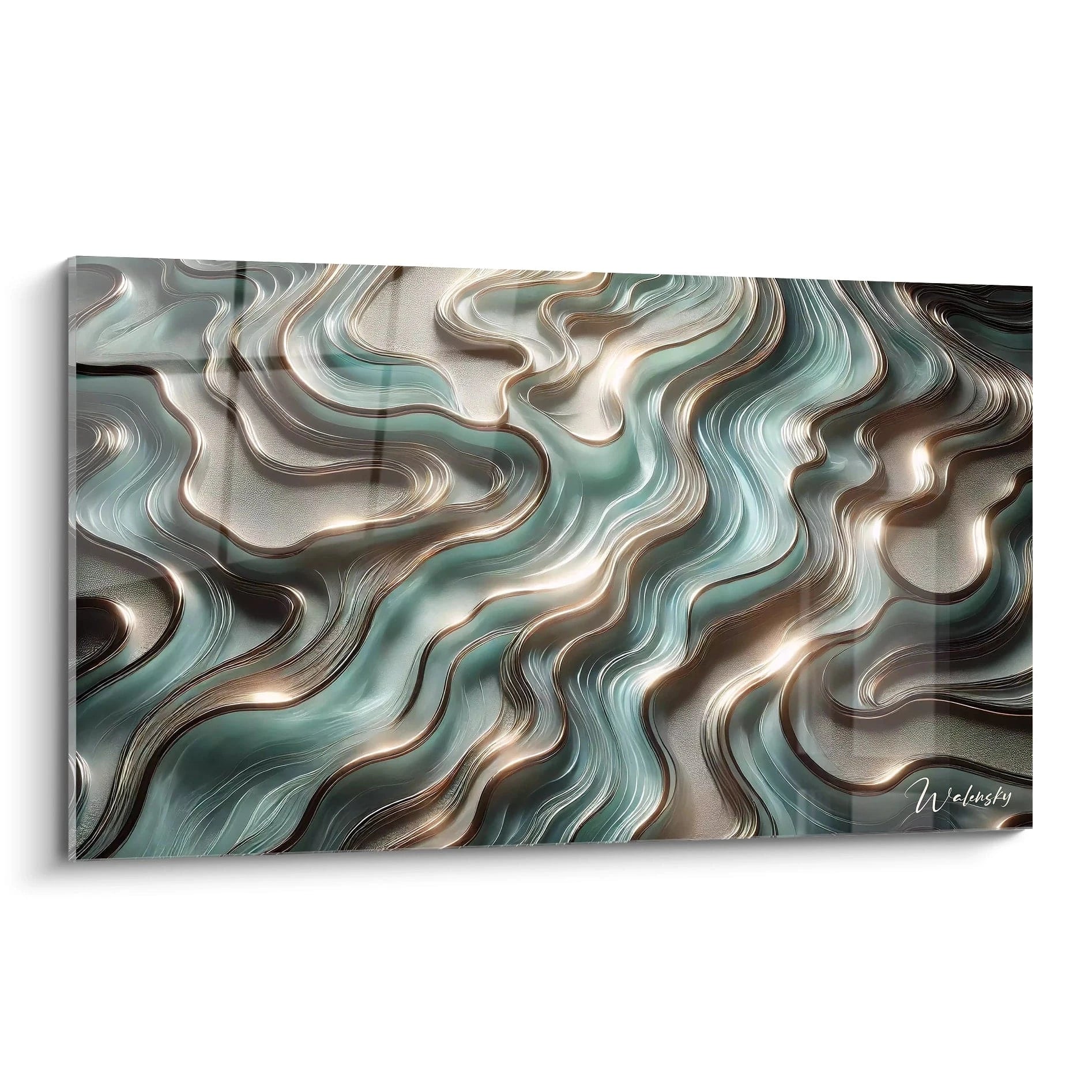






A Wall Artwork as a Bridge Between Several Traditions
October 11, 2025 · 17 min read · by Walensky
You've been staring at that blank wall in your living room for weeks, searching for that unique piece that will tell your story without falling into decorative clichés. Each gallery you visit leaves you with the same feeling: these works speak of a single culture, a single era, but not of YOU.
Your mixed heritage, your travels, your multiple influences... How do you translate this richness onto your walls? You feel frustrated by not finding a work that reflects your complex and modern identity, made up of several heritages that blend harmoniously.
Traditional solutions have disappointed you: either it's too folkloric or too modern and cold. Classic decorating advice doesn't take into account this new reality where our identities are plural, where our interiors must reflect our multiple cultural influences.
It’s normal to feel lost in this quest. The decorative art market remains too compartmentalized, designed for "pure" identities that no longer correspond to our cosmopolitan era. Your search for multicultural authenticity is legitimate and necessary.
By the end of this article, you will know exactly how to choose a wall art piece that unites several cultural traditions, creating that unique visual bridge that tells your personal story while enriching your decor with authentic cultural depth.
Why does your decoration need cultural dialogue now?
Our era is redefining decorative identity. Waiting longer risks leaving you with a “flat” décor that doesn’t truly reflect you. Imagine in a year looking at the same wall and thinking "this doesn't represent me". It's like always wearing the same clothes without ever expressing your personality: you miss out on your potential for expression.
🎨 Customer testimonial : "I grew up between France and Morocco, my wife is of Japanese origin. For years, our living room was neutral, without soul. When we found this painting that mixes Arabic calligraphy, geometric patterns and zen serenity, our guests finally understood who we really were."
Conversation with a decor expert
The golden rule of eclectic decor: A successful multicultural work unites through emotion before distinguishing by technique. When traditions dialogue rather than oppose, your space gains depth and personal authenticity. Visible result in a few days: your guests ask questions, are interested, understand better who you are.

What really happens when you're looking for a multicultural artwork
You recognize yourself in these situations? You go around and around in galleries without finding "the" piece. You hesitate between several works that please you separately but seem incompatible. You postpone this important decision because "it’s complicated".
What really happens is that you are looking for a work that does not exist in traditional circuits. Your multicultural vision requires a different approach, more creative and personalized. It's not you who lack taste, it's the offer that doesn't match your reality.
Imagine an architect who would only draw one-room houses: he would miss all the richness of modern living spaces. This is exactly what happens with traditional decorative art in the face of our multiple identities.
The first hidden cause: the trap of "pure" culture
Contrary to what we think, artistic traditions have always mixed. “Pure” art from a single culture is often a modern construction. Historically, the most beautiful works are born from encounters between civilizations.
It's like cooking: the most delicious dishes often come from the encounter between different culinary traditions. Royal couscous combines Berber, Arab and Mediterranean influences. Why should your decor be any different?
This revelation changes everything in your decorative approach. You are no longer “mixing” artificially, you are participating in a millennial tradition of cultural exchanges. This transforms your search from a problem into a creative opportunity.
🔍 Verification test: Carefully look at three famous "traditional" works of art. Look for external influences in the patterns, colors, techniques. You will discover that artistic “purity” is a modern myth.
We often believe that certain aesthetics cannot coexist. In reality, what matters is the common emotion rather than the technique. Two traditions can seem visually opposed but share the same spiritual quest or the same approach to beauty.
It's like two people who speak different languages but feel the same emotion when listening to music. The visual language may vary, but the emotional impact unites traditions beyond appearances.
When you understand this, your decorative eye is freed from arbitrary constraints. You begin to see the subtle links between your influences, those invisible threads that connect your different cultural sensibilities.
The neglected time factor
Few people realize that traditions are constantly evolving. What is considered "authentic" today was often considered "modern" or "mixed" in its time. Berber art has integrated Arab influences, Japanese art has been nourished by Chinese influences.
Spot this phenomenon in your own cultural heritage: observe how your family traditions have evolved, adapted, and incorporated new elements over generations. That's exactly the natural process you are reproducing in your decor.
This awareness releases a new creative energy. You are not betraying any tradition, you are extending it. Your living room becomes a space where heritage is reinvented rather than frozen.
3 signals that reveal a successful multicultural work:
- The "conversation" effect: Elements seem to respond to each other rather than ignore each other - like a visual dialogue where each tradition enriches the other without dominating it
- Emotional recognition: You feel several "nostalgias" simultaneously - different parts of your cultural identity feel represented and valued
- Accessible universality: Non-initiates understand the emotion even without knowing the references - the work speaks beyond specific cultural codes
The trigger element: personal narrative consistency
What really makes the difference is when your personal story becomes the guiding thread that unites the different traditions. It's like a conductor harmonizing different instruments: your unique experience creates the common melody. Identify key moments in your journey, your significant encounters, your cultural discoveries - these personal elements naturally reveal which traditions can dialogue in your space.
The rule of narrative consistency: A successful multicultural work tells YOUR story before representing cultures. Check immediately: look at the work and ask yourself if it evokes specific memories of your journey. If so, it will naturally find its place in your decor.
| ❌ Traditional approach | ✅ Multicultural approach | 💡 Why it works | 🎯 Concrete benefit |
|---|---|---|---|
| Searching for "pure" art from a single culture | Identifying bridges between your influences | Traditions nourish each other | Unique decor that resembles you |
| Avoiding "mixes" out of fear of chaos | Creating an emotional harmony | Emotion unites more than technique | Warmer and more personal space |
| Following established decorative codes | Writing your own visual story | Your journey creates consistency | Enriching conversations with your guests |
| Waiting to find "the" perfect piece | Composing your dialogue gradually | Multicultural art is built over time | Constant evolution of your decor

How to create this visual bridge between your traditions
Rassurez-vous, creating this multicultural harmony is more accessible than it appears. We will proceed like a luthier who tunes several instruments to create a common melody. Each step reveals a new dimension of your decorative identity. At the end, you will have this unique work that unites your different influences in an authentic and personal visual dialogue.
🎯 Overview of your transformation: We begin by identifying your cultural roots (foundations), then we discover the natural visual links between them (structure), and finally we choose the work that materializes this harmony (accomplishment). At each step, you gain clarity on your decorative identity.
Step 1: Mapping Your Authentic Cultural Influences
Before searching for the perfect artwork, you must understand your own cultural geography. It's like planting a tree: the roots determine the solidity of the whole. This step reveals influences that you may have neglected but are essential to your visual identity.
What You Need for This Exploration
- Personal notebook: Something where you can freely scribble, not a digital medium. Handwriting activates a different emotional memory. Choose one that makes you want to write, not a precious notebook that intimidates you. Avoid your phone: notifications break deep reflection.
- Family and travel photos: Your personal visual archives reveal unconscious cultural patterns. Prefer physical photos over digital albums: they activate a richer tactile memory. Look for the ones that still move you, not necessarily the most technically "beautiful".
- Personal cultural objects: Jewelry, fabrics, books, instruments... Anything that carries a cultural memory in your environment. Even damaged or broken items count: they tell a story. These physical witnesses reveal your deep attachments beyond superficial tastes.
Now, let's move on to the practical exploration of your multicultural identity.
How to Reveal Your Authentic Influences
The emotional inventory: List all the places, cultures, traditions that have marked you emotionally. Also note why each influence touches you: is it the color, the music, the craftsmanship, the values? This emotional mapping reveals your true cultural affinities beyond family origins.
⏱️ Time: 30 minutes | ✅ Successful when: You have at least 5 distinct influences with their precise emotional reasons | ⚠️ Attention: Don't limit yourself to "exotic" cultures - your childhood region counts too
The three-generation method: Trace back three generations in your family (you, parents, grandparents) and identify the traditions, objects, habits of each era. This reveals cultural evolutions that you unconsciously carry. Note also the breaks: they are often a source of decorative creativity.
⏱️ Time: 45 minutes | ✅ Success when: You see the cultural continuities and ruptures of your lineage | ⚠️ Attention: Do not judge past choices, observe the persistent patterns
Analysis of visual crushes: Browse your favorite photos, your Pinterest inspirations, your past decor purchases. Identify the colors, shapes, materials that recur. These preferences reveal your cultural "visual DNA", often more precise than your declared origins.
⏱️ Time: 20 minutes | ✅ Success when: You identify 3-4 recurring visual patterns | ⚠️ Attention: Distinguish your true preferences from current trends
✅ Validation of the step: Your map is complete when you can explain in one sentence why each influence touches you personally. If you hesitate on an influence, explore the associated memory. This emotional clarity will guide all your subsequent decorative choices.
— Our selection


OUR RECOMMENDED PRODUCTS
Step 2: Identify visual bridges between your cultures
Now that you know your influences, let's discover the natural links that unite them. This is when the magic happens: you realize that your "different" cultures often share common aesthetic values. This discovery transforms your decorative approach from constraint to creative opportunity.
Tools to reveal connections
- Visual inspiration boards: Create collages for each culture that influences you. Use magazines, prints, fabric samples. The physical support reveals connections that the screen hides. Look for a minimum A4 format: too small limits creativity. Custom color wheel: Identify the emotional palette of each culture that touches you. Note the precise nuances, not just "red" or "blue". This precision reveals unsuspected harmonies between seemingly opposing traditions. Cultural motif notebook: Collect shapes, symbols, patterns from your various influences. Draw or photograph, the important thing is to build your personal visual library. These motifs often reveal common geometries between distant cultures.
How to reveal these hidden connections
The Method of Common Emotions: For each culture identified, note the main emotion it evokes (serenity, joy, nostalgia, strength...). Then group those that provoke similar emotions. These emotional groups reveal your future natural decorative dialogues.
⏱️ Time: 25 minutes | ✅ Success when: You have 2-3 coherent emotional groups | ⚠️ Attention: A culture can belong to several emotional groups
Analysis of Artistic Techniques: Identify common skills between your cultures: metalwork, embroidery, ceramics, calligraphy... These shared techniques create obvious visual bridges. The same artisanal gesture can unite traditions geographically distant.
⏱️ Time: 30 minutes | ✅ Success when: You find at least 2 common techniques | ⚠️ Attention: Also look for complementary techniques
Research of Aesthetic Values: Each culture promotes certain values: balance, abundance, simplicity, complexity... Identify these aesthetic philosophies and find those that resonate together. These common values will guide your future decorative choices.
⏱️ Time: 20 minutes | ✅ Success when: You identify your personal aesthetic philosophy | ⚠️ Attention: Your values may evolve differently from your origins
🔍 Validation of Connections: Your cultural bridges are solid when you can explain why two seemingly opposite traditions harmonize in your vision. If the connection seems forced, explore the common emotion that unites them. This emotional evidence guarantees decorative harmony.
Step 3: Select the artwork that materializes your dialogueHere you are at the most rewarding step: choosing the work that crystallizes your multicultural vision. Armed with your cultural map and identified connections, you know exactly what you're looking for. This clarity transforms your search from wandering to a precise and effective quest.
Criteria for selecting a multicultural artwork
- Mixed technique or mixed inspiration: Look for works that consciously mix several artistic traditions. Artist trained in multiple cultures, combined techniques, or contemporary reinterpretation of traditional arts. Avoid artworks that "copy" without understanding the cultural essence. Personal emotional resonance: The work should evoke several of your cultural memories simultaneously. Faced with the right piece, you feel this multiple recognition, this sensation of “reunions” with different parts of your identity. Authentic execution quality: Prioritize creations that respect traditional know-how while reinventing it. Noble materials, mastered techniques, careful finishes. This quality honors the traditions represented and ensures the durability of your investment.
How to recognize your perfect artwork
The emotional resonance test: Close your eyes for 10 seconds when facing the artwork, then look at it again. Immediately note your first emotions and memories. If several of your cultural influences spontaneously manifest themselves, this is a great sign of deep compatibility.
⏱️ Time: 2 minutes per artwork | ✅ Success when: You feel at least 3 distinct cultural emotions | ⚠️ Attention: Be wary of artworks that only provoke one emotion, even if strong
Technical and cultural assessment: Verify that the artist truly masters the traditions they mix. Research their training, travels, declared influences. An authentic multicultural work is born from in-depth knowledge, not superficial appropriation.
⏱️ Time: 15 minutes of research | ✅ Success when: You understand the artist's cultural journey | ⚠️ Attention: Distinguish creative fusion and commercial pastiche
Projection into your space: Visualize precisely the artwork in your interior. Imagine explaining it to your loved ones, looking at it every day, making it evolve with other decorative elements. This projection reveals long-term compatibility with your lifestyle.
⏱️ Time: 10 minutes of visualization | ✅ Success when: You naturally imagine it in your daily life | ⚠️ Attention: If you have to "force" the projection, the artwork is not right for you
🎯 Final validation: Your perfect artwork combines technical expertise, emotional resonance and decorative harmony. When facing it, you feel that quiet certainty: it was waiting for you. If you are still hesitating, wait 24 hours then come back to see it. The right multicultural work asserts itself naturally.
The rule of cultural progression: Start with a "bridge" artwork that unites 2-3 of your main influences, then gradually enrich your decorative dialogue. Patience and consistency create more harmonious interiors than rapid accumulation. Multicultural art is built like a conversation: each addition enriches the existing dialogue.
You now master the fundamentals of cultural decorative dialogue. Here are the subtleties that distinguish amateurs from true connoisseurs, those details that transform a beautiful decoration into an authentic and personal cultural experience.
🎭 Connoisseur tip: Create "cultural echoes" in your space: if your main painting unites Japanese and Berber influences, add a cushion with geometric patterns or pottery with clean lines. These subtle reminders amplify the dialogue without overloading it. The effect is striking: your decoration gains narrative coherence.
Frequent question from our clients"How to know if my multicultural artwork won't become tiresome over time?"
This question reveals an important decorative wisdom. A genuine multicultural work grows with you rather than fading. Unlike monochromatic pieces, it reveals new details as your personal evolution unfolds. A Berber motif may speak to you differently after a trip, a Japanese element taking on new meaning after a reading. It is this ability to evolve that distinguishes multicultural art from fleeting trends.
Anti-boredom test: Observe your work at different times of the day for a week. If it reveals new details or emotions to you, it possesses this multicultural richness that ages well. This is your guarantee of a lasting decorative investment.
— You may also like


Pitfalls to avoid in your multicultural quest
Warning, some mistakes can turn your good intentions into confusing decor. These errors are natural when you're starting out in multicultural art, but they are easily avoided with the right reflexes. Let's protect your decorative and emotional investment together.
- ⚠️ The compulsive collection trap: Wanting to represent ALL your influences at once. This impatience creates a visual clutter that undermines your intention. Each culture deserves its place and time. Start with your main duo or trio, then gradually enrich. Remember: even great museums organize their collections by theme.
- 🎭 The decorative folklorism error: Choosing "typical" works instead of works that touch you personally. This tourist-like approach betrays the authenticity of your approach. Always prioritize personal emotion over cultural representation. Your guests will feel the difference between authentic passion and contrived decor.
- 💰 The false economy of reproductions: Believing that a print is enough for a cultural dialogue. Multicultural art requires the tactile sensitivity and energetic presence of the original. A reproduction will never convey the necessary cultural depth. Better a small original work than a large reproduction.
- 🏠 Forgetting existing architecture: Ignoring your architectural environment when making your choice. Your multicultural artwork should dialogue with your space, not fight it. A Haussmannian apartment won't welcome a massive piece like a contemporary house. Respect this harmony.
- ⏰ The impatience of results: Expecting an immediate and total decorative effect. Multicultural art reveals itself gradually, like a friendship that deepens. Give yourself time to discover all the levels of reading of your work. This patience is rewarded by lasting decorative satisfaction.
🛡️ Error-proof verification system: Before any purchase, test these 4 points: Does the artwork evoke specific memories of your journey? Does it respect the scale of your space? Does it complement your existing decor? Do you feel ready to explain it to your loved ones? If one answer is no, be patient. Warning signs: purely aesthetic infatuation, commercial pressure, need to justify your choice.
— In the same vein


Your questions about multicultural wall art
Allow €300-800 for an average original piece (50x70cm), depending on the artist and technique. Multicultural artworks require more creation time, justifying this price. Optimize your budget by choosing medium rather than very large formats: emotional impact does not depend on size. Our customers spend an average of €500 and keep their artwork for over 10 years.
Tell your personal story rather than defending multicultural art. Share the memories that the artwork evokes, the links with your journey. This narrative approach resonates more than theoretical explanations. Example: "This calligraphy reminds me of my grandmother’s letters and that trip to Japan that marked me." Authentic emotion always convinces better than argumentation.
A small space can benefit even more from a well-chosen multicultural artwork. It creates visual depth that expands the perception of space. Favor formats up to 40x60cm maximum and harmonious tones with your walls. Avoid too contrasting colors in a small volume. Multicultural art brings richness without physical clutter.
Research the artist's training and background. An authentic multicultural creator has lived, studied or collaborated with the cultures they represent. Beware of artworks that mix incoherently or artists who superficially appropriate. Good method: can the artist explain the history and meaning of the elements they use? This knowledge is reflected in the final artwork.
Authentic multicultural art grows with you. Unlike monothematic works, it reveals new aspects according to your personal evolution. Choose artworks that resonate with your deep story rather than with your superficial tastes of the moment. Sign of quality: after 6 months, you still discover details that touch you. This ability to evolve distinguishes lasting decorative investment from impulsive purchase.
Your decorative transformation begins now
In a few weeks, you will look at your living room with the deep satisfaction of finally seeing your personal story told on your walls. This multicultural work chosen methodically becomes the starting point for enriching conversations with your guests. They better understand who you are, your journey, your cultural openness. Your space gains depth and authenticity.
This transformation goes far beyond decoration. You develop an expert eye for multicultural art, a capacity to see cultural connections where others see only differences. This new sensitivity enriches your travels, your encounters, your understanding of the world. Your confidence in your aesthetic choices grows.
You now know that creating this cultural dialogue was within your reach. Mapping your influences has revealed your personal cultural wealth. Start today by listing your three main influences in your notebook. This first concrete step launches your decorative transformation. Your perfect multicultural artwork awaits you.
🌟 Your unique decoration starts today: Every great multicultural interior began with a first work chosen with intention. Your cultural journey is unique, your decoration can be too. Trust your sensitivity and the method you now master. Multicultural art transforms spaces into authentic and inspiring living places.

Explore our collections


