

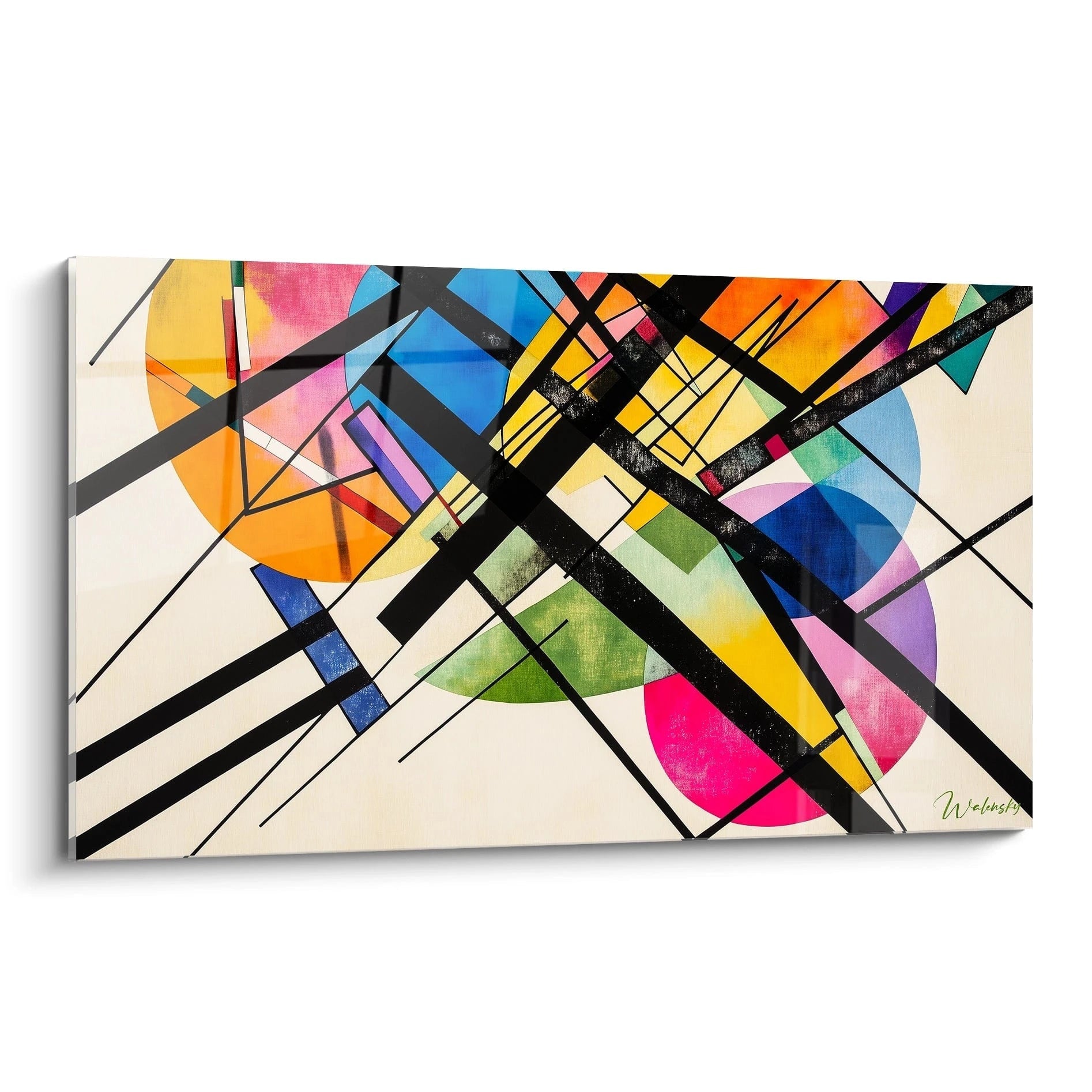
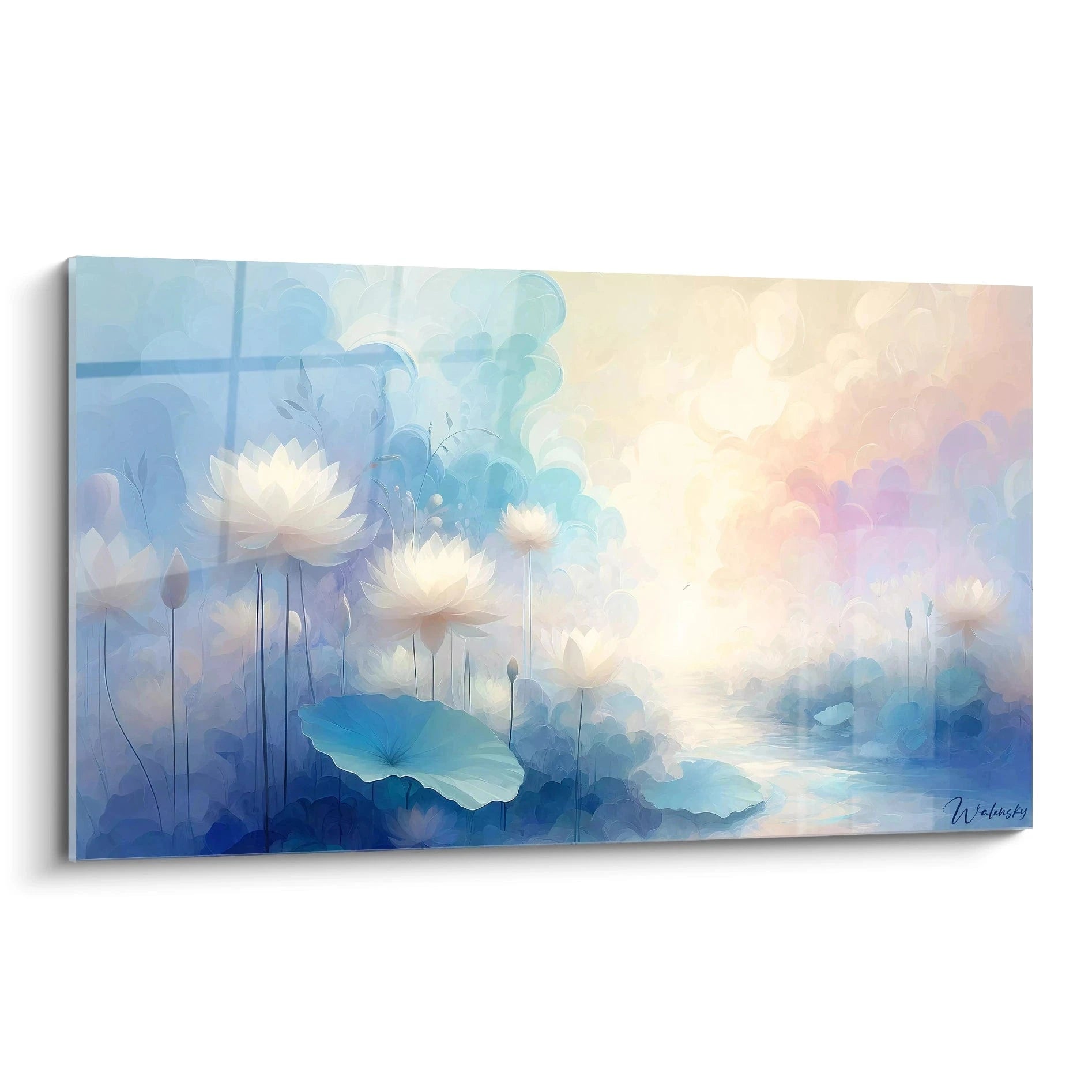
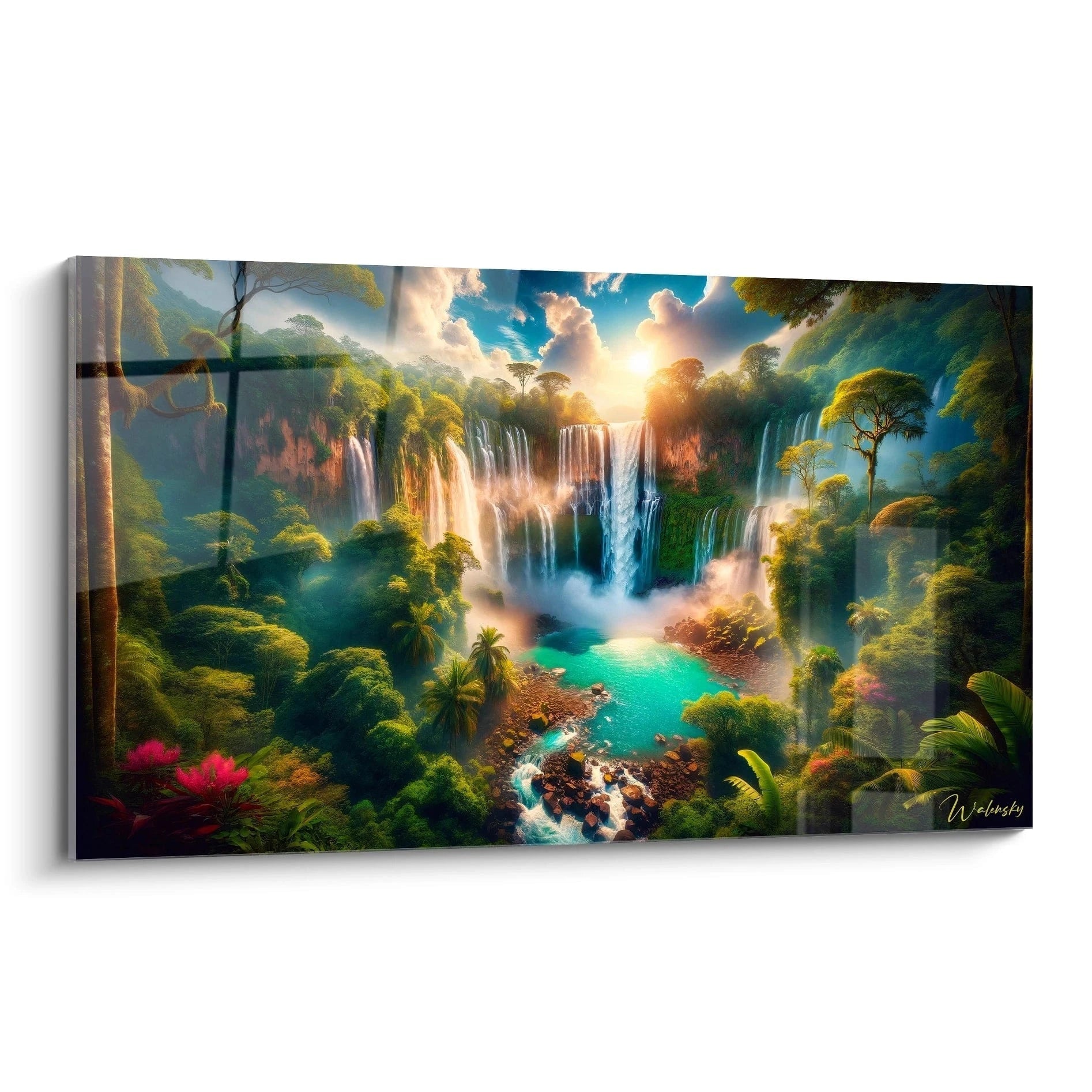
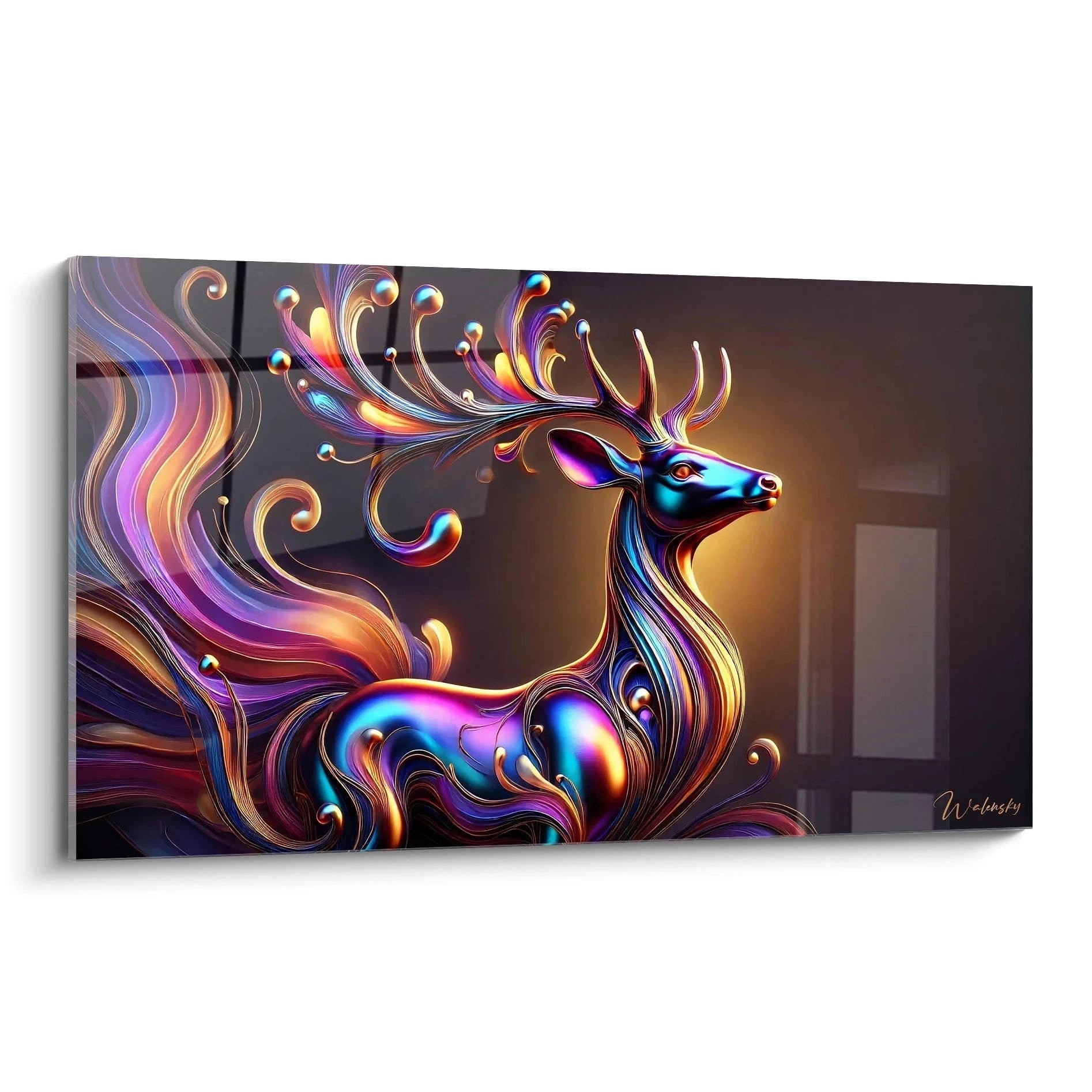
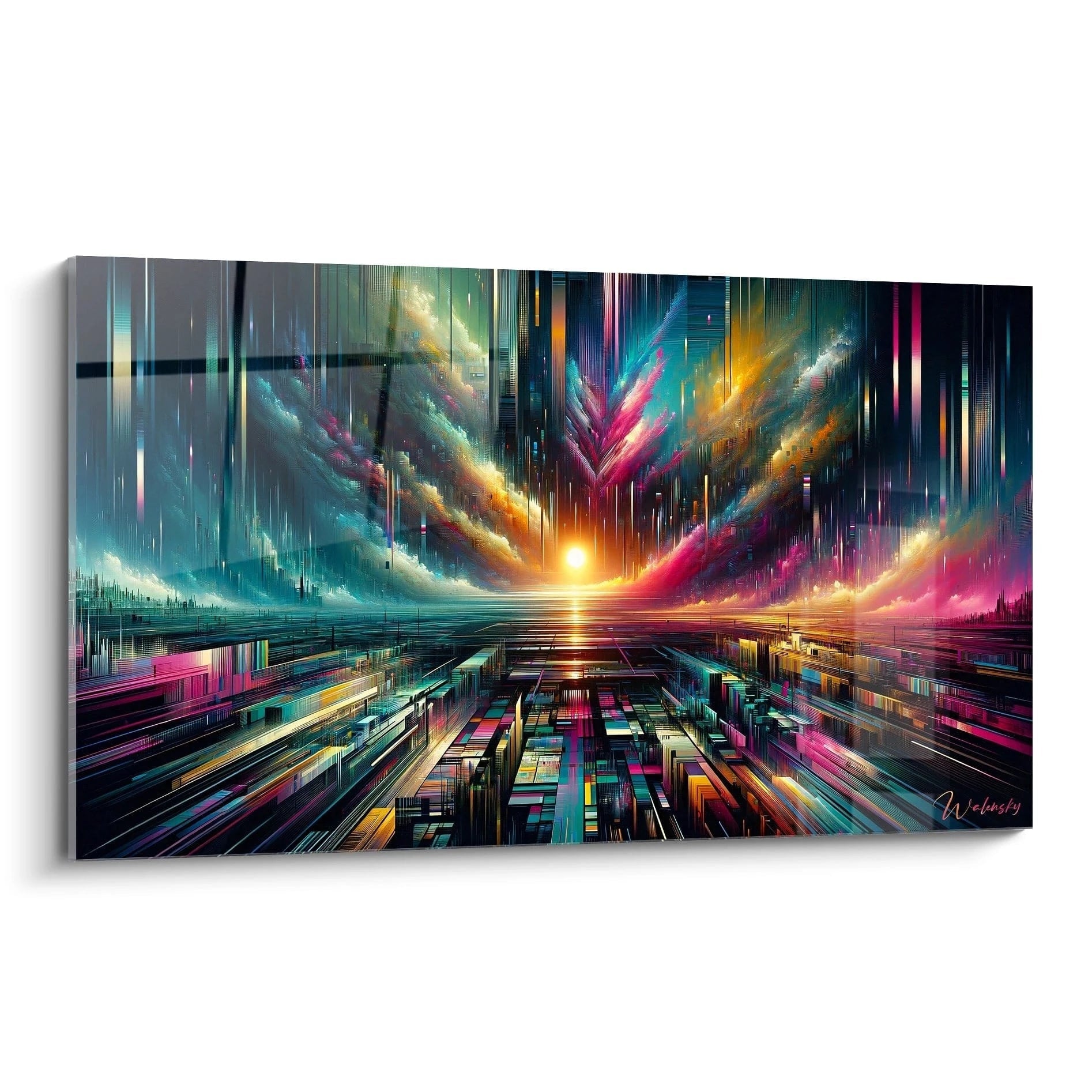
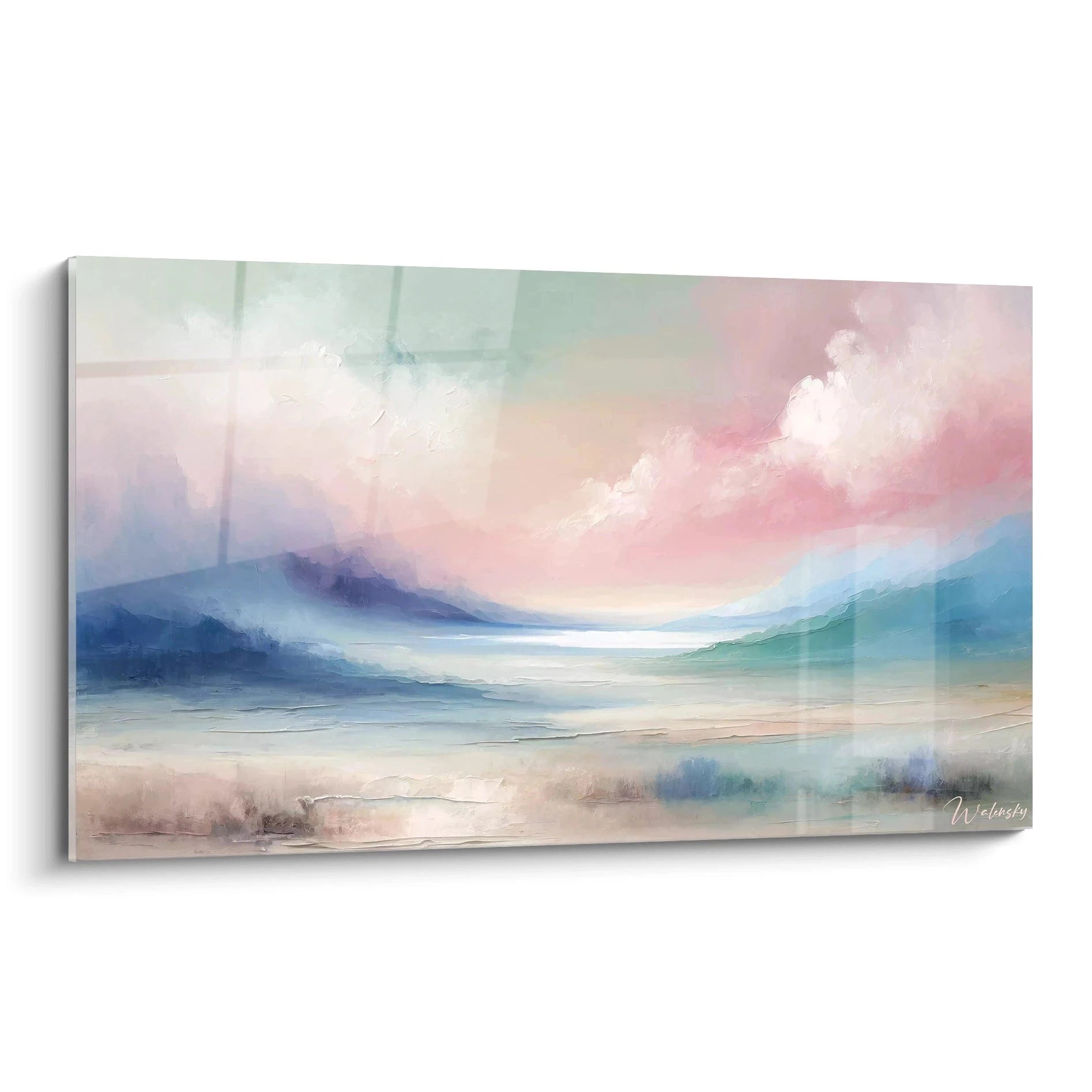

Create a cohesive wall collection with artworks of various styles
11 October 2025 · 17 min read · by Walensky
You just bought this magnificent artwork you fell in love with, but once you get it home, you look at it leaning against the wall and... total panic. It simply doesn't go with your other artworks.
You already imagine the perplexed looks of your guests in front of this wall that resembles an artistic hodgepodge rather than a thoughtful decoration. This modern abstract painting next to your classic landscape, it really looks... amateurish.
So you abandon it in a closet, telling yourself that creating a harmonious wall collection when you like multiple styles is a mission impossible. Or worse: you only buy "matching" artworks and your interior becomes bland and predictable.
Think again! It's not your taste that's the problem, it's simply that no one has explained the secret codes to harmonize different wall decor artworks without falling into boring uniformity. Professional decorators have mastered these techniques for decades.
By the end of this article, you will know exactly how to create a mix-style wall collection that will impress your loved ones and give you that secret pride of finally having an interior that truly resembles you.
Why is your wall becoming the decor nightmare you dread?
Imagine having friends over this weekend. They enter your living room and BAM: their eyes stop on this wall where your zen painting hangs next to your street art piece. Do you see their little embarrassed smile? It's now or never: either you master the art of mixing wall styles, or you remain stuck in timid decor or artistic chaos.
🎨 Client Testimonial: Sarah, a 34-year-old interior architect, recently told us: "I spent 3 years hanging my paintings one by one, without an overall vision. The result: a wall that told 15 different stories but no beautiful complete story. My clients asked me for advice, but at my place... it was an artistic mess!"
Conversation with a Decor Expert
The Little-Known Golden Rule: A successful wall collection doesn't tell 10 different stories, it tells ONE beautiful story in 10 chapters. Like a good movie with varied scenes but a captivating storyline. Visible result in 30 minutes of thoughtful arrangement.

What's Really Going On In Your Head (And On Your Walls)
Do you recognize these situations? You're pacing around your living room holding a painting, searching for the perfect spot for 20 minutes. Or you buy a new frame thinking that will fix it, but the problem remains the same. Worse still: you avoid buying artwork altogether for fear of "messing it up".
The truth? It's NOT you the problem. It's that no one has explained to you that harmonizing different artistic styles follows precise rules, like a cooking recipe. You're improvising where a method is needed.
It's like trying to make a soufflé without knowing the proportions: your artistic instinct is excellent, but it lacks the technique to transform your eclectic tastes into a collection of wall art that is coherent.
First trap: the "perfect" coherence that kills the soul
Unlike what you've been told, buying "matching" paintings doesn't create harmony. It creates deadly boredom. It's the difference between a balanced and nutritious meal, and eating the same thing every day.
Think of the most beautiful interiors you've ever seen: they always mixed eras, materials, and styles. A vintage armchair, a contemporary lamp, artworks from diverse origins... Harmony is born from controlled contrast, not uniformity.
Result: you deprive yourself of your true favorites to buy "things that go well together". But your interior loses its character, your personality disappears, and you end up not recognizing your own home.
🔍 Instant test: Look at your main wall. If all your paintings could have come from the same store on the same day, that means you've sacrificed your personality on the altar of "coordination". Wake-up call: 30 seconds.
Second trap: confusing style and era
Many people think that a "modern" painting cannot coexist with "classic" art. Wrong! What matters is not the creation era, but the emotion the artwork conveys. A Monet nude can perfectly dialogue with a contemporary photograph if they share the same sensuality.
It's like assembling friends around a table: it doesn't matter their age or origin, what matters is that they want to talk to each other. Your paintings should create that same visual complicity.
As a result, you miss out on bold but harmonious mixes that would give character to your interior. You stay in your comfort zone... and your decor remains predictable.
Third trap: neglecting emotional geometry
Here's the secret that few people notice: our eyes don't first see colors or subjects, but shapes and rhythms. Sarah discovered this while observing the gallery of a Parisian collector: a crazy mix of styles, but a perfect balance of visual masses.
You can test this at home: look at your wall with your eyes squinted to blur the details. What do you see? A balance or an imbalance? Rhythms that flow or visual jolts?
This "emotional geometry" subconsciously influences your well-being in the room. An unbalanced wall tires you without you understanding why, even if the individual artworks are magnificent.
🎯 The 4 alarm signals to watch out for:
- Your eyes dart around without stopping: Too many focal points competing for attention, like several conversations at once
- One corner looks "heavy": Accumulation of important visual masses in the same place, a "pile of stones" effect
- The whole thing seems to "float": Lack of anchoring to the floor or furniture, a feeling of instability
- You subconsciously avoid this wall: Your brain is fleeing visual overload, the ultimate warning signal
The trigger element: the "dominant note"
Here's what really makes the difference: identifying the "dominant note" of your collection. Like a conductor who gives the "A", a work or element must set the general tone. This can be a recurring color, a texture, an emotion... This note allows other pieces to harmonize naturally, even if they are very different. To spot it: it's the element your eyes always return to, your visual "madeleine de Proust".
Universal practical rule: A successful wall always has 70% harmony and 30% surprise. Too much harmony = boredom, too much surprise = chaos. Check by counting the elements that "blend in" vs those that "positively clash".
| ❌ Limiting belief | ✅ Liberating reality | 💡 Mechanism | 🎯 Concrete benefit |
|---|---|---|---|
| My tastes are too eclectic | Mastered eclecticism is refinement | The brain loves variety within unity | Unique interior that reflects you |
| It takes a huge budget | Arrangement transforms everything | Value comes from harmony, not price | Gallery effect with your current artworks |
| I don't have an artistic eye | The eye is formed by understanding the rules | Beauty follows logical principles | Confidence to make your own choices |
| A style = an era | Emotion transcends eras | Visual dialogue between common sensibilities | Total freedom in your acquisitions |
— Also to discover


The 3-circle method for perfect harmony
Rest assured, you're not going to start all over again! This method respects your existing works and transforms them into a harmonious wall collection. It's like reorganizing your library: same books, but suddenly everything makes sense. The result? A wall that tells YOUR story in a captivating and coherent way.
🎯 Overview - The 3 magic circles: Circle 1 (anchoring): define your emotional guiding thread. Circle 2 (dialogue): create visual conversations between artworks. Circle 3 (surprise): add the elements that sublimate the whole. Logical progression from the core to complete expression.
Step 1: Identify your "déco DNA" (the anchoring circle)
Before touching a single nail, you need to discover the invisible thread that naturally connects your tastes. It's like identifying your personal "signature": once you know it, everything becomes coherent. This step will give you the deep satisfaction of finally understanding why you like what you like.
Your décor detective tools
- Your smartphone: To photograph your artworks from different angles and lighting. The lens reveals details that the accustomed eye no longer sees. Quality criterion: sharp photos in natural light. Avoid flash which distorts colors and creates misleading reflections.
- A notebook or notes app: To note your emotions towards each artwork. The rational brain analyzes, but emotion reveals your true taste patterns. Write down the first word that comes to mind, without thinking. Instinct decodes your décor DNA better than reflection.
- 3 photos of "favorite" interiors: From magazines or Pinterest. They reveal your deep decorative aspirations. Criterion: you want to live there immediately. These references decrypt your unconscious desires for atmosphere.
Now, let's move on to the revealing practice
Your personal décor audit
Photograph all your artworks individually: Take each painting, poster, photo in close-up and wide shot. The lens captures nuances that your accustomed eye no longer notices. Look at these photos as if you were discovering them at someone else's house.
⏱️ Time: 15 minutes | ✅ Success when: You have 2 sharp photos per artwork, one detail and one overall | ⚠️ Attention: Don't mentally sort during shooting, just capture
Note your first emotion for each artwork: Look at each photo and immediately write down the first word or sensation that comes to mind. "Peacefulness", "energy", "nostalgia", "freedom"... These words reveal your true emotional décor needs.
⏱️ Time: 10 minutes | ✅ Success when: One word per artwork, without thinking | ⚠️ Attention: Resist the urge to analyze or justify, instinct is more revealing than logic
Identify your 3 recurring emotion words: Read your notes and highlight the emotions that come back. These patterns reveal your décor "emotional signature". It's your DNA, the guiding thread of your future harmonious collection.
⏱️ Time: 5 minutes | ✅ Success when: 3 dominant emotions clearly stand out | ⚠️ Attention: If everything seems different, you are over-analyzing, redo the exercise more quickly
🎯 Validate your décor DNA: You should now be able to complete this sentence: "My artworks mainly give me _____, _____ and _____." If it's blurry, start the exercise again focusing on your physical sensations towards the artworks. Your found DNA = solid foundation for the next step!
Step 2: Create visual dialogues (the conversation circle)
Now that you know your DNA, you’re going to learn how to make your artworks “talk” to each other. This is the level where it becomes magical: you no longer see isolated artworks, but an exciting visual conversation. The snowball effect begins here: each good placement facilitates the next.
Orchestrating Conversations
Group by “emotional families”: Physically gather artworks that share one of your 3 main emotions. Like inviting friends who have affinities. Don't look at the style or era, only the common emotion.
Time: 10 minutes | ✅ Successful when: 3 distinct groups, each with at least 2 artworks | ⚠️ Attention: Some artworks may be “polyemotional,” put them in the main group
Test “visual harmonies”: In each group, place the artworks side by side on the floor. Observe: does it “sound right”? Like musical notes that harmonize. Trust your feeling, not logic.
Time: 15 minutes | ✅ Successful when: Feeling of natural harmony in each group | ⚠️ Attention: If it feels forced, separate and try again, harmony is never forced
Create your “wall score”: Roughly sketch your wall and position each group. Alternate the “tempos”: calm zone, energetic zone, contemplative zone. Like a balanced playlist for your eyes.
Time: 10 minutes | ✅ Successful when: Visible natural alternation on your sketch | ⚠️ Attention: Avoid placing everything at the same height, vary the levels like a musical score
Step 3: Add the touch of genius (the sublimation circle)
This is where you go from “pretty” to “wow!”. You now master harmony, you’re going to learn elegant surprise. These final adjustments will transform your wall into a true personal gallery that your guests will remember for a long time. The expert level is now!
Finishing Touches of a Master
Add your “signature note”: Integrate an unexpected element that positively surprises: different texture, unusual format, color that “pops”. It’s your personal signature, what makes your wall unique and memorable.
Time: 20 minutes of testing | ✅ Successful when: The element surprises but doesn’t clash | ⚠️ Attention: The surprise must remain elegant, not shocking
Fine-tune the “breaths”: Adjust the spaces between artworks. Too tight = suffocation, too far apart = dispersion. Each artwork must have its vital space while dialoguing with its neighbors. Like silences in music.
Time: 15 minutes | ✅ Successful when: Your eye naturally circulates without effort | ⚠️ Attention: Measure by eye first, then with a meter, harmony is not mathematical
Test the “gallery” effect: Step back 3 meters and observe the whole thing for 30 seconds. Close your eyes, open them: what do you see first? That’s your main focal point. It must be intentional, not accidental.
Time: 5 minutes | ✅ Successful when: Coherent overall vision and obvious focal point | ⚠️ Attention: If several elements are competing for attention, simplify
Rule of progression: You are ready for the next step when you feel proud looking at your wall AND you want to show it off. True decor success generates this double satisfaction: personal pleasure + desire to share.
Congratulations! You now master the fundamentals of a coherent wall collection. But true collectors know a few extra secrets that take their interior from “successful” to “exceptional”. These pro tips transform a beautiful decor into a memorable conversation starter.
🎨 Gallery secret: Directional lighting transforms everything. A simple adjustable spotlight on your "signature" artwork instantly creates a professional gallery effect. Why is it magical? Light sculpts reliefs, reveals textures, and naturally attracts the eye. Immediate test: illuminate a work with your phone's light, the effect is striking.
Frequently asked question from our readers
"I'm afraid of making a mistake and having to start all over..."
This hesitation is absolutely normal and even healthy! It shows that you take your wall decor seriously. Here's the reassuring truth: in wall decor, nothing is ever final. Unlike paint or large furniture, your paintings can be repositioned endlessly until you find perfection. Sarah tested 12 different configurations before finding the right one, and she doesn't regret any of those trials because each attempt refined her eye.
💡 Pro tip: Start with a "test version" with colored sticky notes on the wall, each representing a work. You visualize the whole thing without drilling a hole, and you can modify it at will. Result: total confidence before the final installation.
— In the same spirit


The 5 mistakes that turn your wall into a decor disaster
Attention, you're on the right track, but some common pitfalls can still ruin your efforts. These mistakes are so common that even experienced decorators sometimes fall for them. Fortunately, now that you know them, you'll know how to avoid them!
- ⚡ Wanting to hang everything at once: Enthusiasm leads to transforming the wall in one day. Mistake! Your eye needs time to integrate each addition. Result: guaranteed overload and regret the next day. Solution: add one work per week maximum. Harmony is built slowly, like a good wine that ages.
- 🎯 Systematically centering everything: By reflex, we center each painting on its wall. Visual catastrophe! It creates a rigidity of provincial museums. Consequence: your wall looks like a school exhibition. Alternative: create intentional offsets, asymmetrical groups. The eye prefers dynamic balance to dead symmetry.
- 📏 Hanging too high "to see better": Classic trap! We think that at height, it's more noble. Fatal error: your works float on the ceiling, disconnected from your daily life. Impact: feeling of uninhabitedness. Golden rule: center of the work at eye level (1m60), no higher than 1m80.
- 🌈 Blindly following the colors of the sofa: "I need it to match my cushions!" No! This logic creates bland and predictable interiors. Consequence: your artistic personality disappears in favor of a boring assortment. Revelation: the most beautiful interiors play on mastered contrasts, not on perfect coordination.
- 💰 Waiting to have "the means for beautiful things": Financial perfectionism paralyzes! You keep postponing, waiting for THE budget to redo everything. Trap: you live for years with sad walls. Reality: a collection is built gradually, and the arrangement makes up 80% of the final beauty. Even 3 well-placed works surpass 10 poorly arranged works.
🔍 Your safety checklist: (1) Recede 3 meters: is the whole thing still legible? (2) Photo test: take a photo of your wall, flaws will jump out (3) 30% rule: maximum 30% of your wall can be "occupied" visually (4) Alarm signal: if you hesitate to show this room, it's time to simplify
— Other chosen rooms


Your questions, our expert answers
Excellent question! For the complete method: allow 2-3 hours spread over a weekend. BUT (and this is important) your eye will continue to refine itself for 2-3 weeks. You will naturally make small adjustments, and that's perfectly normal. Optimization: start a Friday evening with the decor audit (30 min), test Saturday morning (1h30), and finalize Sunday afternoon (1h). Sarah's example: "wouah" result from the weekend, subtle refinement for 15 days.
Surprise: 80% of success comes from arrangement, not acquisitions! With your current works well arranged, the effect can be spectacular without spending a single euro. If you want to enrich: "noticeable transformation" budget = 200-500€ spread over 6 months (one thoughtful acquisition per month). Budget tip: a single high-end "signature" work enhances your entire existing collection. It's better to have a quality piece you truly love than three average purchases.
Even better! Small spaces benefit more from controlled decor because every detail counts double. The 3 circles method adapts perfectly: you just create "micro-conversations" between 2-3 works maximum per zone. Specificity for small spaces: prioritize verticality and medium formats (30-50cm) rather than large canvases. The "intimate gallery" effect can be even more striking than a dispersed large wall.
No, keep your current frames to start! Harmony first comes from arrangement and dialogue between works. However, if some frames really clash (plastic gold with brushed metal for example), a gradual harmonization improves the whole. Pro technique: start by uniformizing the dominant color of the frames (all dark OR all light), the materials can remain mixed. Budget: 20-40€ per frame to be replaced, but only after testing the optimal arrangement.
Adorable question that concerns many parents! Children's creations bring a precious spontaneity, provided they are treated with the same respect as your other works. Foolproof technique: frame them neatly (identical frames = collection effect) and integrate them into your "joy/spontaneity" group. Tip: create an "evolving gallery" in a hallway where children's artwork can rotate regularly without disrupting your main living room composition.
Your transformation into a confirmed collector
In a few weeks, when your friends enter your home, they will stop short in front of your wall. It will no longer be a simply decorated wall, but a true visual signature that tells your story. You will see in their eyes that little spark of admiration and that question they might not dare to ask: "How did you manage to make it so harmonious?"
But the most beautiful thing is the transformation you will experience. That secret pride every morning while drinking your coffee in front of YOUR gallery. That new confidence in your decor choices. That ability to trust your artistic instinct now that you master the technique. You will never again suffer your interior, you will consciously create it.
The hardest part was understanding the hidden mechanisms of visual harmony. Now it's done! Your first move? Take out your phone, photograph your current artworks and start your decor audit tonight. In 2 hours, you will see your wall with totally new eyes.
🚀 Your new superpower: You now possess the keys to decor harmony that most people search for their entire lives. Use them, have fun, and remember: every great collector started by understanding their own tastes. Your dream wall awaits you!
Also to read: 🎨 Discover all artistic styles
Explore our collections


