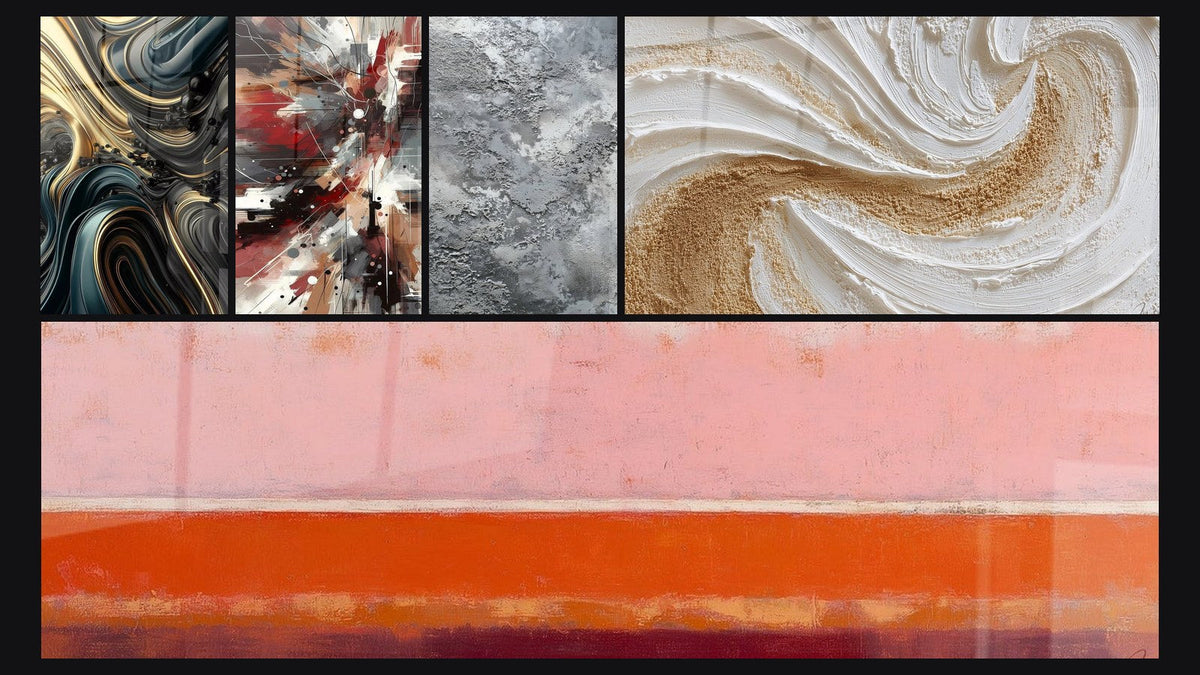
Virtual and immersive galleries: explore art online as if you were there
11 October 2025 · 20 min read · by Walensky
You dream of discovering the world's greatest artistic masterpieces, but you find yourself in front of your screen scrolling through pixelated images on Google Images, frustrated not to be able to truly appreciate the details and the emotion conveyed by a work of art.
You feel this cold distance between you and art, this impossibility of projecting yourself into a museum space or a prestigious gallery. Reproductions alone do not allow you to grasp the textures, the nuances of colors, or the unique atmosphere that surrounds each work.
You may have tried basic virtual tours of a few museums, but they left you wanting more: complicated navigation, poor quality, disappointing experience. You wonder if there is really a way to experience art other than by physically going somewhere.
This frustration is perfectly normal! The problem doesn't come from your lack of artistic culture, but from the fact that revolutionary immersive technologies are still little known to the general public, while they are already transforming the artistic experience.
By the end of this article, you will discover how to access the world's most prestigious collections from your living room, experience breathtaking artistic experiences in virtual reality, and even create your own personalized gallery with your favorite works.
Why are virtual galleries revolutionizing our relationship with art right now?
Immersive digital art is no longer a futuristic technology: it is a reality accessible today that radically transforms our way of discovering and appreciating art. Imagine being able to examine Van Gogh's brushstrokes with a level of detail impossible even when standing in front of the original work, or strolling through the Louvre at 3 am without any crowds. If you wait any longer, you are missing out on a major cultural revolution that redefines the accessibility of art.
🎨 Testimony of an artistic revelation: Sarah, a 34-year-old graphic designer, thought she knew "The Starry Night" having seen it hundreds of times in reproduction. During her first virtual reality experience at the Van Gogh Museum in Amsterdam, she discovered invisible details to the naked eye: the impasto of the paint that creates a striking relief, the subtle color variations in the swirling sky. "I cried in front of my VR headset," she confides. "It was more intense than all my real museum visits."
Conversation with a decor expert
The golden rule of immersive art: emotion has no physical boundaries : A well-designed virtual experience can trigger more intense emotions than a classic visit, because it eliminates distractions (crowds, fatigue, time constraints) and allows you to focus solely on your dialogue with the artwork. Observable result in 10 minutes: a deep emotional connection with artists you thought "you didn't understand".

Finally understand why your previous attempts disappointed you
You have probably already tried to "virtually visit" a museum and found yourself in one of these situations: saccadic navigation causing seasickness, blurry images that hurt your eyes, or a 5-minute express visit that leaves you wanting more. You thought "nothing beats the real thing" and gave up.
The problem is not your lack of adaptability or a defect of these technologies. The reality is that 90% of the "virtual visits " you have tested use obsolete technologies, created quickly during COVID without a true artistic vision. It's like judging the beauty of cinema by watching a pixelated film on a 10-inch screen.
Imagine judging French gastronomy by tasting only first-price frozen meals: you would completely miss out on the true culinary experience. The same thing happens with digital art.
The first hidden cause: confusion between "360°" and "true immersion"
Contrary to what everyone believes, seeing a 360° panoramic image does not create an immersive experience. Immersion is born from intelligent interactivity : being able to zoom in on the details of a brushstroke, listen to the story of the artwork at the precise moment it speaks to you, feel the space transform around you.
It's like the difference between looking at a photo of a mountain and going climbing: both times you "see" the mountain, but the emotional engagement is incomparable. A true immersive gallery makes you participate, not just observe.
This revelation changes everything in your approach: instead of searching for the "best image quality", you will now prioritize the richness of the interaction and discover artistic emotions you had never suspected.
🧪 Revealing test: Open two tabs: a high-definition image of "Mona Lisa" on Wikipedia, and the interactive version of the Louvre virtual tour. Spend 2 minutes on each. You will see that even without moving from your chair, the interactive experience generates a curiosity and engagement that the static image cannot provoke.
The second hidden cause: the illusion of "democratization"
Many believe that digital art only serves to "democratize" culture by making it free and accessible. In reality, the best virtual galleries create a premium experience that rivals the most exclusive private collections.
It's like believing that Netflix exists just to replace free television, when it revolutionizes our way of consuming stories. Immersive art does not replace traditional art, it creates a new emotional dimension.
Result: instead of just "seeing" artworks, you start to live artistic experiences tailored to your tastes and rhythm, which multiplies your pleasure and understanding.
The third hidden cause: the "authenticity" prejudice
Almost no one notices that our era completely redefines the notion of "original work". When Banksy creates a work that self-destructs after its sale, or when an NFT sells for 69 million dollars, art already crosses the boundaries of the physical.
You can easily spot it: whenever you feel more emotion in front of a perfect digital reproduction than in front of a "original" poorly lit behind a dirty window, your brain tells you that authenticity lies in emotion, not in the object.
This transforms your daily life by freeing you from the frustration of not being able to "see everything in person": you discover that some digital experiences touch you more deeply than disappointing physical visits.
3 signals that you are ready for immersive art:
- You feel frustration with classic reproductions: Your brain demands more detail and interaction, like a passionate reader who wants to delve deeper
- You prefer documentaries to simple photos: You appreciate the context and the story, which reveals your appetite for enriched experiences
- You personalize your digital spaces: If you customize your computer desktop or your playlists, you already have the mindset to create your personal virtual gallery
The trigger: the quality of the storytelling
What really makes the difference between a disappointing experience and an artistic revelation is the quality of the immersive storytelling. Like a domino effect, a good story transforms a simple visit into an emotional journey: you no longer look at objects in rooms, you live the era, the artist's studio, their inspirations. You can easily identify it: the best virtual galleries make you lose track of time, just like a good book or a captivating film.
The 5-minute magic rule: If a virtual experience doesn't grab you in the first 5 minutes, it's not that you are not receptive, it's that the quality is not up to par. A true immersive gallery captivates you from the first seconds, like a work that stops you dead in a museum.
| ❌ Disappointing experience | ✅ True immersion | 💡 Why this changes everything | 🎯 Emotional benefit |
|---|---|---|---|
| I undergo a linear guided tour | I choose my path according to my emotions | Your brain actively engages | Feeling of personal discovery |
| I look at isolated artworks | I understand the links and influences | Art becomes a living story | Deep understanding and memorization |
| I feel like an outside observer | I project myself into the era | Empathy multiplies the emotion | Intimate connection with the artist |
| I skip after 10 minutes | I lose track of time | Natural engagement unfolds | Pure pleasure and insatiable curiosity |
— Our selection


The 3-step method to create your immersive art universe
Rest assured: transforming your relationship with art thanks to immersive technologies is easier than learning to use Netflix! The progression follows a natural logic : like learning to cook, you start by mastering the basics before creating your own recipes. By following these 3 steps, you will go from the status of "lost visitor" to that of "informed virtual collector" who knows how to find rare gems and create custom experiences.
🗺️ Your artistic roadmap: Step 1 - Guided discovery (you explore existing galleries), Step 2 - Advanced personalization (you create your thematic collections), Step 3 - Experience creation (you become curator of your own universe). Each level brings you increasing autonomy and pleasure, until you become your own artistic guide.
Step 1: Your first guided immersive discoveries
Starting with this step is essential because it builds your "visual alphabet" of immersive technologies : like learning the basics of solfège before playing a piece, you must first understand the codes and possibilities. This first exploration will provide you with immediate satisfaction: from the first session, you will feel that magical sensation of being "transported" to another universe.
What you need to get started
- A recent computer or tablet: Any device less than 5 years old is sufficient. Galleries automatically adapt to your configuration. Prefer a screen of at least 13 inches for optimal immersion. Avoid smartphones to start: the too-small screen breaks the magic of immersion
- A stable internet connection: The principle is simple: as with watching Netflix in HD, a fluid connection guarantees an interruption-free experience. 10 Mbps is more than enough. You will recognize a good connection when the transitions between rooms are smooth
- A quality audio headset: This element completely transforms the experience! Spatialized sound literally "lets you hear the space": the whispers of other visitors, the acoustics of large rooms, the music of the era. It's the difference between watching a silent film and experiencing an immersive film
Now, let's move on to practice with your first exploration
Your first successful virtual visit
Choose your first destination: Start with Google Arts & Culture or the virtual Louvre - these platforms offer perfectly guided tours to begin. Select a theme that already attracts you (Impressionism, modern art, Ancient Egypt) rather than a general "grand tour". Your brain will engage better with a subject that resonates with your tastes.
⏱️ Time: 30-45 minutes | ✅ Successful when: You have explored at least 3 rooms and zoomed in on 5 details of artworks | ⚠️ Attention: Do not try to "see everything" the first time - it's the classic mistake that leads to fatigue. Prefer deepening to quantity
Mastering interaction tools: Systematically test all functions: zoom, rotation, full screen mode, annotations. Pro tip : click on every small icon you see, even if you don't know what it does. Many treasures are hidden in the secondary menus (cutaway views, comparisons, creation history).
⏱️ Time: 10 minutes | ✅ Successful when: You navigate without thinking about the commands | ⚠️ Attention: If you feel lost in the menus, that's normal at first. Each platform has its codes, just like learning to drive different cars
Develop your critical eye: For each work that interests you, spend at least 2 minutes observing it from different angles. Ask yourself these questions: "What attracts me?", "What does this work tell?", "How did the artist create this effect?". This habit transforms the simple gaze into a true dialogue with art.
⏱️ Time: Variable depending on your pace | ✅ Successful when: You feel different emotions depending on the works | ⚠️ Attention: Don't try to "understand" intellectually right away. Emotion often precedes understanding in art
✨ Validation of your progress: Your first step is successful when you feel that particular sensation: the spontaneous desire to share a discovery with a loved one, or the impatience to return and explore. If you are already thinking about your next virtual visit, congratulations! You have crossed the threshold of immersion. If you have difficulty, start again with another artistic theme - sometimes you just need to find "your" universe.
Step 2: Create your own themed collections
Once you are familiar with exploration, you access the next level: personalized curation. This step is more rewarding because you no longer suffer the choices of other curators, you become the architect of your own virtual museum. The snowball effect is triggered: the more you refine your collections, the more you develop your unique artistic eye and your ability to find gems that others would not have noticed.
Advanced tools for curation
- User accounts on 3-4 major platforms: Create your profiles on Google Arts & Culture, Artsteps, Mozilla Hubs and a specialized platform according to your tastes. Each platform excels in a different area: Google for diversity, Artsteps for creation, Mozilla for collaboration. The complementarity multiplies your exploration possibilities
- A personal backup system: Use a digital notebook (Notion, Evernote) or even a simple folder of organized bookmarks by theme. The goal: instantly find your favorites and track the evolution of your tastes. This is your "personal artistic memory" that enriches with each discovery
- Defined selection criteria: Establish your "personal filters": era, technique, emotion sought, dominant colors. These criteria evolve with you and become your virtual artistic signature
Build your first themed collection
Define your personal guiding thread: Choose a theme that you are truly passionate about: "The blues in art", "Portraits of strong women", "The art of melancholy"... The trick : your theme should be able to be summarized in one emotion or mental image. If you can explain it in a sentence to a friend, it's the right one.
⏱️ Time: 1 hour | ✅ Successful when: You have gathered 10-15 coherent works | ⚠️ Attention: Avoid themes that are too broad ("modern art") which dilute the emotional impact
Develop your thematic expertise: For each selected work, delve into the history: creation context, influences, techniques used. Use the resources integrated into the platforms: audio guides, expert analyses, connections with other works. Your collection gradually becomes a real personalized educational journey.
⏱️ Time: 2-3 hours spread | ✅ Successful when: You can tell the story of your collection | ⚠️ Beware: Don't fall into compulsive accumulation - the quality of the selection is more important than the quantity
Step 3: Becoming a creator of immersive artistic experiences
At the final level of mastery, you no longer just consume virtual art: you create your own immersive experiences. This difference between amateur and expert transforms your relationship with art: you anticipate the emotions you want to evoke, you orchestrate narrative journeys, you become a "creator of artistic experiences". The final result fills you with pride: having your own unique virtual gallery in the world, which you can share and evolve according to your discoveries.
Designing your signature virtual gallery
Architecting your virtual space: Use tools like Artsteps or Spatial to create the architecture of your dreams. Think about circulation, lighting, sound ambiance. The secret : each room should tell a chapter of your personal artistic story. Your gallery becomes a reflection of your unique artistic personality.
⏱️ Time: 3-5 hours | ✅ Successful when: Your visitors understand your vision without explanation | ⚠️ Beware: Start small - a well-thought-out 3-room gallery is better than a labyrinth of 20 empty rooms
Scripting the emotional experience: Create a journey that naturally guides emotions: gentle introduction, increasing intensity, moments of respite, final apotheosis. Integrate period music, dramatic lighting, smooth transitions. Your gallery becomes a mastered emotional journey from A to Z.
⏱️ Time: 2-4 hours | ✅ Successful when: Testers experience strong emotions at specific moments | ⚠️ Beware: Test regularly with loved ones - what seems obvious to you is not necessarily so for others
The rule of natural progression: You are ready for the next step when the current step becomes automatic and enjoyable. Objective criteria: fluid navigation without thinking, spontaneous pleasure during sessions, desire to share your discoveries. Balance patience (each step deserves to be savored) and ambition (your progress should excite you).
Congratulations! You now master the basics of immersive art. Here are some expert tips that only true enthusiasts know, and that will make you a true connoisseur capable of impressing your surroundings and experiencing exceptional artistic experiences.
🔥 Pro Technique - The "Temporal Comparison Mode": Experts use a little-known trick: they display the same artwork side by side in different eras (before/after restoration, evolution of colors, details revealed by X-rays). This technique reveals the secret history of artworks and makes you understand art as a living object that evolves. Concrete example: comparing Leonardo da Vinci's "Mona Lisa" as it appears today with reconstructions of its original colors reveals a completely different painting!
Frequent question from a beginner enthusiast
"I would really like to get started, but I'm afraid I won't have enough artistic culture to appreciate... What if I 'don't understand' anything?"
I completely understand this fear! In reality, you possess the most important qualification : the ability to feel emotions. Immersive art is revolutionary precisely because it eliminates intellectual barriers and connects you directly to pure emotion. A concrete example: a user who "hated contemporary art" discovered Rothko in virtual reality and burst into tears in front of his paintings - the immersion made her understand the spirituality of these works that reproductions did not convey. Your natural sensitivity is your best guide, not an art history degree!
🎯 First reassuring step: Start by searching for "art you already love" in an immersive version. If you love landscapes, portraits, or even architecture, start there! You will quickly see that your natural enjoyment is amplified by immersion, without any intellectual effort.
— Also to discover


The traps to avoid at all costs to not spoil your first experiences
I'm going to reveal the common mistakes that the vast majority of beginners make - and which needlessly discourage them. These mistakes are normal and predictable, but by knowing them in advance, you will easily avoid them and experience magical moments from your first attempts.
- 🚫 The "see absolutely everything" syndrome: It's tempting to want to visit 10 museums the first day! The result: visual saturation and a feeling of skimming. Solution : Limit yourself to a maximum of 3-4 works per 30-minute session. Your brain needs time to "digest" artistic emotions. This is the most common mistake, even experts made it at the beginning!
- 🚫 The obsession with "good technical quality": Many abandon if the image is not perfect 4K. Reality : artistic emotion is born from the entire experience, not the resolution. Sometimes a "pixelated" work but well contextualized will touch you more than a perfect but cold reproduction. Prioritize emotional engagement over technical perfection
- 🚫 Comparing with the "real thing": "But it's better in person..." this sentence kills the magic! Tip : consider the virtual experience as a "genre of art" in its own right, like comparing a book and its film adaptation. Each has its own riches
- 🚫 Impatience with loading times: Immersive platforms sometimes take a few seconds to load. Mistake : clicking everywhere during this time and losing focus. Use these pauses to anticipate your emotions and get yourself into a state of wonder
- 🚫 Exploration without a method: Clicking randomly without logic quickly becomes tiring. Winning method : define a mini-goal before each session: "Today I want to understand why Van Gogh touches me" or "I'm looking for works that remind me of the sea". This intention naturally guides your journey
🛡️ Emotional safety checklist: You are on the right track if: you lose track of time (sign of natural engagement), you want to share your discoveries (sign of authentic emotion), you develop personal preferences (sign of appropriation), you think about art between sessions (sign of lasting impact). Warning signs : eye fatigue (sessions too long), feeling of obligation (you force yourself to be amazed), constant comparisons (you don't let yourself go).

In the same spirit
Painting Architecture Infinity Steps - trompe-l'œil edition
233.90€
Discover this painting →Your practical questions about immersive art: expert answers
Excellent question! The pleasure arrives from the first session of 30 minutes well led, but true mastery develops over 3-4 weeks of regular exploration (2-3 sessions per week). To optimize: start with your existing tastes rather than "difficult" art. Concrete example: Marie, a 45-year-old accountant, felt her first strong emotions during her second virtual visit to the Musée d'Orsay - she had chosen Impressionism instinctively.
Good news: 95% of virtual galleries work perfectly on a 2019 computer! Total cost to start: €0 (most platforms are free). Optional investment: a good pair of headphones (€30-50) which transforms the experience. VR headsets remain a "plus" for later, not an obligation. The essential thing is in the quality of your attention, not your equipment.
Absolutely! The current tools are as simple as creating a PowerPoint presentation. Platforms like Artsteps offer intuitive "drag-and-drop" interfaces. Learning time: 2-3 hours for the basics, then your creativity takes over. More important than technique: your personal artistic vision. Many "technically perfect" galleries are boring, while simple but passionate creations captivate.
3 infallible criteria : the first 30 seconds reveal the quality (smooth navigation, clear interface), the presence of contextual elements (history, anecdotes, links between works), and above all your instinctive emotional reaction. If you feel curiosity rather than confusion, that's a good sign! The best galleries naturally "draw" you towards exploration.
Not at all! Immersive art complements and enriches the traditional experience, like Netflix complements (without replacing) cinema. In reality, most virtual art enthusiasts become better visitors of real museums : they arrive prepared, know what to look for, appreciate details better. It's a symbiotic relationship that multiplies your overall artistic pleasure.
Your new life as an enlightened art lover begins now
In a few weeks, you will be that person who discovers extraordinary works from your living room, who shares fascinating artistic details with your loved ones, who has developed a keen eye and affirmed personal preferences. You will feel that particular pride of owning your own artistic universe, accessible 24/7, personalized to your exact tastes, and which evolves with you. Your friends will ask for your advice, impressed by your artistic culture and your ability to unearth gems they would never have found.
Beyond art itself, you will have acquired valuable digital skills : content curation, creation of immersive experiences, mastery of collaborative tools. These skills will serve you in your professional and personal life, strengthening your confidence in your ability to adapt to new technologies.
Now that you understand the mechanisms and possibilities, the hardest part is behind you! All that remains is to choose your first virtual artistic destination and begin this exploration. Your personal artistic journey awaits - and it will be unique in the world, as it will be yours.
🚀 Your first artistic mission: Within the next 24 hours, give yourself 30 minutes to explore a virtual gallery on a subject that already fascinates you. You have everything you need to experience your first immersive artistic revelation. Art is waiting for your gaze to come back to life!
Also to read: 📈 Explore art market trends
Explore our collections