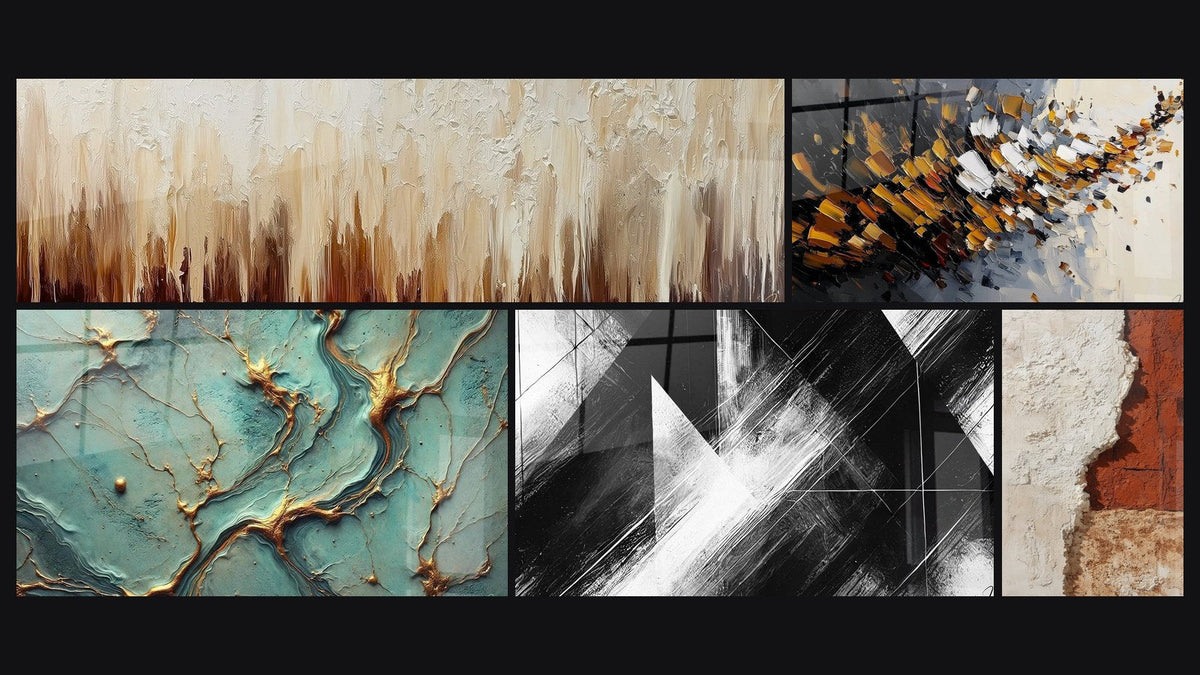
Integrated Sound Wall Art, Elegant Visual and Audio Immersion
October 11, 2025 · 16 min read · by Walensky
Stuck staring at your living room, that frustrating feeling of seeing a bare wall desperately lacking personality. Despite your search for artwork, nothing seems to create that immersive atmosphere you're looking for to transform your space into a true sensory sanctuary.
You imagine your guests discovering an interior that instantly transports them, where every glance at your walls triggers a unique multisensory experience. But faced with traditional paintings, even the most beautiful ones, you feel this sense of incompleteness, as if something is missing to create that total immersion you dream of.
You've probably tried classic artworks, added ambient playlists, installed designer lighting. Yet these elements remain separate, without creating that perfect harmony between visual art and the sound universe that would give your interior this exceptional dimension.
It’s perfectly normal not to have found this solution, because few people know about integrated sound wall art. This recent innovation merges visual art and audio experience into a single work, creating a multisensory immersion impossible to achieve with separate elements.
By the end of this article, you will perfectly master sound wall art and know how to create that elegant immersive experience at home which will transform your living room into a true living art gallery, where every glance becomes a sensory discovery.
Why does integrated sound wall art revolutionize contemporary decoration?
Integrated sound wall art represents today the new frontier of high-end decoration. In 2025, ignoring this trend is like staying in a decorative approach from the last century, where art simply “decorated” without truly transforming the experience of space. Imagine a violinist playing without a bow: that's exactly what a beautiful painting without its complementary sound dimension represents.
🎨 Testimony from a Parisian interior designer: "I recently installed a sound wall artwork at a wealthy client in the 16th arrondissement. The painting, depicting a minimalist forest, subtly diffuses nature sounds. The effect is striking: guests instinctively stop, captivated by this immersive experience that instantly transports them to another universe."
Conversation with a decor expert
The golden rule of sound wall art: A successful work creates an invisible synergy between the image and the sound, where each element naturally reinforces the other. The result? An immersive experience that transforms your wall into a sensory portal in less than 30 seconds of observation.
Understanding what's really happening in your decorative space
Your living room probably feels familiar in these three situations: your guests admire your artwork but quickly move on, you feel a lack of authenticity in your decor despite quality pieces, and you constantly seek to create an atmosphere with separate elements (lighting, music, fragrance).
The problem isn't taste or budget, but a limitation of traditional supports. Your brain naturally seeks a coherent and immersive experience, but classic works of art stimulate only one sense at a time.
It’s like trying to create the atmosphere of a gourmet restaurant with beautiful dishes alone without their aromas: the sensory experience remains incomplete.
The first hidden cause: the "museum" decor syndrome
Contrary to what many think, a beautiful interior is not simply about accumulating beautiful objects. The real difference lies in the ability to create coherent sensory experiences that engage multiple senses simultaneously.
Imagine the difference between looking at a photo of a forest and actually walking through the woods: that's exactly the gap between traditional art and sound wall art.
This understanding will transform your decorative approach, moving from a logic of accumulating beautiful objects to an orchestration of sensory experiences that brings your space to life.
🔍 Quick verification test: Close your eyes in your living room and describe what you hear. If you only perceive external noises or appliances, your decor works with 20% of your senses. Open your eyes and observe how your artwork suddenly seems "silent".
Many imagine that sound wall art requires complex installations, exposed wires, or bulky audio systems. In reality, current integrated technologies are easier to use than a smartphone.
It’s like comparing early desktop computers to modern tablets: advanced technology is hidden behind a remarkable ease of use.
This misconception deprives you of a solution that could transform your interior into an exceptional space with the same ease as hanging a traditional picture.
The third reason: ignorance of the power of micro-experiences
You probably underestimate the impact of these small sensory moments that deeply mark your guests. A sound wall art creates unforgettable "moments of grace" with each discovery.
Observe how your guests currently behave: they look, compliment, then move on. With sound art, they stop, listen, smile and create a memorable souvenir.
These micro-experiences accumulate to create a reputation as an exceptional host and transform your interior into a preferred destination.
The 3 signals that reveal the untapped potential of your decor:
- Your guests photograph your interior but don't stay long: The visual impact works, but the sensory depth is lacking
- You regularly change the background music according to your moods: Your instinct seeks to synchronize visuals and sound
- You feel a sense of incompleteness despite careful decoration: Your brain craves a complete multisensory experience
The trigger element: the quest for authentic sensory experiences
What really makes the difference is your ability to create authentic experiences that emotionally mark your guests. Sound wall art acts as an emotional catalyst, instantly triggering a deep connection with the artwork. In your interior, look for those moments when you would like your guests to stay longer, when you would like to create a contemplative pause - it is exactly there that sound wall art reveals its full potential.
The universal rule of immersive experience: The more senses an artwork engages, the more it creates a lasting memory imprint. Check it immediately: your most memorable decorative memories always combine visual, sound and emotion.
| ❌ Traditional Art | ✅ Sound Wall Art | 💡 Key Difference | 🎯 Experienced Benefit |
|---|---|---|---|
| Visual impact then rapid forgetting | Durable memorable experience | Multisensory engagement | Guests who ask to return |
| Passive decoration to look at | Experience to live | Natural interaction with the artwork | Prolonged moments of contemplation |
| Ambiance created by separate elements | Ambiance integrated into art | Perfect sensory coherence | Ease of use on a daily basis |
| Impression of a "finished" static space | Evolving living spaceConstant subtle dynamism | Interior that renews itself |

The simple method for choosing and installing your sound wall art
Rassurez-vous, creating your first sound wall art experience is more accessible than choosing a new sofa. The progression follows a natural logic like arranging a garden: first the location, then the artwork, finally the overall harmony. At each step, you will notice an immediate transformation of your perception of space.
🎯 Overview of your transformation: You will first identify the ideal location that maximizes sensory impact, then select the artwork that harmonizes perfectly with your decorative universe, and finally orchestrate the complete experience to create this elegant immersion that characterizes exceptional interiors.
Step 1: Identify your optimal sensory impact zone
Starting with the location is no accident: it's the foundation of your immersive experience. Like an architect who first studies the terrain before building, you must identify where your sound wall art will create the maximum emotional impact. Once this step is mastered, you will feel this satisfaction of discovery that will confirm that your project is heading in the right direction.
What you need for this analysis
- A measuring tape or a measurement app: To assess available dimensions and verify that the artwork will have the perfect proportion in relation to your furniture. A laser measure is preferable, which instantly gives you accurate measurements, rather than a classic measure that often requires a second person.
- A compass or your smartphone's compass app: To identify the orientation of your wall and understand how natural light will evolve throughout the day. This information will determine when your artwork will be most highlighted.
- A notebook and a pen: To note your observations on traffic flows, natural moments of contemplation, and spontaneous points of attention from your guests. A simple notebook works better than an app because it allows you to quickly sketch diagrams.
Now, let's move on to active observation of your space
How to identify your optimal impact zone
Observe natural traffic flows: Position yourself at the entrance to your room and mentally trace the instinctive path that your guests follow. Sound wall art works best on a wall that people naturally approach, not on a wall they simply walk past.
⏱️ Time: 10 minutes | ✅ Successful when: You have identified the wall where people spontaneously stop for more than 3 seconds | ⚠️ Attention: Avoid passageway walls - sound art needs a contemplation zone to reveal its potential.
Measure optimal listening distance: Sound wall art creates its magic effect between 1.5 and 3 meters away. Check that your location allows this immersion zone without obstruction (table, sofa too close, frequent passage).
⏱️ Time: 5 minutes | ✅ Successful when: You can comfortably stand 2 meters from the wall for 30 seconds | ⚠️ Attention: A wall that is too close to a sofa turns art into "background noise" rather than a discovery experience.
Test natural acoustics: Gently clap your hands in different places in the room. Sound wall art thrives in areas where sound naturally propagates, without excessive resonance or total absorption.
⏱️ Time: 5 minutes | ✅ Successful when: The sound of your claps remains clear and pleasant | ⚠️ Attention: Avoid corners where the sound bounces too much (echo effect) - prefer open spaces with soft acoustics.
✅ Validation of your impact zone: Your ideal location should allow a natural approach, offer comfortable listening distance, and present pleasant acoustics. If you are hesitating between two locations, choose the one where you naturally like to stop to reflect.
— Our selection


OUR RECOMMENDED PRODUCTS
Step 2: Select the artwork that harmonizes with your universe
Now that you master your location, you move to the next level: choosing the artwork that will reveal the personality of your space. This step is more rewarding because you begin to visualize your transformation concretely. The snowball effect begins: once the work is chosen, all your interior will naturally organize around this new sensory reference.
Criteria for selecting a sound wall artwork
- Visually consistent style with your decor: Sound wall art should integrate naturally into your existing universe while bringing that extra dimension. Look for a work that respects your color codes and your style (minimalist, classic, contemporary) rather than a piece that would create a visual break.
- The signature sound tailored to your ambiance: Each artwork diffuses a specific audio universe: nature sounds, urban atmospheres, original musical compositions. Choose a signature that extends the emotion you want to create in your space - soothing, energizing, or contemplative.
- The invisible integrated technology: Prioritize artworks where technology completely disappears behind the art. The best creators integrate directional speakers and control systems into the frame itself, without visible buttons or wires.
How to choose your sound wall art
Evaluate the visual harmony: Photograph your wall from your optimal viewing zone, then visualize different artworks in that space. Sound wall art should create an elegant focal point that attracts the eye without dominating the room.
⏱️ Time: 20 minutes | ✅ Success when: The artwork naturally integrates into your decor | ⚠️ Attention: Avoid overly imposing artworks that would turn art into a permanent spectacle - prioritize progressive discovery.
Test the sound signature: Listen to audio excerpts of the artwork at different volumes and times of day. The sound signature should create an additive atmosphere that enriches your space without dominating it.
⏱️ Time: 15 minutes | ✅ Success when: The sound seems natural and not artificial | ⚠️ Attention: Beware of overly repetitive signatures that would become annoying on a daily basis.
Step 3: Orchestrate the complete experience
You are now reaching the level of complete mastery: orchestrating all elements to create this exceptional immersive experience. The difference between an amateur and a connoisseur lies in their ability to harmonize sound wall art with lighting, circulation, and other decorative elements. The final result will be an exceptional space that will impress your guests and provide you with daily aesthetic satisfaction.
Finalize your sound wall art installation
Harmonize lighting with the sound experience: Adjust the lighting to create a perfect synergy between the visual artwork and its sound ambiance. Lighting that is too direct can create reflections that disrupt immersion.
⏱️ Time: 10 minutes | ✅ Success when: The artwork is highlighted without glare | ⚠️ Attention: Lighting should serve the overall experience, not just the visual aspect.
Schedule activation times: Configure your artwork to activate at optimal times - typically in the evening or during your receptions. Sound wall art reveals its potential in moments of relaxation and contemplation.
⏱️ Time: 5 minutes | ✅ Successful when: The activation feels natural and not mechanical | ⚠️ Warning: Avoid a permanent activation that would trivialize the experience.
The rule of progression towards excellence: You are ready to move on to the next step when your work spontaneously creates contemplative pauses in your guests. Always remember that successful sound wall art is noticeable for its effects, not its technology.
Congratulations, you now master the fundamentals of sound wall art! Here are some expert subtleties that will give you an edge over other immersive art enthusiasts and reveal the full potential of your installation.
🎓 Professional secret: The best collectors of sound wall art create "sensory journeys" by installing several complementary works in adjacent rooms. Each work dialogues with the others to create a global habitat experience. It is this holistic approach that distinguishes simple decoration from a true immersive art de vivre.
A frequent question from our readers
"I fear that sound wall art may become tiring over time, will I quickly get bored of it?"
This concern is perfectly understandable and reveals a thoughtful approach to decorative investment. In reality, quality sound wall art works like a good perfume: it creates a discreet signature that gradually reveals itself without ever imposing itself. Unlike continuous ambient music, integrated sound art offers subtle variations that adapt to moments and seasons, constantly renewing your experience. Start with one piece in your main room - you will quickly discover that the effect is positively addictive rather than tiring.
🔍 Reassuring action: Visit a contemporary art gallery exhibiting multisensory works, or visit a luxury hotel that uses sound art. You will immediately notice that these installations create an appeasing atmosphere and not invasive.
— You may also like


The pitfalls to absolutely avoid with sound wall art
I'm going to reveal the common mistakes most beginners in sound wall art make, to avoid disappointments and save you time and money. These errors are perfectly normal but easily avoidable when you know them.
- ⚠️ Choosing the artwork before the location: It's tempting to crack for a magnificent work seen in a gallery, but each sound wall art has its specific acoustic requirements. Result: distorted sound or a disappointing experience. Always respect the order: location first, artwork then. This method guarantees an optimal experience from installation. ⚠️ Neglecting the room’s acoustics: Installing a sound artwork in a room with too much reverberation or absorption creates frustrating distortions. Always test the acoustics with a simple hand clap. If the sound seems distorted, adjust the acoustics first with some textile elements before installing the artwork.
- ⚠️ Overloading the space with multiple sound artworks: The desire to create an "immersive museum" can create an exhausting sensory cacophony. Always start with a single masterpiece, then gradually expand your collection. A well-chosen artwork transforms a space more effectively than three competing artworks.
- ⚠️ Ignoring activation moments: Leaving the sound art active constantly turns it into elevator music and diminishes its power of wonder. Program strategic activation moments: end of day, receptions, relaxation times. Sound wall art draws its strength from the positive surprise of discovery.
- ⚠️ Choosing a visible technology: Exposed wires, visible buttons or remote controls turn art into a technological gadget and break immersion. Invest in artworks where the technology is invisible, integrated into the frame or controlled by discreet mobile applications.
🛡️ Pre-installation verification system: Your artwork is well positioned if it naturally creates a moment of pause when you walk past, if the sound seems to come from the artwork itself without speaker localization, if the atmosphere harmonizes with your existing decor, and if your first guests spontaneously stop for more than 10 seconds in front of the artwork. Alarm signal: if you have to explain the concept to your guests, the experience is not intuitive enough.

In the same vein
Metropolis Copper Soul Wall Art - Trompe l'oeil Edition
232,90€
Discover this artwork →Frequently asked questions about sound wall art
A quality sound wall artwork ranges from €800 to €3000 depending on the dimensions and technological complexity. To begin, prioritize a medium-sized artwork (60x80cm) around €1200 - it's an investment comparable to a design sofa but with a much higher decorative impact. Optimize your budget by starting with one piece, then gradually expanding your collection.
Absolutely not! Modern sound wall art is mounted like a traditional painting with secure hanging systems. The connection is made via WiFi or Bluetooth, as simple as connecting headphones. Complete installation takes less than 30 minutes. One precaution: check that your wall can support the weight (usually 5-8kg) and respect the recommended mounting height for optimal sound experience.
Your transformation into an accomplished immersive art enthusiast
In a few weeks, you will welcome your guests to an interior that will mark them indelibly. They will discover this sound wall artwork that instantly transforms their perception of your space, creating those moments of magical contemplation where they stop, listen, and smile with the satisfaction of a connoisseur. You will feel that discreet pride in owning a decoration that not only looks beautiful but also creates unforgettable experiences.
This transformation goes far beyond your decor: you will have developed a multisensory sensitivity that transforms your approach to art and design. This understanding of immersive experiences will accompany you in all your future decorative projects, giving you the confidence of a connoisseur who knows how to create exceptional spaces.
Understanding the principles was the most important step - you now master it perfectly. Your first concrete action? Observe your living room with this new sensory gaze and identify that area where your guests naturally stop. This is exactly where your first sound wall art will reveal its full transformative potential.
🌟 Your journey into immersive art begins now: You have all the keys to create this exceptional experience you imagined. Sound wall art awaits your creative vision to transform your interior into a living art gallery.
Also read: 🔍 Read more articles on art and technology
</divExplore our collections