


Why Do Some Paintings Calm Us at First Glance?
October 11, 2025 · 16 min read · by Walensky
You enter a living room, your gaze falls on a painting on the wall, and instantly, a wave of serenity washes over you. Your breathing slows down, your shoulders relax, as if this simple frame had the magical power to ease your stress in seconds.
The soft colors seem to whisper to your tired soul, the flowing shapes rock your restless thoughts, and suddenly, the chaos of your day fades away. It's unsettling how some artworks can instantly transport us into a state of inner peace.
Yet, in front of other paintings, nothing happens. You remain impassive, sometimes even uncomfortable. You have surely already wondered why certain visuals soothe you immediately while others leave you completely indifferent, or even agitated.
It's perfectly normal! This reaction is not mystical. It obeys precise neurobiological mechanisms that science is just beginning to decipher. There are universal visual codes that activate our parasympathetic nervous system, responsible for relaxation.
By the end of this article, you will know exactly which visual elements to look for to create an instantly soothing environment and transform your interior into a true haven of peace where every glance recharges you.
Why does this feeling of immediate calm fascinate neuroscientists so much?
This ability to instant emotional regulation represents a major issue in our hyperconnected society. If you wait to understand these mechanisms, you risk missing a unique opportunity to improve your daily quality of life. It's like ignoring a natural remedy for stress that is literally right before your eyes.
🧠 Scientific testimony: In 2023, a study by the University of London measured the brain activity of 150 participants exposed to different paintings. Stunning result: in front of some artworks with soft curves and pastel colors, cortisol (stress hormone) dropped by 23% in less than 30 seconds. Participants described a sensation comparable to that felt after 20 minutes of meditation.
Conversation with a decor expert
The golden rule of visual soothing: A calming painting acts as a natural neurological regulator that immediately activates your parasympathetic nervous system. You should feel this relaxation within the first 10 seconds of observation, like an involuntary deep breath.

What does your reaction to a painting really reveal?
You enter a room and instantly feel either tension or calmness. You think it's subjective, but your reptilian brain reacts to very specific universal codes. If a painting stresses you out, it’s activating your primitive alert mechanisms.
What really happens is that your nervous system constantly scans the environment for signs of danger or safety. This analysis does not go through your rational consciousness; it is instantaneous and emotional.
It's like your body instinctively recognizing a safe place. Certain visual elements mimic natural environments where our ancestors found refuge and security.
The geometry of serenity: why curves reassure us
Here’s something no one tells you: your brain subconsciously associates sharp angles with danger. This programming goes back millennia, when pointed shapes meant thorns, claws, or jagged rocks.
Imagine the difference between stroking a pebble smoothed by the sea and holding a piece of broken glass. Your nervous system reacts to the shapes in a painting in the same way: curves evoke softness, security, maternal comfort.
This discovery will transform your approach to choosing artwork. Fluid, undulating, organic lines immediately activate your wellness circuits, while aggressive geometries maintain a subtle but exhausting state of vigilance.
🔍 Immediate test: Look around now. Spot an object with sharp angles, then another with rounded shapes. Observe each for 10 seconds while breathing naturally. You should perceive a difference in tension in your shoulders.
The "soft focus" effect: when imprecision becomes therapeutic
We often think that a painting must be sharp, precise, detailed. Yet, your brain gets tired of constantly analyzing too much detail. It's like constantly forcing the focus of a camera.
Think about the effect of a sunset seen from afar: the outlines blend together, the colors mix, and your mind can finally let go of detailed analysis. That’s exactly what a well-mastered soft focus provides.
Result: your mind shifts into a contemplative mode rather than an analytical one. You move from "deconstructing" to "feeling," which immediately triggers relaxation mechanisms.
The symphony of muted colors
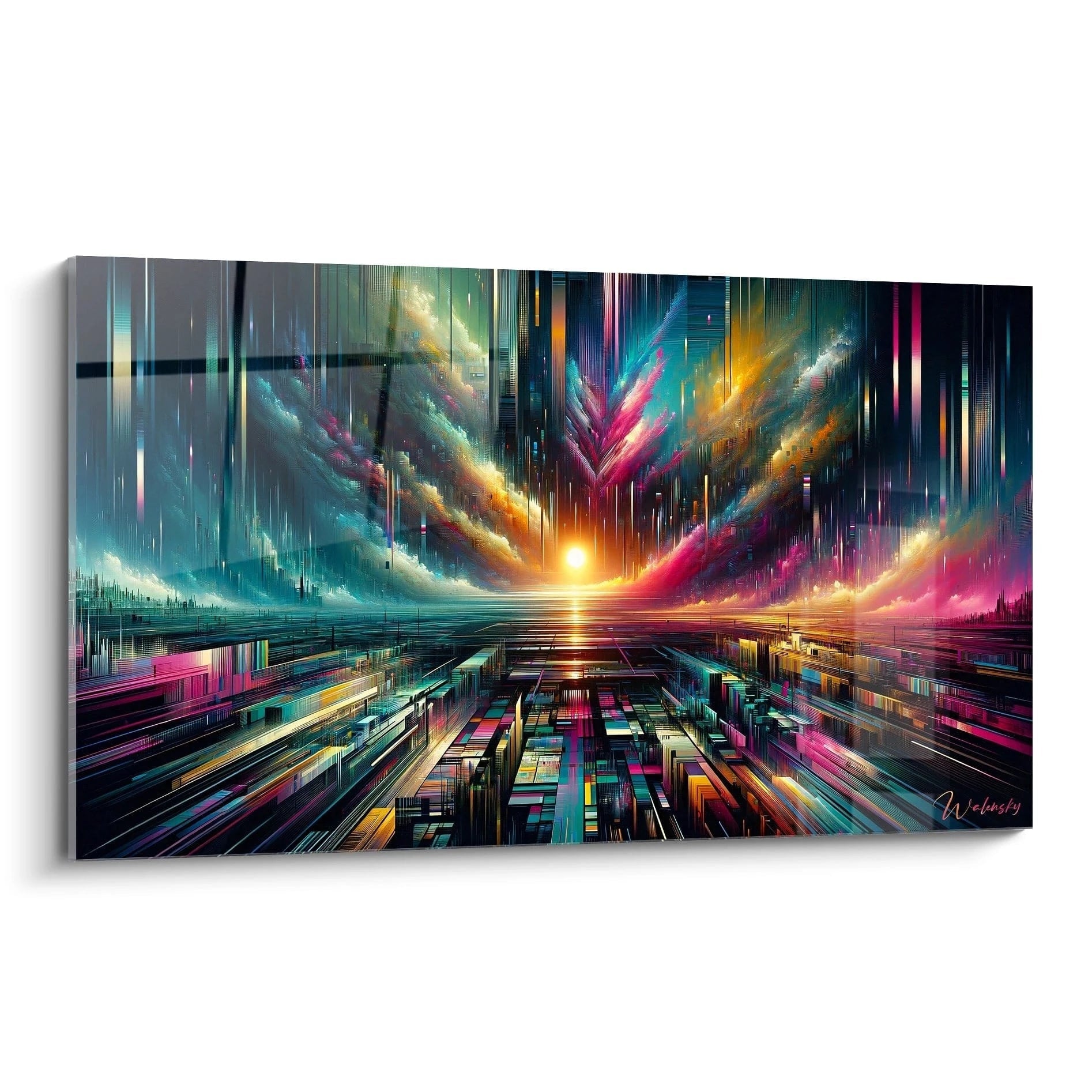
Here's the secret most decorators miss: color saturation directly affects your heart rate. Colors that are too vivid overstimulate, while those that are too dull depress.
Observe your reaction to a Ferrari red versus a weathered brick red. Chromatic intensity triggers measurable physiological responses: increased pulse, dilated pupils, muscle tension.
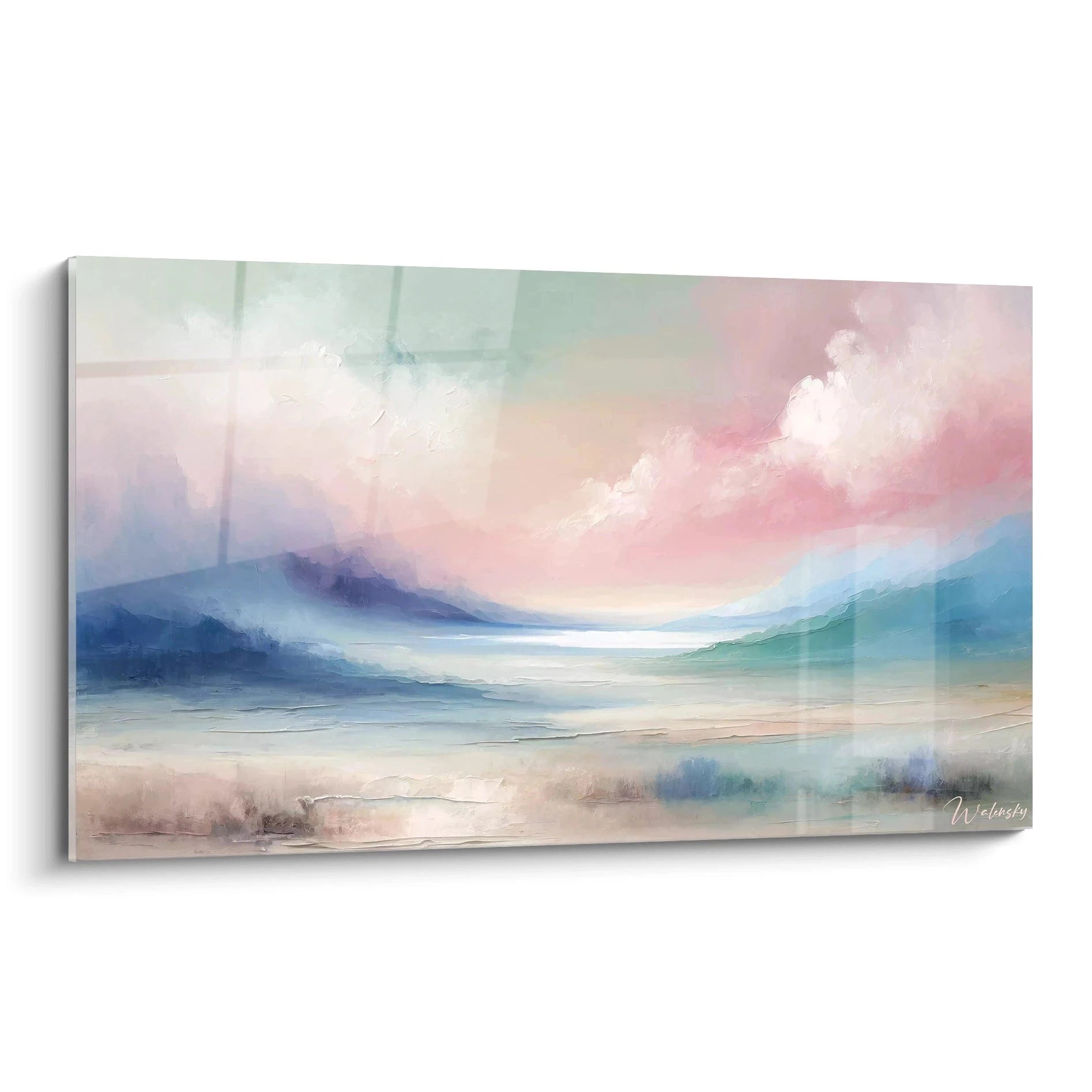
"Tempered" colors—neither too vivid nor too dull—respect the natural balance of your nervous system. They stimulate you just enough to maintain interest without ever over-soliciting.
The 3 signals of a truly soothing artwork:
- Your breathing deepens spontaneously: This is a sign that your parasympathetic system is activating, like during deep relaxation
- Your gaze wanders without clinging: Unlike stressful works of art that "trap" the eye, calming artworks allow for free and fluid exploration
- You momentarily lose track of time: This micro-escape indicates that your prefrontal cortex (area of control) pauses, giving way to a contemplative state
The effect of composition: the art of asymmetrical balance
The real magic lies in balance without perfect symmetry. Your brain appreciates harmony but is bored by exact repetition. It's a positive domino effect: when the composition respects the rule of thirds and the golden proportions, it triggers an intuitive sense of rightness that you feel immediately at the solar plexus.
The universal rule of visual soothing: A calming artwork combines at least three elements: predominantly curved shapes (70%), tempered colors (average saturation), and partial blur (visual resting areas). Test this grid on your current artworks to understand their emotional impact.
| ❌ Stressful elements | ✅ Soothing elements | 💡 Neurological mechanism | 🎯 Perceived result |
|---|---|---|---|
| Sharp angles, straight lines | Fluid curves, undulations | Activation of the alert system vs safety | Muscle tension vs relaxation |
| Saturated colors, violent contrasts | Tempered hues, soft transitions | Overstimulation vs sensory balance | Agitation vs serenity |
| Numerous details, excessive sharpness | Artistic blur, resting areas | Cognitive fatigue vs contemplative mode | Analytical mind vs letting go |
| Unbalanced composition | Harmony of proportions | Perceptual discomfort vs intuitive rightness | Diffuse malaise vs immediate well-being |

How to transform your space into a haven of peace in 3 simple steps
Rassurez-vous, you don't need to be a neuroscience expert to apply these discoveries. The nature has programmed your brain to intuitively recognize these soothing elements. Just follow a logical progression, like building a house: first the foundations (location), then the structure (choice of artwork), finally the finishing touches (harmonious integration). The result will surprise you with its immediate calming power.
🗺️ Method overview: We will first identify areas of visual stress in your interior (diagnosis), then select artworks with scientifically proven calming properties (selection), finally optimize their placement to maximize the soothing effect (integration). Each step will bring you an additional level of serenity, like successive layers of well-being.
Step 1: Create your visual stress map
Before adding anything, you need to understand what currently bothers you in your space. It's like identifying sources of noise before installing a soothing soundscape. This step will already give you a feeling of control and clarity over your environment.
What you need for this diagnosis
- Your smartphone (photo mode): It reveals what your eye no longer notices by habit. Take photos of each main viewing angle of your living spaces. The device's neutral objective will show you the visual imbalances that your brain unconsciously compensates for. Avoid filters that would mask the reality of your space.
- A notebook or notes app: To note your sensations room by room. Unlike memory, which filters, writing faithfully captures your immediate feelings. Choose a medium that you easily consult, as you will return to it to measure your progress.
- 30 minutes of quiet time: Without distractions (TV, music, notifications). Your nervous system needs silence to subtly perceive micro-visual tensions. This mental availability is crucial for an accurate diagnosis.
Let's move on to the systematic exploration of your space
The stress zone detection protocol
Sensory tour of your interior: Move slowly through each room while breathing deeply. Note where your gaze "sticks" unpleasantly, where you feel a micro-tension, even subtle. These points often correspond to sharp angles, overly bright colors, or visually cluttered objects.
⏱️ Time: 15 minutes | ✅ Successful when: You have identified 3-5 discomfort zones per main room | ⚠️ Attention: Do not rationalize your sensations - your first bodily impression is the most reliable
Contemplative pause test: In each room, sit for 2 minutes looking straight ahead. Observe whether your breathing calms down naturally or remains tense. Truly soothing spaces trigger a spontaneous slowing of the respiratory rate.
⏱️ Time: 10 minutes | ✅ Successful when: You clearly distinguish "recharging" rooms from "fatiguing" ones | ⚠️ Attention: Habit masks tensions - imagine discovering the space for the first time
Objective photographic analysis: Look at your interior photos as if they were someone else's. Circle in red the elements that "aggress" the eye (angles, garish colors, accumulation of objects). This emotional distance reveals imbalances invisible on a daily basis.
⏱️ Time: 10 minutes | ✅ Successful when: You identify recurring patterns of visual stress | ⚠️ Attention: Distinguish temporary clutter from structural design problems
✓ Validation of your diagnosis: You should have a clear map of the areas that visually exhaust you versus those that recharge you. If in doubt about an area, repeat the breathing test: stressful spaces maintain high and rapid breathing. You are now ready to precisely target your soothing interventions.
— Our selection


RECOMMENDED PRODUCTS
Step 2: Selecting your soothing artworks
Now that you know your areas of tension, you are going to choose the artworks that specifically counterbalance these visual stresses. It's more rewarding because you immediately see the corrective effect. You no longer decorate randomly; you care for your environment with the precision of a therapist.
Scientific selection criteria
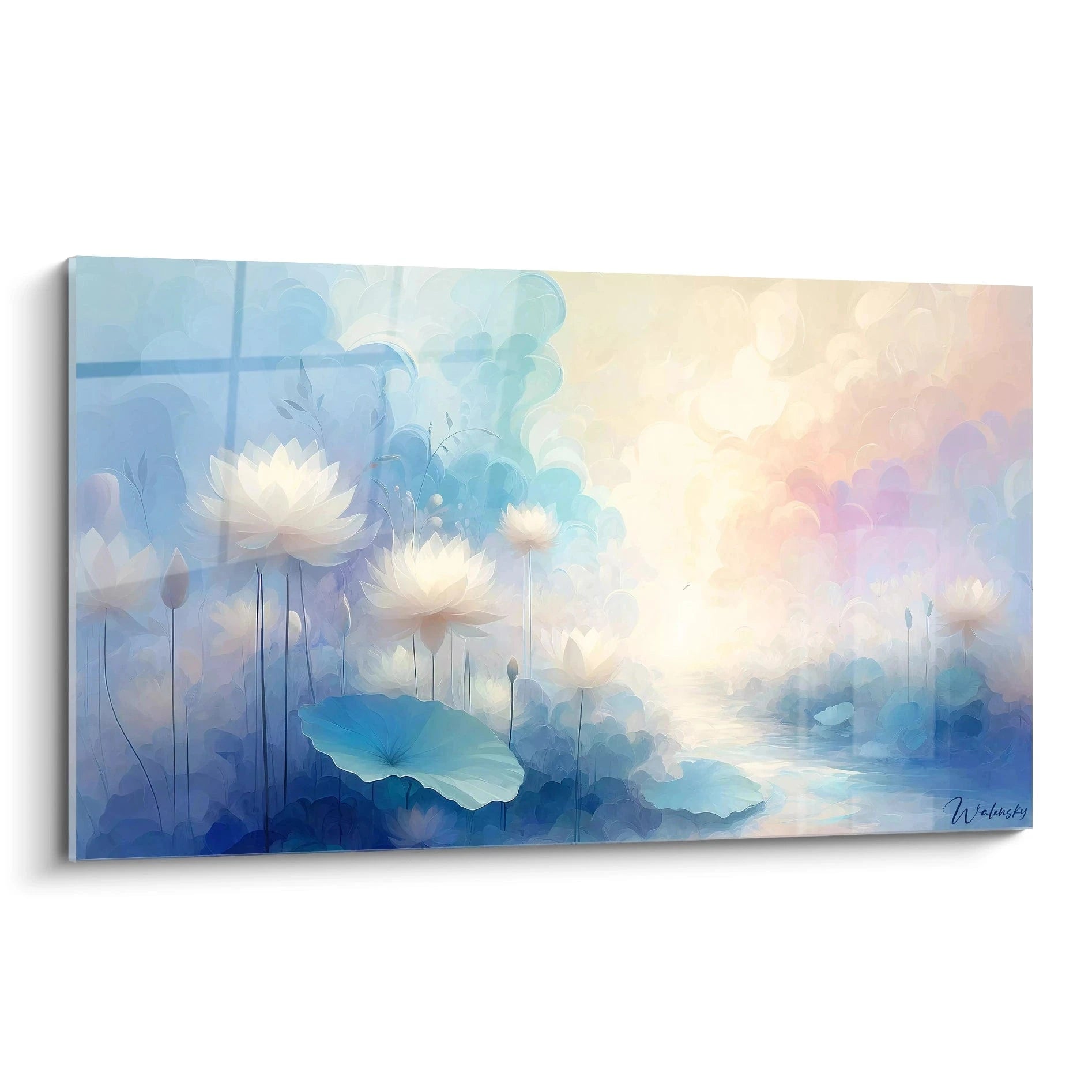
- Dominance of curves (minimum 70%): Look for artworks where flowing lines, undulations, spirals largely dominate. Test by mentally tracing the main outline: if it is angular, the artwork will activate your alert circuits. True soothing works "flow" under the gaze like water. Colors with medium saturation: Neither too bright (retinal fatigue) nor too dull (depressing effect). Favor ocean blues, forest greens, natural beiges, powdered roses. Avoid pure reds, neon oranges, or electric yellows that overstimulate the nervous system. Areas of artistic blur: The artwork should offer "visual pauses" where the eye can wander without clinging to details. These areas of softness allow the brain to enter a contemplative rather than analytical mode.
Practical application of selection
Instant Breath Test: When you encounter a work that attracts you, look at it for 30 seconds while breathing naturally. If it's truly soothing, you should feel your shoulders drop and your breath deepen spontaneously. This is the infallible test of neurological compatibility.
⏱️ Time: 2 minutes per artwork | ✅ Success when: You feel a measurable physical relaxation | ⚠️ Attention: Distinguish aesthetic attraction from real soothing effect
Verification of Mass Balance: The work should present visual balance without perfect symmetry. Mentally divide the image into nine zones (rule of thirds): the main elements should be harmoniously distributed, creating an intuitive stability without rigidity.
⏱️ Time: 1 minute per artwork | ✅ Success when: The work gives you an immediate impression of "rightness" | ⚠️ Attention: Beware of compositions that are too centered or unbalanced towards a corner
Step 3: Optimize Harmonious IntegrationThis final step transforms your selection into a true therapeutic environment. You now master the subtleties of an expert: optimal height, lighting, dialogue with existing furniture. The result exceeds your initial expectations and creates a lasting feeling of serenity that you will truly be proud of.
The Golden Rules of Soothing Placement
Relaxed Eye Height: Place the center of the work at 1m50-1m60 from the floor, corresponding to the natural gaze in a relaxed seated position. This height avoids unconscious cervical tension that maintains a subtle state of stress. Your nervous system automatically associates postural comfort with emotional security.
⏱️ Time: 5 minutes per artwork | ✅ Success when: You can admire the work without tilting your head up or down | ⚠️ Attention: Adjust according to the height of your main seats
Soft Highlight Lighting: The artwork should be visible without glare or marked shadows. Opt for indirect lighting that reveals nuances without creating aggressive reflections. Light participates as much as the work itself in the overall soothing effect.
⏱️ Time: 10 minutes of adjustment | ✅ Success when: The artwork "shines" naturally without overexposure | ⚠️ Attention: Test the lighting at different times of the day
The Gentle Progression Rule: Start with a piece in your main living room, observe the effect for a week before adding the next. Your brain needs time to integrate each new soothing stimulus and maximize its benefits. Patience and progression are better than immediate saturation.
You now master the neuroscientific mechanisms of visual soothing. This knowledge gives you a considerable advantage in creating environments that truly care for your daily well-being, rather than unconsciously tiring it.
🎨 Interior design expert's secret: Create "visual corridors" between your soothing artworks by subtly aligning their chromatic or formal elements. This invisible continuity guides the eye on a path of relaxation that amplifies the effect of each artwork individually. Your space becomes a true symphony of serenity.
Question from an attentive reader
"Do you think it really works for everyone? I wonder if my daily stress is too strong for a simple painting to make a difference..."
I perfectly understand this legitimate question. You are right to be cautious of promises that are too good to be true. The reality is that visual soothing does not replace professional support in cases of severe chronic stress, but it constitutes a remarkably effective daily support. Think of it as a natural complement that acts 24/7, not as an instant miracle solution. The effect builds gradually and becomes increasingly perceptible.
🔬 Personal validation test: Try with a single artwork for 10 days in your main room. Note your tension level when you come home each evening (from 1 to 10). You should observe a gradual but noticeable decrease in this stress score.
— You may also like


Pitfalls to avoid so as not to sabotage your oasis of serenity
Attention, some common mistakes can turn your good intentions into additional sources of stress. These errors are so frequent that I prefer to warn you now, to avoid disappointment and loss of time.
- ⚡ Overloading all at once: The desire to transform your entire interior in a week is understandable, but your brain needs time to adapt to each new soothing element. Too many artworks at once create a visual cacophony that cancels out the desired effect. Progress in successive touches, like a perfumer who doses his essences.
- 🎯 Prioritizing pure aesthetics over a soothing effect: A painting can be beautiful and... stressful! Don't let yourself be seduced only by beauty if the artwork doesn’t pass the deep breathing test. Your well-being takes precedence over what your guests will think.
- 📐 Ignoring scale and proportions: An artwork that is too large crushes the space and creates visual pressure, too small it drowns and loses its soothing power. The general rule: the artwork should occupy 2/3 of the width of the furniture it surmounts, without ever exceeding the total width of the sofa opposite.
- 💡 Neglecting appropriate lighting: Even the most soothing artwork can become aggressive under too direct or insufficient lighting. Harsh shadows and reflections distract from the message of serenity and create visually exhausting micro-tensions over time.
- 🏠 Forgetting harmony with existing decor: Your new soothing artwork should dialogue with your current furniture and colors. A stylistic clash that is too violent generates a visual conflict that cancels out the desired relaxing effect. Seek complementarity, not rupture.
🔍 Daily verification system: Each morning for a week, allow yourself 30 seconds to observe your new artwork while taking deep breaths. If the soothing effect diminishes or disappears, this is a signal to adjust the position, lighting, or reconsider the choice. Also watch out for signs of "visual fatigue": when the eye begins to "slide" over the artwork without stopping.
— In the same vein


Frequently asked questions about the art of visual soothing
Contrary to popular belief, the soothing effect does not depend on price but on visual characteristics. A quality reproduction from 50-150€ with the right codes (curves, muted colors, artistic blur) will be infinitely more relaxing than an original artwork worth 2000€ with aggressive shapes. Start with one piece, measure the impact, then gradually expand according to your feelings and budget.
The immediate effect (deeper breathing) is felt within the first 30 seconds of observation. The impact on your daily stress becomes noticeable after 7-10 days of regular exposure. Your brain needs this time to reorganize its relaxation reflexes in space. Be patient: deep neurological transformations take 3-4 weeks to stabilize.
Each room has its function and deserves a specific approach. Living room: large, contemplative artworks, for family relaxation. Bedroom: softer tones, medium formats, promoting sleep. Office: soothing but dynamic elements, maintaining concentration without stress. Avoid overly stimulating artwork in resting places, too static in workspaces.
Absolutely, provided you maintain chromatic and rhythmic consistency. You can mix contemporary abstract with impressionistic landscapes if the colors dialogue and the shapes remain predominantly curved. The secret: create "visual bridges" between artworks (reprising a blue, an organic form) to maintain overall harmony despite stylistic diversity.
Your transformation towards daily serenity begins now
In a few weeks, you will cross the threshold of your home with a sigh of relief that you did not know before. Your gaze will naturally settle on your chosen artworks, and this simple visual connection will automatically trigger your relaxation mechanism. Loved ones will notice your mood change when returning home, this inner peace that now inhabits you.
This mastery of visual soothing will transform your relationship with all spaces: you will instantly identify stressful environments and know how to protect yourself from them. This skill extends beyond your decor: choice of a restaurant, a hotel, arrangement of your office. You develop an emotional intelligence of space that enriches every aspect of your life.
The hardest part was understanding these hidden neurological mechanisms. Now that you possess these scientific keys, all you have to do is select your first soothing artwork and observe its magic at work. Start today by identifying your priority visual stress zone.
✨ Your invitation to transformation:

Explore our collections


