Imagine entering a palace where each wall tells a millennia-old story, where ochre and blood-red colors dance under tropical light, where every motif sculpted into fresh clay reveals the secrets of a fascinating civilization. The wall frescoes of the Kingdom of Benin were not mere decorations – they constituted a sophisticated visual language, a political and spiritual communication system of unparalleled richness. As an ethnologist specializing in African palace art, I spent seven years studying these monumental works in archives and during missions to present-day Nigeria. What I discovered transcends anything one could imagine about royal decoration.
Here's what the wall frescoes of the Benin palaces reveal: a architecture of power where each image legitimized the divine authority of the sovereign, a mnemotechnic system preserving the oral history of the kingdom through codified visual symbols, and a living cosmology connecting the terrestrial world to ancestral and supernatural forces. These walls were not passive canvases – they vibrated like three-dimensional manuscripts accessible to all, literate or not.
Today, when we admire African art in our contemporary interiors, we often ignore the symbolic depth of these artistic traditions. We see geometric patterns, warm colors, without grasping the complex language they conveyed. This lack of understanding deprives us of an extraordinary source of inspiration for designing spaces full of meaning.
Yet, understanding the meaning of the Beninese frescoes does not require a doctorate in art history. It simply requires opening your eyes to a consistent, logical visual system that spoke as well to dignitaries as it did to artisans. In this article, I take you through the corridors of the royal palaces of Dahomey and precolonial Benin, where wall art told of power, history, and the sacred with an eloquence that our words still struggle to capture.
Walls that legitimize: when clay proclaims divine royalty
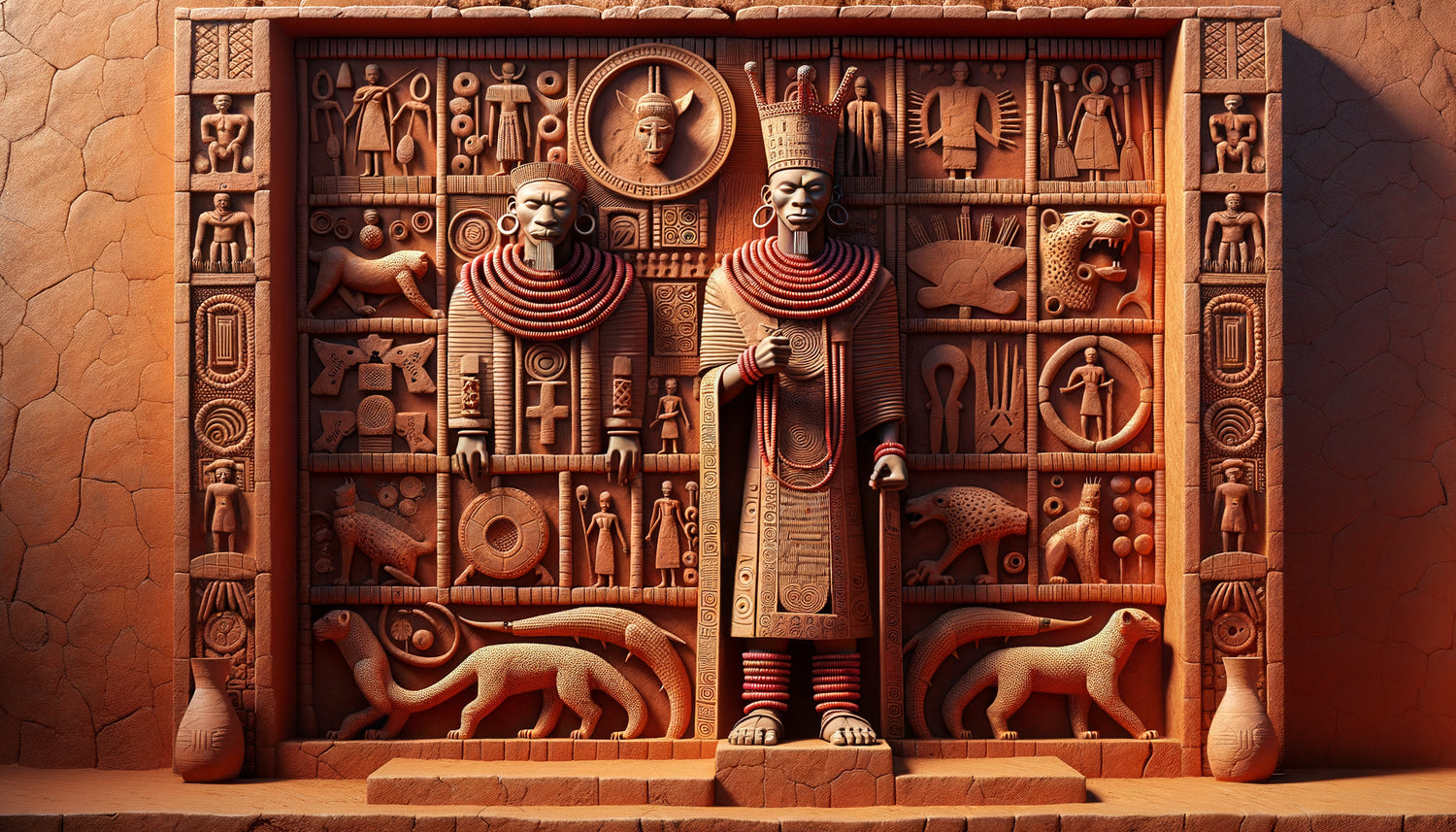
In the palaces of the Kingdom of Benin, each wall fresco first served a fundamental political purpose: establishing and maintaining the sacred authority of the Oba, the god-king. Court artists, members of hereditary guilds, sculpted monumental bas-reliefs into red clay depicting the sovereign's military exploits, his deified ancestors, and the mythological creatures that protected his reign.
These royal frescoes functioned as visual certificates of legitimacy. A newly enthroned Oba would immediately order new wall compositions integrating his likeness into the ancestral lineages already represented. Leopard motifs – the animal par excellence – appeared systematically, symbolizing strength, cunning, and the mystical link between the monarch and the forest powers.
On the exterior facades of the Abomey Palace, capital of the neighboring kingdom of Dahomey, polychrome bas-reliefs reached remarkable sophistication. Each king had his own emblem – a shark, a lion, a buffalo – reproduced in hundreds of copies on the walls of his personal palace. This obsessive repetition created an immediately recognizable visual identity, anchoring in the collective mind the power and uniqueness of the current reign.
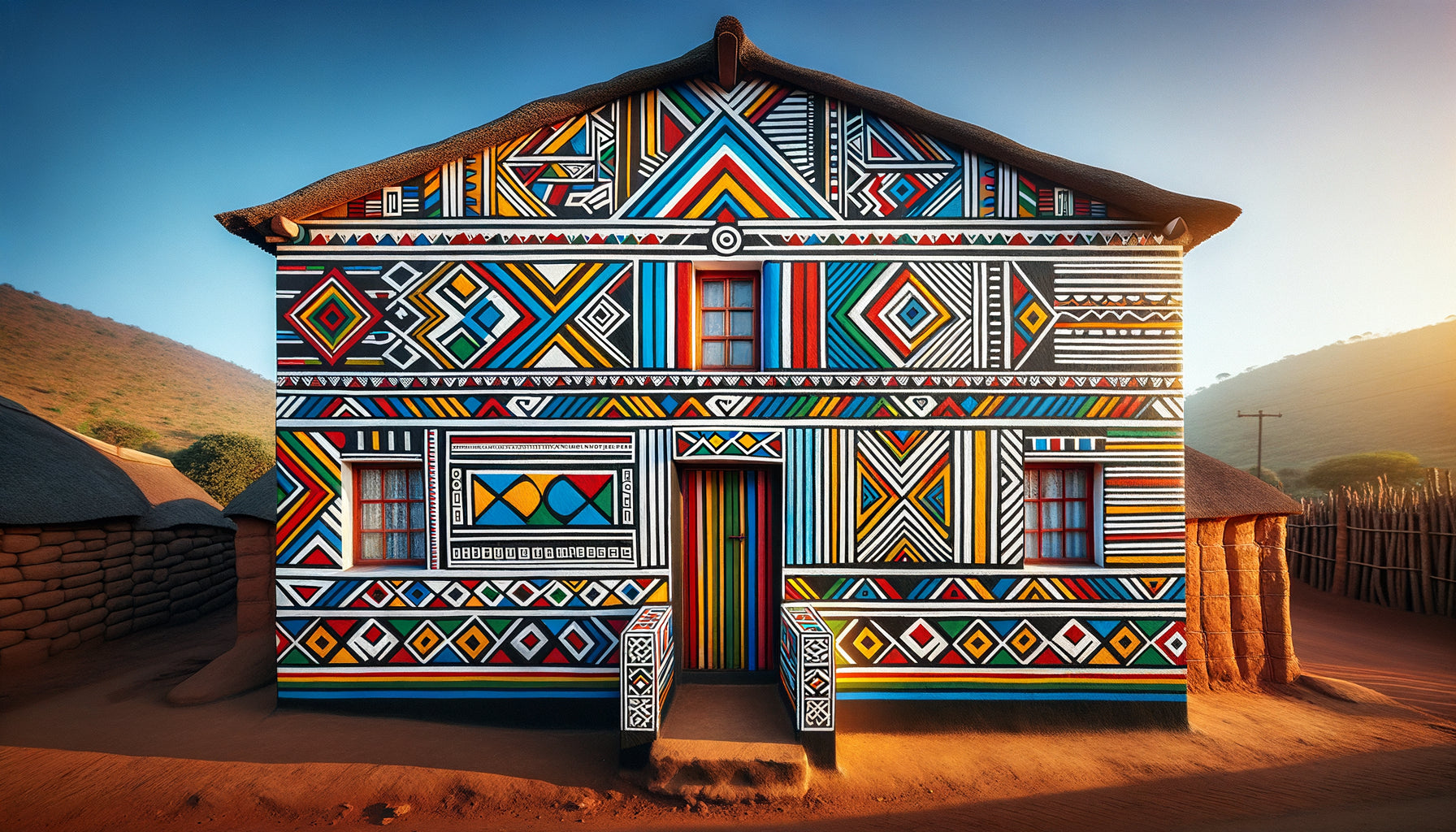
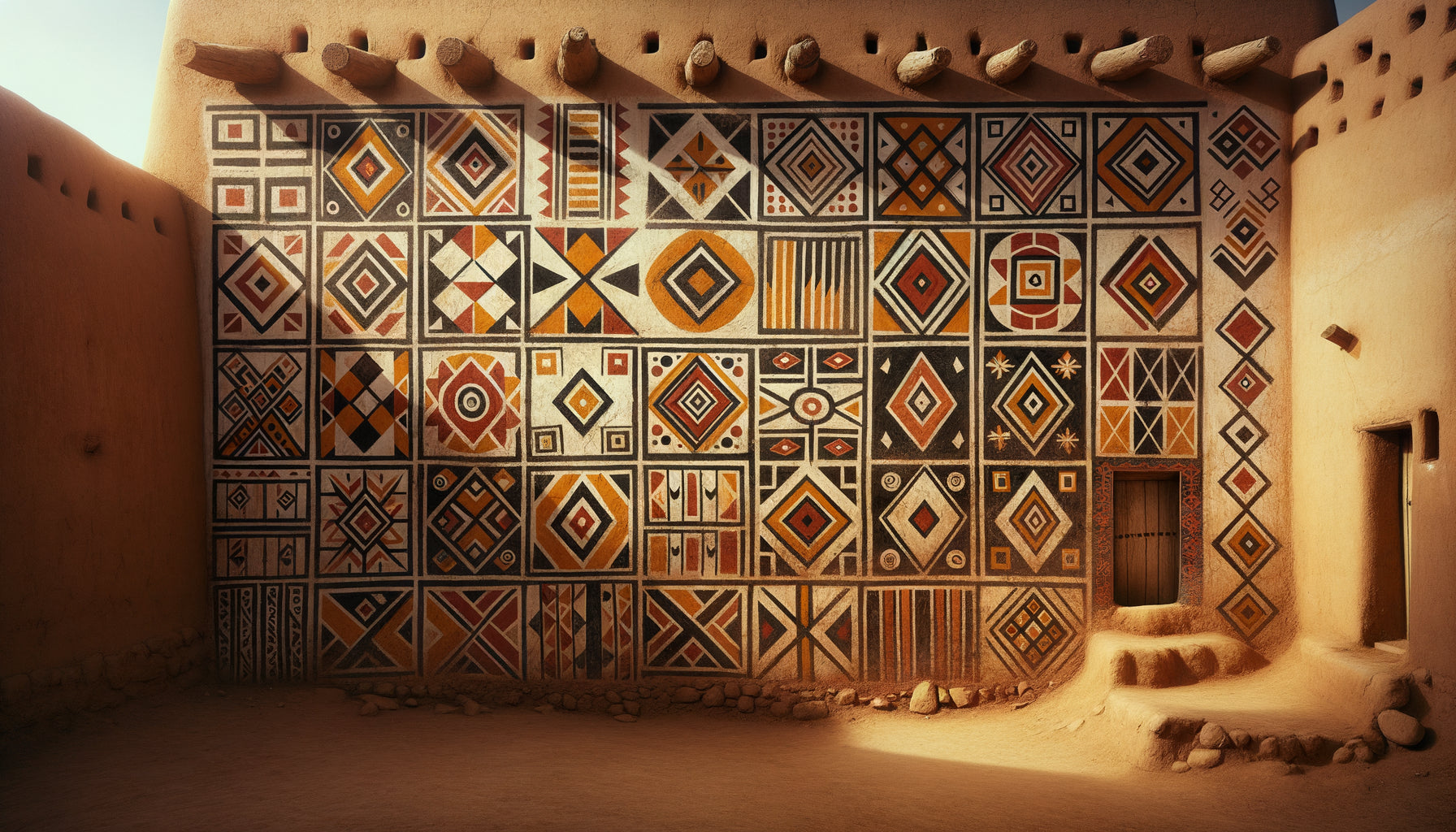
The colors used were never arbitrary. Red, obtained from ferrous ochre, evoked sacrificial blood and war. White, drawn from kaolin, represented spiritual purity and connection to ancestors. The black of charcoal symbolized the nourishing earth and mysterious depths. Each mural fresco orchestrated these hues in a precise symbolic choreography, readable by all initiates.
The wall library: how frescoes preserved collective memory
In a civilization with a strong oral tradition like that of precolonial Benin, murals fulfilled a crucial mnemonic function. They constituted veritable visual archives, recording the major events of the kingdom with remarkable chronological precision. The great griots relied on these images to recite royal genealogies and transmit history to future generations.
Take the example of the Abomey frescoes documenting military campaigns. Each victorious battle was immortalized according to a strict iconographic code: the number of enemies defeated represented by severed heads, the spoils of war depicted by stylized symbols, alliances sealed by ritual handshakes. An educated observer could literally 'read' the kingdom's military history by walking through the palace walls.
These wall compositions also functioned as visual philosophical treatises. Royal proverbs and maxims – central elements of Beninese wisdom – found their pictorial translation in allegorical scenes. A chameleon walking on a branch evoked the adaptability of the wise ruler. A bird pecking at a snake illustrated the victory of cunning over brute force.
The transmission of knowledge thus took place through a sophisticated visual pedagogy. Young princes learned the history of their lineage by contemplating palace frescoes, guided by the explanations of the elders. This architectural memory ensured remarkable cultural continuity, resisting the vagaries of time much better than written documents in these tropical climates hostile to paper and parchment.
The symbolic language of recurring motifs
Certain motifs appeared with a remarkable consistency in the Benin murals, forming a shared visual alphabet. The mudfish, a creature living between land and water, symbolized the hybrid nature of the Oba – both human and divine. Intertwined serpents represented the eternity of dynastic power. Zigzag geometric patterns evoked lightning, a manifestation of the sovereign's divine wrath.

The sacred embodied: when walls become spiritual portals
Beyond their political and mnemonic functions, the murals of royal palaces played a fundamental spiritual role. They transformed palace architecture into a liminal space, a threshold between the visible world and the universe of invisible forces. In Benin cosmology, decorated walls were not simply decorative surfaces – they constituted active interfaces with the realm of ancestors and deities.
The artisans who created these murals followed strict rituals. Before modeling the clay, they performed propitiatory sacrifices, invoking the protection of tutelary spirits. Some pigments were mixed with ritual substances – ashes of ancestors, sacred plant powders – imbuing the wall compositions with a tangible spiritual charge. A visitor entering the palace was not simply contemplating images: he was coming into contact with ancestral energies crystallized in the very matter of the walls.
Representations of totemic animals functioned as spiritual guardians. The leopard sculpted above a door was not merely heraldic decoration – it truly embodied the protective spirit of the royal lineage, watching over the threshold and repelling malevolent influences. This animistic conception of art explains why the Benin murals exuded such an intense presence, almost intimidating to the uninitiated.
In the quarters reserved for ancestral ceremonies, the murals took on a frankly mystical dimension. Scenes depicting vodun spirits, passages between worlds, shamanic transformations covered the walls with esoteric symbols. Only priests and high-ranking initiates could fully decode these visual messages, which served as supports for complex ritual practices.
The ancestral technique: clay, ochre and transmitted know-how
The creation of Beninese murals required an extraordinary technical know-how, jealously preserved within hereditary artisan guilds. The process began with the careful preparation of the wall surfaces. Artisans first applied a layer of coarse clay mixed with chopped straw, creating a rough base allowing for optimal adhesion of subsequent layers.
Once this foundation was dry, they modeled the bas-reliefs in finer clay, sculpting directly onto the wall with impressive mastery. Shapes gradually emerged under their expert fingers: human silhouettes, stylized animals, complex geometric patterns. This technique of in situ modeling required remarkable spatial vision and perfect control of proportions, since no correction was possible once the clay had hardened.
Polychromy crowned the sculpting work. Natural pigments – red and yellow ochres, white kaolin, black charcoal – were ground then mixed with organic binders (tree sap, gum arabic) ensuring their durability in the tropical climate. The application of colors followed precise iconographic rules, each shade reinforcing the symbolic message of the composition.
To protect these wall artworks from the torrential rains of the wet season, Beninese artisans had developed sophisticated waterproofing techniques. They coated the frescoes with a natural varnish based on palm oil and vegetable resins, creating a transparent protective film. Overhanging roofs also provided architectural protection, their generous eaves protecting the walls from direct weather.
The ritual maintenance of sacred frescoes
Royal frescoes were never left to their fate. Teams of specialized artisans carried out regular restoration campaigns, reviving faded colors, filling cracks, consolidating damaged reliefs. These interventions followed a precise ritual calendar, often synchronized with the kingdom's major annual ceremonies.

The contemporary legacy: resonances in our modern interiors
The precolonial murals of Benin still speak to us today with surprising relevance. Their approach to decoration as language, their use of color as an emotional vector, their conception of space as a support for narration – all these principles find fascinating echoes in contemporary interior design.
When we integrate African art into our living spaces, we unconsciously perpetuate this millennial tradition that considered ornamentation as a carrier of deep meaning. An African painting hung in a modern living room doesn't just add color – it creates a symbolic connection, tells a story, evokes a subtle spiritual presence.
Contemporary designers are rediscovering the virtues of narrative wall compositions. Accent walls, patterned wallpapers, and modern murals reinvest this ancestral idea that our walls can be much more than simple functional separations. They can become visual chronicles of our personal history, aesthetic manifestos of our values, gateways to the imagination.
The color palette of Benin frescoes – these earthy reds, these warm ochres, these bright whites – inspires countless decorative projects today. These ancestral colors possess an organic quality, an authentic warmth that synthetic shades struggle to reproduce. They ground our interiors in a reassuring materiality, reconnecting us to the fundamental natural elements.
Transform your interior into a space full of meaning and history
Discover our exclusive collection of African paintings that capture the symbolic essence and visual power of the ancestral artistic traditions of the continent.
Create your own domestic visual language
The most valuable lesson from Benin palace frescoes is not in their particular aesthetics, but in their fundamental principle: decoration as a conscious communication system. These royal artists never chose a motif at random – every visual element participated in a coherent discourse on the identity, values, and history of their patrons.
How to transpose this wisdom into our modern interiors? Start by identifying the stories you want to tell through your decor. Your cultural origins? Your significant travels? Your deep passions? Your spiritual aspirations? Once these themes are clarified, select works and objects that embody them visually, gradually creating your own personal iconography.
Colors play a crucial role in this domestic visual language. Rather than blindly following ephemeral trends, question the emotional and symbolic associations that each shade evokes for you. Does red inspire passion or aggression? Does white suggest purity or emptiness? This intuitive and personal approach will allow you to build authentically meaningful color palettes.
Don't hesitate to integrate explicit narrative elements into your decor. A gallery of chronologically organized family photographs reproduces the mnemonic principle of Benin frescoes. An inspiration wall gathering images, quotes and travel memories creates an evolving composition telling your personal journey. These domestic installations transform your walls into living memory supports.
Finally, consider the spiritual or emotional dimension of your decoration. The palaces of Benin remind us that our living spaces can serve as personal sanctuaries, psychological refuges filled with positive energies. A meditation corner adorned with symbolic objects, a secular altar celebrating your inspirations, a mural composition evoking your aspirations – all are contemporary ways to honor this ancestral tradition that sanctified domestic space.
Preserve and transmit : a fragile but living heritage
Today, the Benin palace murals face multiple threats. Climate erosion, anarchic urban development, lack of funding for conservation – all these factors endanger this irreplaceable heritage. The palaces of Benin, listed as a UNESCO World Heritage site since 1985, benefit from relative protection, but countless lesser-known sites are inexorably degrading.
Encouraging initiatives are nevertheless emerging. Contemporary artisans are being trained in the ancestral techniques of manufacturing and restoring these multicolored bas-reliefs. Digital documentation programs create three-dimensional archives of existing frescoes. International collaborations fund restoration campaigns that respect traditional methods.
Our contemporary fascination with African art can contribute positively to this preservation. By aesthetically valuing these artistic traditions, by integrating their principles into our current decorative practices, by supporting the artists and artisans who perpetuate these skills, we participate in the cultural vitality of this heritage. Art is not only preserved in museums – it survives above all in the imaginations that continue to nourish it.
The Benin frescoes ultimately teach us that true decorative luxury does not lie in the accumulation of expensive objects, but in the symbolic and narrative depth of our aesthetic choices. A truly rich interior is an interior that tells a coherent story, embodies conscious values, creates lasting emotional and spiritual connections. It is this millennial wisdom that we would do well to rediscover and reinvent in our contemporary lives.
FAQ
Can we still see original Benin precolonial murals today?
Yes, the royal palaces of Abomey in present-day Benin (formerly the Kingdom of Dahomey) preserve extraordinary examples of wall frescoes dating from the 17th to the 19th century. The site, a UNESCO World Heritage Site, houses about ten palaces with their remarkably well-preserved polychrome bas-reliefs. Some have benefited from meticulous restorations using traditional techniques. Visitors can admire these narrative compositions illustrating successive reigns, historical battles and royal symbols. In Nigeria, in the city of Benin City (former capital of the Kingdom of Benin), some remains also survive, although colonial destruction in 1897 caused considerable heritage losses. Museums such as the Abomey Historical Museum offer guided tours to decode the symbolic richness of these ancestral wall artworks.
How to integrate the aesthetics of Beninese frescoes into contemporary decoration?
The spirit of Beninese frescoes translates wonderfully into modern interiors without requiring a literal reproduction. Start by adopting their distinctive color palette: warm ochres, earthy reds, creamy whites and deep blacks create an atmosphere that is both sophisticated and cozy. The characteristic geometric patterns – zigzags, checkerboards, spirals – can be integrated through textiles (cushions, rugs, wall hangings) or graphic wallpaper. Prioritize natural materials evoking clay and terracotta: pigmented screed, lime plasters, artisanal ceramics. For maximum impact, create an accent wall with contemporary bas-reliefs inspired by Beninese techniques, or compose a narrative gallery wall of African paintings visually telling your personal story. The essential thing is to respect the fundamental principle: each decorative element must participate in a coherent narrative rather than being chosen arbitrarily.
What was the difference between the frescoes of the royal palaces and those of ordinary homes?
Palace frescoes differed radically from vernacular wall decorations in their symbolic complexity, execution quality, and political function. In royal palaces, only specialized artisans belonging to hereditary guilds could create the bas-reliefs, using secret techniques passed down from master to apprentice. The compositions followed a strict iconographic code reserved for representing royal power: leopards, mythological serpents, battle scenes, dynastic emblems. The pigments used included rare and expensive materials, sometimes mixed with ritual substances. In contrast, common dwellings featured more modest wall decorations: simple geometric motifs, stylized floral friezes, basic protective symbols. These ornaments were generally made by the inhabitants themselves or local artisans, using accessible techniques and materials. This aesthetic hierarchy visually reinforced the social stratification of the kingdom, immediately making readable the status of each building in the urban landscape.