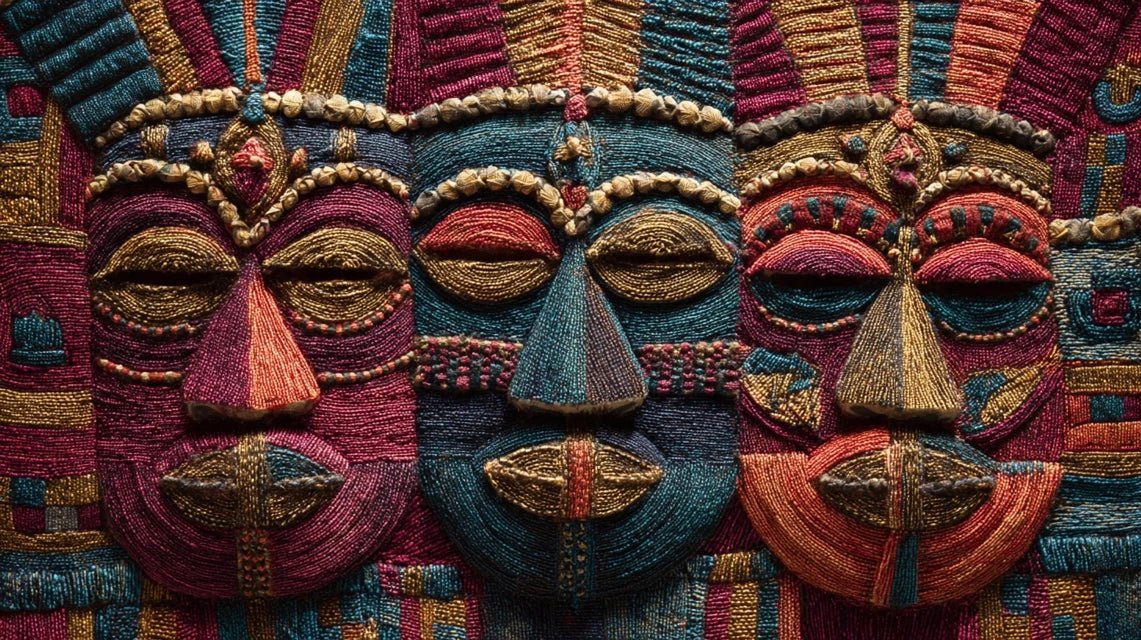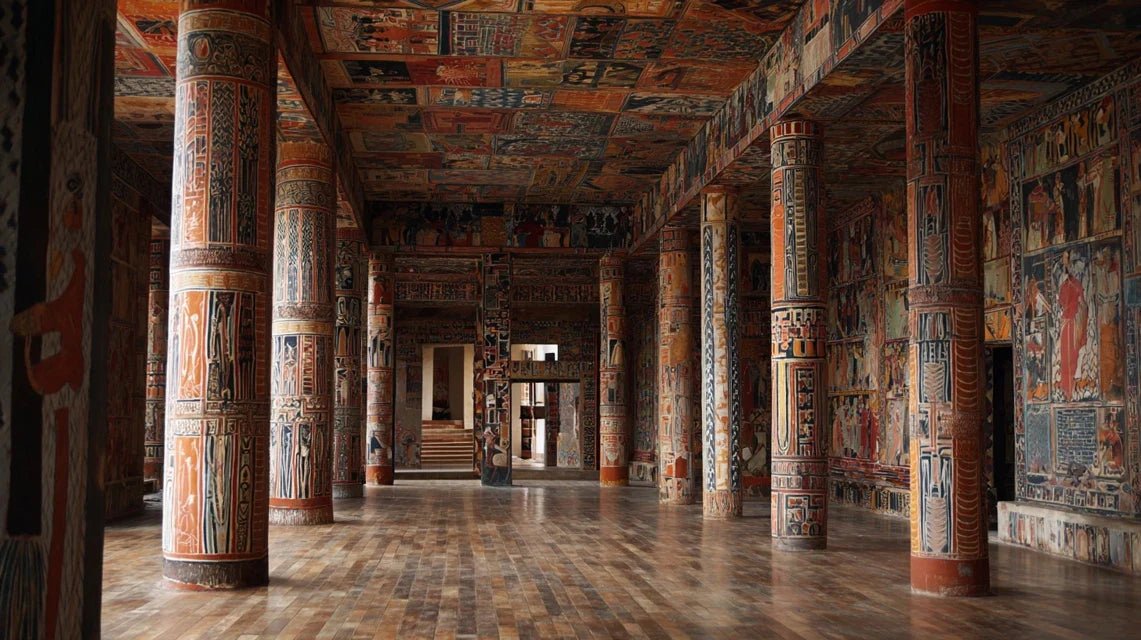
I first felt this electricity in 2018, during an artist residency in Abomey. Standing before the walls of King Ghezo's royal palace, I realized that these frescoes were not simply wall decorations, but true visual languages capable of radically transforming our contemporary interiors.
Here’s what the frescoes of the palaces of Benin bring to your decor: a narrative identity that tells a story on your walls, a vibrant color palette of ochres, burnt earth and deep blacks, and a symbolic geometry that structures space with rare power. These elements, born from the traditions of the Dahomey kingdoms, possess this unique ability to create atmospheres that are both timeless and resolutely modern.
The problem? Many fear that these African inspirations will veer into ethnic pastiche or clash with a clean interior. Worse still: how to transpose the monumentality of a royal palace into a 70m² apartment without creating visual overload?
Rest assured: the spirit of Beninese frescoes adapts to all spaces and styles. It's not a question of faithful reproduction, but of understanding the visual and symbolic codes that make them so captivating. After accompanying dozens of projects blending traditional African art and contemporary design, I have identified the keys that allow this royal aesthetic to be integrated with subtlety and elegance.
The visual heritage of the palaces of Abomey: when architecture speaks
The frescoes of the palaces of Benin are never insignificant. Each motif tells a reign, celebrates a victory, or symbolizes a value: the lion for the strength of King Glélé, the shark for the unpredictability of Béhanzin, the bird for the wisdom of Ghezo. These colorful reliefs transformed walls into visual chronicles, symbolic libraries accessible to all.
In our modern interiors, this narrative dimension offers an incomparable depth. Rather than a simple terracotta-painted wall, imagine a fresco inspired by the appliqués of Dahomey: a panel of wall where geometric shapes and stylized animal symbols articulate, telling your own story. I saw a Parisian couple commission a large mural depicting the codes of Beninese frescoes to celebrate their union – a stylized leopard (symbol of royalty) surrounded by geometric motifs representing their two cultures.
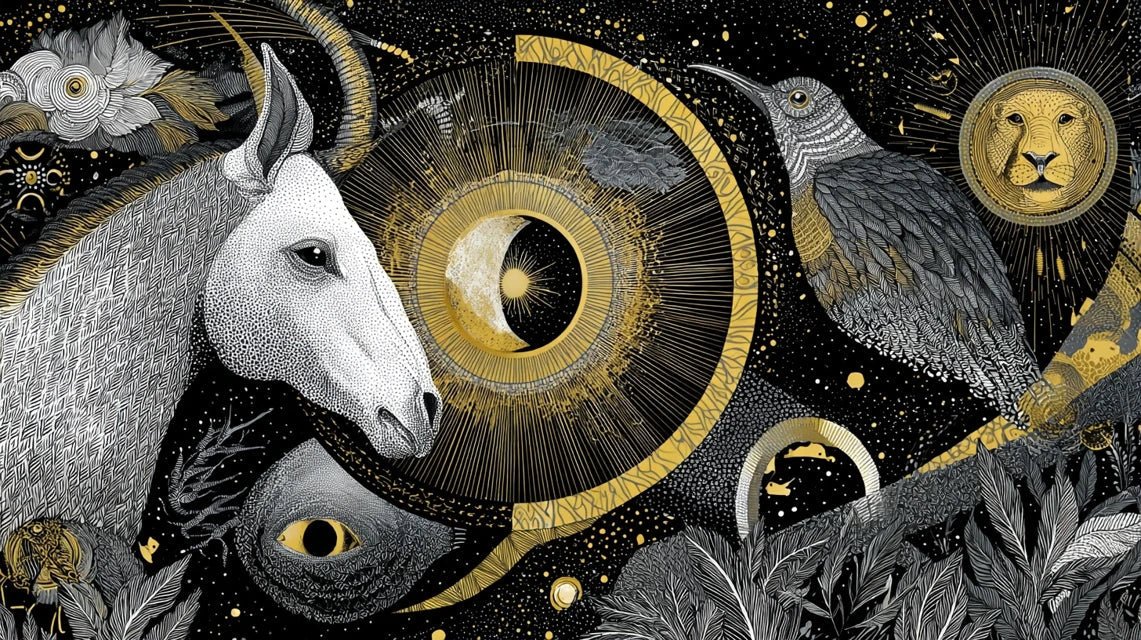
The animal symbolism of the palaces of Benin constitutes a visual repertoire of extraordinary richness. The crocodile evokes strategic patience, the elephant memory and wisdom, the chameleon adaptability. Transposed into decoration, these symbols become character elements: a stylized leopard head above a desk evokes leadership, a fish motif in a bathroom recalls abundance.
Royal color palette: the colors that structure space
The frescoes of the palaces of Benin primarily use natural pigments: yellow and red ochres, Sienna earth, white kaolin, black charcoal. This earthy palette possesses a rare soothing quality, while offering powerful contrasts. Unlike vibrant hues that tire the eye, these ancient colors create a warm depth that evolves with the light.
In contemporary decor, this color range works wonderfully with polished concrete, raw wood, and natural linen. I worked on an industrial loft where we created an accent wall inspired by the frescoes of Abomey: a gradation of ochres ranging from straw yellow to brick red, structured by black geometric motifs. The effect was striking – the wall seemed to have always been there, like an archaeological stratum revealed.
The characteristic earth-charcoal contrast of the royal palaces also offers a sophisticated alternative to traditional black and white. Black patterns on an ochre background possess a warmth that cold monochrome never has. For a living room, replace your classic white wall with an clay beige onto which you apply graphic black motifs inspired by Beninese applications – the space immediately gains character.

Discover this inspiring artwork
Sacred geometry and repetitive motifs: structuring without weighing down
The frescoes of the royal palaces of Benin make extensive use of geometric shapes: chevrons, diamonds, crosses, concentric circles. These patterns are never arbitrary – they represent philosophical concepts, proverbs, royal genealogies. This symbolic geometry creates a visual rhythm that guides the eye and structures space.
Transposed into decor, this approach allows you to create rhythmic spaces without resorting to physical separations. I saw an architect use a frieze inspired by Beninese motifs to visually delineate a dining area in an open space – a simple band of 30 cm high running along the wall, but which was enough to create a clear distinction between functions.
The repetitive motifs of the Benin frescoes also offer elegant solutions for textiles. A cushion featuring traditional chevrons, a rug woven with the diamonds of the kingdom of Danxomè, curtains printed with concentric circles symbolizing royal cycles – these elements bring the cultural reference without imposing a theme that is too emphatic. The key lies in stylization: keep the geometric structure, simplify the details, work in monochrome or tonal variations.
Application techniques: from bas-relief to contemporary wallpaper
The original frescoes of the Benin palaces are made in bas-relief – a modeling technique where shapes emerge slightly from the wall. This dimensionality creates shadow play that brings the surface to life depending on the time and angle of light. Reproducing this effect in our modern interiors offers fascinating possibilities.
The most accessible solution remains colored tadelakt or tinted lime plaster, applied in varying thicknesses to create relief. A skilled artisan can model motifs inspired by the Benin frescoes directly into the fresh plaster – you get a unique surface with that characteristic tactile and visual quality of the Abomey palaces. I supervised such a realization in a bedroom: a 2m x 2.50m panel behind the bed, representing a stylized tree (symbol of rooting) with subtle reliefs. The result had this silent presence of ancient works.
For tighter budgets, stencil and wall painting offer excellent results. Create or have created stencils inspired by the motifs of the royal palaces, then work in layers of earth tones. The trick is not to seek mechanical perfection: slight irregularities, imperfect overlaps give precisely this artisanal character that is the soul of traditional frescoes.
Finally, custom panoramic wallpaper now allows you to faithfully reproduce the aesthetics of the Benin frescoes. Several publishers offer designs inspired by Dahomean art, but I often recommend having a composition created by a specialized graphic designer – you keep the spirit while adapting it perfectly to your dimensions and palette.

Discover this inspiring artwork
Composing with the existing: integration and balance
The frequent mistake is to want to transform an entire interior into a reconstruction of African palace. The frescoes of the Benin royal palaces work wonderfully in targeted touches, like accents that reveal and sublimate the rest rather than covering everything.
In a clean Scandinavian interior, a single wall treated with Beninese codes (ochres, black geometric patterns, perhaps a stylized animal symbol) creates a striking focal point while respecting the overall breathing space. This approach works on the principle of controlled contrast: the surrounding simplicity allows the richness of the fresco to fully express itself.
For more elaborate interiors, prioritize chromatic echo integration. If you already have dark wood furniture and textiles in warm tones, introduce Beninese motifs through movable elements: cushions, throws, decorative objects. A series of three paintings featuring the royal symbols of Dahomey will create a visual continuity without disrupting the existing balance.
The verticality characteristic of palace frescoes – these long decorative bands that ran along the walls – adapts perfectly to modern architectural constraints. In a narrow hallway, a frieze inspired by Beninese motifs at mid-height visually widens the space. In a living room with high ceilings, a vertical composition draws the eye upwards and magnifies the volume.
Beyond the wall: furniture and objects in the spirit of Benin royalty
The influence of palace frescoes from the Kingdom of Benin is not limited to wall surfaces. Their visual vocabulary also inspires furniture and objects, creating an organic decorative coherence.
Upholstery fabrics are a natural extension of this aesthetic. Dahomey appliqués – these fabric compositions sewn representing historical or symbolic scenes – can inspire cushion covers, sofa throws, even upholstered headboards. I particularly appreciate the felt cut-out and layered work, which recreates the dimensionality characteristic of relief frescoes.
Sculpted or painted furniture also offers fascinating possibilities. An antique buffet whose doors are repainted with motifs inspired by the palaces of Abomey becomes a unique character piece. Chairs with backs that echo Beninese geometric shapes create a subtle link with an accent wall treated in the same spirit. The key is consistency: choose two or three recurring motifs rather than multiplying references.
Screens and room dividers are ideal supports for this aesthetic. A three-panel screen where each panel features a different royal symbol (lion, elephant, fish) structures space while telling a story. This modular solution allows you to introduce the Beninese reference without permanent commitment – perfect for testing before embarking on wall modifications.
Ready to infuse the visual power of the Dahomey kingdoms into your interior?
Discover our exclusive collection of African art that captures the essence of Beninese royal frescoes with a refined contemporary interpretation.
Creating your own inspired fresco: method and precautions
Do you feel ready to create your own composition inspired by the frescoes of the palaces of Benin? The process requires preparation and respect, but remains accessible with a methodical approach.
Start with serious iconographic research. Study photographs of the Abomey palaces, consult works on Dahomean art, visit exhibitions if possible. The goal is not to copy, but to understand the compositional logic: how motifs are organized, how colors interact, what the visual hierarchy is. I recommend creating an inspiration notebook where you collect elements that particularly speak to you.
Next, work on your personal adaptation. Select two or three symbols that resonate with your personal story or the values you want to embody in this space. Simplify them graphically to make them compatible with the overall aesthetic of your interior. A graphic designer can accompany you in this styling phase – it's an investment that guarantees a consistent result.
Technically, I always advise doing a full-size test on kraft paper before launching onto the wall. Fix your mockup to the wall for a few days, live with it, observe it at different times of the day. This step will avoid regrets once the paint is dry. Adjust proportions, modify colors if necessary – paper forgives, walls don't.
Finally, an essential precaution: approach this heritage with respect and humility. The frescoes of the palaces of Benin are not a catalog of free decorative motifs, but an expression of a cosmology, a history, a deep cultural identity. Being inspired by them implies recognizing this dimension, documenting yourself seriously, and avoiding any superficial or caricatural appropriation. It is this posture that transforms a simple decoration into a true cultural dialogue.
Conclusion: when your interior tells a royal story
Imagine yourself in your living room, your gaze fixed on that accent wall where deep ochres and symbolic geometries inspired by the palaces of Abomey interact. Your guests stop, intrigued, touched by this particular presence they cannot immediately name. You then tell them the history of these Beninese royal frescoes, of those kings who transformed their walls into visual chronicles, of this wisdom encoded in every shape, every color.
The frescoes of the royal palaces of Benin offer more than just aesthetics – they bring a narrative soul, cultural depth, and a connection to a millennial artistic heritage. By inviting them into your decor with respect and creativity, you create an interior that is not only beautiful but also tells stories, has meaning, and resonates.
Start small if you are hesitant: a cushion with Beninese geometric patterns, a painting featuring the Dahomey animal stylization, an ochre frieze in a hallway. Let this aesthetic tame you, then dare to do more. Your interior will thank you for this rediscovered depth.
Frequently Asked Questions
Do the colors of the Beninese frescoes suit a small space?
Absolutely, and they can even visually enlarge it! Contrary to popular belief, the ochre and earth tones of the frescoes in the royal palaces of Benin do not shrink the space – on the contrary, their warmth creates an inviting depth. The key is strategic application: prioritize one accent wall rather than all four surfaces, and keep the rest in light natural tones (linen, pale beige, off-white). The vertical geometric patterns of the Beninese frescoes, applied to a narrow wall panel, draw the eye upwards and create a sense of height. I personally transformed a 28m² studio with a wall inspired by the palaces of Abomey – the structured red ochre with black motifs created a focal point that visually organized the entire space. Simply avoid overly pronounced reliefs that could weigh it down, and opt for painted or wallpaper versions. Lighting remains important: ensure good lighting (natural or artificial) so that the earthy nuances reveal their richness rather than darkening.
How to avoid the museum effect or ethnic overload?
Subtlety is your best ally. The common mistake is to accumulate African references until creating a museum reconstruction. To harmoniously integrate the spirit of the frescoes of the royal palaces of Benin, adopt the rule of a single focal point: choose ONE strong element (painted wall, large painting, screen) that carries the cultural reference, then subtly decline it in a few accessories (2-3 cushions maximum, one decorative object). The rest of your decor should breathe – minimalist furniture, plain or discreetly patterned textiles, neutral palette that highlights your fresco-inspired element. Also prefer stylization rather than reproduction: a contemporary interpretation of royal motifs (simplified shapes, colors adapted to your overall palette, rethought scale) integrates infinitely better than a faithful copy. Mix eras and styles: Beninese frescoes dialogue beautifully with Scandinavian furniture, industrial design or even a classic interior. It is precisely this mastered hybridity that creates sophistication.
Can you create a mural yourself or do you need an artisan?
Both approaches are valid, depending on your level of creative comfort and the desired result. For an accessible DIY version, the stencil technique with acrylic paints in earthy tones works remarkably well. Create or buy stencils of geometric patterns inspired by Beninese murals, prepare your wall with an ochre or Sienna earth base, then apply your motifs in black or dark brown. The beauty of this approach lies precisely in the small imperfections that give the character of the originals. Allow one weekend for a medium-sized wall. Custom panoramic wallpaper represents a risk-free alternative: you choose or have a design created, a professional installs it, and the result is guaranteed. For a high-end finish with reliefs (a true transposition of the bas-reliefs of the royal palaces of Benin), hire an artisan specializing in decorative plasters – plasterer or tadelakt specialist. The cost is higher (€150-300/m² depending on complexity), but you get this dimensionality and tactile quality impossible to reproduce with flat paint. My advice: start with a test project in a secondary space (toilet, short hallway) to develop your technique before tackling the living room.