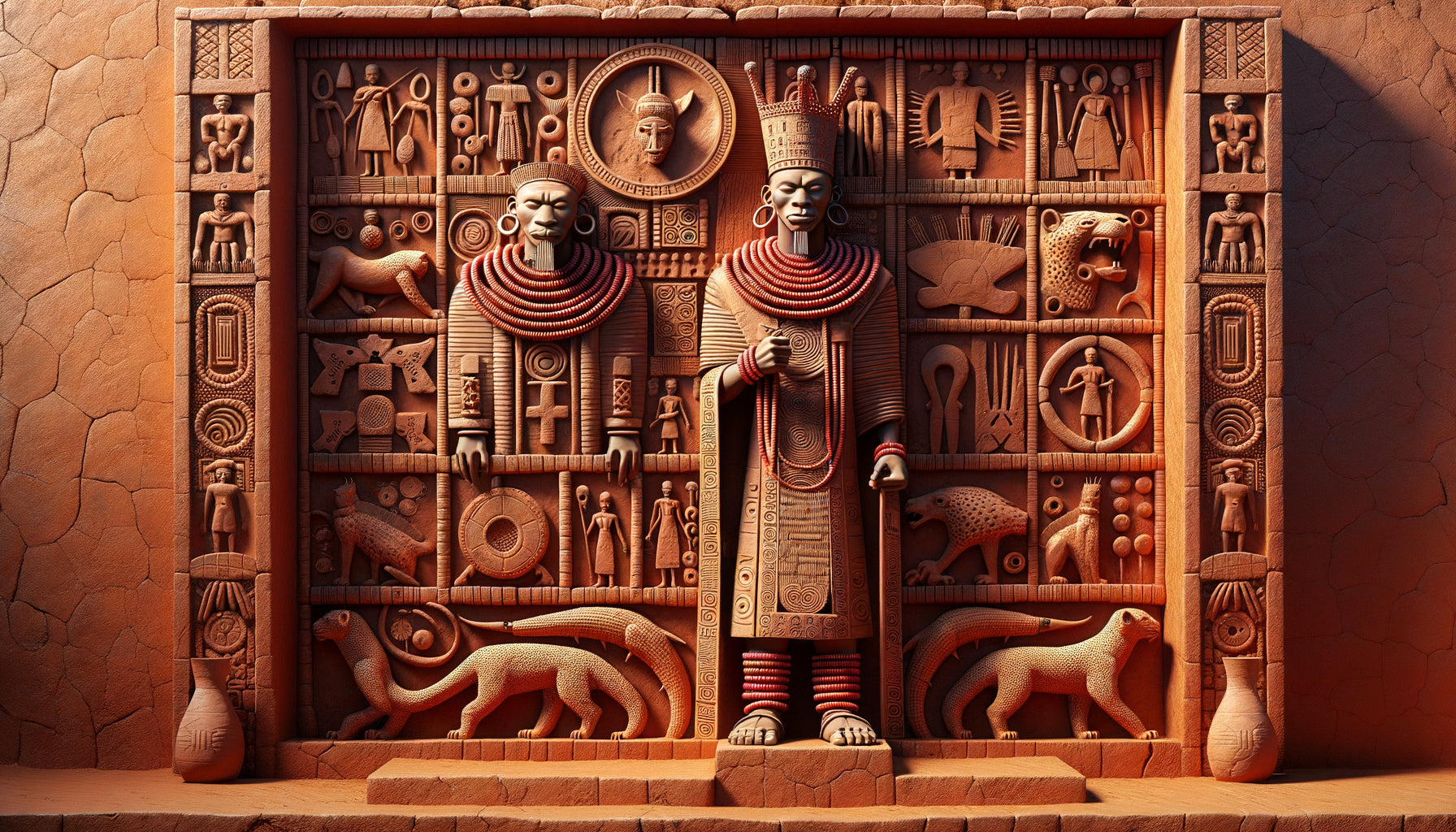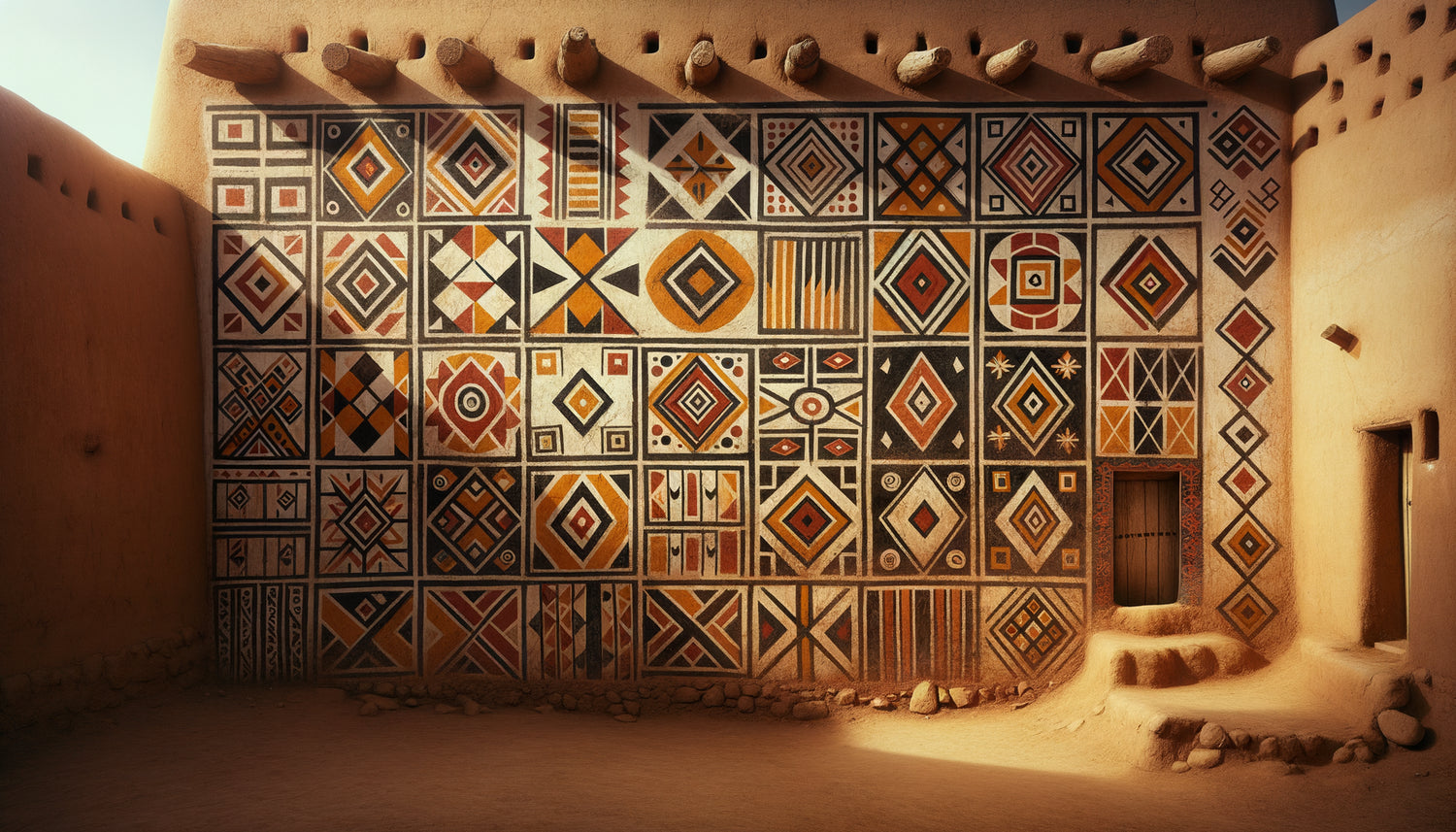
In the Atlas Mountains of Morocco, I discovered a silent language engraved on clay walls for millennia. These Berber wall symbols told stories of migration, weddings, and sacred territories. Each geometric motif carried a precise message, understood only by those who shared this ancestral code. That day, I realized that decoration was not just aesthetic: it was conversation, collective memory, tribal identity.
Berber wall symbols constituted a sophisticated visual communication system: they marked territorial boundaries between tribes, transmitted information about family alliances and important events, and perpetuated spiritual and practical knowledge across generations. These motifs transformed each home into an open book for those who knew how to decipher them.
Perhaps you have already felt this frustration in front of a beautiful African painting without understanding its deep history. Or this curiosity in front of these repeated geometric shapes that seem to hide a secret. Berber symbols seem mysterious because we have lost the habit of reading walls as living texts.
But this visual language is not inaccessible. By understanding how Berbers used these motifs to communicate, we rediscover an approach to decoration full of meaning, where each element tells something essential. Let me guide you in this fascinating universe where wall art becomes language.
The language of borders: when walls become cartography
In the Berber villages of the High Atlas, wall symbols functioned as living territorial markers. Each tribe possessed its distinctive motifs - interlocking lozenges for the Aït Haddidou, ascending chevrons for the Aït Mguild. These tribal signs painted on the facades of peripheral houses clearly indicated: 'Here begins our territory'.
Berber travelers knew how to read these visual markers with the precision of a topographic map. A zigzag motif repeated three times signaled the approach of friendly territory. Inverted triangles warned of sacred areas forbidden to foreigners. This wall signage made it possible to cross entire regions without conflict, each tribe instantly recognizing the codes of others.
This system was particularly crucial during seasonal migrations. Nomadic tribes updated their wall symbols on temporary shelters, creating a constantly updated information network. A simple glance at a rocky wall revealed who had passed there, when, and in which direction they were heading.
Geometry as an identity signature
Each Berber tribe developed its own geometric repertoire. The shapes were never random: they represented the history, genealogy, and alliances of each group. A square divided into four equal sections evoked the four founding lineages of a tribe. Concentric circles symbolized the antiquity of a family established for several generations.
These identity motifs were passed down from mother to daughter, Berber women being the main guardians of this visual language. They painted, engraved, and wove these symbols with remarkable precision, ensuring the continuity of tribal communication codes.
Marriage messages: decoding family alliances
The Berber wall symbols played a crucial role in intertribal marriage strategies. When a family wanted to signal that a daughter was of marrying age, they added stylized floral motifs near the entrance of the house. These marriage signs discreetly informed families from neighboring tribes.
Even more subtle: the complexity of the motif indicated the social status of the family. Elaborate symbols with multiple colors revealed a significant dowry and a prestigious lineage. Simple forms in red ochre suggested a more modest but honorable family. Potential suitors could thus assess possible alliances before even embarking on formal negotiations.
I observed in the Souss region how some wall compositions told the complete story of a marriage: the symbol of the groom's tribe on the left, that of the bride's tribe on the right, and in the center a merged motif creating a new identity. These marriage frescoes documented intertribal alliances for future generations.

The memory of the seasons: calendars and agricultural forecasts
Berbers also used their wall symbols to transmit practical information essential for collective survival. In fortified granaries (ighrem), sequences of motifs documented optimal agricultural cycles. Overlapping waves indicated predicted rainy periods. Broken lines warned of recurring drought years.
This visual notation system proved particularly valuable in arid regions where climate memory could save entire harvests. Tribal elders enriched these wall calendars year after year, creating meteorological archives spanning several centuries.
In the villages of southern Morocco, I photographed symbolic sequences that accurately described the seven-year drought cycles observed in the region. This knowledge, inscribed in clay, guided food storage and water resource management decisions for the entire community.
Symbols of protection and warning
Some wall motifs functioned as collective alert systems. A stylized eye painted blue (a symbol still found in current Maghreb traditions) warned of a recent danger – raid, contagious disease, dangerous animal nearby. These emergency pictograms allowed for the rapid dissemination of vital information without resorting to spoken language.
Berber protective symbols also included prophylactic motifs intended to ward off evil spirits and hostile intentions. Although their function has become more spiritual, their communicative origin remains evident: they signaled to rival tribes that a territory was under divine protection, discouraging conflict.
Spiritual transmission: teaching without words
Wall symbols also served as an educational support for transmitting Berber spiritual and philosophical knowledge. In tribal meeting halls (tajmaât), complex frescoes told the founding myths, ethical principles, and stories of ancestors.
These narrative compositions functioned as illustrated books before the widespread adoption of writing. A undulating serpent represented the cycle of life and death. A stylized mountain symbolized permanence and resilience. Open hands evoked the sacred hospitality (tiwizi) central to Berber culture.
Children learned to read these philosophical symbols from a young age, developing remarkable visual literacy. A young Berber could 'read' the complete history of his tribe simply by observing the walls of the family home.

Contemporary evolution: when tradition inspires modernity
Today, Berber wall symbols are experiencing a resurgence of interest in contemporary design. Maghreb creators reinterpret these ancestral motifs in modern urban contexts, transforming tribal codes into a universal aesthetic language.
This resurgence goes beyond a simple decorative trend. It reflects a deep need to rediscover rich-meaning visual communication systems in a world saturated with empty images. Berber symbols remind us that a pattern can tell a story, carry an identity, transmit knowledge.
In my research work in Kabylia, I observed how younger generations are rediscovering these ancestral visual languages, documenting traditional patterns threatened with extinction. This heritage approach ensures the continuity of a unique communication system in the world.
Transform your walls into a visual conversation
Discover our exclusive collection of African artworks that perpetuate these millennial symbolic traditions and bring depth and meaning to your interior.
Invite this ancestral language into your living space
Understanding how the Berbers used their wall symbols to communicate transforms our view of decoration. Each geometric pattern can potentially carry meaning, each composition can tell a personal story.
Imagine an interior where your walls are not only beautiful but also speak of your values, your history, your identity. This is exactly what Berber tribes have been doing for centuries: transforming the domestic space into an open book, a living archive, a bridge between generations.
Start simply: choose a Berber pattern that resonates with you. Learn about its original meaning. Integrate it into your decoration with intention. You are not decorating - you are communicating, transmitting, writing your story in your living space.
Berber wall symbols teach us this essential truth: our walls can be much more than decorative surfaces. They can be memory, identity, a silent conversation with all those who cross our threshold.