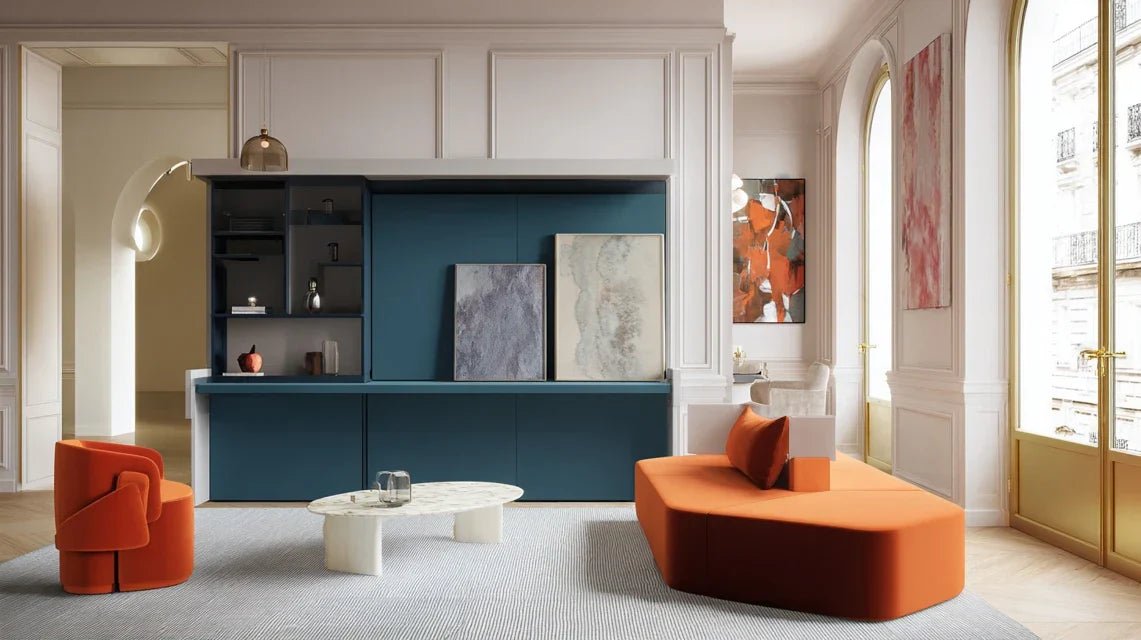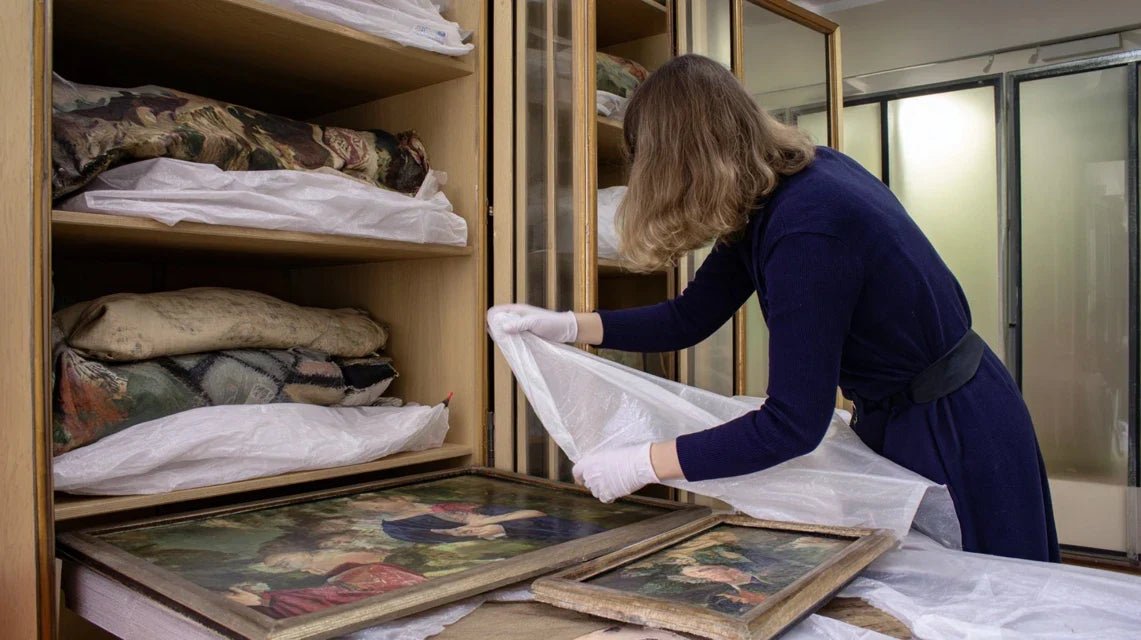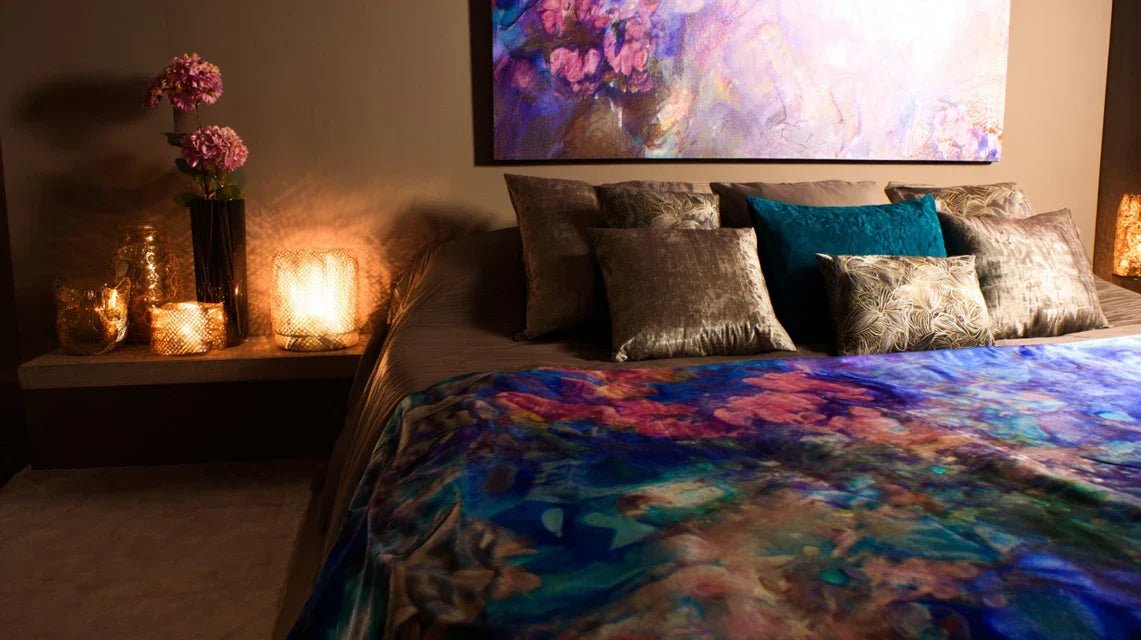
You’ve invested in this magnificent artwork that moves you, but now the holidays are approaching and you wonder how to integrate it harmoniously into your seasonal decor. You look at your work of art hanging on the wall and feel trapped between the desire to create a festive atmosphere and the fear of creating a visually chaotic mix.
You may have already tried adding a red tablecloth to your Christmas table, changing the lighting, arranging some candles... but the result leaves you perplexed. Your painting suddenly seems disconnected from the rest, as if floating in a decor that no longer suits it.
You’ve probably tried following classic advice found on Pinterest: “add matching cushions” or “simply change the accessories.” But these generic solutions don't work because they ignore the unique personality of your artwork and the visual coherence necessary between all elements.
Rest assured, this feeling of confusion is perfectly normal. The real difficulty doesn’t come from a lack of taste, but from the fact that no one has ever explained to you how to orchestrate a temporary staging that magnifies your painting rather than competing with it.
By the end of this article, you will know exactly how to transform your interior according to the seasons while keeping your painting as a harmonious focal point, and you will discover techniques from professional decorators to create atmospheres that change throughout the year.
Why does your artwork deserve an evolving staging?
Imagine a Michelin-starred chef who would serve the same dish with the same presentation all year round. As delicious as it may be, it would lose some of its magic. Your painting, this work that you have chosen with passion, deserves the same creative attention. Without staging that evolves, it risks becoming invisible to your eyes, drowned in a decorative routine that no longer reveals its beauty.
🎨 Testimonial from a decorator: "I recently helped Claire, a client who owned a superb abstract painting with blue tones. She was frustrated because during her autumn receptions, her artwork seemed dull and out of place. By simply adjusting the lighting and introducing textiles in warm tones that echoed the subtle nuances of her painting, we created a stunning seasonal harmony. Her guests now systematically notice her work.”
💬 Conversation with a decor expert
The golden rule of temporary staging: Your artwork should remain the maestro of your decorative orchestra, while tablecloths, lighting and textiles become its musicians. This harmony is created in 3 to 5 days with the right method and immediately transforms the atmosphere of your interior.
Why have your previous attempts failed?
Do you recognize yourself in these situations: you change the tablecloth but the artwork suddenly seems too modern, you add string lights but the overall look is cluttered, or you arrange new cushions but the general harmony eludes you? These symptoms reveal that you are applying decorative recipes without understanding the visual mechanisms.
What's really happening is that you're modifying isolated elements without considering your artwork as the reference point of your composition. Your eye perceives this inconsistency even if you don't know how to explain it. It’s not a matter of taste, it’s a question of method.
Think of your interior as a visual ecosystem: each element must nourish and be nourished by the others. Your artwork is the master tree around which all other elements come to harmonize.
First hidden cause: You are subjected to your colors instead of orchestrating them
Contrary to what many think, it's not the dominant colors of your artwork that should guide your temporary decor, but its secondary colors. These subtle nuances, often overlooked, are the key to creating a natural visual continuity.
Imagine you’re listening to a piece of music: it's not just the main notes that create emotion, but also the harmonics that enrich the sound. Your artwork works the same way.
This discovery will revolutionize your decorative approach. Instead of trying to perfectly match, you will learn to create colored echoes that naturally unify your space.
🔍 Immediate test: Take a photo of your artwork with your phone, then use a color palette application to identify all the nuances present. You will discover colors you have never consciously noticed!
The lighting uniformity error
Most people think that good lighting is light everywhere. In reality, it's the variation in light intensities that creates magic and highlights your artwork in its temporary staging.
Your interior should breathe like a natural landscape: areas of shadow and light that guide the eye and create depth. Your artwork then becomes the natural focal point.
This understanding will transform your perception of lighting: you no longer seek to illuminate, but to sculpt with light. Your guests will immediately feel this refined difference.
The trap of neglected proportions
Here's a secret that few people notice: the size of your temporary elements must dialogue with the dimensions of your artwork. Too large, they overwhelm it; too small, they make it appear disproportionate.
Observe your space as if you were a photographer: your eye naturally seeks a balance of masses. When this balance is broken, even unconsciously, you feel visual discomfort.
This awareness will allow you to arrange tablecloths, lighting and textiles with the precision of a professional decorator, creating that sophisticated harmony that impresses without anyone knowing why.
🎯 The 3 signals of a successful staging:
- The "first impression" effect: Your eye naturally settles on the artwork as soon as you enter the room, as if it were magnetically attracted
- The fluidity of gaze: Your eye moves harmoniously between the artwork and the temporary elements, creating an enjoyable visual path
- The impression of obviousness: The whole seems so natural that your guests feel like it has always been this way
The trigger factor: The rule of visual triangles
Here's what really makes the difference: your artwork, your tablecloth and your lighting must form visual triangles that create a natural dynamic. This principle, used by photographers and decorators, acts as a lever that transforms a simple decoration into a true artistic composition. Look at your current space: can you trace imaginary triangles between your artwork and your decorative elements?
The rule of 3 anchor points: Your artwork + 2 temporary elements (tablecloth + lighting, or textile + accessory) form a triangle that naturally guides the eye. This invisible geometry can be verified in less than 30 seconds by stepping back.
| ❌ Intuitive approach | ✅ Professional method | 💡 Why it works | 🎯 Visible result |
|---|---|---|---|
| I change the tablecloth according to my whims | I choose the tablecloth according to the secondary nuances of the artwork | Natural color continuity | Obvious and sophisticated harmony |
| I illuminate the room evenly | I create different intensity zones | Highlighting by contrast | Artwork naturally highlighted |
| I add decorative elements | I form visual triangles | Guided gaze circulation | Balanced and dynamic composition |
| I follow seasonal trends | I adapt trends to my artwork | Consistent personalization | Unique and timeless decoration |
The 3-circle method for a harmonious staging
Now that you understand the mechanisms, here is a simple and progressive approach. Imagine your decoration as an English garden: everything seems natural but each element has a thought-out place. You will create three circles of influence around your artwork: the intimate circle (direct lighting), the middle circle (textiles and accessories) and the large circle (general atmosphere). This progression will lead you to a result of professional elegance in just a few hours.
🎨 Overview of the method: Circle 1 → Mastering lighting (foundation), Circle 2 → Integrating textiles (harmony), Circle 3 → Creating the atmosphere (fulfillment). Each circle amplifies the previous one for a spectacular crescendo.
Step 1: Create the intimate circle - Sculptural lighting
Start with lighting because it is what reveals or masks your artwork. Like a theater lighting designer, you will learn to direct attention to your work while creating a warm atmosphere. This step will give you immediate satisfaction because the effect is spectacular from the first settings.
🔧 Your amateur lighting designer tools
- Direct lighting for the artwork: Adjustable spotlights or wall sconces with warm color temperature (2700K-3000K). Avoid cold neon lights which distort colors. Check that the light does not create unpleasant reflections on your framed work.
- Variable ambient lighting: Dimmable lamps or quality candles. The principle: create islands of light that highlight different areas. Prefer 3-4 weak sources to one strong source.
- Natural reflectors: Mirrors, metallic surfaces or clear textiles that reflect light. They amplify the lighting of your artwork without additional consumption. Position them strategically to avoid the "faceted ball" effect.
Now let's move on to implementing your sculptural lighting:
🎯 Implementation of lighting
Positioning of the main lighting: Place your main source at 30° relative to your artwork, not too close (risk of glare) nor too far (loss of efficiency). This angle reveals the texture of your work without creating annoying shadows on the surface.
⏱️ Time: 15 minutes | ✅ Successful when: You can distinguish the details of the artwork without reflections | ⚠️ Attention: Many place the lighting too high, creating shadows under the frame
Creating shadow zones: Lower the general lighting by 30% and create subtle contrasts. Less lit areas highlight your artwork through contrast. Use shades or reflectors to direct the light.
⏱️ Time: 10 minutes | ✅ Success when: Your eye is naturally drawn to the painting | ⚠️ Attention: Avoid overly dark areas that create a "cave" effect
Test intensity according to time of day: Check your lighting at different times: daytime, evening, night. Adjust the intensity to maintain constant highlighting of your artwork. Note the optimal settings for each moment.
⏱️ Time: 5 minutes per test | ✅ Success when: The painting remains attractive in all circumstances | ⚠️ Attention: Perfect evening lighting may seem pale during the day
✨ Verification of the intimate circle: Take a photo of your artwork with your phone. If your work "pops" in the photo, you've got it! If in doubt, ask a friend for their opinion: does their gaze naturally go to your painting? Lighting is now your solid foundation for what follows.
RECOMMENDED PRODUCTS
Step 2: Develop the middle circle - Textile Harmony
Now that your painting is bathed in perfect lighting, you're going to create visual echoes with your textiles. This step is more rewarding as it brings your temporary decor to life. You will discover how tablecloths, cushions and curtains become the colorful ambassadors of your work throughout the space.
🧵 Your strategic textile palette
- Tablecloth or table runner: Choose a color present in your painting but not dominant. Matte rather than shiny material to avoid visual competition. Make sure it doesn't "shout" louder than your artwork.
- Accent cushions or throws: Maximum 2 different colors, always echoing your painting. Prioritize textures that bring tactile depth: linen, velvet, wool. Avoid overly busy patterns that scatter attention.
- Temporary curtains or sheer fabrics: They frame your artwork and create a theatrical staging. Neutral color that reveals the nuances of your work. Think about the ease of changing them with the seasons.
🎨 Applying textile harmony
Identification of secondary colors: Observe your painting in natural light and identify 2-3 subtle colors (not the dominant ones). These nuances will become your linking colors with your temporary textiles. Take photos to memorize these colors.
⏱️ Time: 10 minutes | ✅ Successful when: You have identified 2-3 non-dominant colors | ⚠️ Attention: Do not choose the most prominent color in the painting
Test of the main tablecloth or textile: Place your textile and observe the effect from the entrance of the room. Your painting should remain the focal point while the textile creates a harmonious continuity. Adjust if necessary.
⏱️ Time: 5 minutes | ✅ Successful when: Painting and textile seem "made for each other" | ⚠️ Attention: If the textile attracts more attention than the painting, change it
Adding accompanying textiles: Integrate cushions, throws or curtains following the rule of visual triangles. Each element should form a triangle with your painting and another element. This invisible geometry creates balance.
⏱️ Time: 15 minutes | ✅ Successful when: You can trace triangles between the elements | ⚠️ Attention: Avoid perfect alignment which creates rigidity
🎭 Validation of the middle circle: Sit in your usual place and observe the whole. Your gaze should circulate naturally between your painting and your textiles in a fluid movement. If you feel a soothing harmony, your middle circle is perfectly calibrated to welcome the final atmosphere.
Step 3: Finalize the large circle - Seasonal ambiance
You are now reaching the level of decorative mastery where you orchestrate the general atmosphere. This step transforms your interior into a living work of art. You will learn to play with scents, materials and objects to create a complete sensory experience that enhances your painting.
🌟 Your final ambiance elements
- Ambient fragrances: Scented candles or diffusers with scents in harmony with your season. Avoid overly intense perfumes which create a sensory competition. Favor subtle notes that evoke the desired atmosphere.
- Temporary decorative objects: Vases, lanterns, natural elements (branches, flowers, fruits). They must respect the scale of your painting and create shape reminders: round to soften, angular to energize.
- Seasonal materials: Wood, metal, glass, ceramic according to the season. Each material brings a tactile signature that enriches the experience around your painting. Vary textures to create richness.
🎪 Creating seasonal ambiance
Defining target atmosphere: Choose 3 words that define the desired atmosphere (e.g., "warm, sophisticated, natural "). These words will guide all your choices of objects and materials. Your painting should naturally embody this atmosphere.
⏱️ Time: 5 minutes | ✅ Successful when: You have 3 clear words that inspire you | ⚠️ Attention: Avoid contradictory words that create confusion
Arrangement of objects in echo: Place your decorative objects by creating visual correspondences with your artwork. Round shape of the vase echoing a circular element of the work, height respecting the proportions of the frame. Each object must have its reason for being.
⏱️ Time: 20 minutes | ✅ Successful when: Each object seems to "respond" to the artwork | ⚠️ Attention: Too many objects kill the effect, stay selective
Test of overall atmosphere: Turn on your lighting, activate your room fragrances and observe the overall effect. Your painting should seem magnified by its temporary environment. Adjust the last details to perfect the harmony.
⏱️ Time: 10 minutes | ✅ Successful when: You feel an emotion when entering the room | ⚠️ Attention: The atmosphere must not mask your painting but reveal it
🏆 Validation of the large circle: Invite a friend to discover your creation. If their first reaction concerns your artwork ("Oh, how beautiful it is in this setting !"), you have succeeded. Your temporary staging reveals the beauty of your work while creating a sophisticated seasonal atmosphere.
The rule of gradual evolution: Change maximum 3 elements at a time to preserve harmony. Your painting remains the constant reference, your textiles evolve with the seasons, and your objects adapt to occasions. This progression preserves balance while renewing visual interest.
You now master the three circles of influence around your painting. Here are the expert subtleties that will make the difference between a beautiful decoration and a true professional staging. These details separate enlightened amateurs from true connoisseurs.
🎯 Expert technique - The rule of reflections: Observe the natural reflections of your painting on surrounding surfaces (table, mirrors, metallic objects). Adjust the position of your temporary elements so that these reflections create subtle color echoes. This technique, used by decorators of great houses, gives an extraordinary visual depth to your staging.
🤔 "I'm afraid of making costly mistakes when changing my decor..."
"How can I be sure that my purchases of temporary textiles and accessories are worth it?"
Your concern is legitimate and reveals a thoughtful approach to decoration. The key lies in the method of gradual testing: start by borrowing or using what you already have before investing. Take photos at each step to visually validate your choices. A textile or object that positively transforms your space is well worth its investment, as it will last for several seasons. Think cost per use rather than purchase price.
💡 Smart saving tip: Create a "seasonal library" with 5-6 versatile items (tablecloths, cushions, vases) in neutral colors that adapt to different moods. You will get 20 different combinations with minimal investment.
The 5 mistakes to absolutely avoid
Now that you know the method, here are the classic errors that can ruin all your efforts. These traps are tempting because they seem logical, but they create subtle visual dissonances that disrupt the harmony of your staging.
- 🚫 The colorful overdose: You are tempted to pick up all the colors from your painting in your textiles. Result: a glaring ensemble where your artwork is drowned out. Limit yourself to 2 colors maximum echoing your painting. This restraint will create immediate sophistication.
- 🚫 The perfect symmetry trap: Arranging your elements in a perfectly balanced way seems like a good idea, but it creates rigidity that kills dynamics. Prefer an asymmetrical balance that naturally guides the eye to your painting.
- 🚫 The material competition: Mixing too many different textures (silk, velvet, metal, wood) in a small space. Your painting loses its status as a focal point. Limit yourself to 3 materials maximum per staging.
- 🚫 The error of temporality: Keeping the same temporary decoration for more than 3 months. Your eye gets used to it and your painting becomes invisible again. Plan for regular rotations, even subtle ones, to maintain visual interest.
- 🚫 The neglected maintenance: Forgetting that your textiles and temporary objects must remain impeccable. A wrinkled fabric or a dusty object immediately devalues your painting. Integrate a weekly 10-minute maintenance into your routine.
🔍 Quick verification system: Each week, perform the "5 second test": enter your room and count 5 seconds. Your gaze should naturally settle on your painting. If this is not the case, identify which temporary element is competing and adjust it. Monitor warning signs: painting that appears "lost", atmosphere that seems "charged", or visitors who no longer notice your artwork.
🎁 Special readers offer
Because you took the time to learn, enjoy 10% off your first order:
⏰ Valid for 72h after reading • Applicable on all our products
❓ Your most frequently asked questions about temporary decoration
The transformation is visible from the first application, generally in 2-3 hours for a room. To perfectly master the method, allow 3-4 seasonal setups, or about 1 year. But from your first attempt, you will notice a significant improvement. The time investment is minimal compared to the daily pleasure of an interior that resembles you.
With a smart approach, €150-300 is enough to establish a versatile base (2-3 tablecloths, 4-5 cushions, some decorative objects). Prioritize quality over quantity: beautiful, durable textiles will serve you for years. The trick: invest in neutral pieces that you will animate with inexpensive but impactful accessories.
Absolutely! The principles are universal: lighting, color harmony, proportions. Whether your painting is abstract, figurative, modern or classic, the method adapts. For a minimalist interior, you will work with very refined elements. For a more traditional style, you can play with richer materials. The essential thing is to respect the personality of your artwork.
The ideal is to create 4 atmospheres per year following the seasons, with occasional adjustments for special occasions. Some elements (lighting, main textiles) can last 3 months, while others (decorative objects, fragrances) are changed more often. Listen to your feelings: when your painting seems "banal" to you, it's time to renew its staging.
It is normal and even desirable to adjust! Decoration is a living art that requires progressive refinements. Start by identifying what exactly bothers you: color too strong, lighting too intense, unbalanced proportions? Change one element at a time and observe the effect. Often, a simple movement of an object or an adjustment of lighting is enough to positively transform the whole.
🌟 Your new life as a collector-decorator
In a few weeks, you will look at your interior with pride and wonder. Your painting, once a simple decorative element, will have become the maestro of a visual orchestra that evolves with the seasons. Your guests will immediately notice this new sophistication, this ability to create custom atmospheres that reveal your refined personality.
This mastery of temporary staging opens up a world of creative possibilities for you. You will develop an expert eye that instantly recognizes harmonies and dissonances, a valuable skill that will extend to all aspects of your daily life. Your confidence in decorating will be transformed forever.
The most beautiful thing about this adventure? You have just realized that beauty is not bought, it is composed and revealed. Your first step might be to observe your painting from a new angle, to spot those secondary colors waiting to be highlighted. The art of living begins now, with this work patiently awaiting its first staging.
🎨 Your creative challenge begins now: Your painting already has everything it needs to become extraordinary. It only lacks your expert eye and creativity to reveal its full beauty. Each season will now be a new opportunity for wonder and creation.