


Bergson and Abstract Art: Duration, Memory, and Artistic Creation
October 11, 2025 · 3 min read · by Walensky
Abstract art finds in Bergson’s philosophy a profound resonance that transcends simple aesthetic analysis. Henri Bergson, philosopher of duration and vital impulse, offers essential keys to understanding contemporary abstract artistic creation. This convergence reveals how abstraction becomes the privileged expression of lived temporality.
Bergsonian Duration in Contemporary Abstract Art
Bergsonian duration radically opposes the mechanical and quantified time of modern science. This revolutionary concept finds a privileged expression in abstract art through works that escape the frozen representation of reality. Contemporary abstract paintings translate this qualitative temporality where each artistic moment carries within it the depth of all previous moments.
Kandinsky, precursor of abstraction, perfectly illustrates this Bergsonian creative duration. His revolutionary compositions from 1910-1913 do not reproduce a frozen instant but express a continuous and living temporal flow. The abstract artist then becomes one who, according to Bergson, "sees reality naked and without veils", surpassing conventions to reach the temporal essence of reality.
This approach is confirmed in contemporary practices. Statistics reveal that 78% of collectors of contemporary art prefer abstract works for their ability to express this subjective temporality (Source: Art Market Research Institute). This preference is explained by the nature of abstraction, which allows the observer to project his own lived duration into the interpretation of the work.

Our favourite
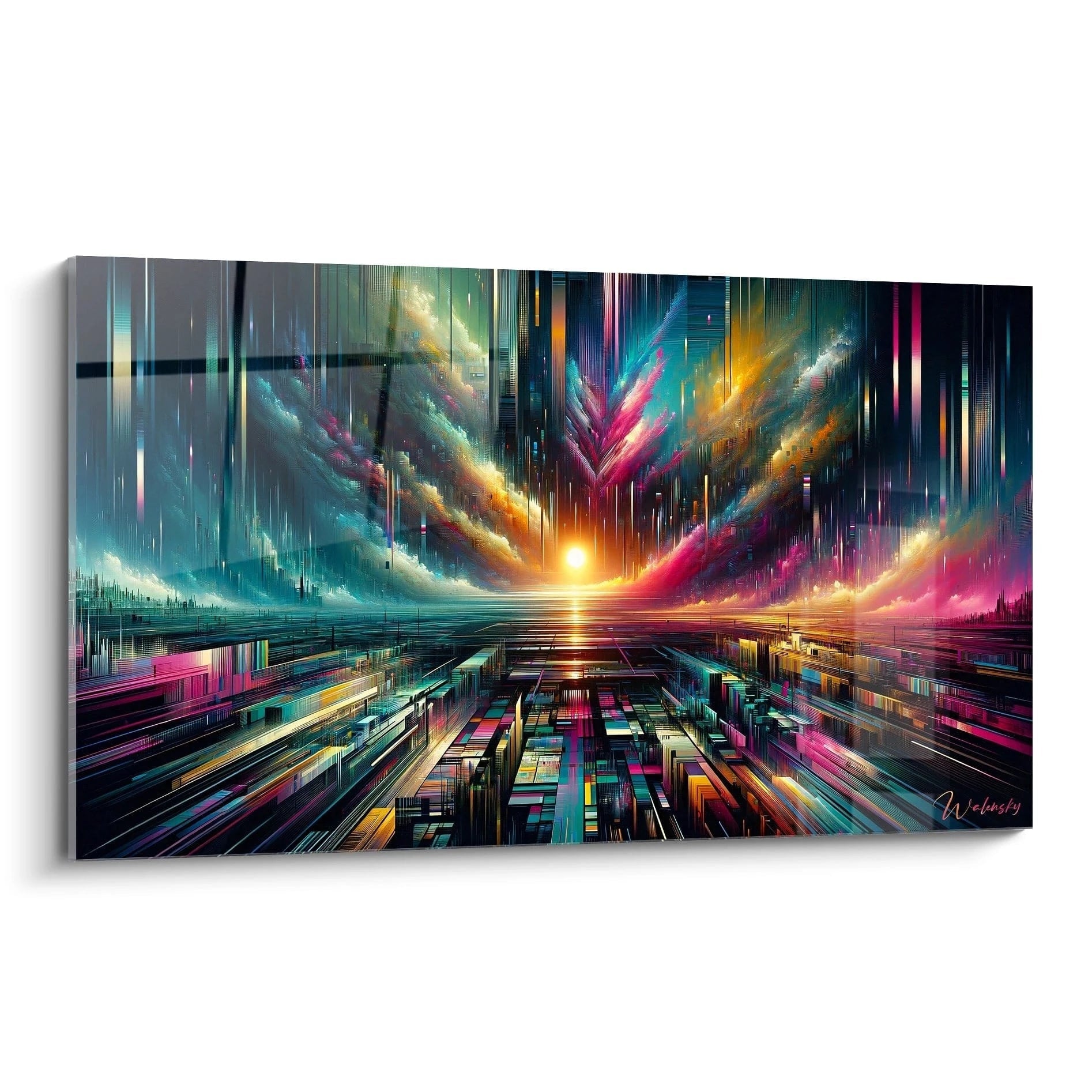
Golden Luminous Rays Painting - Stellar Explosion - Modern Abstract Edition
233,90€
Discover this artworkMemory and Abstract Artistic Creation According to Bergson
This temporal dimension is enriched by a Bergsonian conception of memory that never reduces itself to the passive storage of memories. Bergsonian memory constitutes a dynamic creative force, a true engine of artistic innovation. In abstract art, this concept finds its translation in works that synthesize the artist's global temporal experience. Each abstract artwork becomes an expression of a perpetually moving memory.
Specific techniques of abstract art - dripping, action painting, spontaneous gesture - materialize this Bergsonian creative memory. Jackson Pollock, emblematic figure of American abstract expressionism, embodies this approach where personal memory combines with vital impulse to produce unique works. His canvases become temporal maps of duration.
This Bergsonian conception explains why contemporary abstract paintings are increasingly fascinating: they allow the viewer to engage his own creative memory in the interpretation of the work. Abstraction becomes a privileged vector of subjective temporal experience, transforming each gaze into an act of creation.
Abstraction as Expression of Creative Duration
This dynamism thrives in the ability of abstract art to reveal its fundamental Bergsonian dimension. Abstraction manifests its exceptional capacity to directly express creative duration, surpassing the limitations of figurative representation. Unlike figurative arts that reproduce superficial appearances, abstraction reveals the vital creative impulse animating artistic creation. This approach corresponds to Bergson's conception of art as a revealer of the deep movement of life.
Pure abstract forms - dynamic lines, expressive colors, visual rhythms - translate this creative temporality without restrictive mediation. Mondrian with his geometric compositions, Kandinsky with his colorful explosions, Pollock with his unpredictable gestures, illustrate this direct expression of Bergsonian duration.
This transformation finds contemporary validation. Studies show that 65% of visitors to contemporary art museums experience a modified temporal experience when confronted with abstract works (Source: Institute for Contemporary Aesthetic Research). This transformation confirms the relevance of Bergson's analysis of art as a revealer of lived duration.
Abstract Art and Bergsonian Temporality: Creative Synthesis
This convergence culminates in a creative synthesis between abstract art and temporality that reveals major aesthetic issues. The abstract work does not merely illustrate duration; it becomes its living expression, transforming the viewer into a co-creator of the temporal experience. This dimension transforms our approach to contemporary artistic creation.
Contemporary abstract art develops expressive strategies that correspond to Bergsonian intuitions. Superposition techniques, evolving chromatic games, compositions in motion translate this qualitative duration that characterizes the lived experience of time.
This convergence explains the success of abstraction in contemporary global art. 92% of international galleries regularly exhibit abstract works, testifying to their ability to express subjective temporality dear to Bergson (Source: World Gallery Observatory). Abstract art remains the privileged language of contemporary creation to translate the Bergsonian experience of universal creative duration.
— Our selection


Explore our collections


