

Zen Watercolor White Wall Art
Our Zen Watercolor Painting White collection embodies purity and serenity through delicate wall art. These refined creations with white watercolor hues bring a touch of calm and elegance to your interior. Perfect for creating a meditative atmosphere, these paintings are distinguished by their minimalist style and soft nuances. Explore this minimalist zen decor that transforms every space into a haven of peace, ideal for bedrooms, living rooms or relaxation areas.
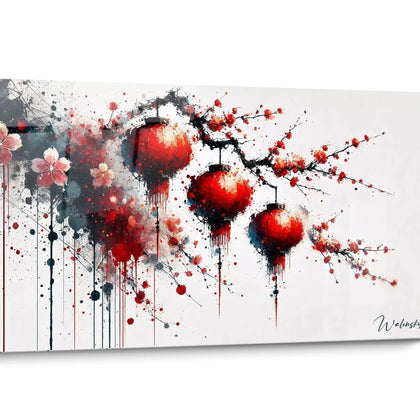
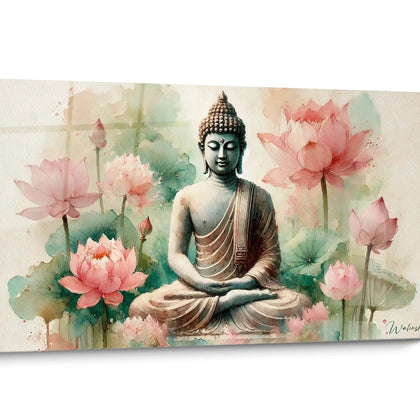
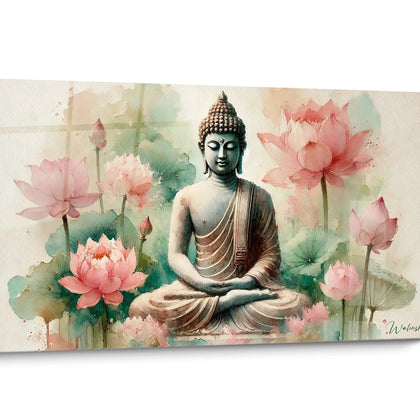
 Lotus Painting Pure Grace - lotus flower edition228,90 €
 Lotus Inner Peace Wall Art - lotus flower edition228,90 €
 Lotus Flower Eternal Grace Painting - Lotus Flower Edition273,90 €
Explore further
In Zen Watercolor White Wall Art
All about Zen Watercolor White Wall Art
- Zen Watercolor White Wall Art Presentation
- Minimalist Harmony
- Contemplative Atmospheres
- Decorative Serenity
The zen watercolor white wall art embodies the very essence of contemplative sobriety in your living space. This artistic creation combines the delicacy of watercolor nuances with the chromatic purity of white, creating an atmosphere conducive to meditation and mental calm. Each translucent shade dialogues with virgin spaces, generating a visual balance that promotes inner refocusing and energetic harmonization of your environment.
The Refined Elegance of Zen Watercolor White Wall Art in Contemporary Spaces
Integrating a zen watercolor white wall art into your interior decoration answers a quest for minimalist authenticity. The subtle washes and vaporous gradations characteristic of this pictorial technique create essential visual breathing in overstuffed modern environments. The predominance of white acts as a space revealer, amplifying natural luminosity while preserving the contemplative intimacy necessary for restorative moments.
How do white watercolor nuances transform spatial perception?
The imperceptible tonal variations of a zen white watercolor work generate paradoxical depth. Unlike saturated graphic representations, these ethereal compositions invite the gaze to travel through different layers of transparency. Monumental formats reveal micro-chromatic variations invisible at reduced dimensions, transforming each observation into meditative discovery. This specific characteristic justifies choosing large-scale works to maximize the soothing impact.
Sensory interaction with monochrome watercolor compositions
Receptivity to zen watercolor white wall art evolves according to ambient light intensity. Soft mornings reveal milky subtleties, while sunny afternoons accentuate contrasts between saturated zones and virgin spaces. This natural variation transforms the work into an emotional sundial, rhythming the day through renewed impressions. To further explore this soothing pictorial dimension, the zen watercolor wall art collection offers diverse chromatic interpretations adapted to each sensibility.
Decorative associations to amplify visual serenity
The immediate environment of zen white watercolor wall art determines its contemplative radiance. Raw natural materials - ecru linen, crackled ceramics, driftwood - resonate with the fluid texture of watercolor. The absence of chromatic competition allows surrounding objects to reveal their intrinsic qualities without visual saturation. This decorative synergy works particularly well in transition spaces like bright hallways or reading alcoves.
- Favor untreated organic textures that dialogue with watercolor fluidity
- Maintain a visual breathing zone of at least 40 centimeters around the artwork
- Avoid direct light sources that alter the perception of subtle gradations
- Harmonize with light-foliaged vegetative elements to extend the airy effect
Creating Sanctuaries of Quietude with Zen Watercolor White Wall Art
The privileged destination for zen watercolor white wall art is found in spaces dedicated to psychological regeneration. East-facing bedrooms, yoga studios, meditation corners particularly benefit from this soothing visual presence. Chromatic neutrality promotes the mental detachment necessary for contemplative practices, while watercolor movements suggest fluid energy circulation.
Why choose watercolor white for restoration spaces?
The symbolism of white transcends cultures as a representation of primordial purity and creative void. Applied to watercolor technique, this symbolic dimension is enriched by a virtual tactile quality - the gaze instinctively perceives the absorbent texture of paper, the progressive dilution of pigment. This visual-tactile synesthesia activates neurological mechanisms associated with relaxation, explaining the particular efficacy of these works in stress-reduction protocols.
The visual architecture of white zen compositions
Artists specializing in zen watercolor white wall art master the balance between suggestion and erasure. Organic forms - mountain mists, water undulations, vegetative swirls - emerge then dissolve into virgin zones. This formal ambiguity prevents prolonged cognitive fixation, encouraging a floating gaze conducive to meditative state. Imposing formats amplify this immersion effect by occupying enough visual field to mentally isolate the observer.
What spatial configuration optimizes the contemplative experience?
The positioning of zen white watercolor wall art follows principles different from conventional decorative hanging. Visibility from the habitual meditation point takes priority over architectural centrality. A slight forward tilt of 5 to 8 degrees enhances visual reception when seated on the floor, creating increased visual intimacy. The ideal distance equals approximately twice the width of the work, allowing encompassing peripheral vision without requiring segmented eye movements.
- Position the artwork at eye level from a seated meditation position
- Ensure soft, diffused lighting without parasitic reflections
- Preserve substantial lateral clearance to accentuate the breathing effect
- Consider the space's acoustics to reinforce the atmosphere of contemplation
The Therapeutic Dimension of Zen Watercolor White Wall Art
Beyond its decorative function, zen watercolor white wall art acts as an ambiance modulator in spaces requiring emotional regulation. Holistic health professionals increasingly integrate these creations into their therapeutic environments, noting their beneficial influence on patient receptivity. The visual non-directivity of these compositions allows each observer to project their own contemplative journey.
The chromatic influence of white watercolor on psychological well-being
Environmental psychology research confirms the impact of chromatically soothed environments on cortisol regulation. A zen watercolor white wall art contributes to this visual hygiene by avoiding the excessive stimulation characteristic of saturated decors. Subtle tonal variations maintain a minimal level of visual interest preventing monotony, while remaining below the cognitive activation threshold that generates fatigue and mental dispersion.
Perceptive evolution and contemplative familiarity
The relationship with zen watercolor white wall art transforms progressively through daily cohabitation. The first weeks reveal primary compositional structures, then attention focuses on details - an unexpected pigment spot, a particular diffusion halo. This progressive discovery maintains interest without ever slipping into weariness, a rare characteristic in decorative art. Generous dimensions guarantee years of renewed visual exploration.
How does white zen wall art integrate into mindfulness protocols?
Mindfulness practitioners frequently use neutral visual supports as attentional anchors. Zen watercolor white wall art perfectly fulfills this function through its simultaneously affirmed and discreet presence. Unlike culturally-charged mandalas or symbols, this watercolor abstraction remains universally accessible, allowing personal appropriation without imposed symbolic interference. The fluidity of watercolor forms visually mimics respiratory flow, facilitating body-mind synchronization.
- Favor judgment-free observation of tonal and formal variations
- Use fuzzy boundaries between painted and virgin zones as metaphor for impermanence
- Practice slow visual scanning to develop contemplative patience
- Mentally note perceptive transformations according to your emotional state
FAQ - Frequently asked questions about zen watercolor white wall art
What size of zen watercolor white wall art suits a 15m² bedroom?
For a 15m² bedroom, favor a format of at least 120x80 cm that will create sufficient visual presence without saturating the space. Large dimensions better reveal watercolor subtleties and generate the contemplative immersion sought, while respecting harmonious proportions for this intimate environment.
Does zen watercolor white wall art require particular maintenance to preserve its luminosity?
Preserving your watercolor white wall art's luminosity rests primarily on protection against prolonged direct solar exposure. A gentle quarterly dusting with a dry microfiber cloth suffices, avoiding any damp products that could alter the delicate pigments characteristic of this pictorial technique.
Can one combine multiple zen watercolor white wall artworks in the same space without creating visual redundancy?
Combining multiple zen watercolor white wall artworks works provided you vary formats and compositions. Create breathing space between each work with minimal 30 cm spacing, and favor different watercolor densities - a more vaporous piece near a composition with more pronounced washes - to maintain contemplative dynamism without monotony.
Further reading


