Wall art for living room

Wall Art for Living Room

Our collection of wall art for living room brings a unique artistic dimension to your living space. Each mural artwork is carefully curated to create a personalized and refined atmosphere in your home. From contemporary creations to timeless classics, our artistic decorations transform your living room into a true art gallery. Our wall art pieces harmonize perfectly with all decorating styles, from minimalist interiors to warmer spaces. Let yourself be seduced by artworks that tell a story and give character to your living room.
634 products

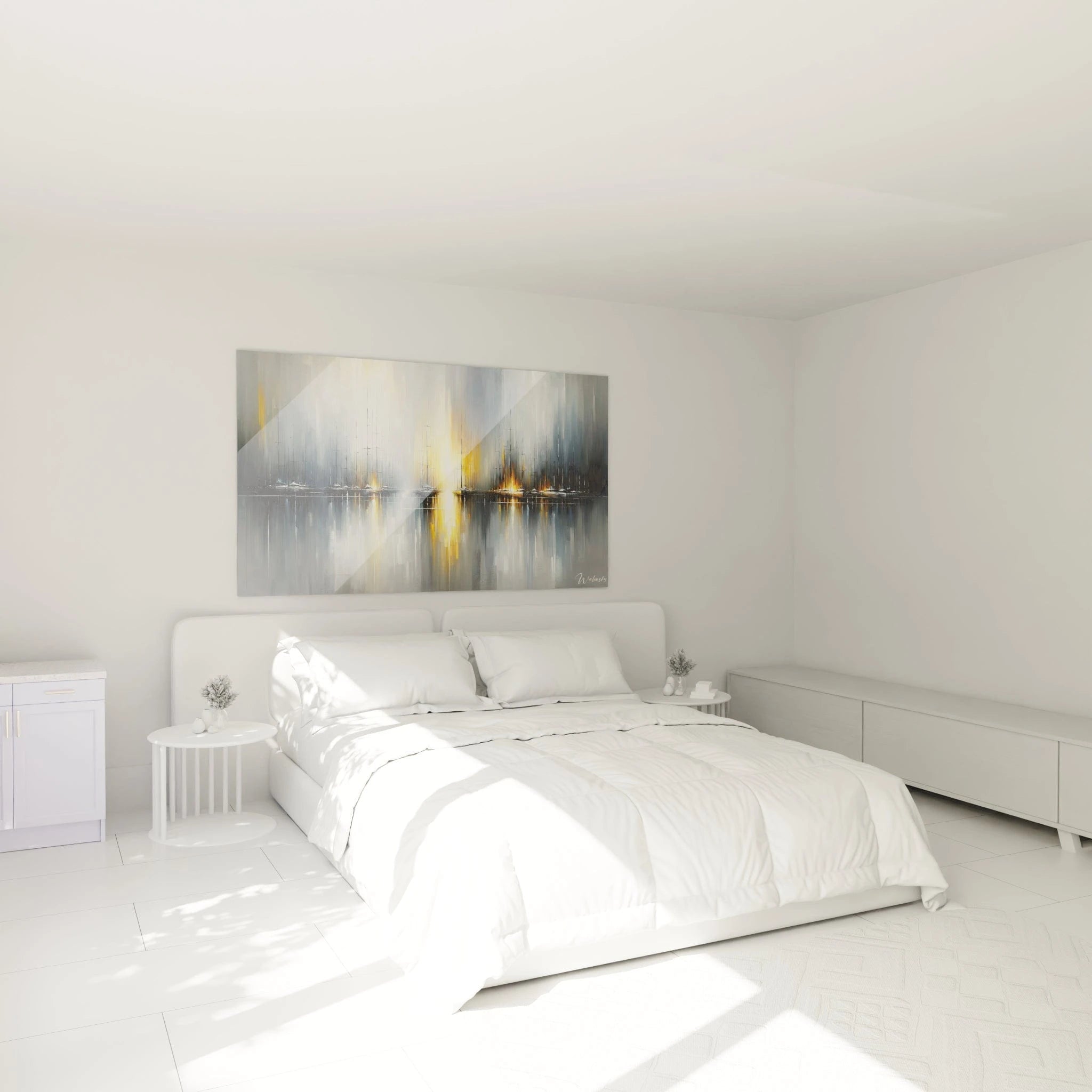
An abstract painting of stylized sailboats on water. Dominated by silvery gray, white, gold, and amber tones. The texture features fine vertical strokes evoking masts, with horizontal streaks reflected in the water, and central golden light creating a misty, atmospheric depth effect.
An abstract misty marina painting with reflections. The palette combines blue-grey, pearlescent white, golden yellow and warm amber. The textures feature long vertical strokes suggesting boat silhouettes and horizontal brushstrokes creating shimmering reflections, with a central light breakthrough illuminating the scene.
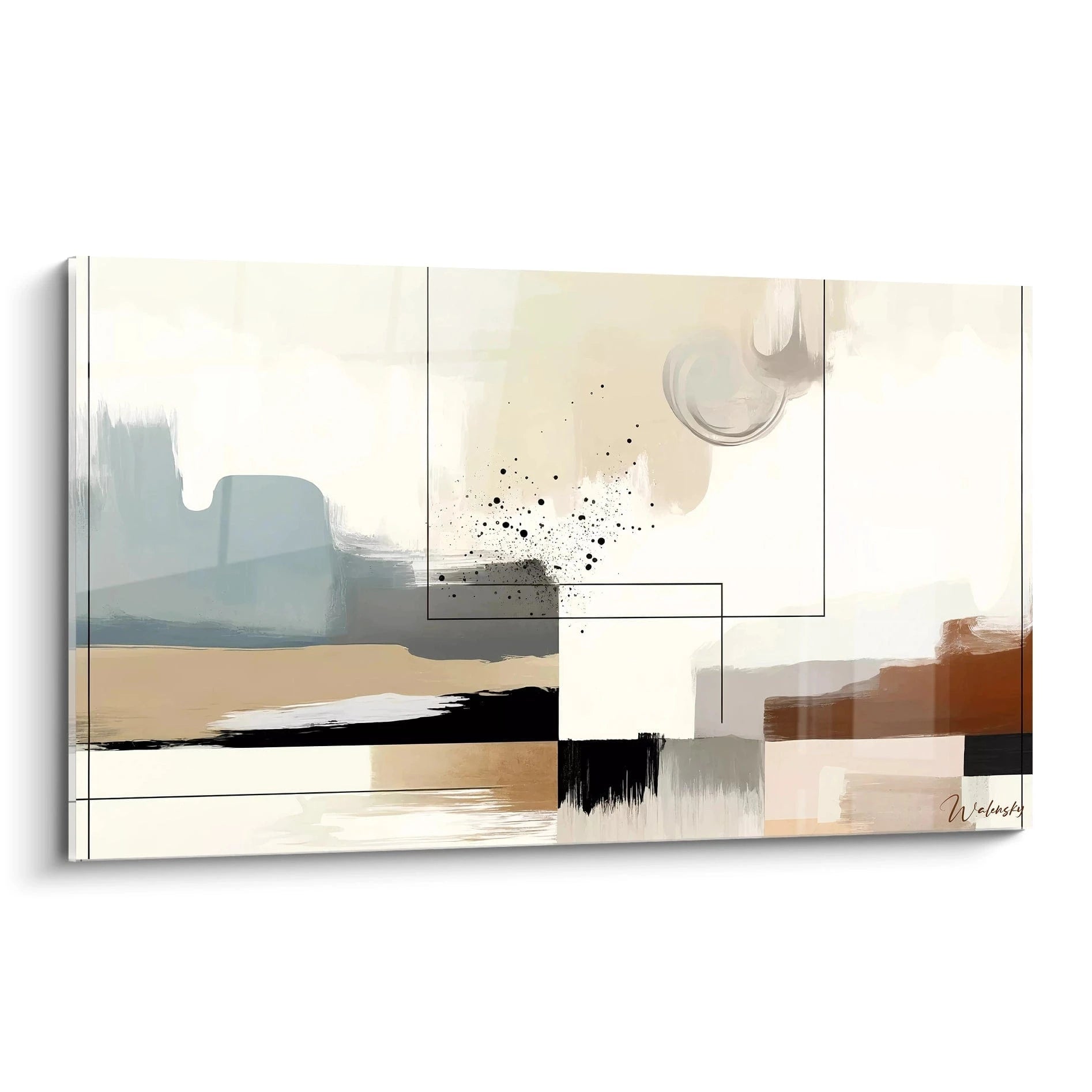
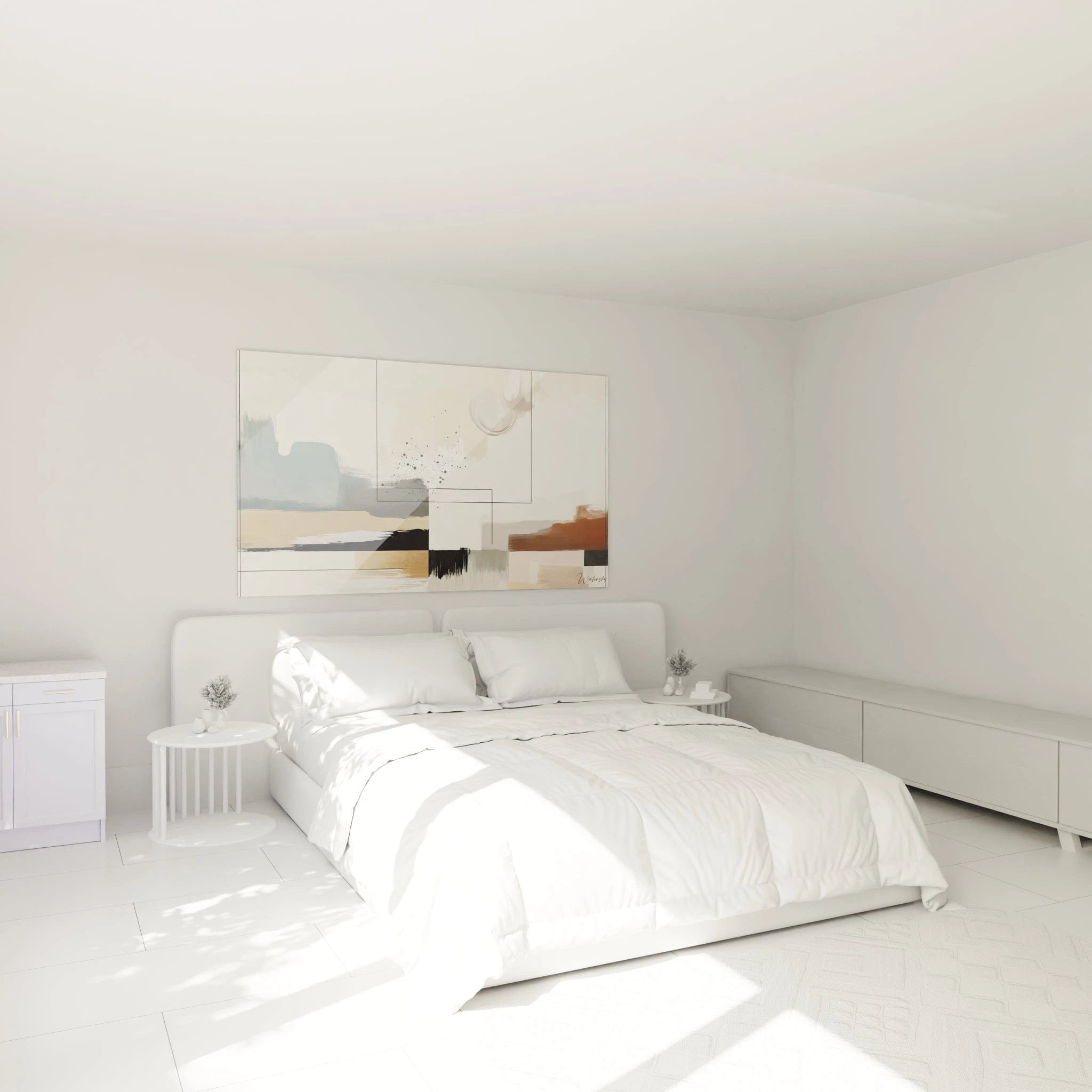
A minimalist abstract painting with segmented geometric composition. Dominated by ivory white, blue-grey, sandy beige and black hues. The texture features areas of diluted color with soft edges, splashes of black dots, and fine geometric lines dividing the space into rectangular sections.
An abstract deconstructed landscape painting. The palette combines cream white, pale blue, light ochre, and black. Textures blend light flat areas, diffuse cloud-like forms, and visible brushstrokes, with a concentration of black splatters at the center and fine lines forming a partial grid.
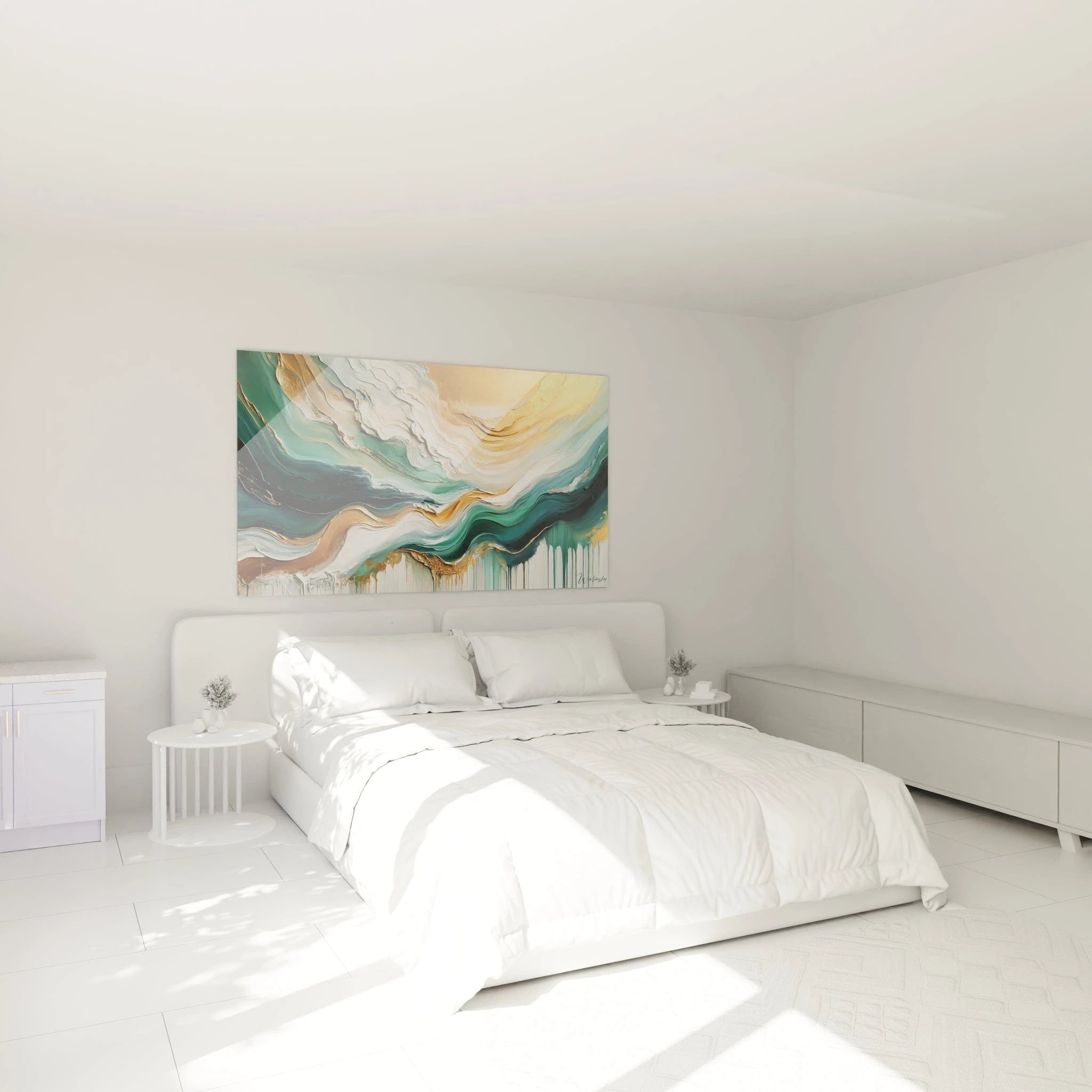
An abstract artwork depicting fluid geological layers with drips. Dominated by emerald green, metallic gold, ivory white, and beige tones. The texture features layered horizontal strata in relief with defined edges, shimmering metallic surfaces, and vertical dripping effects in the lower section.
An abstract topographic wave painting with marbled undulations. The palette combines teal green, copper gold, nacre white and sand beige. The textures blend thick wavy layers with pronounced relief effects, shiny metallic sections and liquid fusion zones flowing vertically, creating a contrast between solidity and fluidity.
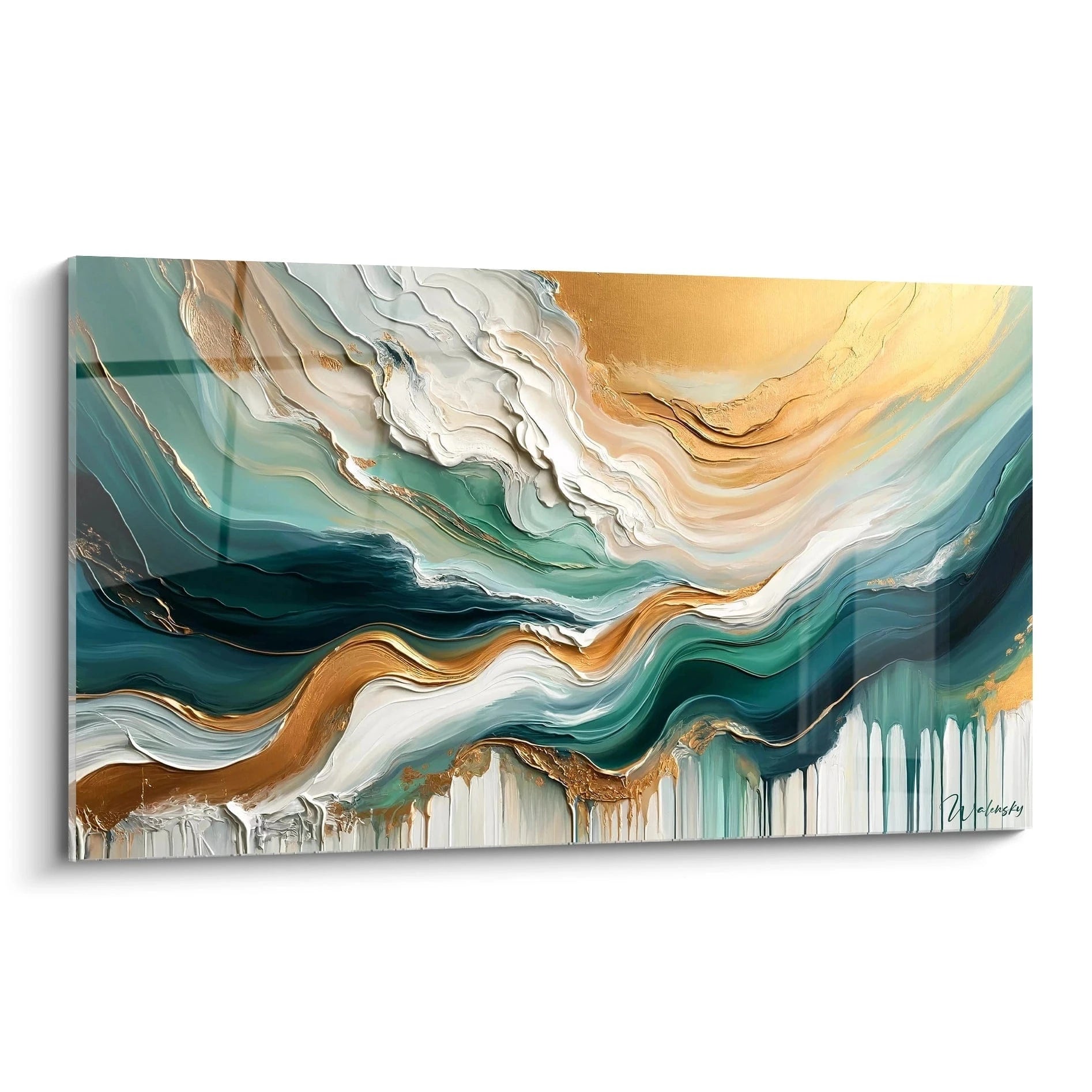
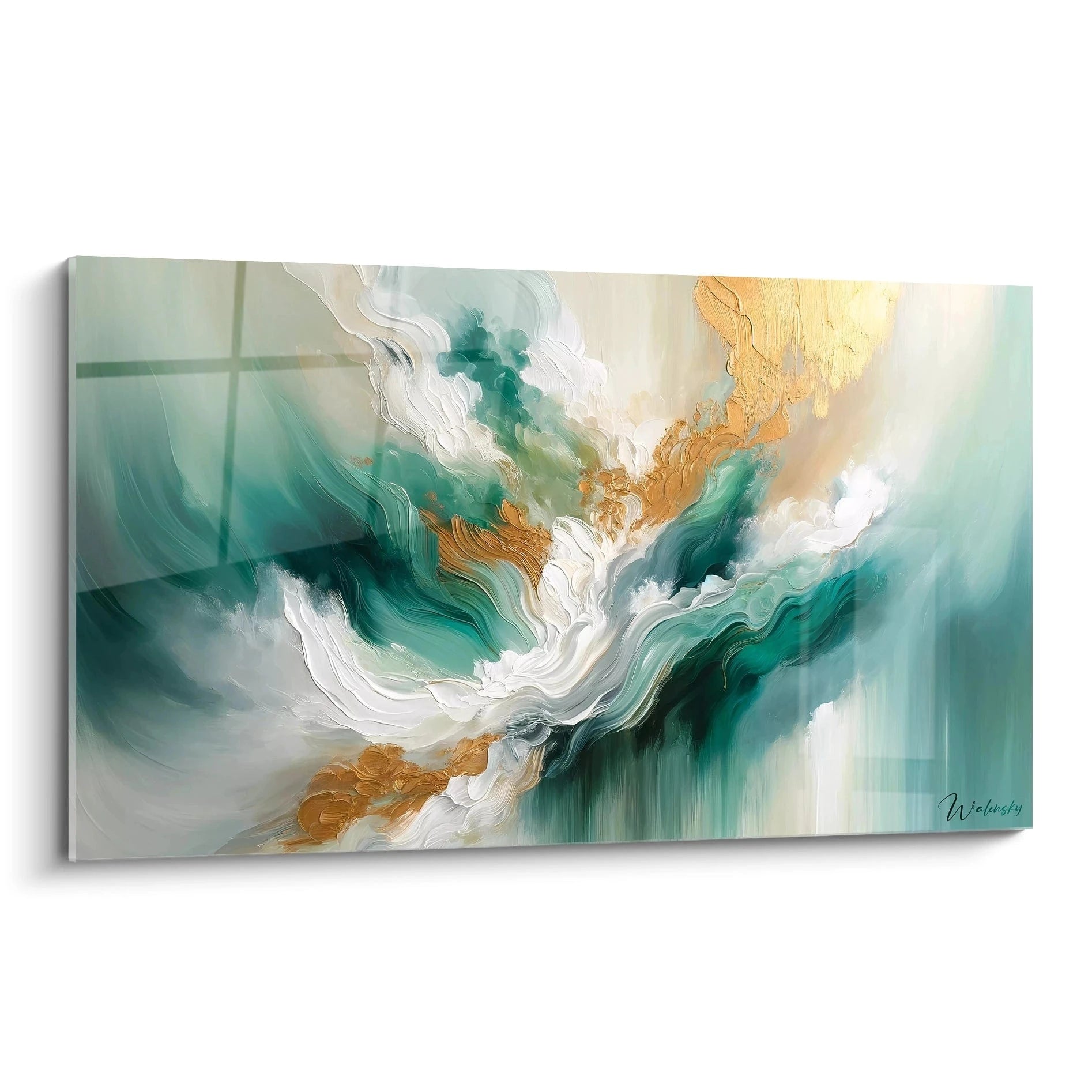
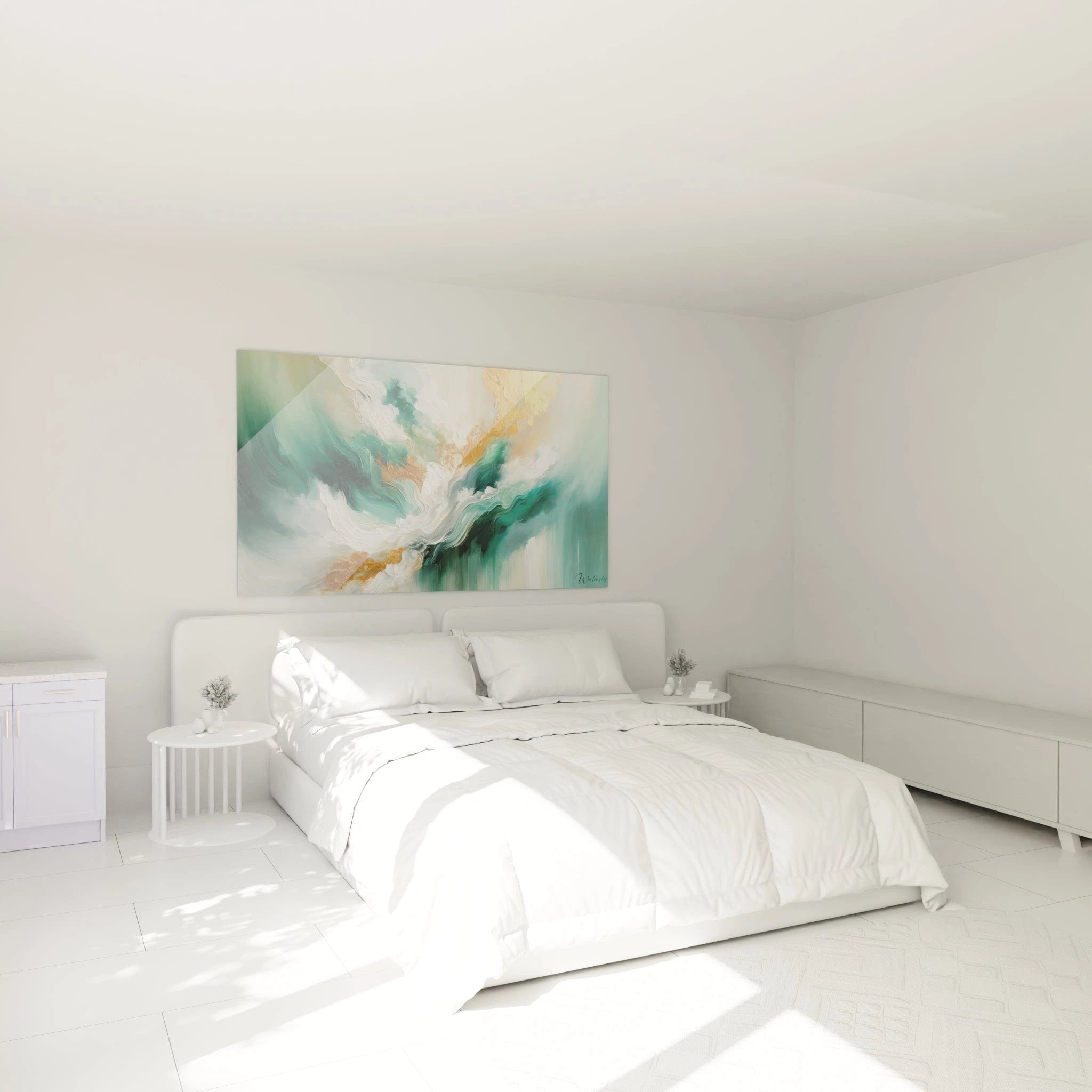
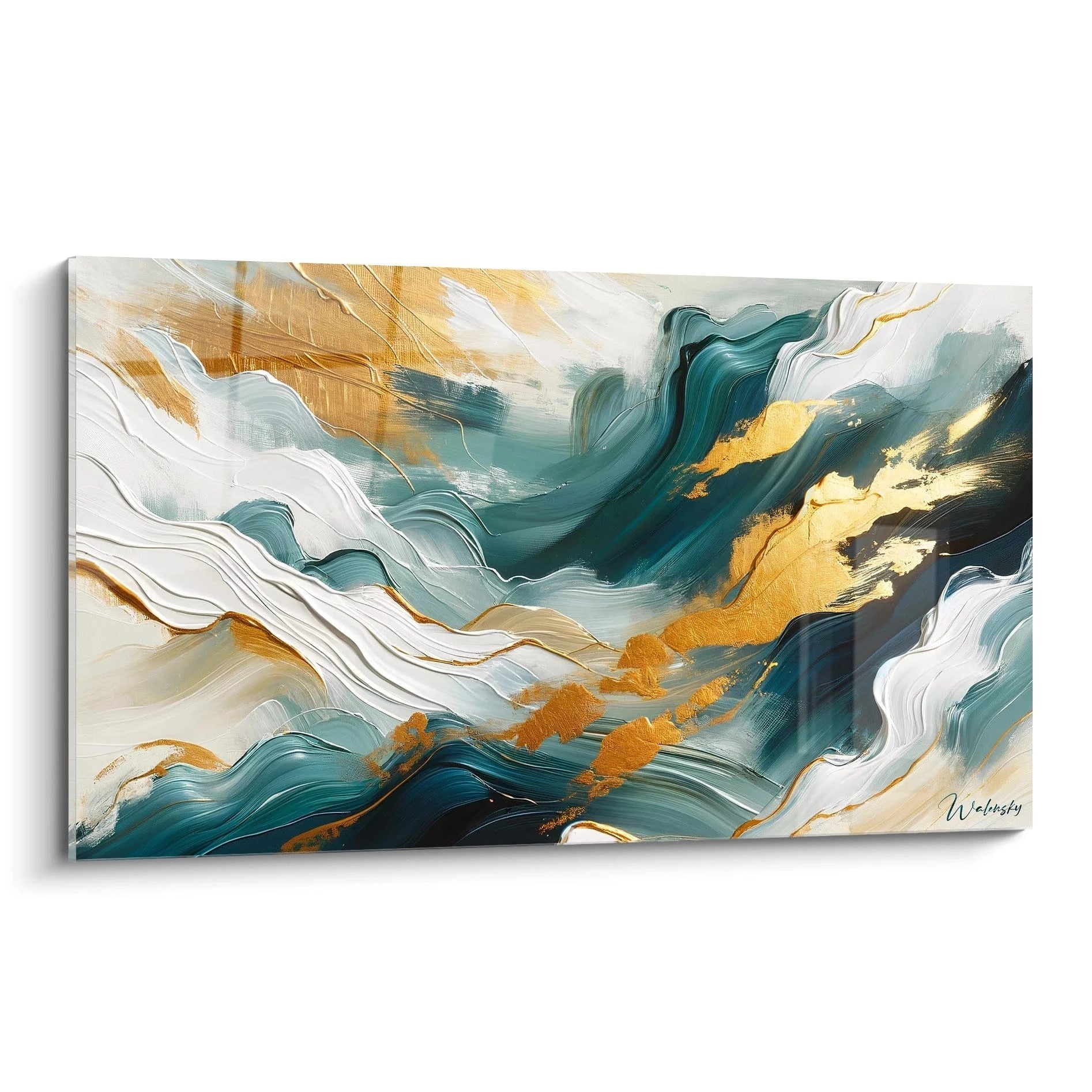
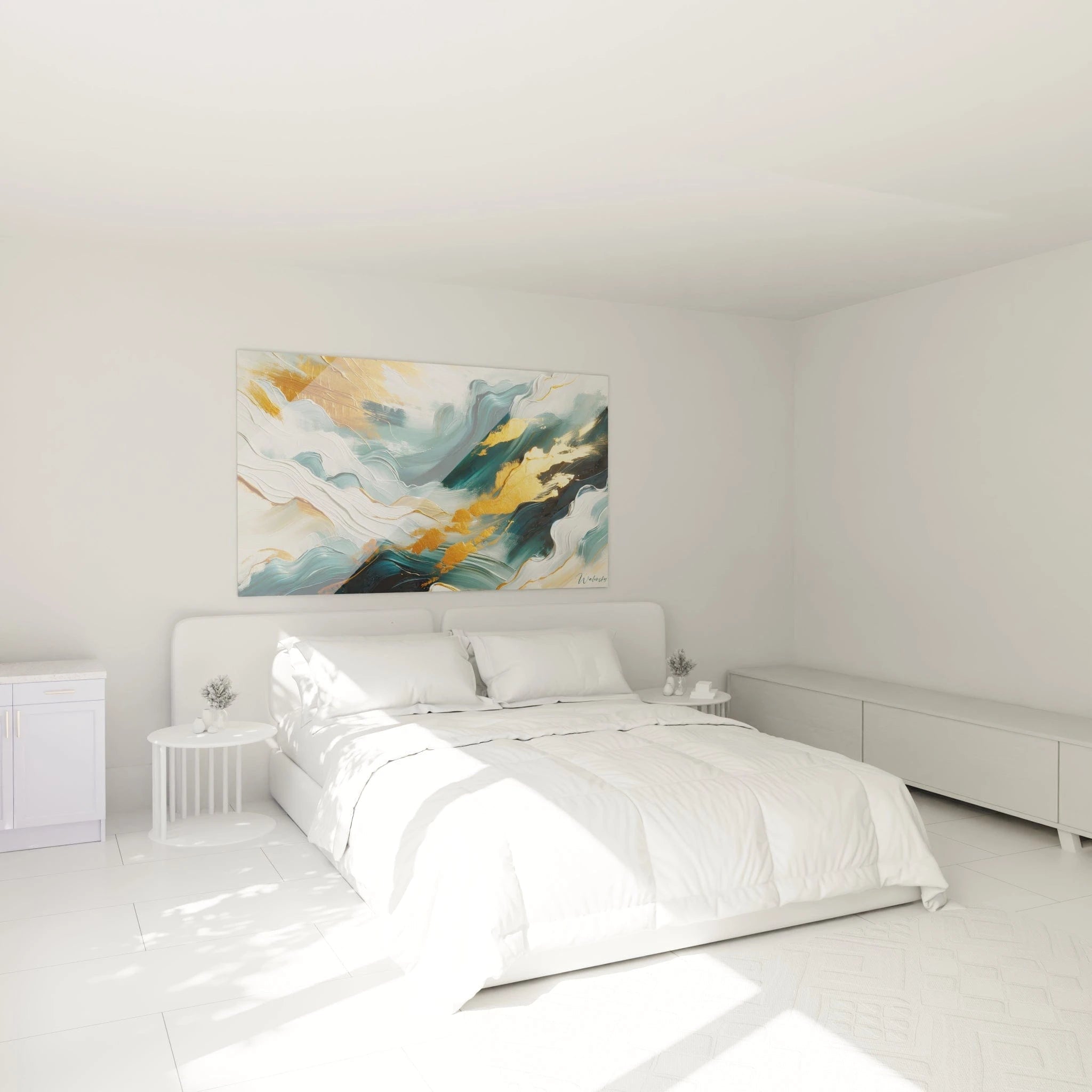
An abstract painting of fluid waves in dynamic motion. Dominated by emerald green, pure white, metallic gold and pale beige hues. The texture features thick paint impasto creating swirling movements, with undulating brushstrokes and textured relief areas, particularly in the white and golden sections.
An abstract painting of interwoven currents with oceanic appearance. The palette combines deep teal green, creamy white, brilliant gold, and beige. The textures blend thick layers of paint applied with a palette knife forming dynamic undulations, with metallic gold areas contrasting against fluid greens and white foam.
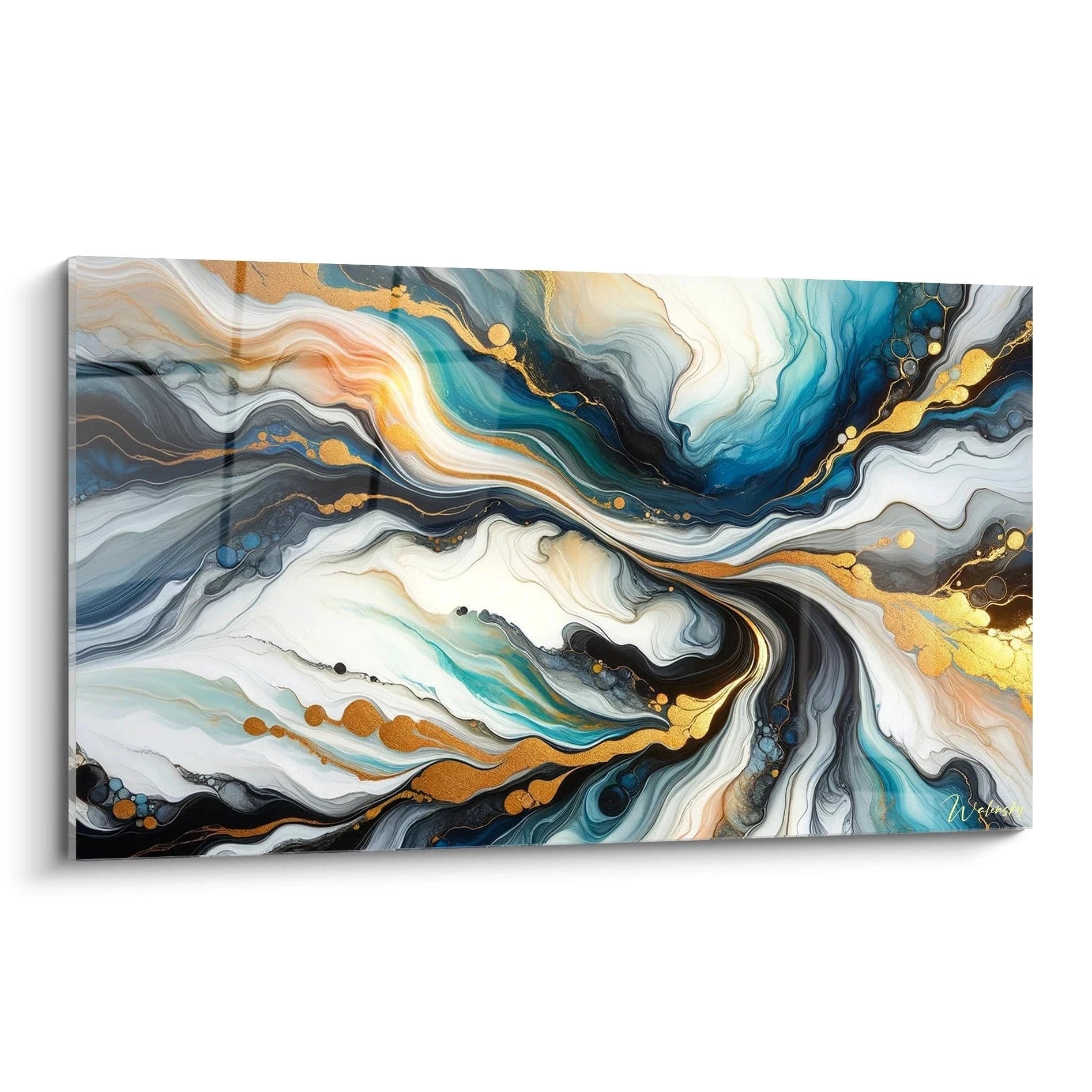
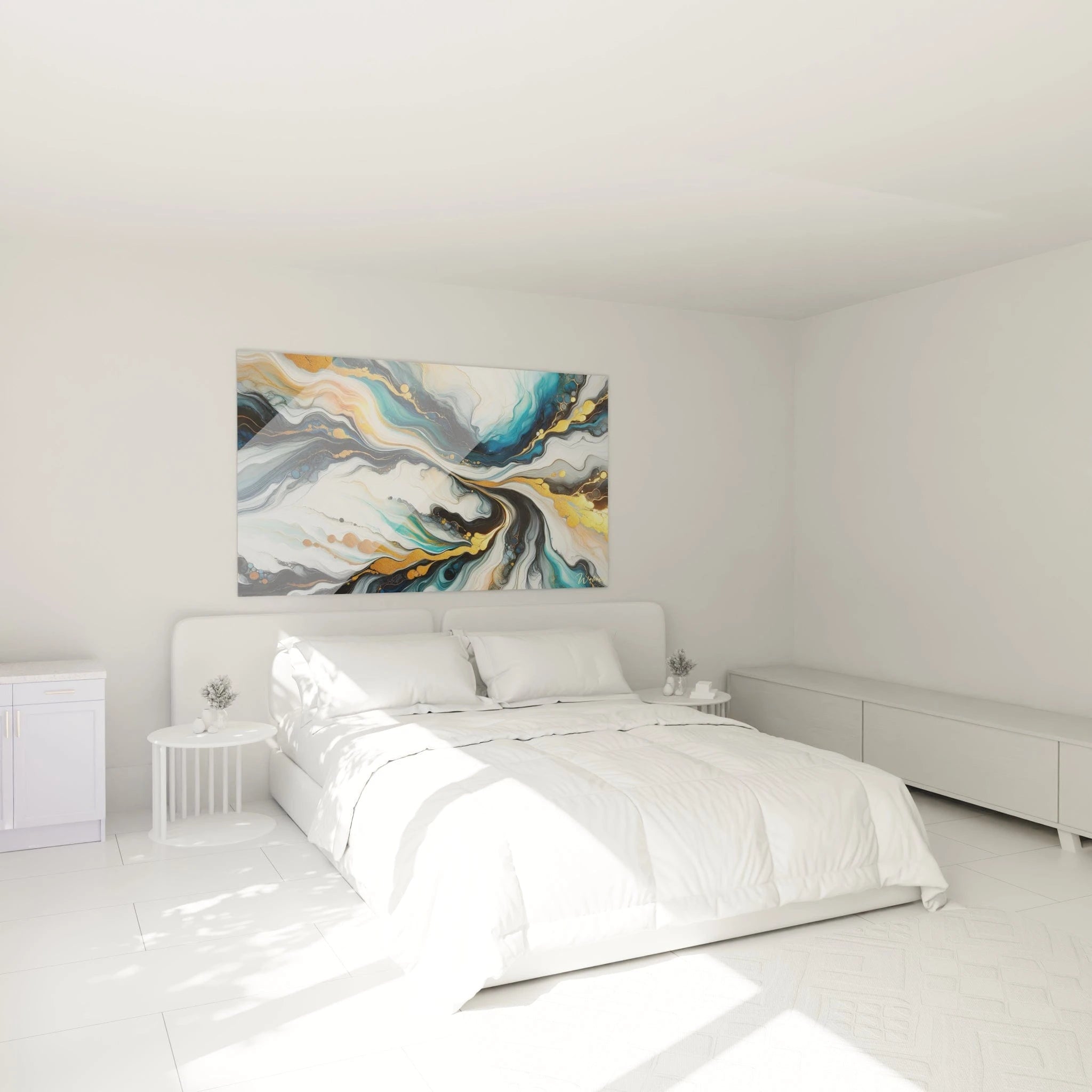
An abstract painting featuring fluid marble swirls with undulating shapes. Dominated by cream white, turquoise blue, black and metallic gold tones. The liquid texture displays sinuous veins interlaced with transparency effects and shimmering gold inclusions forming islands and serpentine lines.
An abstract painting of intertwined fluid flows. The palette combines pearlescent white, ocean blue-green, ink black, and radiant gold. The textures evoke liquid currents with translucent blending effects, bubbly cells, and metallic gold particles deposited in organic patterns.
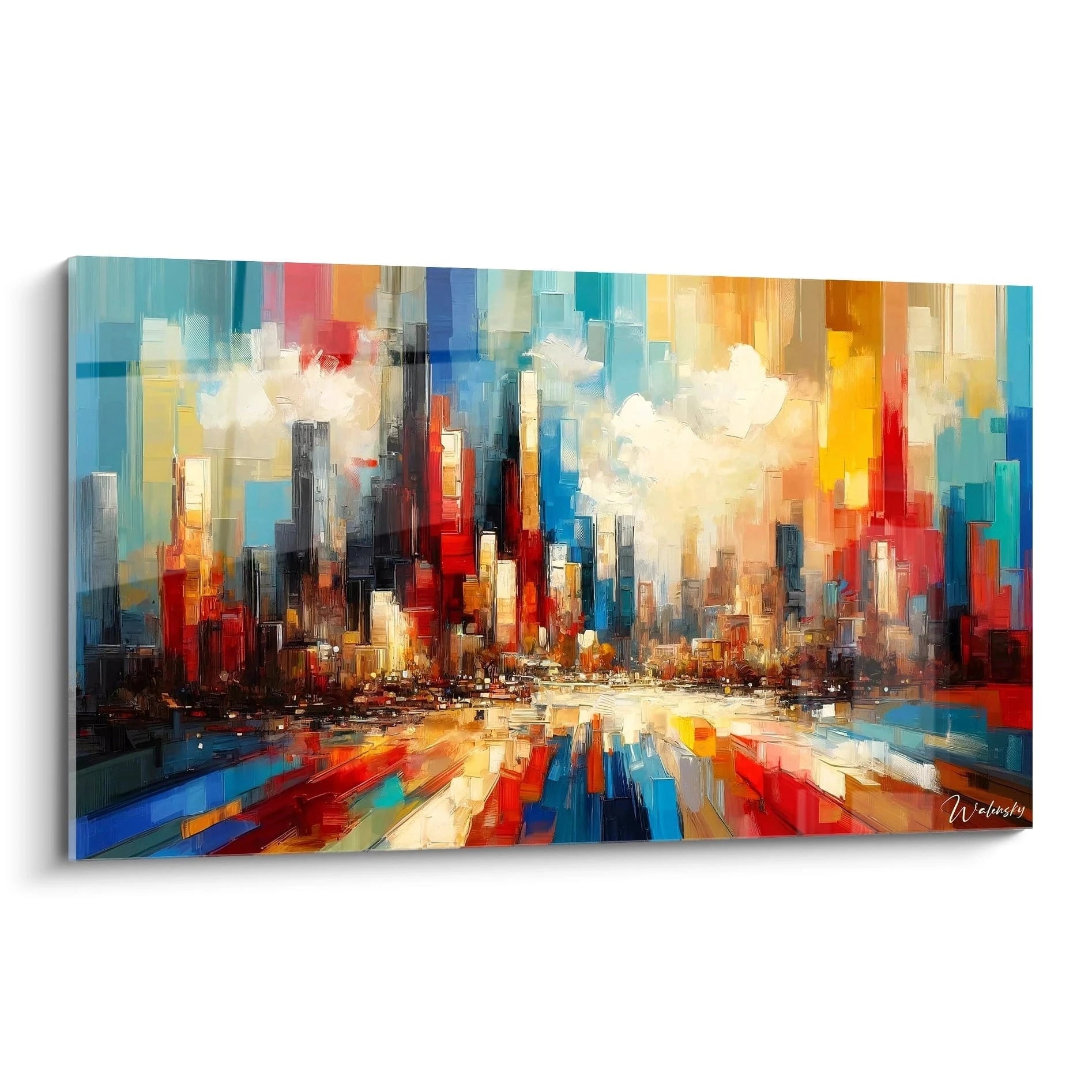
An abstract urban skyline painting with stylized skyscrapers. Dominated by turquoise, vibrant red, ochre, and cobalt blue hues. The texture features palette knife strokes creating vertical rectangular shapes at the center and reflective horizontal streaks in the lower section evoking water.
An abstract cityscape painting viewed in perspective. The palette combines scarlet red, turquoise blue, golden yellow, and white. The textures feature impasto geometric blocks forming vertical towers reflected in a horizontal surface, with diffuse white clouds contrasting against angular structures.
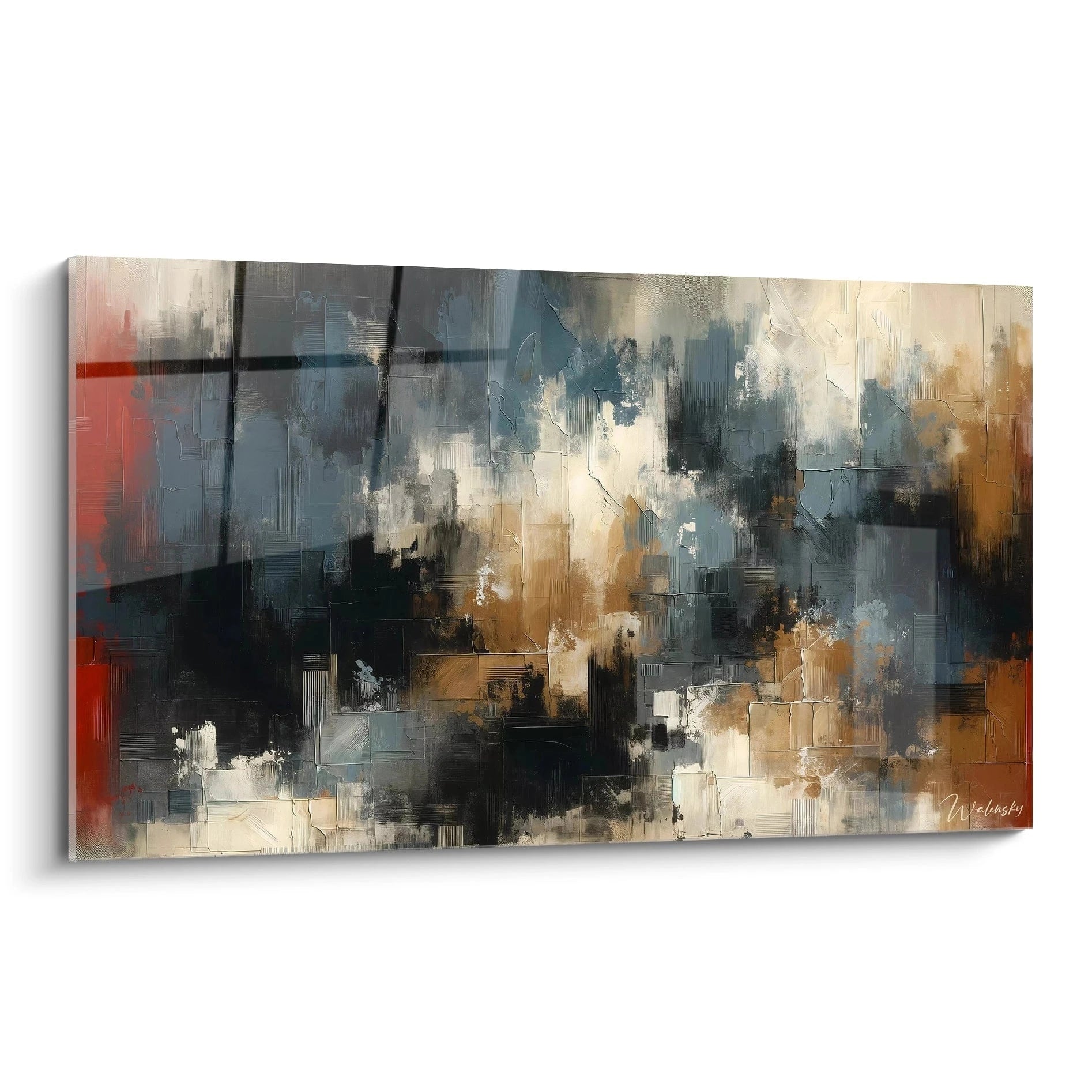
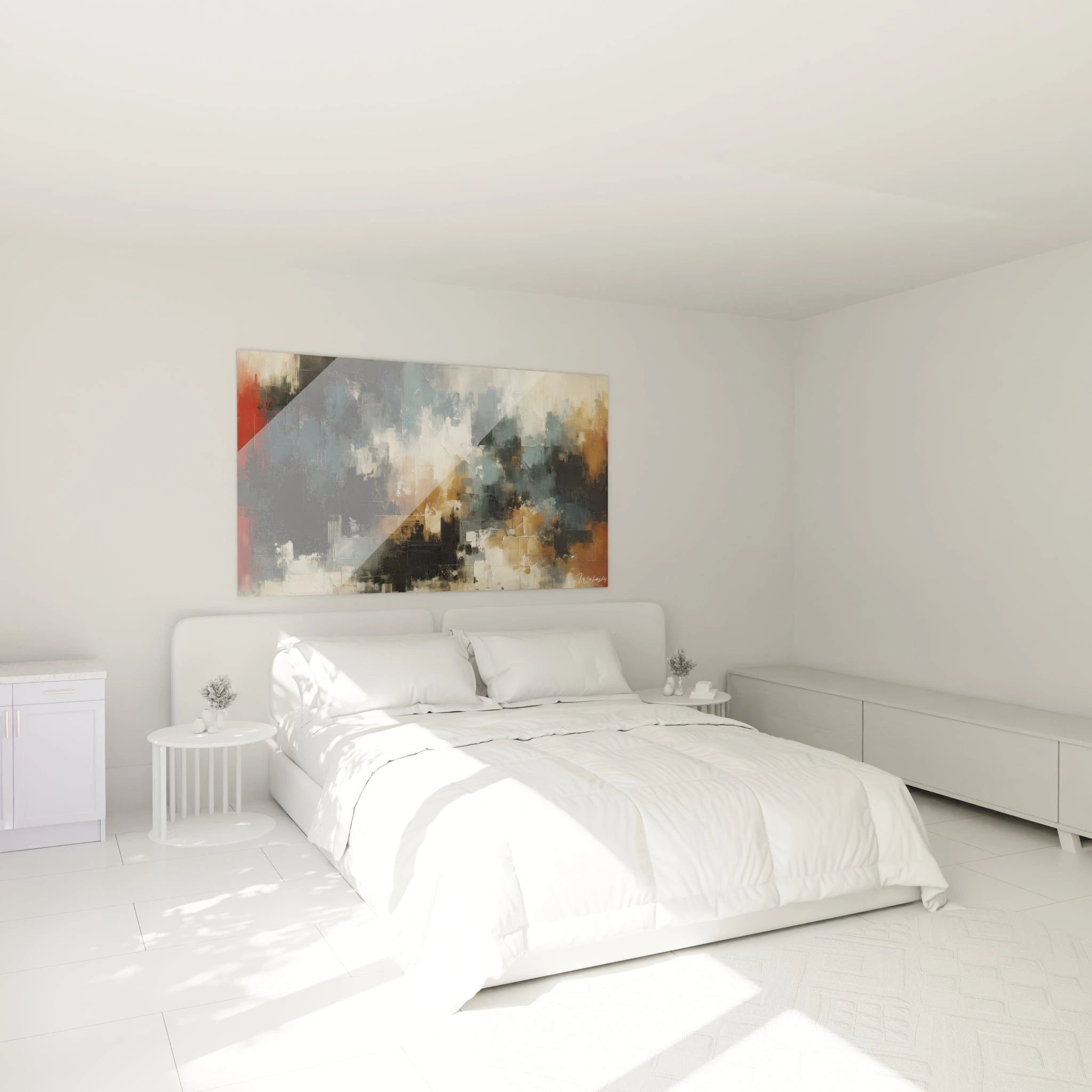
An abstract geometric painting composed of overlapping rectangular blocks. Dominated by blue-grey, black, cream white and ochre hues with a touch of vibrant red on the left. The texture features impasto brushwork, cracks, streaks and rough surfaces creating a depth effect.
An abstract painting of architectural composition with angular shapes. The palette combines slate blue, black, beige, ochre and deep red. Textures blend smooth and rough surfaces with scraping effects, incised lines and paint buildup zones creating tactile relief.
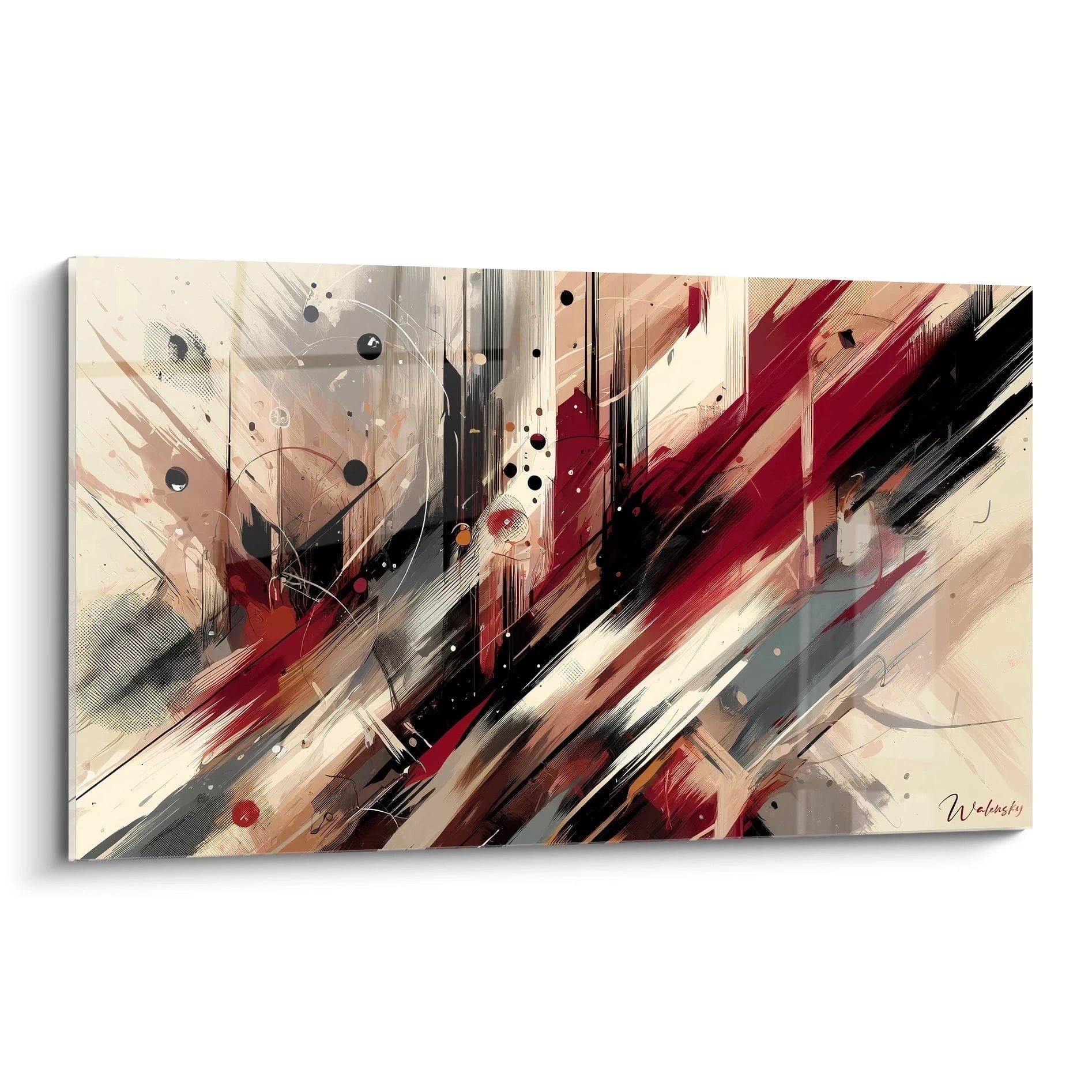
Dynamic abstract painting composed of diagonal lines in blood red, deep black and neutral grey. Textured vertical striped brushstrokes, punctual splashes, layered pictorial overlays with transparency effects.
Abstract painting with fragmented movements. Color dominants: carmine red, graphite black and beige tones. Striated surfaces, projections of black and white dots, dynamic lines crossing the pictorial space.
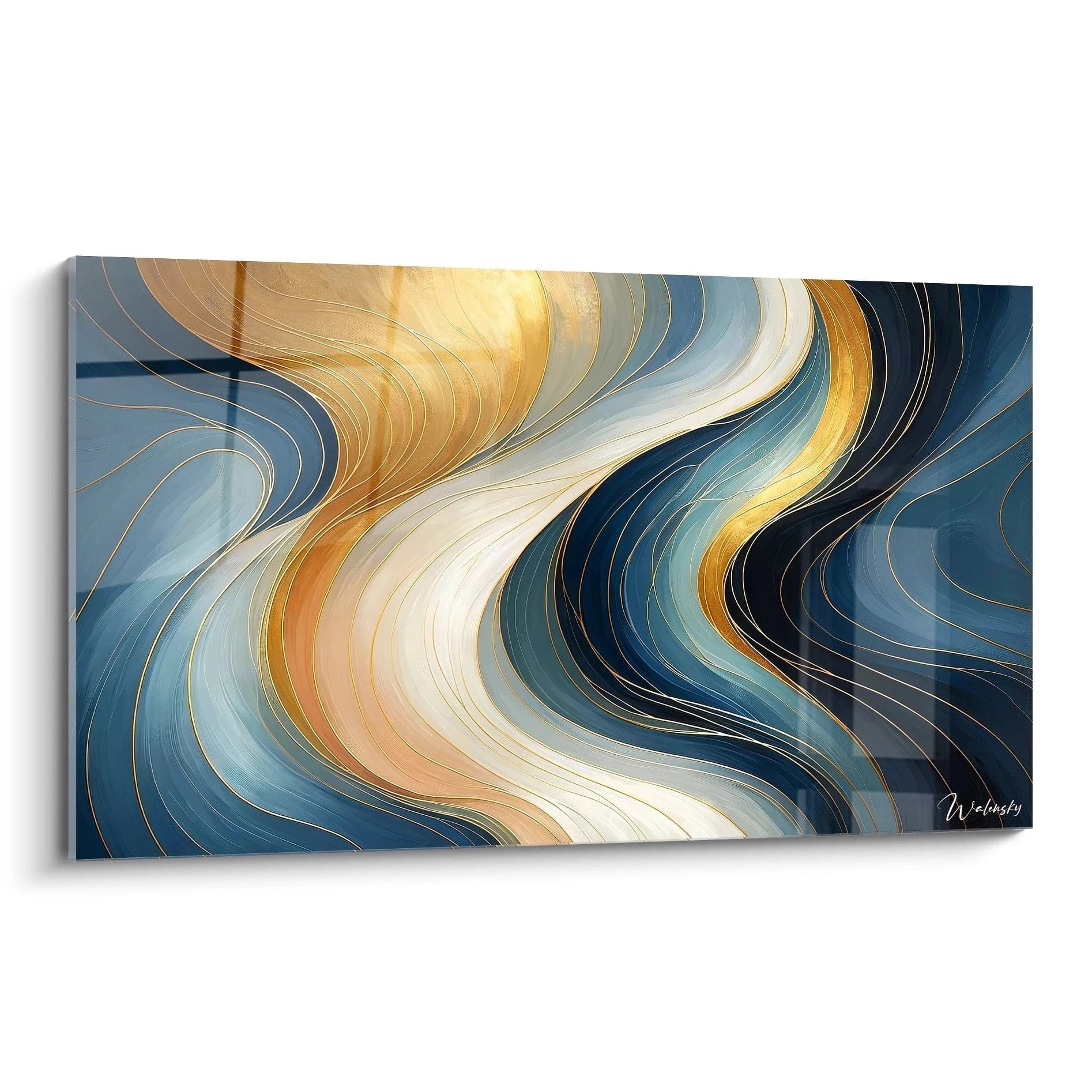
An abstract painting of undulating waves with golden contours. Dominated by navy blue, metallic gold, cream white, and sky blue tones. The texture features curved and fluid bands with subtle gradients, outlined by fine golden lines that follow the rippling movements, creating an effect of elegance and fluidity throughout the composition.
An abstract painting of sinuous interlocking curves. The palette combines indigo blue, brilliant gold, ivory, and pale turquoise. The textures blend smooth color zones with soft transitions and fine golden lines that emphasize each undulation, creating a harmonious wave pattern that appears to move gracefully through space.
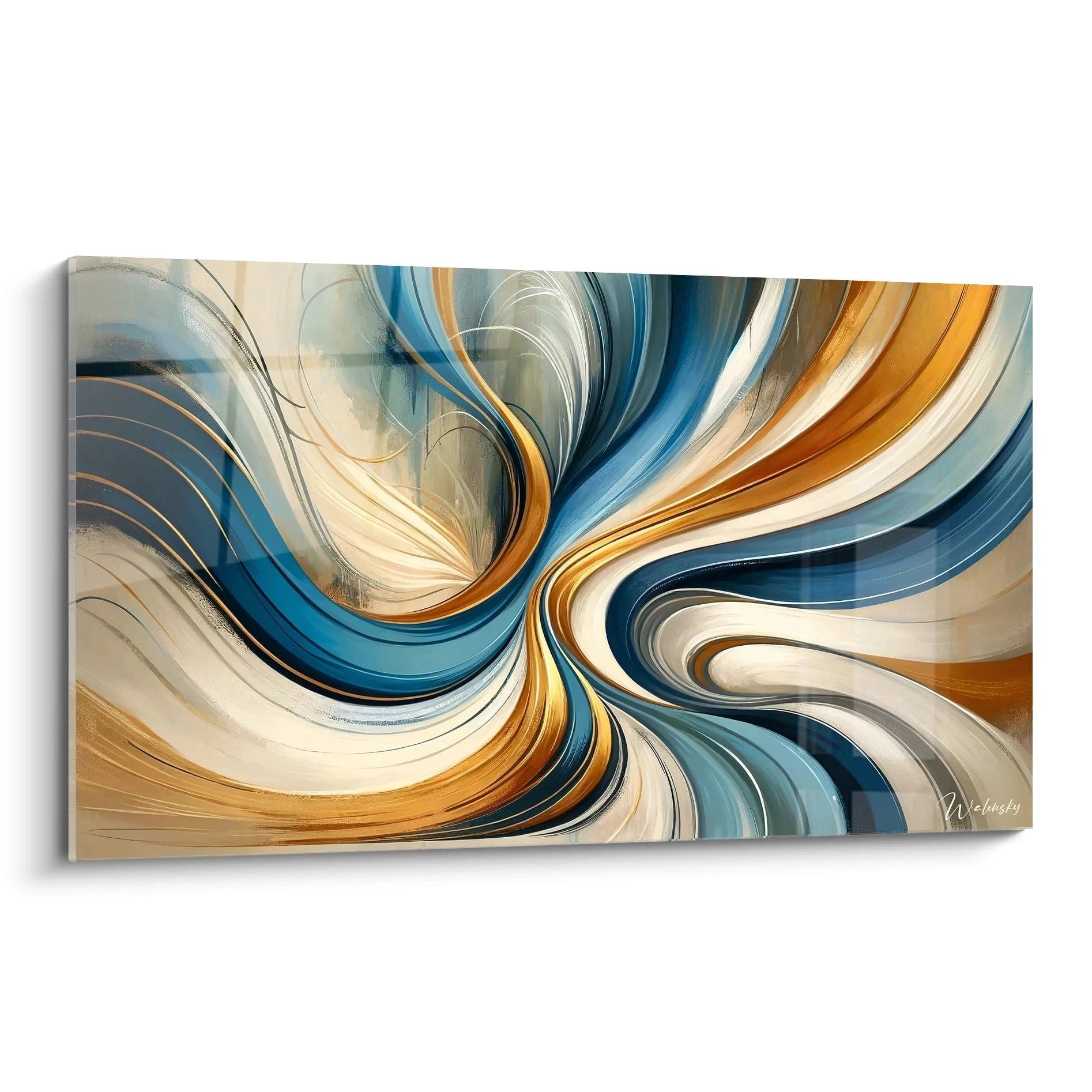
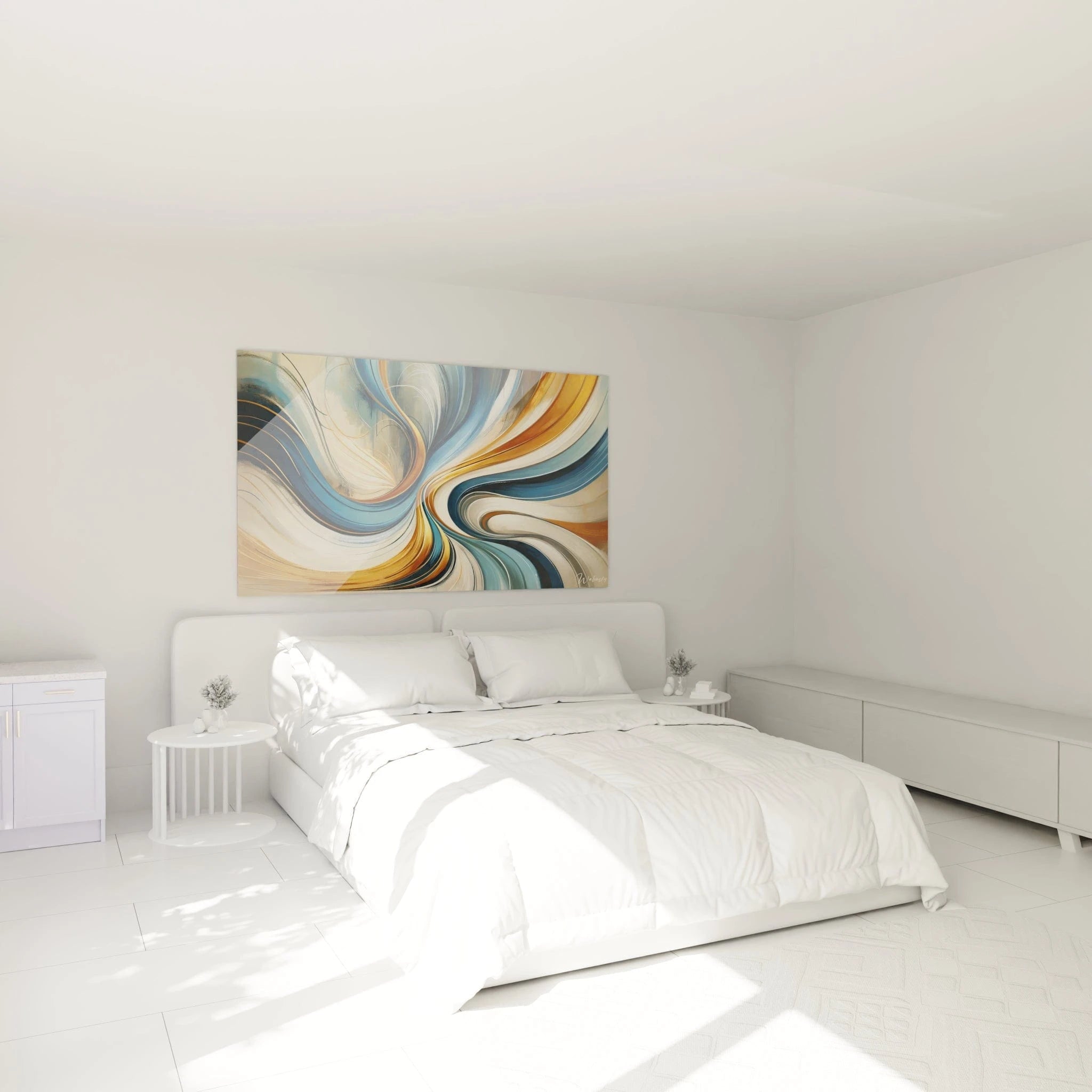
An abstract painting of curved lines in swirling motion. Dominated by turquoise blue, metallic gold, cream white, and pearl gray tones. The texture features fluid bands that coil and converge toward the center, creating a dynamic spiral effect with color ribbons of sharp contours intertwining in a harmonious circular movement.
An abstract vortex artwork with intertwined colors. The palette combines azure blue, golden ochre, ivory white, and silvery gray. The textures blend smooth and glossy strokes forming concentric curves that unfold from the center, with depth effects created by overlapping colored bands that appear to swirl in perpetual motion.
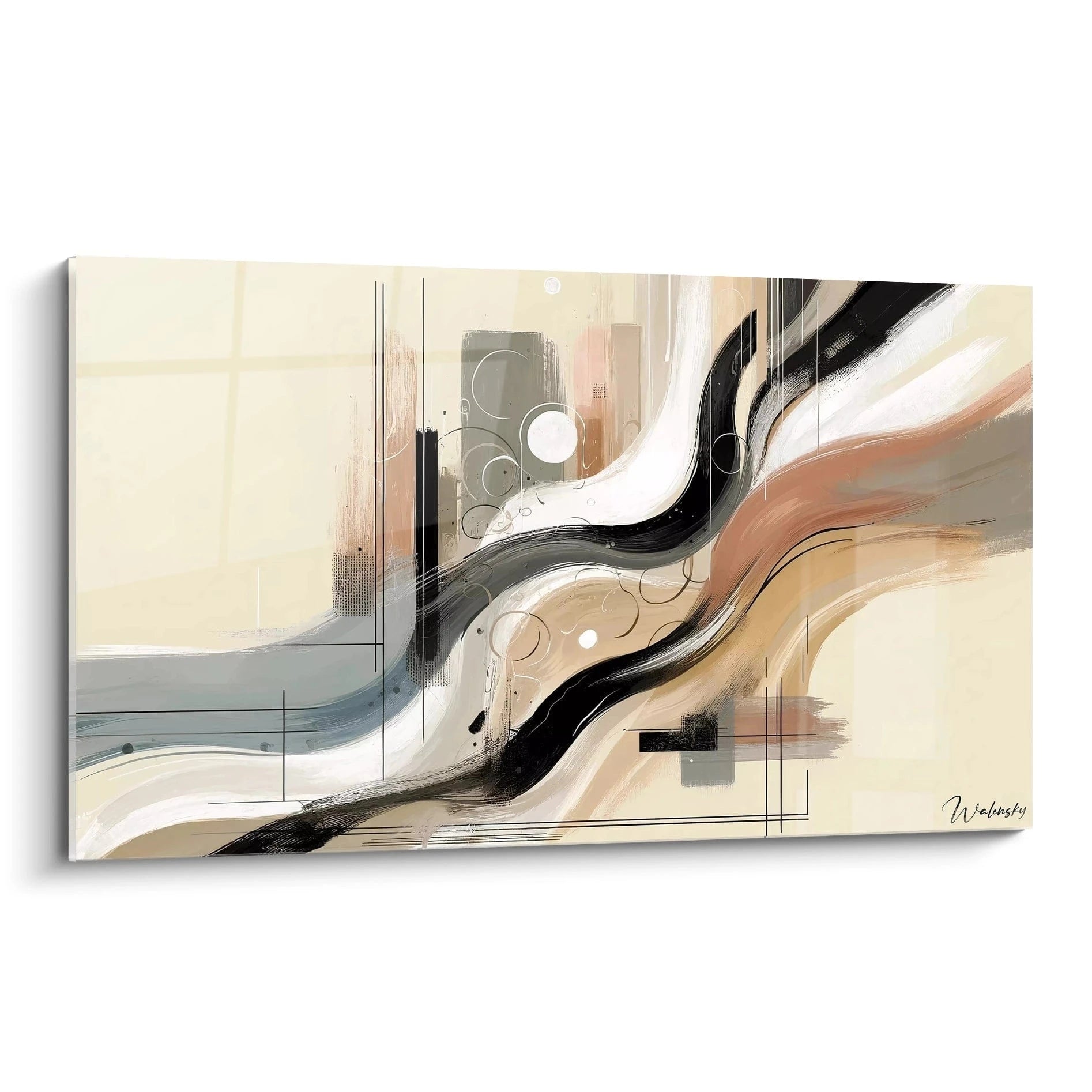
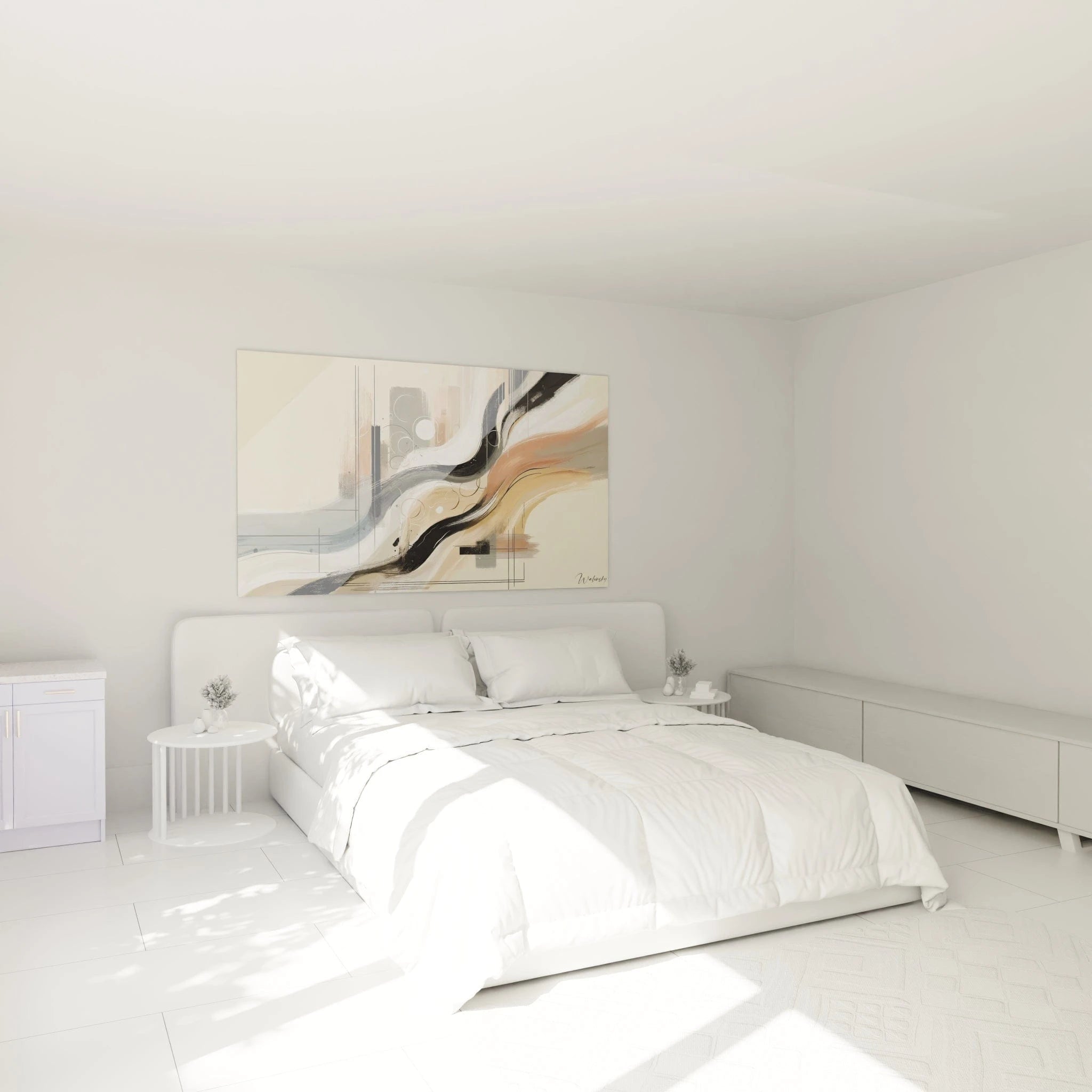
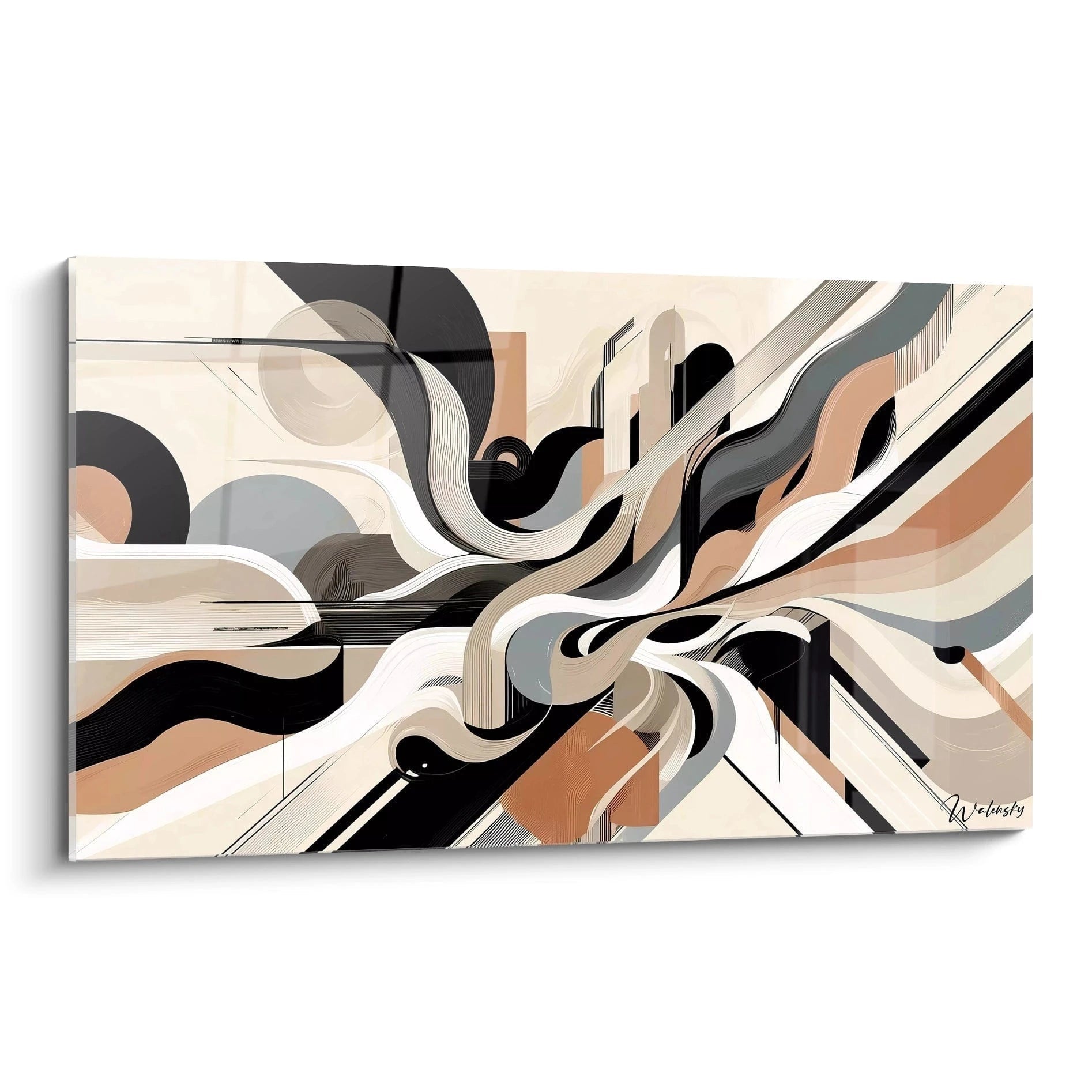
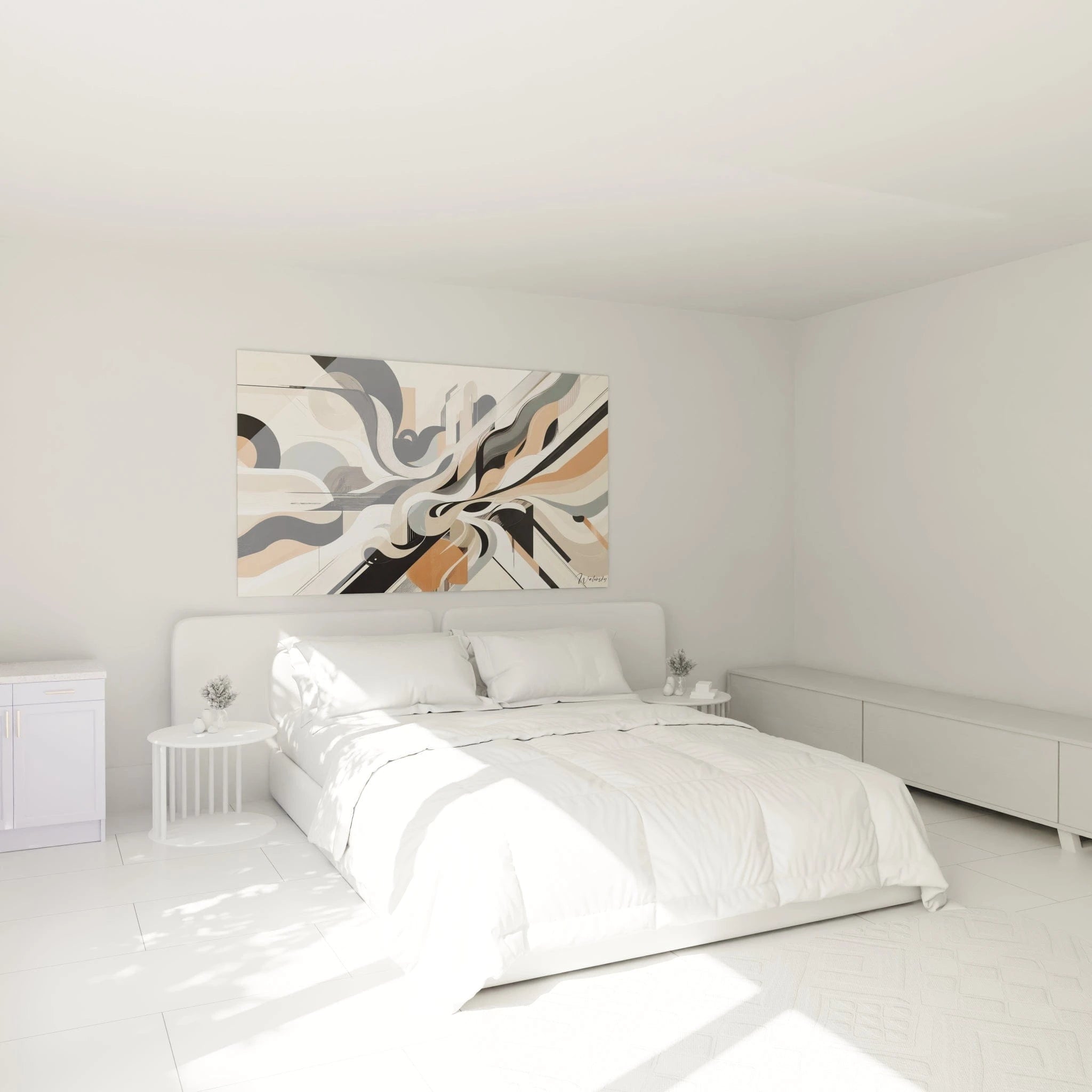
An abstract artwork of minimalist undulating curves. Dominated by cream beige, deep black, pure white, and pale peach tones. The texture features fluid and sinuous lines creating dynamic horizontal movement, with graphic elements such as thin circles, white dots, and geometric straight lines that contrast with the main organic forms.
An abstract artwork featuring graphic waves on a neutral background. The palette combines sandy beige, jet black, ivory white, and powdered coral. Textures blend fluid strokes with sharp edges and varied finishes ranging from smooth to grainy, with minimalist geometric elements and delicate circles integrated into the undulating composition.
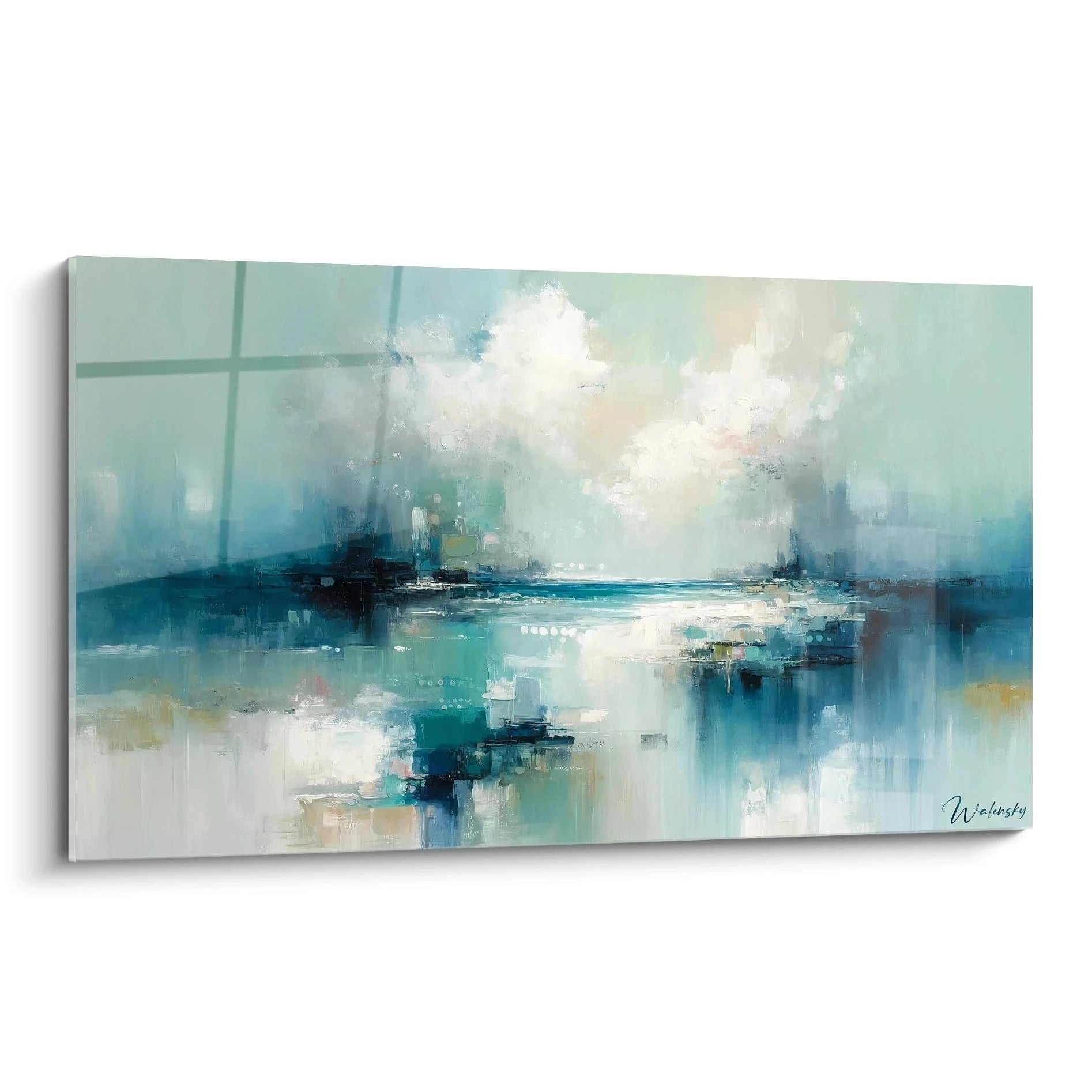
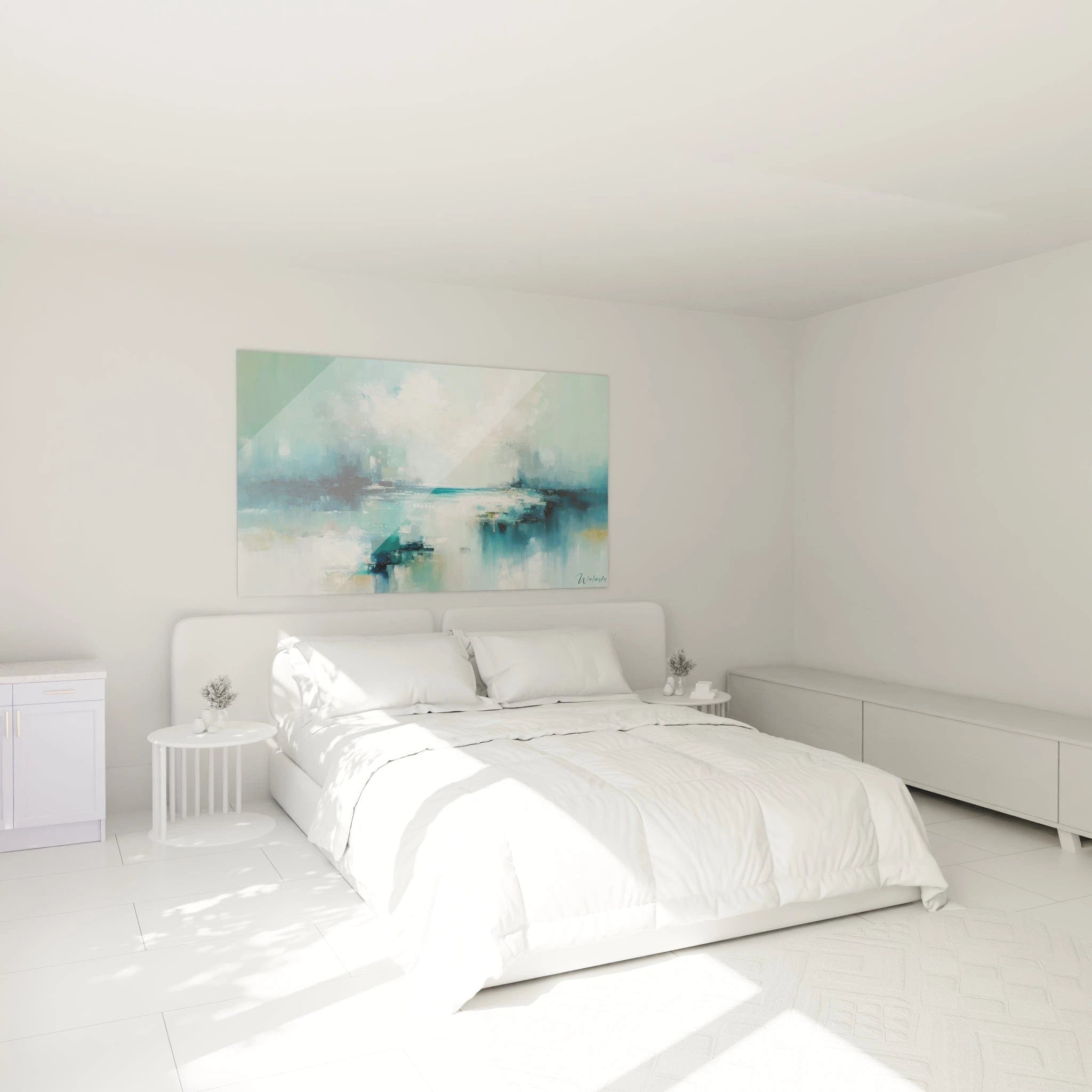
An abstract seascape painting with aquatic tones. Dominated by turquoise, petrol blue, cream white, and beige accents. The texture features misty and vaporous areas suggesting clouds reflected in calm waters, with soft central luminosity and subtle rectangular shapes creating a balanced horizontal composition.
An abstract seascape painting with a misty horizon. The color palette combines teal-blue, pearlescent white, deep blue, and pale beige. The textures blend soft, blurred areas evoking a cloudy sky with more defined brushstrokes forming a central horizon line, luminous reflections on water, and subtle geometric accents that anchor the atmospheric composition.
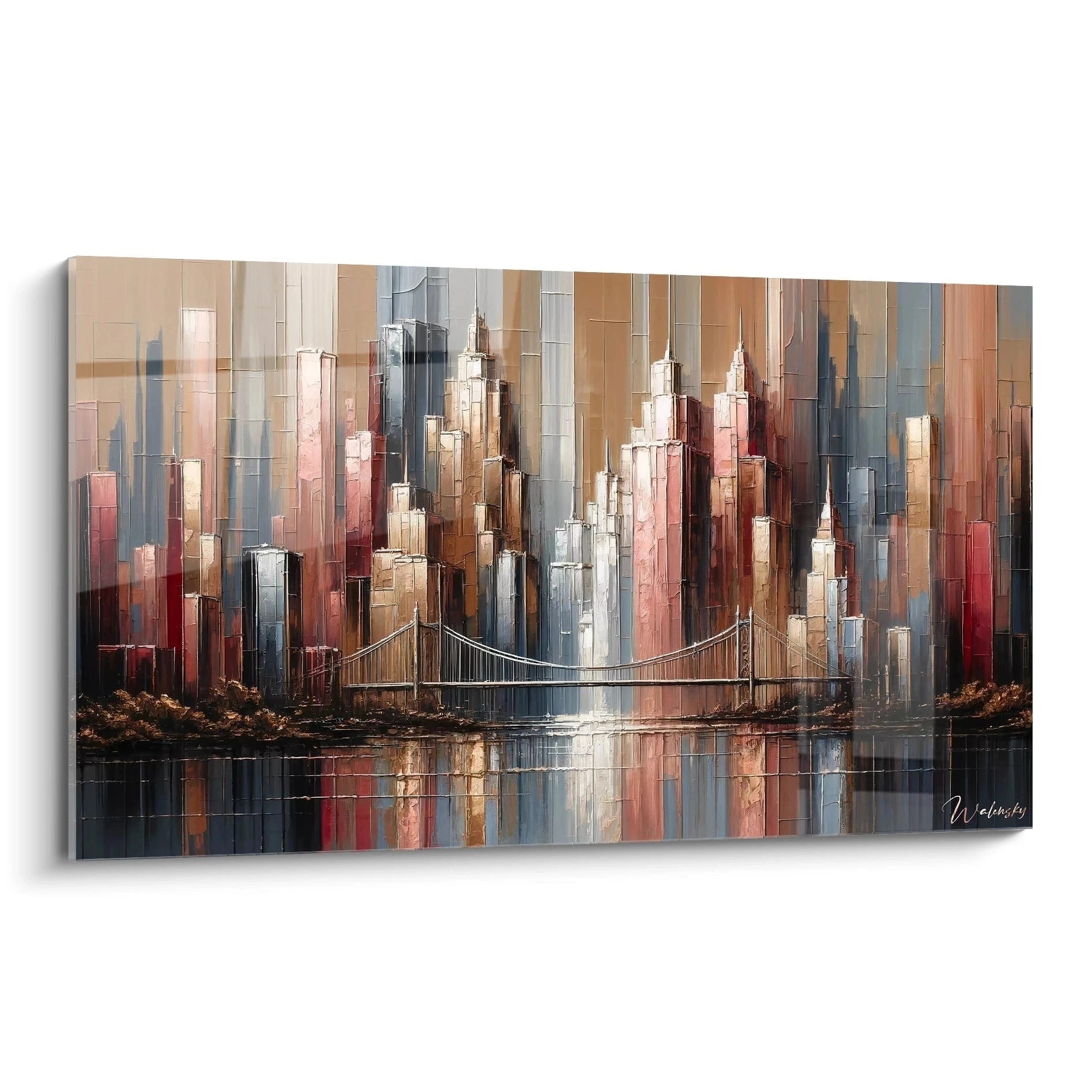
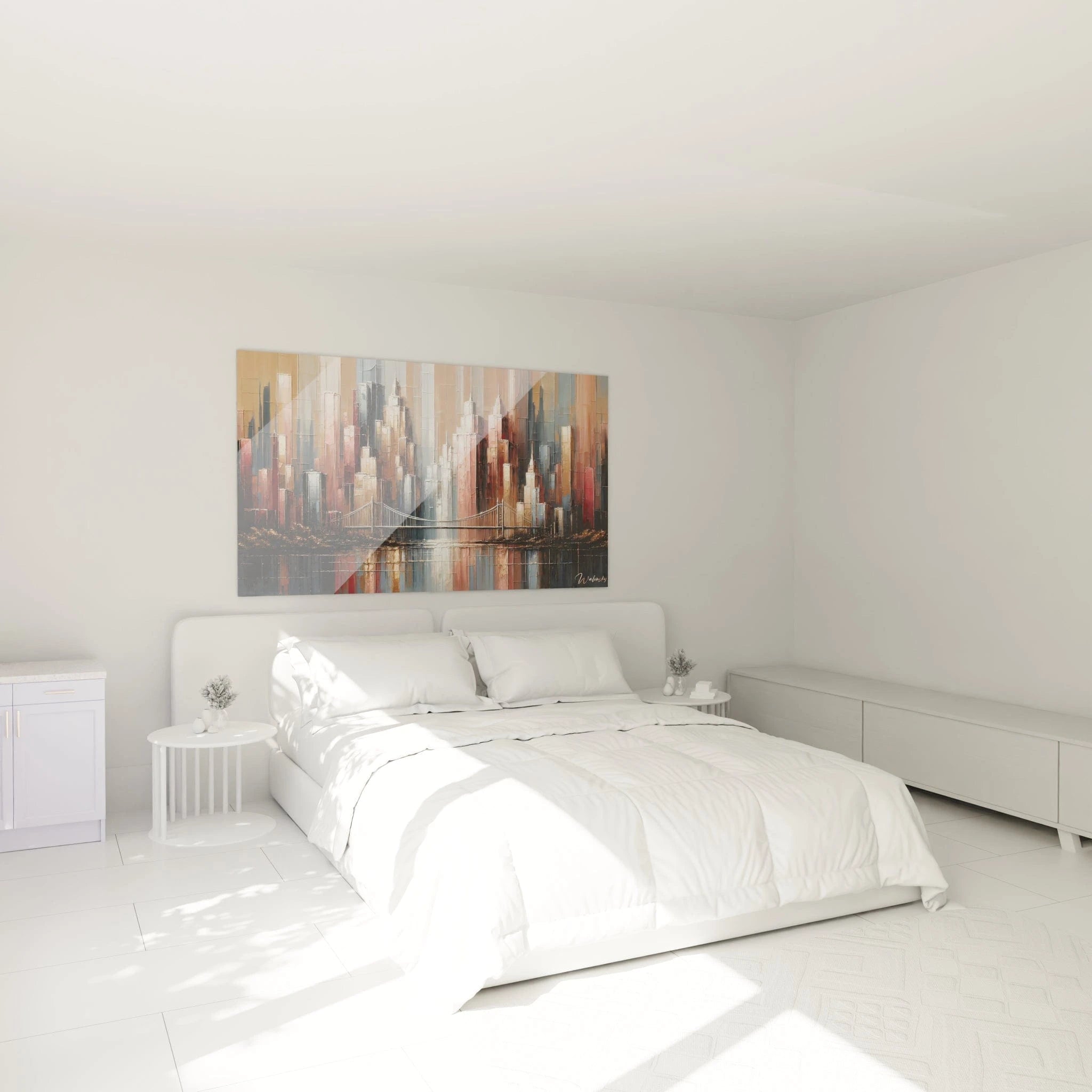
An abstract urban skyline painting with suspended bridge. Dominated by bronze, brick red, steel gray, and ochre tones. The texture features palette knife paint applications creating vertical rectangular shapes representing skyscrapers, with a delicate suspended bridge crossing water, all reflecting in the shimmering surface.
An abstract metropolitan painting featuring buildings and bridge. The palette combines copper ochre, burgundy, slate blue, and golden beige. The textures blend vertical overlapping rectangles forming urban towers and delicate horizontal lines for the suspension bridge, creating an architectural composition reflected in the dark water below.
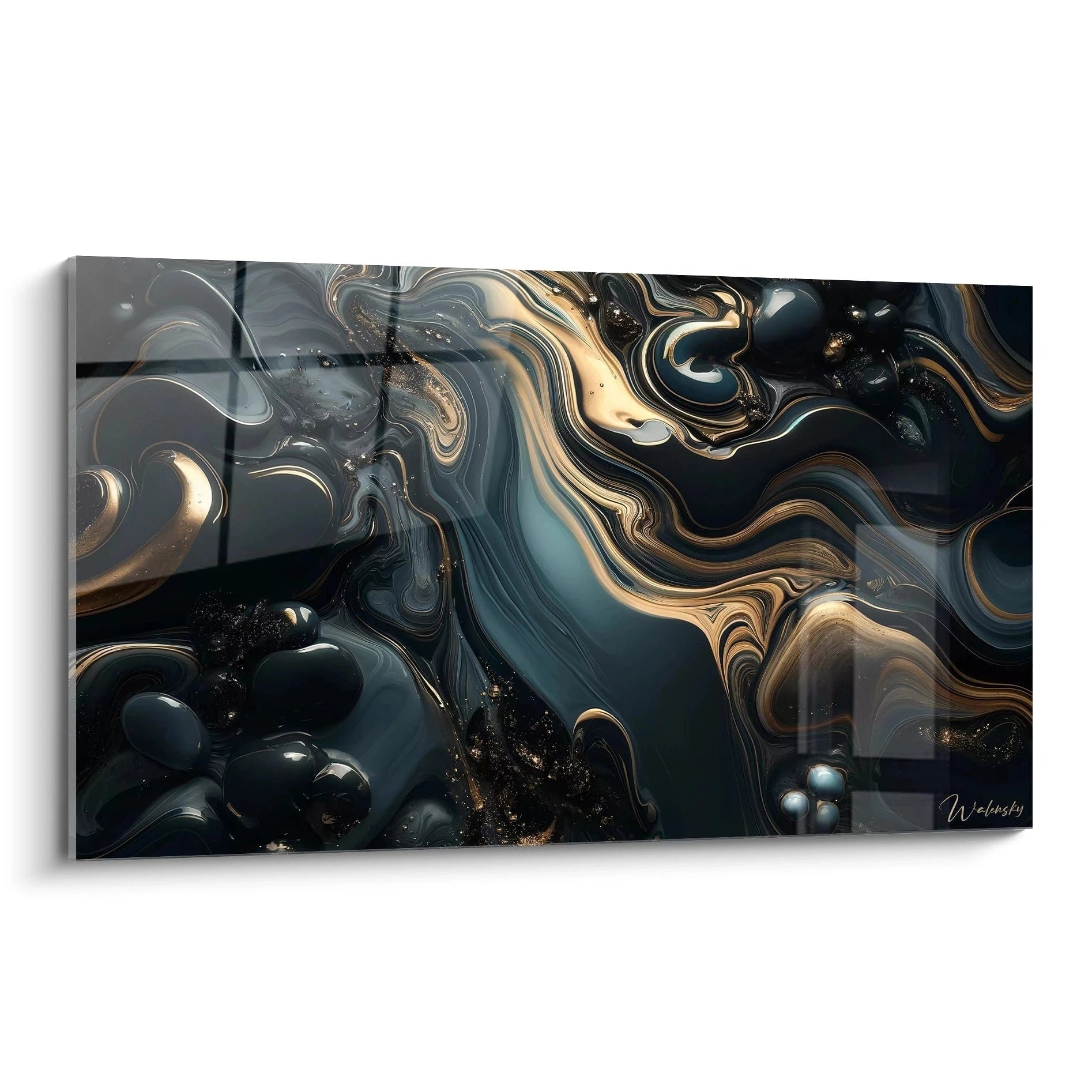
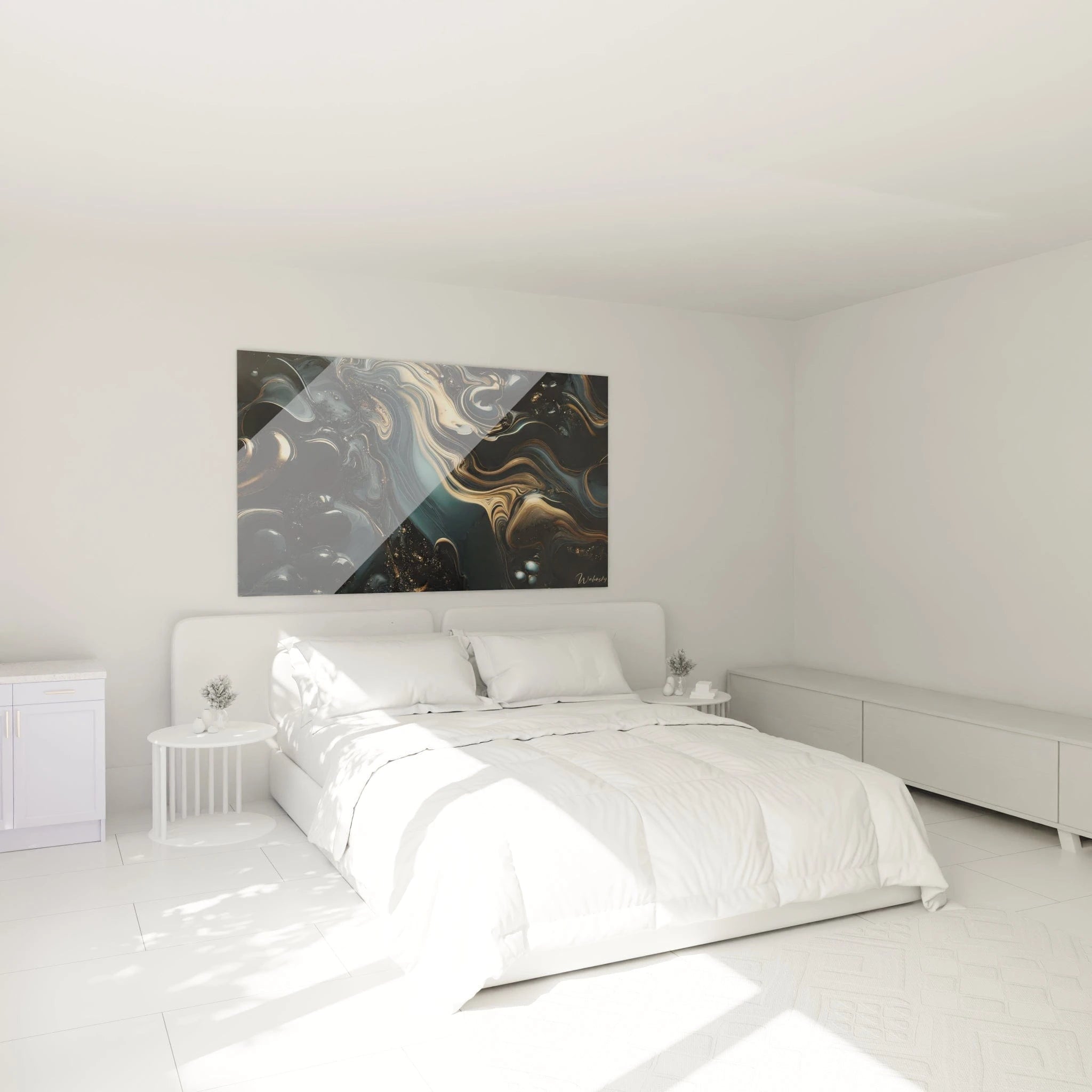
An abstract painting composed of fluid and undulating shapes, featuring deep black hues, metallic gold and petrol blue tones, with smooth and glossy textures.

An abstract painting featuring marbled golden lines on a dark background, with organic shapes and brilliant reflections in deep blue and gold tones.
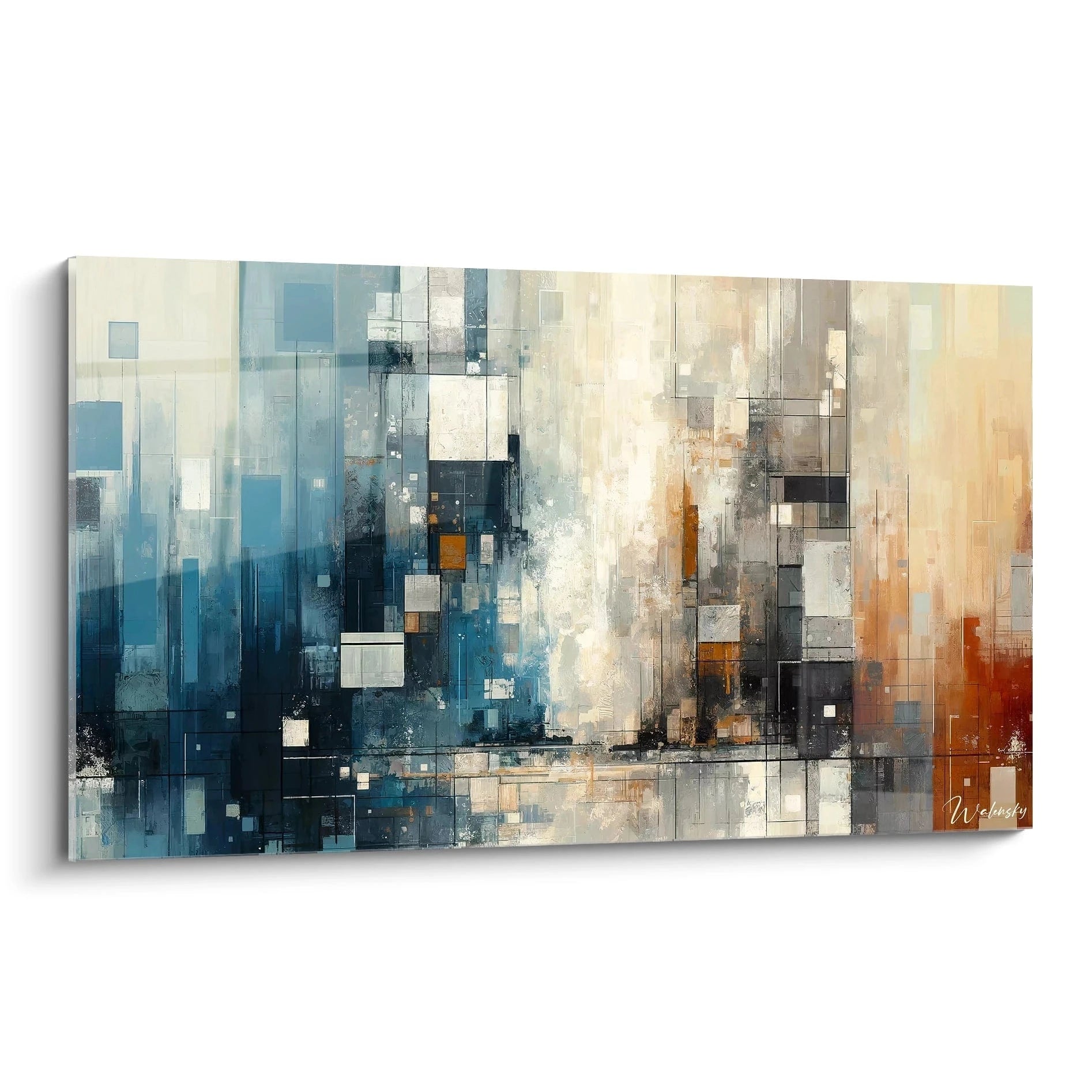
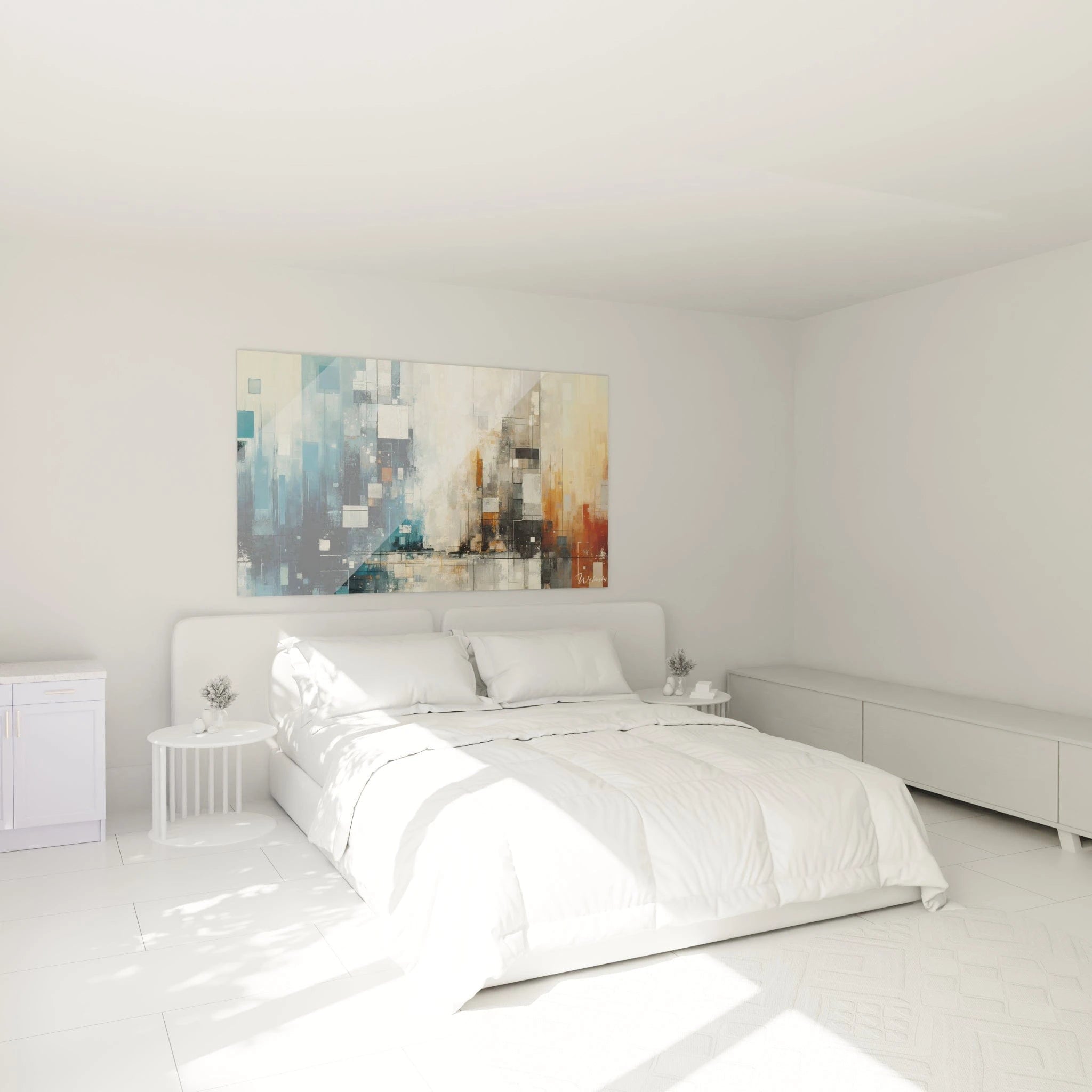
An abstract geometric painting composed of overlapping rectangles. Dominated by petrol blue, ivory white, rust ochre and anthracite gray hues. The texture features squares and rectangles of varying sizes connected by thin lines, with transparent areas and denser zones creating a depth effect.
An abstract painting of fragmented architectural composition. The palette combines teal blue, cream beige, amber rust, and charcoal gray. The textures blend smooth and textured surfaces forming a mosaic of interconnected rectangles and squares through a subtle grid, with central luminosity fading toward darker edges.
An abstract painting of undulating waves with golden veins. Dominated by emerald green, pure white, metallic gold and deep blue hues. The texture features thick impasto creating wavy reliefs, with broad fluid brushstrokes and gold leaf inclusions flowing through the composition like luminous rivers.
An abstract painting of interwoven marine currents. The palette combines deep turquoise, ivory white, brilliant gold, and teal blue. The textures feature thick layers of paint applied with a palette knife creating textured ridges and valleys, with metallic gold lines that wind between white and green masses.
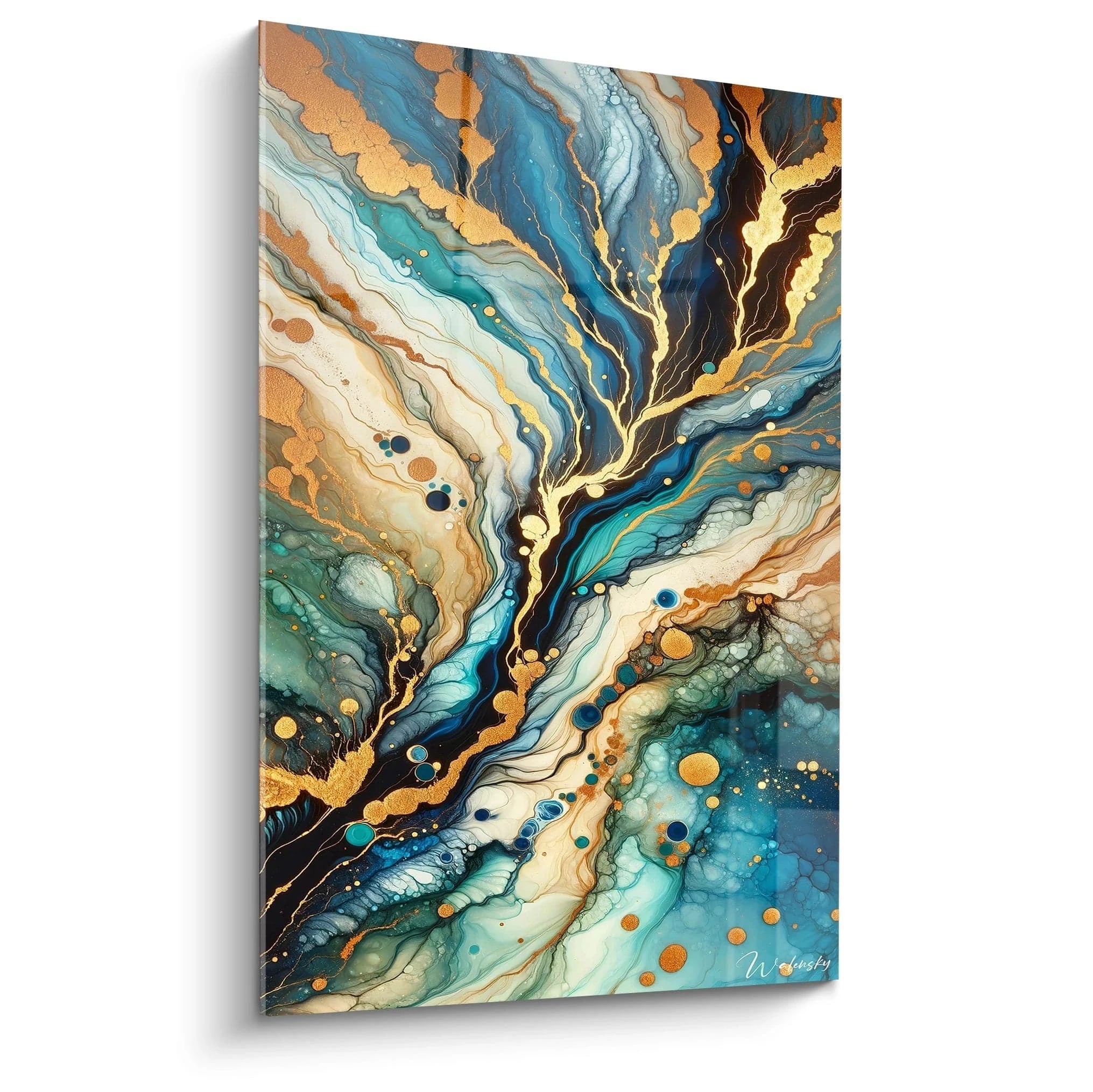
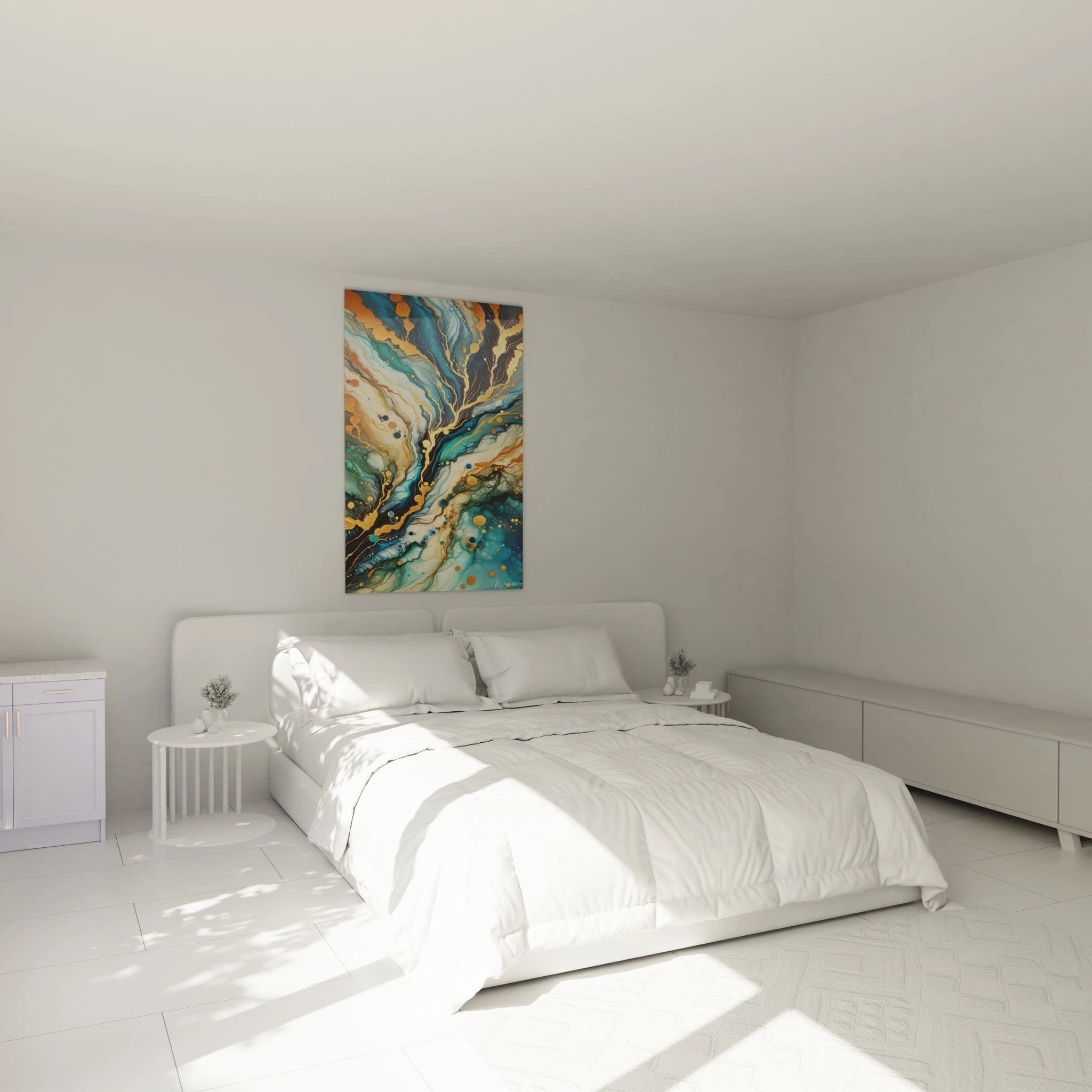
Abstract artwork featuring fluid marbled streaks in oceanic hues. Rich palette of turquoise blue, cobalt blue, black and cream white with golden veins and accents. Liquid texture evoking alcohol ink technique with varied bubbles and cells. Dynamic composition of converging flows toward the center with contrast between light and dark zones enhanced by metallic accents.
Abstract painting featuring stylized aquatic currents traversed with gold. Dominated by teal blue, emerald green, ivory beige and deep black with golden filaments. Glossy surface imitating polished stones and fluid inks with circular inclusions. Tree-like structure reminiscent of a delta viewed from above with blue rivers separated by brilliant golden veins.
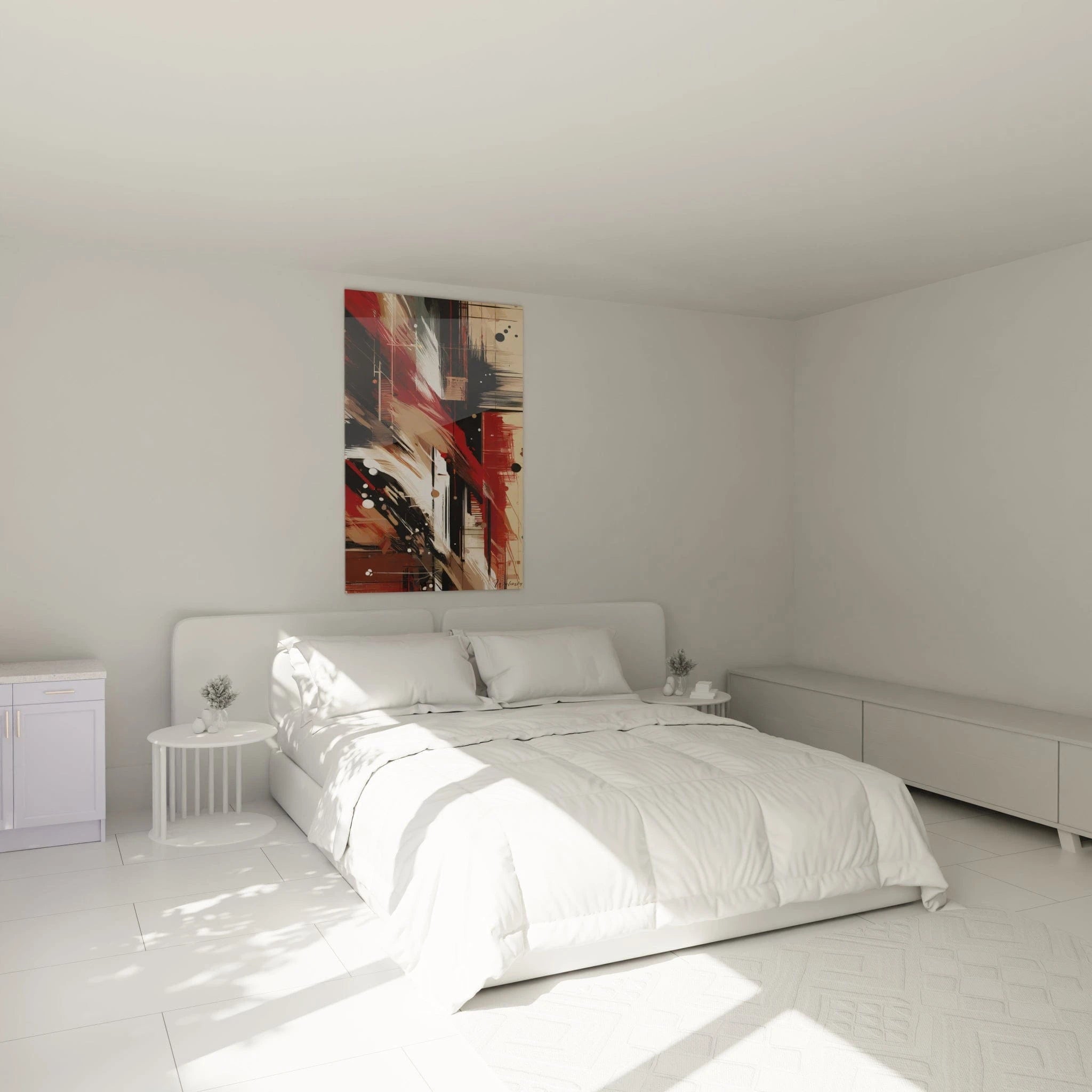
Abstract painting composed of energetic brushstrokes and linear marks in vibrant red, black, white, and beige. Varied textures with splashes, circular dots, and cross-hatching create a dynamic composition with interwoven lines.
Abstract geometric artwork characterized by straight lines and expressive touches. Dominant colors are crimson red, deep black, pure white and beige, with projection effects, dots of various sizes and hatched strokes on a light background.
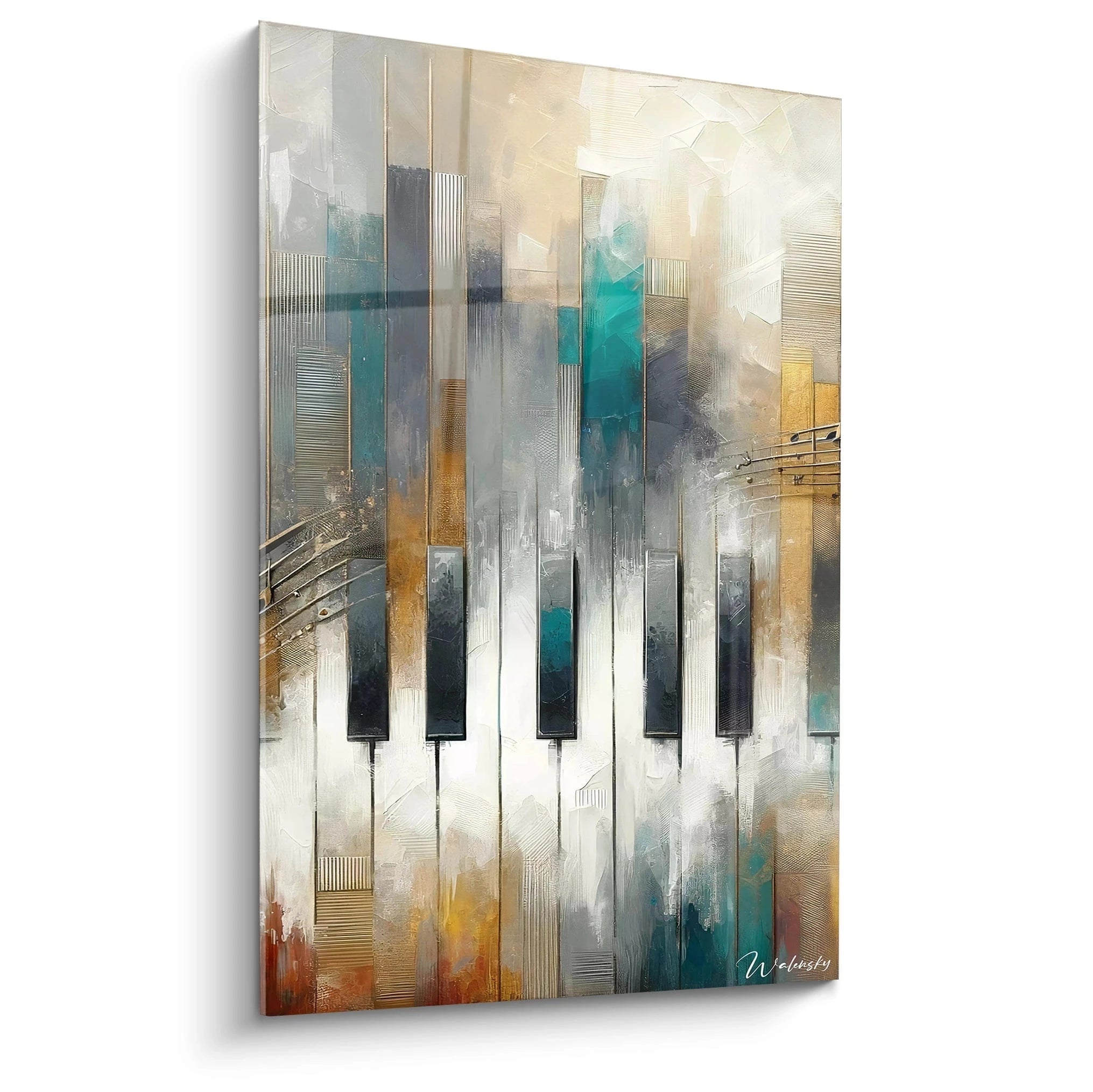
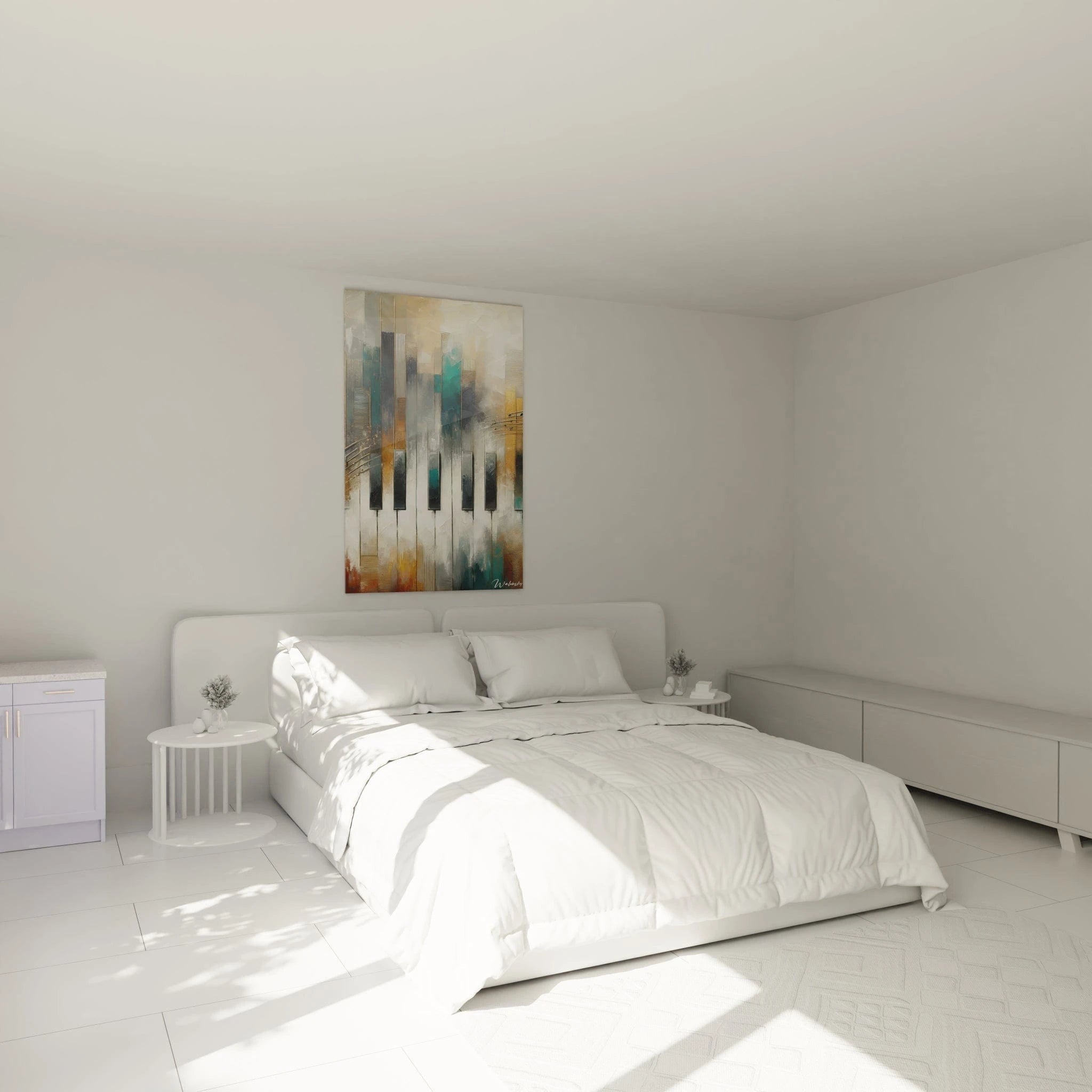
Abstract painting depicting a piano keyboard transformed into an urban landscape. Black and white keys in the foreground extending into vertical skyscrapers. Color palette blending silvery gray, turquoise, golden ochre and cream white. Textured relief with visible brushstrokes and layered composition creating an impression of architectural depth.
Abstract artwork depicting a fusion between piano and modern city. Featuring pearlescent white, steel gray, teal-blue and gold tones on textured background. Surface combining smooth areas and impasto with structured vertical lines. Vertical composition with piano keys at the base metamorphosing into stylized buildings, creating a visual metaphor between music and urban architecture.
Abstract painting with interlaced fluid shapes. Palette of deep black, off-white, steel gray and peach tones. Undulating curved lines, striated textures, combination of geometric and organic forms.
Abstract painting of dynamic curves. Color palette dominated by black, white, slate gray and powdered beige. Sinuous movements, overlapping rounded shapes, structuring parallel lines.
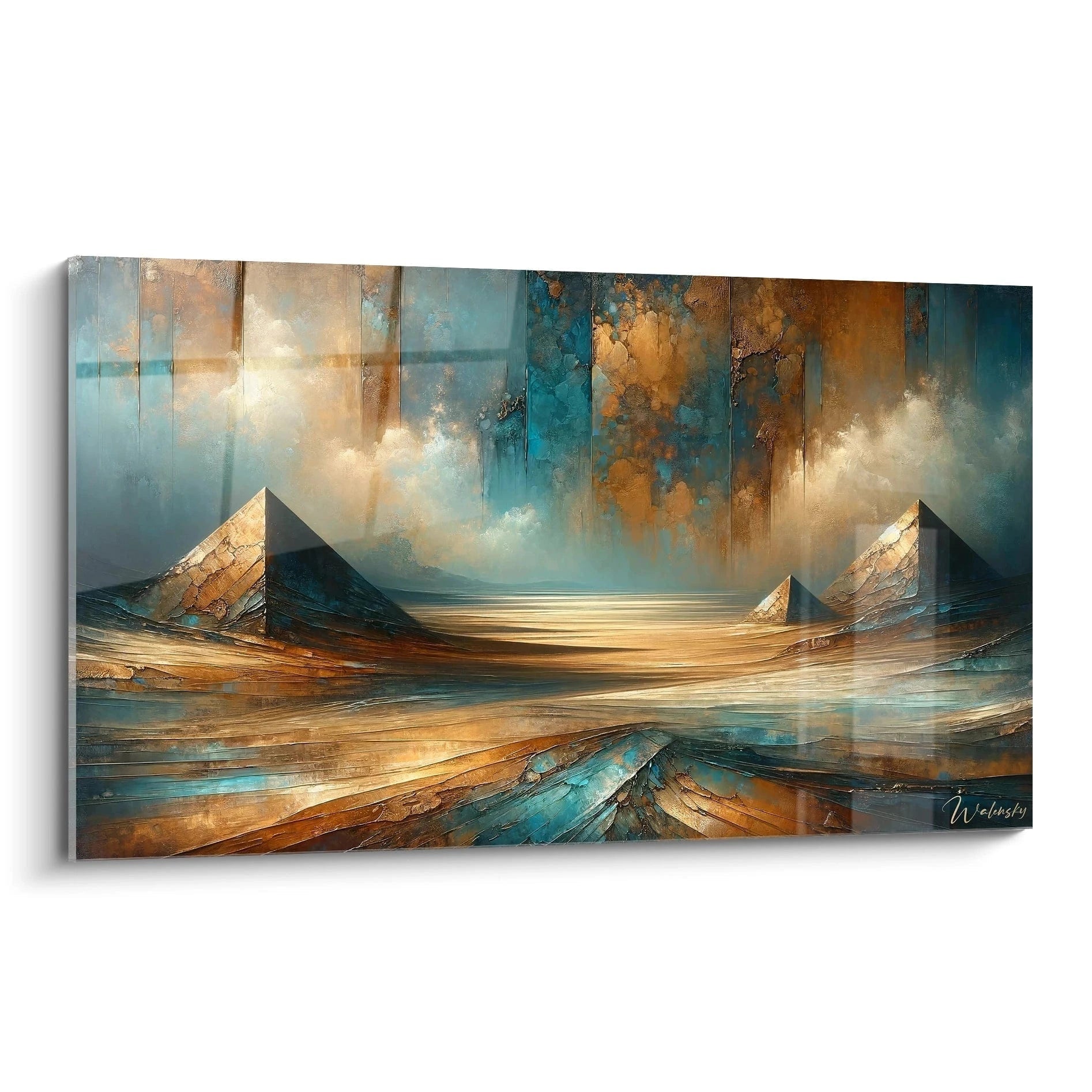
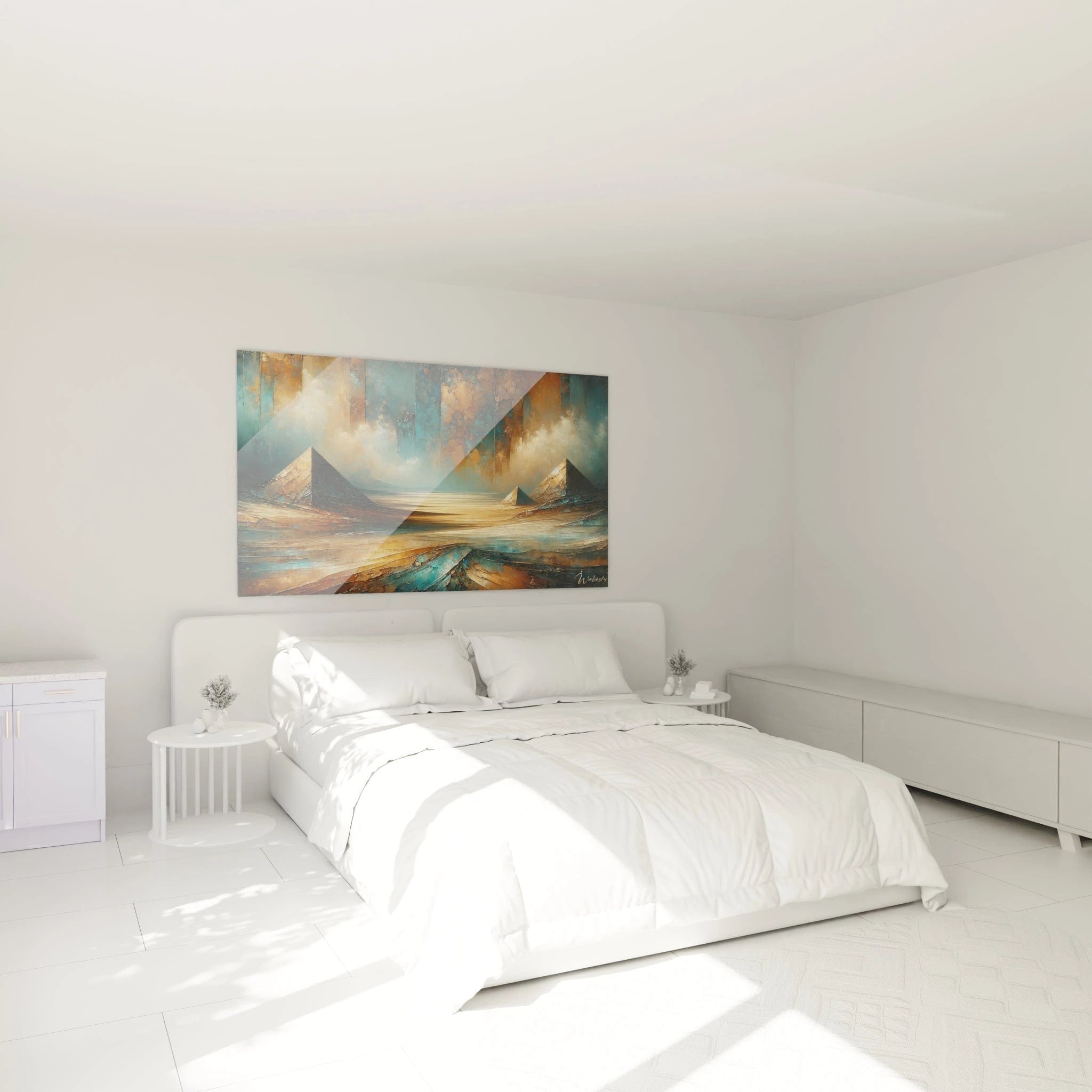
An abstract painting of pyramids in a desert landscape. Dominated by turquoise blue hues, metallic gold, sand beige and bronze tones. The texture features thick brushstrokes creating golden horizontal layers in the foreground, with three triangular pyramids partially covered in gold against a cloudy sky with verdigris and copper patina colors.
An abstract painting of pyramidal monuments on a metallic horizon. The palette combines blue-green, copper gold, creamy white, and oxidized brown. The textures blend smooth horizontal layers evoking a golden desert with textured surfaces for triangular pyramids, beneath a dramatic sky with fragmented clouds and metallic patina marks.
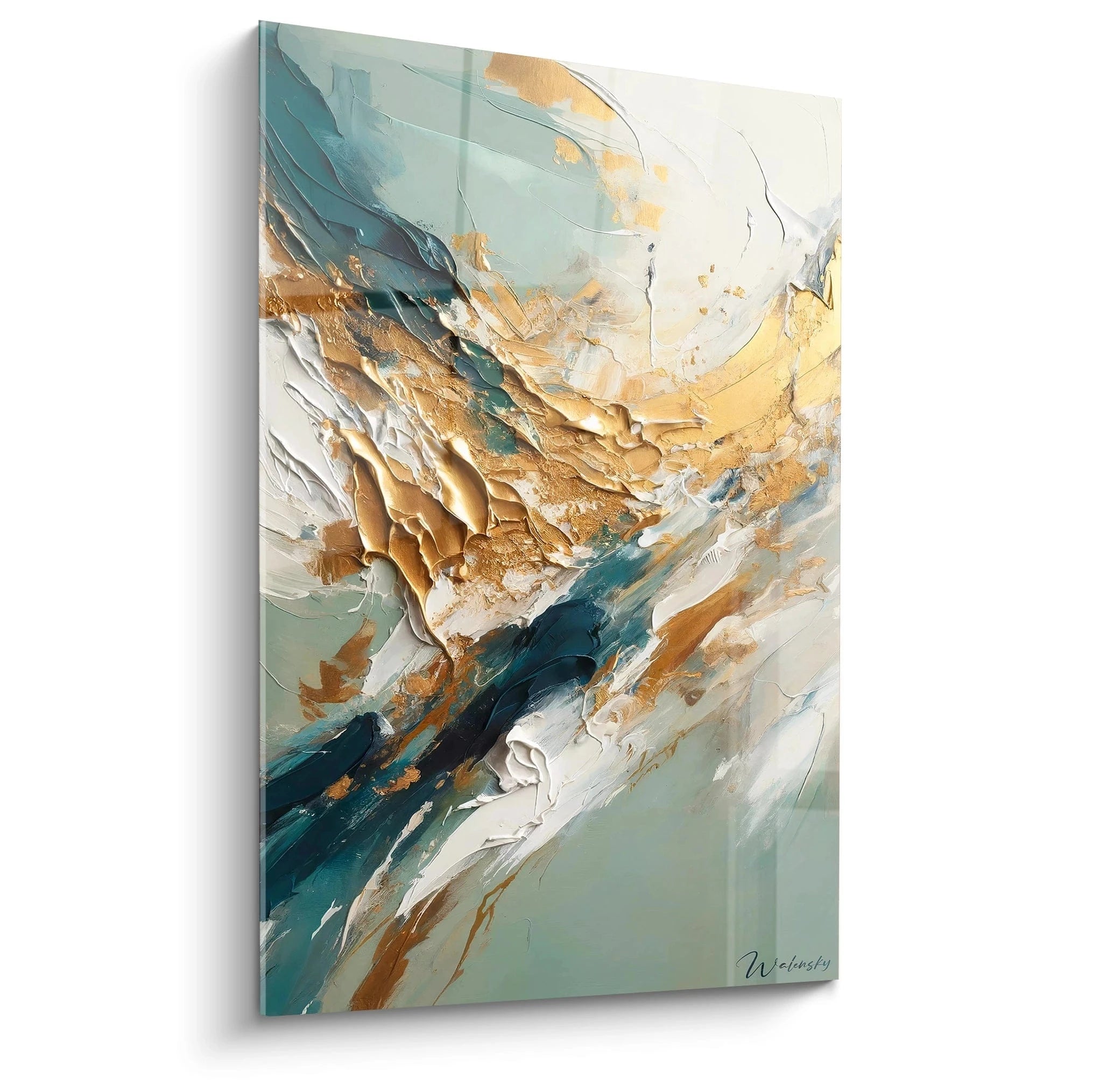
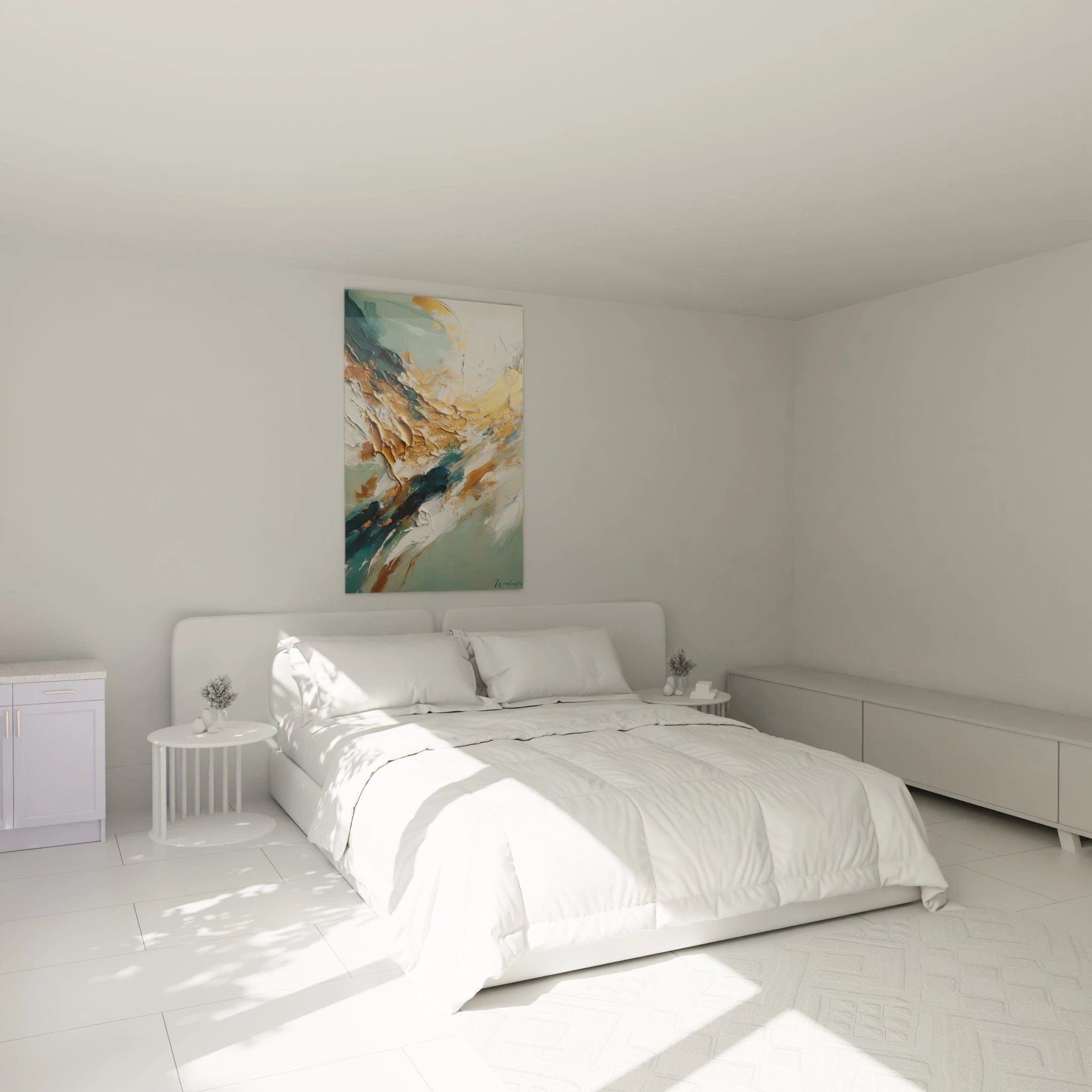
Abstract painting featuring a dynamic blend of thick paint in turquoise, gold, and white hues. Layered textures create pronounced relief with visible palette knife marks and golden splatters on a light background.
Abstract painting characterized by textured blocks of white, teal and gold paint. The composition shows diagonal movements with thick impasto strokes and cracked surfaces where metallic gold contrasts with pastel tones.
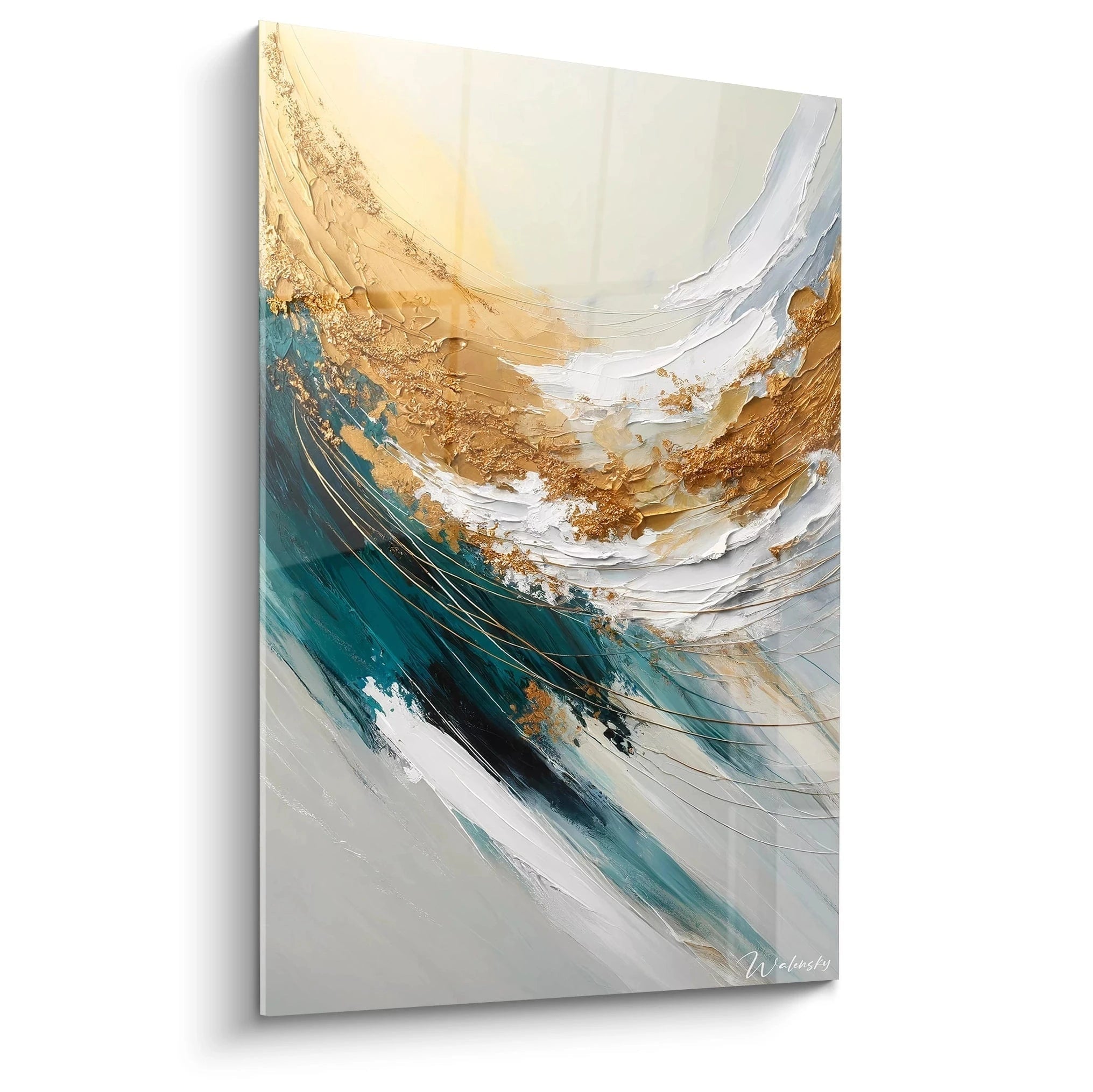
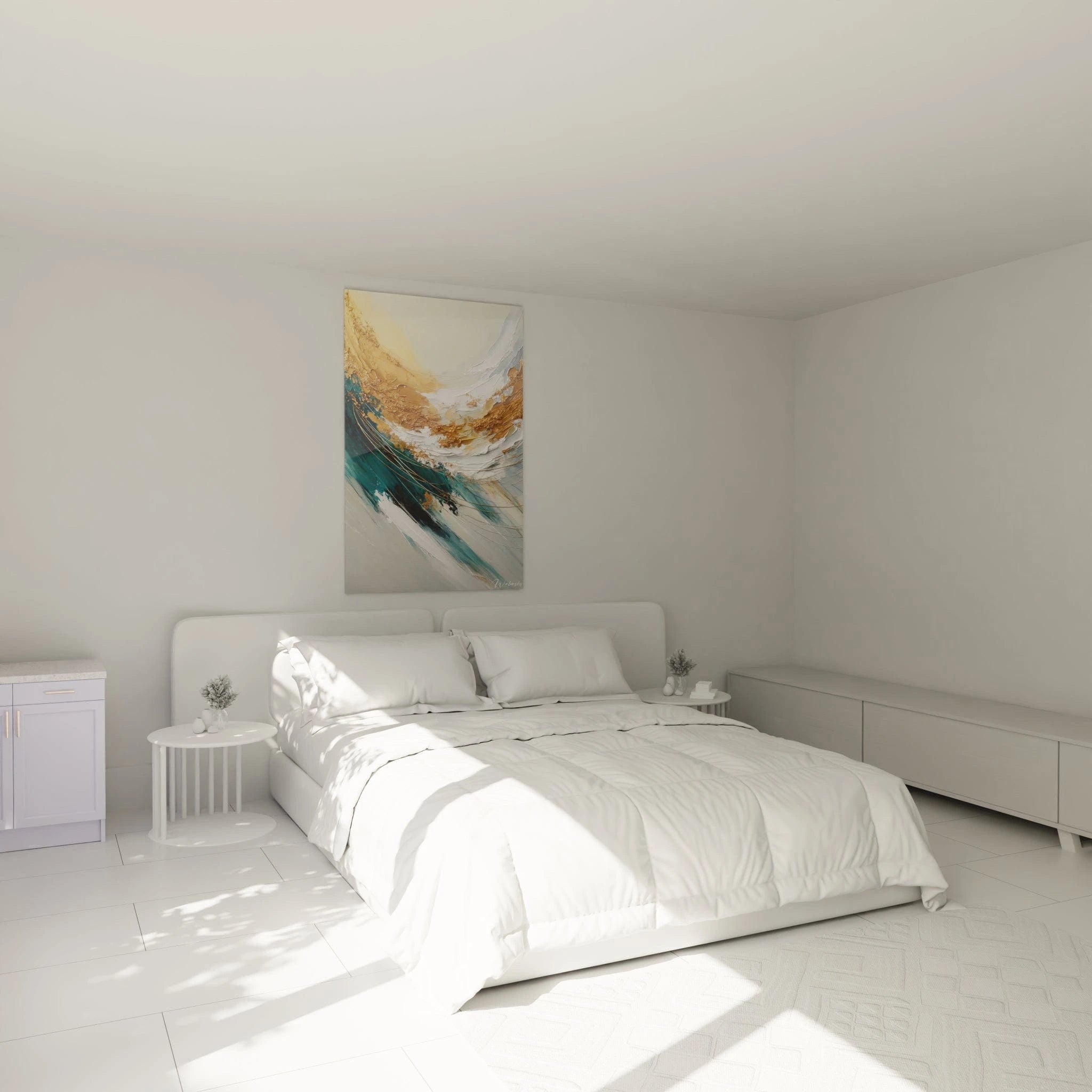
Abstract relief painting combining deep turquoise, pearlescent white, and metallic gold tones on pale gray background. The composition features thick paint impasto creating a curved wave with granular golden textures and fine lines crossing the undulating surface.Abstract painting in teal blue, pure white, and brilliant gold colors. The technique employs thick layers of paint creating pronounced relief with spatula effects, embedded gold particles, and stretched gold threads running through curved colored masses.
An abstract painting depicting a stylized piano keyboard with black and white keys, featuring golden, turquoise and grey hues, with embossed effects and dripping details.

An abstract painting structured around a vertical keyboard, combining white, black, gold and blue, with textures in overlapping squares and vertical drip effects.

Leurs intérieurs, leur fierté

×

Modern Abstract Wall Art for Living Room

Modern Abstract Wall Art for Living Room

Natural Landscape Wall Art for Living Room

Natural Landscape Wall Art for Living Room

Golden Luxury Living Room Wall Art

Golden Luxury Living Room Wall Art

Zen Meditation Wall Art for Living Room

Zen Meditation Wall Art for Living Room

Elegant Black and White Living Room Wall Art

Elegant Black and White Living Room Wall Art

Artistic Portrait Wall Art for Living Room

Artistic Portrait Wall Art for Living Room

Botanical Flower Wall Art for Living Room

Botanical Flower Wall Art for Living Room

Ocean Sea Wall Art for Living Room

Ocean Sea Wall Art for Living Room

Modern Music Wall Art for Living Room

Modern Music Wall Art for Living Room

Vibrant Multicolor Wall Art for Living Room

Vibrant Multicolor Wall Art for Living Room

Romantic Love Wall Art for Living Room

Romantic Love Wall Art for Living Room

Wall Art for Living Room Tree Nature

Wall Art for Living Room Tree Nature

Wall Art for Living Room Dance Movement

Wall Art for Living Room Dance Movement

Minimalist Wall Art for Living Room - Refined Aesthetic

Minimalist Wall Art for Living Room - Refined Aesthetic

Panoramic Mountain Wall Art for Living Room

Panoramic Mountain Wall Art for Living Room

Colorful Pop Art Wall Art for Living Room

Colorful Pop Art Wall Art for Living Room

The living room wall art represents far more than a simple decorative element - it is the soul of your living space. Choosing a wall art piece suited to your living room requires reflection on dimensions, style, and the visual impact you seek. Whether it's a majestic piece dominating the space or an artistic composition subtly integrated, wall art transforms your living room's atmosphere by giving it personality and character. Our detailed sections guide you through essential aspects for selecting a piece that will enhance your living space, taking into account spatial proportions, focal effect, and harmony with your existing décor.

How to Choose the Perfect Dimensions for Living Room Wall Art


Selecting living room wall art with ideal dimensions is the first step to transforming your living space. The balance between the artwork's size and your room's proportions determines visual impact and overall interior harmony. Contrary to popular belief, it's not just about taste, but also about respecting principles of spatial design.


What wall art size should you choose based on your living room dimensions?


For a standard living room (20-25m²), opt for living room wall art in a medium to large format (80-120cm wide). In a larger space, dare to choose monumental formats exceeding 150cm wide that create a true architectural impact. The fundamental rule is to select a piece occupying ideally between 2/3 and 3/4 of the wall's width or the furniture it will be installed above.


A living room with high ceilings (over 2.70m) naturally calls for vertical works that accentuate this elevation, while a space with standard ceilings benefits from more horizontal or square formats. The most common mistake is choosing a piece that's too small and loses all presence in the space.


Viewing distance: a determining factor for your living room wall art


The optimal viewing rule suggests that the ideal distance to appreciate an artwork equals approximately 3 times its diagonal. In a living room, the position of your seating relative to the living room wall art therefore directly influences your choice of dimensions. If your sofas are placed 3-4 meters from the display wall, a large-sized piece (120-150cm) offers an ideal visual experience.


To concretely evaluate dimensional impact, one trick is to create a kraft paper template in your intended dimensions and temporarily position it on your wall. This simulation allows you to appreciate spatial balance before making the final purchase.


The importance of hanging height based on format


The dimension of your living room wall art also determines its optimal installation height. Monumental pieces can be positioned lower, sometimes as low as 30cm from the floor for the largest ones, creating architectural continuity. Medium-sized wall art benefits from having its center positioned at eye level (approximately 160cm from the floor).


Very elongated panoramic formats can break these rules and be placed higher, particularly above low furniture, creating a visual horizon line that structures the space. The key is avoiding a "timid" installation too high that diminishes the piece's impact.


What formats are suitable for different living room configurations?


Long living rooms benefit particularly from living room wall art in horizontal format that accentuates perspective, while square spaces work perfectly with square or slightly vertical formats that visually structure the room. In an L-shaped configuration, prioritize an imposing piece on the main wall visible from both branches of the space.


Living rooms open to the kitchen or dining room require global reflection: the artwork then becomes a transition element between spaces. A monumental format can serve as a subtle visual boundary between functional zones.


Golden proportions applied to living room wall art


The golden ratio (approximately 1.618) is a naturally harmonious proportion found in both art and architecture. Applied to your interior, this principle suggests that living room wall art whose dimensions respect this ratio naturally creates an impression of balance. Concretely, for a 3m wide wall, a piece approximately 185cm wide (3m ÷ 1.618) offers perfectly balanced visual occupation.


This mathematical approach to spatial harmony explains why certain dimensions intuitively seem "right" in a given space. Artists and galleries often propose formats following these classical proportions.


In conclusion, the dimensional choice of living room wall art results from an equation between available space, ceiling height, observation distance, and desired visual impact. By respecting these fundamental principles of spatial balance, your wall art will integrate harmoniously while creating the transformative effect expected for your living space.

Living Room Wall Art as Focal Point: Creating Maximum Visual Impact


The integration of living room wall art transcends simple decoration to become a true architectural element structuring space. When conceived as a focal point, wall art concentrates attention and visually organizes the entire layout around its presence. This strategic approach transforms an ordinary room into a remarkable living space.


Why prioritize wall art as the central element of your living room?


Unlike fixed architectural elements (fireplace, panoramic window), living room wall art offers complete flexibility to establish a focal point exactly where you wish. This freedom allows you to visually correct space imbalances, divert attention from less aesthetic aspects, or compensate for the absence of remarkable architectural elements.


Neuroscience confirms that our brain prioritizes dominant visual stimuli, explaining why an imposing artwork instantly influences our spatial perception upon entering a room. This visual anchoring phenomenon then structures our entire experience of the space.


Strategically positioning your living room wall art


The optimal placement of living room wall art conceived as a focal point respects several fundamental principles. Prioritize the wall facing the main entrance for immediate impact, or the wall most visible from primary seating areas. For a through room, the wall perpendicular to the traffic axis maximizes visual exposure.


Enfilade configurations benefit particularly from a monumental piece that structures perspective, while open spaces gain coherence through a work visible from different functional zones. Systematically avoid locations where the artwork would compete visually with other strong elements like an oversized television.


The impact of dimensions on the focal effect of wall art


To function effectively as a focal point, living room wall art must present sufficient visual mass. In a contemporary living space, only large-format works (minimum 100cm in their largest dimension) possess the presence necessary to visually structure space.


Monumental formats (exceeding 150cm) create immediate architectural impact, while compositions of multiple pieces can achieve equivalent visual mass while adding additional rhythm. The classic mistake is selecting too modest a work that, even if qualitatively remarkable, fails to impose itself as a structuring element.


How to organize furnishings around your focal wall art?


Once the living room wall art is installed as the focal point, all furniture must be organized to support this visual hierarchy. Primary seating must offer a direct view of the artwork, ideally at optimal viewing distance (generally 2.5 to 3 times the artwork's width).


Secondary furniture elements are organized accordingly, creating visual guidelines that naturally guide the eye toward the central piece. This spatial orchestration transforms daily experience of the space by creating thoughtful perspectives from every angle of the living room.


What artistic styles maximize the focal effect in a living room?


Certain artistic expressions naturally amplify the focal effect of living room wall art. Works with marked contrasts, centripetal compositions, or powerful graphic elements instinctively capture attention. Monumental abstract creations with geometric patterns, panoramic landscapes with striking horizons, or figurative works featuring single monumental subjects excel particularly in this structuring role.


Conversely, highly detailed compositions requiring close observation or works in tones too similar to wall colors lose focal impact, even in large format. Visual intensity takes priority here over subtlety to effectively accomplish this architectural function.


In conclusion, transforming living room wall art into a true architectural focal point requires an integrated strategic approach, combining imposing dimensions, optimal positioning, and complete orchestration of space around this dominant presence. This approach elevates wall art beyond its decorative function to make it a fundamental structuring element of your living space.

Perfect Harmony: Selecting Living Room Wall Art Based on Decorative Style


Choosing living room wall art that harmoniously integrates with your existing décor is a subtle art, blending understanding of decorative styles and chromatic principles. This aesthetic synchronization transforms a simple wall piece into a central element perfectly cohesive with your living space's identity.


Stylistic alignment: foundation of decorative harmony


Success in aesthetic integration rests on precise understanding of your living room's dominant style. Each decorative universe - whether Scandinavian, industrial, Art Deco, revisited classic, or contemporary minimalist - possesses its own visual codes that determine the type of living room wall art naturally compatible with it.


A contemporary minimalist interior harmonizes perfectly with abstract geometric works featuring clean lines, while an industrial-style living room ideally welcomes creations more raw, with marked textures and urban subjects. This stylistic coherence creates an impression of unity essential to overall harmony.


  • Scandinavian style: refined works in light tones with organic motifs
  • Industrial ambiance: textured creations, high contrast, urban subjects
  • Classic décor: structured figurative works, detailed framing
  • Contemporary interior: abstract geometric art, large minimalist formats

How to harmonize colors between your living room wall art and your décor?


The chromatic palette is the most immediately perceivable element in integrating living room wall art. Three main approaches are available: harmony through analogy (using tones already present in the room), controlled contrast (introducing a complementary color), or elegant neutrality (work in neutral tones integrating universally).


For analogous harmony, select a work where 60-70% of tones correspond to your space's secondary colors, not the dominant color, to avoid monochromatic effect. The contrast approach introduces a color complementary to your existing palette, creating dynamic chromatic dialogue that visually awakens the space.


Texture and materiality: sensory dimensions of integration


Beyond visual palette, the texture and materiality of living room wall art fundamentally contribute to its harmonious integration. A space with raw materials (concrete, metal, solid wood) naturally resonates with works featuring affirmed materiality, presenting impasto, reliefs, or mixed techniques.


Conversely, an interior with smooth contemporary finishes ideally harmonizes with flatter works, printed on modern supports or painted in flat colors. This tactile correspondence, even perceived solely visually, creates subtle yet essential sensory coherence.


What relationship should exist between architecture and your living room wall art?


Your living space's architectural characteristics significantly influence the choice of harmonious living room wall art. Rooms with straight lines and marked angles naturally balance with works featuring structured geometric compositions, while spaces with gentle curves ideally welcome creations with organic and fluid forms.


Natural orientation and luminosity also dictate specific choices: a sun-bathed living room supports works in subtle tones that reveal their complexity under abundant natural light, while a less luminous space benefits from creations with more pronounced contrasts.


Harmonious evolution: integrating wall art in an evolving decorative approach


The selection of living room wall art takes place in a temporal perspective: your décor will inevitably evolve. Prioritize a work possessing its own artistic strength while remaining sufficiently versatile to adapt to progressive transformations of your interior.


Creations with extended chromatic palettes offer this adaptability, allowing you to evolve your décor's secondary tones while maintaining harmony with the central piece. This approach balances decorative longevity with substantial artistic investment.


Ultimately, the harmonious integration of living room wall art results from thorough analysis of your living space's stylistic, chromatic, and sensory characteristics, enabling selection of a work that perfectly dialogues with the existing while maintaining its own artistic identity. This holistic approach guarantees lasting and evolving aesthetic coherence.


FAQ: Living Room Wall Art and Decorative Harmony


Is it preferable to purchase living room wall art before or after main furniture pieces?
Ideally, first select main architectural and furniture elements, then choose an artwork that integrates harmoniously with this ensemble. This approach offers greater flexibility for finding a creation perfectly suited to the already-established ambiance.


Can large-size living room wall art work in a small space?
Contrary to popular belief, a monumental piece can magnify a small living room by creating visual depth and a major focal point. The key is limiting other decorative elements to prevent visual overload and allow the work to breathe.


How to integrate living room wall art with very vibrant colors in a neutral interior?
A work with bright tones can enliven a neutral space provided you establish subtle chromatic links: introduce a few decorative accessories (pillows, vases, objects) punctually reprising certain artwork colors to create visual coherence without overloading the space.


Can you combine multiple different artistic styles in the same living room?
Styleistic diversity works when it respects a coherent thread - shared chromatic palette, common theme, or similar formal approach. Without these unifying elements, prioritize a dominant artistic style for your main wall art, reserving eclecticism for secondary smaller-format pieces.