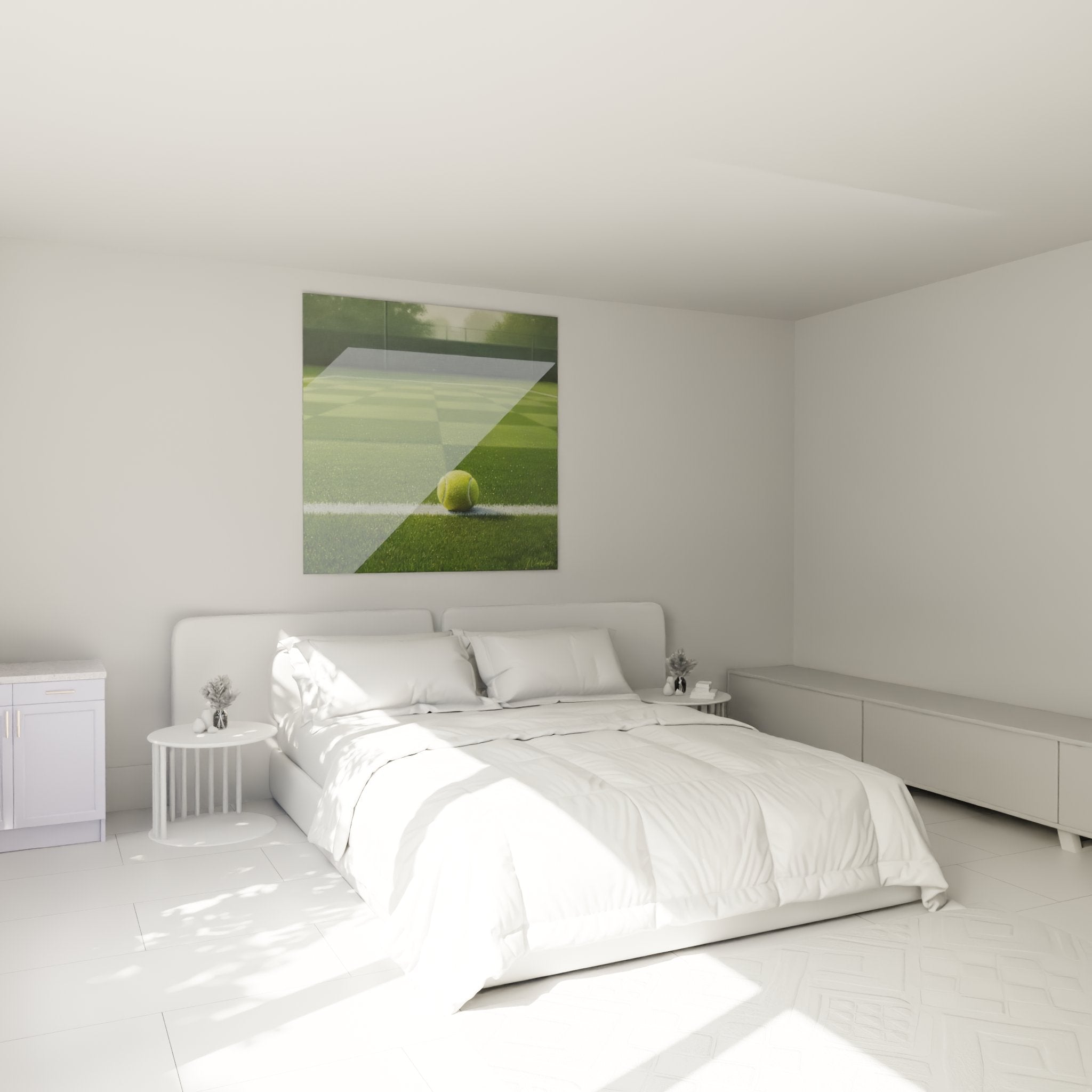
- Presentation Tennis Wall Art
- Tennis Wall Art - Intensity of Decisive Moments
- Tennis Wall Art - Aesthetics of Legendary Tournaments
- Tennis Wall Art - Large Format Immersion
Discover our exclusive collection of wall art decorations dedicated to the world of tennis. Each creation captures the essence of this elegant and dynamic sport, transforming your space into a true tribute to the discipline of the yellow ball. Our large-format wall representations celebrate the energy of rallies, technical precision, and the unique atmosphere of mythic courts.
The Emotional Intensity and Gesture of Tennis in Wall Art
A tennis wall art piece that captures the precise moment of a decisive smash or the tension of a match point radically transforms the atmosphere of a room. These wall representations freeze the pure adrenaline of pivotal moments that swing a match, creating a palpable energy in the space. The intensity of a player's gaze focused before a crucial serve, the twist of the body during a topspin backhand, or the maximum extension to catch an impossible volley constitute visual compositions of exceptional narrative power. Visit our sports collection for more inspiration.
How does technical gesture influence visual impact?
The specific biomechanics of tennis offer incomparable lines of force for wall composition. The rotational movement of a serve, with its ascending arc and then explosive strike, creates striking vertical dynamics. The rapid lateral movements on court, characteristic slides on clay, and abrupt direction changes generate visual trajectories that naturally guide the eye. These kinetic elements unique to tennis produce a sensation of perpetual movement, even in a static wall representation.
The precarious balance during a net volley, the body stretched to the extreme for a delicate drop shot, or the raw power of a forehand hit at full speed constitute unique photographic instants. These extreme athletic postures create angular compositions and visual tensions impossible to reproduce with other sports disciplines. A large format tennis wall art amplifies this sensation of temporal suspension, as if the player were about to emerge from the wall at any moment.
Which match moments generate the most emotional impact?
The decisive points of a tie-break at 6-6, the set point saved at the last instant, or the match point that seals a historic victory carry maximum emotional charge. These instants crystallize hours of effort, strategy, and mental resilience into a fraction of a second. A wall decoration capturing these decisive moments transmits this psychological intensity, creating a dramatic presence in any space dedicated to sport or performance.
Facial expressions during these crucial moments tell complete stories: fierce determination, explosion of joy after an impossible point, or absolute concentration before a decisive engagement. These raw emotions, rarely visible in other contexts, transform a simple wall visual into an authentic testimony of the tennis experience. Large dimensions allow grasping every detail of these micro-expressions that make all the difference.
Why do intense rallies create unique visual compositions?
A thirty-shot rally where each player pushes their physical limits generates cumulative visual energy. The repetition of back-and-forth movements, the progressive acceleration of rhythm, and the variation of trajectories create captivating narrative complexity. A tennis wall art piece representing these marathon rallies captures the very essence of endurance and perseverance, fundamental qualities of this demanding sport.
The contrasts between raw power and technical finesse during these rallies offer exceptional visual richness. A thundering forehand followed by a delicate drop shot, desperate defense transformed into lightning counter-attack: these tactical variations translate into stratified and sophisticated wall compositions. The amplitude of gestures, from the most explosive to the most controlled, creates a visual score where each movement tells a precise strategic intent.
Symbols and distinctive elements of the tennis universe
The small fluorescent yellow ball constitutes an instantly recognizable chromatic element that visually structures any wall composition dedicated to tennis. Its vibrant color creates natural focal points and guides image reading. Racket strings, with their regular geometric patterns, add a unique graphic and technical dimension. These specific material details firmly anchor the representation in the tennis universe without any possible ambiguity.
The white lines of the court, whether baseline, service, or sidelines, function as powerful structuring elements in wall composition. These precise geometric tracings create dynamic perspectives and natural frames that organize visual space. A large-format wall visual exploiting these guiding lines generates spatial depth and sophisticated visual organization, particularly effective in large spaces requiring strong structuring.
- Visible muscle tension during powerful strikes that conveys maximum effort
- Anticipatory movement of the opposing player reading the imminent trajectory
- Complete body projection into space to reach limit balls
- Unstable dynamic balance characteristic of abrupt direction changes
These specific biomechanical elements create wall compositions instantly recognizable by connoisseurs while remaining aesthetically powerful for the general public. Technical authenticity reassures enthusiasts while visual strength seduces lovers of dynamic wall art.
The Aesthetic Codes of Surfaces and Mythic Tournaments
Each major tournament on the international circuit possesses a distinctive visual identity that translates perfectly into large-format wall decoration. The ochre clay of Roland-Garros, with its red-orange hues and characteristic slide traces, instantly evokes Parisian elegance and European tennis tradition. A tennis wall art piece celebrating this warm chromatic universe brings unique Mediterranean sophistication, impossible to confuse with other sports representations.
The impeccably maintained grass of Wimbledon, deep green and lustrous, symbolizes British quintessence and tennis aristocracy. This mythic surface, with its immaculate white lines and strict dress code requirement, generates a chromatic contrast of absolute visual purity. Wall representations exploiting these Wimbledon aesthetic codes transmit refinement, tradition, and excellence, transforming any space into a sanctuary of classic tennis.
How do different surfaces influence visual atmosphere?
Clay produces unique visual effects: shoe prints, projections of ochre dust during spectacular slides, and traces left by the ball create living, dynamic texture. These ephemeral marks tell the match story in real time. A wall visual capturing these clay-specific details conveys tactile authenticity and physical connection to the game that other surfaces cannot offer.
Hard courts, whether blue in Melbourne or blue-green in Flushing Meadows, offer bold and modern chromatic palettes. These artificial but vibrant colorations create saturated contrasts particularly effective in large wall format. The light intensity reflected by these synthetic surfaces generates energetic and contemporary ambiances, ideal for spaces requiring visual dynamism and modernity.
What is the visual signature of the great stadiums?
The distinctive architecture of Court Philippe-Chatrier with its recent metal structure and retractable roof creates unique shadow and light plays. These imposing architectural elements visually structure space and create spectacular natural framings. A tennis wall art piece integrating these monumental architectural elements brings enriching spatial and contextual dimension, anchoring the representation in a mythic location instantly identifiable by enthusiasts.
Wimbledon's Centre Court, with its traditional dark green seating and intimate configuration despite its large capacity, generates a unique atmosphere of proximity and intensity. Perspectives from different stadium angles offer varied compositions, from dramatic overhead views to tight framings at court level. These viewpoint variations considerably enrich the possibilities for large-format wall representation.
Why do night tournament atmospheres fascinate?
Matches under floodlights create an electric atmosphere totally different from daytime tennis. Powerful artificial lighting generates dramatic contrasts between illuminated zones and deep shadows, luminous halos around players, and brilliance effects on the court surface. This spectacular nighttime ambiance translates into theatrical and cinematic wall compositions, perfect for creating strong wall presence in high-traffic spaces.
Grandstands plunged into darkness with thousands of spectators whose silhouettes are barely discernible create mysterious depth of field. This suggested rather than detailed human mass concentrates attention on the illuminated court action. A wall visual exploiting these nighttime contrasts generates natural focus and clear visual hierarchy, effectively guiding the eye toward essential composition elements.
The visual heritage of tennis eras
Wooden rackets from the 70s-80s, with their thick frames and less tensioned strings, possess instantly recognizable vintage aesthetics. These retro equipment evoke tennis's golden age, an era of legends and historic rivalries. Integrating these period material elements into a wall representation creates nostalgic and patrimonial dimension that particularly resonates with generations who lived this mythic era.
- All-white clothing at Wimbledon creating absolute chromatic purity
- Vibrant national colors during team competitions like Davis Cup
- Perfect geometric tracings of court lines structuring visual space
- Specific textures of each surface revealing their unique tactile identity
These visual codes specific to different tennis eras and surfaces allow creating extremely varied wall ambiances while remaining faithful to the sport's essence. A large-format tennis wall art can thus adapt precisely to the desired atmosphere, whether classic, modern, nostalgic, or contemporary.
The Spatial Impact of Large Dimensions to Recreate Court Immersion
The imposing dimensions of a regulation tennis court - 78 feet in length - require a proportionally generous wall representation to faithfully restore scale and spatial immersion. A large-scale tennis wall art piece recreates this sensation of open space characteristic of a real court, this visual breathing that a genuine court provides. This wall amplitude radically transforms the perception of a room, opening it visually and creating illusory depth particularly effective in confined spaces.
The lengthwise perspective of a court, with its converging parallel lines, naturally generates pronounced spatial depth. Reproduced in large wall format, this perspective creates a visual tunnel effect that perceptually enlarges the actual room space. Tennis clubs, training rooms, or sports leisure spaces particularly benefit from this spatial extension effect that constantly reminds of the real game environment.
How do large dimensions amplify player presence?
Reproducing a player in action at near life-scale creates striking human presence that dialogues with inhabited space. This 1:1 or slightly enlarged scale generates an impression of co-presence, as if the athlete physically shared the space with room occupants. This virtual proximity produces considerably superior emotional impact to miniaturized representations, establishing visceral connection with the energy of the represented player.
Anatomical and muscular details become legible at large scale: forearm tension during strikes, veins saliently testifying to maximum effort, sweat drops captured in flight. These physiological micro-details transform simple sports representation into authentic testimony of athletic effort. A large-format wall visual reveals these subtleties impossible to appreciate in reduced dimensions, offering multi-level reading depending on observation distance.
Which spatial configuration optimizes visual impact?
Horizontal panoramic orientation naturally exploits the characteristic elongation of a tennis court. This configuration allows representing the entire court or a complete exchange between two players positioned at opposite ends. This comprehensive view contextualizes action in its complete environment, including court lines, center net, and possibly grandstand elements, creating complete and immersive spatial narrative.
Alternatively, a monumental vertical format capturing a serve in full extension exploits the height of the technical gesture. This choice creates architectural verticality that attracts the eye upward, modifying room proportion perception. This orientation particularly suits spaces with high ceilings where it accentuates monumentality and creates undeniable dominant presence.
Why does life-scale strengthen sports motivation?
In a private training room or dedicated fitness space, a player's presence reproduced at human size in maximum effort functions as constant reminder of sports excellence. This daily visual confrontation with an athlete in action unconsciously stimulates motivation and physical engagement. A monumental tennis wall art piece becomes far more than a decorative element: it transforms into a psychological performance tool.
Young players in development particularly benefit from this visual exposure to correct technical gestures reproduced at large scale. Repeated observation of optimal postures, even passive and indirect, contributes to mental integration of correct movements. This subliminal visual pedagogy effectively complements active technical learning on the real court.
Adaptation to large collective spaces
Tennis clubs with vast reception halls or rest areas require visual elements proportioned to these significant volumes. A wall visual of modest dimensions would disappear in these generous spaces, drowned by surrounding architectural scale. Only monumental representations manage to dialogue effectively with these large volumes, creating sufficiently powerful focal points to visually structure these challenging spaces.
- Realistic depth of field reproducing player-to-court-end distance
- Respected human proportions creating immediate identification
- Legible material details revealing authentic textures and equipment
- Immersive spatial presence transforming room volumetric perception
These characteristics specific to large wall formats fully justify the investment in generous dimensions. Visual and emotional impact increases exponentially with size, far beyond simple linear increase. A monumental tennis wall art piece leaves lasting impression and defines the complete visual identity of a space dedicated to sport.
Is tennis wall art suitable for professional spaces?
Absolutely, sports company offices, specialized shops, or tennis academies find in these wall representations a powerful means to assert their sectoral identity. The professional impact of quality sports visual reinforces perceived credibility and expertise.
What is the minimum size for optimal visual impact of tennis wall art?
To recreate genuine spatial immersion, dimensions should ideally exceed 120 cm in width. Below that, the presence effect attenuates significantly. XXL formats of 150 to 200 cm produce maximum impact by fully exploiting the characteristic scale of tennis.
How does tennis wall art transform a sports room atmosphere?
The visual representation of athletes in action instantly creates dynamic and motivating ambiance. This constant sports presence stimulates collective energy and reminds of performance objectives, transforming a simple training space into a place dedicated to tennis excellence.
Do large tennis wall art dimensions require special precautions?
Monumental formats require reinforced wall mounting adapted to weight and mechanical constraints. The clear space in front of the representation must allow sufficient distance to appreciate the complete composition without perspective distortion, generally 3 to 4 meters minimum for very large formats.