


Landseer Dog Maritime Wall Art
The Painting Dog Landseer Maritime celebrates the heroic legacy of this legendary breed of sea rescuers. This artistic collection captures the elegance and bravery of the Landseer dog in the marine world, with compositions evoking majestic coasts and the spirit of great navigators. Each work features this noble companion in its natural element, between waves and infinite horizons. Perfect for lovers of maritime rescue dog paintings, this collection brings character and nobility to your interior decoration.
 Landseer Painting Storm at Sea Rocky Shores Foaming Waves - Heroes of the Tides - Landseer Edition273,90 €
 Landseer Dog Painting On Fishing Boat - Noble Ocean Rescuer - Landseer Edition273,90 €
 Black and White Newfoundland Dog Painting with Marine Anchor - Maritime Loyalty - Landseer Edition273,90 €
 Landseer Dog Rescuing in Turbulent Waters Painting - Canine Heroism - Landseer Edition273,90 €
 Landseer Dog Painting Grey and Turquoise Waters - Aquatic Majesty - Landseer Edition273,90 €
Explore further
In Landseer Dog Maritime Wall Art
-
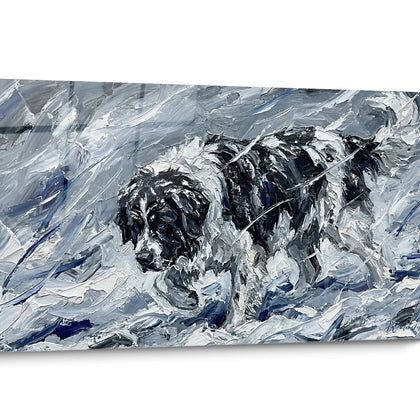 Landseer Dog Canvas33
artworks
Landseer Dog Canvas33
artworks
-
 Landseer Dog Painting Black and White9
artworks
Landseer Dog Painting Black and White9
artworks
-
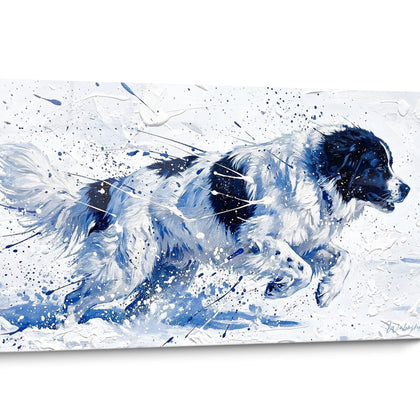 Landseer Dog Watercolor Wall Art3
artworks
Landseer Dog Watercolor Wall Art3
artworks
-
 Abstract Landseer Dog Wall Art4
artworks
Abstract Landseer Dog Wall Art4
artworks
-
 Landseer Dog Golden Painting5
artworks
Landseer Dog Golden Painting5
artworks
-
 Landseer Dog Turquoise Wall Art5
artworks
Landseer Dog Turquoise Wall Art5
artworks
-
 Realistic Landseer Dog Painting6
artworks
Realistic Landseer Dog Painting6
artworks
-
 Vintage Landseer Dog Wall Art4
artworks
Vintage Landseer Dog Wall Art4
artworks


All about Landseer Dog Maritime Wall Art
- Landseer Dog Maritime Wall Art Presentation
- Nautical Landseer Decoration
- Coastal Ambiance and Landseer Dog
- Marine Atmosphere for Interiors
The maritime Landseer dog wall art celebrates the emblematic union between this majestic canine breed and the nautical universe intrinsically linked to it. This type of decorative composition draws from the historical heritage of Landseer dogs, these bicolored Newfoundland dogs renowned for their heroic sea rescues. Each visual captures the essence of this profound connection with the aquatic element, transforming your space into an authentic tribute to coastal traditions and the nobility of this exceptional breed.
Maritime Iconography of the Landseer in Nautical Decoration
The maritime Landseer dog wall art establishes itself as a decorative reference for enthusiasts of authentic nautical culture. This breed, immortalized by Sir Edwin Landseer in the nineteenth century, embodies the bravery of rescue dogs who accompanied Newfoundland fishermen. Unlike classical canine representations, these compositions integrate symbolic maritime elements: coiled ropes, rusted anchors, lighthouses in the background, or crashing waves that contextualize the Landseer within its historical environment.
Why choose a Landseer visual with nautical theme?
The acquisition of such wall art responds to a quest for decorative authenticity. Buyers typically seek imposing formats to recreate the atmosphere of fishermen's cottages or captains' houses. The presence of the Landseer immediately evokes accounts of high-sea rescues, particularly in Newfoundland regions where these dogs plunged into glacial waters to retrieve nets and save shipwreck survivors. This narrative dimension transforms the artwork into a conversational focal point.
Specific visual codes in maritime representations
These compositions distinguish themselves through their color palette inspired by coastal environments: deep ocean blues, slate gray of stormy skies, brilliant white of the Landseer's coat contrasting with marine hues. Certain versions incorporate textures evoking driftwood or salt spray, reinforcing sensory immersion. For nautical decoration collectors, these large-scale paintings constitute visual anchors that structure a complete thematic arrangement, particularly in open spaces overlooking the sea.
Integration into maritime-oriented interiors
Installing a large maritime Landseer painting requires consideration of the overall decorative environment. These artworks naturally dialogue with reclaimed teak furniture, repurposed boat lanterns, or antique maritime maps. Owners of coastal secondary residences favor these visuals in main living areas, where the Landseer dog becomes the symbolic guardian of the home. Association with raw materials such as stone or raw linen amplifies the sought maritime effect, creating aesthetic coherence between the artwork and its setting.
Creating Authentic Coastal Ambiance with the Landseer
The maritime Landseer dog wall art radically transforms the perception of a space by infusing it with the soul of northern coastal regions. This bicolored breed, with its white coat marked with black, immediately evokes the contrasting landscapes of rocky shores where waves sculpt the cliffs. Large-format versions particularly capture the intensity of the Landseer's gaze, that blend of gentleness and determination that characterized these dogs when they scanned the horizon searching for distressed vessels.
How does a maritime Landseer modify the perception of a room?
The visual impact of such an artwork transcends mere decoration. In contemporary interiors far from coasts, it acts as a virtual window onto the maritime universe, bringing an adventurous and traveling dimension. Buyers frequently report a sense of calm linked to the symbolic presence of the Landseer, an animal renowned for its calm and protective temperament. This psychological influence proves particularly sought in rest spaces or libraries, where the atmosphere must favor contemplation.
Synergy with complementary nautical decorative elements
A large-format maritime Landseer painting requires a coherent decorative ecosystem to fully express its potential. Association with textiles featuring navy striped motifs, hemp cushions, or mirrors framed with ropes creates harmonious visual storytelling. For those exploring bolder approaches, juxtaposition with an abstract Landseer dog wall art in an adjacent room generates an interesting dialogue between maritime realism and contemporary interpretation, allowing appreciation of this breed's iconographic versatility.
Adaptation to different coastal spatial configurations
Owners of Breton cottages, Basque villas, or Normandy homes facing the Channel seek compositions that resonate with their geographical environment. A maritime Landseer painting of imposing dimensions suits particularly well to exposed stone walls typical of these regional architectures. The contrast between the rough texture of the wall support and the fluidity of the aquatic representation creates dynamic visual tension. In verandas oriented toward the ocean, these artworks amplify the connection between interior and exterior, the Landseer becoming a symbolic intermediary between the secure domestic space and the unpredictable power of the sea.
Marine Atmosphere and Nautical Heritage of the Landseer
Investing in a maritime Landseer dog wall art constitutes an approach to cultural appropriation of European naval history. These dogs accompanied not only Newfoundland fishermen, but also merchant ship crews crossing the North Atlantic. Their capacity to retrieve objects and people fallen overboard made them full crew members, a status reflected in contemporary maritime compositions by positioning them often in the foreground, visually dominating the surrounding naval elements.
What is the historical significance of the Landseer in maritime context?
Beyond aesthetics, these paintings convey collective memory of coastal communities. Documented accounts of Landseer dogs saving dozens of lives during shipwrecks have forged mythology around this breed. A large-format visual capturing a Landseer in a vigilant posture facing waves recalls this ancestral protective function. For collectors of authentic maritime decoration, these artworks represent far more than a decorative element: they embody a philosophy of life centered on bravery, loyalty, and symbiosis with the ocean.
Seasonal variations in maritime representations
The most sought compositions explore different weather conditions: Landseer in dense autumn harbor fog, amid spray of a winter storm, or bathed in golden evening light on a pebble beach. This diversity allows buyers to select an ambiance matching their personal sensibility. Imposing formats amplify these atmospheres, transforming a wall into genuine immersive maritime scenography that evolves visually according to the room's natural lighting.
Heritage valorization and cultural transmission
For families with maritime roots, acquiring a large maritime Landseer painting inscribes itself in a memorial preservation approach. These artworks become objects of intergenerational transmission, supporting family narratives linked to the sea. In navigation studies or reception rooms of port master homes, they dialogue with antique naval instruments, three-masted ship models, or logbooks, creating coherent domestic museography. This heritage dimension adds substantial emotional value to the decorative investment.
Where to ideally place a maritime Landseer painting in a home?
Spaces benefiting from changing natural light constitute optimal locations: spacious entry halls, stairwells with side windows, or main walls of cathedral-like living rooms. The Landseer's presence immediately creates an impression of benevolent guardianship, particularly appreciated in transit areas.
Does a maritime Landseer painting suit minimalist modern interiors?
Absolutely, the contrast between large-format maritime visual and refined architecture generates sophisticated aesthetic tension. The Landseer brings emotional warmth and narrative depth to spaces risking otherwise coldness, while respecting a color palette often neutral compatible with minimalism.
How to maintain a large maritime Landseer painting?
Regular dusting with a dry microfiber cloth generally suffices. In genuinely coastal environments with saline humidity, annually verify the absence of condensation traces and maintain adequate ventilation to preserve the visual's integrity long-term, guaranteeing the durability of this maritime decorative investment.


