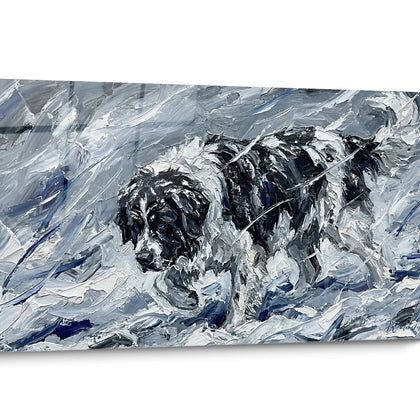
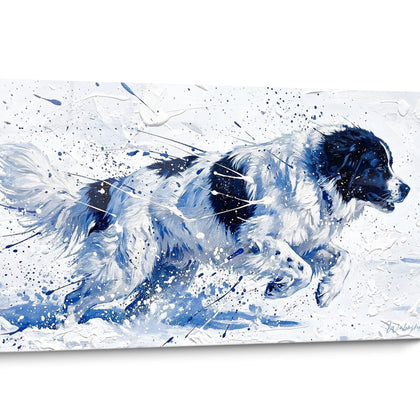
The vintage Landseer dog wall art celebrates the artistic legacy of an emblematic breed immortalized by nineteenth-century painters. This large-format mural representation captures the majestic elegance of the black and white Newfoundland as depicted in classic Victorian-era works. Perfect for collectors of historical canine memorabilia and enthusiasts of traditional animal art, this wall décor brings refined nostalgic charm to character-filled interiors. The generous dimensions enhance period illustration details and reinforce the aristocratic presence of this legendary breed in your living space.
The Victorian Soul of the Landseer in Antique Wall Art
The vintage Landseer dog wall art draws inspiration from nineteenth-century pictorial representations, an era when Sir Edwin Landseer immortalized this Newfoundland variety in scenes imbued with nobility. These large-scale mural compositions faithfully reproduce the aesthetic codes of aristocratic animal portraiture: sepia backgrounds, aged patinas, darkened chromatic treatments evoking antique oils. The retro imagery showcases the characteristic bicolored coat with its signature deep black and pristine white contrasts, a visual hallmark that captivated European collectors of the past.
Why choose an antique representation rather than a modern interpretation?
Historical authenticity radically distinguishes this décor from standardized contemporary creations. Vintage illustrations preserve the idealized anatomical proportions of original bloodlines, before recent morphological modifications in breeding. Faded hues, ornamental borders, and period typography create stylistic cohesion impossible to reproduce with current techniques. This documentary fidelity particularly appeals to historical canine enthusiasts and heritage interior restorers seeking mural ornaments congruent with century-old buildings or canine antique collections.
Integration into heritage libraries and classically-inspired living spaces
The imposing dimensions of the vintage Landseer dog wall art naturally command attention in history-laden spaces: curiosity cabinets, dark wood-paneled libraries, reconstituted English smoking rooms. The muted color palette harmonizes with aged leather, weathered oak wainscoting, and antique book bindings. This monumental format elegantly dialogues with ancestral family portraits, antique maps, and hunting engravings, constructing a visual narrative around European animal heritage. Landseer iconography simultaneously evokes legendary loyalty, heroic water rescue, and the elevated social status of historical owners.
Decorative associations with period furniture and collectible objects
To amplify the nostalgic effect, this mural décor pairs with specific period elements: tufted Chesterfield armchairs, patinated bronze chandeliers, artificially aged gilt-wood frames. Discerning collectors accompany it with Victorian canine medallions, framed antique exhibition collars, or complementary animal lithographs. The generous dimensions allow anchoring a thematic reading nook or domestic museum space dedicated to extinct breeds and historical canine standards. If you also seek a bolder interpretation of this emblematic breed, explore our vintage Landseer dog abstract wall art collection, which revisits these classic aesthetic codes.
Recreating the Atmosphere of European Ancestral Estates
The vintage Landseer dog wall art serves as the central element for recreating the ambiance of British and Swiss noble properties where this breed thrived as a prestige symbol. Monumental formats evoke galleries of animal portraits commissioned by aristocracy to document their show kennels. The retro imagery instantly transports viewers to smoke-filled drawing rooms where pedigrees were negotiated and breeders discussed morphological standards around detailed anatomical engravings. This narrative dimension transforms simple décor into cultural testimony of an era when dogs revealed social rank.
How does this décor evoke tales of Alpine and maritime rescue?
Vintage compositions often prioritize dramatic scenes: Landseer emerging from waters with a shipwreck survivor, heroic posture against snowy mountain backdrops, vigilant stance near harbor quays. These representations recall documented exploits of the breed in Grand-Saint-Bernard monasteries and nineteenth-century coastal stations. The sepia treatment amplifies the legendary, almost mythological character of these canine interventions. For maritime or Alpine history collectors, this décor type functions as a visual window onto the cynophile achievements that forged the international reputation of the bicolored Newfoundland.
Enhancing spaces dedicated to transgenerational family memories
Families having owned Landseers across generations use this vintage wall art as memorial anchor in photograph-lined hallways or antechambers of historic secondary residences. Substantial dimensions create an emotional focal point where family anecdotes, orally transmitted breeding narratives, and archive documents converge. This mural décor becomes a catalyst for intergenerational transmission, triggering conversations about historical breeding practices, dog shows frequented by ancestors, and morphological evolution observed across decades.
Synergy with collections of exhibition medals and antique pedigree certificates
Collector canine enthusiasts complete this décor with display cases presenting faded exhibition ribbons, centenarian rosettes, yellowed championship certificates. The imposing tableau format structurally anchors these scattered small artifacts, creating coherent museum scenography. The retro aesthetic unifies everything in sepia-bistre chromatic cohesion that enhances each element. This documentary mise-en-scène particularly appeals to heritage kennel club members and cynological history researchers reconstructing the evolution of breed standards through comparative period iconography.
Selecting an Authentic and Impactful Vintage Representation
Acquiring a vintage Landseer dog wall art requires particular attention to authenticity details that distinguish quality reproduction from generic printing. The most prized compositions reproduce works catalogued in nineteenth-century dog show exhibition catalogs or directly inspire from Victorian animal master techniques. Generous formats better reveal pictorial treatment subtleties: artificial crackling, tonal variations imitating ancient pigment oxidation, ornamental borders typeset in period fonts. These technical details considerably amplify the historical credibility of the décor.
Which visual criteria guarantee convincing retro aesthetics?
Favor representations featuring intentionally limited color palettes: sepia ranges, bistre, raw sienna, slate gray with aged ivory touches. The finest models integrate period paratextual elements: Latin zoological classification notations, Art Nouveau decorative cartouches, stamps from defunct canine institutions. The Landseer's posture must respect historical anatomical canons: massive chest, powerful head in pre-modern proportions, tail carried low per ancient standards. Monumental dimensions allow appreciating morphological nuances documenting breed evolution across two centuries.
Strategic positioning to maximize immersive nostalgic effect
The imposing format demands a clear main wall where the eye naturally converges: library alcove, mantelpiece panel between display cases, corridor molding in room succession. Indirect lighting through fabric-shaded side sconces creates aged gallery atmosphere, avoiding reflections that would betray the support's contemporary nature. Discerning collectors frame it with blackened or aged gilded wood moldings, reproducing original framing of animal portraits commissioned by nobility. This museum-quality mise-en-scène transforms domestic space into a genuine canine curiosity cabinet.
Complementarity with other breeds in a thematic animal gallery
For global canine history enthusiasts, this vintage wall art integrates into comparative series including Saint Bernard, black Newfoundland, Leonberger, and other European mastiffs represented per nineteenth-century aesthetic codes. Uniformized dimensions create harmonious visual rhythm along a corridor or in a state room. This documentary approach appeals to private museums, reconstituted historic kennels, and educational spaces dedicated to European cynophile evolution. The Landseer's black-white contrast provides strong visual punctuation within chromatically homogeneous series of antique monochrome representations.
Why is vintage Landseer dog wall art suited to English cottage-style interiors?
The Landseer's British retro aesthetic naturally harmonizes with faded floral fabrics, antique porcelain, and waxed pine furniture characteristic of English cottages. Generous dimensions visually compensate for typical low ceilings while respecting intimate room scale. The muted palette dialogues with natural material tones and canine imagery reinforces the pastoral theme of these countryside interiors.
Does this décor work in veterinary offices specializing in heritage breeds?
Veterinary practices focused on heritage breeds use these mural representations as visual educational supports illustrating morphological evolution and inherited health issues. The monumental format impresses clientele while demonstrating the practitioner's historical expertise. The nostalgic atmosphere reassures owners of ancient-lineage dogs seeking medical follow-up respecting traditional breed specificities rather than standardized modern approaches.
How to maintain the aged appearance of large-format vintage Landseer dog wall art?
Avoid direct sunlight exposure, which would artificially bleach carefully calibrated sepia tones imitating natural aging. Monthly dry microfiber cloth dusting preserves detail sharpness without altering patina effects. For monumental formats, semiannual fixture inspection ensures structural stability against hygrometric variations particularly affecting large-dimension supports in poorly-insulated historic buildings.


 Landseer Tricolor Painting Sleeping on Cracked Paving - Nostalgic Sweetness - Landseer Edition233,90 €
 Landseer Dog Painting On Fishing Boat - Noble Ocean Rescuer - Landseer Edition233,90 €
 Adorable Blond Child in Caramel Overalls Sharing Ice Cream with Landseer on Blooming Terrace - Shared Sweetness - Edition Landseer233,90 €
 Black and White Newfoundland Dog Painting with Marine Anchor - Maritime Loyalty - Landseer Edition233,90 €