


Landscape Wall Art for Bedroom
Our Painting for bedroom Landscape collection transforms your intimate space into a haven of peace. Each artwork captures the essence of nature with paysages naturels pour décoration murale that invite escape and serenity. Majestic mountains, lush forests, enchanting sunsets: these artistic creations bring harmony and softness to your bedroom. Perfect for creating a soothing atmosphere, our decorative paintings landscape bedroom blend seamlessly with all interior styles and promote relaxation and rest.
 In the Shadow of Giants Painting - Mountain Landscape Edition273,90 €
 Dawn Over the Lighthouse - Sea Landscape Edition273,90 €
 Waterfall Artwork No.3 - Landscape Edition273,90 €
 Waterfall Painting No.2 - Landscape Edition273,90 €
 Waterfall Painting No.1 - Landscape Edition273,90 €
 Chapel Painting No. 1 - Landscape Edition273,90 €
 Wheat Field Wall Art No.1 - Landscape Edition273,90 €
 Cabin Artwork No. 1 - Landscape Edition273,90 €
 Fog Wall Art No. 1 - Landscape Edition273,90 €
 Starlit Sky Landscape - Dawn Over Infinity Edition273,90 €
 Sailing Toward the Horizon Canvas - Ocean Landscape Edition273,90 €
 Magic Path Wall Art - Garden Landscape Edition273,90 €
 Song of Sunflowers Wall Art - Countryside Landscape Edition273,90 €
 Infinite Calm Painting - Sea Landscape Edition273,90 €
 Beauty of Evening Wall Art - Sea Landscape Edition273,90 €
 Enchanted Path Painting - Jungle Landscape Edition273,90 €
 Water's Flow Artwork - Jungle Landscape Edition273,90 €
 Natural Alignment Canvas - Forest Landscape Edition273,90 €
 Enchanted Dawn Over Aquatic Paradise - Landscape Edition273,90 €
 Dawn Over Eternal Dunes - Signature Edition273,90 €
 Forgotten Boat in Secret Eden Landscape - Landscape Edition273,90 €
 Bright Cove Landscape - Landscape Edition273,90 €
 Sunset Over the Aqueduct Landscape Painting - Edition Landscape273,90 €
 Sunset Over the Floral Archipelago Wall Art - Signature Edition273,90 €
Explore further
In Landscape Wall Art for Bedroom
-
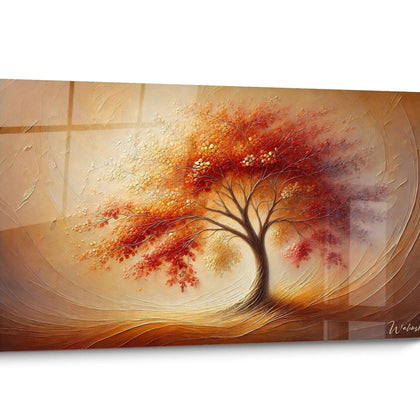 Bedroom Wall Art433
artworks
Bedroom Wall Art433
artworks
-
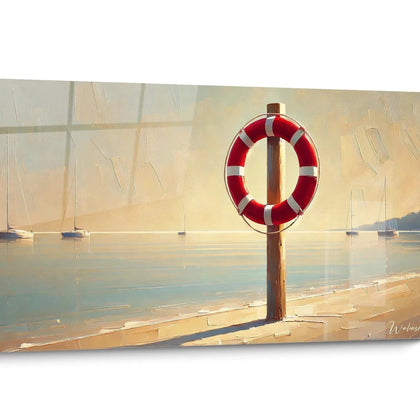 Zen Bedroom Wall Art24
artworks
Zen Bedroom Wall Art24
artworks
-
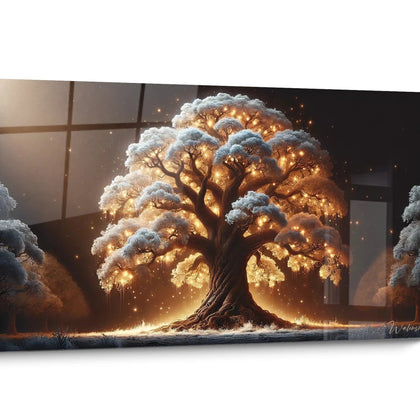 Golden Bedroom Wall Art24
artworks
Golden Bedroom Wall Art24
artworks
-
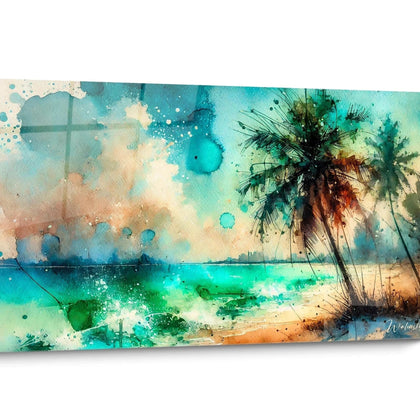 Tropical Bedroom Wall Art23
artworks
Tropical Bedroom Wall Art23
artworks
-
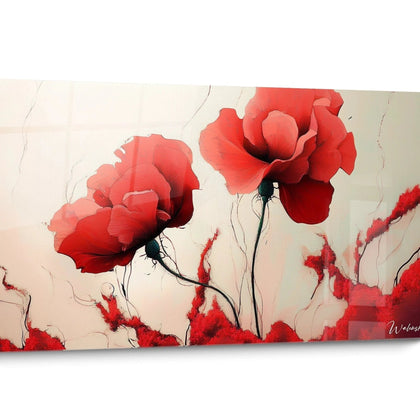 Floral Bedroom Wall Art24
artworks
Floral Bedroom Wall Art24
artworks
-
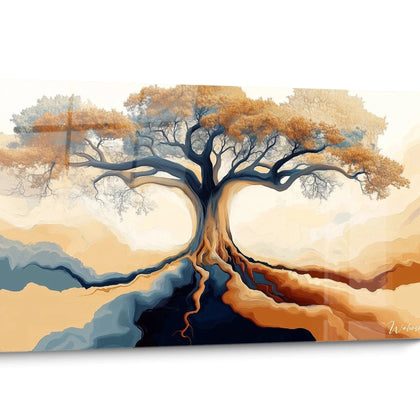 Modern Bedroom Wall Art24
artworks
Modern Bedroom Wall Art24
artworks
-
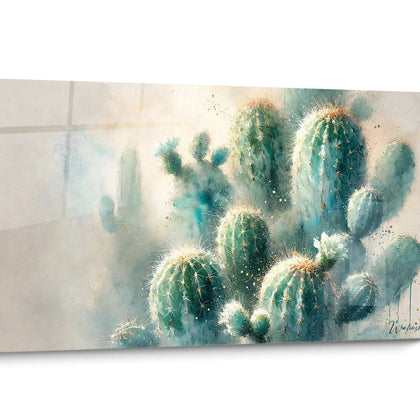 Minimalist Bedroom Wall Art24
artworks
Minimalist Bedroom Wall Art24
artworks
-
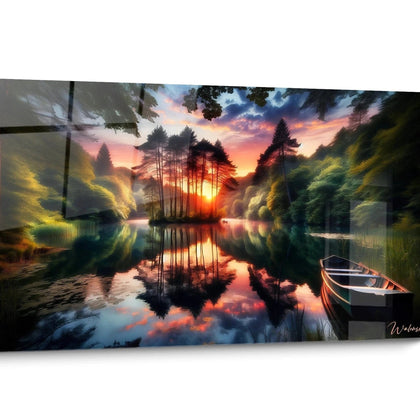 Romantic Bedroom Wall Art13
artworks
Romantic Bedroom Wall Art13
artworks
-
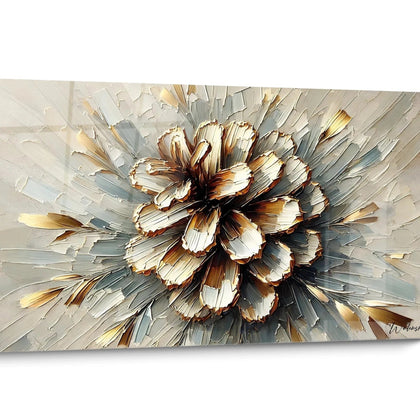 Abstract Bedroom Wall Art12
artworks
Abstract Bedroom Wall Art12
artworks
-
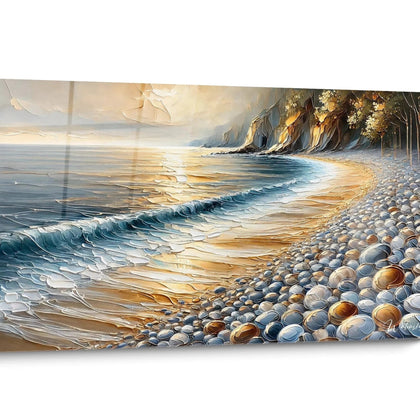 Ocean Bedroom Wall Art10
artworks
Ocean Bedroom Wall Art10
artworks
-
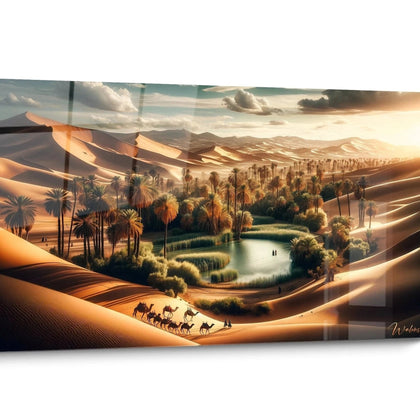 Sunset Bedroom Wall Art9
artworks
Sunset Bedroom Wall Art9
artworks
-
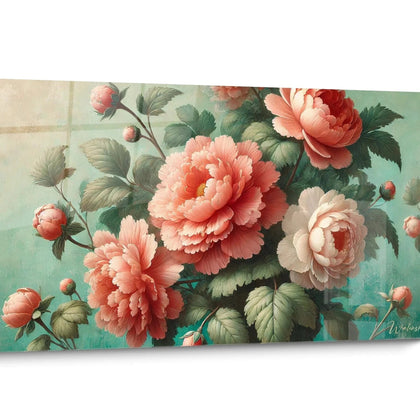 Vintage Bedroom Wall Art7
artworks
Vintage Bedroom Wall Art7
artworks
-
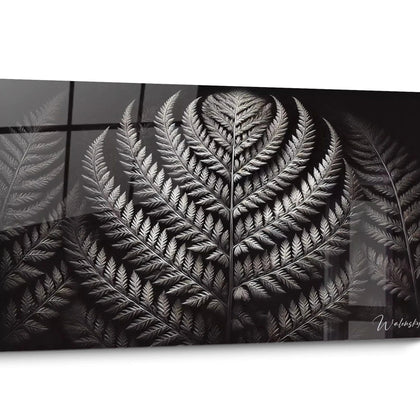 Monochrome Bedroom Wall Art9
artworks
Monochrome Bedroom Wall Art9
artworks
-
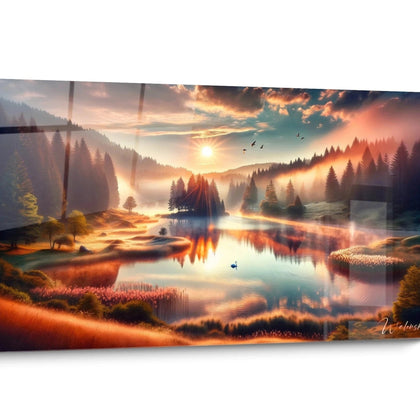 Mountain Bedroom Wall Art5
artworks
Mountain Bedroom Wall Art5
artworks
All about Landscape Wall Art for Bedroom
- Painting Presentation for Landscape Bedroom
- Natural Atmospheres for Relaxation Spaces
- Perspectives and Visual Depth
- Connection Between Nature and Nocturnal Wellbeing
A painting for a landscape bedroom transforms your relaxation space into a visual sanctuary connected to nature. These large wall compositions capture distant horizons, natural expanses, and soothing perspectives that promote relaxation before sleep. Unlike urban or geometric representations, natural panoramas create a visual openness particularly sought after in large, contemporary bedrooms. Each landscape composition is selected to meet the specific needs of an intimate environment where serenity takes precedence over visual stimulation.
Vegetal Atmospheres and Horizons for Spacious Bedrooms
Integrating a painting for a landscape bedroom into a relaxation space requires a fine understanding of natural atmospheres. Representations of misty forests, endless meadows, or mountain ranges create a visual breathing space that is nonexistent in closed compositions. This panoramic opening is particularly beneficial in master bedrooms with generous volumes, where a large wall format creates a contemplative window onto soothing horizons.
What natural panoramas promote nighttime relaxation?
Scenes of valleys enveloped in morning mist generate a chromatic softness conducive to mental release. Representations of still lakes reflecting twilight skies diffuse a horizontal tranquility that naturally slows the heart rate. Forest compositions with graduated depths induce a gentle visual progression, without points of tension. These landscape typologies contrast with stimulating urban views or agitated marine scenes, unsuitable for bedtime rituals.
Depth of Field and Perceived Spatial Expansion
A large-scale landscape wall painting exploits linear perspectives to visually expand the nighttime space. Natural vanishing lines – paths winding between hills, rows of trees receding towards the horizon – guide the eye towards infinite depths. This perspective structuring compensates for rectangular bedroom configurations by creating a contemplative third dimension. Horizontal panoramic formats amplify this expansion effect, particularly sought after above king-size bed headboards.
Chromatic Palettes of Natural Environments
The earthy tones of countryside landscapes – autumnal ochres, moss greens, warm browns – naturally dialogue with the textile materials of contemporary bedrooms. The bluish hues of distant mountain scenes bring a tempered freshness, ideal for south-facing exposures. For those who also appreciate graphic contrasts, an abstract painting can offer a complementary alternative to figurative panoramas. Twilight gradations in prairie skies introduce gentle transitions between warm and cool tones, creating evolving atmospheres depending on the natural diurnal light.
Visual Architecture of Large Landscape Formats
The specificity of a painting for a landscape bedroom lies in its ability to visually structure the intimate space without compartmentalizing it. Horizontal compositions naturally follow the architecture of modern bedrooms, where headboard walls accommodate stretched formats from 150 to 200 cm wide. This pronounced horizontality corresponds to the guidelines of low furniture – bed platforms, foot benches – creating a soothing geometric coherence.
How to integrate natural guidelines?
The landscape horizons contained within these wall art compositions function as stabilizing visual landmarks. A horizon line placed in the upper third of the composition generates a sense of terrestrial vastness, while a placement in the lower third amplifies the impression of an expansive sky. These compositional choices directly influence the perceived volumetric feel of the room: low horizons visually raise ceilings, while high horizons anchor and secure the space.
Panoramic Formats and Wall Proportions
Landscape paintings large format generally adopt 2:1 or 3:1 ratios, mirroring the proportions of main walls. These stretched formats avoid the visual fragmentation caused by multiple frames, offering a contemplative continuity essential in a place of rest. Facing a wall 300 cm wide, a 180 cm composition centered leaves balanced lateral breathing spaces, creating a natural framing without visual saturation.
Interactions with Natural Light Sources
A wall landscape subtly captures and reflects changing daylight, creating an evolving artwork throughout the day. Forest scenes with plays of shadows gain depth under the morning's raking light, while mountain panoramas reveal their reliefs under the zenithal midday lighting. This dynamic interaction with natural luminosity transforms the painting into a living element, unlike static compositions under constant artificial lighting.
Biophilia and Nocturnal Disconnection Rituals
Installing a landscape painting for a bedroom responds to a deep biophilic need: maintaining a visual connection with nature in disconnected urban environments. Environmental psychology research demonstrates that exposure to natural scenes before sleep reduces cortisol levels and facilitates the transition to deep rest phases. This phenomenon explains the growing popularity of landscape murals in contemporary master bedrooms.
Natural Scenes and Cognitive Slowing
Representations of rolling landscapes, peaceful undergrowth, or endless plains activate the brain areas associated with passive contemplation rather than active analysis. This gentle neuronal stimulation facilitates the mental disconnection necessary for falling asleep, particularly after stimulating workdays. Paintings nature landscape bedroom thus function as psychological transition tools between daytime alertness and nighttime relaxation.
What Landscape Typologies According to Life Seasons?
Bedrooms of young parents often prefer reassuring forest scenes, evoking protection and enveloping. Spaces for mature couples tend towards open panoramas – salt deserts, Icelandic plateaus – symbolizing freedom and perspective. Sophisticated guest rooms frequently integrate temperate coastal landscapes or undulating vineyards, creating travel-inspired atmospheres without maritime agitation.
Material Associations and Decorative Extensions
A large wall landscape is ideally accompanied by natural materials in echo: bedding in plant fibers, furniture in light woods, luminaires with organic shapes. These material correspondences amplify the biophilic coherence of the space. Indoor plants with architectural silhouettes – lyrata ficus, monstera – create formal dialogues with the represented vegetations, without visual duplication. Rugs with raw textures extend the tactile feel of forest floors or grassy expanses captured in the wall composition.
Does a landscape painting for a bedroom suit small spaces?
Contrary to popular belief, a wall painting landscape bedroom of generous format creates a beneficial visual depth even in the compact spaces of 12-15 m². The integrated natural perspective compensates for the proximity of the walls by offering a contemplative escape. The key lies in choosing airy compositions rather than dense forest scenes that could visually weigh down a small volume.
What landscapes should you avoid in a north-facing bedroom ?
North-facing exposures, naturally cool in terms of lighting, are best avoided with winter scenes, polar landscapes, or compositions dominated by cold blues. Instead, prioritize panoramas of golden meadows, autumnal forests with warm tones, or savanna scenes that chromatically compensate for the natural coolness of the orientation.
How to position a wall painting landscape facing the window?
Placing a large wall painting landscape on the wall opposite the window creates a visual dialogue between represented nature and real nature seen. This configuration invites the eye to circulate between two sources of natural contemplation, enriching the spatial experience. Avoid lateral placements, however, as they create unbalanced visual competitions between natural light and wall composition.
Further reading
Our articles on this topic
- Which landscape colour to choose for a calming bedroom?
- How to Choose the Perfect Landscape Wall Art for Your Home
- Personalized landscape painting gift idea for the home: the guide to giving a unique artwork
- Large panoramic desert painting for an adult bedroom: a guide to the right proportions and colours
- Bedroom wall paint decoration: ideas, colours and tips for a bedroom that feels like you
L'art qui suscite l'envie
Maison belge d'art mural grand format
14 jourspour changer d'avis*
Protection Walenskyincluse
Fabriquéen Italie
FormatXXL
Kit de fixationtoujours fourni
* Hors tableaux personnalisés et tailles personnalisées


