


Japanese Spitz Dog Portrait Wall Art
Our Painting Japanese Spitz Dog Portrait collection celebrates the immaculate beauty of this iconic breed. Each creation captures the natural elegance and sparkling gaze of the Japanese Spitz in artistic portrait, offering an authentic representation of its bright white coat and gentle expression. These works bring a refined touch to your decor, perfect for lovers of Japanese dog breed portraits. Transform your walls into a gallery dedicated to this majestic companion.
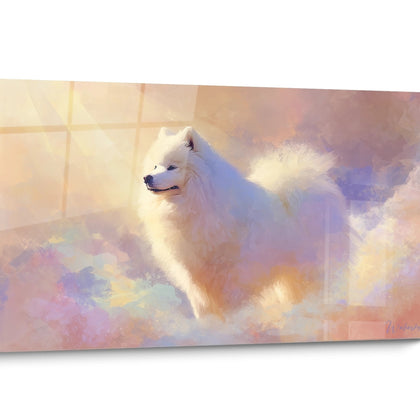
 Smiling Portrait Wall Art Radiant White Coat Pictorial Style - Canine Tenderness - Japanese Spitz Edition228,90 €
 Black and White Portrait Canvas with Noble Gaze - Timeless Elegance - Japanese Spitz Edition273,90 €
 Luminous Portrait Wall Art with Beige and Cream Tones - Endearing Smile - Japanese Spitz Edition273,90 €
 Dog Portrait Painting with Beige and Cream Tones on Urban Background - Modern Softness - Japanese Spitz Edition273,90 €
 White Portrait on Dark Blue Floral Background - Floral Elegance - Japanese Spitz Edition273,90 €
 White Sitting Dog Portrait Gray Nuanced Background - Elegant Portrait - Japanese Spitz Edition273,90 €
 Fluid Portrait Canvas with Cream and Gold Tones - Contemplative Softness - Japanese Spitz Edition273,90 €
Explore further
In Japanese Spitz Dog Portrait Wall Art


All about Japanese Spitz Dog Portrait Wall Art
- Japanese Spitz Portrait Presentation
- Artistic Canine Expression
- Premium Dog-Themed Décor
- Breed Wall Art Value
The Japanese Spitz Dog Portrait Wall Art celebrates the majesty of an exceptional Nordic breed, characterized by its immaculate coat and lively expression. This artistic representation captures the natural elegance of the Nihon Supittsu, immortalizing its sparkling gaze and compact silhouette in a large-scale decorative artwork. Each anatomical detail reveals the morphological uniqueness of this ancestral Japanese breed, recognizable by its pure white coat and distinctive smiling facial mask.
The Distinctive Anatomy of the Japanese Spitz in Wall Portrait
The Japanese Spitz Dog Portrait Wall Art highlights the specific breed characteristics that distinguish this canine from other Spitz breeds. The frontal representation emphasizes the characteristic expression of the short muzzle, dark triangular eyes, and perfectly proportioned erect ears. This portraiture approach reveals the typical scissor bite during the natural smile, a behavioral element unique to this Japanese breed.
The spectacular ruff in its pictorial representation
Artists specialized in these canine representations concentrate their technique on the texture of the abundant frill surrounding the neck. This voluminous fur constitutes the dominant visual element in any quality portrait, creating a striking contrast with the expressive face. The techniques of Japanese Spitz Dog Watercolor Art allow for restoring this hair density with subtle shades of cream white and ivory, faithfully reproducing the characteristic silky texture.
Why choose a portrait focused on facial expression?
The portrait orientation offers an immediate emotional connection with the viewer. Unlike full-body representations, the facial close-up reveals the sparkling personality and intellectual vivacity of the Japanese Spitz. This close composition transforms residential space into a personal gallery dedicated to lovers of pure Japanese breeds, celebrating genetic heritage preserved for centuries.
Morphological details valued in the portrait approach
Large-format wall creations allow appreciation of anatomical subtleties: the lustrous black nose contrasting with the snowy coat, the raised mouth corners creating this emblematic smiling expression, and the dark eyelid pigmentation accentuating the intensity of the gaze. These visual elements become focal points in residential reception spaces, instantly attracting the attention of visitors passionate about Japanese dog breeds.
Decorative Integration of Japanese Spitz Portrait in Your Home
Acquiring a Japanese Spitz Dog Portrait Wall Art responds to a targeted decorative strategy for lovers of Japanese culture and minimalist aesthetics. The immaculate coat of the pictorial subject harmonizes naturally with contemporary neutral palettes, creating a soothing presence in streamlined living rooms. This animal representation transcends mere decoration to become a testimony of affection toward a breed little known outside Japan.
How does this portrait influence the ambiance of a living space?
The wall presence of a Japanese Spitz in large format establishes an atmosphere of active serenity. Unlike breeds with serious expressions, the natural smile of this breed diffuses positive energy throughout reception rooms. Collectors of Japanese memorabilia particularly appreciate this canine iconography that dialogues with other Japanese cultural elements such as traditional prints or artisanal ceramics.
The visual impact of dominant white color contrast
Wall compositions centered on this breed exploit the decorative power of pure white. This neutral shade functions as a spatial amplifier in compact environments, reflecting natural light while creating a non-aggressive focal point. Professional breeders frequently use these representations in their reception spaces to illustrate the ideal breed standard to prospective owners.
Which room best showcases a canine portrait of this breed?
Specialized veterinary clinics and dog grooming salons widely adopt these representations to celebrate breed diversity. In private homes, the home office becomes the privileged location for dog-breeding professionals. The presence of the Japanese Spitz in imposing format creates visual continuity with professional activity while personalizing the workspace with an affective touch.
- Immediate enhancement of reception spaces dedicated to dog-loving guests
- Visual complement to authentic Asian art object collections
- Conversation element for owners of rare Japanese breeds
- Educational support for specialized dog breeding focused on morphology
Selecting an Authentic Japanese Spitz Portrait
Acquiring a Japanese Spitz Dog Portrait Wall Art requires particular attention to morphological fidelity. Quality reproductions scrupulously respect cranial proportions defined by FCI standard No. 262, guaranteeing a representation conforming to the authentic breed type. This anatomical accuracy distinguishes professional creations from generic illustrations of white dogs without breed specificity.
Authenticity criteria for breed representation in pictorial form
A credible portrait restores the withers height proportional to body length, in the 10:11 ratio characteristic of the breed. The angle of the pronounced stop, the position of triangular ears, and the tail carried over the back in plume form constitute non-negotiable breed markers. Discerning collectors verify these elements before any purchase to guarantee faithful representation of Japanese genetic heritage.
Why favor monumental formats for this compact breed?
Paradoxically, large wall dimensions magnify this medium-sized breed. Enlargement reveals subtleties of the dense undercoat and erect guard hair, invisible in reduced formats. This grandiose approach transforms a dog of 30-38 cm at the withers into an imposing presence, doing justice to its assertive temperament and natural presence despite its physical compactness.
The evolution of Japanese Spitz representation in wall art
Historically confined to traditional Japanese prints, this national dog has experienced an artistic renaissance in the West since the 2010s. Contemporary creators explore various stylistic interpretations while preserving breed essence. This evolution responds to growing demand from European owners wishing to visually celebrate their attachment to this still-confidential breed outside the Japanese archipelago.
- Validation of conformity to the official Japanese breed standard
- Importance of restoring the typical smiling expression
- Preference for neutral backgrounds enhancing the main subject
- Seeking balance between anatomical realism and artistic sensitivity
Where to position a Japanese Spitz Dog Portrait Wall Art in a reception room?
Optimal positioning is at seated eye level, allowing natural visual interaction during relaxation moments. Placement above a low piece of furniture dedicated to dog show trophies or breed documentation creates thematic coherence appreciated by passionate breeders.
How does a canine portrait influence perception of a professional dog-breeding space?
In specialized breeding facilities, the presence of quality wall representations instantly communicates serious breed commitment. These visual supports reinforce professional credibility with conformity judges and prospective buyers seeking lineages conforming to the original Japanese type.
What maintenance preserves the visual quality of a Japanese Spitz Dog Portrait Wall Art?
Environments with heavy dog traffic require protection against splatters and ambient humidity. Positioning away from direct animal passages preserves chromatic integrity over time, particularly crucial for representations dominated by white tones sensitive to alterations.


