


Japanese Spitz Dog Watercolor Wall Art
Our Painting Spitz Japanese Dog Watercolor collection celebrates the elegance of this iconic breed through refined artistic creations. Each work captures the immaculate beauty and noble character of the Spitz with a delicate watercolor technique. Soft tones and fluid touches reveal all the grace of this Japanese companion. Perfect for lovers of artistic dog decoration, this collection brings a poetic and luminous touch to your living space.
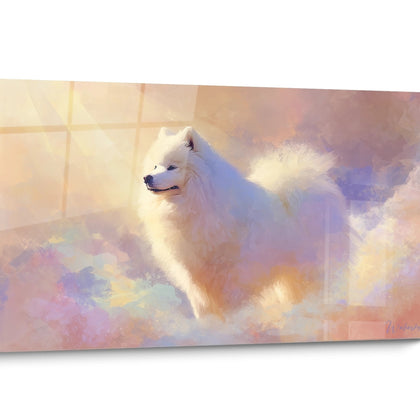
 White Japanese Spitz Painting by Window - Watercolor Softness - Japanese Spitz Edition233,90 €
 Japanese Spitz Dog Painting Pink Tongue Smiling Blue Watercolor - Canine Happiness - Japanese Spitz Edition213,90 €
 White Dog Painting with Blue Watercolor Tones on Sunny Terrace - Morning Tenderness - Japanese Spitz Edition233,90 €
Explore further
In Japanese Spitz Dog Watercolor Wall Art


All about Japanese Spitz Dog Watercolor Wall Art
- Japanese Spitz Watercolor Painting Presentation
- Watercolor Atmosphere
- Color Palette
- Decorative Ambiance
A Japanese Spitz dog watercolor painting captures the characteristic elegance of this Japanese breed through the distinctive fluidity of the watercolor medium. This artistic representation elevates the Japanese Spitz's immaculate white coat by exploiting delicate gradations, subtle transparencies and pigmentary effusions inherent to this painting technique. Watercolor imparts a poetic and vaporous dimension to the canine portrait, transforming each work into a masterpiece for contemporary interiors seeking authenticity and refined visual sophistication.
Artistic Expression of the Japanese Spitz in Watercolor
The Japanese Spitz dog watercolor painting distinguishes itself by its ability to capture the vaporous texture of the white coat characteristic of this ancestral breed. Artists exploit the translucent properties of watercolor to create depth effects in the voluminous fur, using subtle chromatic layering ranging from pure white to cream, ivory and pearl gray nuances. This technical approach reveals the elegant anatomical structure of the Japanese Spitz while preserving its airy appearance.
How does watercolor elevate the distinctive traits of the Japanese Spitz?
The spontaneity of the watercolor gesture perfectly complements the lively and alert expression of the Japanese Spitz. Pigmentary washes capture the intensity of the deep black gaze contrasting with the immaculate whiteness of the coat. Controlled spattering suggests the dynamism of this energetic breed, while aqueous blending reproduces the silky softness of its mantle. This synergy between subject and medium generates an emotional authenticity sought by collectors of refined canine representations.
Watercolor composition for elegant residential spaces
A large-format Japanese Spitz dog watercolor painting instantly transforms contemporary living rooms, spacious entry halls and master bedrooms into sanctuaries dedicated to Japanese-inspired aesthetics. These monumental works create soothing focal points through soft hues and refined compositions typical of watercolor. Collectors of animal art favor these pieces for their ability to generate serene atmosphere without sacrificing visual impact, particularly when integrated into minimalist Scandinavian or zen interiors.
Watercolor techniques for reproducing the Japanese Spitz's coat
The finest Japanese Spitz dog watercolor paintings exploit specific techniques such as wet-on-wet for smooth transitions between light and shadowed areas of the coat. Artists apply glazing to progressively intensify pigmentary density without losing watercolor's characteristic luminosity. Dry scratching reveals zones of pure white simulating individual hairs, while salt projections create organic textures evoking the complex structure of voluminous fur. For those seeking an alternative chromatic approach, works depicting the Japanese Spitz with golden accents offer a complementary luxurious interpretation.
Chromatic Harmonies of Japanese Canine Watercolor
Which palettes enhance the Japanese Spitz dog watercolor painting?
The color palette of a Japanese Spitz dog watercolor painting relies primarily on sophisticated monochromatic harmonies. Dominant neutral hues include titanium white, Payne's gray, natural raw umber and sepia, creating a subtle range respecting the breed's natural appearance. Artists occasionally introduce touches of quinacridone pink or cerulean blue in shadowed areas to enrich visual depth without compromising authenticity. These minimalist chromatic choices suit Scandinavian, wabi-sabi and refined contemporary interiors perfectly.
Impact of watercolor backgrounds on decorative ambiance
Watercolor backgrounds accompanying the Japanese Spitz portrait determine the work's overall atmosphere. Gradients ranging from glacier blue to cloud gray evoke Japanese mountainous landscapes, reinforcing the breed's geographic origin. Off-white backgrounds with minimalist spattering emphasize the Japanese Spitz's iconic purity, creating a haute couture aesthetic suited to urban lofts. Compositions incorporating watercolor botanical elements – cherry blossom branches, stylized bamboo – inscribe the work within a millennia-old Japanese artistic tradition.
Watercolor contrasts for dramatizing canine expressivity
The finest paintings exploit watercolor contrasts to capture the sparkling intelligence characteristic of the Japanese Spitz. Artists dramatically intensify the deep black of the eyes, nose and paw pads against the brilliant whiteness of the coat, generating captivating visual tension. This marked opposition immediately draws the eye toward the facial expression, the central element of these large-format representations. Pure unpainted white zones contrast with saturated pigmentary accumulations, a signature technique of contemporary watercolor valuing negative spaces.
Seasonal variations in Japanese Spitz watercolor
Certain watercolor compositions evoke traditional Japanese seasons through symbolic chromatic touches. Pale sakura pink tones suggest spring, deep azure blues summer, burnt ochres and oranges autumn, while silvery grays evoke winter. These subtle seasonal references allow collectors to select works harmonizing with their interior decoration according to temporal logic, renewing the visual experience through annual decorative changes.
Decorative Integration of Japanese Spitz Watercolor Portrait
Why choose a large-format Japanese Spitz dog watercolor painting?
Monumental formats of a Japanese Spitz dog watercolor painting generate architectural presence radically transforming residential spaces. These imposing dimensions allow full appreciation of watercolor's technical subtleties – millimeter gradations, pigmentary effusions, layered transparencies – invisible in smaller formats. Contemporary canine art collectors favor these statement pieces for establishing clear visual hierarchy in open-plan living rooms, naturally organizing conversational zones around the majestic work.
Decorative associations with Japanese Spitz watercolor
A Japanese Spitz dog watercolor painting integrates harmoniously within various decorative configurations. Japanese-inspired interiors pair it with low-profile natural wood furniture, shoji screens and artisanal ceramics. Scandinavian ambiances combine it with ecru linen textiles, blonde wood and lush vegetation. Industrial lofts create striking contrast by positioning the delicate work against exposed brick and raw metal. This stylistic versatility explains the growing popularity of these watercolor representations among interior architects seeking cohesive statement pieces.
Canine watercolor as a lasting decorative investment
Unlike ephemeral trends, the Japanese Spitz dog watercolor painting represents a timeless aesthetic investment. Watercolor's timelessness, practiced for centuries in Eastern and Western artistic traditions, guarantees decorative relevance transcending passing fads. The Japanese Spitz's representation, an ancestral breed documented since the Japanese Jōmon period, anchors the work in historical depth valorizing cultivated interiors. These heritage qualities appeal to buyers seeking transmissible decorative pieces.
Strategic positioning for maximizing visual impact
Optimal positioning of a large-format Japanese Spitz dog watercolor painting requires strategic spatial consideration. Main walls perpendicular to natural light sources reveal watercolor nuances without creating disturbing reflections. Architectural alcoves or wall recesses transform the work into quasi-sculptural installation. Wide hallways benefit from the soaring verticality characteristic of Japanese Spitz portraits. Visual isolation through lateral empty spaces amplifies decorative presence, a museographic technique adapted to private residences.
FAQ: Japanese Spitz Dog Watercolor Painting
How to preserve the chromatic intensity of a Japanese Spitz dog watercolor painting?
As watercolor pigments are sensitive to ultraviolet radiation, position the work away from direct sunlight. Neutral-temperature LED lighting preserves delicate nuances without accelerating pigmentary degradation, guaranteeing the longevity of brilliant whites and subtle contrasts characterizing these representations.
What atmosphere does a Japanese Spitz dog watercolor painting create in an interior?
Watercolor aesthetics generate a contemplative and soothing ambiance, transforming space into a visual refuge. The softness of chromatic transitions and compositional fluidity establish serenity conducive to relaxation, particularly valued in bedrooms, libraries and meditative spaces.
Can multiple Japanese Spitz dog watercolor paintings be combined?
Creating a thematic wall gallery with multiple Japanese Spitz watercolors in varying postures or chromatic variations generates spectacular decorative impact. This multiplicative approach suits extensive walls of panoramic living rooms, creating coherent visual narrative celebrating this emblematic breed through different watercolor interpretations.


