


Modern Japanese Spitz Dog Canvas Art
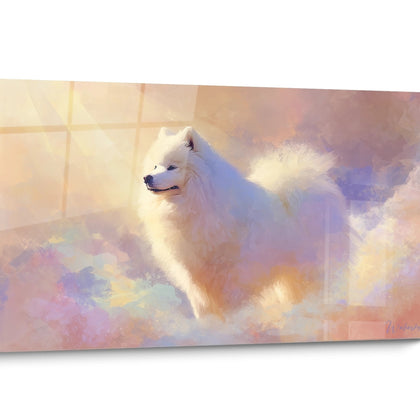
The Painting Japanese Spitz Dog Modern celebrates the natural elegance of this iconic breed through a contemporary artistic vision. Our collection showcases the beauty of the Spitz with streamlined and refined compositions, perfect for lovers of minimalist dog decoration. Each work captures the graceful essence of this legendary Japanese companion. Ideal for creating a sophisticated atmosphere, this modern painting of Spitz dog transforms your interior into a personalized art gallery.
 White Dog Pop Art Wall Art Pink Magenta Blue Yellow - Colorful Explosion - Japanese Spitz Edition273,90 €
 White Dog Painting with Rainbow Colors - Multicolor Portrait - Japanese Spitz Edition273,90 €
 Dog Portrait Painting with Beige and Cream Tones on Urban Background - Modern Softness - Japanese Spitz Edition273,90 €
 White Sitting Dog Portrait Gray Nuanced Background - Elegant Portrait - Japanese Spitz Edition273,90 €
 Japanese Spitz Dog Painting Pink Tongue Smiling Blue Watercolor - Canine Happiness - Japanese Spitz Edition228,90 €
Explore further
In Modern Japanese Spitz Dog Canvas Art


All about Modern Japanese Spitz Dog Canvas Art
- Modern Japanese Spitz Wall Art Presentation
- Japanese Minimalist Décor
- Contemporary Architecture Integration
- Canine Design Collection
The Modern Japanese Spitz dog wall art embodies a contemporary artistic approach that celebrates the minimalist elegance of this iconic Japanese breed. Unlike traditional representations, this large-format creation privileges clean lines, graphic contrasts, and a decidedly current aesthetic that dialogues with Scandinavian and Japanese design codes. Each artwork captures the very essence of the Japanese Spitz—its immaculate coat, attentive expression, delicate silhouette—through an artistic prism that eliminates the superfluous to retain only what is essential. These large-scale compositions instantly transform a living space into a contemporary gallery, bringing that touch of sophistication sought by modern art enthusiasts and lovers of Japanese culture. The artwork becomes an architectural focal point that visually structures the environment while conveying values of purity, serenity, and refinement inherent to contemporary Japanese aesthetics.
The Minimalist Essence of the Japanese Spitz in Monumental Format
The Modern Japanese Spitz dog wall art perfectly embodies Japanese minimalist principles adapted to contemporary Western decorative requirements. This breed, known in Japan as Nihon Spittsu, possesses naturally graphic morphology ideally suited to refined compositions: its immaculate white coat creates striking contrast with any background, while its harmonious proportions instantly evoke the balance sought in the Ma philosophy of Japanese design.
Why does the Japanese Spitz establish itself in high-end contemporary décor?
Large-format murals dedicated to the Japanese Spitz respond to growing demand for artworks that merge pet affection with museum-quality aesthetics. These large-scale creations—often exceeding 100 cm—transform the canine subject into a true artistic installation. The breed's characteristic white coat declines into subtle nuances that contemporary artists exploit to create unexpected texture and depth effects, recalling modern nihonga techniques.
Architectural integration in minimalist open spaces
Rehabilitated industrial lofts, apartments with cathedral ceilings, and architect-designed homes constitute the ideal environment for these monumental works. The Modern Japanese Spitz dog wall art large format functions as a complete architectural element, capable of visually defining zones in an open space without resorting to physical partitions. Its natural verticality—the Spitz having a characteristic upright posture—perfectly accompanies the ascending lines of contemporary architecture, creating visual continuity between floor and ceiling.
Chromatic codes of sophisticated monochrome
The modern approach privileges restricted palettes: deep black on pure white background, graphite gray on light concrete, or inversely to create photographic negative effects. Some compositions incorporate matte red touches inspired by traditional Japanese minimalism, recalling hanko seals or vermillion accents of Shinto temples. These chromatic choices allow the artwork to integrate harmoniously into interiors dominated by polished concrete, bleached wood, and natural textiles. For a complementary approach favoring soft techniques, the Modern Japanese Spitz watercolor wall art offers a more organic alternative while maintaining this Japanese elegance.
What is the contemporary symbolism of the Japanese Spitz in wall art?
Beyond its seductive aesthetics, this breed conveys values particularly sought in our modern interiors: loyalty, benevolent vigilance, discreet elegance. In contemporary Japanese culture, the Spitz also represents successful adaptation between tradition and modernity—this breed having been developed in the 1920s-1950s from European lineages to create a distinctly Japanese dog. This historical duality resonates with interiors seeking to marry cultural heritage and design innovation.
Dialogue Between Architectural Space and Stylized Canine Representation
Installing Modern Japanese Spitz dog wall art in a contemporary environment requires thoughtful consideration of interactions between the artwork and its built surroundings. Unlike standardized decorative reproductions, these large-format creations establish genuine spatial dialogue with surrounding architecture, influencing visual circulation and the room's volumetric perception.
Volume amplification through monumental canine presence
Imposing dimensions—typically between 120 and 200 cm for premium formats—create an almost physical presence of the subject. The Japanese Spitz, represented at a scale larger than reality, acquires a totemic dimension that transforms domestic space into a sanctuary dedicated to contemporary aesthetics. This monumentalization of the canine companion responds to an observable trend in urban art galleries where modern animal art now rivals human portraiture in terms of artistic valorization. Blind kitchen walls, suspended staircase panels, or bedroom-dressing room partitions constitute strategic locations where the artwork can fully deploy its visual impact.
How to maximize graphic effect in Scandinavian-Japanese interiors?
Japandi style—fusion of Japanese minimalism and Scandinavian hygge—represents the perfect setting for these refined canine representations. Dominant natural tones (off-white, sand beige, dove gray) make the graphic contrasts of the Spitz's white coat stand out against dark backgrounds or vice versa. Association with low-lined furniture, suspended washi paper lighting fixtures, and raw linen textiles creates stylistic coherence where the artwork becomes the visual punctuation element that prevents everything from becoming bland.
Wall configurations for double-height spaces
Cathedral volumes and mezzanines offer unique opportunities to showcase Modern Japanese Spitz dog wall art in very large formats. The vertical representation of the dog in sitting or standing position—the breed's characteristic posture suggesting attention and vigilance—naturally accompanies architectural elevation. Some collectors opt for diptychs or triptychs that fragment the representation according to vertical narrative logic, creating ascending eye movement that elevates ceiling height. This sequential approach recalls emakimono (Japanese painted scrolls) while adapting to Western wall constraints.
Which furniture associations enhance the artwork?
Strategic furniture positioning directly influences artwork perception. A low-style Japanese sofa placed facing the artwork creates a dedicated contemplation zone, transforming the seating area into a meditative space. Suspended walnut or bleached oak consoles positioned beneath the artwork establish dialogue between furniture horizontality and pictorial verticality. Adding minimal plant compositions—a single bonsai, a cherry bough in season, or pampas grass in a cylindrical vase—completes the ensemble without visually competing with the canine presence. Gabbeh or kilim-type rugs with simple geometric patterns anchor the space while echoing the artwork's refined forms.
Building a Coherent Contemporary Canine Collection
Acquiring Modern Japanese Spitz dog wall art often marks the starting point of a broader thematic collection dedicated to artistic canine representations. This discerning collector's approach requires thoughtful purchasing strategy and long-term vision for your interior's decorative evolution.
Progressive construction of a canine gallery wall
Contemporary design enthusiasts frequently develop thematic gallery walls where multiple varying-format works dialogue around a common subject. The Japanese Spitz, with its refined aesthetic, positions ideally as central piece surrounded by smaller representations—black and white photographic portraits, minimalist sketches, or vector silhouettes. This museum-like approach transforms a hallway, staircase landing, or living room back wall into a genuine permanent exhibition testifying to an assumed passion for this breed while demonstrating affirmed artistic sensibility. Spacing between works respects Japanese ma principles—that meaningful interval giving equal importance to void and form.
What stylistic coherence to maintain in a multi-breed collection?
Collectors who own multiple dogs or appreciate various canine breeds can develop a cross-breed collection while maintaining strong stylistic unity. The modern, refined treatment applied to the Japanese Spitz can extend to other breeds sharing similar aesthetic characteristics: the Samoyed for its brilliant whiteness, the Akita for its Japanese cultural grounding, or the Shiba Inu for its contemporary popularity. Unification passes through choosing common chromatic palette, homogeneous graphic treatment, and recurring format creating recognizable visual signature. This approach allows valorizing each individual acquisition while building cohesive ensemble that gains impact as collection grows.
Investment in emerging contemporary canine art
The animal art market experiences significant revaluation, particularly in the segment of Japanese breeds represented with contemporary approach. Large-format works signed by emerging artists specializing in Nippo-modern aesthetics constitute potentially sound investments. The relative rarity of Japanese Spitz representations—breed less media-prominent than the Shiba Inu yet equally photogenic—confers certain exclusivity to acquisitions. Discerning buyers seek limited-edition creations, numbered and certified, that will better retain their value over time while guaranteeing uniqueness of interior décor.
How does the artwork evolve with decorative trends?
A major strength of Modern Japanese Spitz dog wall art lies in its adaptation capacity to stylistic evolutions. Its fundamentally timeless aesthetic—rooted in millennial Japanese minimalism while embracing contemporary design codes—allows it to transcend fashion without becoming outdated. When trends shift from anthracite gray to earthy tones, from strict minimalism to warmer wabi-sabi, or from monochrome to color accents, the work retains relevance by serving as visual constant around which remaining décor can pivot. This aesthetic durability justifies initial investment in superior-quality piece rather than ephemeral decoration.
Where to place Modern Japanese Spitz wall art in a compact studio?
In restricted spaces, prioritize the main wall visible from entrance, creating immediate focal point that visually structures the whole. A vertical format (80x120 cm minimum) amplifies ceiling height and avoids cramped effect. Position artwork above a multifunctional bench or low storage furniture to maximize vertical space usage while creating coherent decorative zone.
Does Modern Japanese Spitz wall art suit a professional office?
Absolutely, these refined canine representations bring sophistication that humanizes professional environment without compromising seriousness. Architecture firms, design studios, communication agencies, and high-end coworking spaces adopt these works for their capacity to convey reliability, attentiveness, and elegance values. Favor monochrome compositions in neutral tones to maintain professional atmosphere while affirming distinctive visual identity.
How to maintain large-format Modern Japanese Spitz wall art?
Large-format contemporary works require minimal but regular maintenance. Gently dust every two months with antistat microfiber duster or soft dry cloth, using horizontal motions to prevent scratching. Avoid direct sunlight exposure that could alter pigments long-term, particularly for works using traditional Japanese plant-based inks. Position more than two meters from heat sources (radiators, fireplaces) to preserve structural integrity of entire piece.
Further reading
Our articles on this topic
- How to Position and Size a Pomeranian Spitz Painting in Your Bedroom
- Basset hound painting for a contemporary living room: how to showcase its unique silhouette
- Vizsla Dog Painting: Composition Rules for a Minimalist Decor
- White poodle painting: the chic decor touch for a modern living room
- American Cocker Spaniel contemplative painting: how to integrate it into a modern living room
- Bulldog English painting for a modern living room: which style to choose?
L'art qui suscite l'envie
Maison belge d'art mural grand format
14 jourspour changer d'avis*
Protection Walenskyincluse
Fabriquéen Italie
FormatXXL
Kit de fixationtoujours fourni
* Hors tableaux personnalisés et tailles personnalisées


