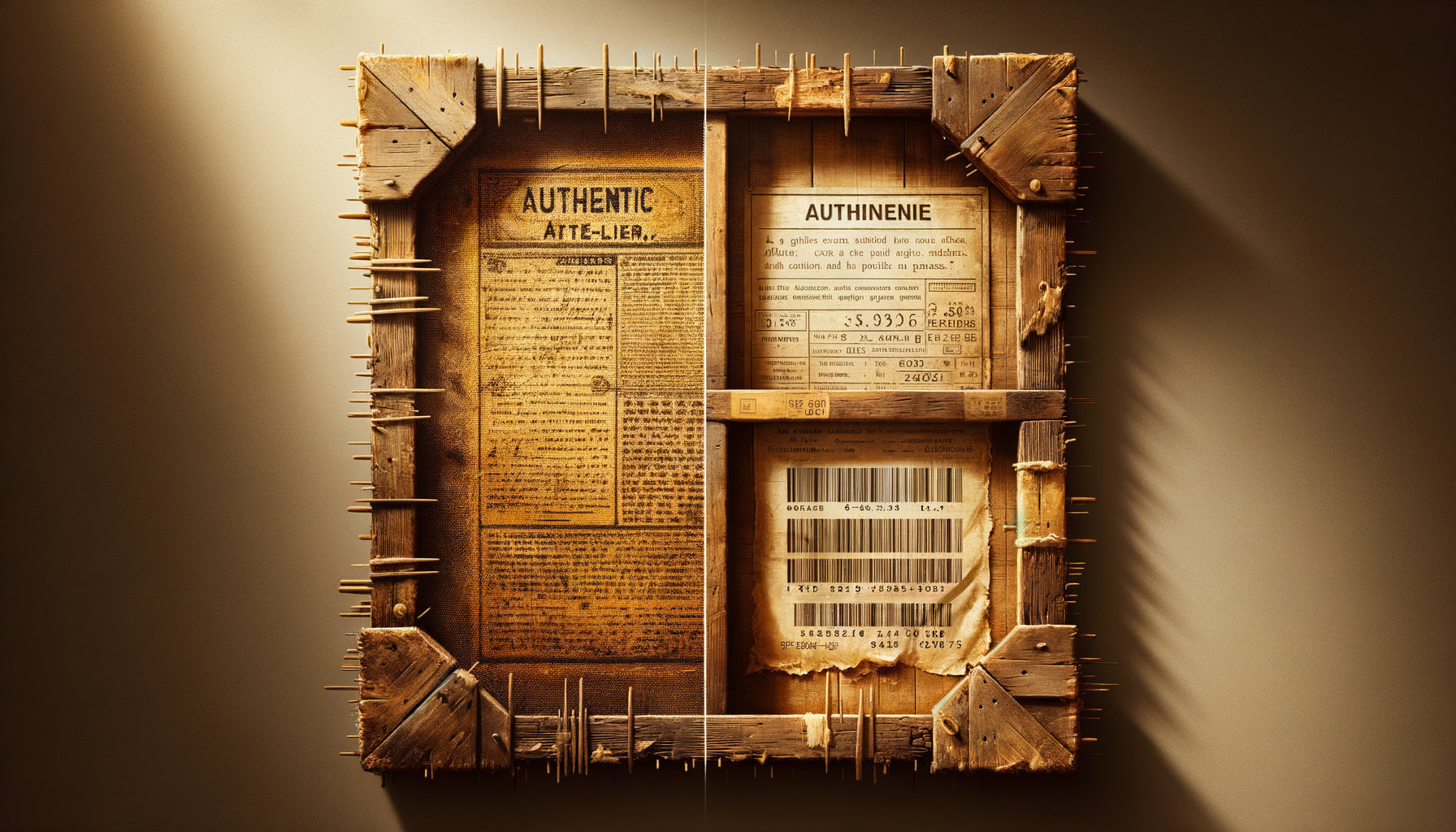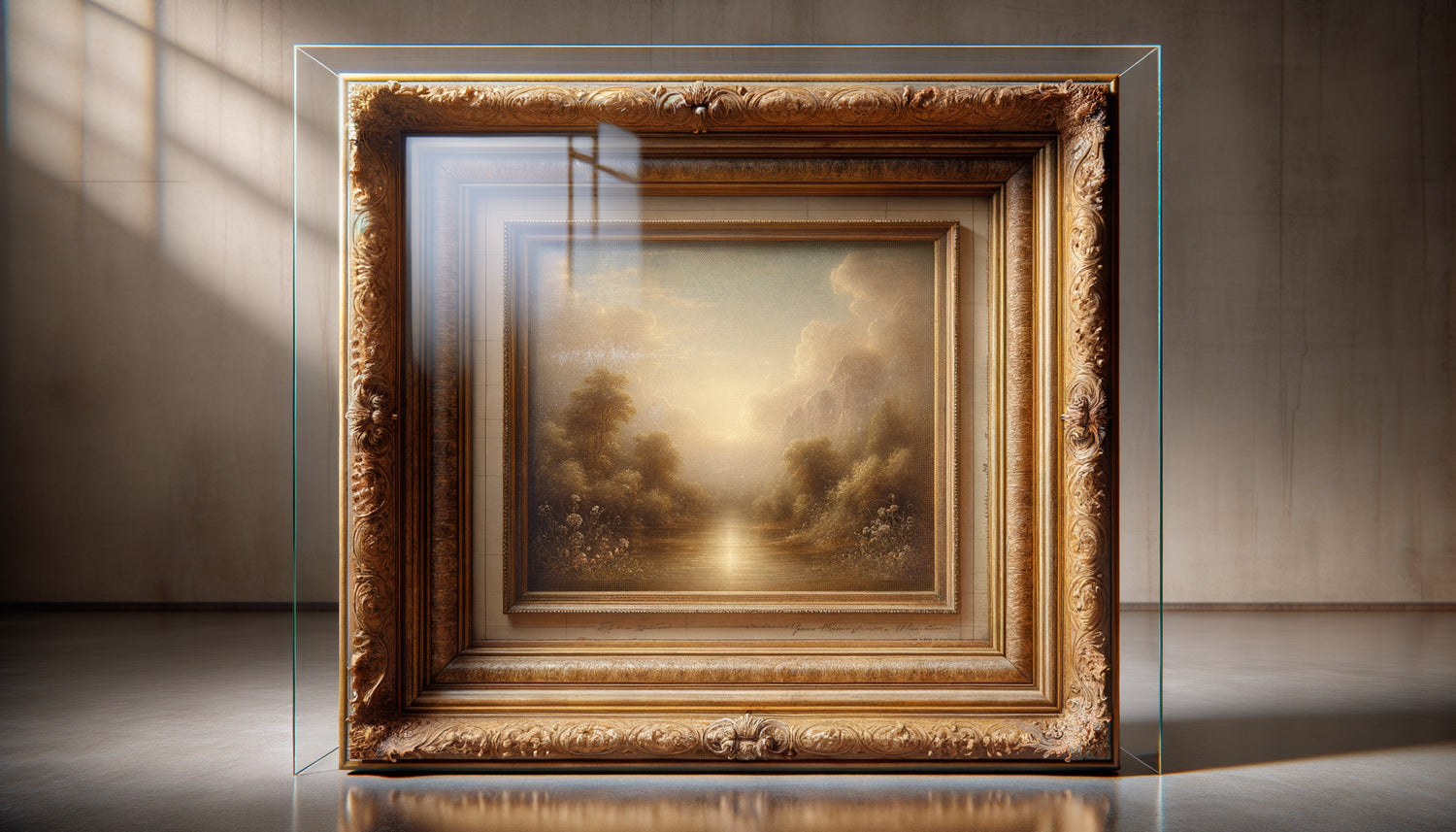
I recently opened a box from an estate in Normandy. Inside, a 1950s cinema poster, perfectly preserved under its original glass. Then, right next to it, a botanical engraving from the same century, also framed under glass... but eaten away by humidity, stained, almost lost. Two similar works, two opposite fates. This scene perfectly summarizes the dilemma of vintage framed wall art under glass: providentially protective or silently condemning?
Here's what framing under glass really brings: an effective barrier against dust and handling, undeniable aesthetic enhancement, but also a risk of trapped humidity if conditions are not controlled. Are you hesitating to keep this protective glass or to free your vintage treasures? Do you fear making an irreversible mistake? Rest assured: understanding the mechanisms of preservation turns this question into an opportunity. I'm going to reveal what twenty years of restoration have taught me about these vintage artworks under glass and how to make the right decision for your pieces.
Protective glass: when beauty meets science
The framing under glass of vintage wall art is not an aesthetic whim. It's a tradition born in the 18th century, when collectors realized that paper exposed to open air would inevitably deteriorate. Glass creates a physical barrier against three major enemies: dust that embeds itself in fibers, fingers that deposit fatty acids, and bookworms attracted by cellulose.
On a lithograph from the 1920s that I recently examined, the difference was striking. The part protected under glass retained its vibrant colors, while the exposed margin (the frame had warped) had yellowed dramatically. This mechanical protection represents the first undeniable advantage of framed vintage artworks.
But glass also offers an optical protection that is often overlooked. Modern UV glasses filter up to 99% of ultraviolet rays, those silent assassins that irrevocably fade organic pigments. I have seen vintage advertising posters lose their vibrant reds in a few years near a window, while similar pieces under UV glass retained their original intensity.
Trapped humidity: the invisible danger behind the glass
Yet, this same protection becomes a trap when moisture comes into play. Glass creates a closed microclimate. If moisture is trapped at the time of assembly, or if it seeps in through a defective seal, it cannot escape. This is exactly what happened to that Norman engraving: stored in a damp cellar, water had condensed between the glass and the paper, creating those characteristic brown spots called foxing.
Vintage glass-covered wall artworks become particularly vulnerable in certain environments. A bathroom, a kitchen, or even a cold exterior wall can create temperature variations that cause condensation. I restored a magnificent 1930s geographical map where microscopic droplets had literally dissolved some inks.
Direct contact between the glass and the artwork exacerbates this phenomenon. Without a mat to create an air space, humidity promotes the development of mold. These microscopic fungi love the stable and dark conditions provided by a hermetic frame. Once installed, they are almost impossible to completely eliminate.

Recognizing the warning signs of a problematic frame
How to know if your framed vintage artworks under glass are in danger? Several clues are not misleading. Halos on the periphery of the artwork signal moisture infiltration. These wavy marks, often yellowish, indicate that the paper has absorbed and released water repeatedly.
The presence of rust spots is also revealing. If you see small orange-brown spots, it means that humidity has oxidized metallic particles present in the paper or coming from the fixing. On a portfolio of Japanese prints that I treated, these points formed a regular pattern corresponding exactly to the location of the original mounting staples.
Also observe the flatness of your artwork. Paper that bulges slightly under the glass has undergone hygrometric variations. The cellulose fibers expand with humidity and contract when drying, creating these permanent deformations. A vintage wall art properly preserved should remain perfectly flat.
The revealing condensation test
Here's a technique I teach to all collectors: place your hand against the glass for thirty seconds, then observe. If condensation appears and takes more than a few seconds to disappear, the seal is compromised. This simple test reveals vulnerable frames that deserve intervention.
Best practices for durable protective framing
Transforming glass into an ally rather than an enemy requires respecting a few fundamental principles. First, the passe-partout is not just a decorative element. This cardboard border creates a vital space between the glass and the artwork, allowing for micro-air circulation that naturally regulates humidity. For vintage wall art, I always use a passe-partout of at least 3mm thickness in acid-free cardboard.
The choice of glass itself is enormously important. Standard glass protects against impacts but lets through destructive UV rays. For valuable pieces, the extra cost of UV protective glass is well justified: it extends the life of colors by decades. Anti-reflective glass also improves visibility without compromising protection.
The back sealing is often overlooked. I systematically use acid-free kraft paper attached to the back of the frame to prevent dust and insects from entering, while allowing the whole thing to breathe. Standard adhesive tapes, containing acidic glues, should be absolutely avoided: they yellow and degrade the paper at the point of contact.
Location Decides Everything
Even the best framing will fail in a hostile environment. For your vintage glass wall art, absolutely avoid: uninsulated exterior walls, direct proximity to radiators, exposure to direct sunlight for more than two hours per day, and humid rooms without ventilation. An interior wall, in a room with stable temperature (18-22°C) and controlled humidity (45-55%), represents the ideal.

Should You Remove the Glass from an Old Frame?
This question comes up constantly. The answer depends entirely on the condition of the current mounting. If your vintage wall art framed under glass shows signs of deterioration (stains, warping, mold), intervention becomes urgent. Removing the glass allows you to assess the damage and reconstruct a healthy frame.
On the other hand, an old frame in good condition, even imperfect by current standards, is sometimes worth preserving. I have seen too many well-intentioned collectors destroy the patrimonial value of a piece by re-framing it in an unsuitable contemporary style. The original frame is part of the artwork's history.
My personal rule: if the artwork is stable, with no signs of active degradation, and if the frame matches its period, I keep the whole thing as it is, simply improving the display environment. If problems are visible, I disassemble everything, treat the artwork if necessary, and recreate a conservative framing with neutral materials.
For pieces of great value, a professional restorer will assess the situation precisely. This consultation usually costs between 50 and 100 euros, but avoids irreversible mistakes on vintage paintings that can be worth hundreds or thousands of euros.
Alternatives to traditional glass for your vintage treasures
Glass is no longer the only option for protecting your vintage wall paintings. Anti-UV plexiglass offers comparable protection while being lighter and shatterproof. For large pieces, this difference in weight makes all the difference. I reframed a 100x150cm poster that weighed 8kg with its glass, reduced to 3kg with museum quality plexiglass.
Plexiglas does have one disadvantage: it scratches more easily and attracts dust due to static electricity. For cleaning, forget standard household products which create micro-scratches. A slightly damp microfiber cloth is sufficient, occasionally supplemented with a specific antistatic product.
For exceptional works, museum glass represents the ultimate in protection. With its anti-reflective treatment and almost total UV filtration, it becomes virtually invisible while perfectly preserving colors. Its high cost (3 to 5 times that of standard glass) is only justified for significant collectibles.
Your walls deserve artworks that will last for decades
Discover our exclusive collection of Vintage paintings that combine retro authenticity and optimal preservation for timeless decor.
Transforming the dilemma into an opportunity to enhance
Ultimately, vintage wall paintings framed under glass are neither an absolute advantage nor an inevitable trap. They represent a conservation system whose effectiveness depends on the quality of the mounting and the display environment. The good news? You control these two parameters.
Imagine your walls adorned with perfectly preserved vintage pieces, their colors intact even in twenty years, protected but breathing, visible without annoying reflections. This vision is accessible with the right practices. Start by evaluating your current vintage paintings according to the criteria I have given you. Identify at-risk pieces that deserve immediate attention.
For your future acquisitions, demand a conservation framing: UV protective glass, acid-free matting, closed but breathable backing. And above all, choose the location with as much care as the artwork itself. A beautifully preserved vintage wall art tells a story that transcends generations. This story deserves your informed vigilance, not your anxiety.
Frequently Asked Questions about Vintage Paintings Under Glass
Can I hang a framed vintage painting under glass in my kitchen?
It's possible but risky. The kitchen generates a lot of humidity and temperature variations that can create condensation between the glass and the artwork. If you absolutely want to decorate this space with a vintage painting under glass, choose a wall away from sources of steam (stove, sink) and ensure efficient ventilation. Favor a frame with thick matting to maximize air circulation. Regularly inspect the artwork for signs of moisture. Honestly, for a kitchen, I recommend reproductions on waterproof supports instead, reserving your authentic vintage wall art for rooms with more stable environments like the living room or bedroom.
How do I clean the glass of an old frame without damaging the artwork?
Cleaning a vintage painting framed under glass requires some simple precautions. Use only a clean, dry microfiber cloth to remove dust. For more stubborn marks, slightly dampen the cloth with demineralized water or ammonia-free window cleaner. Always spray the product onto the cloth, never directly onto the glass: the liquid could seep between the glass and the frame, reach the artwork and cause irreversible damage. Work in gentle circular motions, without excessive pressure. If the frame seems fragile or if the glass is not perfectly sealed, stick to dry dusting. And above all, do not use abrasive products, household alcohol or standard cleaning wipes that could damage any UV protective treatments on the glass.
My vintage painting has brown spots under the glass, can I save it?
These brown spots, called foxing, result from the oxidation of metallic particles in the paper, often catalyzed by humidity. The good news: in most cases, a restorer can significantly reduce or eliminate these spots. Treatment generally involves removing the artwork from its frame, applying gentle chemical solutions that dissolve oxides, then rinsing and stabilizing the paper. This intervention costs between 100 and 300 euros depending on the size and complexity. If your vintage wall art has significant sentimental or market value, this restoration is a worthwhile investment. On the other hand, if the spots are very extensive or the paper has become extremely fragile, treatment becomes more delicate and costly. The important thing is to act quickly: foxing tends to spread over time. While you consider your decision, store the artwork flat in a dry, stable place away from light.