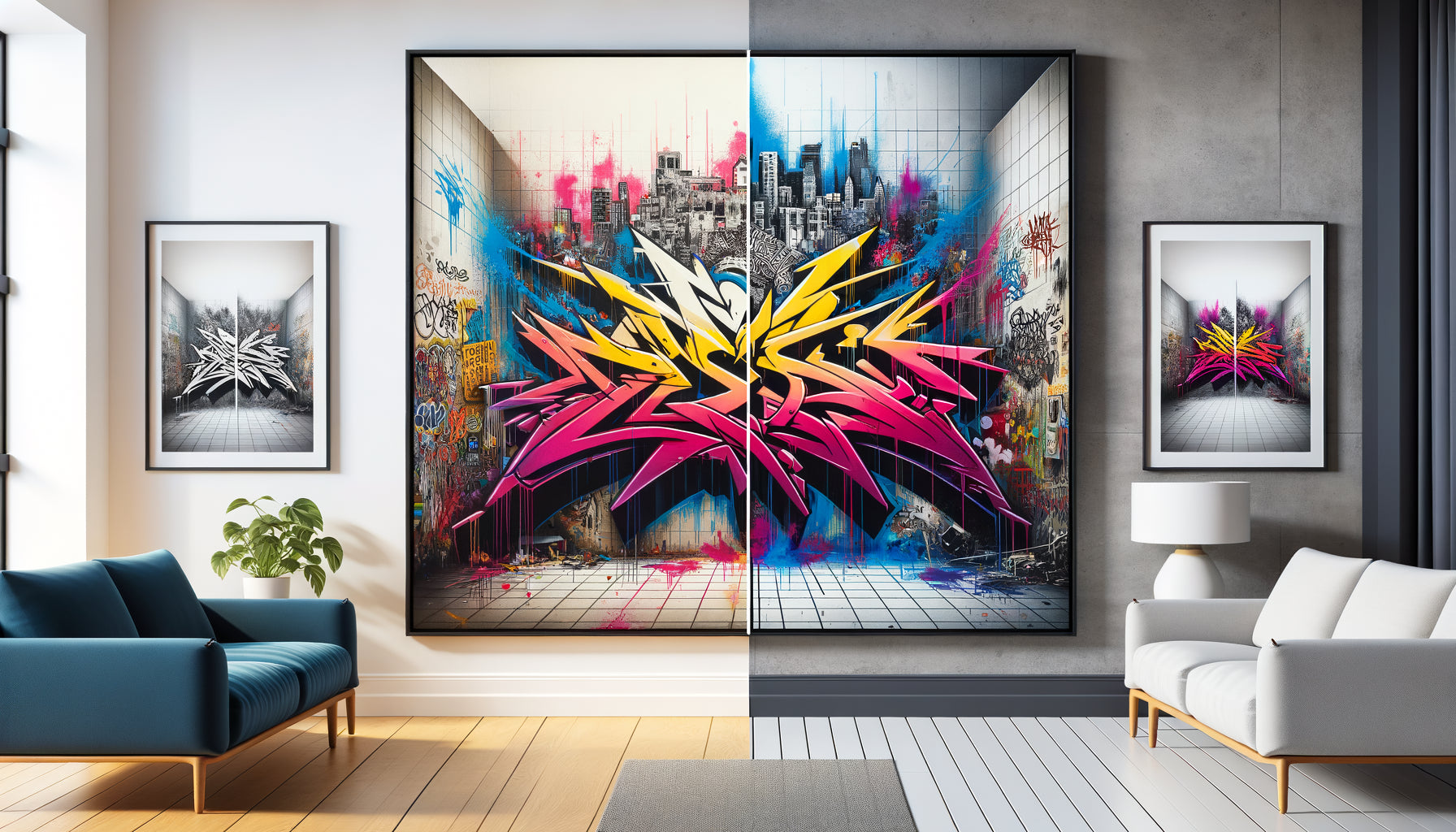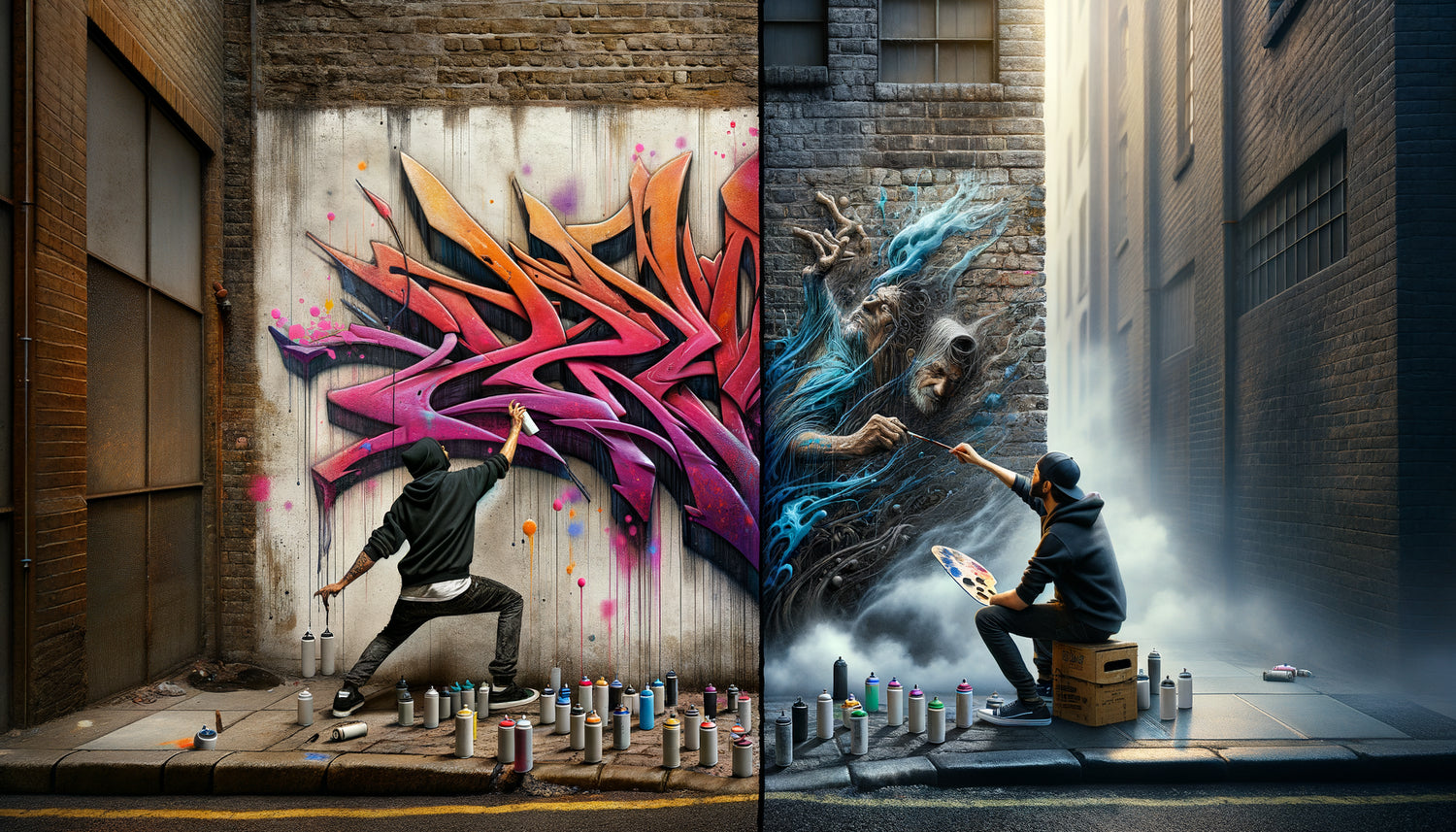
Last year, at an auction in London, I saw a collector spend £45,000 on a spray paint piece, while a magnificent acrylic by the same artist went for £18,000. This moment crystallized a shift I've observed over a decade in specialist galleries: spray art fascinates as much as it divides, creating a totally unprecedented market dynamic.
Here’s what this technique brings to discerning collectors: raw urban authenticity that tells the story of walls, a technically recognizable signature that certifies provenance, and an assumed rarity because few artists truly master spray paint in a studio. Three assets that transform these works into coveted pieces.
Yet, you may still hesitate. Faced with a street art painting, this question constantly arises: does the spray paint really justify a higher price? Aren’t acrylics more durable, more refined, more suited to a sophisticated interior? This questioning runs through all my interactions with novice collectors.
Rest assured: this debate doesn't oppose one technique against another. It reveals two complementary approaches to contemporary urban art, each responding to different aesthetic expectations and collecting philosophies. Understanding their specificities is choosing the work that will truly resonate with your world.
In this article, I reveal the behind-the-scenes of the market: why some sprays are snatched up at high prices, how galleries position acrylics, and above all, which technique corresponds to your collection project.
The aura of authenticity: why spray paint fascinates collectors
The first time a client touches (carefully) a canvas made with spray paint, I see their eyes light up. The texture is alive: these micro-projections of paint create a tactile relief impossible to reproduce with a brush. Each pass of spray paint leaves a unique digital signature, like an artist's DNA fingerprint.
This technique carries within it the history of the street art movement. When you hang a spray paint work, you’re not simply installing a decorative painting: you invite into your interior the very essence of the street, graffiti, this underground culture that has revolutionized contemporary art since the 1980s. It is this direct link to the walls of Brooklyn, Paris or Berlin that often justifies a premium of 30 to 60% on the secondary market.
Specialized galleries confirm it: street art paintings created with spray paint generate more spontaneous requests. Why? Because they embody an authenticity perceived as purer. Collectors seek this visceral connection to the original creative act, that of the graffiti artist facing the wall. The spray can is not just a tool: it's a symbol, a language, an artistic posture.
I recently assisted a couple in acquiring a monumental piece signed by a Parisian artist. Their decisive argument? The gradients achieved with spray paint create chromatic transitions impossible to master with other mediums. This technical magic alone justifies the difference in price for connoisseurs.
Acrylics: Underrated Sophistication and Versatility
However, asserting that acrylic works are less sought after would be a major analytical error. Within my network of galleries, acrylic artworks represent 55% of sales by volume, simply because they appeal to a wider audience. Their versatility is as fascinating as it is reassuring.
Acrylic offers street art artists an exponentially larger palette of technical possibilities. Complex superimpositions, subtle glazes, textured impastos, integration of ultra-detailed stencils: this medium allows for visual sophistication difficult to achieve with just a spray can. Collectors sensitive to the finesse of execution naturally gravitate towards these pieces.
Practically speaking, acrylic paintings offer undeniable advantages for integration into high-end interiors. Their durability is superior: no risk of premature cracking, optimal UV resistance with a good varnish, and guaranteed color stability over several decades. For a long-term investment, this argument weighs heavily.
I also observe that acrylics allow street art artists to transcend their urban identity to explore broader aesthetic territories. Some creators combine spray paint stencils and meticulous acrylic finishes, creating hybrid works that capture the best of both worlds. These pieces particularly appeal to collectors seeking contemporary sophistication rather than a strictly urban aesthetic.

The Market Verdict: A More Nuanced Hierarchy Than It Appears
The numbers tell a fascinating story. In international street art auction sales, records are indeed held by works created with spray paint: Banksy, JonOne, Cope2... Their signature pieces heavily utilize this medium. But let's delve deeper than the headlines.
In the primary market (galleries), reality is more balanced. Spray paint street art paintings generally sell 20 to 50% more expensive than acrylics of equivalent size by the same artist. This premium reflects several factors: relative scarcity (less production), technical difficulty, and above all, that famous aura of authenticity.
However, acrylics dominate in terms of transaction volume. Why? Price accessibility and decorative versatility. A collector can acquire a superb acrylic piece by an emerging artist for 800 to 2000 euros, whereas a spray paint work by the same creator will start at 1500 euros minimum. To build a diverse collection, acrylics offer a more affordable entry point.
Gallery owners also confirm an interesting trend: acrylics resell faster on the secondary market. Their stylistic versatility appeals to a wider range of buyers. Spray paints find their buyers among more specialized collectors, but these are willing to pay more when the piece exactly matches their criteria.
Hybrid Techniques: The New Frontier of Street Art
The real revolution in contemporary street art does not lie in the spray paint versus acrylic opposition, but in their creative fusion. The most sought-after artists today master both techniques and combine them spectacularly.
Take the example of these creators who lay down bases with spray paint for raw energy, then refine with acrylics for photorealistic details. Or those works where aerosol gradients coexist with matte acrylic blocks, creating hypnotic texture contrasts. These hybrid pieces now represent the premium segment of the market, merging the authenticity of spray paint with the sophistication of acrylic.
I recently exhibited a series in which the artist used spray paint for monumental graffiti letters, then acrylics for finely detailed portraits in the background. Result? Sold in three days at a price 40% higher than his single-technique pieces. The market rewards this technical virtuosity that transcends categories.
This evolution redefines the initial question. Savvy collectors no longer ask “spray paint or acrylic?” but rather “how does the artist combine techniques to serve their vision?”. Multiple mastery becomes the new criterion of excellence, transforming the debate into a creative opportunity.

How to choose according to your collection project
Your decision should be based on your deepest motivations. If you are looking for patrimonial investment, prioritize graffiti paintings made with spray paint by established artists with a solid sales history. These pieces retain their value better and benefit from the "authenticity" narrative that appeals to serious collectors.
For a high-end decorative project where harmonious integration is paramount, acrylics offer more flexibility. Their finishes can be adapted (matte, satin, glossy), their colors precisely modulated, and their style calibrated according to your interior. You will find the perfect piece that dialogues with your existing furniture and color palette more easily.
Collectors passionate about the history of the street art movement naturally gravitate towards spray paint. These works tell a story, they physically embody urban rebellion, the conquest of public spaces. Hanging a spray painting is displaying a posture, celebrating a movement that has democratized contemporary art.
Finally, if your budget is limited but your ambition remains intact, start with acrylics by promising emerging artists. You will build a diversified collection while keeping an investment capacity to seize opportunities on exceptional spray paintings when they arise. The balanced portfolio strategy also works in art.
Ready to find the artwork that will transform your interior?
Discover our exclusive collection of Street art paintings that celebrate all techniques, from pure spray paint to sophisticated hybrid creations.
Emotion before technique: your intuition is your best guide
After fifteen years of supporting collectors, I have understood an essential truth: the work that overwhelms you is worth all the technical arguments in the world. Whether it is made with spray paint, acrylic, or both, if it provokes this immediate connection in you, this emotional resonance, it deserves its place on your wall.
The market will evolve, trends will fluctuate, but your intimate relationship with a work of art transcends fashion. I have seen clients acquire "less sought-after" acrylics that have become the centerpiece of their collection, daily sources of inspiration. And prestigious bombs that, despite their value, have never really found their place in the universe of their owner.
The question is therefore not « which technique is most popular? » but « which work resonates with my story, my aesthetics, my vision? ». Street art paintings created with spray paint may dominate spectacular auctions, but acrylics quietly shape thousands of passionate collections. Both techniques coexist, complement each other, enrich the street art movement with their diversity.
Imagine that moment: you come home, your gaze meets this work that pulsates with urban energy on your wall. It doesn't matter whether it was born from a spray can or a brush loaded with acrylic paint. It is there, vibrant, authentic, yours. That’s the emotion you are really collecting. The rest is just technique. Start by visiting galleries, touch (with respect) the textures, let yourself be surprised. Your next acquisition awaits you, whether it came out of a spray can or a tube of acrylic.
FAQ : Your questions about street art paintings
Are spray paint artworks more fragile than acrylics?
This is a legitimate concern that I constantly hear. The reality is nuanced: a spray paint artwork properly varnished and made on prepared canvas can last for decades without problems. The difference lies mainly in the quality of materials used. Professional artists use high-pigmentation spray paints with UV fixatives, then apply several layers of protective varnish. The real risk concerns unvarnished pieces or those made with low-end spray paints. Always ask the gallery owner for technical details about preservation. Acrylics do benefit from a reputation for superior robustness, but a street art painting created with spray paint and well protected largely rivals in longevity. Maintenance remains similar for both: avoid direct sunlight exposure, maintain stable humidity, gently dust. With these basic precautions, your investment will last through generations.
Why do some spray paint artworks cost twice as much as acrylics?
This price difference reflects several economic and artistic factors. Firstly, rarity: screen printing is physically more demanding and time-consuming than acrylic painting. An artist can create three to four times fewer pieces by screen print in the same amount of time, creating a limited supply facing increasing demand. Secondly, technical mastery: perfectly controlling screen printing requires years of experience that not all street art artists have. This expertise is naturally valued. The third factor is symbolic: collectors pay for the perceived authenticity, this direct link to the DNA of graffiti. It's comparable to the vintage denim market where an authentically aged jean is worth more than a perfect reproduction. Finally, galleries strategically position screen prints as premium pieces to structure their offering. This hierarchy does not invalidate the quality of acrylic paintings: it simply responds to the codes of a market where the story around the work counts as much as the work itself.
Can I mix screen prints and acrylics in my collection without a faux pas?
Not only can you, but that's precisely what the most discerning collectors do! A collection composed exclusively of screen prints can become visually repetitive, while a thoughtful mix creates dynamism and depth. The trick lies in thematic or stylistic consistency rather than technical uniformity. Prioritize a common thread: harmonized color palette, artists from the same movement, or common visual narrative. I accompanied a collector who alternated large energetic screen prints and more intimate detailed acrylics, creating a captivating visual rhythm in his loft. Technical diversity enriches your collection by showing the extent of possibilities of contemporary street art. Think of your wall as a musical playlist: the variety of techniques plays the role of tempo changes, maintaining interest without tiring the eye. Just pay attention to formats and frames to maintain a global visual consistency. The intelligent mix of screen prints and acrylics testifies to a mature understanding of the street art movement, far beyond the monolithic beginner collector.