The first time I walked through the door of an urban gallery specializing in street art, I had spotted online a piece by an up-and-coming artist from the Parisian collective. The displayed price made me swallow hard. Yet, forty minutes later, I was leaving with the artwork under my arm, having saved nearly 20% of the initial price. This moment marked the beginning of a passion that led me to build a collection of fifteen street art paintings, each acquired after careful negotiation. Negotiating the purchase of a street art painting is neither vulgar haggling nor a privilege reserved for initiates. It's an authentic dialogue that allows you to build a lasting relationship with gallerists, access exclusive works before they go on public sale, and invest intelligently in a thriving contemporary art scene. Many give up due to intimidation, fearing of appearing stingy or ignorant in front of these guardians of the artistic temple. Rest assured: gallerists are above all passionate people who prefer to sell to someone who understands the work rather than an impulsive buyer. I will pass on to you the subtle codes of this fascinating universe.
The perfect timing to approach negotiation
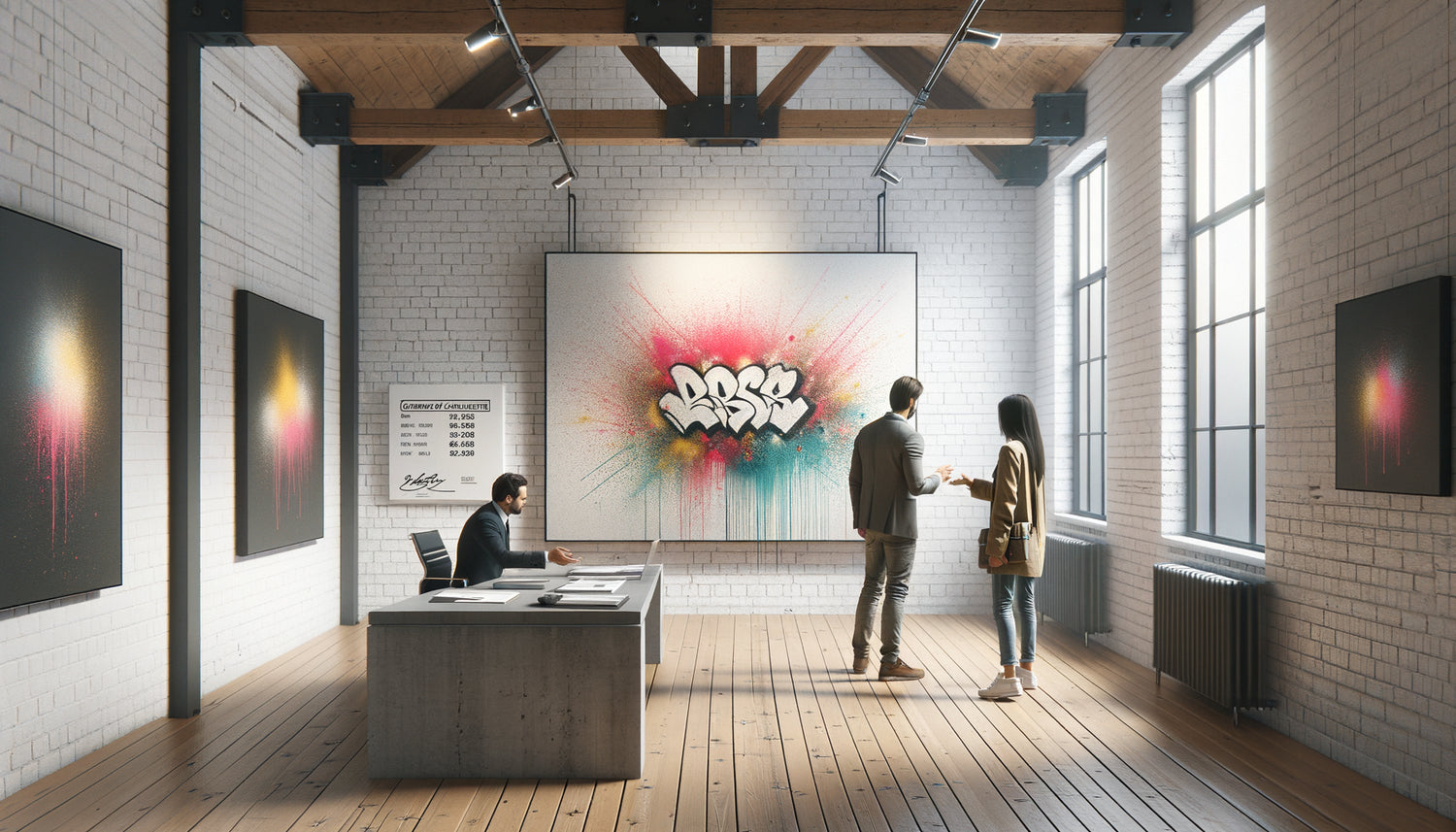
The fatal mistake? Asking for a discount as soon as you enter, pointing out your favorite artwork. The negotiation of a street art painting begins long before mentioning the price. During my third visit to a specialized gallery in Le Marais, I observed that Thursday evening vernissages create a conducive atmosphere: the gallerist is relaxed, surrounded by collectors, and commercial pressure subsides. Conversely, a crowded Saturday afternoon will condemn you to a polite refusal. The ideal time is mid-week, late morning, when the gallery breathes quietly. Present yourself as a curious visitor on your first visit. Ask questions about the artist's approach, their background, the technique used. Show that you can distinguish a stencil from a marker work, that a Blek le Rat is not a Banksy from a supermarket. This first impression builds your legitimacy. Return a week later. This recurrence signals a serious interest, not a tourist whim. It is during this second or third visit that the price discussion becomes natural, almost expected by the gallerist who now recognizes you.
Deciphering the structure of prices in urban galleries
Understanding how the price of a wall art is determined gives you a considerable advantage. Contrary to popular belief, these prices do not come out of thin air. They obey a precise logic that I have learned to decipher through my acquisitions. The artist's rating constitutes the basis: an emerging creator with three group exhibitions is negotiated differently from an established name with works in public collections. The gallery generally applies a margin of 40 to 50% on the artist price. Then, multiplier factors intervene: the rarity of the piece, its format, its technique. An original canvas is worth more than a limited edition serigraph, even if it bears the handwritten signature. I have noticed that wall art street including manual interventions on prints has a wider negotiation margin, because their valuation remains subjective. The gallery also has flexibility depending on the stock age. A work displayed for eight months will be more negotiable than a novelty arrived the previous week. Discreetly inquire about the duration of exposure. An innocuous question like 'Has this piece just arrived in your selection?' sheds light without appearing calculating.
The visual cues that reveal room for maneuver
During my visits to urban gallery, I learned to spot weak signals. A handwritten label rather than a printed one suggests an adjustable price. A cartel mentioning 'price on request' systematically opens negotiation. If the work is hung in retreat, less highlighted than others, the gallery owner may be seeking to boost its sale. Also observe the turnover: a gallery that frequently renews its walls will be more flexible than a museum space where each piece is sanctified for months.

The negotiation techniques that really work
Forget the 'Is this your final price?' launched as in a souk. Negotiation in an urban gallery requires subtlety and psychology. My proven method begins by valuing the artwork: 'This composition captures exactly the energy I'm looking for in my space. I particularly admire the layering work.' You establish your artistic sensibility. Then follow up with a real constraint: 'My budget for this acquisition is X euros. Do you think we could consider something within that range?' Never a brutal statement, always an open question. The figure you put forward must be realistic: 15 to 25% below the displayed price constitutes a credible basis. Offering 50% discount immediately disqualifies you. Another powerful lever is group purchasing. During my fifth acquisition, I negotiated two street art paintings simultaneously, obtaining an 18% overall reduction. The gallery owner finds it beneficial: volume of sales, stock turnover, customer loyalty. Also mention your intention to build a collection: 'I want to regularly acquire pieces from this artistic movement.' This perspective of a lasting commercial relationship softens positions. Don't hesitate to ask for payment facilities: an installment payment in two or three times without fees is often accepted, even if it’s not publicly displayed.
Building a win-win relationship with the gallery owner
The relational dimension distinguishes a simple purchase from a true acquisition in an urban gallery. These professionals are not standard furniture sellers. They defend an artistic vision, support creators, build careers. Show that you share this approach. During a memorable negotiation, I mentioned my project of hanging in a space visible to many visitors, thus offering indirect exposure to the artist. This argument weighed more than a financial counter-offer. Offer to leave your contact information to be informed of upcoming exhibitions. Request the artist's catalog. Follow the gallery on social media and interact authentically. This discreet but constant presence transforms you into a potential collector rather than an occasional customer. The gallery owner will remember you for exceptional pieces that arrive even before being exhibited. I was thus able to preempt a street art painting by a Berlin artist a week before its Parisian vernissage, simply because the gallery owner immediately thought of me for this graphic style. This privileged relationship is worth all discount percentages. It opens doors to a network, informs you about rising quotes, and also protects you from false good deals.
The delicate art of requesting a certificate and provenance
When negotiating a purchase, always request the certificate of authenticity. This legitimate request paradoxically strengthens your credibility: it proves that you are familiar with art market standards. For a street art painting exceeding one thousand euros, documented provenance becomes essential. It guarantees traceability and facilitates any potential resale. A serious gallery owner will appreciate this rigor rather than being offended by it.

The fatal mistakes that ruin your negotiation
Certain behaviors immediately condemn your attempt at negotiation in a gallery. Brutally comparing with online prices: 'I saw it cheaper on Instagram' classifies you as an disrespectful amateur. Sales channels differ, so do guarantees. Mentioning that 'it’s expensive for spray paint on canvas' reveals a deep misunderstanding of contemporary street art, where technique is only a tool in the service of a vision. Arriving with a disdainful air, inspecting the work like a defective object, touching the surface without permission: these awkward moments create an immediate closure. I have a bitter memory of a failed negotiation where I mentioned a specific budget too early, depriving myself of any room for maneuver. The gallery owner then stood firm on his price, knowing that I could pay. Another trap: haste. Wanting to conclude during the first visit often signals an impulsive decision rather than a mature choice. The urban gallerist prefers to see the work go to someone who has contemplated it, questioned it, imagined it in their interior. Take your time. Photograph it (with permission), live with that image for a few days. This maturation makes your final offer much more credible and difficult to refuse.
When and how to seal the final agreement
The moment to conclude the street art painting negotiation arrives when the gallery owner starts looking for solutions rather than refusals. 'I can't go down to that price, but I can offer you a framed piece' signals openness. 'Let me talk to the artist' indicates a willingness to find common ground. At this stage, show flexibility on the terms: accept a longer delivery time, propose immediate payment, waive certain additional services. In my last acquisition, I obtained a 12% discount by agreeing to collect the artwork myself rather than requiring delivery. These mutual concessions create the balance that allows you to sign. Always request a detailed receipt mentioning the artist, the title of the work, its dimensions, technique, and year of creation. This document is as valuable as the street art painting itself for your artistic heritage. Also clarify the terms of repurchase or exchange, even if you do not plan on this option. A professional gallery owner will have a clear policy on this point. Finally, don't forget after-sales service: inform the gallery owner of the successful installation, send a photo of the artwork in your interior if the context allows. This feedback nourishes the relationship and prepares for your future negotiations.
Ready to start your collection with confidence?
Discover our exclusive collection of Street art paintings that will transform your interior into a contemporary urban gallery.
Your first painting awaits you somewhere
In six months, you will contemplate this artwork hanging in your living room, and you will remember this precise moment when you dared to negotiate. Not aggressively, but with the quiet confidence of someone who knows the value of things and the respect due to creators. This street art painting will tell two stories: that of the artist who captured a fragment of urban rebellion, and yours, that of a collector who knew how to dialogue, build, and ultimately acquire a piece that truly speaks to them. Negotiation in an urban gallery is never a victory snatched, but an agreement found between two passions that recognize each other. So push this door open, observe, return, question. And when the perfect artwork looks at you from its wall, you will know exactly how to make it yours, at the right price, with elegance. The world of collectible street art is reaching out to you. All it takes is your first step.
Frequently asked questions about negotiation in a street art gallery
Is it really possible to negotiate in all urban galleries?
Absolutely, but the approach varies depending on the gallery's standing. Established spaces in artistic districts accept price discussions as an integral part of the acquisition process, provided you demonstrate a genuine interest in the artwork and the artist. Street art galleries are generally more accessible than classic art institutions, as they share the movement’s rebellious and anti-establishment spirit. Even high-end galleries negotiate, but will expect you to have thorough knowledge of the market and an ultra-professional approach. The real question isn't 'can I negotiate?' but 'how can I negotiate with respect and relevance?'. Always start by building a relationship before addressing the price. If the gallery owner feels that you are buying the artwork for the right reasons – passion, consistency with your collection, understanding of the artistic process – they will almost always find a way to adjust their offer. I have found that 85% of my attempts resulted in an arrangement, whether it was a direct discount, an added service, or a payment plan.
What percentage of discount can I reasonably expect?
The realistic range is between 10 and 25% depending on several decisive factors. For a first purchase without an established relationship, aim for a maximum of 10 to 15%. This moderation demonstrates that you understand the economic constraints of the gallery owner who must remunerate the artist and cover their operating expenses. If you are purchasing multiple artworks simultaneously, 18 to 22% becomes conceivable on the total amount. Regular collectors who have already acquired three or four pieces in the same gallery can claim 20-25%, sometimes more on certain works that have been in stock for a long time. Note: these percentages apply to prices displayed in galleries, not to established artists' quotes whose rates are sometimes contractually fixed. A painting by an internationally renowned street artist will leave less margin than a work by a talented emerging creator. My best negotiation resulted in a 28% discount, but it combined double purchase, immediate cash payment, and a two-year relationship with the gallery owner. Consider any discount as a privilege earned through your seriousness, not as something owed.
How do I know if the requested price is consistent with the market?
Prior research is your best protection against overpricing. Before negotiating, consult specialized platforms such as Artprice or Artsy to verify recent sales results of the artist. Pay particular attention to works of comparable format and technique. A street art painting 80x60 cm does not appreciate like a monumental piece of 200x150 cm. Check if the artist has participated in institutional exhibitions, if their works are featured in public collections, if their rating is progressing or stagnating. These elements objectively justify a price. Also compare between several galleries: the same artist may be represented by different spaces with varying pricing policies. Be wary of differences greater than 30% for similar pieces, this signals either overcharging or suspicious undervaluing. In an urban gallery, openly discuss your research: an honest gallerist will appreciate your approach and explain to you precisely how they position their prices. This mutual transparency creates the trust necessary for a healthy and equitable negotiation for both parties.