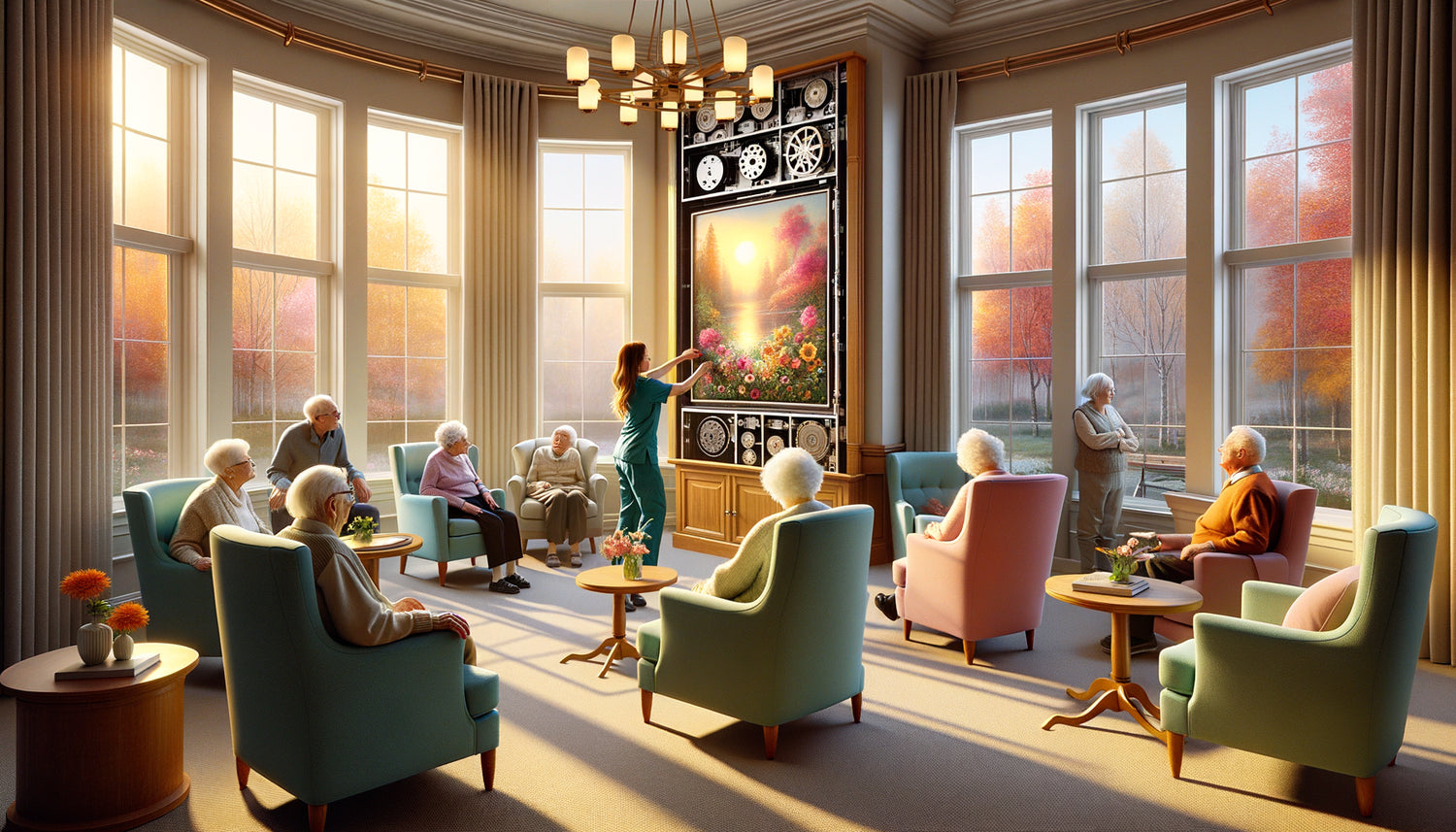
I noticed something fascinating during my last consultation in a senior residence in Toulouse: an 82-year-old woman stopped in front of the main hallway, smiling. "Look, they've changed the picture!" she exclaimed. This simple change of artwork had transformed her daily route into a discovery. It is precisely this magic that evolving and rotating artworks create.
Here's what evolving artworks bring to residents: they awaken daily curiosity by offering constant visual renewal, they stimulate conversations and shared memories, and they combat the monotony that can settle in communal living spaces.
The problem in many residences? Frozen walls. The same works year after year create insidious visual fatigue. Residents end up no longer looking at what surrounds them, as if their environment became invisible. This monotony subtly affects the morale and engagement of residents.
But rest assured: the solution does not require pharaonic work or an astronomical budget. Rotating systems and evolving galleries radically transform the atmosphere of a residence with disconcerting simplicity. I'm going to reveal how these devices maintain visual interest and bring life back to common areas.
The power of daily surprise
Imagine the scene: every Monday morning, a new artwork welcomes residents into the entrance hall. This rotation creates what I call "the effect of discovery," a powerful psychological phenomenon that I regularly observe.
Rotating artworks act as natural temporal markers. "Ah, it's Monday, they've changed the artwork!" This simple rotation structures the week and creates reassuring landmarks. Residents unconsciously develop positive anticipation: What will I discover today?
In a residence where I intervene regularly, the director has installed a monthly rotation system with twelve different artworks. Result? Breakfast conversations now revolve around the new works. "Did you see the Provence landscape this month? It reminds me of my vacation in Aix."
Cognitive stimulation through change
Evolving artworks constantly solicit the attention and memory of residents. Unlike static decoration that becomes invisible after a few weeks, these changing works force the brain to remain active, to compare, to remember.
I have noticed that residents naturally develop discussions around these changes: "I preferred the previous one" or "This one is really soothing." These exchanges create social connections and maintain valuable intellectual vitality.
Three rotation strategies that really work
After supporting about twenty residences in their transition to rotating systems, I have identified three particularly effective approaches.
Seasonal thematic rotation remains the most popular. Spring blooms, bright summers, golden autumns, cozy winters. This approach synchronizes the interior with the exterior, creating a reassuring consistency. Evolving artworks follow the rhythm of nature, a tempo that our elders particularly appreciate.
The revolving gallery system works differently: a set of fifteen to twenty artworks circulates between different spaces. The living room artwork is found in the dining room three months later, then in the hallway. This internal circulation creates a gradual familiarity: an artwork is rediscovered in a new context.
Collaborative rotation involves the residents themselves. In a Parisian residence, a committee of five residents votes each quarter to select the next artworks from an available collection. This participation dramatically strengthens attachment and interest in the works.
The importance of the pace of change
Timing is crucial. Too fast, the change becomes anxiety-inducing; too slow, it loses its power of surprise. My recommendations? A monthly rotation for passageways (hallways, corridors), a quarterly rotation for living spaces (living room, dining room).
The rotating artworks in individual bedrooms follow a different rhythm: no more than twice a year, as stability is paramount in the intimate space. Some residents, however, appreciate being able to exchange their artwork with a neighbor, creating an informal artistic barter.

How evolving colors influence collective mood
The chromatic dimension of evolving artworks plays an underestimated role. In winter, I advise my clients towards warm and bright tones that compensate for the exterior greyness. Golden yellows, soft oranges, warm reds create a enveloping atmosphere.
In spring and summer, rotating artworks can explore fresher palettes: tender greens, airy blues, luminous whites. This seasonal chromatic variation subtly but truly influences the collective atmosphere of the residence.
In a Lyon residence, I observed a significant decrease in complaints about "a gloomy atmosphere" after the installation of a rotation system including artworks with vibrant colors. Nurses confirmed that residents seemed "more present, more engaged in their environment.
Memory triggered by change
The evolving artworks act as memory triggers. A seascape can awaken buried memories of childhood vacations, a bouquet of flowers recall a childhood garden. This memory activation is only possible because the works change: each new artwork offers a new opportunity for emotional connection.
I witnessed touching scenes: a resident suddenly rediscovering memories of her youth in front of an artwork depicting the Norman countryside, a gentleman telling about his career as a sailor facing a harbor scene. These moments of sharing would not exist with static decor.
The practical aspects that change everything
Let's be frank: rotary systems must remain simple. I have seen too many ambitious projects abandoned due to logistical complexity. The key? Lightweight artworks, standardized hanging systems, and a clear organization.
Lightweight canvas artworks or on aluminum offer the best compromise: high enough quality to create emotion, practical enough to be handled regularly. Weight is a determining factor when considering frequent rotations.
The rail system with adjustable hooks greatly simplifies artwork changes. Two people can perform a complete rotation of ten artworks in less than an hour. This ease guarantees the sustainability of the system.
Smart storage for rotating collections
One question comes up systematically: where to store the artworks awaiting their turn? My favorite solution: transform a storage room into a "museum reserve." The artworks are cataloged, protected and easily accessible. Some residences even open this reserve to curious residents, creating an additional activity.
The evolving artworks also require regular maintenance. Take advantage of each rotation to dust, check the fixings, inspect the overall condition. This preventive maintenance significantly extends the lifespan of the collection.

Art as a guiding thread through the seasons of life
Beyond aesthetics, rotating paintings create a temporal narrative within the residence. Residents follow the cycle of rotations as they follow the seasons: "Oh, it's almost Christmas, they'll be putting up snowy scenes!"
This reassuring predictability paradoxically combines with the surprise of the specific choice. You know there will be change, but you don’t know exactly which painting will be chosen. This combination of structure and surprise is psychologically very comfortable.
Rotating paintings also become tools for intergenerational socialization. During family visits, grandchildren discover new works with their elders, creating shared conversations. “Grandma, do you like this one? Why?” These exchanges transcend generations.
Want to transform your space into a living gallery?
Discover our exclusive collection of paintings for senior residences that awaken daily curiosity and create authentic moments of sharing.
Visualize the transformation
Close your eyes for a moment. Imagine a residence where each morning holds a small visual discovery. Where corridors are no longer functional passages but living galleries that evolve with the seasons. Where residents naturally stop to admire, comment, remember.
Rotating paintings are not a decorative luxury, but an investment in daily well-being. They transform the ordinary into the extraordinary, the repetitive into the surprising, the living space into a truly living space.
Start modestly: three paintings that alternate in a strategic space. Observe reactions, listen to comments, adjust your approach. Then gradually extend the system. In six months, you will have created a visual dynamic that no one will want to abandon.
Because ultimately, maintaining residents' visual interest is telling them: your environment deserves to remain alive, inspiring, evolving. Just like you.
Frequently Asked Questions
How often should artwork be changed to maintain interest without creating confusion?
The ideal frequency depends on the area concerned. For high-traffic areas like hallways and entrances, a monthly rotation works perfectly: frequent enough to create novelty, spaced enough to allow familiarity. In communal living spaces (living rooms, dining rooms), I recommend a quarterly rotation that follows natural seasons. This periodicity creates pleasant anticipation without generating anxiety. For individual bedrooms, prioritize no more than two changes per year, as visual stability is soothing in intimate space. The key? Maintain a regular and predictable rhythm that residents can anticipate positively.
What budget should be allocated to set up a rotating artwork system in a residence?
Good news: an effective rotation system does not require a pharaonic investment. To start with 12 quality artworks (allowing monthly rotation), count between 800 and 1500 euros depending on the formats and finishes chosen. Modular hanging systems add 200 to 400 euros for an average residence. The economical trick? Gradually build your collection rather than buying everything at once. Start with 6 artworks and add 2 per quarter. Some residences also create partnerships with local artists or art schools, reducing costs while supporting creation. The return on investment in terms of resident well-being is remarkable, teams quickly noting an improvement in the overall atmosphere.
How to involve residents in the selection and rotation of artworks?
Involving residents transforms a simple decorative system into a true collective project. The most effective method is to create an artistic committee of 4 to 6 volunteer residents who meet quarterly to plan the next rotations. Offer them a catalog of 20 to 30 works from which they select those that will be exhibited. Also organize “discovery days” where new artworks are unveiled with a small convivial moment (tea, coffee). Some residences even install a voting system with simple ballots: “Which artwork do you prefer for the living room this month?” This participation spectacularly strengthens attachment to the works and stimulates conversations. Residents become true exhibition curators, a rewarding role that maintains their intellectual and social engagement.