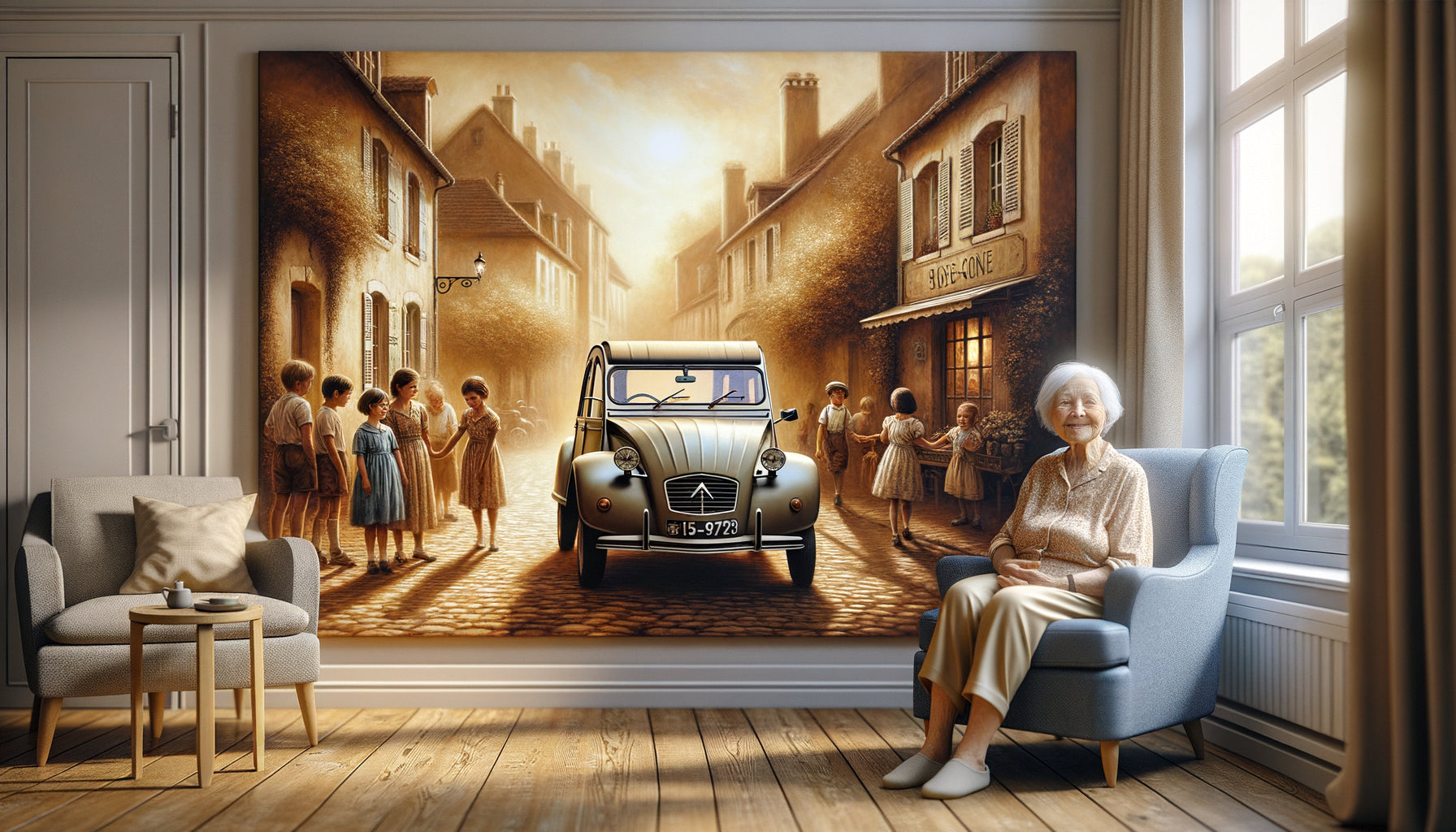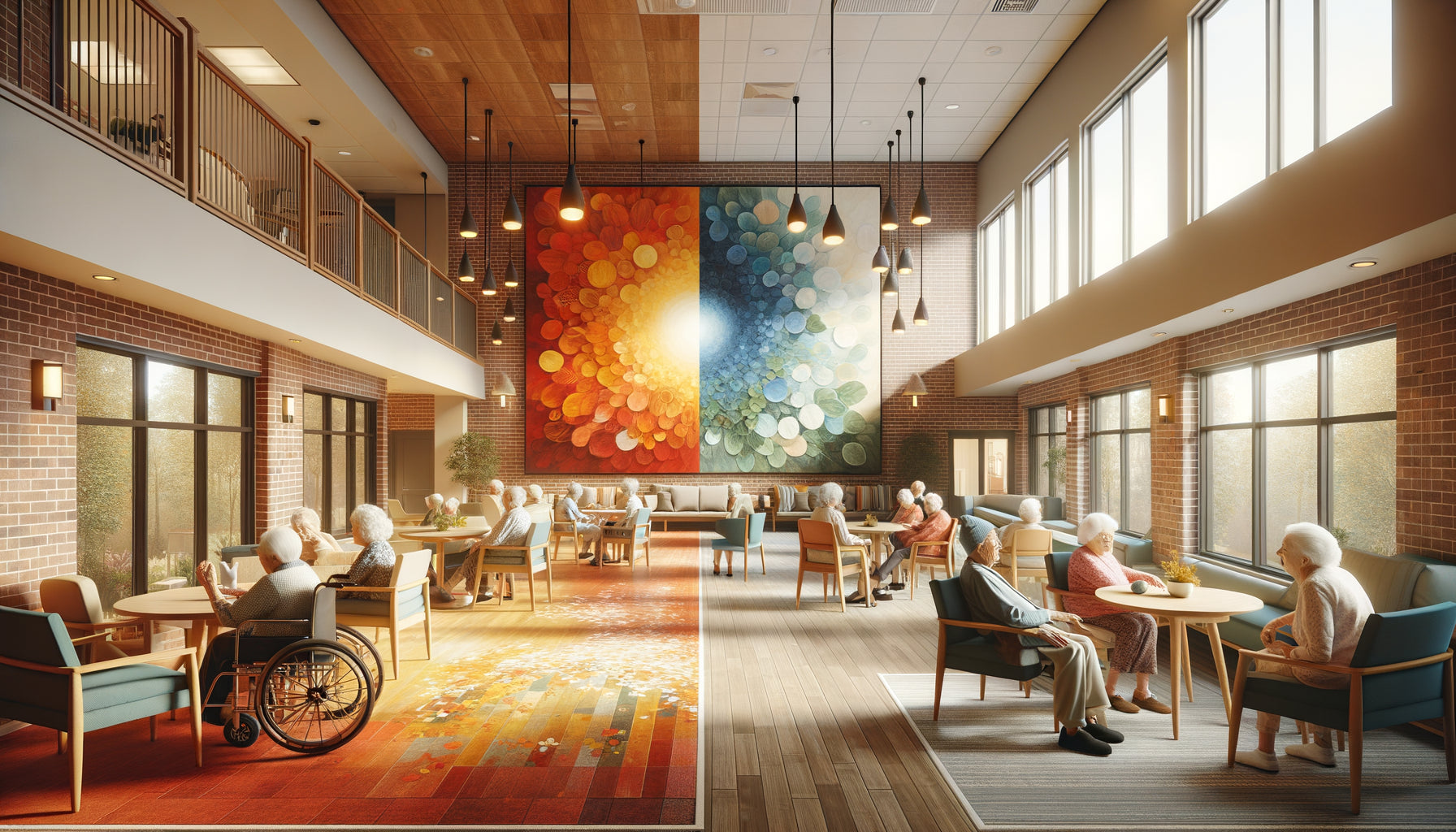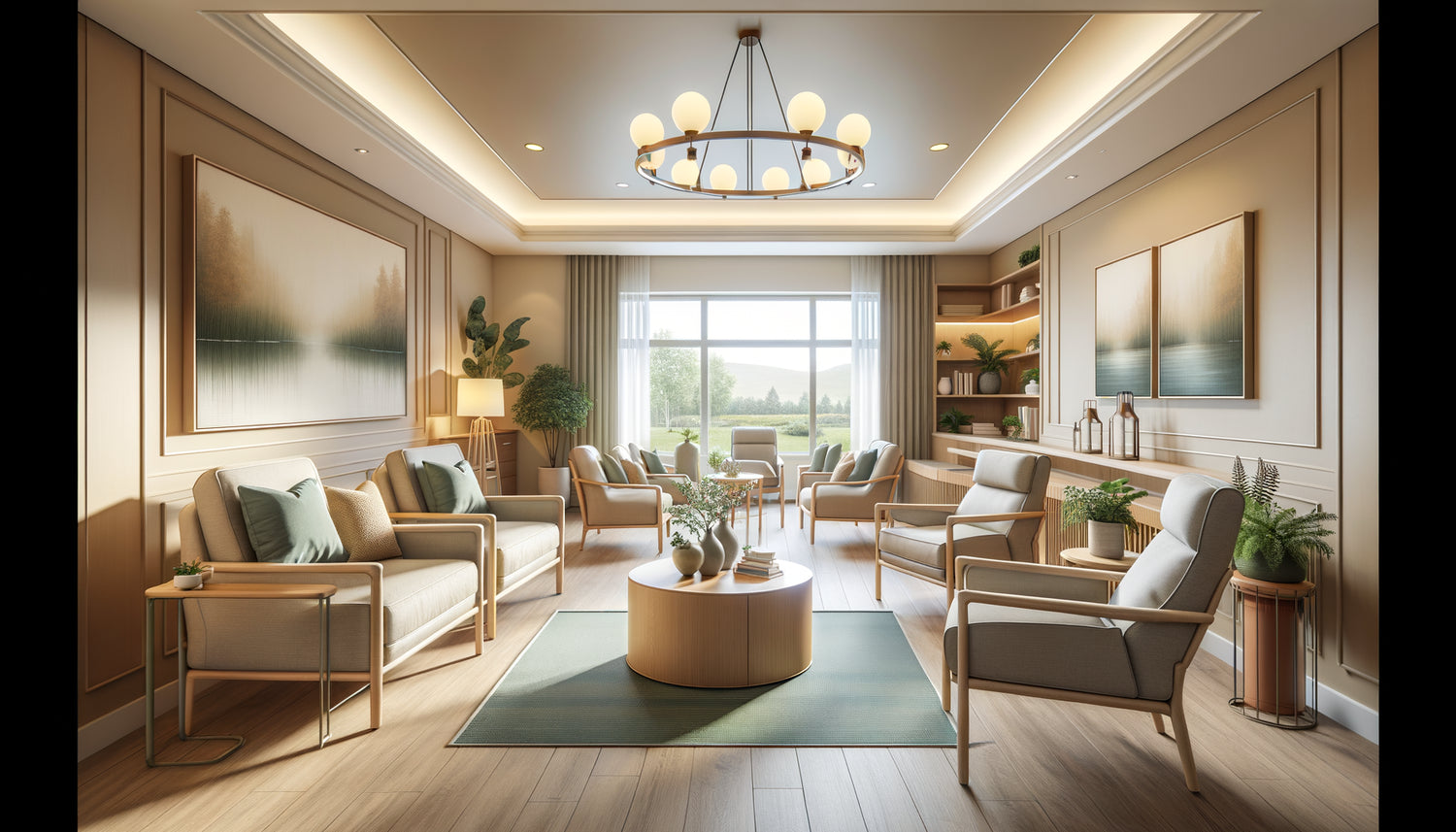
I still remember the entrance hall of the Les Magnolias residence, transformed in just three weeks. Families told me they were now coming with pleasure, that their loved ones were smiling more. This project confirmed a conviction for me: decorating common areas in a senior residence is not a luxury but an essential. These shared living spaces condition daily well-being, the desire to socialize, and even the mental health of residents.
Here's what a well-thought-out budget for decorating common areas brings: a warm atmosphere that combats isolation, immediate enhancement of the establishment in the eyes of families, and a therapeutic environment that promotes relaxation and cognitive stimulation. Yet, the budgetary question remains a headache for many directors. Between financial constraints, safety standards, and the desire to create a truly vibrant place, how to find the right balance? I will guide you through realistic expense items, priorities to establish, and tips to optimize every euro invested in these spaces that deserve all our attention.
Budgetary fundamentals according to size and standing
Let's start by laying the groundwork. The budget for decorating common areas in a senior residence varies considerably depending on three parameters: the total area to be arranged, the desired standard, and the initial condition of the premises. For a medium-sized residence (80 to 120 residents), expect between €25,000 and €75,000 for a complete project including entrance hall, common living room, dining room and main corridors.
In the economy segment, allow €200 to €350 per square meter for a simple but warm arrangement. This budget allows you to install functional furniture, quality paint, a few decorative elements and an adapted lighting. For the intermediate segment, aim for €350 to €600 per square meter with higher quality furniture, durable materials, and a real reflection on the atmosphere. The high-end segment starts at €600 per square meter, integrating designer furniture, noble materials, and often the intervention of an interior architect specializing.
A frequent mistake is to underestimate ancillary costs. In addition to the basic budget, systematically add 15 to 20% for unforeseen circumstances (technical constraints discovered during the course of work), and 10% for installation and coordination. These margins will avoid you unpleasant surprises that paralyze so many projects halfway through.
Furniture: between comfort and safety, where to place the financial cursor
Furniture typically accounts for 40 to 50% of the overall budget when decorating common areas. It's a major investment, but also one that directly impacts residents' daily lives. For a living room accommodating 15 to 20 people, expect to spend between €8,000 and €18,000, depending on the quality chosen.
Adapted armchairs and sofas represent the main expense. A good senior armchair, with a raised seat, stable armrests and durable upholstery, costs between €350 and €800 per piece. Provide at least one for three residents in common areas. Secure coffee tables (rounded corners, adapted height) range from €200 to €600, while a dining table for 8 people varies from €800 to €2,500.
Don't forget the occasional furniture: accessible bookcases (€300 to €900), service trolleys (€150 to €400), and especially waiting areas in the hall (€500 to €1,500 per bench). My advice? Always prioritize quality over quantity. It's better to have 10 excellent armchairs than 20 uncomfortable seats that will need to be replaced in two years.

Wall decoration: creating the soul of the place without breaking the bank
After furniture, wall decoration represents the second major expense, accounting for 20 to 30% of the total budget. This is where the atmosphere truly comes into play, that subtle alchemy between colors, textures and decorative elements that transforms a cold space into a living space.
Painting remains the most economical solution: €25 to €45 per square meter installed, depending on quality and number of coats. Opt for washable paints and soothing shades (warm beiges, soft greens, powder blues). Panoramic wallpaper, very popular in high-end senior residences, costs between €80 and €200 per square meter installed, but creates a spectacular effect in an entrance hall or living room.
Wall decorative elements deserve special attention. Artwork for senior residences plays an often underestimated therapeutic role: it stimulates memory, encourages conversations, and personalizes the space. Allow €1,500 to €5,000 to dress the main walls with adapted works (generous formats, bright colors, evocative subjects). Photo frames of memories, decorative clocks and safety mirrors complete the ensemble for an additional €500 to €1,500.
Tactile wall coverings: a trend with meaning
An innovative approach involves integrating various textures: wood paneling ($40 to $90/m²), colored acoustic felt panels ($60 to $120/m²), or embossed friezes. These elements enrich the sensory experience, particularly valuable for residents with impaired vision.
Lighting and ambiance: smart lighting without breaking the bank
Lighting accounts for 10 to 15% of the budget, but its impact on well-being is disproportionate. Inadequate lighting causes fatigue, depression, and increases the risk of falls. Conversely, good lighting instantly enhances all other investments.
For common areas, plan a combination of light sources. Main LED ceiling lights cost between $80 and $300 per piece, with installation at $50 to $150 per light point. Allow one light point every 8 to 12 m². Floor lamps, essential for creating reading corners, range from $120 to $400.
Indirect lighting, via LED strips or wall sconces, transforms the atmosphere for a contained budget: $30 to $80 per linear meter installed. In a 20-meter hallway, this represents $600 to $1,600, but the effect is spectacular, especially in the evening. Dimmer switches ($40 to $100 each) allow you to adjust the brightness according to the time of day, a detail that changes everything.

Textiles and accessories: the finishing touches that make a difference
Often overlooked during budgeting, textiles nevertheless represent 8 to 12% of the total investment. Cushions, curtains, rugs, and throws create this comforting warmth so reassuring for residents.
Blackout or dimming curtains, essential for controlling brightness, cost between $60 and $180 per linear meter (fabric and sewing). For a bay window of 4 meters, count $240 to $720. Non-slip rugs, beyond their decorative function, secure movement: $150 to $600 depending on size and quality.
Decorative cushions ($25 to $80 each) add color and comfort for a minimal budget. Allow 2 to 3 per main seating area. Soft material throws ($40 to $120) invite you to snuggle up. For all the textile accessories in a 40 m² living room, budget between $1,500 and $4,000.
Plants and vegetation: nature as accessible therapy
Biophilia, this innate connection to nature, plays a crucial role in senior residences. Integrating vegetation into common areas reduces stress, improves air quality, and stimulates memory. The budget required remains very affordable: 5 to 8% of the total.
Indoor natural plants range from €30 to €200 depending on size and rarity. For a medium-sized common area, allow for 8 to 12 plants (€800 to €2,000), with coordinated planters (€20 to €150 each). If maintenance is a problem, stabilized plants offer an alternative: €150 to €500 for a medium-sized plant panel, without maintenance for several years.
A high-quality artificial green wall, spectacular in a reception hall, costs between €200 and €400 per square meter installed. For 6 m², allow €1,200 to €2,400. The "wow" effect is guaranteed with visiting families.
Transform your walls into sources of well-being and conversation
Discover our exclusive collection of wall art for senior residences that evokes memories and instantly creates a warm atmosphere in your common areas.
Optimizing your budget: smart trade-offs that preserve the essentials
Faced with these multiple expense items, how to prioritize when the budget is limited? After supporting about fifteen residences, I have identified three optimization principles that preserve quality while controlling costs.
First rule: invest heavily in what is touched daily. Furniture must be of impeccable quality, even if it means temporarily reducing decorative elements. An uncomfortable armchair is immediately noticeable; a less ornate wall can wait a few months.
Second principle: the phased approach. Rather than doing everything at once with compromises on quality, it is better to perfectly equip the hall and main living room in the first year, then complete the secondary spaces the following year. This approach also allows you to adjust the project according to feedback from residents.
Third tip: mix high-end and clever solutions. Invest in a few key pieces (a beautiful lamp, an iconic designer armchair, a striking work of art) that set the tone, and complement with more accessible but well-chosen elements. This "focal point" strategy creates an impression of overall quality for a controlled budget.
Also consider alternative financing solutions: furniture rental (30 to 40% cheaper the first year), partnerships with art schools for wall artworks, or group purchases if you manage multiple establishments.
The return on investment: beyond the numbers, the human impact
Let's be frank: Is decorating common areas in a senior residence really profitable? The numbers speak for themselves. Establishments that invest in their shared spaces see a increase of 15 to 25% in visits during open house days, and an occupancy rate higher than 12 to 18% compared to less well-kept competitors.
But the true return on investment is measured differently. Care teams report a reduction in depressive states when residents are in a pleasant setting. Families visit more regularly when they feel good in the place. Residents themselves leave their rooms more often, socialize more, and maintain better cognitive abilities.
A director recently confided to me that after renovating their main living room (investment of €32,000), participation in group activities jumped by 40%. Meals taken together increased, exchanges multiplied. Several families had even expressed their thanks, relieved to see their loved ones regain the desire to live in a community setting.
This budget for decorating common areas is therefore not an expense, but an investment in people, with measurable consequences on health, well-being and even the commercial attractiveness of the residence.
Visualize the result: your residence transformed
Close your eyes and imagine. Tomorrow morning, Mrs. Durand leaves her room. In the reception hall, natural light blends harmoniously with the dimmed LED lighting. She settles into a comfortable armchair near the large bay window adorned with warm curtains. Her gaze rests on a painting depicting a Provençal market, and memories flood back. She smiles.
Mr. Lefebvre joins her, attracted by the new accessible library. They comment together on the plants that green the space, debate the beauty of the wall colors. At noon, they head to the dining room where elegant tables and comfortable chairs await them. In the afternoon, other residents naturally invest in the common living room for a memory workshop. The space is no longer endured, it is lived, inhabited, loved.
This transformation is within your reach. With a budget of €30,000 to €60,000 for an average-sized residence, you create spaces that will profoundly change the daily lives of dozens of people. Start by identifying your priorities, consult your teams and residents, and get started. Every euro invested in well-being will prove valuable.
Frequently Asked Questions
Can you really create a beautiful communal space with a limited budget of €15,000?
Absolutely, even if it requires intelligent prioritization. With €15,000, focus on a single space (the main living room for example) rather than scattering efforts. Invest 60% in comfortable mid-range furniture (6 to 8 good armchairs, 2 coffee tables), 20% in quality paint and some impactful wall decor elements, and 20% in lighting and textiles. This targeted approach will create a truly warm place that serves as a showcase for your establishment. You can then gradually extend this atmosphere to other spaces during subsequent budget exercises. The key is to do little but well, rather than everything halfway.
How long does it take to recoup such an investment in decoration?
Profitability is observed on several levels and at different deadlines. Commercially, the impact is almost immediate: families visiting a well-cared-for residence make their decision 30% faster according to industry statistics. Operationally, the return occurs in 18 to 36 months through improved occupancy rates (each additional occupied room generates €1,500 to €2,500 in monthly revenue). But true profitability is human and ongoing: reduction of anxious and depressive states, decreased medication consumption, improved work environment for teams, increased satisfaction of families. These intangible benefits permanently transform the life of your residence and fully justify the initial investment.
What are the most frequent budgetary errors to absolutely avoid?
The first mistake is to underestimate installation and coordination costs. Many budget only for furniture and decoration, forgetting the additional 15 to 25% for installation, adjustments and technical contingencies. Second trap: prioritize price over quality on heavily used items. A €200 armchair that needs to be replaced after 18 months ultimately costs more than a €500 model that will last 8 years. Third mistake: neglect the phase of consultation with residents and teams, which leads to unsuitable choices and costly rearrangements. Finally, many forget to budget for partial renewal: from the start, provide an annual envelope of 5 to 8% of the initial investment to gradually refresh worn elements and maintain the attractiveness of spaces over time.