The banks of the Seine have changed the course of painting. Imagine Claude Monet in 1872, setting up his rickety easel on the shores of Argenteuil. Before him, the water shimmers under the summer sun, reflecting a thousand reflections that dance and distort. There are no rules to be respected anymore, no rigid academicism. Just capturing what your eye actually sees at that precise moment.
Landscapes of the Seine Valley: A Visual Playground for Impressionists
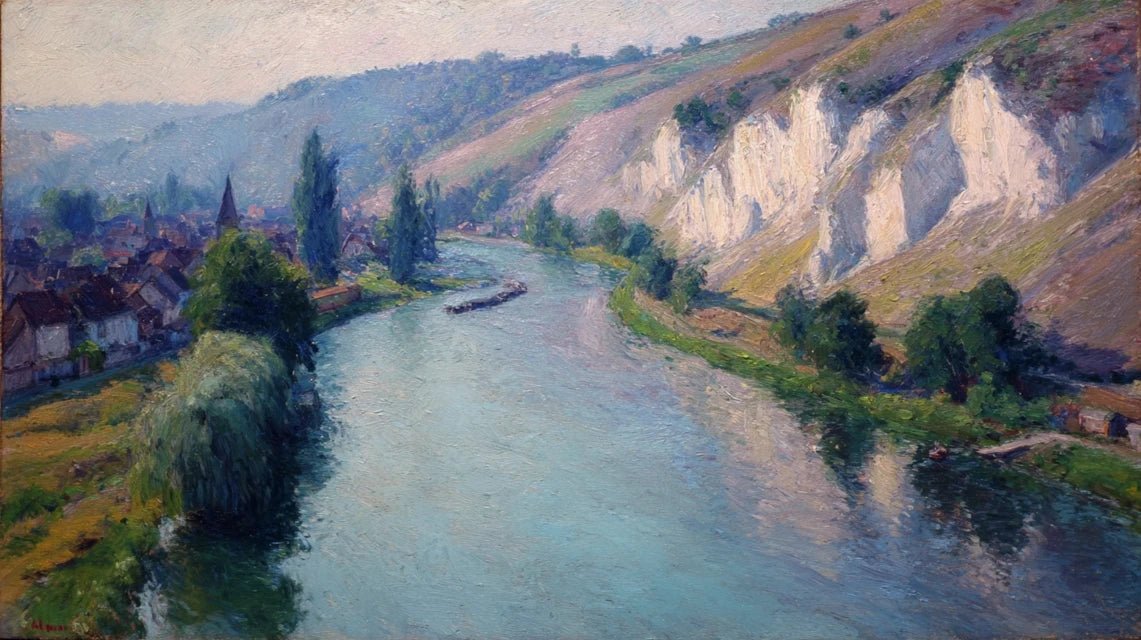
Impressionist painters weren't looking for just any setting. They wanted living reflections, that magic of water which transforms each scene into a moving kaleidoscope. In Vétheuil, the white chalk cliffs bounce back the light like natural spotlights. The river becomes an unpredictable mirror where the sky, trees and human constructions blend.
Along the banks, vegetation changes its costume four times a year. Poplars stand like green sentinels in spring, become golden torches in autumn. Weeping willows dip their branches into the current. Monet will transform this plant obsession into a veritable laboratory in Giverny, sculpting his own garden as a work of art.
Architecture punctuates these natural paintings with discretion. The church of Vétheuil dominates the bend and appears in nearly 200 canvases by Monet between 1878 and 1881 (Source: Musée des Impressionnismes Giverny). These ancestral stones dialogue with the nascent modernity: metal bridges, steam trains, guinguettes where Parisian bourgeoisie come to relax on Sundays.
Painting outdoors, painting true: Revolutionary techniques in the valley
The real revolution begins with a simple decision: get out of the studio. Before the Impressionists, one sketched outdoors and finished between four walls. Monet, Renoir and Sisley turn the table over. They set up their easels directly on the banks, sometimes in the rain, often in the wind. Monet even goes so far as to build a floating workshop in Argenteuil, a wooden cabin on a boat that allows him to paint from the water itself.
The brush no longer smooths, no longer blends colors. It applies quick touches, juxtaposes pure blue next to pure green, lets the viewer's eye do the mixing. On their Seine canvases, the water is never uniform: dozens of nuances interlock, creating that vibration which makes all the charm of Impressionism.
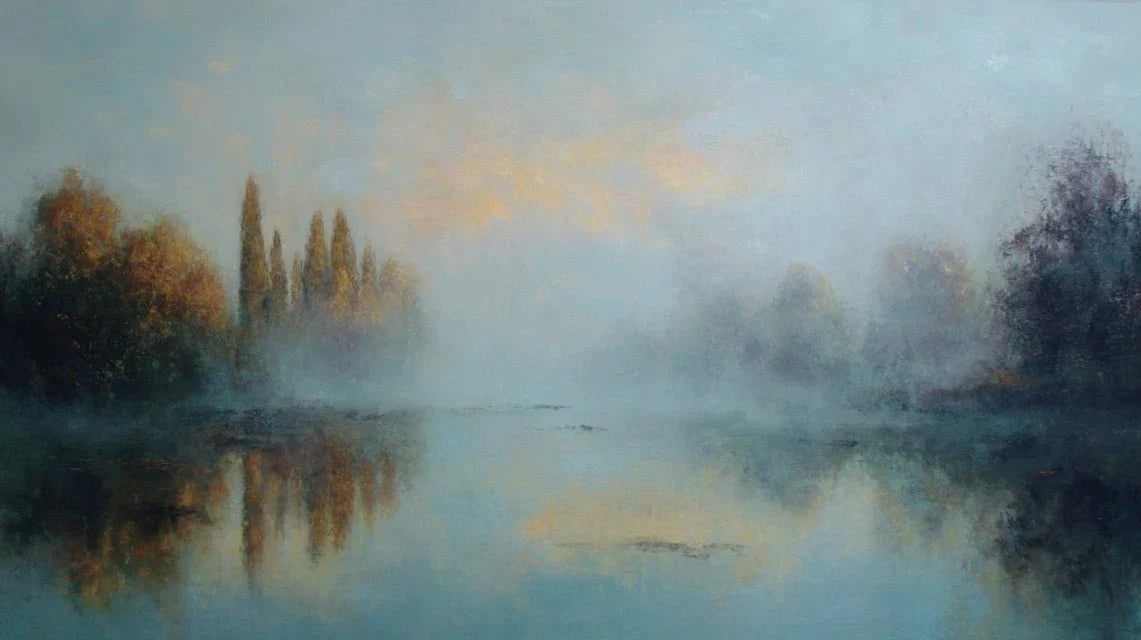
They chase fleeting moments as others hunt game. Sisley paints the same flood twice in Port-Marly in 1876, capturing this ephemeral event where the Seine overflows and transforms the landscape. Morning mists, the golden light of twilight, the ice cracking on the water in winter: everything becomes a subject of study.
Major discovery that makes us smile today but scandalizes at the time: shadows are colored. A shaded boat does not project a black stain onto the water, but reflects the colors of the sky and surrounding vegetation. Purples, greens, blues slip into what was thought to be simply "shadow".
From village to village: The map of iconic Impressionist places
Argenteuil becomes the hub of the movement in the 1870s. Monet settled here in 1871, and like a magnet, attracted Renoir, Sisley, Caillebotte. Regattas on the Seine attract Parisians for leisure. The new railway bridge spans the river. Guinguettes serve fresh wine under arbors. It is modern life that enters painting, joyful and spontaneous.
In Chatou, on its Impressionists' Island, the Fournaise House becomes an essential meeting place. Renoir paints his famous Luncheon of the Boating Party in 1881: boating hats, light dresses, glasses of wine, laughter and flirting under the sun. The Seine sparkles in the background, accomplice to these moments of simple happiness.
Vétheuil welcomes Monet for three decisive years, from 1878 to 1881. The village nestles in a pronounced meander, dominated by spectacular chalk cliffs. A difficult period: the family lacks money, his wife Camille dies at 32 years old. Yet, it is here that more than 200 major canvases are born (Source: Musée des Impressionnismes Giverny). Winters are harsh, ice cracks on the river, the church rises like a fortress of stone. Pain sometimes nourishes genius.
Bougival and Louveciennes offer a perfect balance: wild enough to inspire, close enough to Paris to regularly bring canvases back to collectors. Renoir, Sisley and Pissarro walk these tree-lined paths, painting these houses with blue stone where the light catches every roughness of the stone.
Characteristics of major Impressionist sites in the valley:
- Argenteuil : proximity to Paris by rail, modern life and regattas
- Chatou : guinguettes and bourgeois leisure on the Island of the Impressionists
- Vétheuil : chalk cliffs and spectacular meander of the river
- Bougival/Louveciennes : balance between preserved nature and accessibility
- Giverny : Monet's garden-laboratory and water lily pond
Finally, Giverny. Monet settled here in 1883 and did not move for 43 years. He shapes his garden like a giant canvas, creates the water lily pond that will generate his most famous series. If these landscapes of the Seine valley inspire you and you want to recreate this Impressionist atmosphere at home, our landscape paintings collection captures the essence of these bucolic scenes that revolutionized modern art.
The light of the Seine: why does it fascinate so much
What makes the valley of the Seine unique is its particular light. Not the dazzling sun of the Midi, but a veiled clarity, slightly misty. The climate of Ile-de-France softens contrasts, creates subtle harmonies: colored grays, attenuated blues, pale pinks that seem to float in the atmosphere.
The water becomes the true protagonist. The Seine acts as a living mirror where the sky, trees and houses decompose into moving touches. Monet constantly returns to this phenomenon, seeking to capture these reflections that change minute after minute. It is frustrating, exciting, obsessive.
This quest gives birth to work in series. Instead of a single painting, Monet paints the same motif ten, twenty, thirty times. Same location, same angle, but different light: dawn, midday, twilight, gray weather, bright sun, fog. He scientifically documents how an identical landscape transforms according to the time and weather.
Composing an Impressionist Landscape of the Valley
The Seine canvases share a recurring structure: the river cuts horizontally across the composition in three bands. Sky at the top, bank in the middle, water at the bottom. Simple, clean, effective. The attention focuses on the essential: atmospheric variations, games of light, colored vibration.
Sometimes, painters climb the hillsides to capture plunging views. From the heights of Vétheuil, they embrace the entire loop of the Seine. Perspective flattens slightly, the composition becomes almost abstract. We can already sense the 20th century approaching.
Architecture structures space without invading it. The Argenteuil bridge guides the eye towards the background. The steeple of Vétheuil anchors the composition vertically. Houses with red roofs punctuate the greens of the vegetation.
Formats stretch in width to echo the horizontality of the river. These panoramic canvases accentuate the feeling of space, air, freedom. The eye glides laterally without obstacles, as if actually strolling along the banks.
Frequently Asked Questions about Impressionist Landscapes of the Seine Valley
Why did the Impressionists choose the Seine valley?
The Seine valley offered an ideal balance: proximity to Paris to sell their paintings, unique veiled light creating subtle harmonies, changing aquatic reflections, and emerging modernity (trains, bridges, bourgeois leisure) which corresponded to their desire to paint contemporary life.
How many paintings did Monet create in Vétheuil?
Claude Monet painted more than 200 paintings during his stay in Vétheuil between 1878 and 1881. This intense creative period produced major works despite the financial and personal difficulties he was experiencing, notably the death of his wife Camille.
What revolutionary technique did the Impressionists develop in the Seine valley?
Painting outdoors directly on the spot, without retouching in the studio, constitutes their major innovation. Monet even went so far as to build a floating workshop on the Seine to capture the changing reflections of the water. Fragmented touches of pure colors juxtaposed, working in series and capturing ephemeral effects complete this technical revolution.