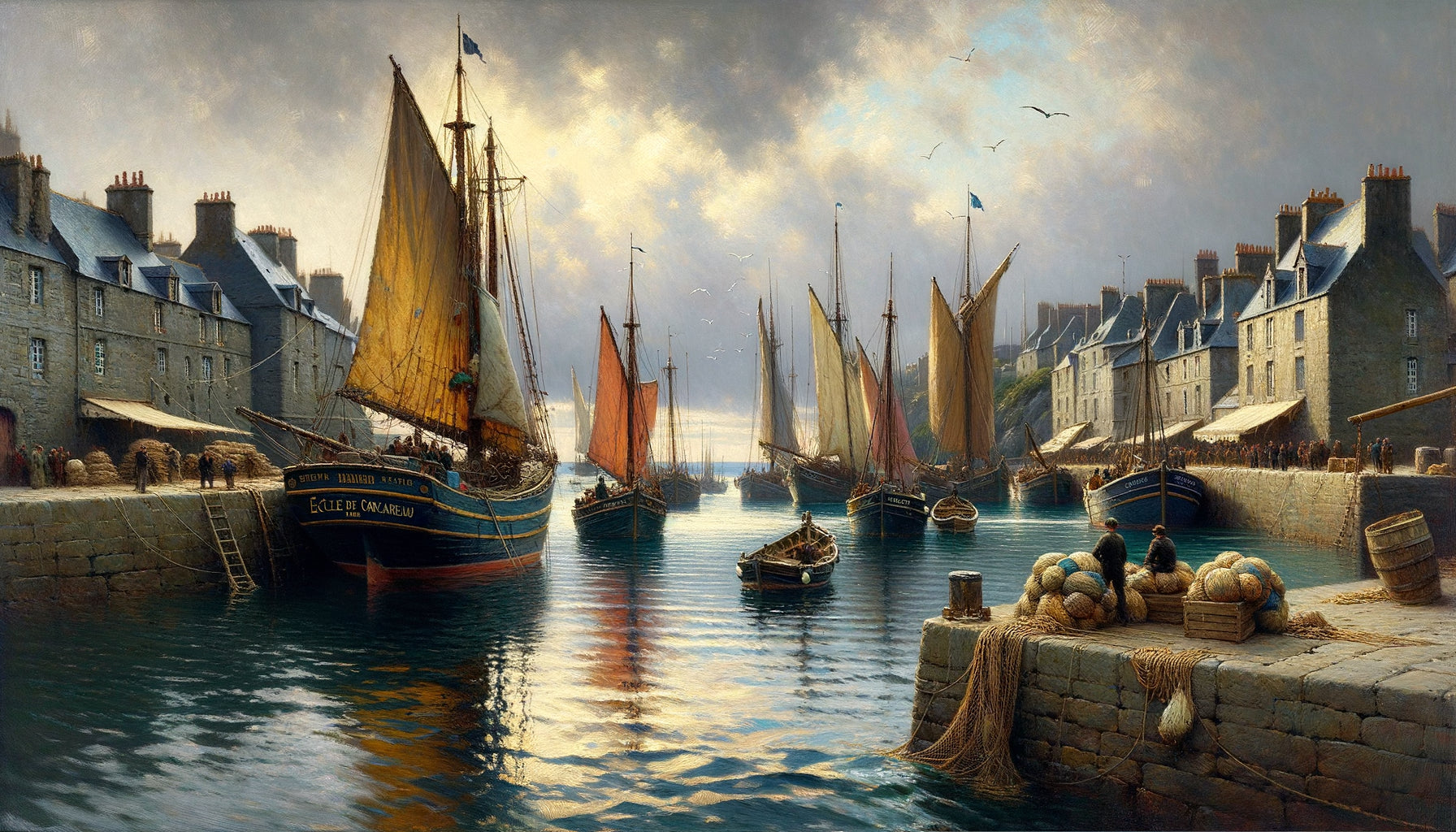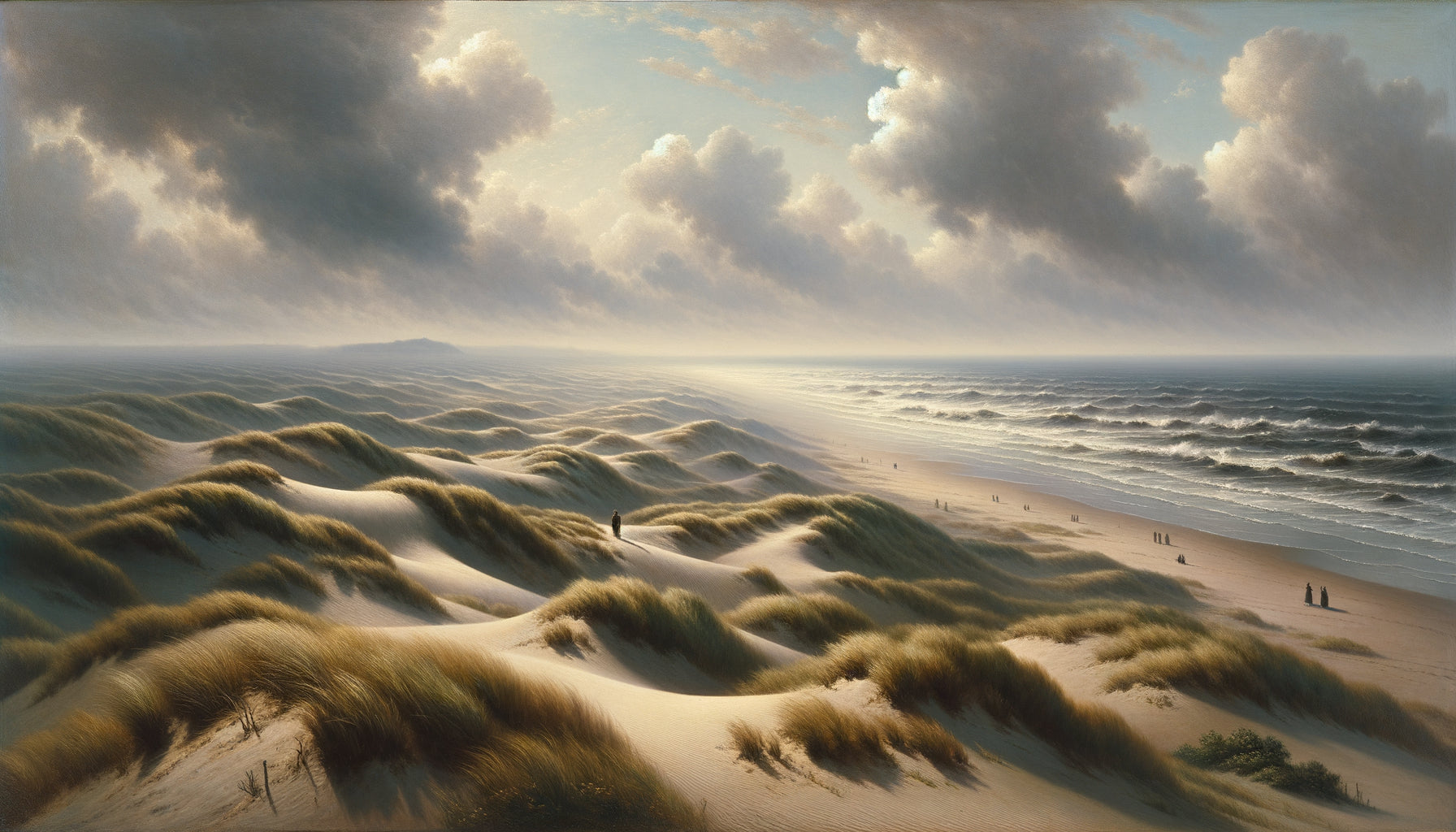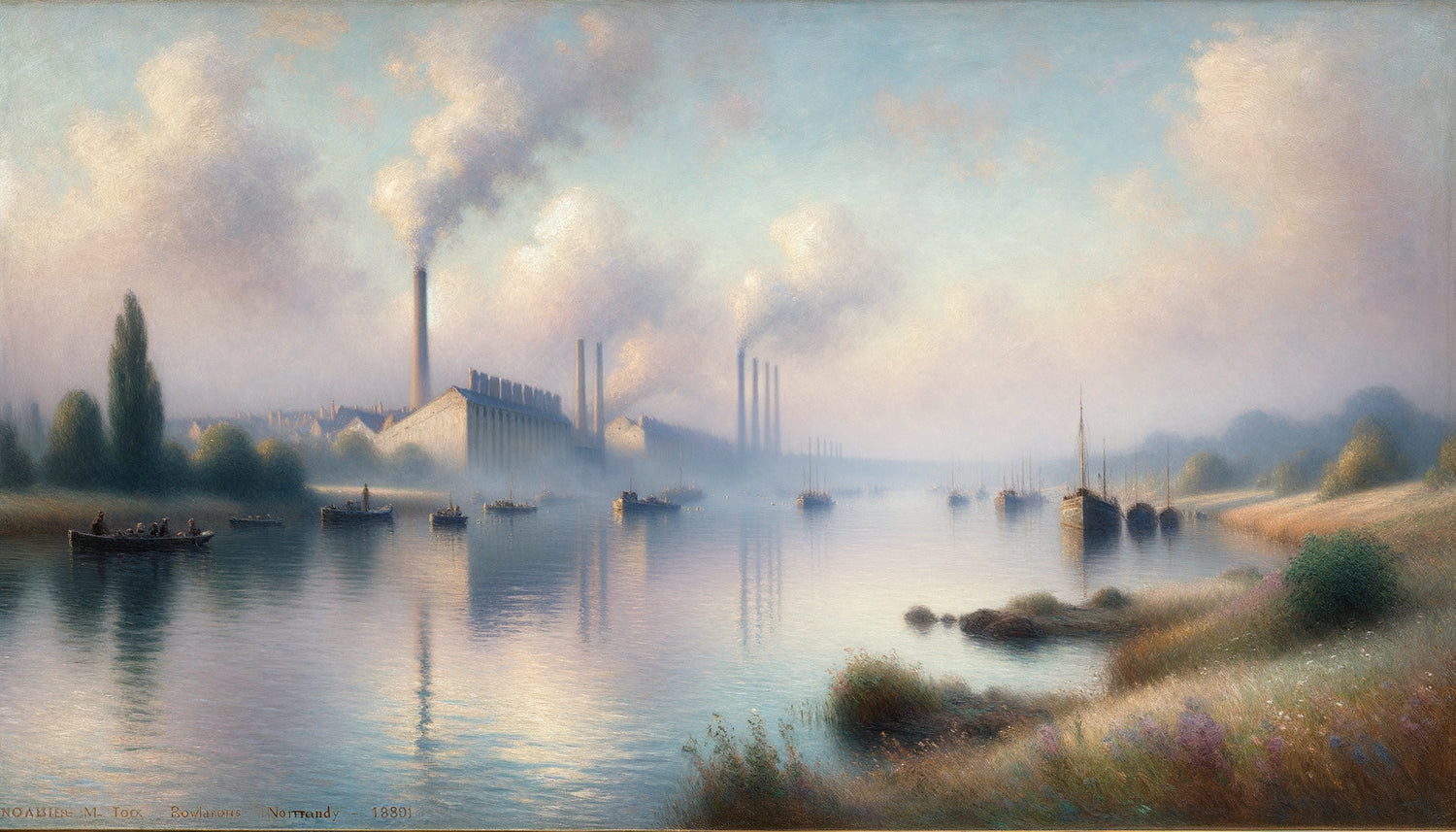
One September morning, while strolling along the quays of Rouen, I stopped in front of a small gallery where a fascinating canvas was on display: the Seine shrouded in mist, its silvery reflections and those shades of grey-blue that only Norman light can create. I had already seen this scene many times in the streets, but never with such poetic intensity. It was the work of a painter from the School of Rouen, a little-known movement that captured the soul of the Norman landscapes with a unique sensitivity.
Here's what the School of Rouen brings to your world: an authentic Impressionist aesthetic rooted in the landscapes of the Seine, a soft and luminous color palette that transforms any space, and a deep connection with the Norman artistic heritage that enriches your view of French art.
Yet, when we think of Impressionism, we immediately think of Monet and Giverny, Renoir and Paris. The School of Rouen remains in the shadows, eclipsed by its illustrious neighbors. This lack of recognition deprives our interiors of an extraordinary visual richness, that of artists who dedicated their lives to immortalizing the Seine, its ports, its cathedrals and this characteristic changing light.
Good news: rediscovering the School of Rouen is offering yourself a window onto authentic Impressionist landscapes, less known but just as captivating. These works bring a soothing and sophisticated atmosphere, perfect for creating spaces where you instantly feel transported to the Norman shores.
I invite you to explore this fascinating pictorial universe, its forgotten masters and how to integrate this unique aesthetic into your daily life.
The origins of a movement rooted in the Seine
The School of Rouen was born in the 1880s-1890s, at the time when Parisian Impressionism reached its peak. But unlike the Impressionists of the capital, these Norman artists developed a more intimate approach, deeply linked to their territory. The Seine becomes their open-air studio, their inexhaustible source of inspiration.
Joseph Delattre, Charles Angrand, Albert Lebourg: these names resonate less than Monet or Pissarro, yet their contribution to Norman Impressionism is considerable. They paint the industrial quays of Rouen, the boats moored, the bridges spanning the river under different lights. Their visceral attachment to the region transpires in every brushstroke.
What distinguishes the School of Rouen is this ability to capture the authenticity of the Norman landscapes without idealizing them. Factories coexist with cathedrals, barges mingle with sailboats. This realistic but poetic vision creates balanced compositions, where human activity harmonizes with nature.
A distinctive Nordic color palette
When observing the works of the School of Rouen, we quickly identify a visual signature: bright greys, soothing blues, tender greens and those touches of pale pink at dusk. This palette faithfully reflects the Norman climate, this soft and diffused light that envelops the Seine in an almost mystical atmosphere.
These tones have exceptional decorative power. They naturally blend into contemporary interiors, bringing softness without ever saturating the space. A painting depicting the Seine at dawn can transform a living room into a haven of peace.
Albert Lebourg: the poet of the Seine
If I had to choose an emblematic master of the Rouen School, it would be Albert Lebourg without hesitation. Born in Montfort-sur-Risle in 1849, he devoted his career to painting the Seine in all its facets. His paintings exude a luminous melancholy that is absolutely captivating.
Lebourg masters the art of suggestion rather than description. His Norman landscapes are composed of quick touches, superimposed veils of colors that create a sensation of perpetual movement. When you look at one of his depictions of Rouen from the surrounding hills, you can almost feel the fresh breeze rising from the river.
His series on the bridges of Paris and Rouen show his fascination with reflections in the water, this infinite game between the sky, architecture and the Seine. These symmetrical compositions have a meditative quality that makes them perfect for spaces dedicated to calm and contemplation.
Lebourg's contemporary legacy
What fascinates me about Lebourg is his timeless modernity. His works, created over a century ago, retain an astonishing freshness. Their relative abstraction brings them closer to contemporary sensibilities, while retaining the narrative depth characteristic of Impressionist landscapes.
Integrating a reproduction by Lebourg into an interior is choosing discreet elegance. His neutral tones dialogue admirably with natural materials: linen, light wood, stone. The effect is immediate: the space gains sophistication without ostentation.

Joseph Delattre and the industrial Seine
Joseph Delattre embodies another facet of the Rouen School: that which embraces modernity without renouncing poetry. His depictions of the Rouen ports, with their factory chimneys and cranes, celebrate the alliance between industry and natural beauty.
This approach resonates particularly today. In our interiors where industrial style meets greenery, Delattre's works find a natural place. They tell a story of balance, of coexistence between progress and preservation.
Delattre is fond of dramatic skies, those accumulations of clouds typical of Normandy that create striking contrasts. His dynamic compositions bring character to spaces while retaining the characteristic soft chromaticism of Impressionist Norman landscapes.
How the Seine Inspires Your Decor
Translating the aesthetics of the Rouen School into your interior is more than just hanging a painting. It's adopting a decorative philosophy where light, water and sky dialogue harmoniously.
Start with the palette: prioritize pearl grays, grayish blues, sage greens. These shades create a soothing base that immediately evokes the morning mists on the Seine. Add touches of off-white and beige to warm up the whole thing, like the reflections of sunlight on the water.
Materials play a crucial role. Crinkled linen recalls the texture of Impressionist canvases, blown glass evokes the transparency of water, driftwood echoes the banks of the Seine. This material consistency reinforces the Norman atmosphere you are seeking to create.
The Art of Framing Inspired by the Painters of Rouen
Artists from the Rouen School excel in horizontal composition, these panoramic formats that follow the curves of the river. By choosing artworks or reproductions in a long format, you reproduce this feeling of expanse characteristic of Seine landscapes.
Place these compositions at eye level, in circulation areas such as hallways or above a sofa. The visual effect widens the room and creates an imaginary opening to the Norman shores.

Creating a Norman Impressionist Gallery at Home
Building a collection inspired by the Rouen School requires a thoughtful approach. The goal: create a visual consistency that tells the story of Norman landscapes without falling into redundancy.
Mix the subjects: a view of Rouen Cathedral, a port scene, a sunset over the Seine. This thematic diversity maintains interest while preserving the stylistic unity characteristic of Rouennais Impressionism. Variations in light from one canvas to another create a captivating visual rhythm.
Don't hesitate to play with formats. A large Seine landscape as a focal point, surrounded by smaller studies of skies or reflections, composes a dynamic ensemble that evokes Impressionist series. This arrangement recalls the working method of painters who captured the same motif at different times.
The frame deserves particular attention. Works from the School of Rouen flourish in simple frames, made of natural wood or painted in off-white. These understated choices highlight the subtle chromaticism without competing with it.
Let the poetry of Norman landscapes transform your everyday life
Discover our exclusive collection of nature paintings that capture this unique impressionistic light and bring serenity and sophistication to your spaces.
Living with the spirit of the Seine every day
Integrating the aesthetics of the School of Rouen is not limited to walls. It's an invitation to adopt a contemplative lifestyle, inspired by the tranquil rhythm of the Seine and the softness of the Norman landscapes.
This philosophy translates into simple rituals: taking the time to observe the variations in light through your windows, as the Rouen painters observed the river. Creating reading corners near a reproduction by Lebourg, where natural light dialogues with the grey tones of the canvas.
The Norman impressionistic spirit values imperfection, transience, and subtle nuances. Apply these principles to your decor by embracing patinas, prioritizing living materials that evolve over time, and composing minimalist floral arrangements that evoke the grasses along the banks of the Seine.
This approach creates soothing interiors where every element breathes and leaves room for contemplation. The landscapes of the School of Rouen become more than just decorations: they become windows onto a world where beauty and serenity intertwine naturally.
Imagine yourself, every morning, greeted by this particular light that bathes the quays of Rouen, this enveloping atmosphere that the artists of the School so masterfully captured. Your space becomes a refuge where time slows down, where worries fade away in the face of the silent poetry of the Norman landscapes. The School of Rouen awaits you to reveal all its transformative magic.
Frequently asked questions about the School of Rouen
Is the School of Rouen really different from Parisian Impressionism?
Absolutely, and that’s precisely what makes its unique charm. While Parisian Impressionists explored lively urban scenes and lush gardens, the Rouen School artists developed a more intimate vision, deeply rooted in the Norman landscapes. Their color palette favors softer, atmospheric tones, reflecting the particular light of Normandy. They painted the Seine not as a picturesque backdrop, but as a living, changing, sometimes industrial element. This unadorned authenticity creates more contemplative works, perfect for interiors seeking sophistication and serenity. The Rouen School offers a refined alternative to classical Impressionism, with a regionalist dimension that enriches its artistic identity.
How to integrate works inspired by the Rouen School into a modern interior?
The Norman Impressionist landscapes possess an amazing modernity that makes them perfectly compatible with contemporary interiors. Their palette of grays, blues and greens naturally harmonizes with current Scandinavian or minimalist design codes. For a successful integration, prioritize clean framing that does not compete with the subtlety of the work. Place your painting in a clear space where it can breathe, possibly facing a window so that natural light dialogues with the painted light on the canvas. Large horizontal compositions work beautifully above a sleek sofa or in an entrance hall, immediately creating a soothing atmosphere. The trick: let the artwork establish the color palette of the room rather than the other way around, for a natural and elegant consistency.
Where to find quality reproductions of the masters of the Rouen School?
The rediscovery of the Rouen School makes quality reproductions more accessible than ever. Favor giclée prints on canvas or art paper, which faithfully reproduce the subtle nuances characteristic of these Norman landscapes. The museums of Rouen often offer official reproductions of works from their collection. For a more personalized approach, look for contemporary artists who draw inspiration from this Impressionist Norman aesthetic and create original works in that spirit. The advantage: you support current creation while adopting this timeless aesthetic. Ensure that the print quality respects the color subtleties that make all the magic of the Rouen School. A beautiful reproduction is always better than a mediocre original work, and it will bring the same soothing atmosphere to your interior.