Imagine for a moment: Paris, 1825. In a bourgeois living room in the Marais district, behind heavy drapes, a visual miracle unfolds. Walls disappear to make way for a lush Brazilian forest, Hindu temples shrouded in mist, or the mysterious shores of the Bosphorus. Without ever boarding a ship, without risking tropical fevers or ocean storms, owners travel from their Voltaire armchairs. This magic is called panoramic wallpaper, and it revolutionized French art de vivre in the 19th century.
Here's what these historical panoramics brought to interiors: total visual escape that transformed each room into a theater of distant adventures, a prestigious social marker reserved for the wealthy elite, and an unparalleled technical feat blending craftsmanship and industrial innovation. These wall decorations were not mere ornaments; they embodied the dream of exoticism of a French society fascinated by elsewhere.
Yet, understanding the world of French panoramic wallpapers can seem daunting. How did these manufacturers manage to create such detailed landscapes? Why did these decorations cost a fortune? And above all, how did this art conquer the most beautiful Parisian mansions?
Rest assured: this extraordinary story is accessible to everyone. Behind each panel lies a human, technical and artistic adventure that deserves to be told. Let's discover together how these exotic mural landscapes transformed interior decoration between 1800 and 1860, creating what was then called "immobile journeys."
The invention of dreams: when Parisian manufacturers create the panoramic
It all begins in the early years of the 19th century, when Jean-Zuber in Rixheim and Joseph Dufour in Paris revolutionize the wallpaper industry. Before them, walls were content with repetitive patterns: daisies, stripes, medallions. But these visionaries imagine something totally new: continuous panoramic decorations that tell a story over several meters.
The Dufour manufacture launches "Les Sauvages de la Mer Pacifique" (The Savages of the Pacific) in 1804, inspired by Captain Cook's voyages. The success is immediate. On twenty-four panels (these vertical strips of wallpaper), an unknown world unfolds: majestic palm trees, natives in traditional costumes, turquoise lagoons. Each panel assembles like a giant fresco, transforming a living room into a window open onto Oceania.
The technical feat is colossal. These French wallpapers require up to two hundred woodblock prints for each panel. Each color requires a different block, a millimeter-perfect superposition. Artists first draw the entire panorama at reduced scale, then engravers reproduce each section on pearwood boards. Colorists then apply the pigments by hand, shade by shade.
Dream Destinations: A Geography of Bourgeois Imagination
Between 1800 and 1860, manufacturers of panoramic wallpaper offered a fascinating cartography of the era's fantasies. Each decor reflects the geopolitical and cultural obsessions of the moment.
The Mysterious Orient largely dominates. “The Shores of the Bosphorus” by Dufour (1812) transports Parisians to the Ottoman Empire: mosques with soaring minarets, camel caravans, palaces on the seaside. At a time when Bonaparte's Egyptian campaign (1798-1801) fueled all conversations, these exotic landscapes satisfy a thirst for the Orient.
The New World is just as fascinating. “Views of North America” (1834) by Zuber shows Niagara Falls, virgin forests, and southern plantations. These decors celebrate an idealized America, that of explorers and colonists, discreetly concealing the realities of slavery and territorial conquest.
The Fantasized Asia inspires “Chinese Gardens” or “Hindustan,” with their golden pagodas, mandarins in silks, and caparisoned elephants. These historical panoramas cheerfully mix geographical references: a Khmer temple borders a Japanese bridge, all within a garden that exists nowhere else but in the Western imagination.

Discover this inspiring artwork
A Luxury Exclusive: Who Could Afford These Wall Journeys?
A wallpaper panorama cost a fortune. In 1830, a complete panorama represented the equivalent of six months' salary for a skilled worker. Only the aristocracy, the wealthy upper bourgeoisie, and a few enriched industrialists could afford this luxury.
The installation itself was an art form. Wallpaper installers formed a respected corporation. They had to assemble the sections with perfect precision: even a millimeter of misalignment would cut a tropical cascade in half, or disarticulate an oriental caravan. Some panoramas required three weeks of work for a single room.
Notarial inventories from the era reveal where these decors were installed. The grand salon received the most spectacular panorama, visible upon entry. The dining room often featured rural scenes or Italian gardens. Rarely in bedrooms: these wall landscapes were meant to be admired by guests, tangible proof of the homeowner's refinement and fortune.
The panoramic as a social marker
Owning a Zuber or Dufour was equivalent to exhibiting a work of art. These manufacturers published luxurious catalogs, sent to wealthy families throughout Europe. A French ambassador in Saint Petersburg or a rich Lyon merchant could order the same decor, creating a transnational aesthetic community of the elite.
Fashion magazines and women's journals of the time described these interiors with fascination. “Mrs. Countess X has had installed in her private mansion the magnificent panorama of the Greek Islands,” one could read in the Journal des Dames. These articles fueled the desire for social advancement through decoration.
The golden age of manufacturers: Zuber, Dufour and their rivals
The Jean Zuber et Cie manufacture, established in Rixheim in Alsace since 1797, became the absolute reference. Its panoramas such as « L'Eldorado » (1848) or « Isola Bella » (1842) combine documentary research and artistic license. Zuber employed up to fifty colorists simultaneously, each specializing in a shade: the man of Prussian blue, that of water greens, the woman of roses and carnations.
The Dufour et Leroy manufacture (after 1820) favors narrative ambition. « Psyche » (1815) unfolds the mythological story over thirty-two panels. « The Monuments of Paris » (1814) offers an architectural promenade from Notre-Dame to the Arc de Triomphe. These French panoramic wallpapers become visual encyclopedias.
Other players emerge: Desfossé and Karth, Delsalle, Jacquemart and Bénard. Competition stimulates innovation. Manufacturers file patents to improve color resistance, gradient fineness, printing speed. Some panoramas use metal stencils for gold details, others experiment with copper plate engraving.

Discover this inspiring artwork
The technique revealed: from engraving to printing
Creating a panoramic wallpaper mobilized an extraordinary chain of skills. The process began with the order of a renowned draughtsman. Jean-Julien Deltil, Pierre-Antoine Mongin or Jean-Gabriel Charvet created preparatory watercolors several meters long, sometimes working for months on a single project.
Next came engraving. Craftsmen carved in relief on hardwood planks the areas that would receive each color. For a panorama of twenty panels, this represented several hundred blocks. The manufacture Zuber still holds more than 150,000 original engraved plates today, a dizzying testimony to this know-how.
The printing itself required strength and precision. Workers placed the paper on long tables, applied an inked block, pressed with all their weight, removed the block, repositioned the paper for the next block. Each color had to dry before the next. Completing a panorama sometimes took six weeks of manufacturing.
The pigments of the immobile journey
The colors of historical panoramas came from all over the world. Prussian blue from Silesia, cochineal carmine from Mexico, indigo from India, Naples yellow Italian, oxidized green-grey. Paradoxically, these exotic décors used materials as traveled as the landscapes they represented.
Some pigments cost extremely expensive. Natural ultramarine, extracted from Afghan lapis lazuli, was worth its weight in gold. Manufacturers developed chemical substitutes, such as cobalt blue or chrome, gradually making these wallpaper more accessible without sacrificing visual brilliance.
Decline and renaissance: from 1860 to today
After 1860, panoramic wallpapers lost their luster. Industrialization allows for mechanical printing on a cylinder machine: faster, cheaper, but standardized. Taste evolves towards more subdued décors inspired by the Arts and Crafts then Art Nouveau movements. The grand exotic landscapes suddenly seem dated, pompous, loaded.
Many panoramas are torn off during renovations. Others disappear under layers of paint. Some go to the United States, where wealthy collectors buy back these testimonies of French art de vivre. The Metropolitan Museum in New York or the Winterthur House in Delaware preserve magnificent ensembles today.
But since the 1980s, a passionate rediscovery has been taking place. Restorers track down forgotten panoramas in castles and mansions. The Zuber manufacture, still active, reissues its historical models according to the original techniques. Bold decorators reintegrate these wall landscapes into contemporary interiors, creating striking aesthetic clashes.
Get inspired by the magic of landscapes that transform space
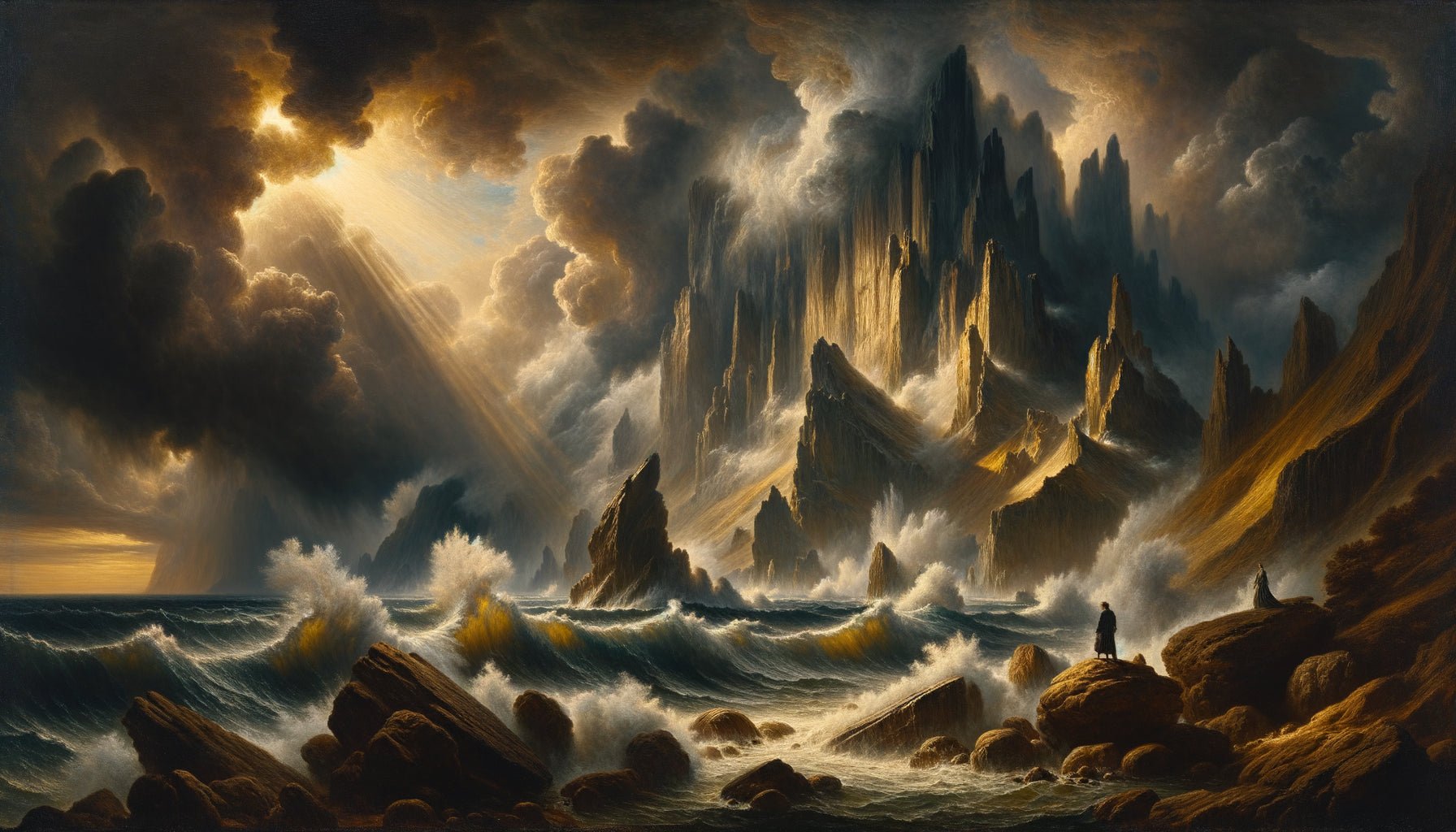
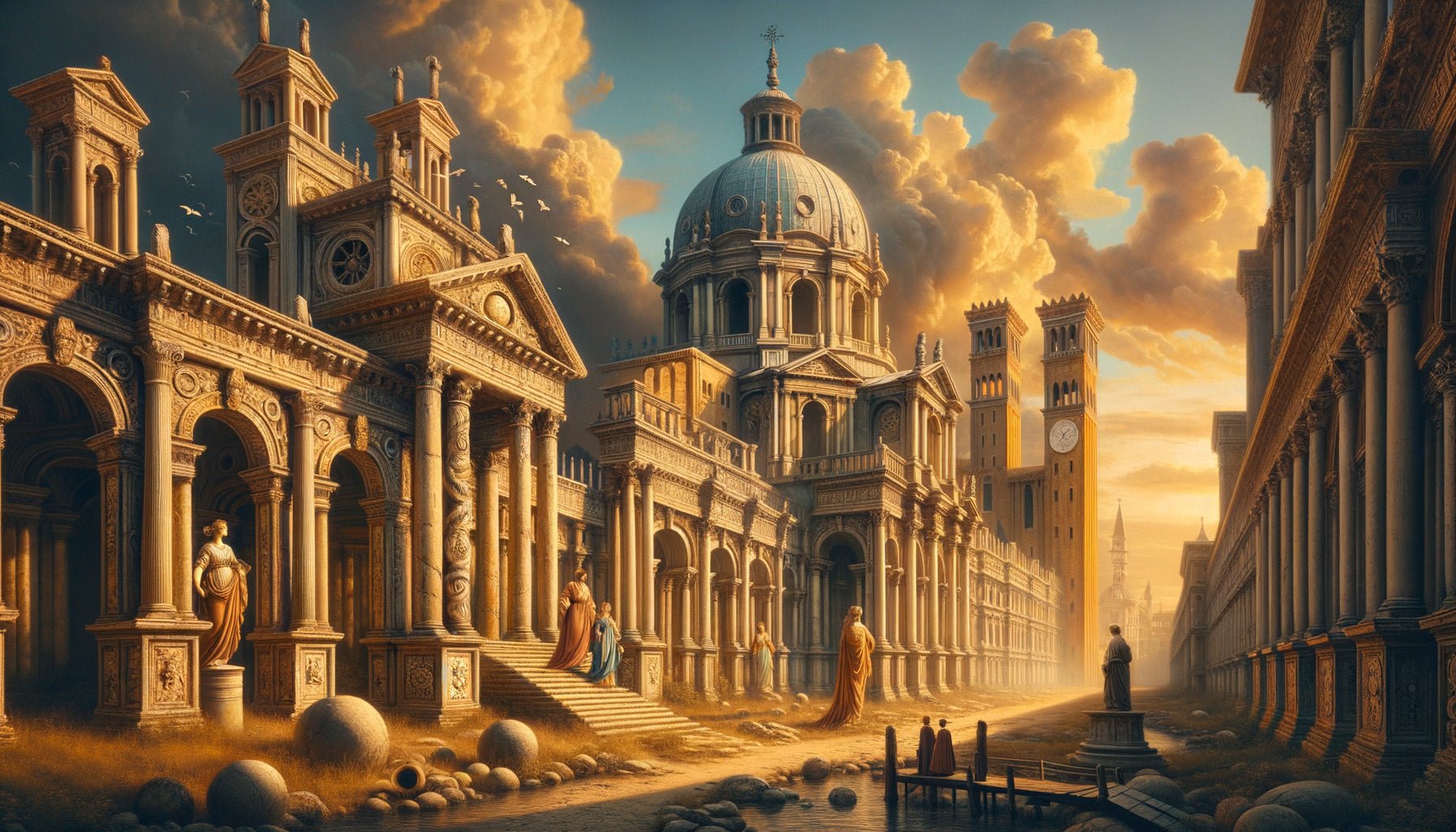
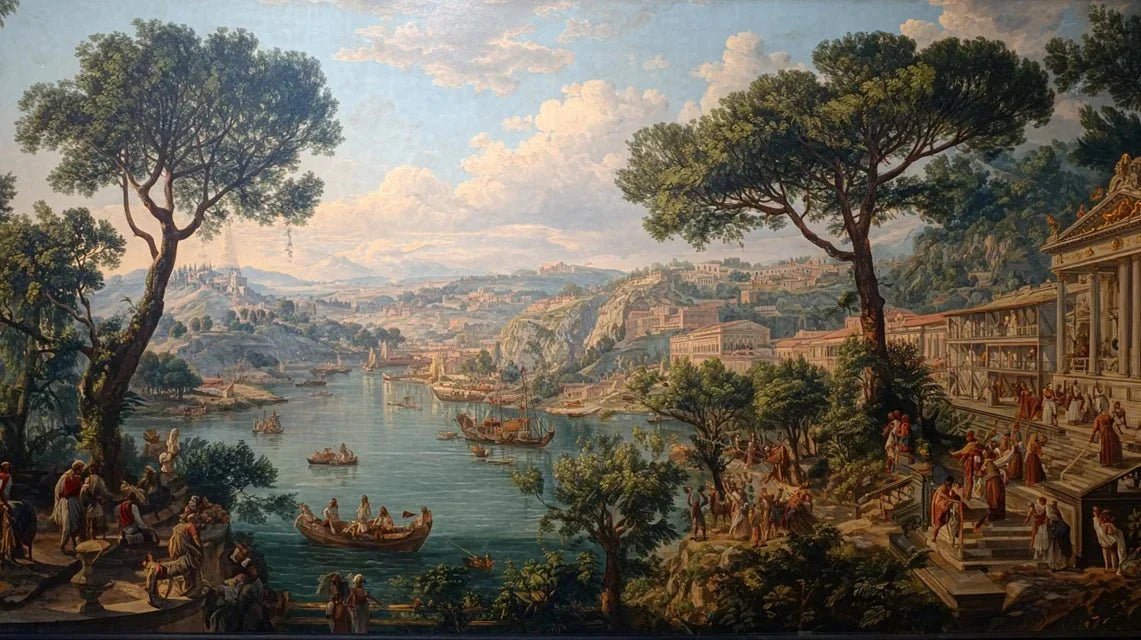
Discover our exclusive collection of landscape paintings that capture the spirit of great historical panoramas and invite you to travel from within your home.
Conclusion: The living legacy of immobile journeys
French panoramic wallpapers from 1800 to 1860 embody a unique moment when technology, art and colonial imagination came together to create interior worlds. These exotic wall landscapes offered Parisian bourgeois what digital screens give us today: an instant window on elsewhere, a mental escape without leaving your comfort.
Their message still resonates: our walls are not just functional surfaces. They can become portals, narratives, invitations to dream. Whether you're considering a historical restoration or simply decoration inspired by this era, remember that every wall choice transforms our perception of space and our relationship with the imagination of travel.
Start modestly: visit a decorative arts museum to contemplate an authentic panorama. Observe how light plays on the gradations, how your gaze travels from detail to detail. You will then understand why these decorations fascinated our ancestors so much, and perhaps find inspiration for your own immobile journey.
FAQ: Your questions about historical panoramic wallpapers
Can we still find vintage panoramic wallpapers?
Yes, but they are rare and precious. A few specialized dealers occasionally sell them at auctions or in high-end antique shops. Prices vary considerably depending on the condition: from a few thousand euros for incomplete fragments to more than 50,000 euros for a complete panorama in good condition. The Zuber manufacture offers faithful reproductions of the original techniques, offering an alternative for those who want this style without acquiring a fragile original. To admire these decorations without investing, visit the Musée des Arts Décoratifs in Paris, the Château de Fontainebleau or the Villa Vauban in Luxembourg, which preserve magnificent ensembles in situ.
How do restorers preserve these ancient wallpapers?
The restoration of panoramic wallpapers is a high-flying endeavor. Specialists begin by exhaustively photographing each panel before any intervention. They analyze the chemical composition of the pigments to identify compatible cleaning products. The main enemy is humidity, which causes the paper to swell and dilutes water-based colors. Restorers often work in tiny areas, consolidating the support with reversible adhesives based on wheat starch, retouching gaps with conservation watercolors. Some panoramas require complete removal from the wall to treat the back, an operation that can take six months. Direct light being also destructive, museum conservators limit lighting to a maximum of 50 lux and regularly rotate exhibited pieces.
Why were these exotic décors so popular in the 19th century?
The fascination with exotic landscapes can be explained by several social and cultural factors. First, French colonial expansion in North Africa, Asia and the Caribbean fueled intense curiosity for these territories. Secondly, travel remained dangerous and expensive: only a few privileged people crossed the oceans. Panoramas offered an accessible visual alternative to a wealthy bourgeoisie but non-traveling one. They also embodied a marker of cultural distinction: owning a décor showing knowledge of distant civilizations signaled education and fortune. Finally, these idealized landscapes corresponded to the romantic fantasies of the time, where the Orient represented mystery, America virgin nature and Asia millennial wisdom. Panoramic wallpapers literally materialized the collective imagination of a society undergoing profound transformation.