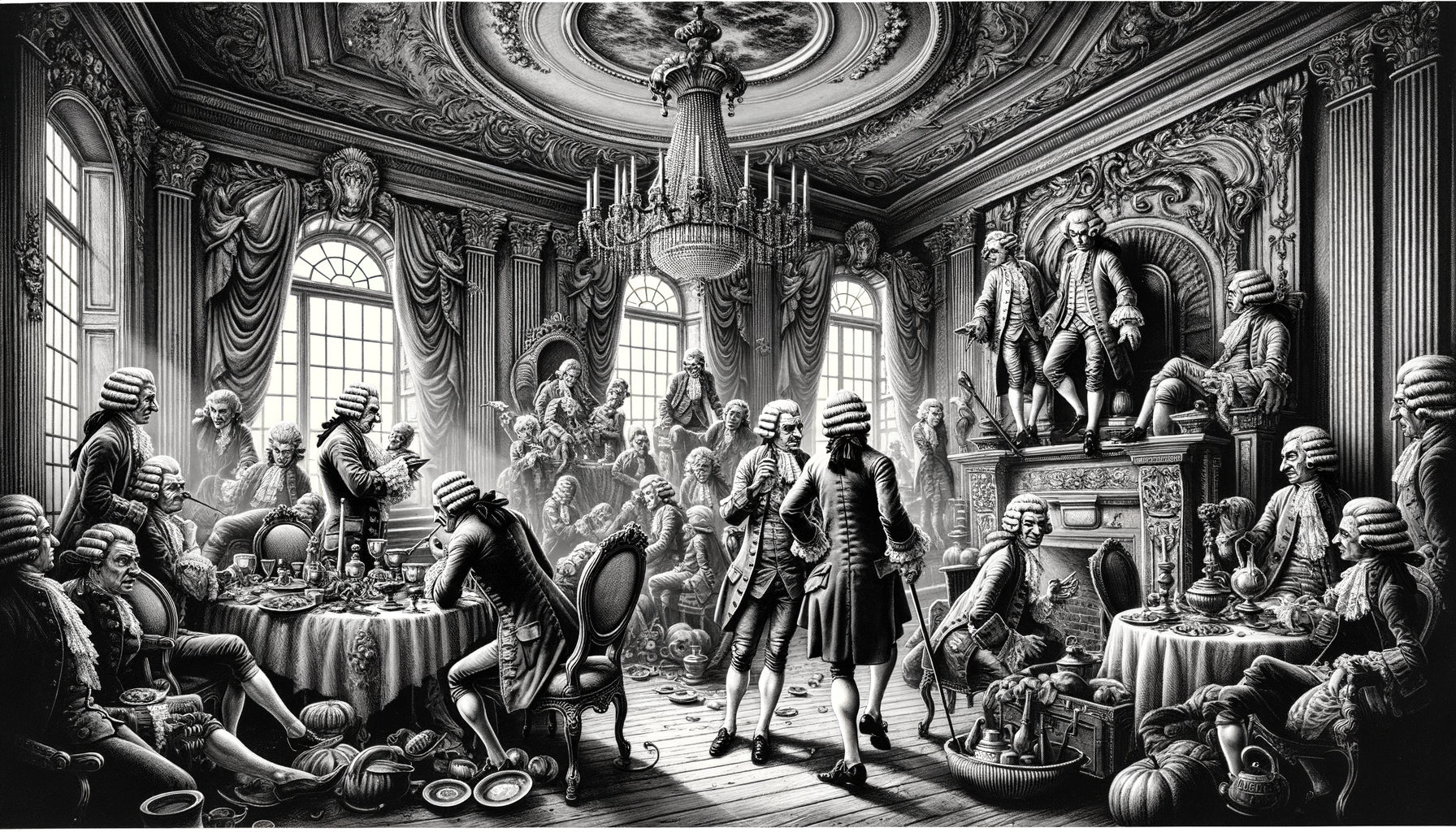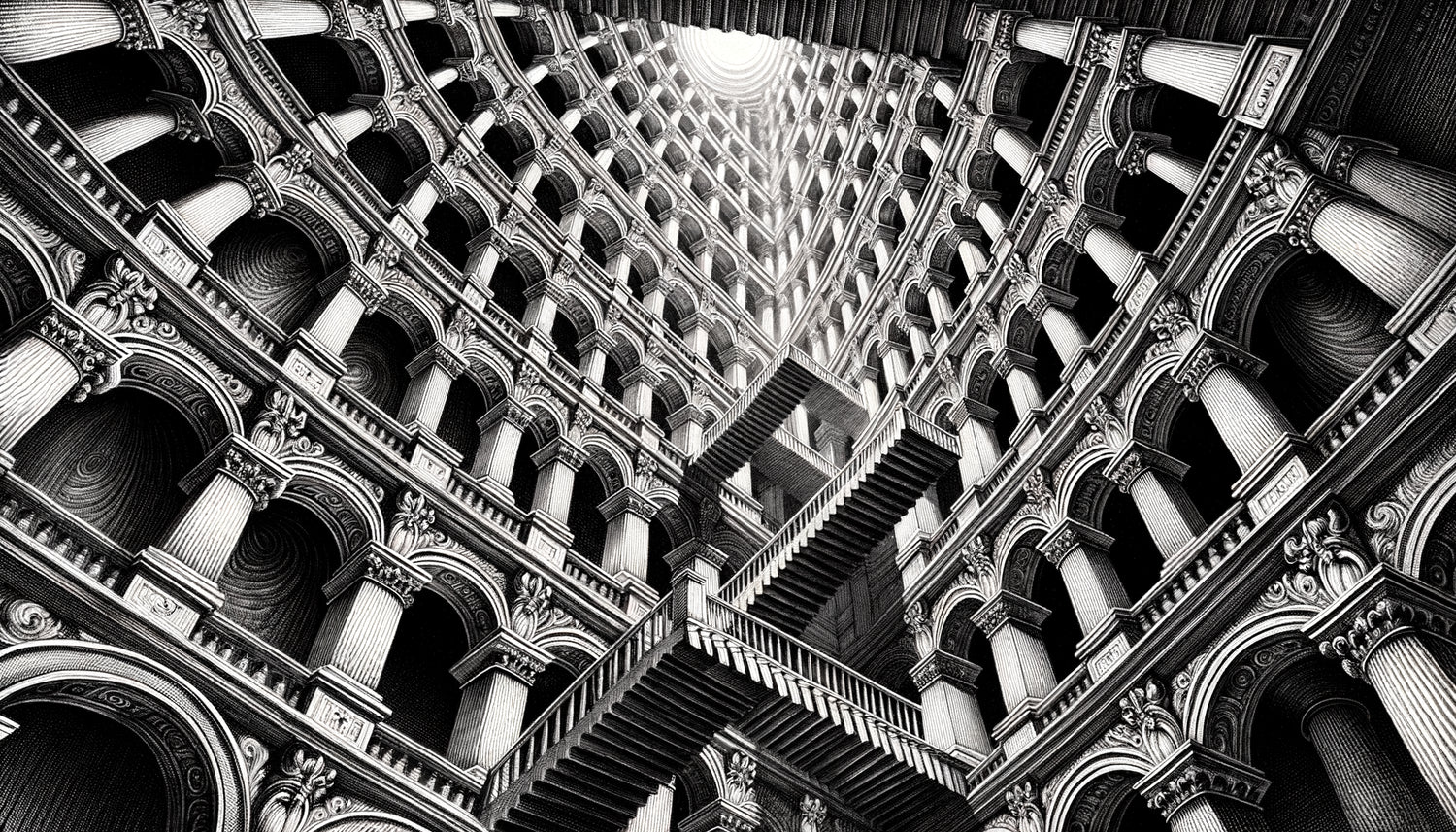
Imagine towering architectures that defy all logic, staircases leading nowhere, endless vaults plunging into darkness. In the 18th century, a Venetian engraver managed to capture these hallucinatory visions using only black and white. Giovanni Battista Piranesi never built a single building, yet his monochrome engravings revolutionized our way of conceiving architectural space. How did he achieve this feat? Here's what Piranesi’s universe reveals: unparalleled technical mastery of chiaroscuro, boundless architectural imagination, and proof that black and white possesses an evocative power superior to color. We often think of monochrome as a constraint, a limitation compared to chromatic richness. We fear that the absence of color will make our spaces cold or austere. Yet Piranesi proves exactly the opposite: it is precisely this voluntary restriction that liberates the imagination and creates worlds of incomparable emotional intensity. Let's discover together how this master engraver transformed black ink into a portal to infinity.
The radical choice of monochrome as an amplifier of emotion
When Piranesi begins his legendary series of Carceri d'Invenzione (Imaginary Prisons) in 1745, he makes a decisive artistic choice: to renounce color altogether. This decision is not an economic or technical limitation, but a powerful narrative strategy. In monochrome engraving, every shade of gray becomes meaningful. Deep shadows create mysterious abysses, while flashes of white light suggest impossible openings to other dimensions.
This monochrome approach allows Piranesi to explore extreme contrasts. In his compositions, intense blacks literally engulf portions of the architecture, creating a sensation of spatial vertigo. The viewer can no longer distinguish between near and far, up and down. This perceptual confusion is precisely what generates the fantastic feeling: our usual references collapse in the face of spaces that seem to obey their own laws.
Monochrome also has this unique power to transcend time. Without color indication, Piranesi's architectures escape any precise dating. His Roman ruins become timeless, his imaginary prisons could belong to the past as much as to the future. This temporal universality explains why his works continue to inspire architects, decorators and creators three centuries after their creation.
The intaglio technique pushed to its limits
To create his fantastic worlds, Piranesi masters the etching technique with unparalleled virtuosity. He engraves directly onto copper plates, creating thousands of lines that, when printed, produce the entire range of grays. This laborious method allows him absolute control over every square millimeter of his compositions.
Piranesi’s engravings can contain up to thirty different tonal value variations, from pure white to black ink. He achieves this by layering acid passages, varying the spacing and depth of his lines. Some areas of his plates have been reworked up to ten times to achieve exactly the desired shadow density. This obsessive patience transforms each monochrome engraving into a visual score of astonishing complexity.
The art of directional line
Piranesi uses the orientation of his hatching to guide our gaze through his labyrinthine compositions. Vertical lines suggest monumental elevation, diagonals create dynamism and instability, while crossed hatchures generate the deepest shadows. This linear grammar becomes a spatial language that unconsciously directs our visual exploration of these impossible architectures.

Impossible architectures that defy reason
What makes Piranesi’s fantastic worlds so unsettling is their appearance of credibility. He doesn't draw fairy tale castles or orientalist palaces. His architectures are built with impeccable technical rigor: each stone is in its place, each vault respects the principles of statics. And yet, the whole defies all logic.
In his Carceri, monumental staircases rise to ceilings that are too low to accommodate them. Bridges stretch towards invisible destinations. Gigantic pulleys hang above spaces where they could serve no purpose. This juxtaposition between local coherence and global absurdity creates a fascinating malaise. Our brain accepts each element individually, but rejects the totality of the composition.
This approach anticipates Escher’s spatial explorations by two centuries. Like the Dutch master, Piranesi understands that the most effective fantasy is born from rationality pushed to the absurd. His monochrome engravings become exercises in perception where architectural logic collapses upon itself, creating mental spaces rather than physical ones.
Human scale as a key to vertigo
A detail often overlooked makes all the difference in Piranesi’s engravings: the presence of tiny human silhouettes. These microscopic characters, often barely visible, serve as a unit of measurement that reveals the colossal dimension of the architectures.
When we discover, after several minutes of observation, that a small dark spot at the foot of a pillar is actually a man, our entire perception of space abruptly shifts. What seemed large becomes gigantic, what appeared distant reveals itself as abyssal. Piranesi masterfully plays on this scale shock to amplify the fantastic feeling. In a monochrome universe where all landmarks are blurred, these silhouettes become the only elements that allow us to measure the immensity.
This technique directly influences our contemporary way of designing interior spaces. A large black and white format in a living room can create exactly this effect of infinite depth, transforming an ordinary wall into a window onto another universe.

Piranesi's legacy in contemporary decoration
Three centuries later, Piranesi’s influence permeates our visual culture far beyond the art world. Science fiction directors like Ridley Scott (for Blade Runner) or Christopher Nolan (for Inception) explicitly cite his vertiginous architectures as sources of inspiration. Deconstructivist architects like Zaha Hadid drew from his impossible spaces.
In our interiors, Piranesi’s lesson remains strikingly relevant: monochrome does not limit, it intensifies. A reproduction of his engravings or a work inspired by them brings to a space that dimension of mysterious depth often lacking in colorful compositions. Black and white has this unique ability to create an architectural presence that dialogues with the walls rather than simply decorating them.
Embracing the Piranesi spirit at home
To capture this atmosphere in your interior, prioritize large monochrome formats that create a true visual window. Avoid overly busy compositions: Piranesi’s effectiveness relies on the subtle balance between dense areas and empty spaces. Play with lighting to reinforce the contrasts of your artwork. Indirect light creates shadow games that echo the chiaroscuro of the engraving itself.
Transform your interior into a space for contemplation
Discover our exclusive collection of black and white paintings that capture this monochrome intensity and create architectural depth in your living spaces.
Black and White as an Emotional Portal
The latest lesson from Piranesi’s monochrome engravings concerns their emotional impact. Contrary to popular belief, black and white is not neutral or cold. In Piranesi, it becomes the vector of intense emotions: melancholy before ancient ruins, anguish in the face of infinite prisons, fascination for past grandeur.
This emotional charge comes precisely from the absence of color. Our brain, deprived of chromatic information, compensates by amplifying other sensory dimensions. Textures become more tangible, depths more vertiginous, contrasts more dramatic. Monochrome engages the imagination in a way that color, by giving too much information, does not always allow.
In your decorative choices, this understanding changes everything. A black and white artwork is not a minimalist choice by default, but a bold decision that leaves room for dreams. It doesn't close meaning, it opens it. Exactly as Piranesi opened doors to worlds that exist only in the mental space created by the encounter between the work and the viewer.
Now imagine yourself in your living space, facing a monochrome composition that captures this Piranesian intensity. Every day, your gaze discovers new details, explores unsuspected depths. The artwork does not merely decorate your wall: it dissolves it, creating an opening to elsewhere. This is exactly the miracle that Piranesi accomplished with his copper plates and black ink. It's this same power of fantastic monochrome that you can bring into your home. Start by truly observing the contrasts in your everyday environment. Notice how light creates ephemeral architectures of shadow and clarity. You will then see that Piranesi’s worlds are not so far away: they are simply waiting for us to learn to see differently.
Frequently Asked Questions
Why are Piranesi’s engravings only in black and white?
The choice of monochrome by Piranesi is not a technical constraint but a fundamental artistic decision. In the 18th century, he could have added color by hand to his prints, as some engravers did. But he understood that black and white amplifies the dramatic effect and emotional impact of his compositions. The absence of color forces our imagination to complete the image, making his fantastic architectures even more powerful. Monochrome also creates a timeless universality: his works escape any specific era and become eternal. This voluntary restriction paradoxically liberates the imagination rather than limiting it. It is a valuable lesson for contemporary decoration: sometimes, subtracting rather than adding creates the strongest impact.
How to integrate Piranesi's aesthetics into a modern interior?
The spirit of Piranesi integrates wonderfully into contemporary interiors, particularly in clean spaces that benefit from a strong visual presence. Favor a large monochrome format that creates a true architectural focal point. Unlike small compositions which blend into the decor, an imposing format reproduces this effect of window onto another space that Piranesi mastered so well. Location is enormously important: choose a clear wall that allows for the necessary distance to contemplate. Lighting should be carefully considered, with an indirect source that creates tonal variations without reflections. Absolutely avoid visual clutter around the work: as in Piranesi's engravings, empty spaces are an integral part of the composition. A simple frame, black or white depending on your wall, is quite sufficient. The goal is to create this moment of temporal suspension that the originals provoked.
Isn't black and white likely to make my interior too austere?
This is a understandable concern but totally unfounded, as masterfully demonstrated by Piranesi's works. Well-used monochrome creates depth and warmth rather than coldness. Austerity comes from the absence of emotion, not the absence of color. Piranesi's engravings overflow with emotional intensity precisely thanks to their restricted palette. In an interior, a quality monochrome composition brings sophistication and elegance that bright colors cannot always equal. The secret lies in choosing works with a true tonal richness: not just black on white, but the entire range of grays that create volume and texture. Combine your monochrome piece with natural materials (wood, linen, stone) which bring tactile variations. The result will never be austere but profoundly soothing and visually captivating. Piranesi teaches us that monochrome takes nothing away: it reveals the essential.