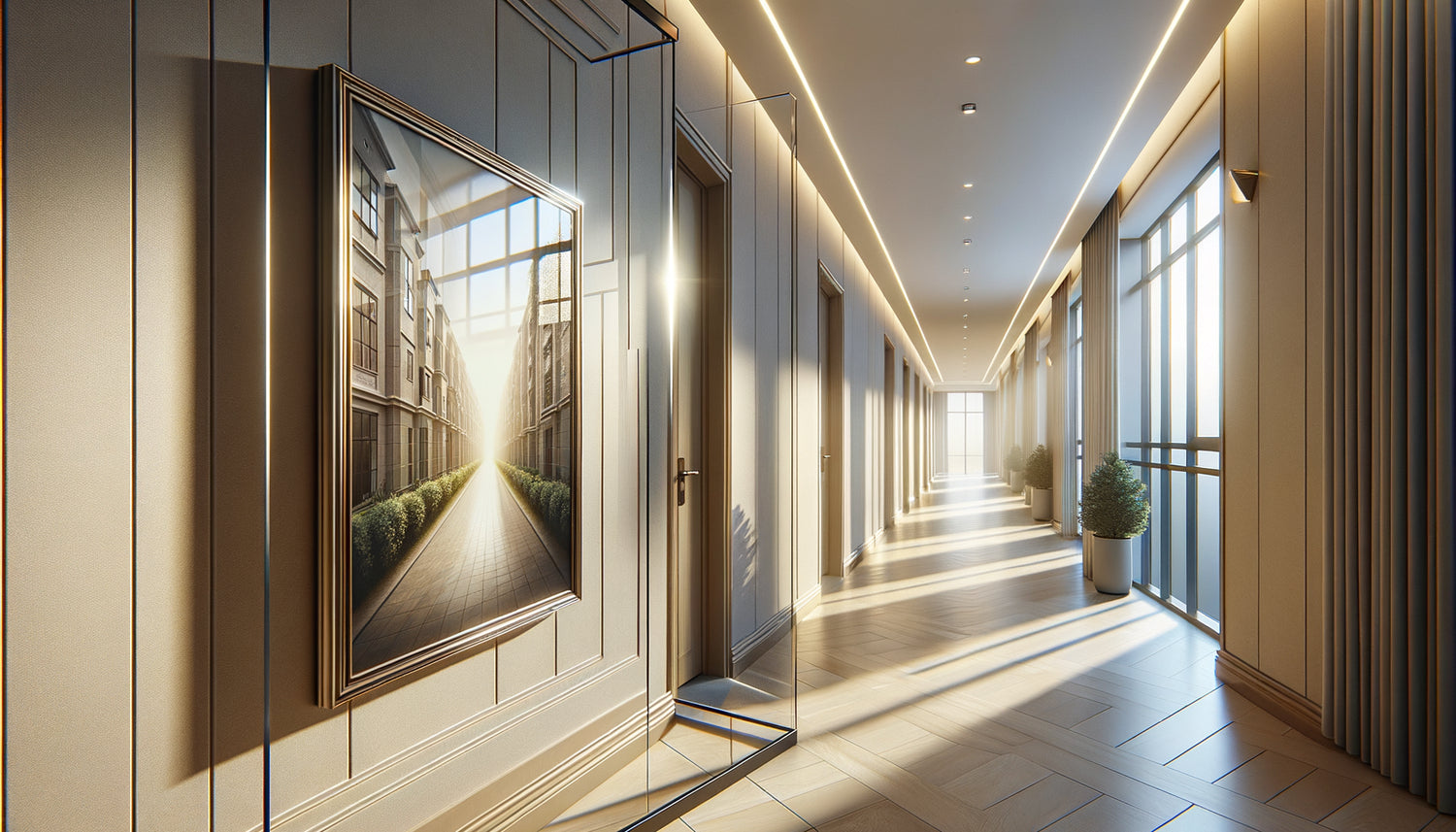
This morning again, walking through the hall of my residence, I noticed this empty frame against the wall for months. The building manager had it removed after a teenager threw his ball at it. Yet, that painting really brightened up this gray passage. How many condominiums give up beautifying their common areas for fear of vandalism or accidents? The solution exists, and it is more accessible than one might imagine.
Here's what an unbreakable acrylic brings to your condominium hallway: a virtually indestructible protection that resists impacts, a lightness that facilitates installation without reinforcing wall fixings, and crystalline transparency that enhances your works without exposing them to danger. No more glass debris on the floor, disputes with worried neighbors, or damaged artworks due to clumsiness.
Are you hesitating between traditional glass and modern protection? Are you wondering if acrylic will yellow, scratch at the first touch, or give your painting a cheap look? I understand these reservations. For fifteen years, I have equipped collective spaces, from art galleries to company halls, and I have seen the spectacular evolution of protective materials. What is done today in terms of acrylic glass has nothing to do with the dull plexiglass of the 90s.
In this article, I reveal the specific criteria for choosing the right type of acrylic according to your configuration, the thicknesses adapted to passageways, and the finishes that will transform your hallway into a secure gallery.
Why acrylic is essential in collective spaces
The first time a condominium manager contacted me to replace broken glass in a hallway, I immediately suggested 3mm anti-reflective acrylic. Three years later, the same painting is still intact despite moves, strollers bumping into it, and rambunctious children. Traditional glass would have already been replaced twice.
Acrylic, or PMMA (polymethyl methacrylate), has an impact resistance 17 times greater than glass. In concrete terms, where a traditional pane of glass shatters under impact, acrylic absorbs the shock and may, at worst, crack slightly without breaking into dangerous pieces. For a condominium hallway, this characteristic changes everything: you eliminate the legal risk associated with potential injuries.
Another major advantage: its featherweight. An acrylic panel of 60x80cm weighs approximately 1.2kg compared to 4.5kg for its equivalent in glass. This lightness allows you to hang your paintings on plasterboard walls without structural reinforcement, which avoids heavy work and general assembly votes.
The three grades of acrylic to know
Not all acrylic glasses are equal. I distinguish three categories according to their manufacture and performance:
Extruded acrylic: the most economical, produced continuously by extrusion. Perfect for small formats (less than 40x50cm) and tight budgets. However, it scratches more easily and may exhibit slight undulations in large format. I reserve this for decorative paintings without great artistic value.
Cast acrylic: made by slow polymerization between two glass plates, it offers perfect flatness and superior hardness. This is my standard choice for apartment building hallways. Its remarkable optical clarity rivals mineral glass, and its scratch resistance is suitable for high-traffic areas.
UV treated acrylic: essential if your hallway receives natural light. This treatment filters 98% of ultraviolet rays, preserving the colors of your works. A cost increase of 20 to 30%, but a worthwhile investment in the long term if you display lithographs, watercolors or photographs sensitive to fading.
The thickness that changes everything: from 2mm to 5mm
I often see apartment buildings opting for 2mm for economy. Strategic error. In a passageway, thickness determines longevity and perceived quality. Here is my proven rate based on hundreds of installations:
2mm thickness : reserved for very small formats (A4 maximum) or temporary posters. Too flexible, it sags easily and gives an impression of fragility that actually contradicts the safety objective. To be avoided in apartment buildings.
3mm thickness : the optimal standard for paintings from 40x60cm to 70x100cm. This thickness offers the best rigidity-weight-cost compromise. The panel remains perfectly flat, resists handling during cleaning, and retains an appreciable lightness. It is my default choice in 70% of projects.
4 to 5mm thickness : for large formats (beyond 80x120cm) or valuable works. This thickness provides exceptional rigidity and a visual presence that gives your space a true gallery status. The extra cost (about 40% compared to the 3mm) is justified if you invest in an original work or a high-end reproduction.
The trap of over-thickness
Some providers offer 6 or 8mm arguing for maximum safety. In my experience, this is useless and counterproductive in a hallway. The weight becomes significant (more than 3kg for a standard format), the fixings must be reinforced, and visually, this thickness creates a museum-like showcase effect that can seem disproportionate in a residential space. Keep these thicknesses for very high traffic commercial environments.

Anti-glare or glossy: a matter of lighting
You've chosen your thickness, perfect. Now, the surface finish will determine how your artwork is perceived depending on the lighting conditions in your hallway. This decision directly impacts daily visual enjoyment.
The standard transparent acrylic (glossy finish): economical and very common. Perfect if your hallway is dimly lit or has no direct light source facing the artwork. Its crystalline clarity enhances colors. The downside: in a hallway with a window or LED spotlights, it generates annoying reflections that partially mask the work depending on the viewing angle.
Anti-glare acrylic: treated with a microscopic matte coating on one or two sides, it diffuses light and eliminates 95% of reflections. This is my systematic choice for hallways equipped with wall sconces or receiving natural light. The anti-reflective treatment makes the acrylic almost invisible, creating this magical impression that the work floats on the wall. An additional cost of 30 to 50%, but the visual experience fully justifies the investment.
An important technical detail: prioritize double-sided anti-glare treatment if your hallway has lighting at both ends. On textured works (canvases, relief reproductions), single-side treatment is usually sufficient.
Installation and maintenance: the gestures that prolong life
You've selected your shatterproof acrylic glass ideal? Perfect. Now let’s talk about what makes an installation last in a shared space: installation and maintenance. I have seen excellent materials fail due to avoidable mistakes.
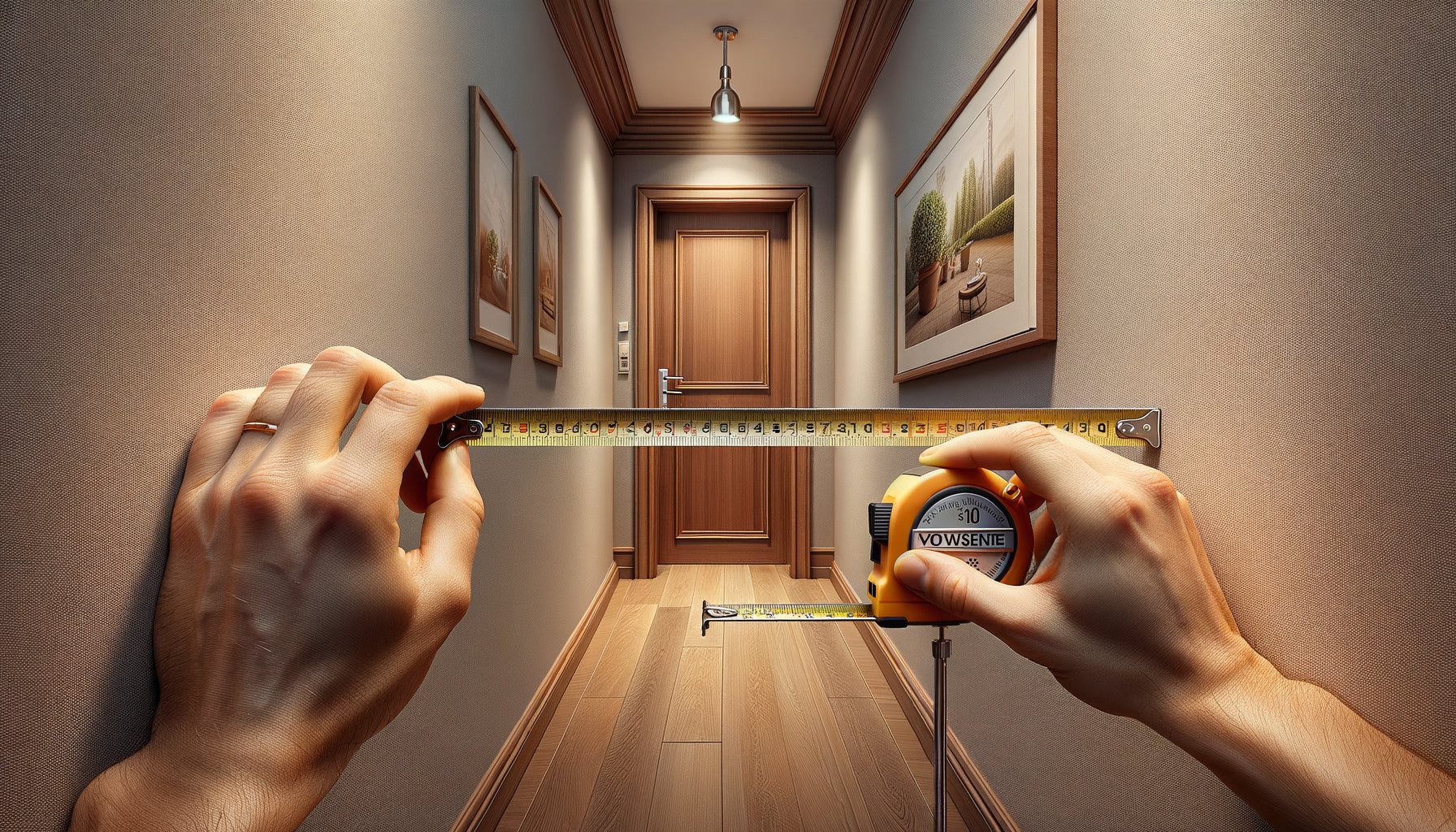
For wall mounting, forget lightweight suspension systems. An artwork with acrylic protection requires fixings suitable for your type of wall: molly for drywall, nylon plugs for brick, chemical anchoring for cellular concrete. The rule: provide a load capacity three times greater than the actual weight. A 60x80cm format with frame and acrylic weighs approximately 2.5kg; your fixings must support 7 to 8kg.
Cleaning that preserves transparency
Acrylic scratches more easily than glass, but is also easier to clean. Absolutely avoid alcohol-based products (ordinary windows) which attack the polymer and create microfissures. Use only warm soapy water with a microfiber cloth, in gentle circular motions.
For inevitable minor scratches after a few years, a special acrylic polish (available online for €15-20) will restore your protection to like-new condition. I intervene every 2-3 years on my collective installations for this light preventative maintenance.
Transform your hallway into a secure art gallery
Discover our exclusive collection of wall art for Hallway that combines refined aesthetics and optimal protection for your common areas.

Mistakes to Absolutely Avoid
After fifteen years of equipping condominiums, I could write a catalog of missteps. Let me spare you the most costly ones.
Mistake No. 1: Choosing the cheapest acrylic without checking its origin. Low-end Asian acrylic yellows in 18-24 months due to light exposure. Opt for European manufacturers (Plexiglas, Altuglas, Perspex) even if the extra cost is 25%. Your investment should last a decade, not two years.
Mistake No. 2: Neglecting the seal between the acrylic and the frame. Moisture seeps in, creating condensation that irreparably stains your artwork. A thin silicone sealant or adhesive sealing felt (2€ per meter) permanently solves this problem. Five minutes of work to avoid irreversible damage.
Mistake No. 3: Installing an acrylic-protected painting facing a heat source. Radiator, nearby halogen spot: the acrylic deforms above 80°C. Keep a minimum distance of 50cm from any heat source. If your hallway has radiators under the walls, move your hanging or opt for a vertical format that avoids the heat zone.
Your Hallway Deserves More Than a Bare Wall
Imagine: tomorrow morning, you walk through this once impersonal hallway. Your gaze falls on this autumn forest photograph, perfectly protected behind its anti-glare acrylic. The colors seem to breathe, the artwork dialogues with natural light without any parasitic reflections. Your neighbors stop, comment, smile. The common area is no longer just a passageway, but a place that tells a story.
You now know the type of acrylic suitable: <strong>3mm cast with anti-reflective treatment</strong> for standard sizes, prioritizing European certified UV-resistant manufacturers if your hallway receives natural light. Start with a single test artwork, observe the reaction of your co-owners, and gradually expand this secured gallery.
Beauty doesn't have to be fragile. With the right shatterproof acrylic glass, it finally becomes accessible to spaces we all share.
Frequently Asked Questions
Will the acrylic yellow over time in my hallway?
This legitimate concern comes from old plexiglass of the 80s and 90s which did indeed yellow. Modern quality acrylics, especially those treated with UV protection, <strong>retain their crystalline transparency for 15 to 20 years</strong> even when exposed to natural light. The key is to choose a cast acrylic from European manufacture (Plexiglas GS, Altuglas, Perspex) rather than inexpensive Asian versions. If your hallway has a window or skylight, systematically invest in the UV-resistant version (25-30% extra cost). This protection filters ultraviolet rays responsible for yellowing and color degradation of your artwork. In a hallway without natural light, standard cast acrylic is more than sufficient and will maintain its clarity for decades. I regularly follow installations from 2008 that have not taken any tint, proof that current formulations have definitively solved this past problem.
How to avoid acrylic scratches in a passageway?
Superficial scratches are indeed the Achilles' heel of acrylic, but several strategies minimize them considerably. First, <strong>choose cast acrylic rather than extruded</strong>: its superior surface hardness makes it naturally more resistant to micro-scratches. Then, position your artwork at a strategic height: between 1.50m and 1.80m from the floor, you avoid the area where strollers, suitcases and backpacks regularly bump. For maintenance, absolutely ban abrasive sponges and alcohol-based window cleaners that create micro-scratches. Use only a damp microfiber cloth with soapy water, in gentle circular motions. If scratches appear despite these precautions after a few years, they are easily repaired with special acrylic polish (Novus, Xerapol) which restores impeccable transparency in 10 minutes of polishing. Unlike glass which is permanently scratched, acrylic offers this ability to renovate which considerably extends its aesthetic lifespan.
What thickness of acrylic should I choose for a large 100x80cm artwork?
For this generous format, I strongly recommend a thickness of 4mm, or even 5mm. Why this thickness when 3mm is sufficient for medium formats? Because beyond 80cm in width, an acrylic that is too thin (2-3mm) lacks structural rigidity and may exhibit slight warping or undulations, particularly with temperature variations in a hallway. The 4mm offers the perfect flatness necessary for large formats, eliminates any risk of deformation, and confers this visual presence that enhances your artistic investment. Admittedly, the weight increases (approximately 2.8kg for a 100x80cm piece in 4mm), but it remains three times less than equivalent glazing. Simply plan for suitable wall fixings: two attachment points with dowels capable of supporting 10kg each guarantee absolute safety. The extra cost of the 4mm compared to the 3mm (approximately 35-40%) is fully justified on large formats: your painting will retain its impeccable appearance for years, without any flatness defect that would spoil the visual experience.