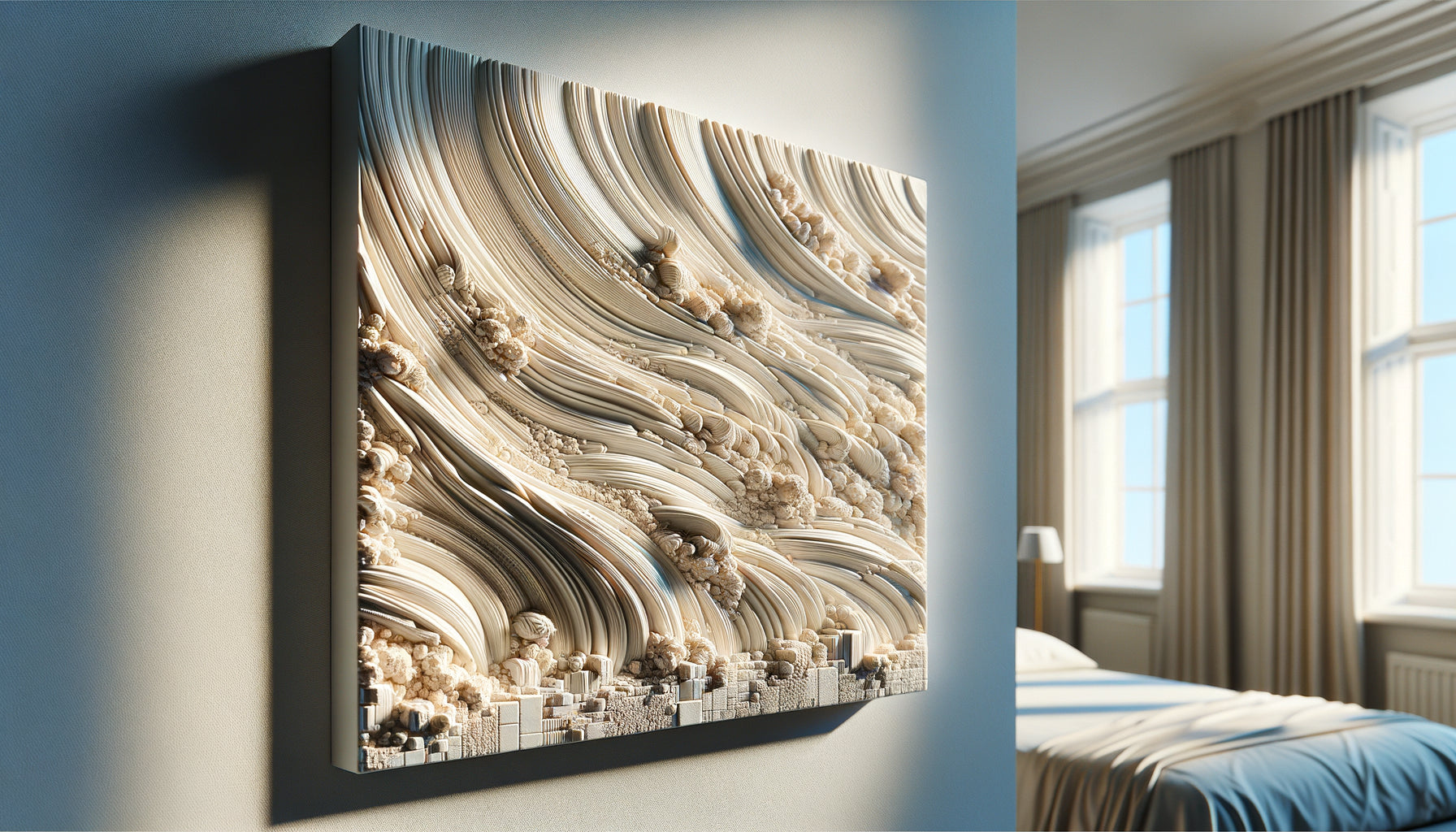
This morning again, I received a magnificent canvas in my workshop... covered with traces of chocolate fingerprints and splashes of orange juice. A desperate mother had brought it to me: "It was her daughter's favorite painting, but impossible to clean." I have experienced this scene dozens of times. And each time, my answer is the same: everything depends on the protective varnish.
Here's what a washable varnish brings to your paintings in a child's room: invisible protection against everyday splashes, remarkable ease of maintenance with just a sponge, and the guarantee that the artwork will last through childhood without losing its luster.
Because in a child's room, accidents are inevitable. Water pistol battles, paint drips during creative sessions, purée projections during clandestine snack time... Every parent knows this anxiety of seeing a beautiful decoration damaged by real life. And yet, giving up beauty to prioritize practicality has never been my philosophy.
After fifteen years restoring artworks in difficult environments - from the family dining room to the gourmet restaurant - I have developed precise expertise in protective varnishes. I will reveal exactly which types of varnish really resist splashes, how to apply them to your paintings, and above all how to transform a child's room into a space that is both beautiful and livable.
Washable acrylic varnish: the invisible shield for children's rooms
In my workshop, washable acrylic varnish has become my number one ally for all artworks intended for intense living spaces. Why? Because it creates a transparent protective barrier that repels water and stains without altering the colors of the painting.
This type of varnish acts like an invisible waterproofing agent. Unlike traditional varnishes which can yellow or crack over time, acrylic varnish remains stable for years. It is made up of synthetic resins suspended in water which, once dry, form a flexible and resistant protective film.
I tested this varnish on a painting installed above a changing table for three years. Result? Hundreds of splashes of wipes, moisturizer and even some diaper projections... yet the artwork remained impeccable. A simple wipe with a damp sponge is enough to remove everything.
The technical characteristics that make the difference
Not all acrylic varnishes are created equal. For a child's room exposed to splashes, look for these specific specifications:
The varnish must be classified as “washable” and not simply “water resistant”. The difference is crucial: a water-resistant varnish repels moisture, but a washable varnish withstands repeated rubbing with a damp sponge without being damaged. Check the label: it should explicitly mention "washable with a damp sponge".
The satin finish is my absolute recommendation for children’s rooms. More practical than a glossy finish, which reveals every fingerprint, and more protective than a matte finish, which absorbs more dirt. Satin offers the best compromise: slightly lustrous, it protects effectively while remaining visually discreet.
Also, opt for a fast drying varnish (2 to 4 hours between coats). In the rush to prepare a room before baby arrives, this feature becomes invaluable. I’ve seen too many rushed projects because deadlines were too short with slow-drying varnishes.
Polyurethane varnish: reinforced protection for high-risk areas
When a mother ordered a painting for her 4-year-old son’s creative play area, I immediately thought of polyurethane varnish. Why? Because this area was going to experience more than just accidental splashes: paint, glue, modeling clay... A creative battlefield.
Polyurethane varnish is the most resistant of all washable varnishes. It forms an extremely hard protective layer that resists not only splashes but also light impacts and scratches. If your painting is installed near a play area, a sink or a craft zone, it’s the ideal choice.
I protected a painting installed 50 centimeters from a small sink in a Montessori bedroom with this type of varnish. Three years later, despite countless daily splashes when washing hands, the artwork is in perfect condition. The polyurethane varnish has kept its promises of extreme durability.
Polyurethane application precautions
This varnish requires a more rigorous application technique than acrylic varnish. It releases fumes during drying, requiring excellent ventilation. I always recommend varnishing the painting in a garage or workshop, never directly in the child’s room.
The drying time is also longer: allow 24 hours between each coat, and 72 hours before the varnish reaches its maximum hardness. Plan the application at least a week before installing the painting in the room, so that all emissions dissipate completely.
Finally, apply polyurethane varnish in thin coats rather than a thick coat. Three thin coats create more even and beautiful protection than a thick coat that may run or bubble. I repeat this to all my customers: patience in application guarantees the longevity of the result.

How to apply your washable varnish for optimal protection
The best protection is useless if the application fails. I have recovered too many poorly varnished paintings, with runs, unprotected areas or unsightly bubbles. Here's my proven method, the one I use in my workshop for fifteen years.
First, perfectly prepare the surface. If the painting is acrylic paint, wait at least 48 hours after the last brushstroke before varnishing. The paint must be completely dry in depth, not just on the surface. Then gently dust with a slightly damp microfiber cloth.
For the application itself, use a flat soft-bristled brush 5 to 10 cm wide depending on the size of the painting. Foam brushes are practical but sometimes leave micro-bubbles. Dip your brush in the varnish, wipe off lightly against the edge of the pot, then apply in regular vertical strips, then cross with horizontal passes to even out.
The number of coats that changes everything
A single coat of washable varnish only offers superficial protection. For a child's room exposed to splashes, apply at least three coats. This is the golden rule of my workshop, which guarantees real durability over time.
Between each coat, strictly adhere to the drying time indicated by the manufacturer. With acrylic varnish, wait generally 2 to 4 hours. Lightly sand with 000 (ultra-fine) steel wool between coats to remove any imperfections and promote adhesion of the next layer.
After the last coat, let the painting dry completely for at least 48 hours before installing it in the room. And above all, wait a full week before testing wash resistance. The varnish continues to harden for several days, and premature cleaning could damage it.
Mistakes to absolutely avoid with washable varnish
Last year, a customer brought me back a painting I had created for her: the varnish was completely veiled, whitish, with traces everywhere. After discussing it, I understood her mistake: she had cleaned the painting with an aggressive household product the week following installation. A classic error that compromises all protection.
Never use chemical products to clean a varnished painting, even with washable varnish. No alcohol, no white vinegar, no glass cleaner, no detergent. These substances can attack the varnish, make it opaque or create irreversible stains. Clear water is sufficient in 99% of cases.
Also avoid varnishing in humid weather or in a room that is too cold (less than 15°C). Ambient humidity can cause a "whitening" phenomenon: an unsightly milky veil appears on the surface. If this happens, apply another layer of varnish in dry weather to correct the problem.
The trap of thick varnish
For efficiency's sake, some apply the varnish in a very thick layer, thinking they will save time. Big mistake. A thick layer dries poorly in depth, remains sticky for a long time, yellows more easily and is likely to crack over time.
Always prefer multiple thin layers rather than one thick layer. It's longer, of course, but the protection will be infinitely superior. In my workshop, I have never deviated from this rule, even under pressure from short deadlines. Quality cannot be compromised when it comes to protecting a work for years.
Do you dream of a child's room that is as beautiful as it is practical?
Discover our exclusive collection of wall art for kids that resists everyday adventures while bringing poetry and softness to their world.

Daily maintenance: keep your painting impeccable effortlessly
A well-applied washable varnish transforms maintenance into a simple and quick gesture. But you still need to adopt the right reflexes to preserve protection over time. Here are my practical recommendations, those that I give to all my clients.
For fresh splashes, act quickly with a soft, slightly damp cloth. The faster you act, the easier the cleaning will be. If the substance has dried (paint, food...), generously moisten the area with a soft sponge soaked in warm water, let it sit for 30 seconds, then gently wipe in circular motions.
Never use abrasive sponges, hard brushes, or scrapers. Even with a resistant varnish, these tools can create micro-scratches that will eventually tarnish the surface when accumulated. A soft sponge or microfiber cloth is sufficient to clean everything without damaging the varnish.
When should you consider a new varnishing?
Even the best washable varnish wears out over the years. After 5 to 7 years of exposure to splashes and repeated cleanings, you may notice that the surface is slightly less shiny, that water beads less well, or that some stains are more difficult to remove.
This is a sign that it's time to re-varnish the artwork. Good news: if the original varnish was acrylic, you can simply add new coats after light sanding and dusting. There’s no need to completely strip the old varnish. Three new coats restore the artwork to its initial protection.
In my workshop, I offer a "refreshment" service for artworks that I created several years ago. It's always moving to see these works again which have accompanied an entire childhood, to hear them recounted by the parents, and to give them life back for perhaps a second generation.
Visualize the transformation in your child’s room
Imagine that artwork you love so much, the one that brings this touch of softness and poetry to the room. Now protected by its washable varnish, it serenely goes through all the daily adventures. Splashes from the bathtub water fight? A sponge wipe. Fingerprints after snack time? Gone in seconds.
You no longer have that apprehension each time your child plays near the artwork. You no longer spend your time repeating "attention, don't touch the picture". Beauty and life coexist harmoniously at last. The artwork remains impeccable, the colors vibrant, and your child grows up in an environment that is both aesthetic and adapted to their reality.
My final recommendation? Don’t postpone protecting your artworks. Each day without varnish is a risk of irreversible accident. Invest in a quality washable acrylic varnish, take the time to apply it correctly in three coats, and offer your works the protection they deserve. Your child will grow up, memories will accumulate, but the artwork will remain as beautiful as on the first day.
Frequently asked questions about washable varnish for children's artworks
Can you apply washable varnish on any type of paint?
Yes, the washable acrylic varnish is suitable for most supports: acrylic paint, fixed gouache, canvas print, protected watercolor... The only condition is that the surface must be perfectly dry and non-powdery. For oil paints, wait at least 6 months for complete drying before varnishing, as oil dries very slowly in depth. If you have any doubts about compatibility, always test the varnish on a small, inconspicuous area before treating the entire surface. In my workshop, I systematically perform this test, even with materials that I know well: each paint brand has its own characteristics and it is better to prevent than cure. For photographic prints, check that the ink is properly fixed (allow at least 48 hours of drying) before applying the varnish, otherwise you risk bleeding colors.
How long does a washable varnish actually protect a painting?
With correct application in three layers and suitable maintenance, a quality washable acrylic varnish effectively protects for 5 to 8 years in a child's room exposed to splashes. A polyurethane varnish can last 10 years or more thanks to its superior hardness. The lifespan obviously depends on the intensity of use: a painting above a bed will be subjected to less aggression than a painting near a play area or a sink. Signs of wear appear gradually: the varnish loses slightly its luster, water beads less well, some stains require more rubbing to remove. As soon as you observe these signals, plan for a new varnishing. In my experience, paintings that I varnished 7 years ago for my first clients are only beginning to need refreshing, proof that investing in good varnish is really worthwhile in the long term.
Does the varnish change the appearance of the painting's colors?
A quality varnish modifies the appearance very slightly, usually by intensifying the colors and increasing their saturation, which is rather an aesthetic advantage. Satin varnish creates a subtle effect that visually enriches the work without distorting it. Gloss varnish accentuates this phenomenon further and can create reflections depending on the lighting in the room. If you absolutely want to preserve the original matte appearance, opt for a matte varnish, but be aware that it offers slightly inferior protection against splashes because its microporous texture retains more dirt. In my workshop, I always recommend doing a test on a marginal area or on a scrap of the same paint to visualize the final rendering before varnishing the entire painting. This precaution avoids unpleasant surprises and allows you to adjust the choice of varnish according to your aesthetic preferences. After fifteen years of practice, I can assure you that a quality satin varnish almost always enhances the original work while protecting it effectively.