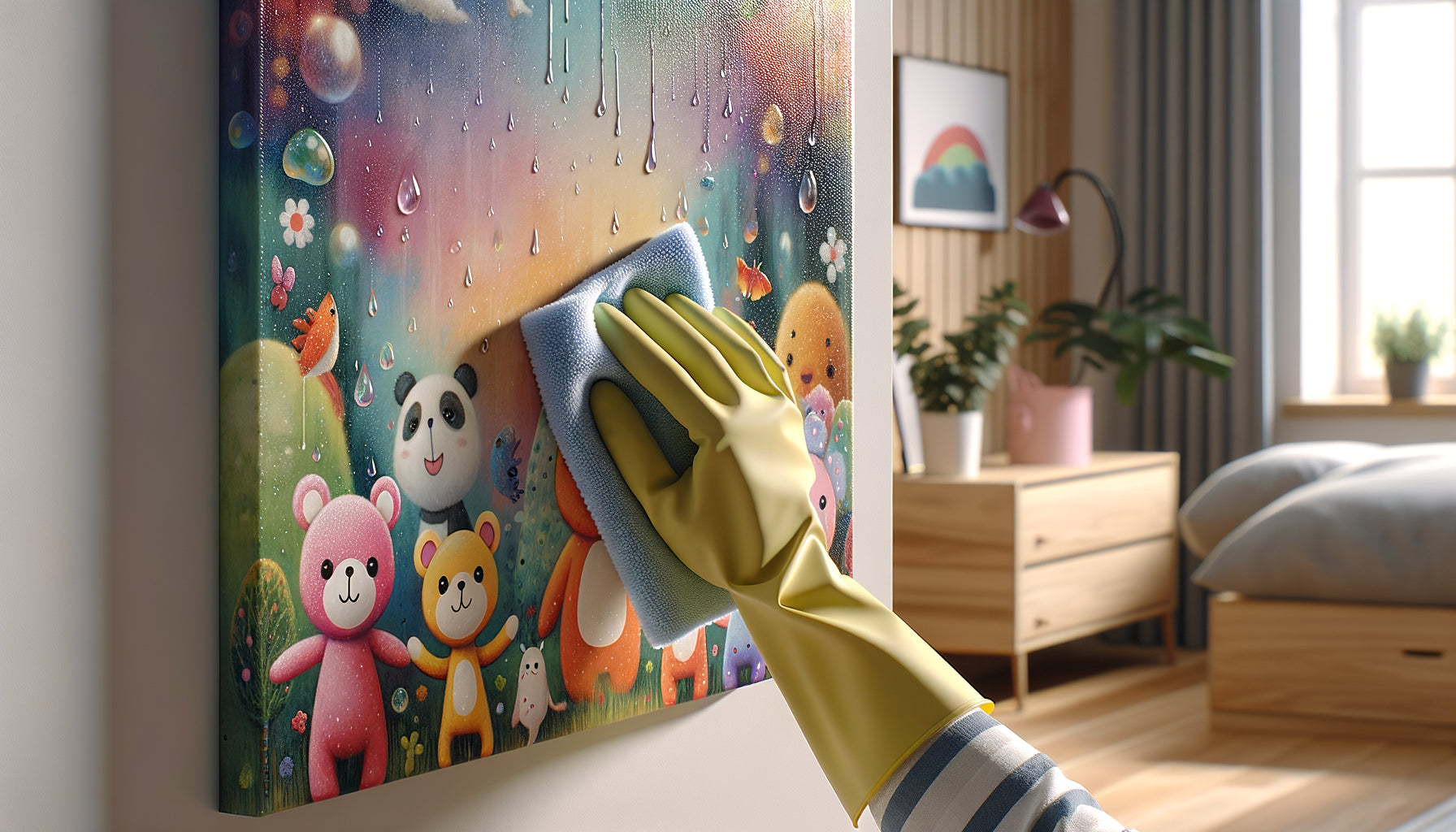
When my daughter Emma was born, I spent weeks decorating her room with almost obsessive attention to detail. Every detail mattered. But it was when I hung an adorable painting depicting a colorful unicorn that I suddenly realized: what if the pigments contained toxic substances? This question led me to an unsuspected universe, that of chemical safety in children's decorative art.
Here’s what checking for the absence of heavy metals in pigments brings: peace of mind for your family, the guarantee of a healthy environment for your children, and the certainty that each decorative element contributes to their well-being rather than exposing them to toxins.
You have probably felt this nagging concern when discovering alerts about recalled toys due to the presence of lead or cadmium. How can you be sure that the paintings adorning your children's rooms do not hide these invisible dangers? The frustration is real: labels often remain vague, manufacturers are opaque, and you feel helpless in the face of this opacity.
Rest assured: there are concrete and accessible ways to verify the composition of pigments. I will share with you the methods I have learned through my research and exchanges with experts in environmental toxicology and responsible manufacturers.
Why do heavy metals still hide in our paintings?
Heavy metals in pigments are not a manufacturing accident. Historically, lead offered brilliant whites, cadmium vibrant reds and yellows, chrome deep greens. These elements made it possible to obtain colors of remarkable intensity and exceptional longevity.
Even if European regulations have considerably restricted their use, some imported paintings or those manufactured with less stringent standards may still contain these substances. Lead, particularly insidious, affects the neurological development of children. Cadmium accumulates in the body and damages the kidneys. Mercury and arsenic, although rarer, pose similar risks.
The problem is all the more concerning because children naturally put their hands to their mouths after touching surfaces. Pigment dust can gradually detach, creating an invisible chronic exposure.
Certifications: your first protective shield
Before even thinking about complex analyses, start by examining the painting’s certifications. This is your first line of defense, the most accessible and often the most reliable.
EN 71-3 standard: the European standard
This certification specifically tests the migration of heavy metals in toys and children's articles. An EN 71-3 certified artwork has been subjected to rigorous analyses measuring 19 different chemical elements, including lead, cadmium, chromium, mercury and arsenic. The permitted thresholds are extremely low, calculated to protect children even in case of accidental ingestion.
Look for the CE marking accompanied by the specific mention of this standard. Be careful: the simple CE logo is not sufficient, as it covers many directives. You must find the explicit reference to EN 71-3.
Complementary eco-labels
The Öko-Tex label, although primarily textile, also applies to some artwork supports and guarantees the absence of harmful substances. The GREENGUARD certificate evaluates chemical emissions and includes heavy metal tests. These labels are valuable additional guarantees.
When you choose an artwork, systematically ask the seller to provide you with the analysis certificates. A serious manufacturer has this documentation and is happy to share it. Refusal or evasion in response to this request should alert you.

Home verification methods
Sometimes, you fall in love with a local artisan's artwork, a vintage creation or a work without clear certification. In these cases, home verification solutions exist.
Lead detection kits
Available in hardware stores or online for 15 to 30 euros, these lead test kits come in the form of reactive pads. You gently rub the surface of the artwork with the pad: if it turns pink or red, lead is present.
These tests offer a first quick indication, particularly useful for old artworks or of uncertain origin. Their limitation? They only detect lead, not other heavy metals such as cadmium or chromium.
Portable XRF analyzers: professional accuracy
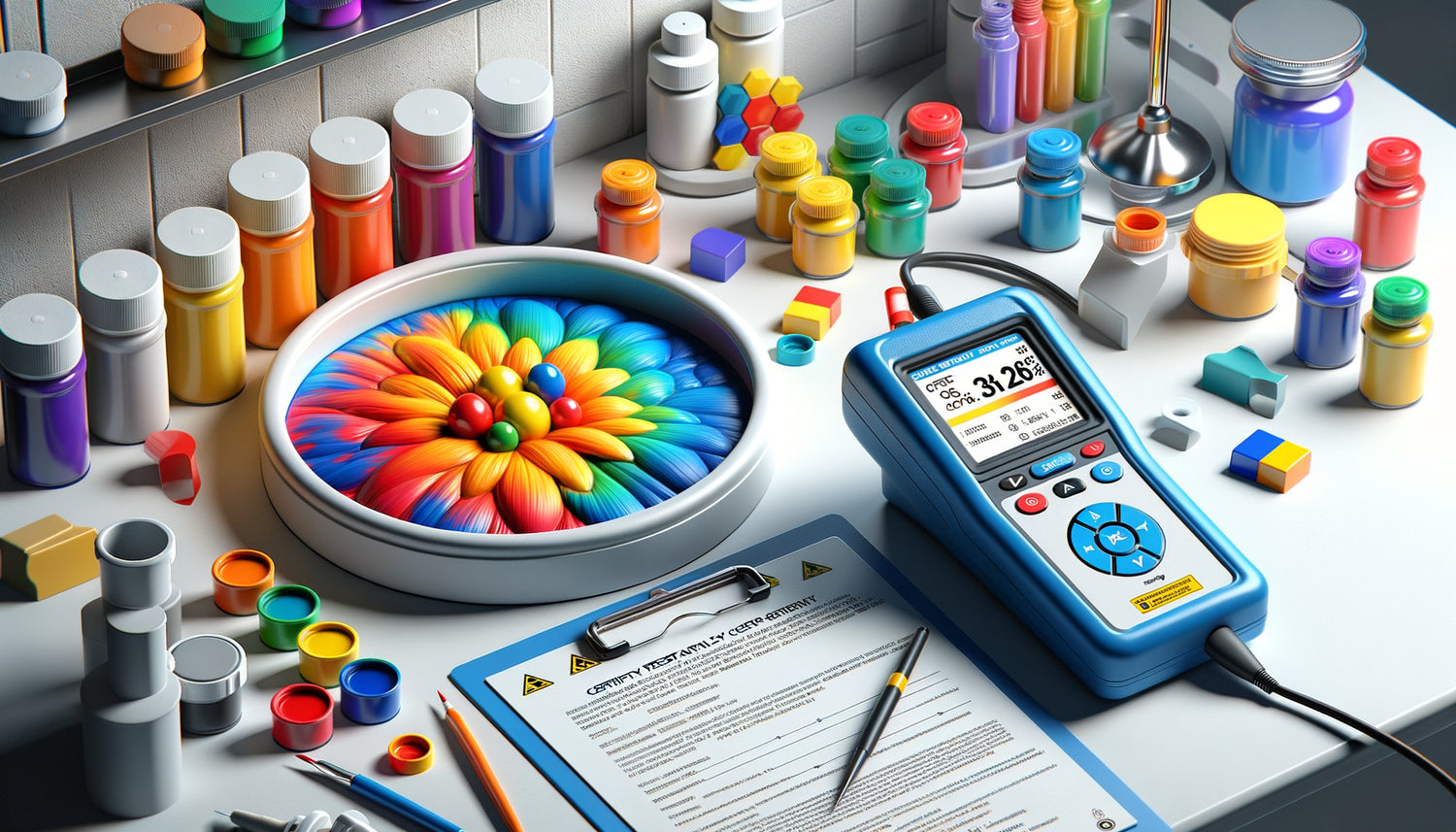
For a complete analysis of heavy metals, X-ray fluorescence (XRF) analyzers represent the gold standard. These devices, used by art restoration professionals and environmental safety experts, instantly identify the elemental composition of pigments without damaging the artwork.
Personal investment (several thousand euros) is obviously not realistic. But some testing laboratories, consumer associations or child protection centers offer this service. Contact your regional health agency or environmental health specialized organizations: they sometimes have this equipment or can direct you.
The cost of a professional analysis varies between 50 and 150 euros depending on the laboratory. This is a reasonable investment for the health of your children, especially if you own several paintings whose composition you want to check.
Questioning the manufacturer: the right questions to ask
A manufacturer's transparency says a lot about the quality of their products. Before any purchase, engage in dialogue with targeted questions.
Ask explicitly: What pigments do you use? A conscientious manufacturer knows precisely his supply chain and references of its colorants. Modern high-quality pigments bear standardized designations (such as PW6 for titanium white, PY42 for yellow iron oxide) easily verifiable.
Inquire about conformity tests: Have heavy metal analyses been carried out? By which laboratory? When? Can they provide the reports? This approach is not excessive: it is normal and expected in the children's products sector.
Find out about the place of manufacture. European workshops are subject to strict regulations (REACH regulation in particular), while some imports escape controls. It’s not protectionism: it’s a regulatory reality that directly affects product safety.
Finally, ask if the pigments are certified non-toxic by organizations such as ASTM (American Society for Testing and Materials) or if they meet the AP (Approved Product) or CP (Certified Product) standards of the ACMI label, references in the art world.

Prioritizing natural pigments and modern alternatives
The best way to verify the absence of heavy metals remains to choose paintings that have never contained them.
Natural pigments from plant or mineral origin offer a magnificent palette without toxicity. Ochres, earths, natural indigo, vegetable charcoal create soft and organic shades particularly suitable for children's rooms. These ancestral pigments, used for millennia, have an unparalleled safety profile.
Modern synthetic pigments are also excellent alternatives. Phthalocyanines offer intense blues and greens without toxic copper. Quinacridones produce vibrant pinks and purples. Pyrroles deliver bright oranges. These chemical innovations make it possible to obtain all imaginable nuances without resorting to heavy metals.
Look for watercolor or acrylic paintings rather than old oil paintings. Contemporary acrylic formulations systematically use non-toxic pigments, as they specifically target the family and educational market. Artist-quality watercolors are also formulated without dangerous heavy metals.
When doubt persists: the precautionary principle
Despite all your research, you cannot obtain formal guarantee on a painting that makes you crack? Simply apply the precautionary principle.
Position the painting out of direct reach of young children. A height of 1.50 meters eliminates repeated contact with hands. Avoid placing uncertified paintings above the bed or near play areas where children spend most of their time.
Favor frames with protective glass which create a physical barrier between the pigments and the environment. This protection minimizes the risk of particle detachment and direct contact.
Ventilate the room regularly. Good air circulation dilutes any emissions, whatever their nature. This is a general rule of environmental health that applies to all decorative elements.
Finally, observe your child. If he or she exhibits unusual behaviors such as systematically touching or licking a painting, remove it immediately, even if it is certified. Safety always comes before aesthetics.
Give your children beauty without compromising their health
Discover our exclusive collection of paintings for children's rooms that meet the strictest safety standards and use exclusively certified non-toxic pigments.
Creating a truly healthy environment
Imagine your child's room as a protective cocoon where every element contributes to their development. The paintings that adorn its walls are not just decorations: they constitute its daily landscape, the images that accompany its dreams and nourish its imagination.
Checking for heavy metals in pigments is not an anxiety-inducing or excessive measure. It's a conscious act of love, an attention to detail that makes all the difference in building your child’s future health.
Start today: examine the artwork currently in your child’s room, look for certifications, contact manufacturers if necessary. Each verified piece is one less source of worry and a step towards parental peace of mind.
Beauty and safety never oppose each other. On the contrary, they reinforce each other when you make informed choices. Your vigilance today builds the healthy environment your child needs to thrive.