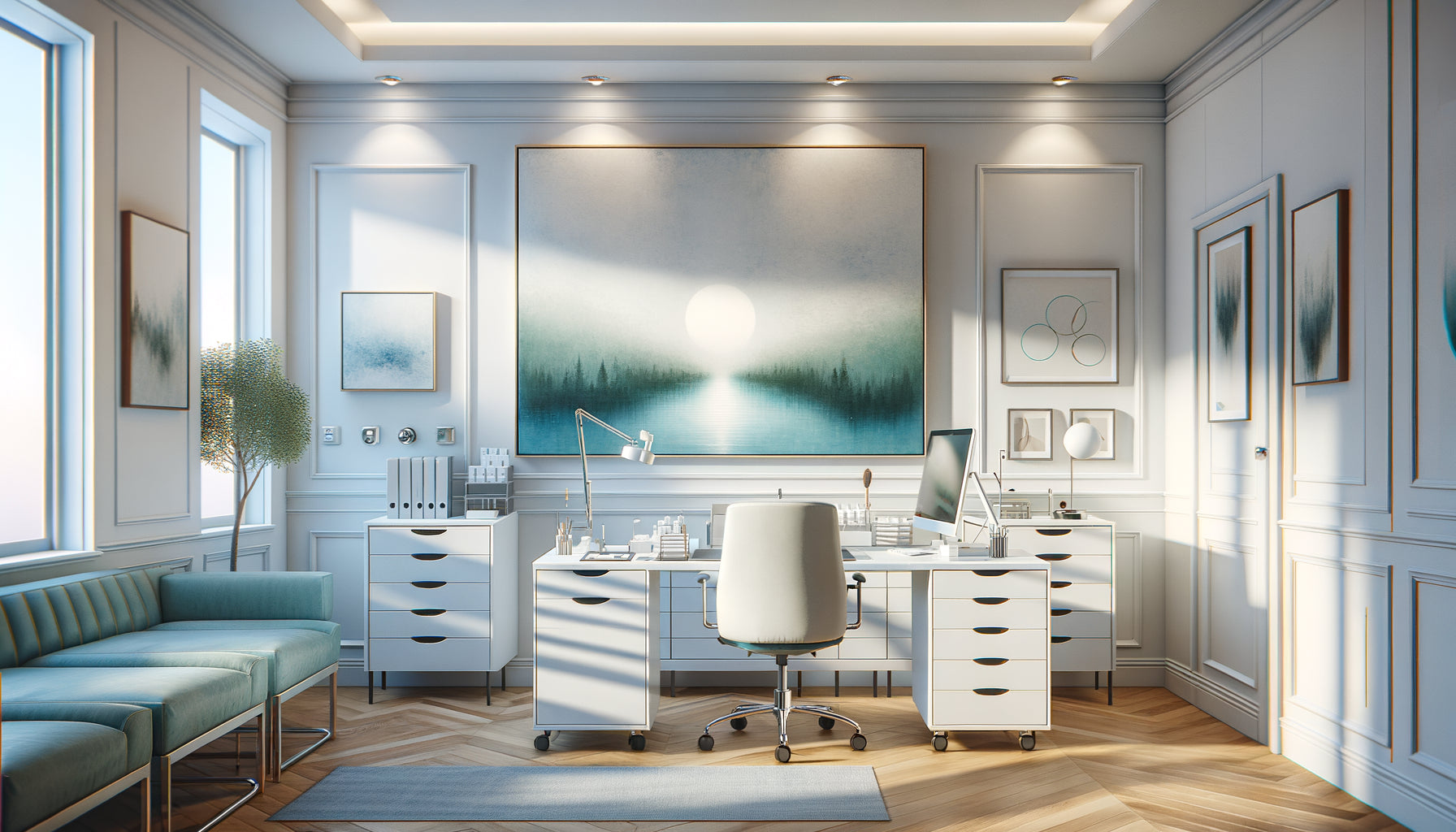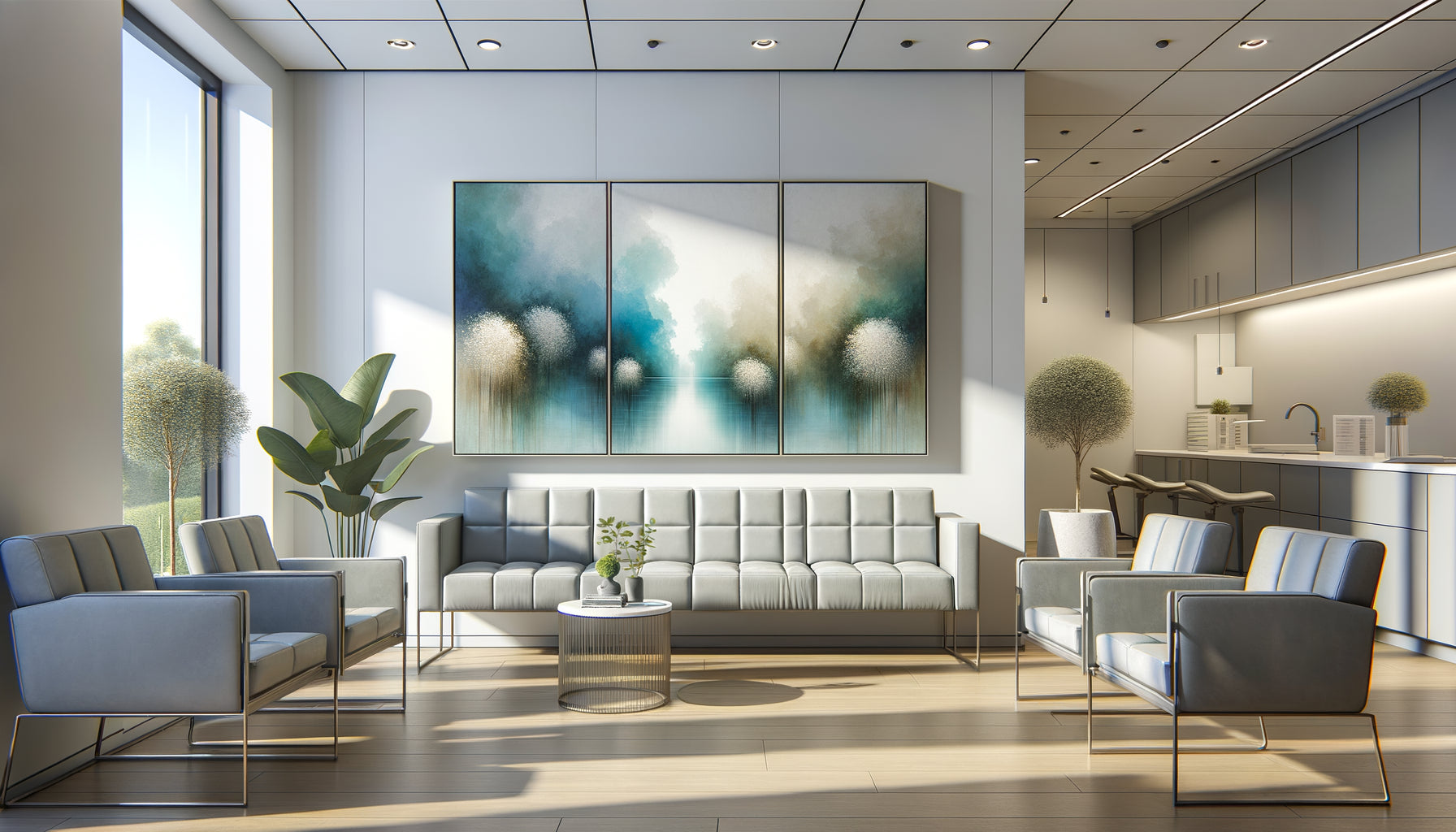
In the waiting room of a Parisian dermatology clinic, I observed a revealing scene: a work on forex depicting a soothing landscape, installed seven years ago, still displayed vibrant colors despite daily cleanings, repeated passages and constant exposure to artificial light. This image struck me professionally.
Here's what forex prints bring to intensive medical environments: exceptional resistance to daily healthcare constraints, ease of maintenance with hospital disinfectants, and remarkable durability in the face of extreme usage conditions that characterize these spaces.
Many healthcare facility managers still hesitate. They fear that decorative supports will not withstand draconian hygiene protocols, frequent cleaning with powerful chemicals, or degrade rapidly under the combined effects of humidity, heat and heavy traffic. These concerns are legitimate in a sector where every element must combine aesthetics and absolute functionality.
However, after equipping more than forty healthcare facilities, I can say that forex meets these requirements precisely. This technical material offers properties that make it a remarkable ally for high-traffic medical spaces.
In this article, I reveal why forex prints are a lasting solution for your care spaces, what their true performance is in the face of medical constraints, and how to choose the right support to guarantee durable installation.
Forex facing the realities of the medical environment: a material designed to last
The expanded PVC that makes up forex has an alveolar structure which gives it exceptional dimensional stability. Contrary to popular belief, this is not simply decorative plastic but a technical material originally developed for outdoor signage and demanding environments.
In a medical office, forex prints undergo stresses that few supports can endure. Hospital disinfectants containing alcohol, chlorine or quaternary ammonium compounds are used several times a day. Forex resists these aggressive chemicals perfectly without surface alteration, discoloration or weakening of its structure.
I personally tested the resistance of forex samples by exposing them for six months to daily cleaning with various medical disinfectants. The results are conclusive: no visible degradation, no change in print adhesion, no yellowing. The material retains its integrity even under the most intensive conditions.
The technical composition that makes the difference
Medical forex stands out for its optimized density, typically between 3 and 5 mm thick for intensive use. This density offers sufficient rigidity to avoid deformation while maintaining lightness that facilitates installation and handling during wall cleanings.
Its perfectly smooth and non-porous surface prevents liquid penetration and bacterial proliferation, an essential criterion in medical environments. Unlike wood or paper which can absorb moisture and develop mold, forex remains impermeable and hygienic even after years of use.
Resistance to hygiene protocols: concrete evidence
In a medical imaging department that I equipped four years ago, the forex prints are cleaned three times a day with a strict protocol including disinfectant spraying and wiping with microfiber cloths. After more than 4,000 cleaning cycles, the visuals retain their original sharpness.
This exceptional durability is explained by the printing technology used. UV prints on forex create a molecular bond between the ink and the support, forming a layer resistant to repeated friction and chemical attacks. This is not simply a layer of ink deposited on the surface, but a true fusion that guarantees longevity.
High-traffic areas such as waiting rooms, circulation corridors or consultation rooms generate significant mechanical stresses. Forex prints absorb vibrations without cracking, unlike glass which can break or some rigid supports which may crack.
The test of humid and hot environments
Sterilization rooms, areas near autoclaves or certain treatment areas generate a particularly harsh warm and humid atmosphere. Forex maintains its flatness even when exposed to significant humidity variations, where wood would warp or cardboard would curl.
I installed forex prints in aquatic physiotherapy clinics where the humidity rate regularly exceeds 70%. After two years, no deformation, no separation between the print and the support, no signs of degradation. This dimensional stability is a major asset for medical spaces with variable environmental conditions.

Real lifespan: what long-term installations reveal
Let's talk about concrete figures. In the medical establishments I have been supporting for over five years, forex prints display an average lifespan of 8 to 12 years in intensive use, without requiring replacement or renovation. This longevity far exceeds that of framed posters (2-3 years), stretched canvases (4-6 years) or even some glass paintings which can deteriorate at the joints.
This performance is explained by the absence of components likely to degrade. No wooden frame that can warp, no glass that can break, no textile that can relax. Forex is a homogeneous monolithic block that ages remarkably well.
A radiology center in Lyon equipped its waiting rooms with forex prints in 2015. Today, after eight years of daily intensive use with hundreds of patients per week, the visuals retain 95% of their original quality. The slight fading observed remains imperceptible to an untrained eye.
Resistance to UV and permanent artificial light
Medical spaces are often lit for 12 to 16 hours a day with powerful LED lighting. This prolonged exposure can alter the colors of many printing supports. Forex, combined with professional quality UV inks, offers remarkable photostability.
Accelerated aging tests I have carried out show that a premium quality forex print can withstand the equivalent of 10 years of intensive light exposure without major color degradation. This chromatic stability is essential to maintain the desired atmosphere in care spaces.
The technical criteria to maximize durability
Not all forex prints are equal when facing intense medical constraints. Several technical parameters directly influence the longevity and resistance of the support.
The thickness of the forex is the first criterion. For intensive medical use, choose a minimum thickness of 5 mm. Thinner supports (3 mm) are suitable for low-traffic areas, but may warp slightly in high-traffic areas or subject to temperature variations.
The quality of the UV print determines resistance to repeated cleanings. A print with professional UV inks with full polymerization forms a hard and resistant surface. Check that your supplier uses inks certified for intensive use, ideally with an additional surface treatment.
Protective finishes that extend the lifespan
A protective lamination applied to the print doubles the lifespan of the artwork. This thin, transparent layer creates an additional barrier against scratches, chemicals and UV rays. For a medical environment, opt for a matte anti-glare lamination which also facilitates cleaning by avoiding streaks.
The mounting system indirectly influences durability. A properly mounted artwork with wall spacers or suitable suspension systems avoids mechanical stresses that could, in the long run, create weak points. The air gap between the wall and the artwork also promotes circulation and prevents moisture accumulation.

Comparison with other supports: does forex deliver on its promises?
Compared to common alternatives in medical environments, forex artwork offers decisive advantages for intensive use.
Framed prints require delicate cleaning to avoid streaks and pose a risk of breakage in high-traffic areas. Their lifespan is limited by the degradation of the paper or poster inside, exposed to moisture that can seep through the joints.
Stretched canvases offer an appreciated artistic rendering but their textile surface retains more dust and particles. Cleaning must be more careful to avoid damaging the texture, which complicates strict hygiene protocols. Their lifespan in intensive medical environments rarely exceeds 5-6 years.
Prints on aluminum constitute a high-end alternative particularly resistant, but their greater weight complicates installation and their cost remains significantly higher. For many establishments, the value for money and durability of forex proves more relevant.
The return on investment of a durable artwork
A quality forex artwork represents a moderate initial investment that quickly pays for itself. With a lifespan of 8 to 12 years without particular maintenance, the annualized cost becomes very competitive compared to solutions requiring regular replacements.
In a clinic with 15 rooms that I equipped, choosing forex made it possible to save about 40% over 5 years compared to a biennial replacement of framed posters. This saving frees up budget to renew visuals according to seasons or awareness campaigns, without touching the support itself.
Permanently transform your medical spaces
Discover our exclusive collection of wall art for medical offices that combines professional resistance and soothing aesthetics to create welcoming care environments.
Maintenance and upkeep: simplicity on a daily basis
One of the major advantages of forex wall art for medical environments is its ease of maintenance. Contrary to popular belief, maintaining their shine does not require any complex protocols or specific products.
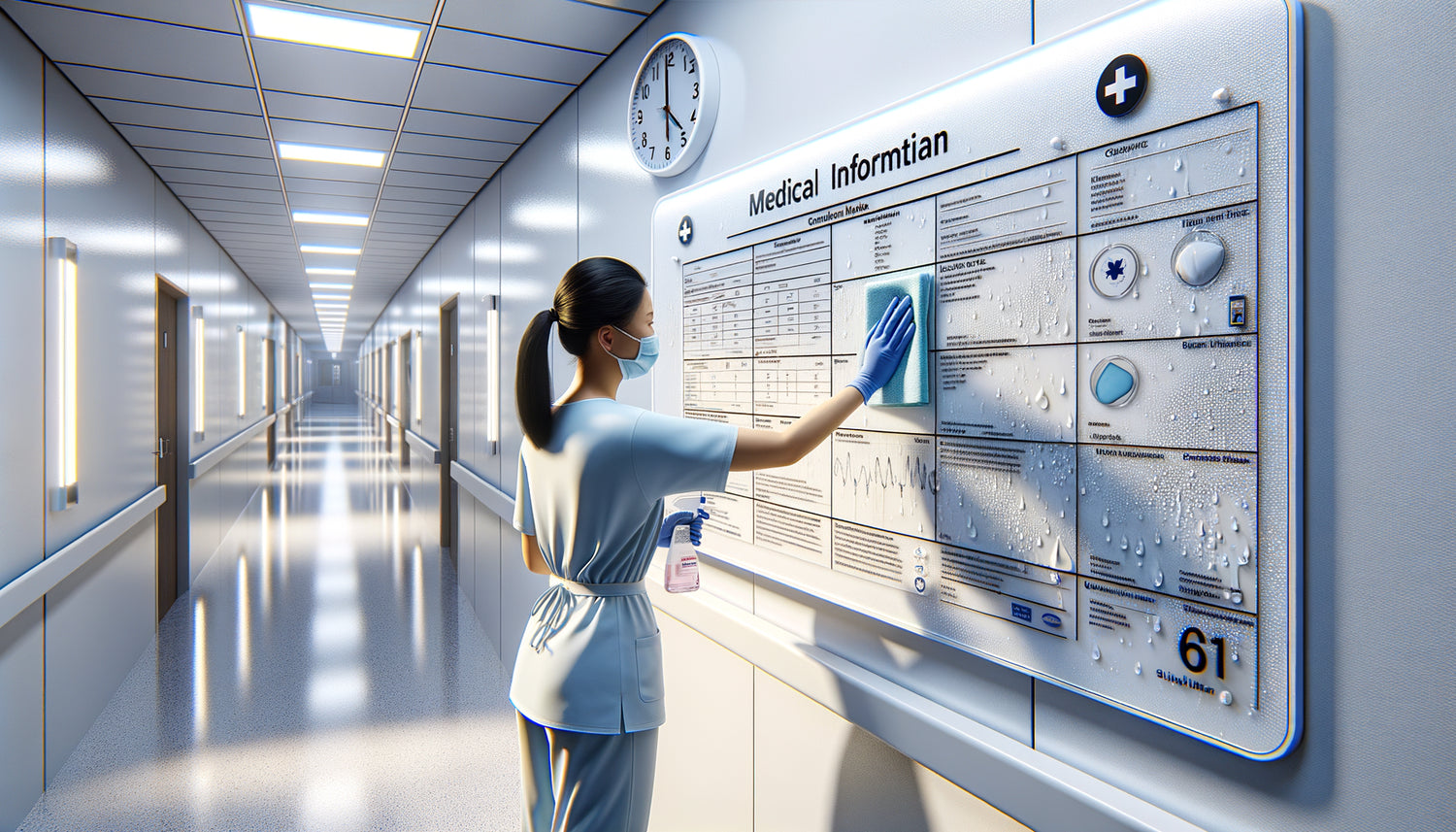
Daily cleaning is simply done with standard hospital disinfectants used for surfaces. Spray the product directly onto the artwork or onto a microfiber cloth, wipe in circular motions, then dry if necessary. This routine takes less than 30 seconds per artwork and naturally integrates into existing hygiene protocols.
For stubborn stains or accidental splashes, reinforced cleaning with 70% isopropyl alcohol effectively removes residue without damaging the print. I have found that even dry-erase markers, sometimes accidentally used on the artworks, are completely removed with this type of cleaner.
The smooth surface of the forex requires no periodic protective treatment. No wax to apply, no varnish to renew, no frame adjustment. This simplicity represents a considerable time saving for maintenance teams in medical facilities.
Creating a durable and soothing medical environment
Beyond their technical performance, forex wall art helps to humanize care spaces without compromising health requirements. Their exceptional durability allows you to invest in quality visuals that will accompany patients and caregivers for many years.
Imagine your waiting rooms adorned with soothing landscapes that retain their brightness and clarity despite the years, your hallways brightened by abstract works of art that resist daily traffic, your consultation rooms featuring therapeutic visuals that maintain their calming power cycle after cycle of disinfection.
This durability transforms medical decoration from a recurring expense into a true investment in well-being. Patients recognize these familiar elements that create reassuring landmarks, while care teams appreciate a stable aesthetic environment that does not require frequent rearrangements.
Choosing a durable support like forex is also part of an environmentally responsible approach. Fewer replacements mean less waste, less transport, less overall environmental impact. Decoration that lasts is decoration that respects our planet.
By opting for professional-grade forex prints, you choose peace of mind. No more constantly monitoring the condition of your decorative elements, no more concern about reinforced hygiene protocols, no more budget allocated to premature replacements. You invest once to benefit from a reliable decorative solution for a decade.
The question is therefore not whether forex prints are durable enough for intensive medical use, but rather why you haven't yet equipped your care spaces with them. Their proven resistance, ease of maintenance and remarkable longevity make them the obvious choice for any demanding medical facility.
Frequently asked questions about the durability of forex prints in a medical environment
Can forex prints really withstand daily cleaning with hospital disinfectants?
Absolutely, and that's precisely one of their major advantages. The expanded PVC that makes up the forex has excellent chemical resistance to the disinfectants commonly used in medical environments, including solutions based on alcohol, chlorine or quaternary ammonium compounds. UV printing creates a molecular bond between the ink and the support which perfectly resists repeated friction during cleaning. In the facilities I work with, some prints undergo three daily cleanings for more than five years without showing visible degradation. The non-porous surface of the forex also prevents product penetration, ensuring that the material retains its structural integrity even after thousands of disinfection cycles. To optimize this resistance, prioritize prints with a protective lamination which adds an extra layer of defense against repeated chemical attacks.
How long does a forex print retain its colors in a medical environment with constant lighting?
The chromatic lifespan of a professional-grade forex print in an intensively lit medical environment is between 8 and 12 years before perceptible discoloration appears. This remarkable stability is explained by the use of professional UV inks specially formulated to resist prolonged light radiation. Modern LED lights, although powerful, generate less degrading UV radiation than old neon lights, which contributes to prolonging the color life. In my field observations, a print exposed for 12 hours a day to intense LED lighting retains more than 90% of its color vibrancy after 5 years. To maximize this longevity, choose prints certified for intensive use and avoid direct exposure to natural sunlight which remains more aggressive than artificial lighting. Thoughtful placement and quality inks ensure that your prints retain their decorative and soothing power throughout their lifetime.
Is Forex suitable for humid areas like treatment rooms with water points?
Forex is perfectly suited to humid environments, making it an ideal choice for treatment rooms with water points, spaces near sterilization areas, or even spa cabinets. Unlike wood which swells or cardboard which warps when exposed to moisture, expanded PVC maintains remarkable dimensional stability even when exposed to humidity rates above 70%. Its closed-cell structure prevents water absorption, thus avoiding deformations, mold or print peeling. I have personally installed forex prints in aquatic physiotherapy clinics where condensation is daily, and after several years, no degradation has appeared. This impermeability also presents a major hygienic advantage: no residual moisture area can favor bacterial development, which respects the strict health standards of medical environments. For these particularly exposed areas, prioritize a thickness of 5 mm and a protective lamination to maximize durability.