


Triptych or Single Artwork: What Visual Impact in a Waiting Room?
October 30, 2025 · 10 min read · by Walensky
This morning again, I observed a patient nervously tapping on her phone in a medical waiting room. Her gaze lifted to the white wall, then immediately fell back down. No visual anchor. No breath. Just the stretching wait. After fifteen years of transforming therapeutic spaces and accompanying more than 200 medical practices in their redesign, I can say that one thing radically changes the waiting experience: the choice between a triptych and a unique artwork. These two options create diametrically opposed visual impacts.
Here's what this choice determines in your waiting room: the fluidity of your patients' gaze, which transforms anxiety into contemplation; the perception of professionalism that reassures before the consultation; and the overall atmosphere that can soothe or, conversely, fragment attention. Yet, most practitioners choose randomly, guided only by personal aesthetics, without understanding the spatial psychology at play on their walls.
Rest assured: understanding the visual impact of these two approaches requires no training in interior design. I will reveal exactly how each option influences your patients' experience and how to choose the one that corresponds to your practice and your space.
The narrative power of the triptych: when three panels tell a story
The triptych possesses a fascinating psychological advantage: it naturally invites the gaze to move from left to right, creating a visual movement that captures attention without tiring it. In a waiting room, where physical immobility contrasts with mental agitation, this visual dynamic becomes a valuable ally.
I installed a triptych depicting a progressive forest landscape in the office of a pediatrician in Bordeaux. The work stretched over 180 centimeters, each panel showing the evolution of a path through the seasons. Parents reported that their children were playing inventing stories by following the gaze's journey. The triptych transformed waiting into narrative exploration.
This three-panel configuration also offers remarkable spatial flexibility. On a wall interrupted by a door or window, the triptych adapts by allowing elements to be positioned asymmetrically. In narrow but long spaces, such as these corridors transformed into waiting areas, it creates a horizontal continuity that visually widens the space.
The effect of visual rhythm in the medical space
The triptych introduces what I call a visual breathing rhythm. The spaces between the panels create natural pauses that allow the brain to process information in sequences. For anxious patients before a consultation, this visual segmentation paradoxically facilitates concentration and soothing.
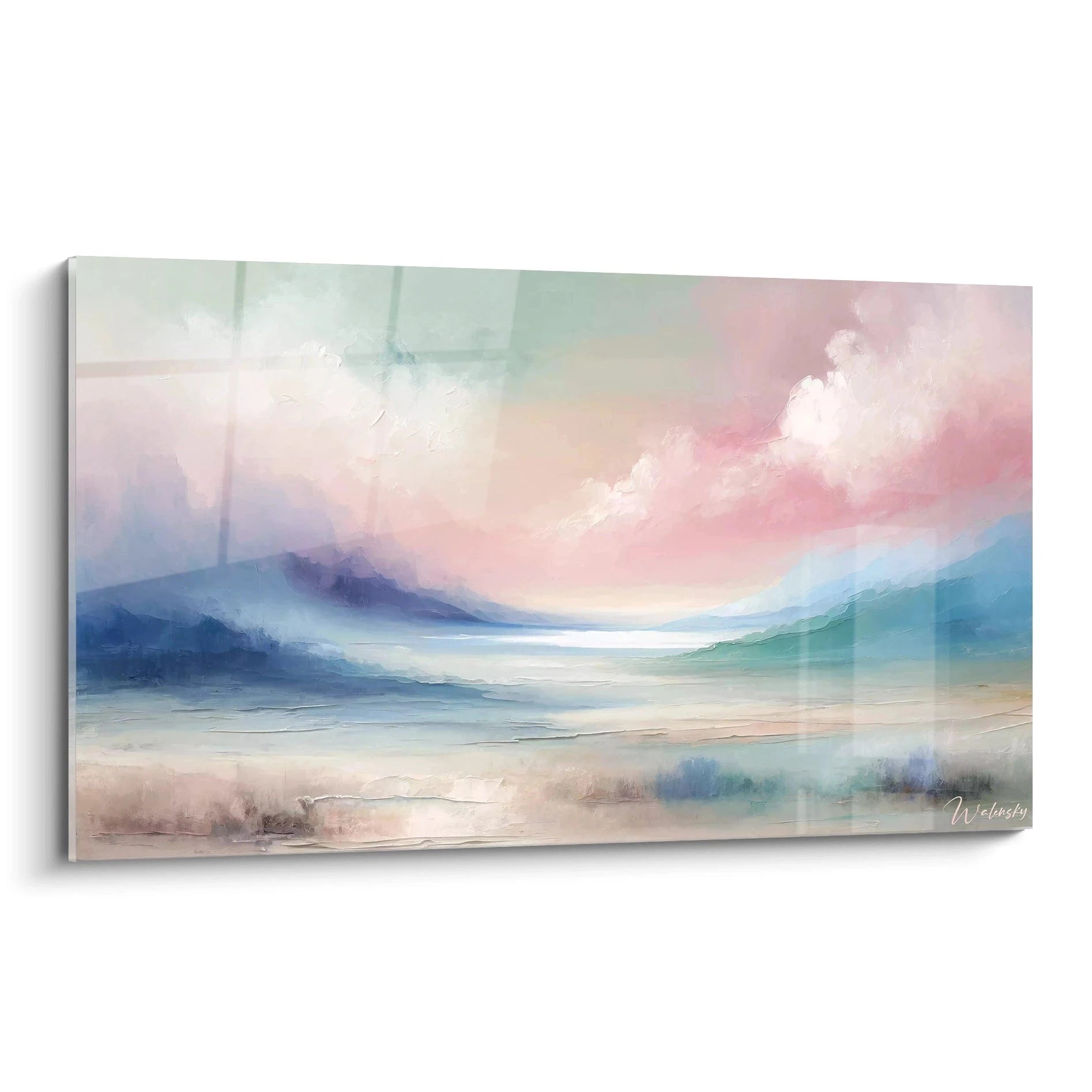
In a cardiology practice where I worked, we opted for a triptych of abstract art in ocean blue tones. The three panels presented variations of waves, each with a different intensity. Patients spontaneously described a progressive feeling of calm, their gaze instinctively moving from the most dynamic panel to the most serene. This artwork literally guided their breathing.
The unique artwork: the power of unified contemplation
Conversely, a unique artwork of large format creates a powerful focal point that immediately centralizes attention. In a waiting room, this approach works remarkably well when you want to project an image of solidity, established expertise, and clear vision.
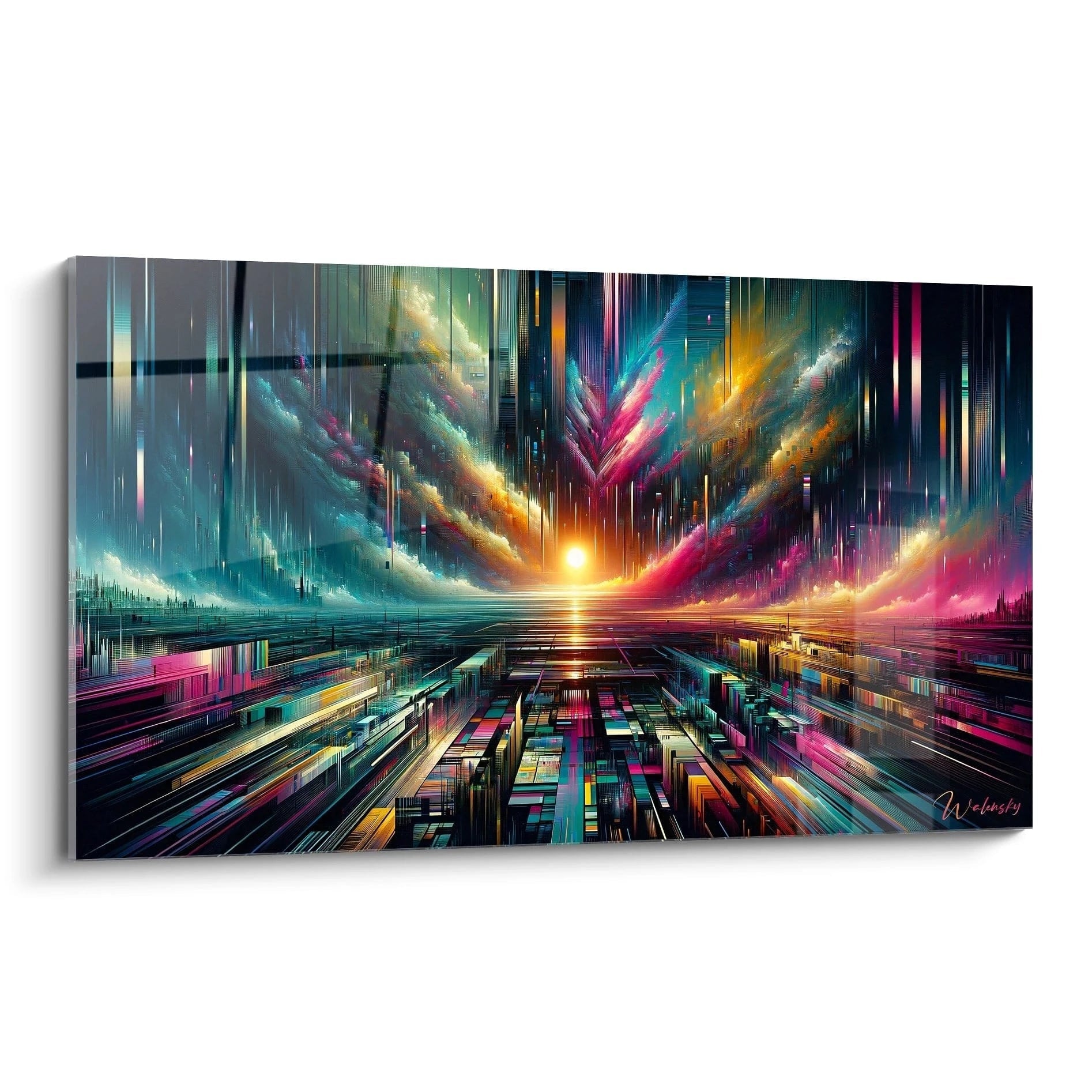
I equipped the practice of an orthopedic surgeon with a single canvas measuring 150x100 centimeters depicting a geometric abstraction in neutral tones. The visual impact was immediate: authority without aggression, modernity without coldness. Patients subconsciously associated this unified visual presence with the practitioner's competence. A single artwork, a single message, reinforced confidence.
The advantage of a unique artwork also lies in its ability to create what designers call a visual moment of silence. In our world saturated with fragmented stimuli, offering a single element for contemplation becomes a soothing luxury. The gaze doesn't have to choose, compare, or move: it can simply rest and breathe.
Proportional balance in the medical space
A unique artwork however requires particular attention to proportions. On a four-meter wall, an 80 centimeter painting will get lost, creating a feeling of incompleteness. In a waiting room with modest dimensions, a massive canvas can conversely stifle the space and generate counterproductive visual pressure.
The empirical rule I apply: a unique artwork should occupy between 50 and 70% of the width of the main wall. This proportion creates a balance where the painting dominates sufficiently to structure the space, without overwhelming it. I have seen too many practices where small canvases floated sadly on immense walls, negating any visual impact.


Our favourite
Colored Bowling Pins Painting - Artistic Triptych - Bowling Edition
233,90€
Discover this artworkThe decisive criteria according to your spatial configuration
The geometry of your waiting room often dictates the optimal choice. A square or nearly square space generally benefits from a single artwork that centralizes the energy of the room. The gaze naturally converges towards this focal point, creating a reassuring spatial cohesion.
Conversely, rectangular spaces, particularly those with a length-to-width ratio greater than 2:1, thrive with a triptych. The horizontal composition accompanies the architecture rather than fighting against it. In a dental practice in Nantes, we installed a triptych on a seven-meter long wall: the space formerly perceived as a corridor became a soothing gallery.
Also consider the ceiling height. High volumes (over 3 meters) can absorb the energy of a horizontal triptych, while a single artwork or large format creates a presence that visually fills the space. In low ceilings (under 2.5 meters), the horizontal triptych optically widens the space by guiding the gaze laterally.
The influence of color and theme on patient experience
Beyond configuration, the content of your artwork interacts differently depending on whether it is single or triptych. A single artwork delivers a concentrated emotional message: a seascape instantly communicates escape, a geometric abstraction projects modernity, a natural scene diffuses serenity.
The triptych, on the other hand, allows for narrative or emotional progression. I created an installation for a psychology practice where the three panels evolved from stormy gray to luminous gold, subtly symbolizing the therapeutic journey. Patients did not consciously verbalize this metaphor, but several mentioned a sense of hope when observing the walls.
Color palettes according to choice
For a single artwork in a medical waiting room, prioritize palettes with a maximum of 3 to 5 colors. Chromatic simplicity reinforces the visual impact and facilitates soothing. Neutral tones punctuated by a color accent create professional sophistication.
With a triptych, you can afford a richer chromatic evolution. Each panel can introduce new nuances while maintaining overall consistency. In a dermatology clinic, we used a triptych transitioning from dusty rose to deep terracotta: this progression created visual warmth without saturating the space with an intense uniform color.

— Our selection

Budget and maintenance: pragmatic considerations
Let's frankly address the financial aspect. A triptych of quality generally costs 20 to 40% more than a single artwork of equivalent surface area, simply because it requires three frames, three supports, and a more complex installation requiring precise balancing of spacing.
However, the triptych offers flexibility for evolution. If your practice moves to a different space, you can adjust the spacing between the panels to adapt to new dimensions. A single artwork, on the other hand, either suits or does not suit the new wall: there is no intermediate zone.
Regarding maintenance, the single artwork is easier and faster to clean and has only one fixing point to check. The triptych requires regular attention to alignment, particularly in buildings subject to structural micro-movements. Every six months, check that the three panels maintain their perfect parallelism: even a minimal shift breaks the visual harmony.
Transform waiting into a soothing experience
Discover our exclusive collection of wall art for medical offices that combines professional aesthetics and patient well-being, available in single and triptych formats.
— You may also like


How to decide: the test of three questions
Before finalizing your choice between triptych and single artwork, ask yourself these decisive questions:
1. What is the average waiting time for my patients? For short waits (less than 15 minutes), a striking single artwork is sufficient to create a lasting impression. For longer waits, the triptych offers more visual material to explore, reducing the perception of time passing.
2. What dominant emotion should I cultivate? If your specialty generates anxiety (surgery, oncology, dentistry), the triptych with its soothing visual progression accompanies the patient towards calm. For wellness practices or general medicine, the single artwork projects confidence and stability.
3. Will my space evolve? If you are considering a move or redecoration within the next five years, the triptych offers more adaptability. A single work is suitable for permanent installations where you control all spatial parameters.
In my practice, I observe that specialist clinics (cardiology, orthopedics, ophthalmology) prefer a single work which reinforces their targeted expertise, while general practitioners and pediatricians opt for the triptych which creates a more narrative and accessible atmosphere.
Professional installation: never neglect this step
The most sophisticated visual impact collapses with approximate installation. For a single work, position the center of the artwork 145-150 centimeters from the floor: this is the optimal height corresponding to the gaze of a seated person, your priority in a waiting room.
For a triptych, the spacing between panels determines the overall harmony. I recommend an interval of 5 to 8 centimeters for medium formats (40-60 cm wide per panel), and from 8 to 12 centimeters for large formats. Too narrow a gap visually merges the panels, negating the triptych effect. Too wide, it fragments the work into three disconnected entities.
Invest in invisible professional fixings. Nothing destroys the prestige of a work more quickly than exposed cables or protruding hooks. Rail suspension systems with steel wires or flush wall mountings preserve the illusion that the artwork floats on your wall.

In the same vein
In the Shadow of Giants Painting - Mountain Landscape Edition
233,90€
Discover this artwork →Imagine your waiting room transformed
Visualize your space tomorrow morning. Your first patient walks through the door, still affected by the stress of their day or the worry that brings them. Their gaze sweeps across the room and settles on the main wall. There, either a single work captures their attention in a moment of unified contemplation which slows their heart rate, or a triptych invites their eyes to travel, transforming static waiting into soothing visual exploration.
This choice between triptych and single work is not simply about decoration: it shapes the emotional experience you offer before the consultation even begins. It silently communicates your attention to detail, your understanding of psychological comfort, your attentive professionalism.
Start by photographing your current waiting room and precisely measuring the main wall. Identify constraints (sockets, switches, doors) and assets (natural light, ceiling height). With this data, you can confidently choose the option that will transform your space into an authentic place of calm.
Frequently asked questions about artistic choices in waiting rooms
Can we mix triptych and single work in the same waiting room?
This is a question I receive regularly, and the answer depends on the size of your waiting room. In spaces smaller than 20 m², I formally advise against this combination which creates a visual cacophony. The brain struggles to determine where to focus its attention, generating counterproductive cognitive fatigue. On the other hand, in larger waiting rooms of more than 40 m² divided into distinct zones (children's area, reading corner, main area), you can install a unique artwork in the formal reception area and a more playful triptych in the pediatric space. The key is that each zone has a consistent visual identity. I applied this strategy in a multidisciplinary medical center: each specialty had its own visual language, creating distinct atmospheres while maintaining a common color palette (natural tones and blue-green) which unified the entire patient journey.
What is the difference in visual impact between an abstract and a figurative triptych?
Abstraction and figuration create radically different experiences in a medical waiting room. A figurative triptych (landscape, natural scene, vegetation) offers what I call an narrative escape: the patient mentally projects their attention away from the medical environment, reducing anxiety through imaginary transportation. Studies on therapeutic environments show that images of nature decrease physiological markers of stress. Conversely, an abstract triptych works by visual meditation: non-figurative forms, colors and compositions allow the brain to rest from constant interpretation of the real world. This is particularly effective for patients suffering from cognitive or mental overload. In my practice, I orient clinics treating physical pathologies (orthopedics, physiotherapy) towards soothing figurative art, and those accompanying psychological or neurological disorders towards contemplative abstraction. The triptych amplifies these effects by creating a progression: evolving figurative to tell a story, gradual abstract to deepen contemplation.
How do I know if my artwork creates the right impact before final installation?
Excellent pragmatic question! Before any permanent installation, I systematically apply the paper test technique which avoids costly regrets. Cut out rectangles in cardboard or kraft paper to the exact dimensions of your unique artwork or your triptych. Temporarily fix them to the wall with masking tape at the intended height. Live with it for a full week, observing the visual impact at different times of the day: how does the morning natural light interact with the location? Does the evening artificial lighting create annoying reflections? From the different seats in your waiting room, is the artwork well visible or partially masked? Also ask your team and even a few trusted patients for their spontaneous feelings. This simulation often reveals problems invisible on paper: a radiator that partially masks the lower panel of a triptych, a door that opens hiding the work temporarily, a zenithal lighting that creates a reflection exactly in the center of the composition. These preliminary tests transform an anxiety-provoking choice into an informed and serene decision.
Explore our collections


