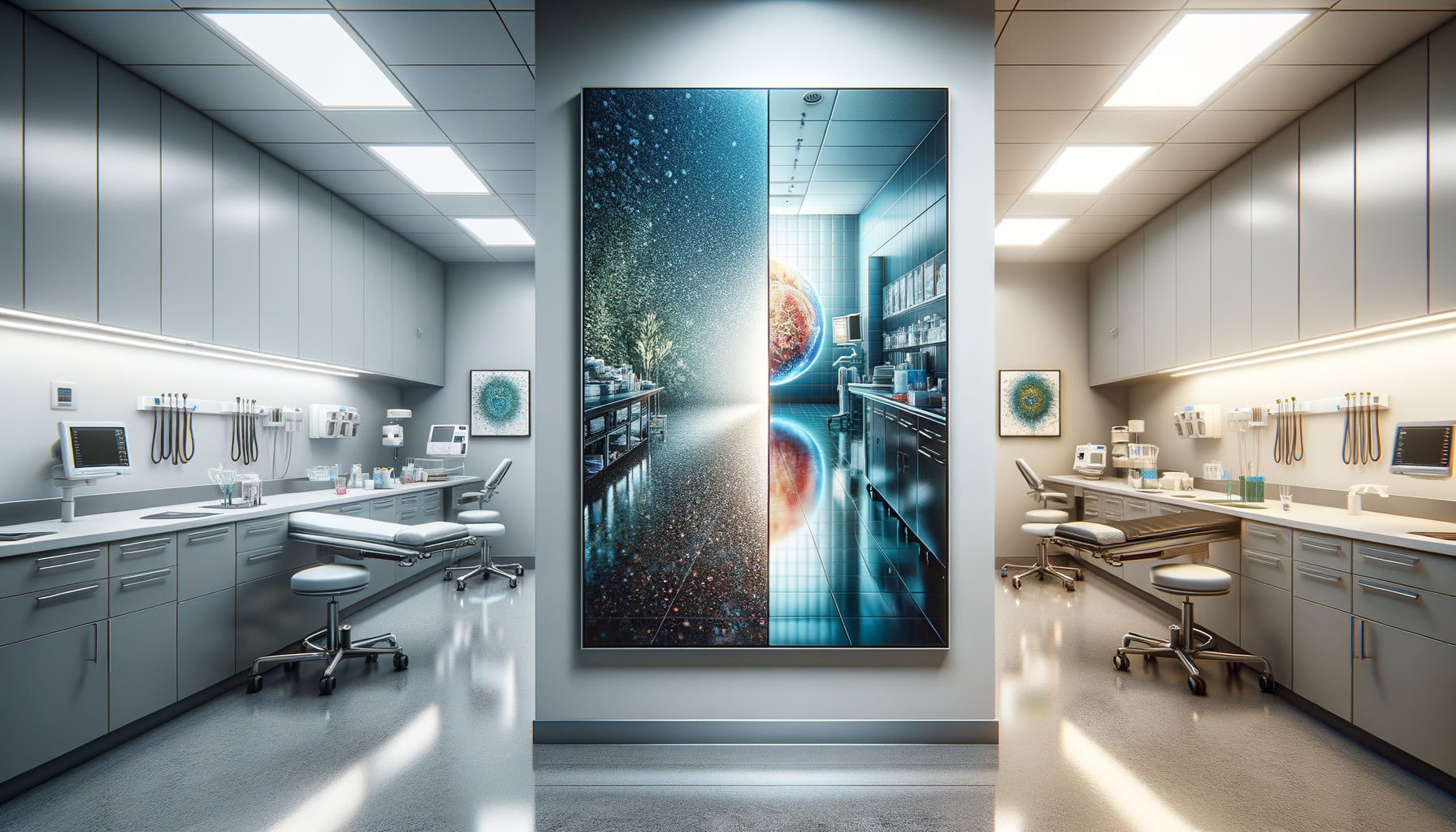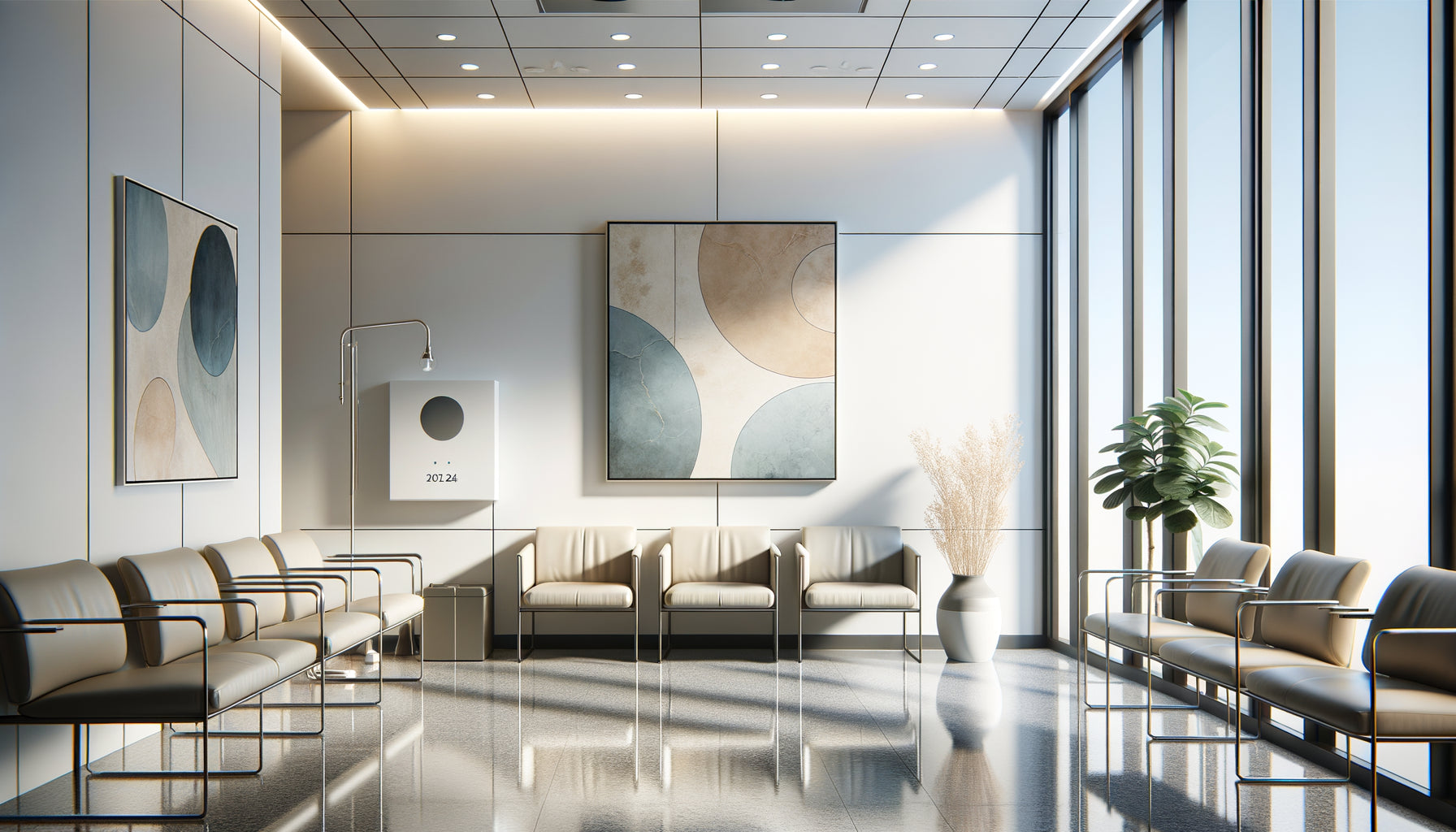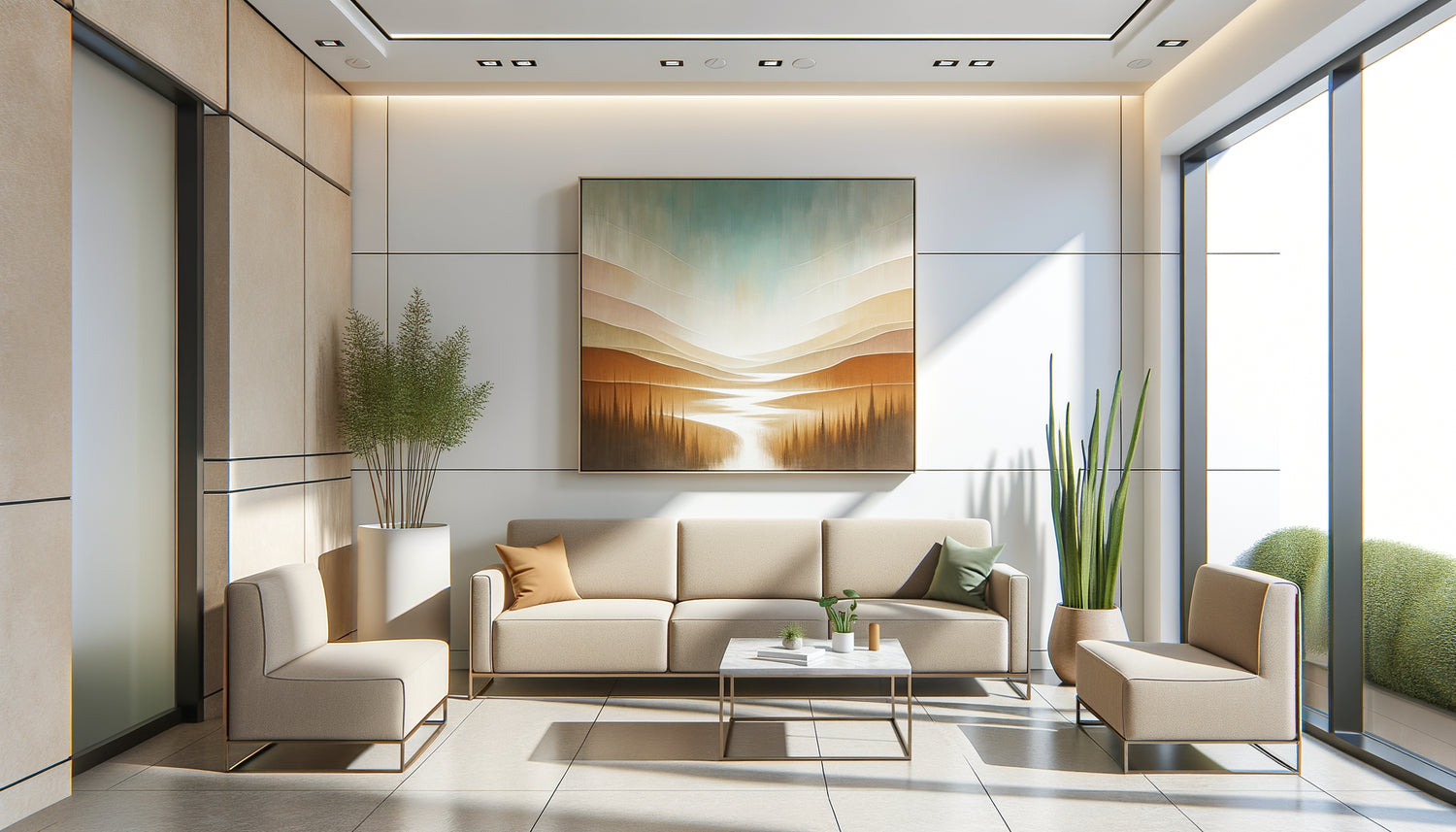
The wait. That suspended moment where time seems to stretch, where anxiety gently rises, where each minute weighs heavily. I have spent years transforming these professional waiting areas, and I have observed a fascinating phenomenon: a simple visual change can transform the human experience. When a large-format artwork is installed above a bench, something magical happens. Shoulders relax, eyes lift, the atmosphere breathes.
Here's what a large-format artwork concretely brings: it captures attention and soothes waiting, it visually structures the space by creating a natural focal point, and it instantly conveys the values of your establishment. You may hesitate, wondering if the investment is worth it, if the dimensions are suitable, if the artistic choice will please everyone. Rest assured: I have accompanied more than one hundred professional spaces in this transformation, and the feedback is unanimous. The large-format artwork above waiting room benches is not a decorative luxury, it's a well-being tool that transforms visitors’ experience from their arrival.
The immediate calming effect: when art replaces anxiety
I have seen dozens of people enter a waiting room, face tense, hands clenched on their phone. Then their gaze rises, catches a large-format artwork, and something changes. Breathing slows down. Features relax. It's not magic, it's neuroscience applied to space.
A large-scale artwork has this unique ability to capture our peripheral attention effortlessly. Unlike small scattered frames that create visual noise, an imposing work offers a soothing anchor point. Natural landscapes, soft abstract compositions, marine scenes: all universes in which the mind can take refuge during waiting. I have measured in my projects a noticeable reduction in agitation behaviors: less repeated clock checks, less nervous tapping, less complaints about waiting time.
The secret lies in the size of the artwork. Above a bench, a large-format artwork naturally occupies the field of vision when you look up. It becomes a silent invitation to escape, a visual companion that transforms waiting time into a moment of contemplation. In a medical office where I installed an abstract composition of 150x100 cm, the receptionist confided in me that patients positively commented on the atmosphere, whereas before they complained about the wait.
Architectural mastery of space
A waiting room without a focal point resembles a sentence without punctuation. The gaze wanders, gets lost, seeks where to settle. It's cognitively exhausting. The large-format artwork above the bench acts as a visual architect: it structures, orders, and prioritizes the space.
I use this principle in all my professional design projects. An imposing format automatically creates a convergence zone: it anchors the bench as the central element of the room, defines a visually coherent territory, and intuitively guides the flow of people. The human eye naturally seeks large colored or textured surfaces. By placing a generously sized artwork above the seating, you create a harmonious composition where furniture and art dialogue.
This vertical structuring has a major advantage: it draws the gaze upwards, thus visually freeing up floor space. A room instantly appears taller, more airy, more elegant. In a clinic with a relatively low ceiling, I installed a vertical triptych that literally transformed the perception of volume. Patients commented on the brightness and spaciousness of the room, even though we had not changed any architectural dimensions.

The silent messenger of your professional values
Every aesthetic choice speaks. A large format artwork is no exception to this rule: it instantly communicates about your identity, your values, your approach. It's your visual business card, the one that imprints itself in the minds of your visitors before even the first interaction.
I have learned to decipher these messages over the years. An abstract work with soft colors suggests modernity and sensitivity. A large format nature photograph evokes care, authenticity, respect. A clean graphic composition translates precision and professionalism. The choice is never arbitrary: it positions your establishment in the collective imagination.
In the medical sector in particular, this visual positioning plays a crucial role. A soothing artwork above the waiting bench announces a human approach, attentive to psychological comfort. It says without words: 'We understand your stress, we have thought about your well-being'. I accompanied a dental practice in choosing large format marine works. The practitioner noted a significant reduction in pre-treatment anxiety, simply because the environment mentally prepared for relaxation.
Technical optimization: how to choose the right dimensions
The question invariably comes up: what size for a large format artwork above a bench? My empirical rule, refined over dozens of projects, is simple: the artwork should cover between 60% and 80% of the width of the seating.
Specifically, for a 180 cm bench, aim for a format between 110 and 140 cm wide. This proportion creates a perfect visual balance: imposing enough to structure the space, yet proportionate enough not to overwhelm. Height is also important: I recommend a minimum of 80 cm to create a real presence. Below that, the work risks appearing timid, lost on the wall.
The space between the back of the bench and the bottom of the frame deserves attention. Maintain a distance of 15 to 25 cm: this avoids accidental bumps, allows for air circulation (crucial for preservation), and creates visual breathing room. Too high, the painting detaches from the furniture-art composition; too low, it seems precariously placed.
For generous waiting areas, don't hesitate to consider exceptional formats of 150x120 cm, or even larger. I equipped a panoramic waiting room with a 200x120 cm artwork above a long modular bench: the effect was spectacular, transforming a waiting corridor into a true gallery.

Emotional durability: investing in the patient experience
Let's talk about return on investment. A high-quality large format painting represents an initial investment, certainly. But unlike furniture that wears out or finishes that fade, a work of art stands the test of time while retaining its emotional impact.
I revisited spaces equipped five to seven years ago. The paintings installed above the benches continue to spark interest, comments, and a sense of calm. This emotional durability is priceless in a professional context where patient or customer experience becomes a major differentiator. Your visitors may not remember the color of the seats, but they will keep in mind that impression of calm, elegance, and care for their psychological comfort.
The return on investment is also measured in perception time: patients who arrive relaxed are more receptive, more cooperative, and generally more satisfied. In the service sector, a pleasant waiting area reduces dropout rates and improves recommendations. A clinic director reported to me a notable increase in positive reviews specifically mentioning 'the soothing atmosphere', directly correlated with our visual redesign including large format paintings strategically placed.
Beyond decoration: creating a memorable experience
The true power of a large-format artwork above a waiting bench goes beyond simple decoration. It participates in the construction of a global experience, a spatial narrative that begins as soon as you cross the threshold.
I always encourage my clients to think about emotional journey rather than just arrangement. When a visitor enters, their brain subconsciously scans the environment, assesses safety, and gauges quality. A well-chosen large format sends powerful signals: attention to detail, investment in comfort, aesthetic sensitivity. These subliminal messages shape trust before any verbal exchange.
In medical and paramedical offices, this dimension becomes particularly important. The patient's vulnerability requires environmental compensation: creating beauty, tranquility, reassurance. The artwork then becomes a silent therapeutic ally. I collaborated with a psychologist who chose an abstract work in blue and green tones for her waiting room. She confided to me that several patients spontaneously mentioned the painting, using it as a starting point to express their emotions. Art becomes mediator, facilitator of dialogue.
Transform your waiting area into a haven of serenity
Discover our exclusive collection of artwork for Medical Offices that combine visual impact and soothing power, specially designed to transform the experience of your patients.
Visualize your transformed space
Imagine tomorrow morning. Your first visitors walk through the door, sit on the bench. Their gaze naturally rises to the large-format artwork that adorns the wall. A deep breath. A slight smile. Waiting is no longer a stressful constraint, but a welcome moment of pause in their busy day.
You observe this change in atmosphere with satisfaction: your space now speaks of you, of your approach, of your attention to detail that matters. The artwork is not an accessory, it's the beating heart of your waiting room, the one that sets the rhythm, soothes tensions, creates connection.
Start by accurately measuring your bench and the wall above it. Imagine the colors that resonate with your professional identity. Think about the emotions you want to evoke. Then choose with conviction: a large-format artwork that will transform every minute of waiting into a positive, memorable, differentiating experience. Your visitors will notice it, comment on it, and most importantly, they will remember the impression your space left on them.
Frequently asked questions about large-format artworks in waiting rooms
What is the minimum size for a painting to be considered large format above a bench?
I consider a large format painting to start from 100 cm wide. Below that, the artwork risks lacking visual impact and getting lost on the wall. For a standard bench of 150 to 180 cm, aim for a size between 110 and 140 cm wide, with a minimum height of 80 cm. This proportion creates a harmonious balance that structures the space without overwhelming it. Don't be afraid to go big: in professional spaces, we more often undersize than oversize. A painting that is too small looks hesitant, while a large format asserts a reassuring and professional presence.
What types of visuals should be prioritized to soothe people waiting?
Landscapes, compositions with soft tones, and aquatic scenes work remarkably well. I have observed that cool colors (blues, greens, turquoise) generate an immediate calming effect, particularly suitable for medical environments. Abstract works offer the advantage of neutrality: each person projects their own interpretations without imposing a too specific universe. Avoid overly figurative scenes loaded with details, aggressive colors (bright red, intense orange), or anxiety-inducing subjects. The golden rule: the artwork should invite contemplation, not analysis. A good waiting room painting is positively noticeable but never fatigues the eye, even after the tenth visit.
How to securely fix a large format painting without the risk of it falling?
Safety is paramount, especially in a public space. For a heavy large format painting (over 5 kg), you must use wall fixings adapted to the type of wall: Molly plugs for plasterboard, mechanical plugs for brick or concrete. I systematically recommend a two-point fixing system, with an X hook or professional suspension rail. Call in a professional for installation if you have any doubts: a falling painting can cause serious injuries. Also check the solidity of the frame itself: large formats require a reinforced structure. Finally, always respect the minimum safety distance of 15 cm between the back of the bench and the bottom of the frame to avoid accidental contact.