I have accompanied the transformation of more than forty medical practices over the past seven years. Each time, the same hesitation arises during our first meeting: should you choose framed or unframed artworks? This seemingly trivial question actually hides a strategic decision that will influence the atmosphere of your care space for years to come.
Here's what choosing framed or unframed artwork brings to your contemporary medical practice: a consistent aesthetic signature, simplified hygiene management, and a direct influence on the emotional comfort of your patients. These three dimensions radically transform the experience felt in your waiting room.
Many practitioners install artworks without a real strategy, then notice a troubling mismatch: the atmosphere does not correspond to the professional image they want to project. Frames sometimes seem too formal, bare canvases appear unfinished. This uncertainty creates a visual dissonance that your patients perceive unconsciously.
Rest assured: there is no absolute wrong choice, only options more or less suited to your vision and architecture. I will guide you through the concrete advantages of each solution, drawing on dozens of achievements that have transformed the atmosphere of contemporary medical practices.
My commitment: to offer you a clear vision so that your decision truly enriches the experience of your patients and enhances your medical practice.
The refined elegance of unframed artworks in the medical space
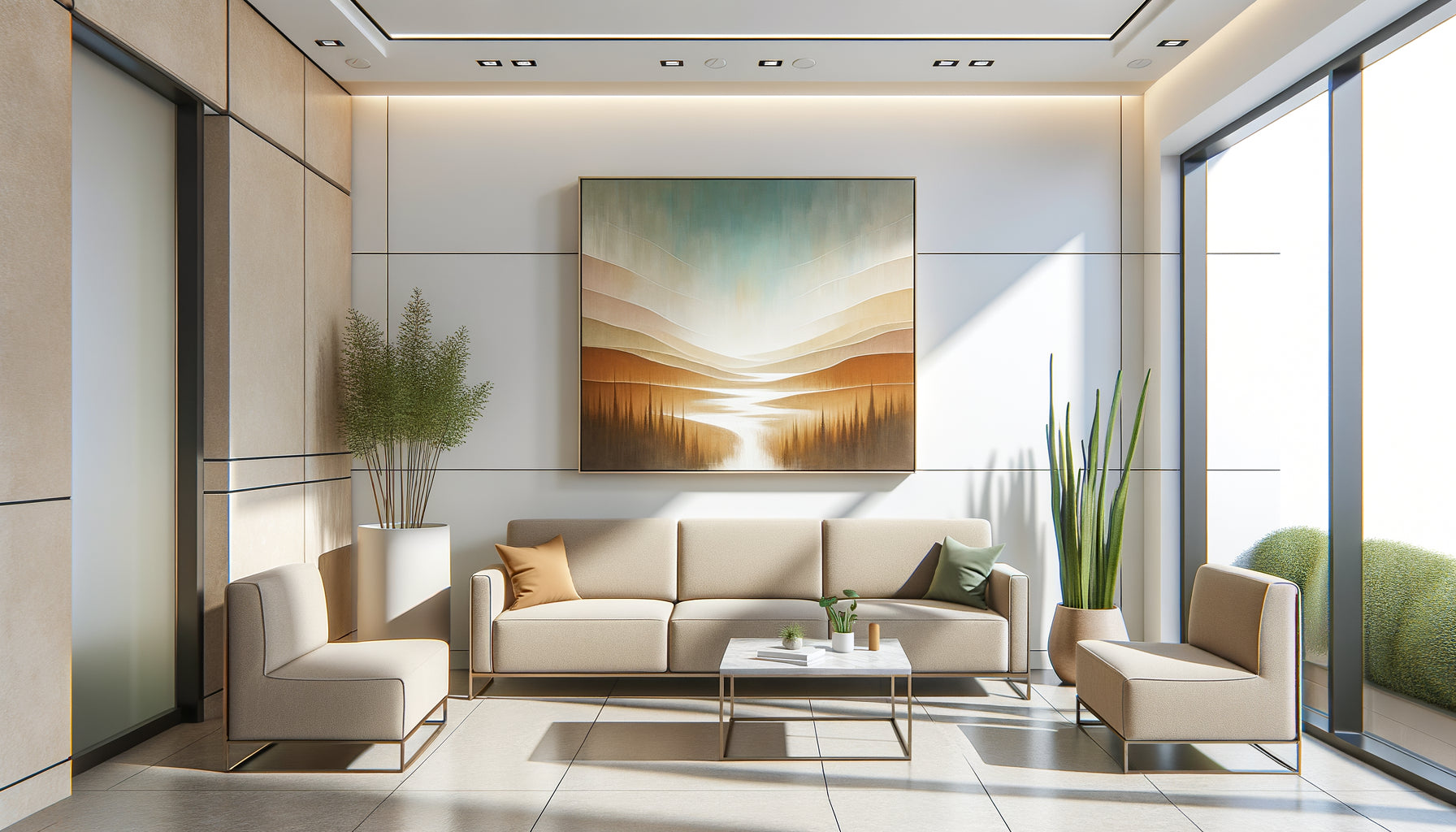
In a dental office in the 11th arrondissement of Paris, I installed three large formats without frames on immaculate walls. The result exceeded all expectations: unframed artworks create a remarkable visual continuity with contemporary architecture. The canvas stretched over a thick frame naturally blends into the space, like a window open to a soothing elsewhere.
This solution offers major advantages for a medical practice. The absence of a frame eliminates angles and reflections on the glass, allowing optimal viewing of the artwork from any angle in the waiting room. Your patients can thus fully immerse themselves in the chromatic nuances without being distracted by parasitic reflections.
Maintenance also becomes child's play: a simple regular dusting is enough to maintain the brilliance of your artworks. In a medical environment where hygiene reigns supreme, this ease of maintenance represents a considerable asset. No joints to clean, no glass to polish, just the canvas surface easily accessible.
When to favor the absence of a frame?
Unframed artworks naturally impose themselves in medical practices with clean lines. If your architecture plays on minimalism, smooth surfaces and contemporary materials such as Corian or brushed steel, the absence of a frame amplifies this aesthetic coherence. The artwork becomes an integral part of the wall, creating a soothing visual fluidity.
I've also noticed their remarkable effectiveness in small spaces. A physiotherapy practice in Lyon, constrained by a twelve-square-meter waiting room, gained considerable sense of spaciousness thanks to three frameless canvases with oceanic tones. The absence of visual borders allows the eye to circulate freely, perceptually enlarging the space.
The frame as a signature of professional refinement
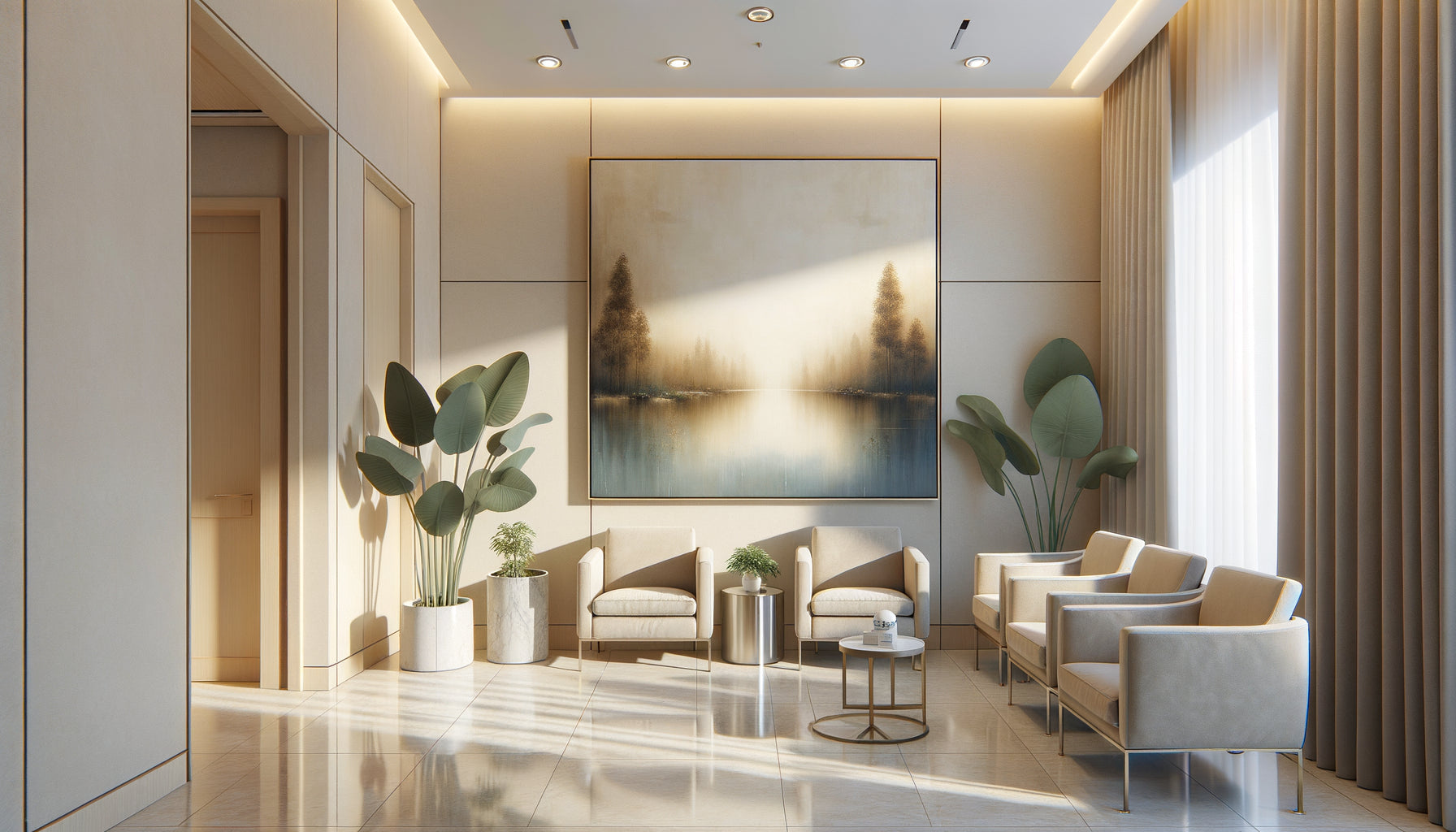
Conversely, I accompanied the renovation of an orthodontics practice where the choice of frame radically transformed the perception of space. The frame provides a formal boundary that instantly gives your artwork a museum-like dimension. This staging enhances your artistic investment and subtly communicates your attention to detail.
In a contemporary medical environment, a thin black matte aluminum or lacquered white wood frame constitutes the ideal compromise. It visually structures the work without weighing it down, creating a discreet setting that naturally guides the eye. This protective border also reassures some patients subconsciously: the framed artwork evokes permanence, stability, values essential in the world of care.
The frame also offers tangible protection against accidental handling and dust. In areas with heavy traffic or near reception areas where staff circulate regularly, this physical barrier significantly extends the lifespan of your artworks. Modern anti-reflective glass, almost invisible, preserves colors from UV rays while facilitating maintenance with a simple microfiber cloth.
Situations where the frame naturally imposes itself
Some medical practices feature renovated heritage architecture: preserved moldings, restored original parquet flooring, generous ceiling height. In these contexts, the frame creates a harmonious bridge between architectural heritage and your contemporary practice. A thin gold or deep black frame elegantly dialogues with classic elements without falling into pastiche.
I've also observed that multidisciplinary practices, where several practitioners work, particularly benefit from framed artworks. This visual uniformity brings reassuring institutional coherence. Patients immediately perceive the professionalism of the structure, even before their first interaction with healthcare staff.

The hybrid strategy: intelligently mix frame and absence of frame
Here's an approach I particularly like: strategically combining framed and unframed artworks in different areas of your medical practice. This creative mix, however, requires careful consideration to avoid visual inconsistency.
In a dermatology clinic in Bordeaux, we installed large-format unframed pieces in the main waiting room, creating an open and relaxed atmosphere. In contrast, the corridors leading to the consultation rooms received a series of small framed artworks, creating an intimate gallery that accompanies the patient's journey to the treatment area.
This alternation works wonderfully when it follows a clear spatial logic: generous and communal spaces readily welcome large unframed canvases, while circulation areas and restricted zones are better suited to framed compositions. This subtle variation enriches the visual experience without creating confusion.
The decisive criteria for choosing according to your environment
After dozens of projects, I have identified five objective criteria that naturally guide your choice. Firstly, observe your lighting: direct LED lighting favors unframed works, which do not generate any annoying reflections. Conversely, abundant natural light often requires the anti-reflective glass of a frame to preserve readability.
Secondly, evaluate the physical proximity: works located less than two meters from passageways benefit from being framed for their protection. Beyond this distance, the absence of a frame becomes perfectly viable and even recommended for the visual impact it provides.
Thirdly, consider your overall visual identity. If your furniture, signage, and communication supports play on Scandinavian minimalism or industrial design, unframed artworks will reinforce this consistency. If your universe integrates noble materials such as solid wood or marble, thin frames will dialogue harmoniously with this sophistication.
The psychological impact on your patients
Never underestimate the emotional dimension of this decision. I have conducted informal observations with hundreds of patients: unframed artworks generate a perception of accessibility and modernity, particularly appreciated by a young and urban patient base. The absence of a visual barrier creates an emotional proximity to the image.
Conversely, framed artworks evoke permanence and institutional seriousness, reassuring values for certain audiences. In an aesthetic surgery clinic, this protective dimension of the frame subtly soothes apprehensions by communicating mastery and precision.
Ready to transform the atmosphere of your medical practice?
Discover our exclusive collection of wall art for medical practices that combines contemporary aesthetics and proven therapeutic impact on patient well-being.

Realize your artistic vision in a medical practice
Your final decision should reflect the overall experience you want to offer. I always encourage my clients to visualize their medical practice as a coherent ecosystem where every element contributes to an intentional atmosphere. The framed or unframed artwork is not an end in itself, but a tool for your therapeutic vision.
A dermatologist recently confided in me that his patients regularly commented on the large botanical photographs without frames installed in his waiting room. These spontaneous conversations visibly eased pre-consultation anxiety. The absence of frame allowed total immersion in these soothing plant landscapes, transforming waiting time into a contemplative pause.
Whatever your choice, always prioritize quality execution: professionally stretched canvas for unframed works, framing done by a professional for framed versions. This technical requirement guarantees the longevity of your investment and preserves the visual impact over the long term. In a medical environment where your patients return regularly, this constancy of quality subtly reinforces the trust they place in your practice.
Frequently asked questions about choosing framed or unframed works in a medical practice
Are frameless artworks really suitable for medical hygiene standards?
Absolutely, and I would even go further: <strong>frameless artworks greatly facilitate compliance with hygiene protocols in medical practices.</strong> Contrary to popular belief, the absence of a frame eliminates all crevices where dust and particles could accumulate. The smooth surface of the stretched canvas is cleaned in seconds with a slightly damp cloth or an antistatic duster. I systematically recommend this option to practitioners who are particularly vigilant about hygiene, especially in pediatrics or immunology. A modern, professionally-made canvas frame has perfectly smooth edges, without any roughness. You can even apply a specific dusting treatment that naturally repels particles. In high-traffic areas, weekly cleaning is more than sufficient, compared to framed works which require specific products and delicate handling to avoid streaks and scratches.
What budget should I expect depending on whether I choose framed or unframed artworks?
The budgetary difference deserves a nuanced analysis as it varies considerably depending on your choices. <strong>A professionally made frameless artwork generally costs 15 to 30% less than an equivalent framed version,</strong> all other things being equal. This saving is simply because you are not investing in the frame, the anti-reflective glass and professional framing work. For a medical practice equipping five to eight spaces, this difference easily represents several hundred euros. However, do not forget to factor in the long-term cost: framed artworks offer superior protection that can significantly extend their lifespan, especially in demanding environments. My pragmatic advice: invest in high-quality frameless artworks for your large formats in the waiting room, and reserve framing for medium sizes in corridors and passageways. This hybrid strategy optimizes your budget while maximizing visual impact where it matters most to your patients.
Can I mix framed and unframed artworks in the same room?
This question comes up repeatedly, and my answer is nuanced: yes, but with a consistent visual strategy. Mixing framed and unframed works in the same space works wonderfully when you follow a clear composition logic. I have created several successful installations where a large-scale unframed work dominated the main wall of the waiting room, accompanied by three small framed pieces arranged in a constellation on an adjacent wall. The key is visual hierarchy: the dominant artwork dictates the style, and the secondary artworks complement it without competing with it. Avoid placing framed and unframed works of similar size directly next to each other on the same wall: this proximity creates an unpleasant visual confusion. However, separating these two approaches by distinct functional areas – a waiting room versus a hallway, for example – allows for an enriching variation that maintains visual interest throughout the patient's journey. The essential thing remains chromatic and thematic consistency: even if formats and finishes vary, your artworks must dialogue harmoniously through their palette and aesthetic universe.