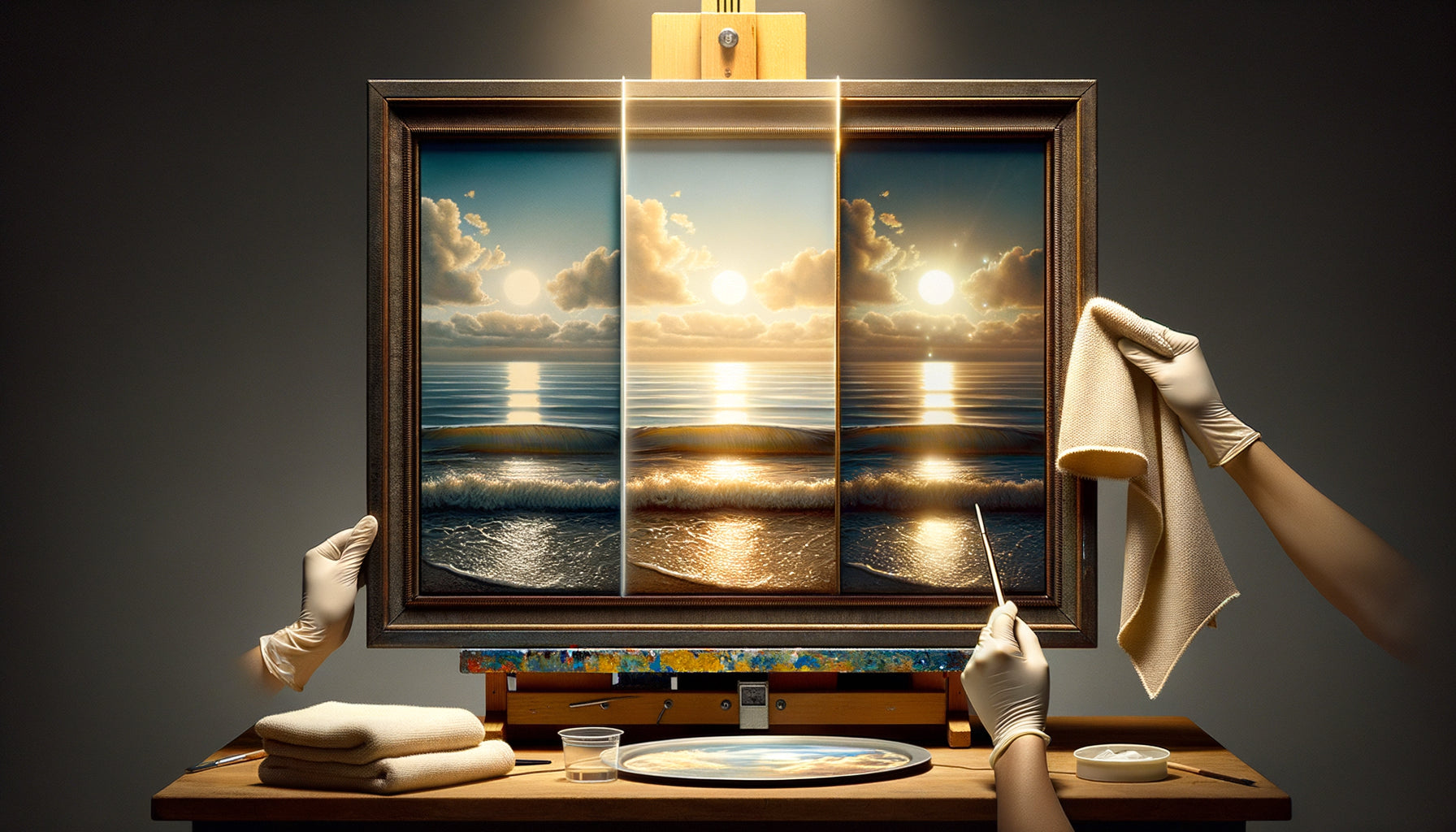
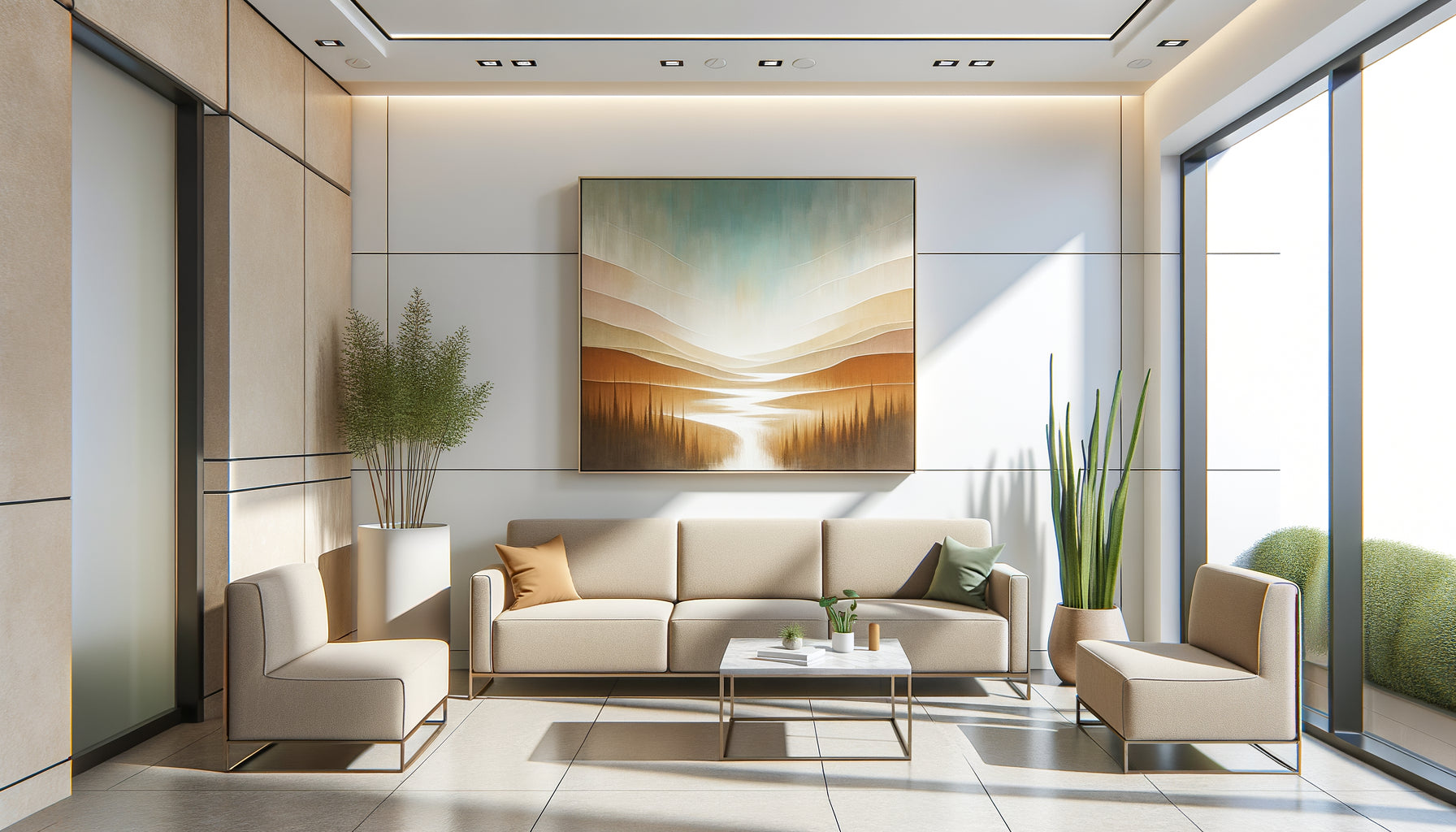
I've seen too many medical offices abandon wall art after just a few months. Canvases yellowing near disinfection areas, frames warping with the humidity from sterilizers, surfaces impossible to clean properly. When you invest in designing a care space, you don’t seek ephemeral decoration: you want to create a soothing environment that lasts through the years without losing its impact.
Here's what choosing the right wall art support brings to your office: exceptional durability against daily hygiene protocols, resistance to the chemical attacks of disinfectants, and ease of maintenance that preserves the aesthetics of your spaces for years.
Many practitioners find themselves caught between two fears: investing in artworks that won’t survive the medical environment, or giving up completely on humanizing their spaces out of fear of health constraints. This hesitation is legitimate when you know that a clinic daily experiences what no domestic interior ever will.
Yet, some supports are precisely designed for these extreme conditions. Understanding the fundamental differences between aluminum and canvas in a medical context will allow you to make an informed choice, adapted to your actual constraints and your aesthetic vision.
In this article, I'm going to reveal what fifteen years of observation in care environments has taught me about the real longevity of different artistic supports facing daily health requirements.
Medical aluminum: when durability meets hygiene
Wall art on aluminum represents a silent revolution in the design of healthcare spaces. This metallic support offers exceptional resistance to chemicals that clinics use daily. Contrary to popular belief, aluminum intended for artistic printing is not cold and industrial metal: sublimation printing techniques create photographic renderings of remarkable depth.
The true strength of aluminum lies in its durability against health protocols. You can spray hospital disinfectants directly onto the surface, wipe vigorously with disinfectant wipes, repeat this gesture ten times a day for ten years: the image remains intact. This immutability is not anecdotal in a medical environment where hygiene takes precedence over everything else.
Aluminum also has perfect dimensional stability. No deformation, no warping, even in rooms where humidity varies constantly. Waiting rooms that are overheated in winter, air-conditioned clinics in summer, areas near autoclaves: aluminum withstands these variations without flinching. This stability guarantees that your aesthetic investment retains its visual impact over the long term.
The lightweight nature of aluminum also facilitates installation and reorganization of spaces. This is a significant advantage when one wishes to regularly refresh the ambiance of a practice without undertaking major work. And unlike canvas, aluminum does not retain dust or allergens, a major asset for sensitive patients.
The limitations of aluminum in a medical context
Let's be honest: aluminum is not perfect. Its main disadvantage remains its higher initial cost than traditional canvas. This investment is justified over time, but represents a barrier for some equipment budgets. Moreover, the modern and streamlined aesthetic of aluminum does not suit all decorative styles: some practices seek a traditional warmth that only canvas can provide.
Reflections can also be problematic in certain lighting configurations. Although matte finishes exist, they do not completely eliminate the effects of shine that can be distracting in very bright areas. Finally, customization remains more limited: it is impossible to work with mixed techniques or add relief, unlike the possibilities offered by canvas.
Canvas in a medical setting: tradition and sanitary challenges
Canvas remains the artistic support par excellence, that which immediately evokes an authentic artwork. In a medical practice, it brings an irreplaceable visual warmth and a texture that instantly humanizes the space. Patients subconsciously perceive this difference: canvas reassures, evokes the familiar, creates a bridge between the medical environment and the domestic universe.
Aesthetically, canvas offers far more possibilities than aluminum. Color renderings have a particular depth, especially with museum-quality giclée prints. Canvas absorbs light differently, creating subtle nuances that change depending on the viewing angle and time of day. This life inherent in the work enriches the visual experience over time.
Economically, canvas remains more accessible. For a limited fit-out budget, it allows you to dress several spaces with large-scale artworks. This accessibility explains why so many practitioners naturally turn to this traditional medium when installing or renovating their practice.
The vulnerabilities of canvas in the face of medical constraints
Unfortunately, canvas has structural weaknesses in a medical environment. The fabric absorbs moisture, creating tensions that progressively deform the support. In areas near water points or equipment generating steam, this deformation becomes inevitable after a few years. Corners relax, waves appear, compromising the overall aesthetics.
Sensitivity to chemicals is the Achilles' heel of canvas. Aggressive disinfectants, even indirect contact (splashes, aerosols), progressively alter the fibers and pigments. We observe premature yellowing, uneven discoloration, sometimes irreversible stains. Cleaning a canvas directly with standard sanitation protocols? Impossible without risking irreparable damage.
The textile surface also attracts and retains dust, allergens, and potentially pathogens. In a medical practice where some patients are immunocompromised, this characteristic poses a real hygiene problem. A protective glass offers a partial solution, but adds weight to the whole, complicates installation, and significantly increases the final cost.
Finally, limited durability of canvas in daily medical use means more frequent replacement. What seemed economical at purchase becomes a recurring cost that, over ten years, far exceeds the initial investment in aluminum.

Comparative durability: what fifteen years of observation reveal
After following the evolution of hundreds of artistic installations in various medical environments, one finding is striking: aluminum retains 95% of its initial brilliance after ten years of intensive use, whereas canvas shows visible signs of wear from the third year.
In very busy waiting rooms, where wall art is subjected daily to barrier gestures, handling and repeated cleaning, the gap widens even further. Canvases protected under glass resist better, but the frame and joints inevitably accumulate dust and disinfectant residues, creating problematic areas from a health point of view.
Critical areas such as consultation rooms, treatment rooms or circulation corridors require a level of resistance that only aluminum can guarantee without compromise. The ability to clean the artistic surface directly with the same protocols as other medical equipment radically changes the situation in terms of hygiene and maintenance.
Canvas nevertheless finds its place in less exposed spaces: administrative offices, staff rest areas, psychological consultation areas where a warm atmosphere is paramount and where health constraints are less severe. In these contexts, its relative vulnerability becomes acceptable in view of the aesthetic and emotional benefits it brings.
Making the right choice based on your specific environment
Your decision should be based on an honest assessment of your actual constraints. Ask yourself these questions: how often do you disinfect your spaces? Are your walls exposed to splashes of chemicals? Does your patient population include immunocompromised individuals requiring maximum sanitary vigilance?
For a dentist's office, ambulatory surgical center, or dermatology clinic, where hygiene is absolutely crucial and frequent disinfection is necessary, aluminum emerges as the only truly responsible choice. The initial extra cost disappears quickly compared to replacement savings and the peace of mind that comes with a support truly suited to its purpose.
A general practitioner's office or pediatrician's office, with distinct spaces for varied uses, will benefit from an integrated approach. Aluminum in treatment rooms and passageways, canvas in administrative areas or nursing rooms. This strategy optimizes the budget while adapting each support to its actual conditions of use.
Remember that durability is not only about physical resistance. A work of art that retains its aesthetic impact after years of daily service continues to fulfill its mission: to soothe patients, humanize the medical environment, and positively differentiate your practice. A degraded artwork has the opposite effect, suggesting a lack of attention to detail that can unconsciously affect the perception of your professionalism.
Daily maintenance: protocols adapted to each support
Aluminum accepts the same cleaning protocols as your other medical surfaces. Spraying disinfectant, wiping with hospital wipes, even cleaning with isopropyl alcohol for critical areas: everything is possible without risking altering the artwork. This simplicity represents a valuable time saving for your teams and guarantees consistency in your health protocols.
Canvas requires a radically different approach. Gentle dusting with a dry microfiber cloth, never applying liquid products directly to the surface, cleaning the frame only. These precautions create an exception in your maintenance routines, an additional complication that many offices underestimate when purchasing.
Transform your practice into a truly soothing care space
Discover our exclusive collection of wall art for Medical Practices that combines professional durability and soothing aesthetics, specifically designed to withstand the sanitary requirements of your environment.

Visualize your practice in ten years
Imagine walking into your waiting room in 2035. The equipment has been renewed, the armchairs replaced, the paint repainted twice. And your wall artworks? If you chose aluminum, they retain the same shine, clarity, and soothing impact as on the first day. Thousands of disinfections have left no trace. Your new patients cannot guess that these works have adorned your practice for a decade.
This longevity radically changes the economic calculation. A piece of wall art on aluminum that lasts fifteen years of practice without replacement represents an investment per year of use lower than that of canvases replaced every three to five years. Not to mention the time spent searching for new artworks, installation procedures, and managing old equipment.
More deeply, this aesthetic stability creates a lasting visual identity for your practice. Your regular patients find these visual cues that paradoxically reassure them by their permanence in an often anxiety-provoking medical world. This continuity contributes to the construction of your professional image over time.
The choice between aluminum and canvas goes beyond a simple decorative question. It engages your vision of the care environment you want to create and maintain over time. An environment where hygiene, visual comfort, and durability coexist harmoniously, without compromises that will catch up with you a few years later.
Start by identifying your three most critical spaces in terms of hygiene and traffic. These are the ones that will benefit most immediately from the exceptional durability of aluminum. For the rest, let your real constraints and aesthetic sensitivity guide your choices, now knowing exactly what each support can offer you over time.
Frequently asked questions about the durability of wall art in medical settings
Can aluminum really resist hospital disinfectants without being damaged?
Absolutely. Aluminum with dye-sublimation printing is designed to withstand harsh chemicals, including hospital-grade disinfectants. The image is fused into a protective coating that makes it completely waterproof and unalterable. I have personally observed installations in operating rooms where wall art on aluminum is cleaned daily using the same protocols as surgical surfaces, without any degradation after seven years of use. This exceptional resistance eliminates the dilemma between rigorous hygiene and lasting aesthetics. You can spray, wipe, disinfect freely: the artwork retains its original brilliance. It is precisely this characteristic that makes aluminum the reference support for demanding medical environments.
Does a canvas under glass offer sufficient protection for a medical office?
Glass does indeed provide protection against direct splashes and facilitates the cleaning of the visible surface. However, this solution has significant limitations in a medical environment. The frame and joints between the glass and canvas create recesses where dust and residue accumulate, which are difficult to clean according to standard sanitation protocols. Furthermore, the considerable weight of the entire assembly complicates installation and limits placement options on certain walls. The canvas itself remains vulnerable to moisture that can gradually seep in, creating conditions favorable for mold in poorly ventilated environments. For low-risk sanitary spaces such as administrative offices, canvas under glass remains a valid option. But for intensive care areas, it represents a compromise that shows its weaknesses after a few years of daily use.
What is the actual lifespan of a wall art on aluminum in a very busy office?
Under intensive medical use conditions with daily disinfection, a quality aluminum wall art retains its visual integrity for a minimum of fifteen to twenty years. This exceptional longevity comes from the stability of the metal support which does not deform, peel or warp over time. Feedback from dental practices and dermatology clinics confirms this remarkable durability. Some installations I have followed for twelve years still show 95% of their original brilliance, while they have undergone thousands of cleaning cycles. This permanence completely changes the economic equation: the higher initial cost becomes derisory when compared to the actual period of use. Not to mention the total elimination of replacement costs, searching for new artworks and reinstallation during all those years.