When, in 2019, I secured my first contract to renovate the pediatric wing of a university hospital, I discovered a universe where aesthetics meets unimaginable technical requirements. Each wall, each surface must withstand daily chemical assaults: concentrated bleach, chlorinated derivatives, 70% disinfectant alcohols. On that day, standing before these dilapidated walls where the paint was peeling like burnt skin, I realized that creating soothing spaces in a medical setting required a masterful balance between art and material science.
Here's what a painting technique adapted to hospital protocols brings: exceptional chemical resistance that maintains the integrity of surfaces despite 5 to 15 daily disinfections, economic durability that avoids costly renovations every 2-3 years, and total peace of mind knowing that your walls actively contribute to hygiene.
The problem? Most classic decorative paints, even high-end ones, are simply not designed to withstand the aggressiveness of hospital disinfectants. After just a few weeks, they yellow, crack, lose their adhesion. Hospital technical services know this well: repainting becomes a budgetary and organizational pitfall.
Rest assured: there are proven solutions, used in the most demanding establishments in Europe. Painting techniques that combine technical performance with impeccable aesthetic appeal. Let me guide you through the backstage of this little-known expertise.
The revolution of epoxy-polyurethane paints: when chemistry meets aesthetics
During this pediatric project, the hygiene engineer handed me a strict specification: resistance to more than 10,000 cleaning cycles with chlorinated solutions at 1200 ppm. Impossible with traditional acrylic paint, even washable.
Two-component epoxy paint became the obvious technical solution. This technique relies on a chemical reaction between a resin and a hardener, creating a film of exceptional hardness. Unlike paints that dry by evaporation, epoxy forms an almost impermeable membrane that resists repeated chemical attacks.
But pure epoxy has one drawback: it yellows under UV light. That's why epoxy-polyurethane systems have revolutionized the industry. The epoxy base layer ensures adhesion and chemical resistance, while the aliphatic polyurethane finish guarantees color stability over time. Even under hospital neon lights that operate 24/7, colors remain faithful for 7 to 10 years.
The technical criteria that make the difference
Not all epoxy systems are created equal. For environments subject to hospital disinfection protocols, I systematically check these characteristics:
• Certified chemical resistance: EN 13300 standard with a minimum classification of 1 (the highest)
• Water vapor permeability: class 1 or 2 to prevent delamination
• Adhesion to various supports: concrete, plaster, old paints
• VOC rate less than 10 g/L to preserve indoor air quality
• Hygiene certification: food contact approval (guarantees the absence of migration of harmful substances)
These criteria may seem technical, but they determine whether your investment will last 10 years or require refurbishment from the third year.
The resurgence of siloxane paints: breathability at the service of durability
During the renovation of a rehabilitation center by the sea, I faced a particular challenge: old stone walls that had to breathe, while withstanding daily disinfection of medical rooms.
It was here that siloxane paints demonstrated their unique relevance. Derived from silicone resin technology, they create a fascinating paradox: impermeable to liquid water (and therefore disinfecting solutions), but permeable to water vapor. The wall breathes, moisture is evacuated, and no bubble compromises the integrity of the coating.
Their resistance to hospital disinfectants is impressive. During on-site tests, we applied daily for 90 days a disinfection protocol based on hydrogen peroxide and quaternary ammonium compounds. Result: no visible alteration, either in gloss or color.
When to prioritize siloxane technology?
Silicone paint excels in specific contexts:
• Historic buildings: it respects the water balance of old walls
• Areas with high condensation: bathrooms, therapeutic kitchens, operating rooms with sterilization
• Coastal or humid environments: exceptional resistance to sea spray and salinity
• Exposed facades: protection against weathering while allowing external cleaning protocols
Its cost remains higher than epoxy systems (about 30% more expensive), but its lifespan of 12 to 15 years largely compensates for this initial investment.

Pure polyurethane paints: excellence for areas with maximum risk
In operating rooms, analysis laboratories and intensive care units, even the best epoxy paints reach their limits. This is the territory of pure polyurethane paints, the Rolls-Royce of technical coatings.
Their ultra-dense formulation creates a surface so smooth and non-porous that bacteria struggle to adhere. This property, called anti-bacterial adhesion effect, perfectly complements disinfection protocols. Some manufacturers even add silver ions in the matrix for continuous passive biocidal action.
I have used these systems in an oncology clinic where the risk of infection imposes draconian standards. Disinfection is carried out 15 times a day with solutions based on glutaraldehyde and peracetic acid – extremely corrosive products. After 4 years, the polyurethane coating maintains its original performance.
The application protocol: the key to success
Polyurethane painting technique requires impeccable implementation. A single application defect and the entire system loses its effectiveness. Here's what I systematically impose:
• Surface preparation : mechanical sanding, vacuumed dust removal, solvent degreasing
• Primer : essential to create a bridge between the substrate and the finish
• Cross-layered application : minimum 2 coats at 24h intervals, up to 300 microns total thickness
• Complete polymerization time : 7 days at 20°C before first disinfection
• Quality control : measurement of thickness with a micrometer, adhesion test by gridding
This rigor explains why the cost per m² of a polyurethane system often exceeds €45-60, including installation. But faced with the costs of a nosocomial infection or premature service shutdowns for renovation, it is a perfectly rational investment.
Beyond technique: integrating aesthetics into the medical world
For years, healthcare facilities have believed they had to choose between technical performance and aesthetic quality. My first hospital projects looked like aseptic bunkers: bright white, institutional pale green, concrete gray. Depressing.
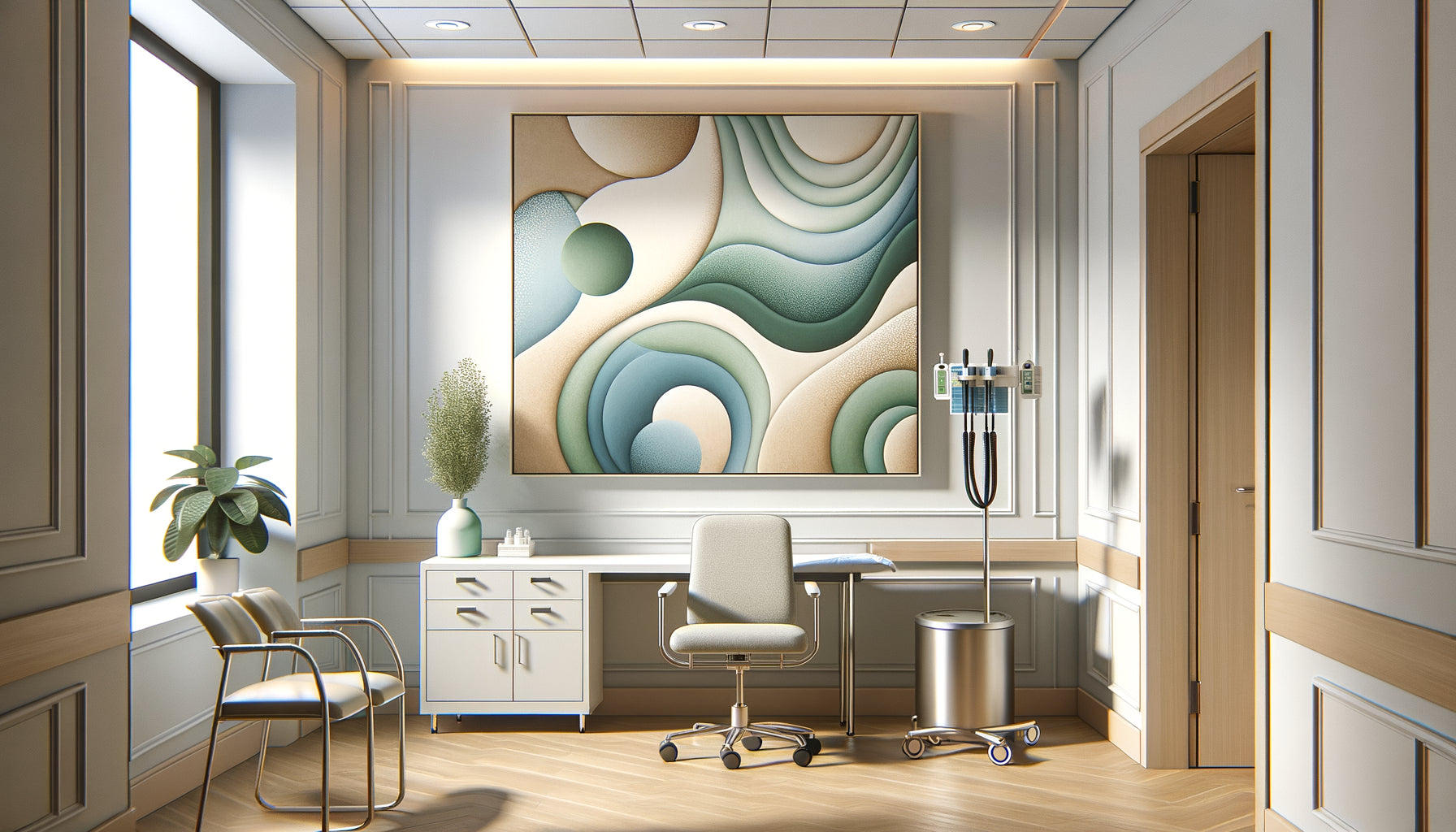
Today, high-performance technical paints exist in expanded color palettes. Manufacturers have realized that the visual environment directly influences the well-being of patients and the satisfaction of caregivers. For this pediatric project I mentioned earlier, we created a soothing universe with sky blues, sage greens and powdered pinks – all formulated in epoxy-polyurethane.
Decorative painting techniques can even be invited into these constrained spaces. Vinyl adhesive stencils, applied before the last layer of polyurethane, allow to create patterns, borders, graphic universes. Once sealed under the technical varnish, they support the same disinfection protocols as the rest of the surface.
The importance of choosing finishes
The level of gloss directly influences practical use. Contrary to popular belief, the satin finish offers the best compromise in hospital settings:
• Glossy : Maximum washability but highlights every imperfection in the support, visually tiring
• Satin : Excellent balance between cleaning resistance and visual comfort
• Matte : Superior aesthetics but lower mechanical strength, reserved for low-traffic areas
I generally recommend satin finishes with 30-40% gloss for bedrooms and hallways, and 70-80% gloss for wet rooms and technical areas.

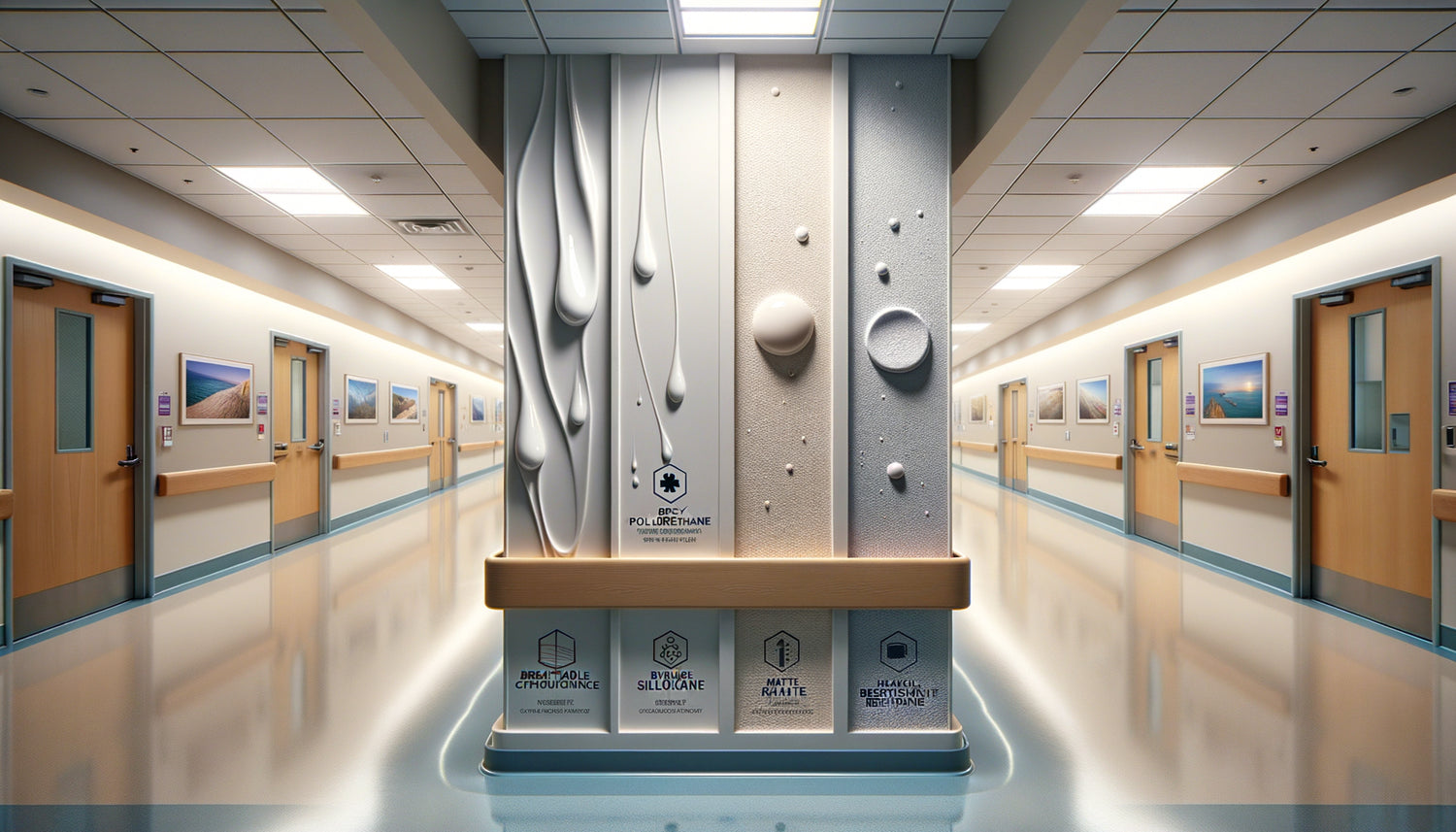
Compare to choose better: summary table of techniques
After 12 years equipping healthcare facilities, I have established this comparative synthesis of the main painting techniques resistant to hospital protocols:
Two-component epoxy paint
• Chemical resistance: Excellent (9/10)
• Durability: 7-10 years
• Breathability: Low
• Cost per m²: €25-35
• Ideal for: Standard care areas, examination rooms, hallways
Epoxy-polyurethane system
• Chemical resistance: Excellent (9/10)
• Durability: 8-12 years
• Breathability: Low
• Cost per m²: €30-40
• Ideal for: All areas with intensive protocols, color stability required
Siloxane paint
• Chemical resistance: Very good (8/10)
• Durability: 12-15 years
• Breathability: Excellent
• Cost per m²: €35-50
• Ideal for: Historic buildings, wet areas, heritage environments
Pure polyurethane
• Chemical resistance: Exceptional (10/10)
• Durability: 10-15 years
• Breathability: Very low
• Cost per m²: €45-65
• Ideal for: Operating rooms, laboratories, sterile areas, maximum risk of infection
This comparison shows that there is no universal technique, but an optimal solution for each context of use and each level of requirement.
Transform your medical spaces into places of calm and care
Discover our exclusive collection of Wall art for Medical Offices that perfectly complements your technical coatings with works designed to withstand demanding environments while creating a warm and reassuring atmosphere.
Visualize the transformation: from anxiogenic environment to healing space
Imagine for a moment: you push open the door of a medical office. Instead of the aggressive white that usually grabs you, you discover walls in soothing tones, perfectly maintained, without yellowed traces or wear and tear. The surfaces breathe cleanliness without that clinical aspect that generates anxiety. You instinctively know that this space is healthy, not despite its aesthetics, but thanks to it.
This is exactly what a painting technique adapted to hospital disinfection protocols can create. No compromise between beauty and performance. No cruel choice between budget and durability.
If you manage a healthcare facility, a medical office, a veterinary clinic or any space where hygiene is non-negotiable, invest in the right technique from the start. Consult a certified applicator, request hospital references, ask for samples tested according to the protocols you use.
Your walls will thank you. And your patients too.
Frequently asked questions about paints for medical environments
Can these technical paints be applied to already painted walls?
Absolutely, and it is even the most common situation in my renovation projects. The key lies in preparing the existing substrate. For an epoxy or polyurethane paint, I systematically proceed with a sanding for adhesion (grain 80-120) which creates sufficient roughness, followed by meticulous dusting. If the old paint is glossy or has areas of peeling, a complete stripping becomes necessary. Applying a suitable primer then guarantees durable adhesion. Siloxane paints are more tolerant and can sometimes be applied directly to existing mineral paints after simple cleaning. In all cases, an adhesion test on 1m² and a waiting period of 48 hours allow validation of the protocol before committing to the entirety of the work. This approach avoids unpleasant surprises and ensures the durability of your investment.
How long should you wait before disinfecting a freshly painted wall?
This is THE crucial question that determines the success or failure of a medical environment renovation. Unlike classic decorative paints which dry in a few hours, technical systems require complete polymerization before facing disinfectants. For two-component epoxy paints, I recommend a minimum period of 7 days at 20°C – each degree less extends this period. Polyurethane systems sometimes require 10 to 14 days depending on the formulation. This time is not superficial drying, but a deep chemical reaction that gives the film its definitive strength. I have seen too many projects compromised by premature commissioning: the paint softens upon contact with the disinfectant, peels, blisters. For services that cannot wait, there are rapid formulations certified for 48h, but their cost is increased by 40 to 60%. Plan your work during off-peak periods – it's the most worthwhile time investment you can make.
Are these technical paints really necessary for a small medical practice?
This question comes up systematically, and my answer depends on your actual cleaning protocol. If you disinfect your surfaces 3 to 5 times a day with hospital products (bleach, chlorinated solutions, alcohols), then yes, absolutely. Even a high-quality acrylic paint will show signs of fatigue within 6-12 months: yellowing around sinks, loss of adhesion in frequently touched areas, increasing difficulty cleaning effectively. You will end up repainting every 2-3 years, with the cost and inconvenience that entails. On the other hand, if your activity generates little infectious risk and you occasionally use mild cleaners, a good scrubbable high-end paint (class 1 or 2) may be sufficient. My pragmatic advice: invest in high-performance technology for critical areas (treatment room, waiting room, restrooms) and opt for reinforced standard in administrative spaces. This hybrid approach optimizes your budget while securing the areas that really matter.