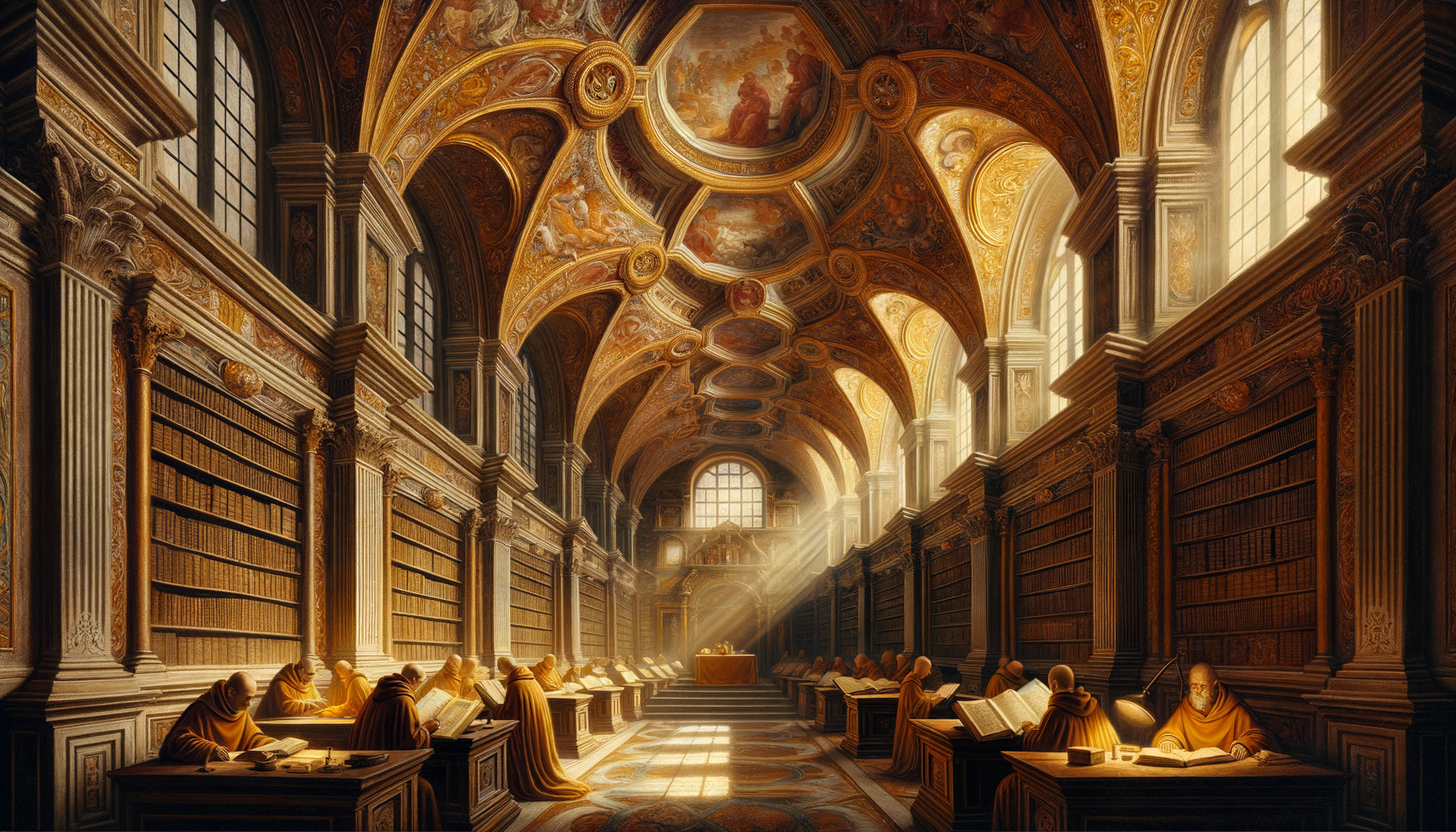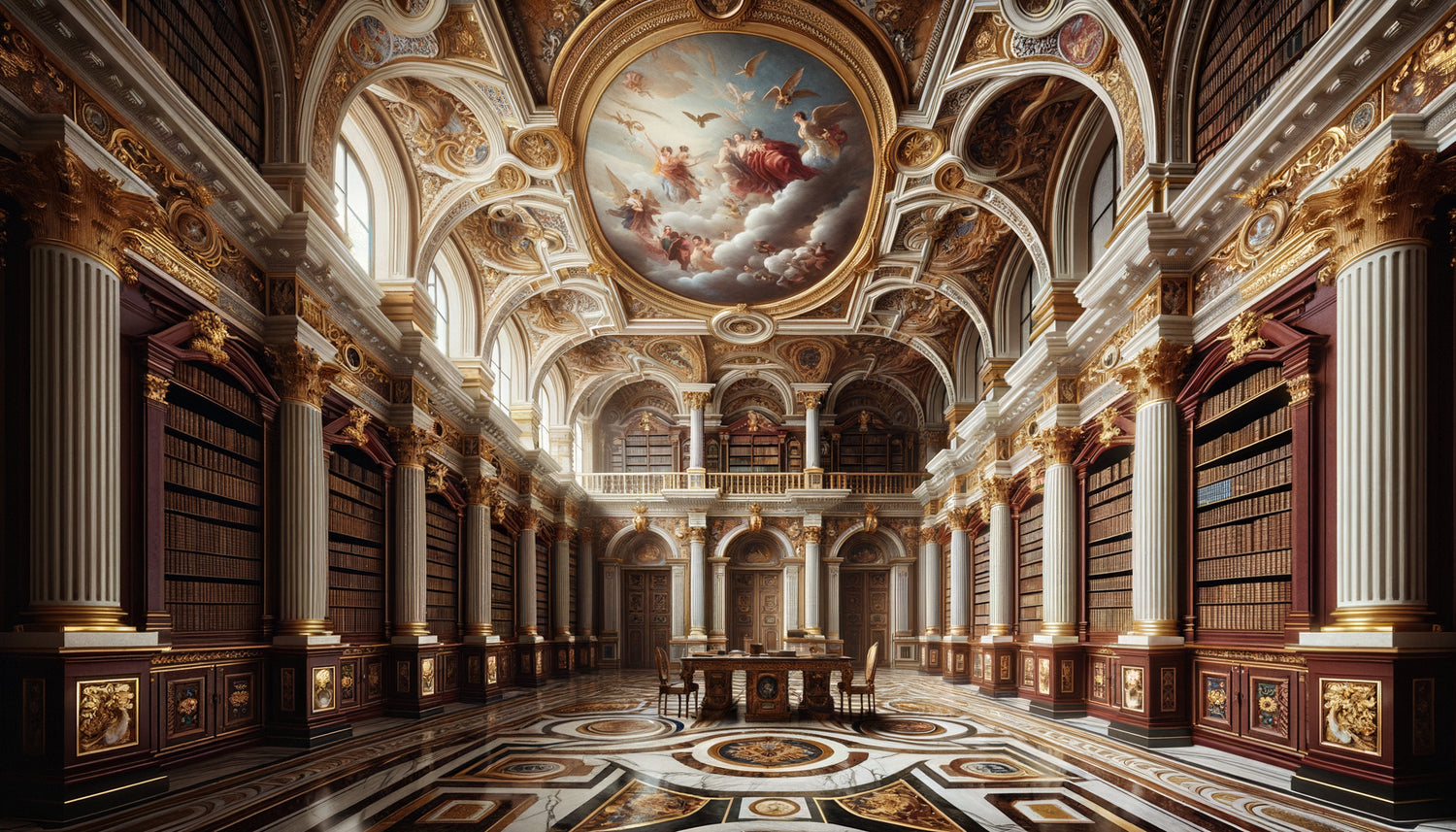
Imagine stepping through the threshold of an aristocratic library in the 17th century. Your eyes rise to the ceiling and suddenly, you lose your footing: the sky opens above you, dizzying colonnades stretch towards infinity, impossible galleries multiply on the horizon. Your reason knows that you are between four walls, but your senses tell you otherwise. This visual magic was not simply an aesthetic whim: it embodied a true cultural revolution.
Here's what illusionist perspective brought to 17th-century libraries: it transformed a place of knowledge into a theater of power, it materialized the infinity of human knowledge in a finite space, and it positioned its owner as a visionary capable of defying physical laws themselves.
You may be fascinated by these period interiors where architecture seems to defy gravity, where every surface tells a story. You probably wonder why these nobles invested fortunes in these spectacular illusions rather than simple classic decorations. The answer reveals much more than a passing fad: it unveils an entire philosophy of knowledge and prestige.
Rest assured, understanding this passion for illusionist perspective requires no knowledge of art history. It simply takes grasping the cultural and political stakes of an era when owning a library was already an act of politics in itself.
In this article, you will discover the profound reasons that made illusionist perspective the preferred ornamentation of aristocratic libraries, and how this tradition continues to inspire our contemporary interiors.
Limitless knowledge: translating intellectual infinity into architecture
In the 17th century, an aristocratic library was not simply a storage space for valuable volumes. It symbolized the accumulation of universal knowledge, an unlimited intellectual ambition that physical walls seemed to cruelly limit. It was precisely here that illusionist perspective intervened.
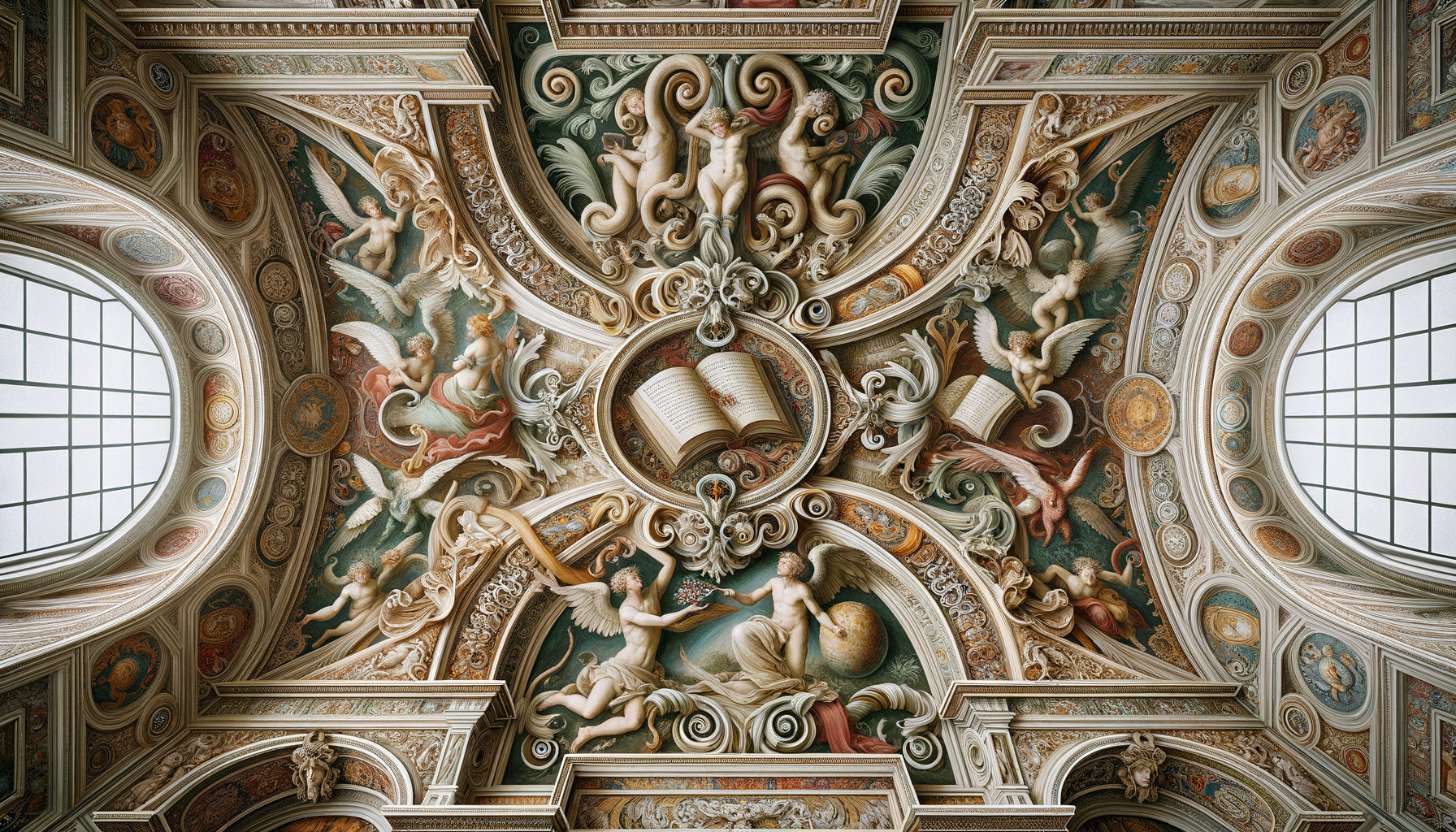
Painters specializing in architectural trompe-l'œil, heirs to the mathematical discoveries of the Renaissance, created fictitious extensions of real space. On ceilings, they painted open domes onto skies populated with learned allegories. On walls, they multiplied shelves to infinity, suggesting thousands of additional volumes that did not exist materially.
This sophisticated optical illusion answered an essential question: how to visually represent the infinity of knowledge in a necessarily finite space? Illusionist perspective offered an elegant answer by creating a visual continuity between the real world and the imaginary world, between physically owned books and the infinite ocean of human knowledge.
The libraries of Italian and French palaces competed with daring. Each illusionist perspective became more dizzying than the previous one, each painted architecture more complex. The goal was not simply to decorate, but to materialize the limitless intellectual aspiration of their owner.
Theater of Power: The Elegant Intimidation of the Visitor
Crossing the threshold of an aristocratic 17th-century library was a calculated experience designed to impress. Illusionistic perspective played a strategic role in this staging of power.
From the entrance, the visitor found themselves confronted with a spectacular demonstration of wealth and refinement. Trompe-l'oeil frescoes required the services of the best artists of the time, often trained in Italy, true masters of projective geometry and aerial perspective. Their remuneration represented considerable sums.
But the desired effect went beyond mere exhibition of fortune. Illusionistic perspective created a controlled disorientation in the viewer. Losing one's spatial bearings in the face of an impossible architecture was to experience physically the intellectual and symbolic power of the aristocrat who commissioned these wonders.
This disorientation carried a powerful subliminal message: if this owner masters the secrets of perspective, if he commands appearances to the point of deceiving your senses, what extent of power and knowledge must he possess? The library thus became a instrument of visual diplomacy, a mute but irresistible argument of authority.
The Alliance Between Science and Art
Illusionistic perspective also demonstrated mastery of the most advanced disciplines of the time. Creating these perfect illusions required a thorough understanding of geometry, optics, and mathematics. By sponsoring such works, the aristocrat displayed his belonging to the European intellectual elite, one that valued both arts and sciences.

The Baroque Legacy: When Illusion Becomes Philosophy
Illusionistic perspective in aristocratic libraries was part of the Baroque movement, this 17th-century aesthetic that celebrated movement, theatricality, and the fusion of arts. But its specific presence in spaces dedicated to books revealed a particular philosophical dimension.
The Baroque questioned the boundary between reality and appearance, between truth and illusion. What more powerful metaphor for a library, a place where words themselves create imaginary worlds, where reading transports the mind to absent realities? Illusionistic perspective materialized visually what reading accomplished intellectually: a journey beyond physical limits.
The ceilings opened onto allegorical scenes where Virtues, Sciences and Arts mingled in celestial architectures. These sophisticated compositions established a symbolic continuity between the act of earthly reading and access to universal truths located in higher spheres.
This design transformed the library into a veritable temple of knowledge, where illusionistic perspective played the role of a mystical passage between the material world of books and the immaterial universe of ideas. The aristocratic reader no longer simply consulted works: he participated in a ritual of intellectual elevation orchestrated by the illusionistic architecture itself.
The aristocratic competition: a bidding war of virtuosity
The aristocratic libraries of the 17th century did not exist in isolation. They were part of a fierce competition between great families for cultural supremacy. Illusionistic perspective became a terrain of sophisticated rivalry.
Each noble visiting a peer's library immediately gauged the quality of the illusionistic perspective. Worldly conversations compared the feats of different artists: the one who had achieved the most dizzying gallery, whose painted sky seemed truly infinite, and who had integrated real architectural elements with the greatest subtlety into his illusionistic composition.
This emulation pushed commissioners to constantly seek innovation and excellence. Artists specializing in illusionistic perspective traveled from court to court, from palace to palace, bringing with them the latest technical discoveries and the most spectacular effects.
The libraries of some Roman or Viennese palaces became legendary precisely thanks to the audacity of their illusionistic perspectives. Owning such a library was to join an exclusive circle of European aristocrats sharing the same refined cultural codes, a kind of Freemasonry of taste and knowledge.

Creating the ideal atmosphere for scholarly contemplation
Beyond the issues of prestige, illusionistic perspective served a more intimate purpose: to create the optimal psychological environment for study and reflection.
The aristocrats of the 17th century who retreated to their libraries sought to escape the constraints of daily life. Illusionistic perspective facilitated this mental escape by offering a visually transcendent environment. Looking up from their reading, they could lose their gaze in these impossible architectures, infinite skies painted on the ceiling.
This immersion in a partially fictional space stimulated imagination and fostered what we would now call an intellectual flow state. The mind, already engaged by reading, found in these visual illusions an invitation to continue its mental journey, to explore further the ideas encountered in books.
Illusionistic perspective also created an atmosphere of solemnity without austerity. Unlike overly elaborate decorations that can distract, or bare walls that can oppress, architectural illusion offered a perfect balance: it enriched the space without cluttering it, it inspired without imposing.
Light Sublimated by Illusion
Painters of illusionistic perspective mastered the art of representing light itself. Their painted skies captured and reflected the natural light from windows, creating plays of shadows and clarity that evolved according to the time of day. This living dimension of the illusion transformed the library into a space in perpetual visual metamorphosis, never fixed, always renewed.
Transform your library into a sanctuary of knowledge
Discover our exclusive collection of Library artworks that capture the essence of these historical illusionistic perspectives and bring depth and sophistication to your reading spaces.
Contemporary Inspiration: Reinventing Illusionistic Perspective Today
While the libraries of 17th-century aristocrats belong to history, their aesthetic lesson remains surprisingly relevant. Illusionistic perspective continues to inspire contemporary creators who seek to add depth to reading spaces.
The most successful current interiors borrow from techniques of yesteryear without falling into servile copying. A painting representing an architectural perspective, strategically placed in a modern library, can recreate that sense of infinity which fascinated the aristocrats of the Grand Siècle.
Interior designers are rediscovering the virtues of visual illusion to optically enlarge spaces, particularly in urban apartments where every square meter counts. A work evoking a gallery in perspective or an open sky instantly transforms the perception of a room, just as Baroque frescoes did.
This approach offers a considerable advantage: it brings a cultural and historical dimension to your decor while solving practical space planning challenges. Your personal library thus becomes the heir to this great European tradition, a space where the present dialogues with the past.
Rather than seeing our contemporary spaces as limited, we can, like aristocrats of the 17th century, use the art of illusion to transcend them visually and symbolically.
Your library as a journey through time and space
The illusionistic perspective prized in aristocratic libraries of the 17th century was not merely decorative ornamentation. It embodied a worldview where knowledge had no limits, where the aristocrat positioned himself as a prince of arts and sciences, where private space became a theater of power and temple of contemplation.
Understanding this historical passion illuminates our own decor choices. When you furnish your personal library, you unconsciously participate in this centuries-old tradition that considers books as portals to infinity and their place of storage as a privileged space deserving exceptional treatment.
The next time you contemplate a reproduction of these Baroque illusionistic perspectives, or visit one of the historical libraries that have survived to this day, let yourself be transported by this visual magic. Imagine yourself as an aristocrat of the 17th century, looking up from your reading to lose yourself in these impossible architectures, feeling your mind soar towards those painted skies promising access to eternal truths.
Your own library can regain some of this magic. It just takes understanding that visual illusion, far from being a deception, constitutes an invitation to transcend the limits of everyday life and make your reading space a true personal sanctuary.
Frequently asked questions about illusionistic perspective in libraries
Can we visit libraries with illusionistic perspective today?
Absolutely, and it’s an experience not to be missed! Several historical European libraries have beautifully preserved their illusionistic perspectives from the 17th century. The Austrian National Library in Vienna, with its spectacular ceiling painted by Daniel Gran, remains one of the most impressive examples. In Italy, many aristocratic palaces converted into museums retain their original libraries with intact trompe-l'oeil frescoes. The Riccardiana Library in Florence or the Casanatense Library in Rome offer striking testimonies to this art. When visiting these places, you will immediately understand why these illusions fascinated aristocrats so much: the effect remains stunning even for our contemporary eyes accustomed to digital special effects. Plan your visit during hours when natural light floods these spaces, as that's when illusionistic perspective reveals all its magic, exactly as it was designed to be admired.
How to incorporate the spirit of illusionistic perspective into a modern library?
Rest assured, you don't need to transform your ceiling into a baroque fresco to capture the essence of illusionistic perspective! The contemporary approach favors more accessible but equally effective solutions. Start by choosing a work of art depicting an architectural perspective or landscape in depth, and position it strategically facing your main reading area. Quality reproductions of Baroque perspectives, or contemporary creations inspired by this tradition, instantly create that feeling of openness and infinity. You can also play with mirrors to create effects of space multiplication, a technique that 17th-century decorators already used as a complement to frescoes. Lighting also plays a crucial role: well-placed light sources can accentuate the depth of your decorative elements. The goal is not historical replication but the transposition of this fundamental principle: giving your library a dimension that transcends its physical limits.
Why was illusionistic perspective specifically associated with libraries rather than other rooms?
This combination reveals the profound conception that the 17th century had of knowledge and the act of reading. The library represented the place where the mind traveled, where reading transported the reader beyond the borders of time and space. The illusionistic perspective materialized this intellectual transcendence visually. While reception rooms favored narrative decorations celebrating the family or its exploits, and bedrooms generally remained more subdued, the library deserved a particular symbolic treatment: it should reflect the infinity of human knowledge and the spiritual elevation that comes with learning. This decorative specialization also signaled the cultural importance attached to books in the enlightened aristocratic circles of the 17th century. Possessing a library adorned with illusionistic perspective displayed an intellectual identity, not just material wealth. It was proclaiming one's belonging to an elite who valued the mind as much as temporal power, an essential distinction in the social hierarchy of the time.