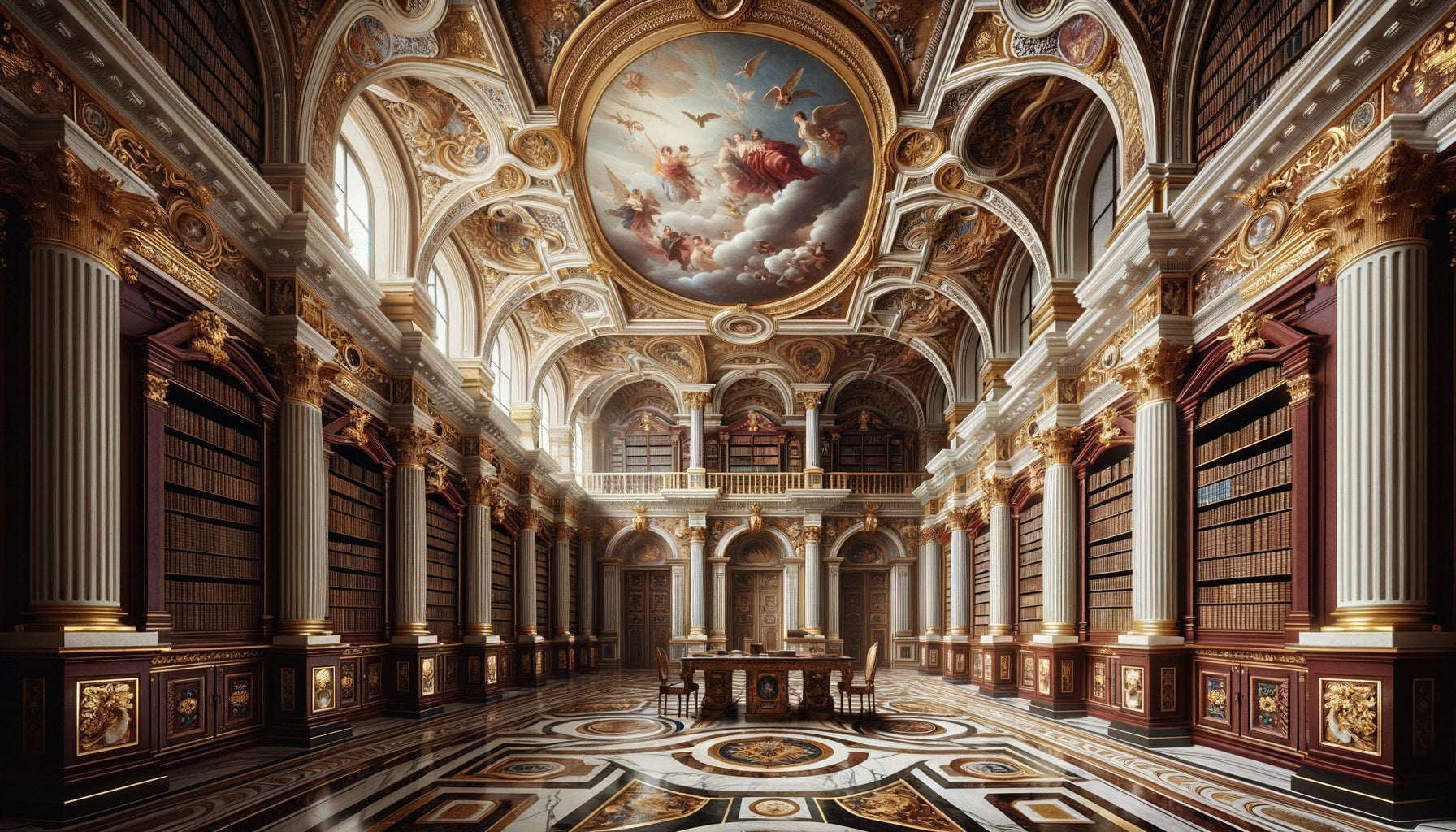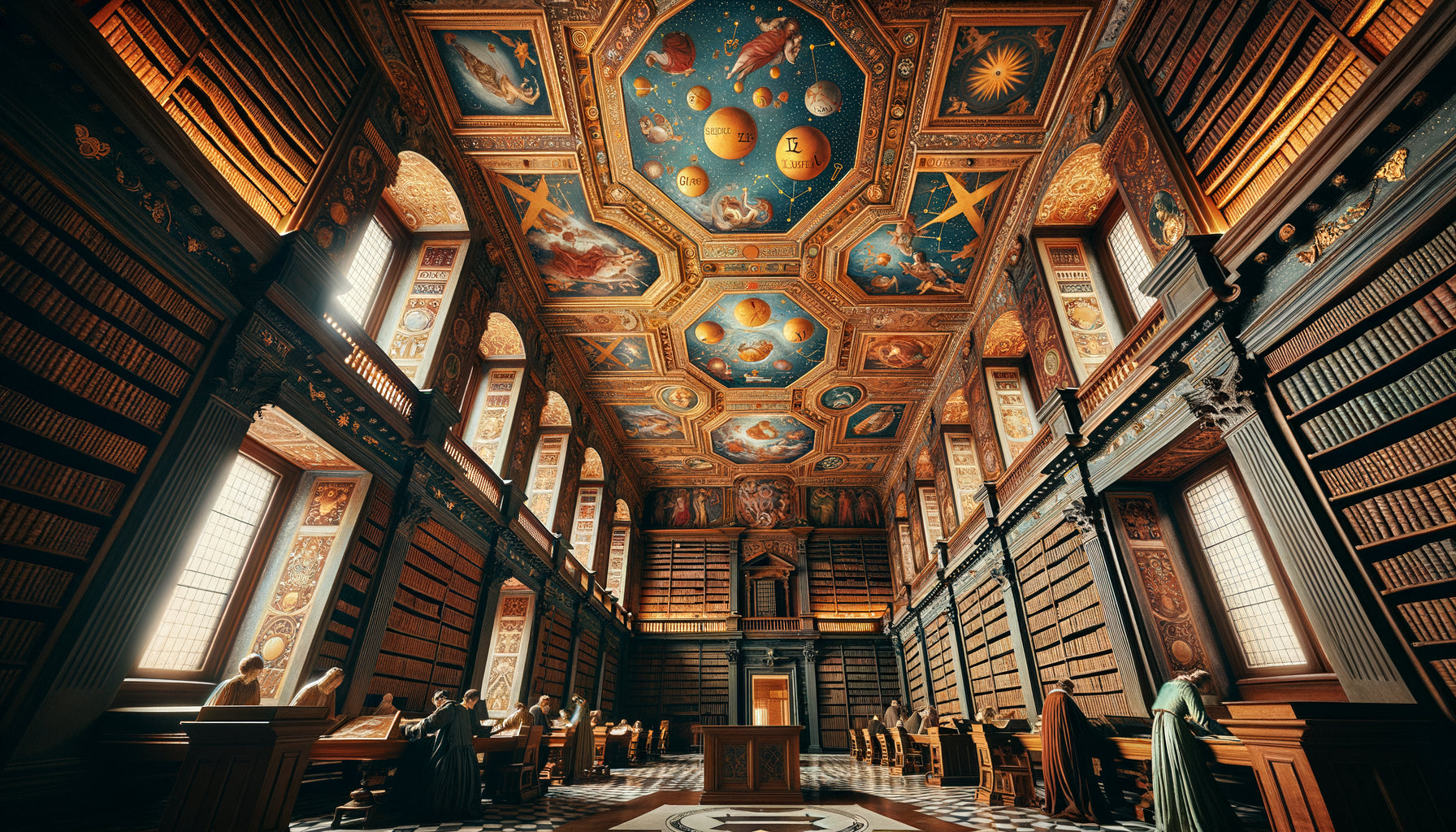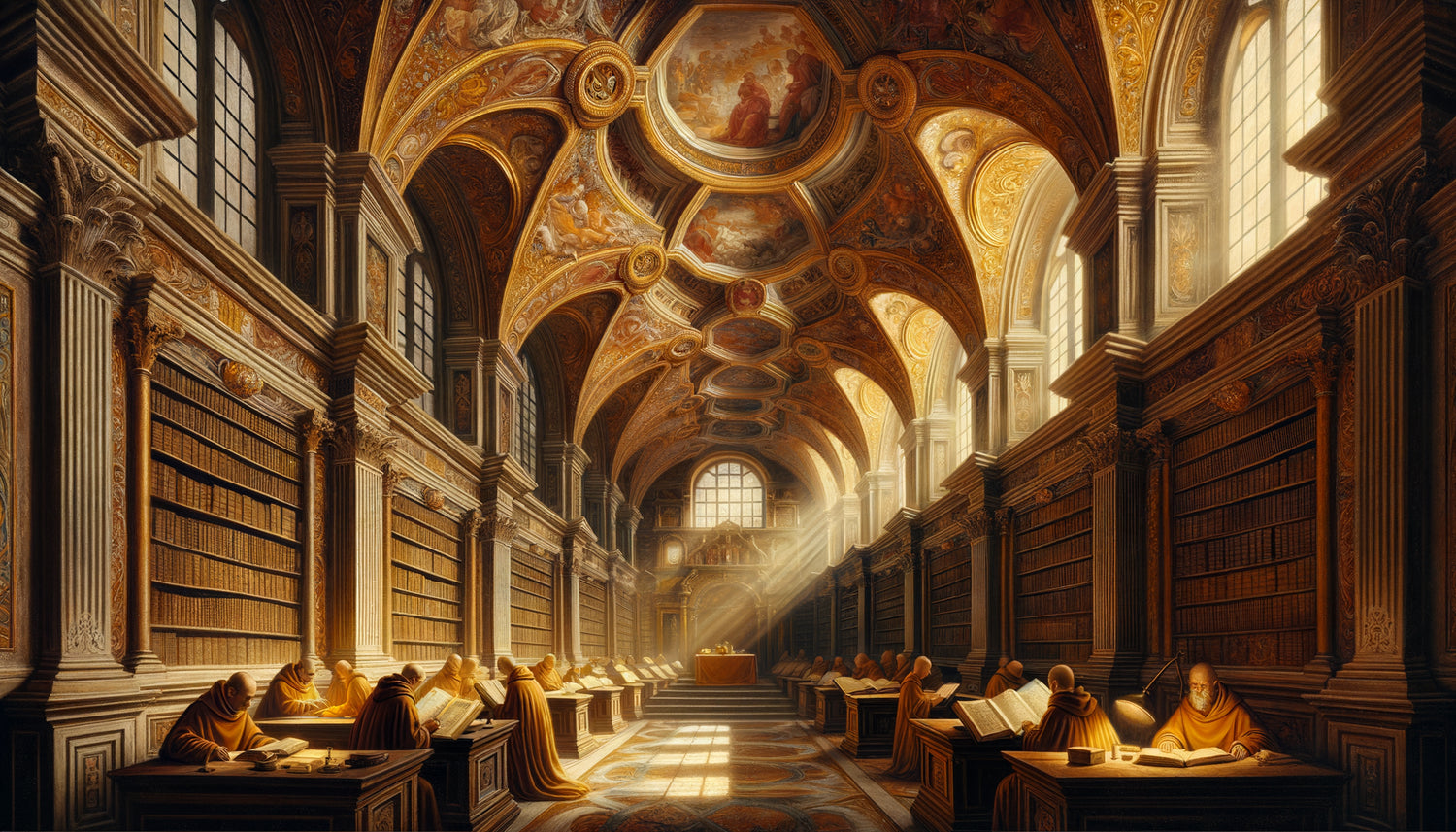
Imagine standing in the Vatican library, gazing up at the sublime vault where Michelangelo and Raphael deposited their masterpieces. A dizzying question arises: how did these geniuses capture light in spaces where sunlight struggles to penetrate? How did they transform dark ceilings into radiant visions of light? This enigma has tormented the greatest masters from the Renaissance to the Baroque, leading them to invent solutions as ingenious as they are dazzling.
Here's what the natural lighting strategies of painters bring to your understanding of decorative art: a revolutionary mastery of indirect light, trompe-l'oeil techniques that defy the laws of physics, and a color palette specifically designed for dark environments.
You admire these majestic frescoes in art books, but you wonder how they shine so intensely despite the absence of direct windows. This architectural and pictorial mystery has long seemed impenetrable, reserved for art historians and restorers. Rest assured: ancient painters developed systematic, perfectly logical methods that we can decipher today. I will reveal their luminous secrets, those very ones that still make these works vibrate centuries after their creation.
The architectural paradox of vaulted libraries
Monastic and palatial libraries presented a formidable challenge: their majestic vaults created noble spaces but simultaneously blocked direct sunlight. Side windows, often narrow to preserve precious manuscripts from fading, only illuminated the peripheral walls. The ceiling remained plunged in permanent twilight, an area of shadow that architects could not resolve without compromising the structural integrity of the building.
Painters from the 15th to 18th centuries had to contend with this fundamental constraint. Unlike walls easily accessible to natural light, vaults absorbed shadows. Painting under these conditions was like decorating the interior of a cave hoping it would shine like a summer day. This apparent impossibility stimulated unprecedented creativity, forcing artists to rethink their entire approach to color and composition.
The technique of luminous backgrounds: creating your own source
Faced with the natural darkness of vaults, painters adopted a radical strategy: transforming the painted surface itself into a light source. Rather than passively waiting for daylight, they created bright backgrounds that captured and reflected even the faintest rays available. The Laurentian Library in Florence, decorated under the direction of Michelangelo, perfectly illustrates this approach.
Artists prepared their surfaces with brilliant white bases, composed of highly reflective lead white or lime. This preparatory layer acted as a diffuse mirror. Even under low natural lighting, these bright backgrounds reflected available light downwards, creating an ambient brightness that seemed to defy the laws of optics. Golden tones and pale yellows further enhanced this effect, particularly well capturing the warm light from candles and oil lamps used in the evening.
Pigments with a high reflection coefficient
Painters meticulously selected their pigments according to their ability to reflect light. Saint John’s white, pale azurite for skies, and yellow ochres dominated the palettes intended for vaulted libraries. These colors possessed a higher luminous reflectance coefficient, maximizing each ray of natural light reaching the vault. Conversely, they avoided raw earth tones and deep blacks that would have absorbed the precious luminosity.

Architectural trompe-l'oeil: opening the closed sky
The most spectacular solution remains the illusion of celestial openings. Andrea Pozzo, a Jesuit master of the 17th century, perfected this technique in the church of Saint Ignatius in Rome, a principle he also applied to libraries. His genius was to paint false windows, fictitious oculi and open skies directly onto the closed vault. The viewer's eye, deceived by the dizzying perspective, perceived a light source where there was only stone and paint.
These architectural trompe-l'oeil created a psychological light as powerful as physical light. By painting white clouds crossed with golden rays, artists suggested a divine luminosity that mentally radiated the space. The visitor’s brain compensated for the actual darkness with this painted light, subjectively making the library brighter. This perceptual manipulation rested on an intuitive understanding of visual psychology, centuries before neuroscience.
Strategic exploitation of rare natural sources
Painters obsessively studied the path of the sun in the library. They identified moments when an oblique ray passed through a side window to temporarily strike a section of vault. These privileged areas received the most important scenes, the main faces, the key narrative elements. The rest of the composition was organized around these intermittent natural lighting points.
In the Wiblingen monastery library in Germany, the Rococo frescoes precisely follow the seasonal light axis. In summer, midday sun directly illuminates the central figures of the vault. In winter, the grazing sidelight highlights the peripheral ornaments. This luminous choreography transformed the work into a living composition, changing character according to the hours and seasons, as if the vault breathed with the solar cycle.
Modulation of contrasts according to distance
The masters adapted their contrasts to the viewing distance and available lighting. On high, dark vaults, they exaggerated tonal differences: whites whiter, shadows more pronounced. This amplification compensated for the loss of definition caused by distance and low light. Conversely, in better-lit areas, they used subtle transitions and delicate nuances. This strategic modulation ensured optimal readability despite unfavorable conditions.

Glazes : the magic of luminous depth
The supreme technique of Venetian and Flemish masters, glazing consisted of layering thin coats of translucent paint. Each layer allowed partial light to pass through, which bounced off the lower layers before returning to the eye. This luminous journey through the pictorial strata created an unreal luminous depth, an inner glow that seemed to emanate from the painting itself.
In vaulted libraries, this technique became crucial. Glazes based on clarified linseed oil and resins allowed the few rays of natural light to penetrate the pictorial matter, to be reflected on the luminescent preparation, then to emerge enriched. The work no longer passively reflected available light: it transformed it, amplified it, creating a luminescence that defied the surrounding darkness. Complexions took on vital transparency, draperies shimmered gently, and backgrounds seemed to recede into a luminous haze.
The contemporary legacy: drawing inspiration from ancient masters
These age-old strategies remain surprisingly relevant to our modern interiors. We face similar challenges: dimly lit spaces, ceilings far from windows, a desire to create brightness without multiplying artificial sources. The principles developed by the vaulted library painters apply perfectly to dark hallways, attic rooms, and under-roof spaces.
Adopting high-reflectance colors on ceilings, creating illusions of depth through trompe-l'oeil, strategically exploiting rare natural light sources: these are lessons that can be directly translated. Some contemporary decorators consciously revisit these techniques, painting faux skylights or applying pearlescent finishes that capture and diffuse ambient light. Ancient art dialogues with modern design, proving that ingenious solutions transcend eras.
Transform your dark spaces into havens of inspired brightness
Discover our exclusive collection of Library wall art that captures the spirit of great historical frescoes and brings clarity and depth to your walls.
Conclusion: light as a creative conquest
The painters of vaulted libraries did not simply solve a technical problem: they transformed an architectural constraint into an artistic opportunity. Their mastery of limited natural lighting produced some of the brightest works in art history, frescoes that seem to defy darkness by their very presence. These strategies – reflective backgrounds, celestial trompe-l'oeil, exploitation of solar trajectories, translucent glazes – constitute a valuable technical heritage.
Today, facing your own difficult-to-light spaces, remember these ancient masters. Their ingenuity reminds you that no spatial challenge is insurmountable for those who understand the laws of light and possess the audacity to manipulate them creatively. The next time you contemplate a dark ceiling, see it not as a limit, but as a blank canvas awaiting luminous transformation.
FAQ: Your questions about lighting ancient frescoes
How did painters actually work in these dark spaces?
Artists combined multiple light sources during execution. They primarily worked during hours when natural light reached its maximum, generally mid-morning. Polished metal mirrors, strategically positioned, reflected and directed the few rays of sunlight towards the work area. For fine details and retouching, they used multi-candle systems placed at calculated distances, creating a relatively uniform artificial lighting. Some workshops even developed scaffolding equipped with mobile reflectors, veritable ancestors of modern spotlights. This complex orchestration of available light transformed each workday into a meticulous technical choreography, where time and solar angle dictated the creative rhythm.
Why do these frescoes seem brighter in person than in photos?
This fascinating phenomenon results from binocular vision and retinal adaptation that photography cannot reproduce. On site, your eyes gradually adapt to the ambient brightness of the library, dilating pupils and increasing retinal sensitivity. In this state of adaptation, subtle contrasts and translucent glazes reveal all their richness. Moreover, your mobile position allows you to perceive variations in brightness according to the angle of vision, an effect that masters consciously exploited. Cameras, with their fixed exposure, capture a single moment of light and flatten this multidimensional experience. That is why art historians insist on the importance of direct experience: the complete magic of these works reveals itself only to the human eye, in its original architectural context, under its changing natural lighting.
Can I apply these principles to my own interior decoration?
Absolutely, and it is even recommended for difficult spaces! Start by identifying the natural light sources in your room and their trajectories according to the time of day. Paint your ceilings and walls in light, high-reflectance tones: off-white, light beige, or pearly gray. If you want to add decorative elements, prioritize patterns containing white and gold, which capture available light as much as possible. For a spectacular effect in a dark room, consider a ceiling trompe-l'œil window or skylight, created by a specialist artist or via high-quality photographic reproductions. Finally, use slightly satin finishes rather than matte ones: they subtly reflect light without creating glare. These simple adjustments, directly inspired by historical techniques, will transform your dark space into surprisingly bright and welcoming place.