In Jan van Eyck’s workshop in Bruges, a stunned visitor observed a detail of the Ghent Altarpiece. He passed his hand behind the panel, convinced that light was actually passing through the wood. This unreal transparency, this luminosity coming from within the painting itself, was not magic - it was the result of a revolutionary technique that would forever change the history of art.
Here’s what the Flemish glazing technique brings: optical depth comparable to precious stones, a luminosity that defies centuries, and that unsettling feeling that the painting breathes before your eyes. A craftsmanship so sophisticated that even the greatest Italian masters will travel to Flanders to unlock this secret.
Today, faced with a 15th-century Flemish painting, this question torments us: how did they achieve these such lively complexions, such shimmering fabrics, such true jewels that you feel like you could grasp them? The answer lies in a meticulous alchemy between patience, chemistry and obsessive observation of light.
Linseed oil, the liquid treasure of Flanders
Unlike Italy, which was still mostly painting with tempera, Flemish masters perfected the use of linseed oil as a binder. But be careful: not just any oil. They prepared it for months, letting it clarify in the sun in glass containers, regularly changing the water that absorbed impurities. This ultra-refined oil became almost colorless, perfectly fluid.
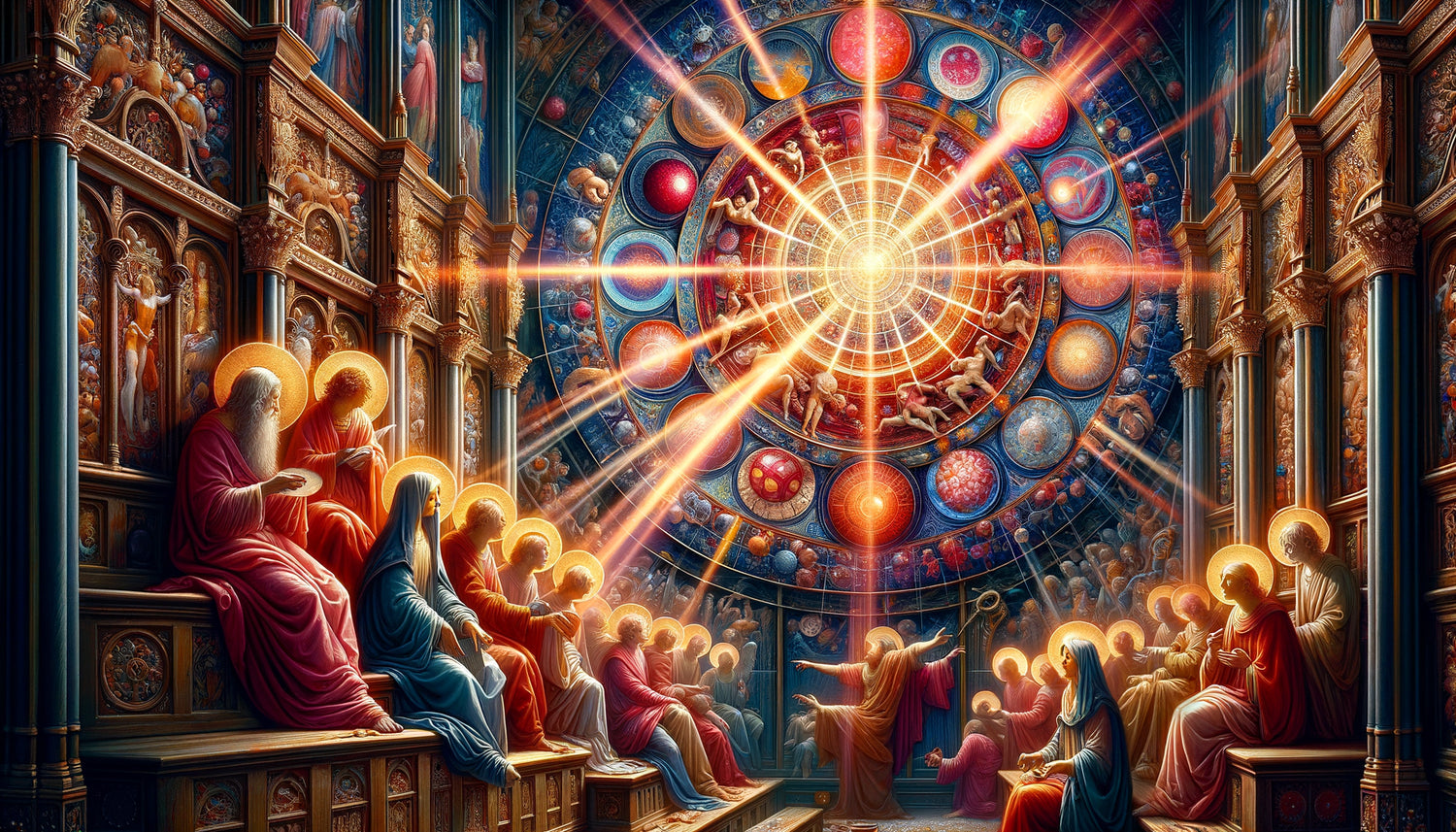
This purified oil possessed a magical property: a natural transparency that allowed light to penetrate the pictorial layers, bounce off the white preparation of the panel, and then emerge by passing through the colored glazes again. Exactly as light behaves in an opal or carnelian.
Flemish painters sometimes added resins such as mastic or Venetian turpentine to their oil. These additives accelerated drying - crucial when layering ten, fifteen, sometimes twenty glazes - and further increased the transparency of the medium. The result? A painting so fine that no brushstroke is discernible, no texture, only solidified light.
The secret of the radiant white preparation
Even before touching a brush, the Flemish prepared their oak panels with the meticulousness of jewelers. Several layers of gesso - a mixture of chalk and animal glue - were applied and sanded until a surface as smooth as marble was obtained, an immaculate white. This clear base was fundamental: it would reflect light through the translucent glazes.
Some artists like Rogier van der Weyden even added a thin layer of lead-white primer over the gesso, creating an internal luminous mirror. This reflective preparation transformed each colored glaze into a stained glass window, the light making a back-and-forth journey that multiplied the chromatic intensity.
The Glazing Technique: The Art of Infinite Patience
A glaze is a paint layer so diluted that it becomes transparent, like a colored veil. Imagine placing a tinted tissue paper on top of another: the colors blend optically without physically touching each other. This is exactly the process that the Flemish masters elevated to the rank of supreme art.
To achieve this legendary transparency, they began with a monochrome detailed underlayer, usually in grisaille. This first step, called dead coloring, established all volumes, all shadows, and the entire structure of the painting. Then came the real work: the methodical superposition of colored glazes.
A cardinal's crimson robe? First a brown-red glaze, left to dry for several days. Then a transparent vermilion glaze. Next a madder lake glaze. Perhaps a fourth with carmine. Between each layer: waiting, observation, adjustment. This progressive layering created a depth impossible to achieve otherwise, each layer subtly modifying the perception of those that preceded it.
Pigments Chosen for Their Natural Transparency
Not all pigments are equal for glazing. The Flemish masters meticulously selected their colors according to their intrinsic transparency. Organic lakes - extracted from plants or insects - were particularly prized: madder lake for bright reds, gold stil for golden yellows, verdigris for deep greens.
For the carnations, that living flesh which characterizes Flemish portraits, they used a sophisticated technique. On the greenish grisaille base (which created the cold shadows), they applied Siennese earth glazes, then diluted vermilion, and finished with touches of lead white barely tinted. Result: skin that seems irrigated with blood, with that characteristic translucency of human epidermis.
Blues presented a particular challenge. The precious lapis-lazuli, ground into ultramarine, was naturally semi-transparent and ideal for glazing skies and the Virgin's mantles. Its astronomical cost explains why commissioners contractually specified its quantity in religious works.

Light as a Material: Understanding Optics Before Newton
What is astonishing is that these 15th-century artists intuitively understood optical principles that science would not formalize until two centuries later. They knew that reflected light and transmitted light do not produce the same effect.
An opaque pigment illuminated reflects light on the surface: it is flat, matte, lifeless. But a transparent glaze allows light to penetrate, bounce off the lower layers, and emerge enriched with all the chromatic information it has traversed. This is exactly the phenomenon that makes stained glass so luminous or gemstones so fascinating.
The Flemish also systematically exploited contrast of transparency. In the same painting, some areas were painted in opaque layers (the backgrounds, architectures) while others received fifteen glazes (complexions, jewels, precious fabrics). This alternation created a natural visual hierarchy, guiding the eye towards the essential elements enveloped in light.
The Role of Time in Final Transparency
Paradoxically, Flemish glazes become even more transparent over the centuries. Linseed oil continues to polymerize for decades, gaining clarity. Resins stabilize, layers fuse microscopically. A Memling painting is probably brighter today than it was in the 16th century.
This maturation of transparency was anticipated by the masters. They knew that their work would improve with time, like a precious wine. That's why some paintings appear too dark in the shadows during their creation: the artisans compensated for future lightening, literally painting for eternity.
Surgical Application Techniques
Perfect transparency also required a goldsmith's gesture. The Flemish used extremely fine brushes, often made of squirrel hair for their flexibility, which allowed them to spread glazes without leaving traces. The gesture was light, almost caressing, so as not to disturb the barely dry lower layers.
Some artists like van Eyck applied their glazes with their fingertips in the most delicate areas, the warmth of the skin imperceptibly fluidifying the oil for a perfect blend. Others used soft badger hair brushes to soften, creating those elusive transitions between light and shadow characteristic of Flemish painting.
Exact dilution was crucial. Too much oil and the glaze would run, accumulate in the hollows. Not enough and it would become opaque, losing its magic. Each pigment required its own dosage, an empirical knowledge passed down from workshop to workshop, from master to apprentice.
Let this Flemish light illuminate your everyday life
Discover our exclusive collection of famous artist inspired paintings that capture this timeless transparency and transform your walls into windows to the Renaissance.

Living Heritage: These Glazes That Still Inspire
The Flemish glazing technique did not die with the 15th century. The Dutch masters of the Golden Age - Rembrandt, Vermeer - pushed it even further. Vermeer used up to twenty different glazes for his legendary blues, creating this supernatural luminosity that nimbly surrounds his interior scenes.
Even today, restorers who analyze these works under a microscope still discover new technical subtleties. Layers so thin they measure just a few microns. Pigments mixed with precision rivaling modern printing. A mastery of transparency that remains, six centuries later, an unparalleled technical peak.
For us, art and beauty lovers, these Flemish paintings offer an essential lesson: true depth does not come from thickness but from intelligent layering. Whether in an interior, a work of art or a creative project, well-controlled transparency creates a richness that no opacity can equal.
Conclusion: Transparency as Philosophy
This obsessive quest for transparency by Flemish masters ultimately reveals a worldview: true beauty is built in layers, revealed gradually, requires patience and precision. Like their meticulously superimposed glazes, precious things in life gain depth with time and the attention we give them.
The next time you find yourself facing a van Eyck or a van der Weyden, approach very closely. Observe how impossible it is to see where each layer begins and ends. Then step back and let the magic work: this light coming from within the painting itself, this miraculous transparency that has crossed six centuries without losing any of its power. This is the gift these alchemists of color have left us.
FAQ: Understand Everything About Flemish Glazes
Why do Flemish paintings seem to glow from within?
This unique luminosity comes from the technique of superimposed transparent glazes on a brilliant white ground. Light penetrates the translucent layers of oil paint, bounces off the light background, and then emerges again through all the colored glazes. This double passage enriches and intensifies the colors, just like light behaves in a gemstone. It is an optical effect that opaque pigments can never produce. Flemish masters empirically discovered this physical principle and perfected it beyond what modern techniques can often reproduce. Each glaze acts as a color filter that adds to others, creating unparalleled chromatic depth.
How long did it take to paint a picture with this technique?
A medium-sized Flemish portrait could require six months to a year of work. Not because the artist painted slowly, but because each glaze had to dry completely before another was applied - sometimes several days of waiting between two layers. Large altarpieces like van Eyck's Ghent Altarpiece took years. This imposed slowness was not a disadvantage but the very heart of the technique: it was precisely this patient superposition of fifteen, twenty glazes that created the magical transparency. Artists worked simultaneously on several areas of the painting or on multiple works, optimizing these drying times. Patience was literally the price of perfection.
Can this technique still be painted today?
Absolutely, and some contemporary artists practice it with passion. However, it requires specific training as it completely goes against modern painting habits. You have to relearn to think in terms of transparency rather than direct color, accept slowness, master the chemistry of binders. Historical materials (purified linseed oil for months, natural resins, hand-ground pigments) are still available, even if prepared modern versions exist. The real challenge is mental: our era values spontaneity while Flemish glazes celebrate premeditation and patience. But for those who accept this discipline, the results remain incomparable in terms of luminosity and depth.