Imagine an era when masterpieces were born in the shadows, where the hands that created beauty remained invisible. For centuries, artists worked in complete anonymity, erasing their identity behind collective conventions. Then, at the turn of the 15th century, a revolutionary gesture changed everything: Albrecht Dürer became the first Western painter to systematically sign his works, forever transforming the relationship between the artist and his creation.
Here's what this artistic revolution brings: the birth of modern creative identity, the valorization of the artist as an individual, and the emergence of the concept of authorship in visual arts. A turning point that still resonates today in every gallery, every collection, every interior that welcomes a signed work.
You might wonder why this question of signature should interest you when you are simply looking to beautify your space? Because understanding the history of the signature is understanding the very value of the art you choose to hang on your walls. It's grasping why a signed work carries within it something deeply human: the affirmation of a presence, a unique vision.
Let me tell you this fascinating story that has shaped our relationship with art.
The mystery of anonymous works: when art had no father
Before the 15th century, the very idea of signing a painting would have seemed strange, even presumptuous. Medieval artists worked within guilds and workshops where collective work took precedence over individuality. A magnificent altarpiece? The work of an entire workshop. A majestic fresco? The fruit of a collaboration where the master directed dozens of apprentices.
This culture of anonymity reflected a worldview where spiritual humility prevailed. The artist considered himself a mere divine instrument, a channel through which celestial beauty manifested. Signing would have been an act of pride, an inappropriate claim of talent that, according to medieval thought, first belonged to God.
A few exceptions existed: some sculptors discreetly engraved their names on their works, a few illuminators left a subtle trace in manuscripts. But in the field of painting, anonymity reigned supreme. Patrons themselves did not seek to identify the artist, but rather the reputable workshop that executed the commission.
Albrecht Dürer: the man who dared to claim his genius
Born in Nuremberg in 1471, Albrecht Dürer comes of age in a world undergoing profound change. The Italian Renaissance breathes its new ideas northwards into Europe, carrying with it a revolutionary concept: the artist is no longer just an artisan, but an intellectual, a creator whose personal vision deserves recognition.
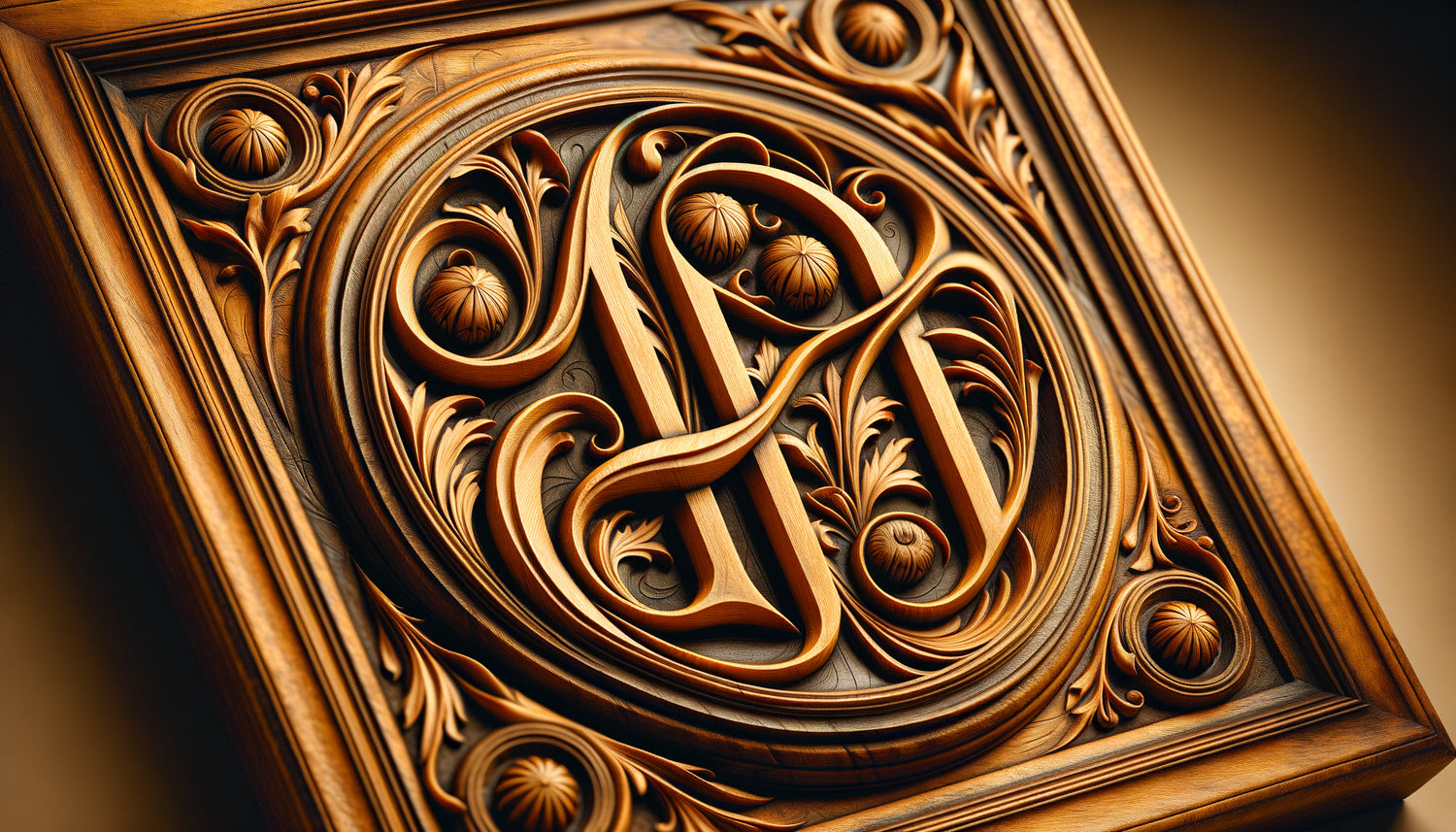
From his earliest engravings, Dürer adopted a gesture that would become his trademark: he affixed his famous monogram, this stylized « AD » which became as recognizable as his works themselves. But Dürer went further: he didn't just sign occasionally, he did so systematically, methodically, transforming his signature into a true quality label.
This approach was not merely a matter of ego. Dürer intuitively understood something fundamental: in a world where reproduction techniques were beginning to develop (particularly with engraving), protecting one's creative identity became essential. His signature functioned as the first copyrights, a claim of artistic paternity.
The monogram as a business strategy
Dürer was also a remarkable businessman. His monogram became a distinctive brand, allowing buyers to immediately identify a « true Dürer ». This strategy foreshadowed contemporary branding logics: creating a strong visual identity, easily recognizable, synonymous with excellence and authenticity.
He meticulously documented his works, noted the dates, kept archives. This rigor was an integral part of his artistic practice, establishing a new professional standard that other artists would gradually adopt.

The silent revolution: how the signature transformed art
The impact of Dürer's gesture resonates far beyond his own career. By signing systematically, he initiates a profound transformation of the social perception of the artist. Gradually, his contemporaries and then subsequent generations adopt this practice, each developing their own distinctive signature.
This evolution accompanies a major economic change: the development of the art market. Collectors begin to seek not just « a beautiful painting », but « a Raphael », « a Michelangelo », « a Titian ». The artist's identity becomes inseparable from the value of the work. The signature is no longer an accessory detail, it becomes a constituent element of the artwork.
For you, a lover of contemporary art seeking to compose a refined interior, this story explains why you feel drawn to works signed. It's not snobbery: it’s the intuitive recognition that each signature tells a human story, establishes a personal connection with the creator, and authenticates a unique vision of the world.
Signatures that tell stories: deciphering artistic codes
Each artist develops their own approach to signing. Some, like Dürer, create a monogram recognizable among thousands. Others inscribe their full name with careful calligraphy. Rembrandt simply signed “Rembrandt,” abandoning his family name as a contemporary star would.
The position of the signature also reveals aesthetic and philosophical choices. Placed discreetly in a corner, it affirms a presence without disturbing the composition. Integrated directly into the work, it becomes an integral part of the visual language. Some modern artists have even made their signature a central graphic element, blurring the boundaries between identification and creation.
Vincent van Gogh signed “Vincent” in bright yellow letters, transforming his signature into an additional color touch. Pablo Picasso evolved his signature throughout his career, reflecting his stylistic mutations. Each signature thus becomes a microcosm of its author's artistic universe.
Contemporary art and the reinvented signature
Today, some artists question the very concept of a signature. Banksy remains anonymous while graphically signing his works. Others use QR codes, holograms, blockchain certificates. But even in these futuristic variations, the legacy of Dürer persists: the fundamental need to authenticate, claim, and connect a creation with its creator.
Transform your interior with the history of art
Discover our exclusive collection of wall art inspired by famous artists that carries the legacy of the greatest masters who have marked the history of artistic signatures.

Collecting with conscience: the signature as a guide to authenticity
When you choose a work for your living room, office or bedroom, the presence of a signature changes everything. It establishes a direct connection between you and the artist, transforming your wall into a space of dialogue. This hand that traced these lines, these colors, then signed: it's the same hand, the same creative gesture that ends in this final claim.
For quality reproductions and prints, the original signature faithfully reproduced honors this tradition. It recalls that behind each composition there is a real person, with their sensitivity, their history, their vision of the world. That’s why collections that respect the integrity of works, including their original signatures, offer a more complete aesthetic experience.
In your interior design approach, this historical understanding allows you to make more informed choices. A Dürer reproduction with his characteristic monogram? You welcome into your home not only an image, but the very history of modern artistic affirmation. A contemporary painting signed? You participate in a tradition centuries old.
The living heritage: what Dürer teaches us today
Dürer's revolutionary act still speaks to us with surprising intensity. In the digital age, where everything is copied, shared and appropriated, the question of attribution and authenticity has never been so crucial. Contemporary artists watermark their creations, photographers digitally sign their shots, designers jealously protect their designs.
This historical continuity reveals something profoundly human: the need to leave a mark, to affirm “I exist, I created this, it is my vision of the world.” When you contemplate a signed work in your interior, you participate in this centuries-old conversation between creator and viewer.
Great collectors know that a signature is never trivial. It carries within it the promise of authenticity, but also the echo of a human presence. In an increasingly automated world, this handwritten trace, this final gesture of the painter identifying himself, retains an irreplaceable emotional power.
Composing your interior with the spirit of the great masters
Now that you know this fascinating story, your view of art changes. Each signature becomes a gateway to creative intimacy. By choosing works that honor this tradition – whether originals, quality reproductions or contemporary creations – you inscribe your living space into a prestigious historical lineage.
Imagine your living room with a careful reproduction of an engraving by Dürer, his emblematic monogram visible in the lower corner. Or your office adorned with a painting reminiscent of the bold signatures of the Impressionists. Each room then tells not only an aesthetic story, but also a human story, that of the artist who dared to say “this comes from me.”
This conscious approach to decoration transforms your interior into a personal gallery where each signed work dialogues with the others, where authenticity takes precedence over quantity, and where the quality of the reproduction respects the integrity of the original.
The legacy of Dürer invites us to this requirement: not to settle for anonymous images, but to choose works that bear the distinctive mark of their creator. It is this attention to detail, this historical awareness that transforms a simple space into a true aesthetic sanctuary, where every glance reveals a new depth, a new connection with the creative geniuses who have shaped our visual culture.
Frequently Asked Questions
Why didn't artists sign their works before Dürer?
Medieval culture valued spiritual humility and collective work within workshops. Artists considered themselves artisans serving God and their patrons, not individual creators deserving personal recognition. The very notion of an artistic author did not really exist: the work belonged more to the patron than to the one who executed it. Dürer broke this convention by asserting himself as a creative intellectual, influenced by the humanist ideas of the Renaissance that placed the individual at the center. This transformation also reflected the emergence of an art market where the identity of the creator began to have its own economic value.
How to recognize a quality reproduction that respects the original signature?
A quality reproduction preserves all the details of the original work, including the signature in its exact position, size and color. Check that the printing process (giclée on canvas or archival quality art paper) faithfully restores the nuances and texture. The best reproductions clearly mention the original artist and do not seek to make it appear as an original. They often include a certificate of authenticity for the reproduction itself. Beware of cropped versions that eliminate the signature or modifications that betray the artist's original intention. A respectful reproduction honors the creative integrity of the master while making his work accessible to enhance your interior with historical and aesthetic awareness.
What is the added value of a signed work in my interior decoration?
Beyond pure aesthetics, a signed artwork brings a narrative and emotional dimension to your space. It establishes a silent dialogue between you and the creator, transforming your wall into a cultural meeting place. This signature testifies to a conscious artistic intention, a completion of the creative gesture that includes an affirmation of identity. Psychologically, living surrounded by signed artworks – even high-quality reproductions – elevates the character of your interior, conferring cultural legitimacy upon it. It's the difference between simple decoration and true artistic curation. Each signature tells the story of an artist who dared to claim their vision, thus inspiring your own aesthetic boldness in composing your personal living space.