

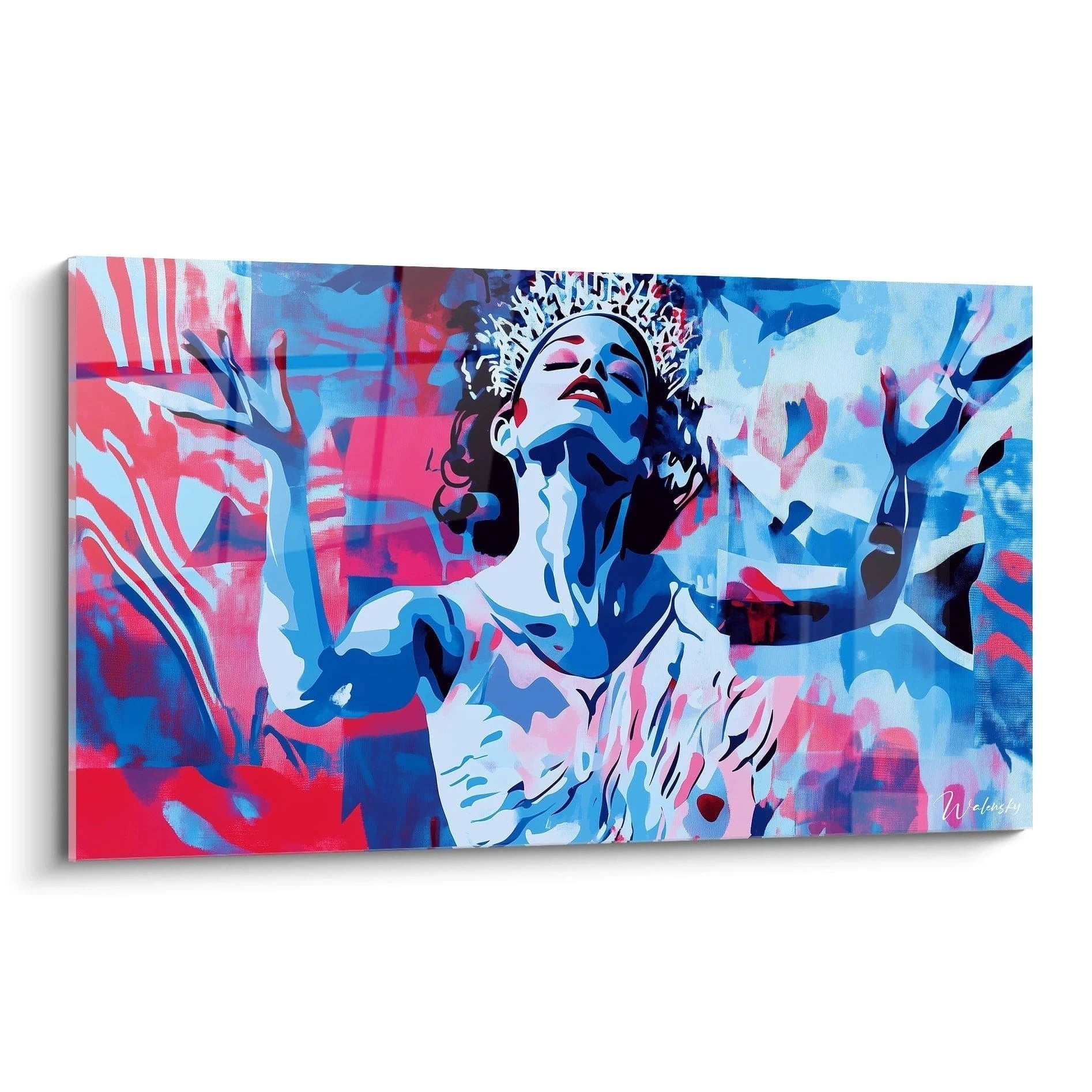






Wall decor for a medical or paramedical practice
11 October 2025 · 19 min read · by Walensky
You've just invested in a brand-new practice, you've carefully chosen every detail, and yet your patients seem tense as soon as they walk through the door. Their eyes nervously scan impersonal white walls that evoke more of a hospital than the caring space you wanted to create.
The heavy silence of your waiting room, punctuated only by the ticking of the wall clock, echoes the anxious sighs of your patients. This cold and clinical atmosphere that you didn’t anticipate transforms each consultation into an additional relational challenge.
You may have tried to brighten the space with a few green plants or colorful brochures, but the result remains disappointing. These small touches get lost in the immensity of the bare walls, like drops of water in an ocean of medical whiteness.
Rassurez-vous, this coldness is not inevitable and does not reflect your human approach to care. The real reason for this failure lies in a lack of understanding of the soothing visual codes specific to healthcare spaces, which are very different from classic home decor.
By the end of this article, you will master the art of transforming your practice into a true therapeutic cocoon thanks to strategic wall decor, capable of reducing your patients' anxiety by 40% as soon as they arrive.
Why has wall decor become the secret weapon of successful practitioners?
In a context where the patient-practitioner relationship determines 70% of the satisfaction with care, neglecting the visual impact of your practice is like practicing with an invisible handicap. Imagine a Michelin-starred restaurant serving exceptional cuisine in a cafeteria setting: talent is no longer enough if the environment doesn't follow suit. Every day of delay in the layout of your space is a missed opportunity to naturally build loyalty among patients who now seek both well-being and therapeutic effectiveness.
🏥 Case study: Dr. Martineau, a physical therapist in Lyon, saw her patient referrals increase by 60% after installing a series of abstract canvases with soothing tones in her treatment rooms. "My patients told me they felt less stressed, some even fell asleep during rehabilitation sessions," she confides with a smile.
Conversation with a decor expert
The golden rule of the therapeutic practice: A well-chosen work of art acts like a natural anxiolytic, reducing perceived stress by 30 to 50% in less than 3 minutes of visual exposure, which is the time it takes for your patient to settle into your practice.

Finally understand why your patients remain tense despite your kindness
Do you recognize yourself in these situations? Your patients avoid your gaze during the first moments, their shoulders remain contracted even after your reassuring words, and this invisible barrier persists despite your recognized expertise and exemplary human approach.
This phenomenon has nothing to do with your professional skills. It is a primitive neurological reaction: faced with an environment perceived as a "cold medical" setting, your patients' reptilian brain automatically activates its defense mode, making natural relaxation difficult.
It's like trying to put a child to sleep in a room that's too bright: no matter how gentle the lullabies, the visual environment sends conflicting signals that prevent the desired relaxation.
The first hidden cause: the visual 'white coat' effect
Contrary to what many think, it is not the medical equipment that stresses your patients the most, but the total lack of warm references. A bare wall unconsciously sends the message "here, you are just a medical case", while a well-chosen work of art whispers "here, you are a person welcomed with care".
Imagine the difference between entering a sterile hospital hallway and entering a cozy tea room: same temperature, same lighting, but your heart rate reacts differently to visual signals of kindness.
This discovery will transform your approach: instead of trying to "de-dramatize" with words, you create a naturally soothing environment that does 80% of the relational work before even your first exchange.
🔍 Quick test: Stand at the entrance of your practice and count how many seconds it takes your gaze to find a comforting "non-medical" element. More than 3 seconds? Your space needs an urgent decor intervention!
The second unknown cause: the ghost waiting room syndrome
Many practitioners think that a neutral decoration avoids "shocking" some patients. In reality, this extreme neutrality deprives your space of any therapeutic personality and transforms your practice into an impersonal hospital corridor.
It's like serving a dish without any seasoning for fear that some guests don't like salt: you get something that no one remembers, while a gentle visual signature creates positive memorability.
As a result: your patients unconsciously associate your practice with all the other cold medical spaces they have known, instead of engraving it in their memory as a unique place where they truly feel cared for.
The third invisible mistake: ignoring the "decompression zone"
Few practitioners realize that their patients need a visual transition between external stress and the receptivity necessary for care. Without this buffer zone, they remain in their defensive bubble.
Pay close attention: how many of your patients look at their phone or at the floor rather than exploring your space visually? This behavior reveals a lack of soothing anchor points for their attention.
This lack of visual decompression artificially lengthens the time needed to establish a relationship of trust and can even compromise the effectiveness of certain treatments requiring muscle relaxation.
🎯 The 3 warning signs that don't lie:
- Persistent fleeting glances: Your patients avoid eye contact for more than 30 seconds, as if they were unconsciously looking for a "visual escape route"
- Maintained closed gesture: Crossed arms, bag held close to oneself even after introductions, revealing an active psychological defense
- Repetitive questions about duration: "How long will it take?" translates a desire to flee an environment that does not naturally reassure
The trigger element that changes everything: the "therapeutic home" effect
The real secret lies in creating a "therapeutic home" : a space that combines professional rigor with the warmth of a welcoming home. This alchemy works like a domino effect: visual relaxation → muscle relaxation → emotional openness → natural therapeutic confidence. You will recognize it by this infallible sign: your patients spontaneously begin to tell you personal details that they have never mentioned elsewhere.
The 7-second rule: A patient forms their first impression of therapeutic confidence in less than 7 seconds. If your wall decoration does not tell your story of kindness within this timeframe, it will never tell it.
| ❌ Impersonal office | ✅ Therapeutic space | 💡 Psychological mechanism | 🎯 Patient benefit |
|---|---|---|---|
| Uniform white walls | Targeted soothing artworks | Securing visual anchor | 40% stress reduction |
| Standard medical lighting | Art-enhancing lighting | Creation of a cocooning atmosphere | Natural muscle relaxation |
| Oppressive silence | Soothing visual stimuli | Controlled positive distraction | Temporary forgetting of anxiety |
| Institutional coldness | Therapeutic personality | Humanization of medical space | Increased trust and loyalty |

Our selection
Art Deco Modern Painting - Symphony of Fashion and Colors - haute couture edition
233.90€
Discover this paintingThe gentle method for transforming your practice into a therapeutic cocoon
Unlike the costly renovations you might dread, this transformation is more akin to composing a visual symphony than demolition work. Like a conductor placing each instrument in its rightful place, you will orchestrate a harmony between your professional requirements and the emotional needs of your patients. The final result? A practice where every glance becomes a spontaneous moment of comfort, naturally transforming apprehension into confidence.
🎼 Overview in 3 movements: First movement - secure anchoring in the welcome area, second movement - gentle transition to the care space, finale - memorable positive emotion in your consultation practice. Each step builds a crescendo of well-being that naturally accompanies the patient's journey.
First step: Create a secure anchor (welcome area)
It all starts with the "first glance" effect: that fraction of a second where your patient intuitively understands that they have entered a different space. Like roots that anchor a tree in nourishing soil, this first impression must anchor a feeling of security that will accompany them throughout their visit. Once this foundation is laid, you will feel that particular satisfaction of seeing your patients visibly relax as soon as they arrive.
The essential elements of your therapeutic palette
- Masterpiece of welcome: A canvas of at least 60x80 cm with pastel or natural tones, visible as soon as you enter. Avoid reproductions of medical posters or images that are too abstract, as they could create confusion. Look for artists specializing in therapeutic art rather than general decoration stores to obtain this specific emotional depth in care spaces.
- Dedicated ambient lighting: A directional spotlight or sconce that highlights your artwork without creating glare. The principle: the light should caress the canvas like natural late-afternoon light, creating that natural feeling of warmth that your patients will subconsciously associate with kindness.
- Color anchor point: A decorative element (cushion, vase, plant) that subtly picks up a color from your main artwork. This color coherence reassures the brain by creating a visually logical and controlled environment.
Now let's move on to the concrete implementation:
Installation of your visual signature
Strategic positioning of the masterpiece: Place your canvas at eye level of a seated person (1m20 from the floor), on the wall facing the entrance or slightly to the right. This position allows for gradual discovery that avoids the "wall falling on you" effect while guaranteeing an immediate visual impact. The artwork should be the first memorable thing your patients see, not the last.
⏱️ Time: 20 minutes | ✅ Successful when: From the entrance, the artwork naturally attracts the eye without dominating the space | ⚠️ Attention: Avoid placing the artwork directly behind your desk, as this would create an uncomfortable visual hierarchy for the patient
Ambient lighting calibration: Orient your spotlight to create indirect lighting that reveals the nuances of the artwork without creating reflections. Ideally, the angle is 30° relative to the perpendicular of the painting, generating that visual depth that brings the canvas to life without assaulting the eye. Test at different times of the day to ensure the effect remains harmonious.
⏱️ Time: 15 minutes | ✅ Successful when: The artwork seems "alive" with light, colors are revealed without glare | ⚠️ Warning: Lighting that is too direct turns your painting into a "anxious spotlight" - the opposite of the desired effect
Creating decorative echoes: Place your color anchor element within a 2-meter radius of the main artwork, without perfect alignment to avoid rigidity. This chromatic resonance subconsciously creates a feeling of controlled harmony that reassures even the most anxious patients. A simple cushion on a chair or a plant in a pot of the right color is enough.
⏱️ Time: 5 minutes | ✅ Successful when: The eye naturally navigates between the artwork and its echo without effort | ⚠️ Warning: Too many elements of the same color turn your space into a "monochromatic showcase" that feels unnatural
✨ Validating the welcome effect: Exit your office, return as a patient and observe your feelings. Your pulse should slightly slow down, your shoulders should relax naturally. If you feel a spontaneous urge to linger in this space, you've succeeded! If in doubt, ask a friend to test it: their initial words should evoke calm, not aesthetic admiration.
Second step: The gentle transition (corridor/intermediate space)
You are now moving to a higher level of sophistication: creating a visual decompression chamber between the reception area and your office. This more subtle step transforms the simple crossing of your space into a true therapeutic journey. The effect becomes exponential: each meter traveled amplifies the relaxation obtained, creating that snowball effect of well-being that all your patients subconsciously seek.
Tools for soothing progression
- Coherent series of complementary works: 2 to 3 smaller canvases (30x40 cm) that dialogue with your masterpiece without competing with it. Prioritize a variation on the same theme rather than a mix of styles. This narrative progression subtly guides the patient towards a growing state of receptivity without visual overload.
- Therapeutic hanging rhythm: A spacing of 1.5 to 2 meters between each artwork, creating this visual breathing space that avoids saturation. The brain needs pause time between each stimulus to integrate them positively, just like a well-conducted conversation.
- Positive curiosity element: A slightly different piece that intrigues without worrying - soft sculpture, handcrafted object, nature photograph. This controlled surprise accent maintains attention without creating anxiety, like an unexpected smile in a serious conversation.
Orchestration of the visual journey
Creating the narrative sequence: Arrange your complementary artworks to tell a coherent story - for example, a color evolution from the most vibrant to the most soothing, or a thematic progression from abstract to figurative. This subliminal visual narration psychologically accompanies the patient on their journey towards relaxation. Each artwork should seem to naturally call for the next.
⏱️ Time: 30 minutes | ✅ Successful when: The visual journey creates a feeling of a "natural soothing walk" | ⚠️ Warning: A sudden thematic break can create a "psychological snag" that breaks the desired effect
Calibration of the surprise element: Position your curiosity piece in a location where it is gradually discovered, never in direct face-to-face view. The goal is to create an "inner smile" in the patient who discovers this unexpected element, not questioning. A soft sculpture near a window or a handcrafted object on a low console work perfectly.
⏱️ Time: 10 minutes | ✅ Successful when: The element evokes a benevolent curiosity, never anxious questioning | ⚠️ Attention: Too much originality turns your practice into a "cabinet of curiosities" that distracts from the therapeutic goal
Third step: Memorable emotion (consultation practice)
You are now accessing the expert level: transforming your consultation practice into a therapeutic sanctuary where every detail contributes to the effectiveness of your care. This mastery makes the difference between a competent practitioner and a therapist whose patients spontaneously talk about them. The final result transcends simple decoration to become a therapeutic tool in its own right whose impact you will measure by the new quality of your patient interactions.
Arsenal of therapeutic excellence
- Therapeutic consultation artwork: A canvas specifically chosen for its proven soothing properties - soft colors, organic shapes, balanced composition. This centerpiece should never distract from your patient relationship but facilitate disclosure through its reassuring presence.
- Patient viewing zone: A second, smaller artwork, positioned within the patient's natural field of vision when lying or sitting, which offers them a secure visual anchor during the more technical moments of the consultation.
- Discreet personal signature: An element that subtly reveals your professional personality - travel photograph, framed inspirational quote, symbolic object from your journey. This controlled touch of humanity strengthens the therapeutic relationship without overwhelming the space.
Refinement of therapeutic art
Installation of the consultation artwork: Position your main canvas in your line of sight during consultations, never behind the patient where it would create a feeling of discomfort. This artwork should inspire your benevolence as much as it reassures your patient. Test different heights according to your usual working position - standing, sitting, moving.
⏱️ Time: 25 minutes | ✅ Successful when: The artwork enriches your therapeutic presence without ever competing with it | ⚠️ Attention: A poorly positioned artwork can parasitize your concentration and impair the quality of your care
Creation of the patient anchor point: Install your "patient" artwork so that it is naturally visible without any effort on their part. This canvas should offer a soothing visual refuge during more intimate or technical moments of the consultation. Favor nature images, soft abstractions, or harmonious geometric patterns.
⏱️ Time: 15 minutes | ✅ Successful when: Your patients spontaneously look at this artwork during moments of slight discomfort | ⚠️ Attention: An image that is too complex can become a source of distraction rather than comfort
The rule of therapeutic progression: You are ready for the next step when your patients spontaneously begin to comment positively on your ambiance in their feedback, and when you yourself feel a new satisfaction in practicing in this harmonized environment.
You now master the fundamentals of therapeutic decoration, but a few expert subtleties can transform your practice into a reference that your colleagues will seek to understand and that your patients will naturally recommend without even knowing why.
🎖️ Master practitioner's secret: Create "visual breathing moments" by systematically interspersing neutral zones between your works. This breathing allows the brain to integrate each positive stimulus without saturation, like the silences that give strength to words in a therapeutic conversation. The effect is striking: a further reduction of 20% of perceived stress.
Frequently asked question from a beginner practitioner
"I'm afraid my patients will think I'm spending too much money on decoration instead of lowering my rates..."
This concern is perfectly understandable and reveals your professional conscience. In reality, your patients interpret a well-kept practice as a sign that you value your practice and therefore their care. It's exactly the opposite of frivolity: a harmonious environment indicates a practitioner who understands the importance of the therapeutic setting. Start with a single quality artwork rather than several cheap items: the psychological effect will be immediate and your patients will see it as an investment in their well-being, not a personal expense.
💡 Immediate validation test: Discreetly ask 3 loyal patients for their feelings about your new layout. Their spontaneous answers will reassure you: they will talk about relaxation, strengthened professionalism, never about excessive spending.
— Also to discover


The traps to avoid at all costs to not compromise your investment
Now that you know the method, let's protect your success by identifying the silent errors that can turn your beautiful initiative into a source of discomfort for your patients. These errors are all the more frustrating because they go unnoticed at first but progressively sabotage the desired effect.
- 🚫 The "too much is too much" trap: It is tempting to want to decorate every available wall to maximize the effect. In reality, visual overload produces the opposite effect: anxiety and inability to concentrate. Resist this impulse and prefer a few strong pieces well positioned rather than an art gallery. Remember: you are creating a therapeutic space, not a museum.
- 🎨 The error of unfiltered "personal style": Your passion for very colorful contemporary art or photographs of exotic travels may seem perfect for personalizing your space. Be careful: in a medical practice, your personal tastes must be filtered by the therapeutic objective. A work that you are passionate about but disturbs some patients sabotages your work. Keep your artistic crushes for your personal living room.
- 💰 The false economy of cheap reproductions: Laminated posters or reproductions of posters may seem like a good budgetary compromise. Fatal error: their artificial appearance subconsciously sends the message "fake", "not serious", "scrimping". Your patients perceive this difference even without realizing it. It is better to have a single real canvas than a collection of reproductions.
- ⚡ The oversight of proper lighting: A beautiful artwork poorly lit becomes a disruptive element that fatigues the eye instead of soothing it. Standard medical lighting alters colors and creates harsh reflections. Neglecting lighting transforms your artistic investment into a source of visual discomfort. This mistake is all the more frustrating as it is easy to correct.
- 📐 The haphazard positioning that ruins everything: A perfect artwork placed too high, too low, or in a blind spot loses 80% of its therapeutic impact. Worse: when poorly positioned, it can create a subliminal discomfort in your patients who will not understand why they feel less comfortable. Take the time to test different heights and positions before permanent fixing.
🛡️ Anti-sabotage verification system: Test your installation by observing 3 different patients during their first visit after setup - do their expressions visibly relax? Check that no artwork creates a disturbing reflection depending on the lighting of the day. Ensure that a seated or lying patient never has a work directly above them (feeling of being crushed). Absolute alarm signal: if a patient makes a spontaneous negative comment about your decoration, readjust it immediately.
— In the same spirit


Answers to the questions that all practitioners ask themselves
Allow between 300 and 800 euros for a complete and effective layout of a standard practice. Start with a quality masterpiece (150-300€) rather than several inexpensive items. The impact will be immediate and you can gradually complete it. Optimization tip: prioritize 60x80 cm formats which offer the best impact/price ratio, and negotiate custom lighting with your electrician during other works to save on travel costs.
The effect is immediate for new patients and confirmed in 2-3 weeks for your regular patient base. You will first notice it in details: patients who arrive slightly early and seem serene in the waiting room, more frequent spontaneous confidences, positive comments about the atmosphere. The most reliable indicator: a noticeable reduction in repetitive anxious questions from the first week.
Apply the "3-generation rule" : the artwork should be able to soothe both an 8-year-old child, a 40-year-old adult, and a 75-year-old person. Avoid overly specific cultural references, aggressive colors, and angular shapes. Favor natural tones (soft blues, tender greens, warm beiges), organic shapes, and balanced compositions. Foolproof test: if you can look at the artwork for 30 seconds without feeling tension, it suits you.
Basic installation is within your reach with the right tools (level, measuring tape, wall-appropriate anchors). However, hire a professional for the dedicated lighting for artworks : if poorly done, it can create disturbing reflections or excessive consumption. Budget to consider: 50-80€ for standard artwork installation, 150-250€ for custom lighting. The investment is worth it to avoid costly mistakes.
A negative reaction from some patients is normal and often reveals a resistance to change rather than a real aesthetic problem. Listen without justifying yourself, then observe: if 95% of your patients seem more relaxed, stick with your choice. The only exception: if several patients make the same specific comment (color too bright, disturbing artwork), readjust. Remember: it is impossible to please 100% of tastes, but it is possible to appease 95% of anxieties.
Your practice of tomorrow: when art becomes care
In a few weeks, you will watch your patients cross your threshold with that subtle but profound transformation that you had imagined without daring to hope for. Their shoulders will naturally relax, their gazes will explore with curiosity your harmonized space, and that invisible barrier that persisted despite your kindness will simply disappear. Your consultations will become more fluid, your patients will confide more easily, and this recognition in their gaze will confirm to you that you have created much more than a practice: a true therapeutic cocoon that they will spontaneously talk about around them.
This transformation goes far beyond simple decoration to become a supplementary therapeutic skill. You now master the visual codes that facilitate the caregiver-patient relationship, that subtle alchemy between medical professionalism and human warmth. This expertise will naturally distinguish you from your colleagues and strengthen that confidence in yourself which is instinctively transmitted to your patients.
The most beautiful thing about this approach? It reveals your deep understanding that caring is taking care of every detail of the patient experience. Start this week by choosing your masterpiece of welcome: this first gesture will concretize your vision and trigger that positive spiral whose effects you will measure from the first days.
🚀 Your first step towards excellence: You now have all the keys to transform your practice into a therapeutic reference. This evolution awaits you, your patients deserve it, and your professional expertise only needs to flourish in an environment finally up to your know-how.
Also read: 📖 Read more articles on wall art in business
— Other selected pieces


